Tag: Supplemental Nutrition Assistance Program

  • Advocates: Huge numbers of Ohioans stand to lose food benefits if GOP House budget becomes law

    Advocates: Huge numbers of Ohioans stand to lose food benefits if GOP House budget becomes law

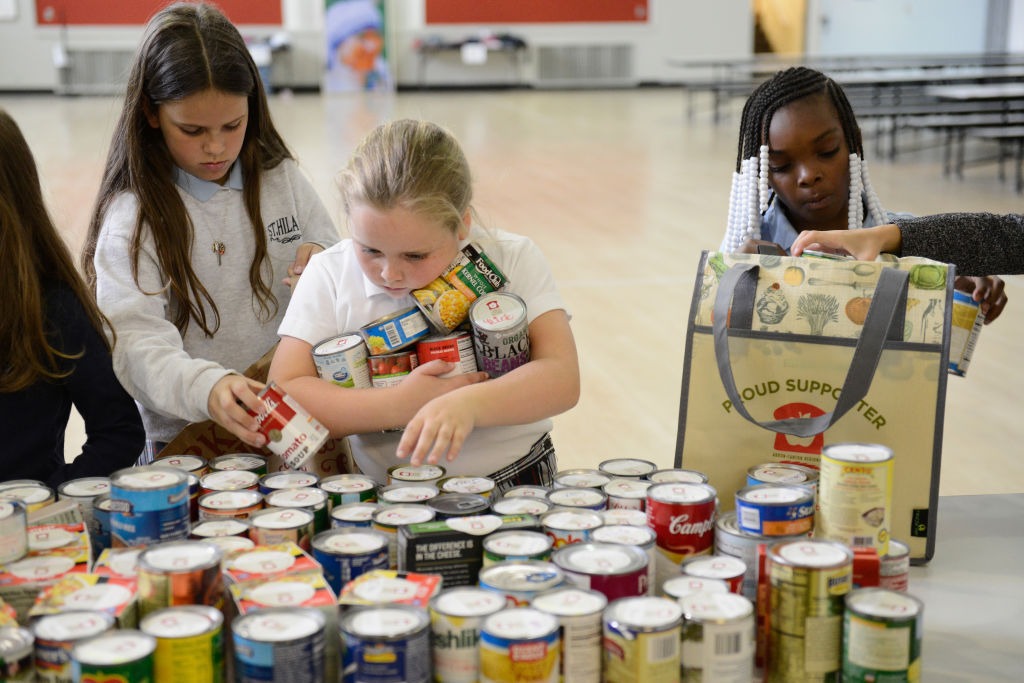
    A food drive. Stock photo from Getty Images

    By:  Ohio Capital Journal

    The executive director of the Ohio Association of Foodbanks is trying to get the word out: If the budget passed by the U.S. House of Representatives becomes reality, it could trash the state budget and make many, many Ohioans go hungry.

    The matter goes next to the U.S. Senate. But the members of the Ohio delegation aren’t talking.

    The House-passed Republican reconciliation budget — President Donald Trump’s “One Big Beautiful Bill” — would hand out $4.6 trillion in tax cuts over 10 years. In an analysis, Trump’s alma mater, the University of Pennsylvania’s Wharton School, estimated that 70% of the benefit would go to the “top 10% of the income distribution.”

    Meanwhile, the “Department of Government Efficiency” — led by the world’s richest man — has been looking to cut services for average Americans. One place the Republican House budget seeks to achieve some of those cuts is to the Supplemental Nutrition Assistance Program, or SNAP.

    Also known as food stamps, the program provides debit cards for food. To qualify, Ohio recipients generally have to have net income at or below federal poverty guidelines —  $32,150 a year for a family of four.

    Benefits awarded under the program are pretty modest, $6.28 per person, per day on average last year. And, as a reflection of the high level of poverty in the state, one in nine Ohioans — or 1.4 million — received them last year.

    Whether Ohio’s poorest will get those food benefits in future years is an open question in light of the One Big Beautiful Bill.

    “The House-passed Republican reconciliation plan would cut nearly $300 billion from the Supplemental Nutrition Assistance Program (SNAP) through 2034, based on Congressional Budget Office (CBO) estimates — by far the largest cut to SNAP in history,” the Center on Budget and Policy Priorities wrote last week. “As a result of these cuts and other policies in the legislation — which are being used to pay partly for trillions in tax cuts skewed to the wealthy — millions of people would lose some or all of the food assistance they need to afford groceries, when many low-income households are struggling to afford the high cost of food and other basic needs.”

    The bill would force states to take up the slack by forcing them to pay based on error rates. In other words, they’d have to pay at least 5% more and then go up a sliding scale based on how often they were found to pay recipients too little or too much in benefits. It also would greatly increase error rates by eliminating the current tolerance for small errors — those up to $57.

    This all might sound technical, but the consequences for Ohio would be huge.

    If it had an error rate of 6% or less (which it doesn’t, even under the current, more-tolerant system), the state would have to pay $158 million more a year into the program, according to the Center for Budget and Policy Priorities. At the top end, with an error rate of 25% or more, Ohio would have to pay $790 million more a year.

    Under the Republican bill, error rates would surely go sharply up. But even under Ohio’s most recent rate, the state would take a massive hit. At 15% errors, the state would have to come up with $473 million a year.

    “That’s almost $500 million in new state revenue that they would have to come up with just to maintain current levels of benefits,” said Joree Novotny, executive director of the Ohio Association of Foodbanks. “That’s roughly equivalent to the entire state investment in the Ohio Department of Job and Family Services” which administers SNAP in addition to many other programs.

    Novotny is worried that Ohio’s food banks would be stretched even worse under such cuts than they were after expanded SNAP benefits during the covid pandemic expired.

    “We know that we can’t ever make up for the value that SNAP benefits provide to low-income working families, seniors and people with disabilities,” she said. “We’re not designed to be a first-line grocery store. SNAP invests directly in local economies. Benefits are spent at local grocers. The removal of this investment in that supply chain… I’m not only concerned about access to affordable food for people with lower resources, but also sustainability and resilience in the food-supply sector as a whole.”

    Novotny said two bad-but-likely results would be bigger food deserts and less access to healthy nutrition. Those outcomes would be particularly devastating to low-income families who have seen food prices grow 27% between mid-2020 and the beginning of this year.

    Asked whether Gov. Mike DeWine opposed the SNAP cuts in the Republican bill, his press secretary, Dan Tierney, was noncommittal.

    “As we have seen, these proposals can change dramatically as the process proceeds,” Tierney said in an email. “We have generally reserved comments until after final proposals have been adopted.”

    The offices of Sens. Jon Husted and Bernie Moreno were asked if they would support the cuts when the House bill came before them. Neither replied.

    For her part, Novotny said she has an even deeper concern than overwhelmed food banks and growing food deserts.

    Asked what would happen if states can’t or won’t find the money the House budget is demanding for SNAP, she said, “We can’t get a good answer to that.”

    “Fundamentally, will SNAP remain an entitlement? Will states have to administer the program at all?” she asked. “Fundamentally, it’s hard to understand how it would be required of a state to participate in the program if there’s such a significant cost burden.”

    The question, at bottom, is whether the already huge number of poor Ohioans will swell and whether they’ll be pushed even deeper into poverty and food insecurity.

    “I’m most concerned about what it would mean for the structure of the federal nutrition safety net,” Novotny said. “SNAP is and always has been an entitlement program. If you’re a worker who, through no fault of your own, loses your job and while you’re seeking work you need help affording groceries so that you can stay in your house… SNAP is there. Or if you’re a person who receives a really serious cancer diagnosis and you have to use some (Family and Medical Leave Act benefits) to come and get treatment, SNAP is there. If you’re a low-wage working family, or if you’re a senior on a fixed income, SNAP is there and the benefit has always been fully federally funded.”

    Marty Schladen
    Marty Schladen

    Marty Schladen has been a reporter for decades, working in Indiana, Texas and other places before returning to his native Ohio to work at The Columbus Dispatch in 2017. He’s won state and national journalism awards for investigations into utility regulation, public corruption, the environment, prescription drug spending and other matters.

    Ohio Capital Journal is part of States Newsroom, the nation’s largest state-focused nonprofit news organization.

    MORE FROM AUTHOR

  • More than 3 million people would lose SNAP benefits under GOP bill, nonpartisan report says

    More than 3 million people would lose SNAP benefits under GOP bill, nonpartisan report says

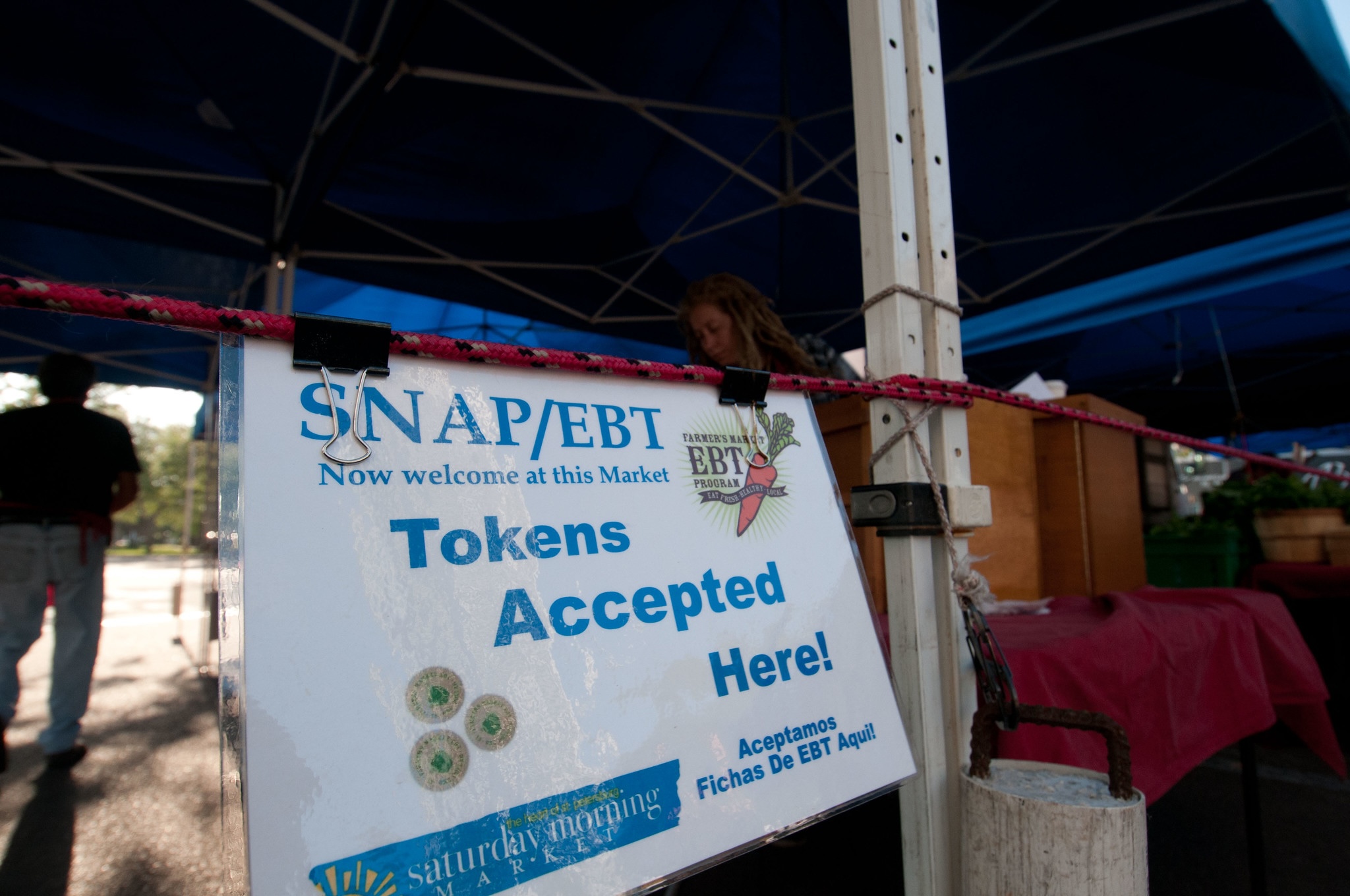
    At a farm market in St. Petersburg, Florida, SNAP recipients were able to use their Electronic Benefits Transfer cards for food. (Photo by Lance Cheung/USDA).

    By:  Ohio Capital Journal

    The massive tax and spending bill passed by U.S. House Republicans would likely result in 3.2 million people losing food assistance benefits, and saddle states with around $14 billion a year in costs, according to a new analysis from the nonpartisan Congressional Budget Office.

    Democrats have argued the bill, which the House passed215-214 early Thursday without any Democrats in support, would cut programs for the needy to fund tax breaks for high earners.

    The CBO document, issued late Thursday, responded to a request to the office from the top Democrats on the Senate and House Agriculture committees, Sen. Amy Klobuchar and Rep. Angie Craig, both of Minnesota, and somewhat bolsters that claim. The panels oversee federal food aid programs.

    “This report is truly devastating,” Craig said in a Friday statement to States Newsroom. “As a mother and someone who at times relied on food assistance as a child, these numbers are heartbreaking. It is infuriating that Republicans in Congress are willing to make our children go hungry so they can give tax breaks to the already rich.”

    A provision in the bill to tighten work requirements, including by excluding single parents of children older than 6 and by raising the age of adults to whom the work requirements apply, of the Supplemental Nutrition Assistance Program, or SNAP, would result in 3.2 million people losing access to the program in an average month, the CBO report said.

    Of those, 1.4 million would be people who currently have a state waiver from work requirements that would be disallowed under the bill and 800,000 would be adults who live with children 7 or older, the report said.

    In a Friday statement, Ben Nichols, a spokesman for the House Agriculture Committee led by Pennsylvania Republican Glenn ‘GT’ Thompson, said the proposed change would be more fair to the people SNAP is supposed to help and noted the program is the only state-administered entitlement program that is paid fully by the federal government.

    “No one who is able-bodied and working, volunteering, or training for 20 hours a week will lose benefits,” Nichols wrote.

    Republicans want to use the legislative package to extend the 2017 tax law and its cuts, increase spending on border security and defense by hundreds of billions of dollars, overhaul American energy production, restructure higher education aid and cut spending.

    Toll on states

    The cost-share changes, which would require states for the first time to pay for a portion of SNAP benefits, would also limit participation and add a massive line item to state budgets, according to the CBO.

    Starting in 2028, states would be responsible for paying 5% to 25% of SNAP benefits, with a state’s share rising with its payment error rate. The federal government currently pays for all SNAP benefits.

    Under the House bill, which will likely undergo substantial changes as the Senate considers it in the coming weeks, states collectively would be responsible for just less than $100 billion from 2028 to 2034, about $14 billion per year.

    States would respond in a variety of ways, CBO Director Phillip Swagel wrote, including potentially dropping out of the program.

    “CBO expects that some states would maintain current benefits and eligibility and others would modify benefits or eligibility or possibly leave the program altogether because of the increased costs,” he wrote.

    The office took a “probabilistic approach to account for a range of possible outcomes” to determine what the effect on households would be and estimated that 1.3 million people would lose benefits because of state responses to the new cost-share.

    Nichols, with the House Agriculture Committee, disputed the CBO’s estimate regarding the cost share change. The lowest state cost-share of 5% would be available for states with error rates below 6%. Every state has hit that mark at some point in the last decade, he said.

    With that favorable of a cost-share, the Republican committee members did not believe states would drop out of the program, he added.

    “We reject the hypothetical assumption that some states may not chip into 5 percent of a supplemental nutrition program,” Nichols wrote. “Every state is capable of paying for a portion SNAP… Federal policy should encourage states to administer the SNAP program more efficiently and effectively, and this bill does just that.”

    CBO’s forecasters determined the impacts of the work requirements and cost-share provisions separately, meaning some people potentially losing benefits could have been counted in both categories.

    Move to the Senate

    The House vote Thursday sent the measure to the Senate, where the debate over SNAP benefits may fall along similar party lines.

    Republicans who hold control in that chamber are planning to employ the budget reconciliation process, which allows them to skirt the Senate’s usual 60-vote requirement for legislation.

    During the House Agriculture Committee’s debate over its portion of the legislation, Republicans on the panel said the work requirement and state cost-share measures were needed reforms to SNAP that would protect the program for those it was meant to serve, while limiting the costs associated with benefits to adults who were able and unwilling to work or in the country illegally.

    In a Friday statement, Sara Lasure, a spokeswoman for Senate Agriculture Committee Chair John Boozman, an Arkansas Republican, also said the panel would seek reforms to the program but did not offer specifics.

    “The Senate Agriculture Committee is in the process of crafting its budget reconciliation package and will work as good stewards of taxpayer dollars to make commonsense reforms to SNAP that encourage employment,” she wrote in an email.

    Klobuchar, in a statement after House passage Thursday, blasted the House bill and indicated she would oppose efforts to cut SNAP benefits.

    “House Republicans are pulling the rug out from under millions of families by taking away federal assistance to put food on the table,” she said. “They’re doing that even as President Trump’s tariff taxes raise food prices by more than $200 for the average family, all to fund more tax breaks for the wealthy. That’s so very wrong —and we will fight against it in the Senate.”

    Jacob Fischler
    Jacob Fischler

    Jacob covers federal policy and helps direct national coverage as deputy Washington bureau chief for States Newsroom. Based in Oregon, he focuses on Western issues. His coverage areas include climate, energy development, public lands and infrastructure.

    Ohio Capital Journal is part of States Newsroom, the nation’s largest state-focused nonprofit news organization.

    MORE FROM AUTHOR

  • U.S. House Republican cuts to Medicaid, food assistance would impact hundreds of thousands in Ohio

    U.S. House Republican cuts to Medicaid, food assistance would impact hundreds of thousands in Ohio

    U.S. Speaker of the House Mike Johnson, R-La., speaks to reporters as he leaves a news conference following a House Republican Conference meeting at the U.S. Capitol on April 8, 2025, in Washington, D.C. (Photo by Andrew Harnik/Getty Images)

    By:  Ohio Capital Journal

    The U.S. House Republican budget bill could spell significant losses for low-income families in Ohio, specifically those in need of food assistance and those on Medicaid.

    Advocates for Medicaid and anti-hunger leaders have said reductions and eliminations connected to the two programs would negatively affect Ohioans as a whole, as well as the state’s economy and spending power.

    Only one Republican U.S. representative from Ohio voted against the congressional budget bill, passed early Thursday with a vote of 215-214. U.S. Rep. Warren Davidson, posted on X, formerly Twitter, Thursday morning that he supported “many things in the bill,” but that “deficits do matter and this bill grows them now.”

    “The only Congress we can control is the one we’re in,” he wrote, alongside a bar graph showing the Congressional Budget Office’s analysis of the bill’s deficit effect. “Consequently, I cannot support this big deficit plan.”

    U.S. Rep. Joyce Beatty, D-Ohio, stood with all other Democrats in voting against the bill, saying in a statement after the vote that the bill is “a cruel and catastrophic budget that rips health care, food and opportunity from Ohioans and millions of other Americans just to bankroll bigger and better tax breaks for billionaires.”

    Medicaid

    Beatty’s statement said the bill, which now moves to the U.S. Senate, includes “the largest cut to Medicaid in American history,” at $698 billion, and $267 billion from the Supplemental Nutrition Assistance Program (SNAP) over the next decade.

    “In Ohio, that means potentially substantial new costs shifted onto our state, and fewer hospitals, fewer nursing homes, fewer services for our most vulnerable neighbors,” according to Beatty. “It’s not just bad math – it’s moral failure.”

    Ohio would see direct impact from the bill in its own state operating budget, currently being drafted by the General Assembly.

    The Ohio House’s version of the bill kept a provision proposed by Republican Gov. Mike DeWine in his executive budget to eliminate the state’s Medicaid expansion group if the federal government reduced the contribution it makes to the program.

    Currently, the federal government pays 90% of the Medicaid funding in Ohio, with the state covering the other 10%.

    In the Ohio House’s version of the budget bill, Ohio would eliminate Group VIII — another name for the Medicaid expansion group that covers more than 700,000 Ohioans who live above the income requirements for traditional Medicaid but are still in need of assistance — if the federal government’s share of the funding dips below 90%.

    GET THE MORNING HEADLINES.


    Medicaid advocates and experts have said losing this expansion group would cause Ohio’s uninsured rate to go up, and those dropped from the program to seek self-pay medical options, or skip care all together, causing the health of the state to suffer.

    According to Ohio child advocacy group Groundwork Ohio, nearly 48% of Ohio children younger than six rely on Medicaid for health coverage, and the program covers about 50% of all births in the state.

    The Center for Community Solutions found in a recent study that Medicaid covers 2 in 5 children in the state, as well as 1 in 5 working-age adults, and 1 in 10 adults aged 65 and older. The largest group covered in Ohio’s Medicaid program, 53.2% of cases, is families and children.

    SNAP funding

    The national Food Research & Action Center said the cuts would represent a nearly 30% reduction in SNAP funding, and would increase each state’s share of spending for the food assistance.

    “The bottom line is this bill would end up costing America,” wrote Crystal FitzSimons, president of FRAC, in a statement. “Rural communities would be disproportionately impacted. We would see higher rates of hunger and poverty, increased health care costs, reduced academic outcomes, less productivity and an economy that will be hit hard.”

    The Congressional Budget Office said the cuts, particularly to Medicaid and SNAP, would create a 2% decrease in household income nationwide in 2027 for the 10% of Americans in the lowest income brackets, going to 4% by 2033. Households in the highest income brackets, however, could see raises.

    The loss of SNAP funding, along with Medicaid, would reduce access to services that “are vital for everyday Ohioans in every Congressional district,” according to Joree Novotny, executive director of the Ohio Association of Foodbanks.

    Novotny said the current proposal would shift nearly $500 million in SNAP costs per year onto the state of Ohio.

    “That’s about the same as all the state general revenue spent to operate the entire Ohio Department of Job and Family Services each year,” Novotny said.

    The food banks and other anti-hunger advocates are already asking the state to support bipartisan legislation that would create supplemental benefits for SNAP participants in Ohio.

    Ohio House Bill 178, which has received two hearings in the House Community Revitalization Committee, would require the Ohio Department of Job and Family Services to provide “supplemental benefits to households receiving (SNAP) benefits if the household includes a member who is 60 years of age or older and receives a monthly SNAP benefit that is less than $50.”

    The supplements would cost the state $12.5 million in fiscal year 2026, and $21.4 million in 2027, according to a fiscal analysis of the bill.

    In supporting the bill, Hope Lane-Gavin, director of nutrition policy and programs for the state association of food banks said the average SNAP benefit in Ohio is $171 per month per person, or less than $6 per person per day.

    The federal minimum SNAP benefit is $23 per month, according to Lane-Gavin. There are about 70,000 households with adults 60 or older as the head of them in which the household receives less than $50 per month.

    “Access to SNAP benefits can reduce food insecurity, increase medication adherence and contribute to health care savings,” she told the committee.

    If SNAP funding changes drastically, food banks will not be able to fill the gap, even as they served more than 230 million meals in 2024, according to Novotny. The language in the budget would force state governments including Ohio’s to “make impossible choices.”

    “This cost shift wouldn’t just hurt families, it would impact local grocery stores, farmers and food suppliers, threatening jobs and access to fresh food in communities across Ohio,” Novotny said.

    Susan Tebben
    Susan Tebben

    Susan Tebben is an award-winning journalist with a decade of experience covering Ohio news, including courts and crime, Appalachian social issues, government, education, diversity and culture. She has worked for The Newark Advocate, The Glasgow (KY) Daily Times, The Athens Messenger, and WOUB Public Media. She has also had work featured on National Public Radio.

    Ohio Capital Journal is part of States Newsroom, the nation’s largest state-focused nonprofit news organization.

    MORE FROM AUTHOR

  • Hunger assistance, student meal support, take hits in final Ohio House budget draft

    Hunger assistance, student meal support, take hits in final Ohio House budget draft

    By:  Ohio Capital Journal

    Anti-hunger advocates saw a mixed bag with the final Ohio House version of the state budget, and they’re hoping to claw back some losses via the Senate’s draft.

    The House’s budget was approved by the chamber on Wednesday with only five Republicans voting against it.

    It maintained some reductions to a children’s hunger initiative, and gave food banks across the state only “core funding,” without an increase that they say they need as the number of people asking for food continues to increase. And federal food assistance through the Supplemental Nutrition Assistance Program (SNAP) often doesn’t cover the needs of Ohio residents.

    The final House budget draft still includes SNAP work requirements and regulations, some of which were in Gov. Mike DeWine’s executive budget, and some were added by the House.

    GET THE MORNING HEADLINES.


    The Children’s Hunger Alliance will still fight against cuts to its programs as the budget moves to the Senate. DeWine’s proposal asked for $3.75 million each year in federal Temporary Assistance for Needy Families (TANF) funds to be given to the alliance. The House reduced that amount to $2.5 million.

    The cut could cause major problems for children in Ohio who need the help, according to the alliance. They include 2.8 million fewer meals and a doubling of the number of schools on a waitlist to join the program.

    The hunger alliance’s president and CEO, Michelle Brown, said Columbiana and Athens counties would lose 150,000 meals in an Appalachian region that sees significant food insecurity already.

    “We are urging the Senate to honor their commitment to children and by increasing CHA’s funding by $2.5 million over the biennium, to restore flat funding as proposed by the governor,” the alliance said in a statement after the House budget was passed.

    The Hunger Network in Ohio criticized not only the hunger program cuts, but also cuts to the Fair School Funding Plan and the Housing Trust Fund. The network pressed the Senate to “adopt fiscally responsible investments to create a stronger Ohio that prioritizes Ohio neighbors who are struggling to make ends meet.”

    The House-passed version of the bill didn’t include a provision of DeWine’s budget that would have provided free breakfast or lunch to school districts that participate in federal school meal programs and have a student population with at least 25% eligible for free or reduced-priced meals.

    The measure removed from the budget by the House used the federal Community Eligibility Provision, something that also could be up for cuts on the federal end. The provision allows schools to participate based on the percentage of students in a school district who participate in other assistance programs like SNAP and TANF. Currently, schools are eligible if they have up to 40% participation in such programs.

    Earlier this year, a congressional committee proposed changing the eligibility level for the provision. It would raise the participation percentage to 60%, a change that hunger relief advocates said could impact more than 280,000 Ohio children, and millions nationwide.

    The House budget did retain DeWine’s language on the state’s school meal programs. It would reimburse districts to allow those eligible for reduced-priced meals to receive them for free. The previous state operating budget included $4 million for that purpose.

    For the Ohio Association of Foodbanks, an earmark from TANF dollars of up to $24.5 million a year made it from the governor’s budget proposal to the House’s draft. The association is expected to use the money for food distribution, summer meal programs, SNAP outreach and even free tax filing services, according to budget documents. The provision also mentions “capacity building” equipment as part of the earmarked funding.

    But the group still sees the need to fight for more on the Senate side, especially amid increasing demand and potential cuts to federal food assistance. The U.S. House passed a budget on Thursday, with funding cuts that could number in the trillions. They could include at least $880 billion in programs such as the SNAP program.

    The Center on Budget and Policy Priorities stated at least $230 billion in federal cuts have been proposed through 2034 from the U.S. House Agriculture Committee, overseers the SNAP program, and reductions could come “largely or entirely” from SNAP.

    Data from the Ohio Department of Job and Family Services noted nearly 1.5 million SNAP recipients in the state as of last month.

    The association’s executive director, Joree Novotny, said the group plans to ask the Senate to add $4.93 million per fiscal year to help offset rising food costs and allow the food banks to continue to source food locally.

    “Since 2020, food prices have surged by nearly 24%, meaning the same level of funding buys significantly less, both in consumers’ grocery carts and in our own purchasing power as a statewide hunger relief network,” Novotny said in a statement. “…With modest additional support, Ohio’s foodbanks will continue to stretch every dollar to maintain access to healthy foods when seniors and working families are forced to turn to us for help.”

    YOU MAKE OUR WORK POSSIBLE.

    _______________
    Susan Tebben
    Susan Tebben

    Susan Tebben is an award-winning journalist with a decade of experience covering Ohio news, including courts and crime, Appalachian social issues, government, education, diversity and culture. She has worked for The Newark Advocate, The Glasgow (KY) Daily Times, The Athens Messenger, and WOUB Public Media. She has also had work featured on National Public Radio.

    Ohio Capital Journal is part of States Newsroom, the nation’s largest state-focused nonprofit news organization.

    MORE FROM AUTHOR

  • The fight to feed children in Ohio continues

    The fight to feed children in Ohio continues

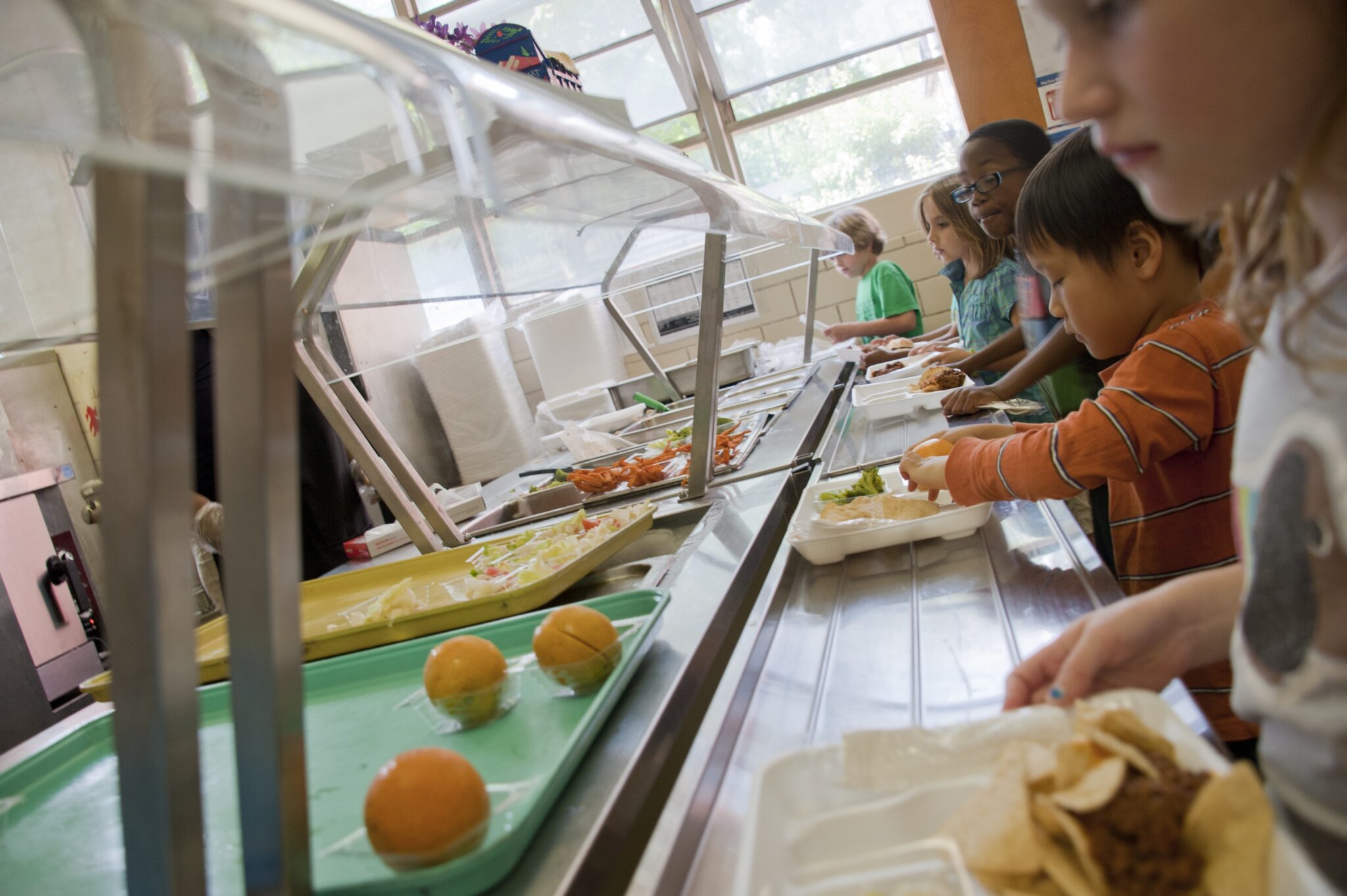
    Students getting their l lunch at a primary school. Photo by Amanda Mills/Centers for Disease Control and Prevention.

    BY:  Ohio Capital Journal

    The most recent state budget made changes to allow more students to be fed at no cost, but the battle to quell child hunger is still ongoing in Ohio.

    The budget bill passed last year provided more than $4 million in funding to allow any students qualified for reduced-price of free breakfast and lunch can get the meals at no cost for the 2023-2024 school year.

    It’s not quite the universal meals that school nutrition directors had asked for when budget talks began, but the final budget’s school meal provisions are progress in the right direction, child and education advocates in the state concluded.

    The programs that are still attempting to help stem the flow of student hunger are seeing the struggles that inflation has on the cost of food, and Katherine Ungar, senior policy associate with the Children’s Defense Fund of Ohio, said the stigma of the income-based school food programs is still a barrier.

    “It’s creating these categories that can create that stigma,” said Ungar.

    Ohio has taken strides to help in the future by pledging to use federal dollars to establish a summer program that will give low-income families with child of school-aged children “grocery-buying benefits” while schools are closed, according to the USDA, who estimates more than 29 million children nationally could benefit.

    “During the summer months, we estimate almost 1 million kids … lose access to meals,” Ungar said.

    CDF-Ohio researched the whole-child impacts of categories like housing, health care and food insecurity. In fiscal year, 2023, the group’s  annual data profiles showed an increase in the state’s students who were eligible for reduced-price or free school meals and considered “economically disadvantaged.”

    The number of kids qualifying for the no-cost or low-cost lunches, for which any student in a household with up to 185% of the federal poverty line is eligible, when from 46.6% in the 2021-22 school year to nearly 50% in the 2022-23 school year.

    This new summer benefit will be eligible to about 837,000 Ohio children, according to Ungar, and the economic impact of the benefit could bring $150 million into local economies.

    The Summer Electronic Benefit Transfer Program (EBT) gives eligible families who apply pre-loaded cards with $40 per child per month. The EBT program works in conjunction with Supplemental Nutrition Assistance Program (SNAP) benefits, Women, Infants and Children (WIC) funds and other nutrition assistance efforts.

    But the program can only be used if eligible families apply. Children who are certified as eligible for free or reduced-price meals at school would be eligible for the Summer EBT as well, but still have to apply through the same process as the free-or-reduced-lunch application.

    “We know there are families who qualify but have not completed the application form,” Ungar said. “Some families may not think they’re eligible, but it’s important that anyone who could be eligible applies, so that those benefits can get to the people who need them.”

    A similar program was available during the COVID-19 pandemic, and the USDA found that the program decreased “children’s food hardship” by 33%, and took between 2.7 and 3.9 million out of hunger across the country.

    According to research by the Center for Community Solutions, the pandemic EBT program brought Ohio children an estimated $2.2 billion in nutrition assistance between Spring 2020 to Summer 2023, the end of the pandemic program.


    Susan Tebben
    SUSAN TEBBEN

    Susan Tebben is an award-winning journalist with a decade of experience covering Ohio news, including courts and crime, Appalachian social issues, government, education, diversity and culture. She has worked for The Newark Advocate, The Glasgow (KY) Daily Times, The Athens Messenger, and WOUB Public Media. She has also had work featured on National Public Radio.

    MORE FROM AUTHOR

  • Ohioans hit food banks in record numbers as SNAP requirements hinder assistance programs

    Ohioans hit food banks in record numbers as SNAP requirements hinder assistance programs

     Feeding America and Akron-Canton Regional Food Bank host Hungry to Help Lesson Plan for students at an Ohio elementary school in Fairlawn, Ohio. (Photo by Duane Prokop/Getty Images for Feeding America)

    BY:  Ohio Capital Journal

    As Ohio food banks see record-breaking amounts of need, the state is also at risk of losing federal funding that could help residents get essential needs and boosts in employment.

    After the most recent state budget passed with a plan to redesign the education and training piece of the state’s Supplemental Nutrition Assistance Program (SNAP), food and employment advocates across the state watched as the program became a “compliance machine,” rather than a way to bring Ohioans out of poverty.

    “The bottom line is that our current program that we’ve been running for many, many years in Ohio does not … meet the needs of employers, it does not increase employment, it does not increase wages,” Rachel Cahill, a visiting fellow with the Center for Community Solutions, said during a recent webinar by the Ohio Workforce Coalition.

    The federally-funded SNAP program’s future in Ohio could also be at risk after negative evaluations from the US Department of Agriculture and federal agencies meant to “assess how well our staff employment training program is working or not working,” according to Hope Lane-Gavin, director of nutrition policy and programs with the Ohio Association of Food Banks.

    “Ohio has continued to produce bad management evaluations … that determine we are not screening participants for exemptions adequately and we are not providing supportive services,” said Lane-Gavin, who also participated in the OWC webinar on SNAP benefits and local implementation.

    Cahill said she is in a work group aimed at redesigning the state SNAP program. She mentioned a “written warning letter” that was sent to the state from the USDA saying federal funding for the next fiscal year may be in jeopardy if the state doesn’t bring their program into compliance.

    “If we don’t get this right, if we don’t redesign this well, we are going to lose that federal funding, and we won’t be able to support the type of programs … that we have now,” Cahill said.

    The Ohio Department of Job and Family Services’ SNAP Employment & Training Plan states a new policy was implemented by the state effective July 1, 2023, “to help ensure all requirements are being met prior to sanctioning an individual who is non-compliant with SNAP E&T.”

    The document states the change was made as a result of notification from the USDA’s Food and Nutrition Service, which said “until Ohio is in full compliance with regulations affecting program access, the state must take steps immediately to ensure that SNAP E&T participants are not improperly sanctioned.”

     Stock image of a food pantry courtesy Hurlburt Field. 

    The current Ohio program expands on work requirements that are already in place through the federal SNAP program’s regulations by including the state option of mandatory employment requirements for “able-bodied adults without dependents” or ABAWDS.

    Under the federal program, while there are work requirements, there is also a three-month grace period allowing individuals to attempt to gain employment before they’re removed from the SNAP program.

    With Ohio’s mandatory employment and training, that three-month grace period does not exist for ABAWDS, unless they’ve been a victim of domestic violence, according to Lane-Gavin.

    “So, the federal time limit recognizes that individuals need access to food first before any meaningful attempts are made at identifying adequate and sustainable employment,” Lane-Gavin said.

    Job training and barriers

    For those programs who provide job training to SNAP-eligible Ohioans, the idea that someone is forced to participate doesn’t necessarily improve the chances of success.

    At the Center for Employment Opportunities, an Ohio-based program working to help formerly incarcerated individuals re-enter the workforce, program leaders would rather work with those who commit voluntarily. That way, CEO knows those that come to their program are ready to improve their lives, rather than merely check a state-mandated box.

    “Individuals are coming to CEO really motivated to work, but are facing barriers in connecting to the right opportunities,” Bacon said.

    Bacon said studies of their program participants show about 80% of them are eligible for SNAP, and access to basic necessities as the formerly incarcerated come back out is needed as they navigate their new situation.

    “We know that there’s a need, we know that people need both training and food security, and we’re seeing that play out in our program,” Bacon said.

    While advocates are hoping for state reform, the opportunity for federal reform outside of the long-awaited farm bill, at least for one “unintended consequence” of the work requirements included in SNAP, could be on the horizon.

    Federal legislation called the Training & Nutrition Stability Act, co-sponsored by Ohio Republican U.S. Rep. Max Miller, was touted by Bacon as a fix for a clause in SNAP eligibility that counts wages earned in job training toward benefit levels. Counting those wages could potentially reduce benefits or make a household ineligible, Bacon said.

    The TNSA would exclude that income with regard to eligibility.

    Locally, Lane-Gavin said the state needs to jump in to help county Job and Family Services agencies deal with the heavy implementation load that comes from the mandatory education and training requirements.

    “Our county agencies are stretched thin … and SNAP employment and training is a compliance issue,” Lane-Gavin said. “It is just a paperwork machine.”

    Part of the changes needed as part of the SNAP program in Ohio is a “paradigm shift” for county JFS offices that will not only allow them to stem the flow of paperwork, but also gain back the trust of program participants, who may have “animosity” because of the “punitive” nature of the current program, according to Cahill.

    “If we really want to do meaningful recruitment and outreach for an employment and training program … we are going to have to do some rebuilding of trust with the community and that’s not going to happen overnight,” Cahill said.


    Susan Tebben
    SUSAN TEBBEN

    Susan Tebben is an award-winning journalist with a decade of experience covering Ohio news, including courts and crime, Appalachian social issues, government, education, diversity and culture. She has worked for The Newark Advocate, The Glasgow (KY) Daily Times, The Athens Messenger, and WOUB Public Media. She has also had work featured on National Public Radio.

    MORE FROM AUTHOR

  • Groups fighting hunger in Ohio disappointed by Senate budget draft

    Groups fighting hunger in Ohio disappointed by Senate budget draft

    BY:  OHIO CAPITAL JOURNAL

    Those on the ground trying to eradicate hunger in Ohio say the new budget proposal from the state Senate would only exacerbate the problem.

    After finding out that many of Ohio’s foodbank clients are forced to choose between paying for food and things like utilities and medicine, the Ohio Association of Foodbanks urged the state legislature to include increased funding to the Ohio Food Program and Agricultural Clearance Program (OFPACP), along with hopes that the federal government would make positive changes to the Supplemental Nutrition Assistance Program.

    “Clearly (the study’s) findings had the reverse impact on the Senate Republicans,” OAF executive director Lisa Hamler-Fugitt, told the OCJ. “If enacted, (the Senate’s budget proposal) will make hunger, insecurity, and poverty worse than it is now.”

    The Ohio Senate’s version of the budget, headed to the chamber’s finance committee, would reduce the OFPACP funding and added a request for the Department of Medicaid to establish work reporting requirements for Medicaid.

    The House version of House Bill 33, the official title of the budget bill, included $15 million per year for the next two years to the food and agricultural clearance program, and created free-lunch eligibility for any student who qualified for the reduced lunch program as well.

    Neither of those are included in the Senate version.

    “Eliminating increased funding to help workers, families, older adults, disabled Ohioans and marginalized people put food on the table, when the state of Ohio has incredible resources at its disposal, is cruel and short-sighted,” the OAF said in a statement.

    The Hunger Network in Ohio disparaged the GOP version of the budget for cutting funding not only to the hunger efforts, but also to K-12 education and free and reduced lunches in schools.

    “We cannot continue to balance our budget on the backs of hardworking and hungry Ohioans,” said Nick Bates, director of the network. “This proposal will leave Ohioans hungry, our schools under-resourced, and families without the resources to get ahead.”

    According to Hamler-Fugitt, the association of foodbanks provided take-home groceries to more than 3 million state residents in the last quarter, over 30% more than the same time last year.

    In the research study by the OAF, two in three Ohio households who come to the foodbanks have had to cut the size of meals or skip meals due to a lack of money, which could be attributed to rising food costs and a reduction in SNAP monies boosted during the pandemic.

    The association study also found that only 5% of SNAP participants’ benefits lasted a full month since the end of the pandemic-expanded program, which stopped in March.

    Ending the program resulted in a monthly loss of about $90 per person on average, according to the OAF.

    The Senate Finance Committee will hold hearings on the budget and conduct a floor vote on the bill. The deadline for passage is the end of June.


    Susan Tebben
    SUSAN TEBBEN

    Susan Tebben is an award-winning journalist with a decade of experience covering Ohio news, including courts and crime, Appalachian social issues, government, education, diversity and culture. She has worked for The Newark Advocate, The Glasgow (KY) Daily Times, The Athens Messenger, and WOUB Public Media. She has also had work featured on National Public Radio.

    MORE FROM AUTHOR

  • After the end of COVID-era benefits, 70k older Ohioans struggle to fight hunger

    After the end of COVID-era benefits, 70k older Ohioans struggle to fight hunger

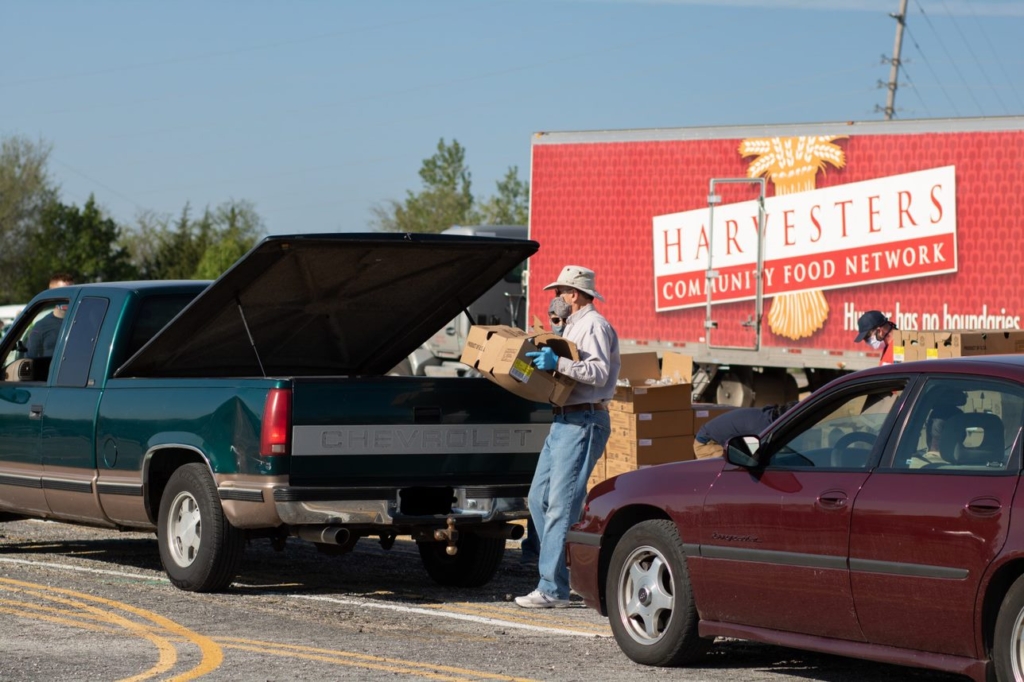
    Throughout the pandemic, families have turned to food banks for help. Harvesters, a private food bank, saw the amount of food distributed increase from 54 million pounds in 2019 to 65 million in 2020. In this picture, food is distributed at a drive-in in Kansas City, Kansas. (Harvesters — The Community Food Network).

    BY:  Ohio Capital Journal

    After Congress ended pandemic food assistance in February, 70,000 older Ohioans have seen food benefits slashed to $23 a month, in some cases down from $280.

    That has many making excruciating choices between food, medicine and utilities like electricity and gas, Lisa Hamler-Fugitt, executive director of the Ohio Association of Foodbanks, said Wednesday.

    And while it’s dire for anybody to live in hunger, that’s especially true the older you are, she said, because insufficient nutrition exacerbates conditions such as diabetes and depression and can take away seniors’ ability to live on their own. The end of COVID-era enhancements to benefits under the Supplemental Nutrition Assistance Program — or SNAP — has added to the already increasing number of older Ohioans seeking help at Ohio’s groaning food pantries, Hamler-Fugitt said.

    “They’re the canaries in the hunger coal mine,” she said, explaining that because most older Ohioans live on fixed incomes, they can’t earn their way out of food insecurity. “When they join the food line, they’re not leaving until they go into the nursing home or they pass away.”

    To help low-income people deal with the economic shocks from the coronavirus epidemic, Congress and the Trump administration in 2020 enhanced benefits under SNAP, the program formerly known as food stamps, and it eased eligibility to include households with somewhat higher incomes. And by literally putting food on the table, it had a big effect on poverty, the Center on Budget and Policy Priorities reported.

    “The temporary benefits pushed back against hunger and hardship during COVID,” the report said. “A study estimated that (enhanced allotments) kept 4.2 million people above the poverty line in the last quarter of 2021, reducing poverty by 10 percent — and child poverty by 14 percent — in states with (enhanced allotments) at the time. The estimated reduction in poverty rates due to (enhanced allotments) was highest for Black and Latino people.”

    But last December, Congress and the Biden administration decided to end the enhancements effective in February.

    “This change was made as part of a bipartisan compromise that created a permanent Summer Electronic Benefit Transfer (EBT) program to provide grocery benefits to replace school meals for some 30 million children in low-income families when schools are closed in the summer — a time when families with school-aged children are at higher risk for food insecurity,” the Center on Budget and Policy Priorities reported.

    Hamler-Fugitt said that in Ohio, the group over 60 was particularly hard hit in part because it’s an aging state. It has the 18th-highest percentage of residents over 65, for example.

    In some cases, seniors don’t have support systems and some are even supporting others, such as grandchildren and great-grandchildren. And the older one becomes, the more health complaints accumulate, often making it impossible to perform many of the jobs that are available.

    Hamler-Fugitt said her agency has been hearing about the real-life consequences of cutting back food benefits to older Ohioans.

    “You just can’t even believe these horror stories,” she said. “We’re interviewing them now about what their coping strategies are and it’s really, really scary. Before they had about $2 a meal — that was a best-case scenario. Now it’s 75 cents a day. That’s 25 cents a meal.”

    She explained that the permanent fix to the problem is at the federal level, where providing the U.S. Department of Agriculture with more resources could make the enhanced benefits permanent.

    But over the short term, advocates for the poor are asking the Ohio General Assembly to pony up $21 million for each of the next two years to ensure that every eligible Ohio household has at least a $50 monthly SNAP benefit.

    “The economic consequences of this for an aging state like Ohio are just huge,” Hamler Fugitt said.

    _____________________________

    MARTY SCHLADEN

    Marty Schladen has been a reporter for decades, working in Indiana, Texas and other places before returning to his native Ohio to work at The Columbus Dispatch in 2017. He’s won state and national journalism awards for investigations into utility regulation, public corruption, the environment, prescription drug spending and other matters.

    MORE FROM AUTHOR

  • Meijer extending SNAP benefits through March 31 for in-store produce purchase

    Meijer extending SNAP benefits through March 31 for in-store produce purchase

    Loveland, Ohio – The Ohio Department of Job and Family Services (ODJFS) announced that changes in federal law mean that February will be the last month of emergency Supplemental Nutrition Assistance Program (SNAP) allotments. 

    However, through March 31, Meijer is offering SNAP customers a 10 percent discount on produce purchased in-store, helping families stretch their dollars even further on fresh, healthy food. More info:

  • Federal Government to End SNAP Emergency Allotments After February

    Federal Government to End SNAP Emergency Allotments After February

    Ohio Department of Job and Family Services (ODJFS) Director Matt Damschroder has announced that changes in federal law mean that February will be the last month of emergency Supplemental Nutrition Assistance Program (SNAP) allotments. These are extra monthly payments the federal government created in response to the COVID-19 pandemic. In general, it ensures all households receive the maximum allotment for their household size. Beginning in March, recipients will receive only their one, normal monthly payment.

    Here are examples of how the change will impact people:

    • Individual normally entitled to the minimum allotment of $23 per month has been receiving an additional $258 per month to receive the maximum allotment of $281.
    • Household of 3 normally entitled to $180 per month has been receiving an additional $560 per month to receive the maximum allotment of $740.
    • Household of 4 normally entitled to $939 per month (maximum allotment) has been receiving an additional $95 per month, for a total of $1,034.

    “Recently passed federal legislation is bringing the temporary SNAP allotment to an end after February,” said Damschroder. “We will be communicating to recipients, county agencies, and our partners such as foodbanks, that normal SNAP payment will resume in March.”

    The Supplemental Nutrition Assistance Program is a federally funded program meant to supplement the food budget of families in need so they can purchase healthy food and move towards self-sufficiency.
    Eligibility, as well as the normal monthly allotments, vary based on factors such as income and household size.

    The Families First Coronavirus Response Act allowed states to request emergency allotments for households participating in SNAP. As a result, ODJFS has been providing emergency allotments to SNAP households since March 2020. Congress recently passed the Consolidated Appropriations Act of 2023, which ended the program.

    The federal announcement means the last emergency allotment will be paid in late February, and beginning in March, recipients will receive only their one, normal monthly payment, which is typically loaded onto an electronic benefits card. As this is a federal change, there are no fair hearing rights or fair hearing benefits on the ending of the SNAP emergency allotments.

    Recipient can manage their benefits by going to https://benefits.ohio.gov/ or by contacting their county Department of Job and Family Services (JFS).