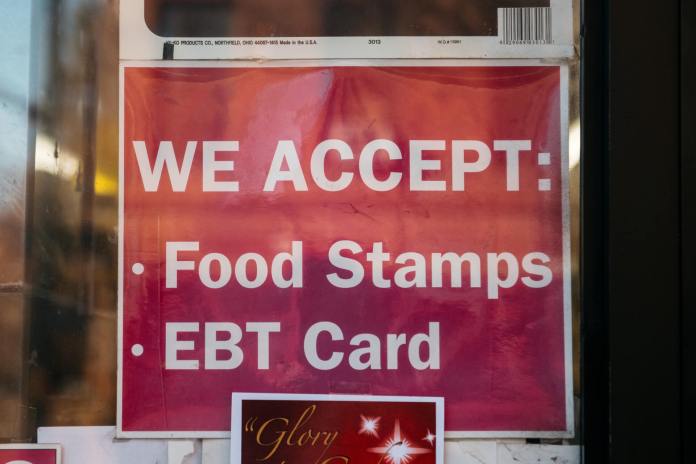
Tag: Supplemental Nutrition Assistance

  • Ohio economists strongly agree that sliding-scale public benefits are best

    Ohio economists strongly agree that sliding-scale public benefits are best

    Photo by Scott Heins/Getty Images.

    By:  Ohio Capital Journal

    It seems like it should be common sense: When you provide a benefit only up to a certain, hard income level, it creates a cliff that gives a strong disincentive for a person to try to earn more.

    The Ohio Department of Job and Family Services recently took steps away from that approach and a panel of economists strongly agreed with the move.

    Previously, Ohioans were eligible for the state’s Supplemental Nutrition Assistance program, or SNAP, only if they earned 130% or less of federal poverty guidelines. For a family of four, that’s $40,560.

    Earlier this month, the Department of Job and Family Services adjusted that, stepping down food stamp benefits along a sliding scale until a family is making 200% of federal poverty guidelines, or $62,400 for a family of four.

    “Fear of losing food benefits can be a deterrent to taking a new job, working more hours, or even accepting a promotion,” ODJFS Director Matt Damschroder said in a statement announcing the change. “Instead of an all-or-nothing approach, we are creating a sliding scale that encourages people to earn more by slowly reducing their benefits as their income grows. This provides an incentive to accept promotions and pay raises knowing they won’t immediately lose benefits.”

    A panel of Ohio economists appear to heartily agree, according to a survey that was released on Oct. 28. They were asked about “benefits cliffs,” or providing them at a certain level then abruptly cutting them off once an income threshold is reached.

    GET THE MORNING HEADLINES.

    Asked if benefit cliffs “caused by strict income requirements for public benefits create significant barriers to career advancement for low-income workers,” all 19 economists agreed, according to the survey conducted by Scioto Analysis.

    “People make an economically rational decision, at least in the short run, to turn down raises or promotions that result in loss of a much more significant public benefit,” Bill Lafayette of Regionomics said in the comments section of the survey.

    The economists were somewhat more mixed when asked if the changes enacted by ODJFs would “lower barriers to work for low-income people.”

    Thirteen agreed, while six were uncertain or had no opinion.

    “Eliminating the ‘benefits cliff’ is an efficient policy that reduces disincentives to work,” wrote Kevin Egan of the University of Toledo. “Moreover, it is a fair policy change to gradually reduce SNAP benefits so no households find themselves in such an unfair position.”

    But Kay Strong, an independent economist, said barriers to work extend well beyond facing benefits cliffs.

    “Barriers to work for low-income workers don’t occur solely on the supply side of the market,” she said. “Employers create barriers through their choice of workers, scheduling of workers, and willingness to assist employees over and around occasional personal obstacles that hinder workers.”

    YOU MAKE OUR WORK POSSIBLE.

    ____________
    Marty Schladen
    Marty Schladen

    Marty Schladen has been a reporter for decades, working in Indiana, Texas and other places before returning to his native Ohio to work at The Columbus Dispatch in 2017. He’s won state and national journalism awards for investigations into utility regulation, public corruption, the environment, prescription drug spending and other matters.

    Ohio Capital Journal is part of States Newsroom, the nation’s largest state-focused nonprofit news organization.

    MORE FROM AUTHOR

  • License amnesty program nets big gains for low-income drivers

    License amnesty program nets big gains for low-income drivers

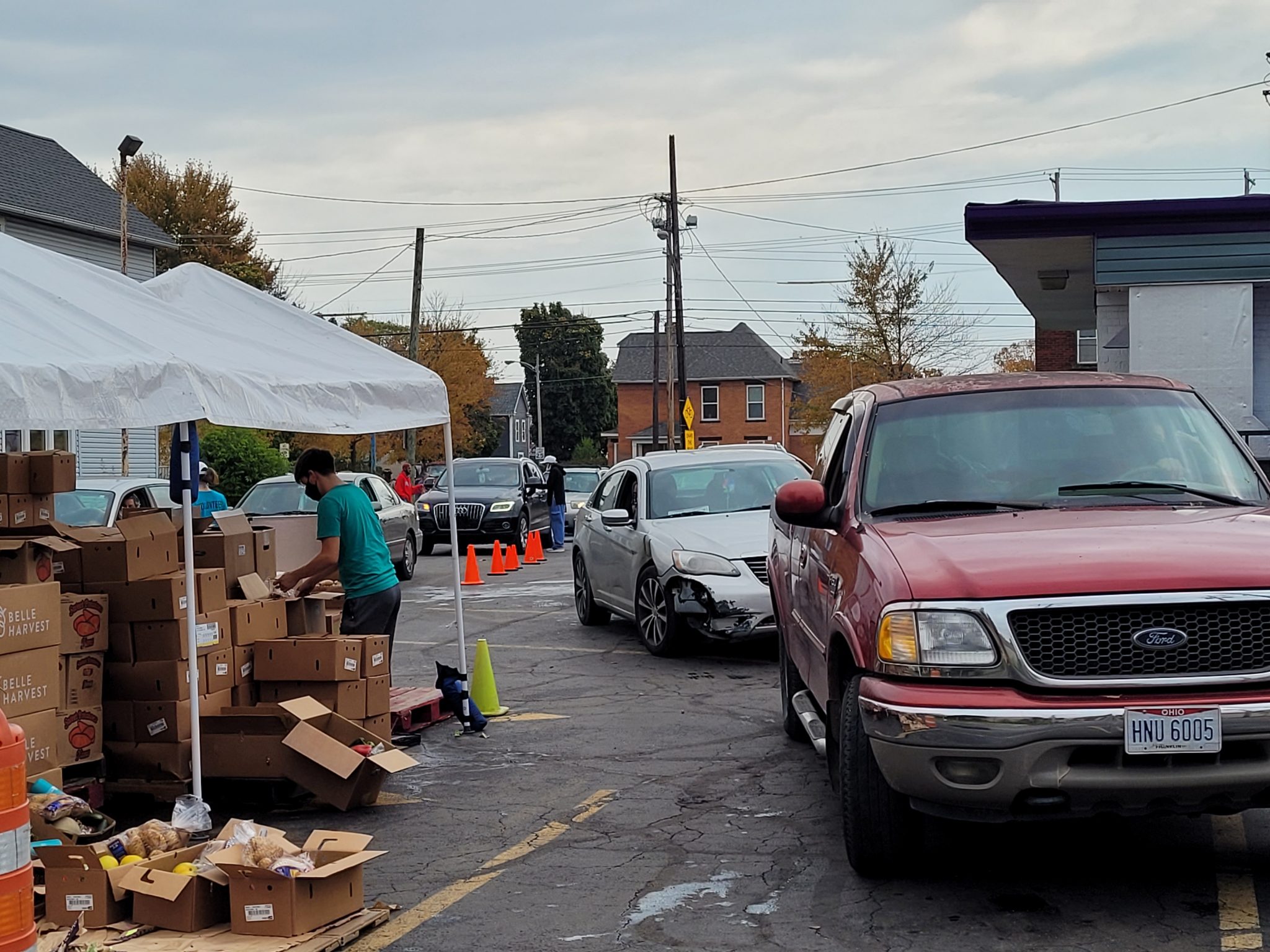
     Two lines of cars wait for food assistance at the All People’s Fresh Market in Columbus. Photo by Marty Schladen, Ohio Capital Journal.

    BY:  Ohio Capital Journal

    Nearly a quarter-million Ohio drivers have taken advantage of a program started at the end of 2020 that is intended to reduce license-reinstatement fees or waive them altogether, the Ohio Poverty Law Center said Monday.

    The group released an analysis of the amnesty program, a bipartisan measure passed by the legislature. It found that nearly 223,000 drivers have participated and saved more than $136 million, with an average individual savings of $612.

    “The program has provided a lot of relief from the financial barriers that prevent hundreds of thousands of lower-income Ohioans from driving legally,” Zack Eckles of the poverty law center said during a virtual press conference. “Driving is essential for economic participation in the state of Ohio.”

    Suspensions stemming from driving under the influence of alcohol, drugs or with deadly weapons are not eligible for the amnesty. Instead, the program is aimed at people who just don’t have the funds to pay the fees to reinstate their licenses after being suspended for offenses such as driving with no proof of insurance.

    “Although reinstatement fees are distinct from punitive fines, they have many characteristics of a fine,” the report said. “For example, they vary by the type of offense or increase in amount for repeated offenses, and they can be extremely burdensome. One particularly punitive reinstatement fee is for non-compliance suspensions, which occur when a driver does not show proof of insurance at a traffic stop or at the time of an accident. These non-compliance suspensions carry reinstatement fees of $100 for the first offense, $300 for the second offense, and $600 for the third and any subsequent offenses within a five-year period.”

    To help ensure that only people who can’t afford reinstatement fees get reductions, the program requires that suspended drivers wait 18 months after at least one of their suspensions expire before they’re eligible. Presumably, people who can afford to pay won’t wait that long, but Eckles faulted the rule for holding those without funds “hostage” for 18 months before they can clear their fees and drive legally.

    People eligible for Medicaid, Supplemental Security Income, Ohio Workers First, Supplemental Nutrition Assistance or the VA Pension Benefit are eligible to have their reinstatement fees canceled and don’t have to wait 18 months because their eligibility for those programs demonstrates their financial need. However, Ohioans eligible for the waiver made up only about 5% of those who have participated in the amnesty program.

    Benefits of the amnesty extend well beyond making it easier for huge numbers of Ohioans to drive legally to work, school, medical appointments and the grocery store.

    Of the drivers applying for fee reductions, 85% paid their fees in full, paying $23 million to the Bureau of Motor Vehicles that it otherwise likely wouldn’t have collected. And, with an estimated 75% of those with suspended licenses continuing to drive illegally, the amnesty program probably has greatly reduced the number of uninsured drivers because participants have to furnish proof of insurance to participate.

    But even though nearly a quarter-million Ohioans participated in the program, that’s only a third of 748,000 that the BMV notified that they were eligible.

    That has implications beyond increasing the number of legal drivers on Ohio roadways. The Legal Aid Society of Cleveland last year estimated that about 1 million Ohioans have debt-related license suspensions. With Ohio’s heavily gerrymandered legislature passing one of the strictest voter ID laws in the country, that could have a huge impact in a state with about 8 million registered voters.

    To improve participation in the amnesty program, the Ohio Poverty Law center made three recommendations:

    • Standardize reinstatement fees at $25
    • Eliminate suspensions strictly resulting from unpaid fines and fees. “Driver’s license suspensions should only be imposed for dangerous driving, not for a person’s inability to pay a fee,” the report said.
    • Expand the program so that all 14% of Ohioans living in poverty are eligible for full waivers

    ______________________________

    MARTY SCHLADEN

    Marty Schladen has been a reporter for decades, working in Indiana, Texas and other places before returning to his native Ohio to work at The Columbus Dispatch in 2017. He’s won state and national journalism awards for investigations into utility regulation, public corruption, the environment, prescription drug spending and other matters.

    MORE FROM AUTHOR