Tag: Supreme Court

  • GUEST EDITORIAL: Banning TikTok enables online censorship

    GUEST EDITORIAL: Banning TikTok enables online censorship

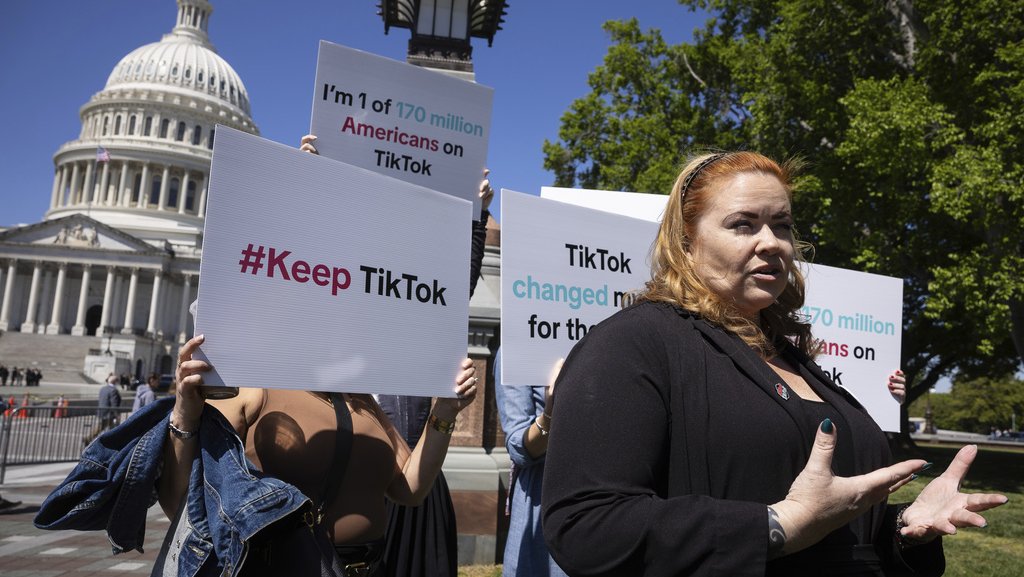
    Content creators demonstrate in front of the U.S Capitol in 2024 in opposition to proposed legislation banning TikTok. Francis Chung/POLITICO via AP Images

    From the Freedom of the Press Foundation

    The Supreme Court yesterday upheld the federal law passed last year to ban TikTok, accepting the government’s arguments that national security threats posed by the foreign ownership of TikTok’s parent company justify the ban.

  • Republicans in Congress shy away from campaigning on national abortion platform

    Republicans in Congress shy away from campaigning on national abortion platform

    BY: JENNIFER SHUTT – Ohio Capital Journal

    WASHINGTON — Republicans, hoping to flip control of Congress in the November elections, appear to have decided against campaigning on a unified abortion platform that would specify exactly what conservatives plan to do if given control of the U.S. House and Senate.

    Yet Republicans in Congress have written dozens of proposals that, if passed, would restrict abortion nationwide. GOP lawmakers this session have introduced more than 153 abortion-related bills that party leaders could point to as evidence of what Republicans would try to pass on the national level if they trounce Democrats at the polls.

    They include legislation that would define life as beginning at the moment of fertilization, prohibit insurance coverage for abortions, and make it a crime punishable to up to five years in prison for doctors who perform abortions after a heartbeat is detected, generally at about six weeks.

    But so far, Republicans have opted against a cohesive national campaign strategy on abortion, following the decision by the U.S. Supreme Court in June to overturn the landmark 1973 Roe v. Wade case. Many Senate Republicans are brushing aside questions about whether they would take up a nationwide abortion bill, citing as a hurdle the Senate filibuster that means bills need 60 votes to advance.

    Republican leaders are leaving it up to each House or Senate candidate to tout their own bills and views while the party wrestles with whether the matter should be left solely to state lawmakers or if Congress has a role to play.

    “It’s one thing that we are debating within the conference,” Iowa Republican Sen. Joni Ernst said of a nationwide abortion bill. “But at the same time, most of us do believe that the Dobbs decision was the right decision, and it’s returning that authority to our state and local governments. That’s our system of federalism.”

    Rep. Cathy McMorris Rodgers, a Washington Republican who has become one of her party’s leading voices on abortion, said during a brief interview the GOP won’t put forward a nationwide abortion policy ahead of the midterms.

    “We’re not in a position to move anything and the U.S. Supreme Court really sent it back to the states,” she said.

    But McMorris Rodgers didn’t rule out Republicans pushing nationwide legislation after the election if they regained control of Congress.

    “Not before the election,” she said, later adding “Well, yeah,” when asked if Republicans would put forward legislation afterward if they won.

    Back to the states

    Some Republicans have repeatedly said their opinion of the ruling on abortion in Dobbs v. Jackson Women’s Health Organization is that it sent the issue back to the states. Others have said it’s a topic for Congress to debate as well.

    The Supreme Court’s decision overturning the constitutional right to an abortion that stood for nearly 50 years said “the authority to regulate abortion is returned to the people and their elected representatives.”

    House GOP Whip Steve Scalise, a Louisiana Republican, said during a press conference in June shortly after the ruling was released that the decision “finally allows states and Congress to” pass new abortion legislation.

    But House GOP Leader Kevin McCarthy, of California, when asked what exactly Republicans would do on abortion, was vague, saying “we will continue to look wherever we can go to save as many lives as possible.”

    McCarthy did mention a bill from Missouri Republican Rep. Ann Wagner, though he didn’t say exactly which of her bills he’d bring up.

    Wagner is the primary sponsor of legislation that would require doctors to provide health care to “any infant born alive after an abortion” or attempted abortion. But she’s also sponsored several other bills related to abortion.

    Congress passed a similar bill, from Ohio GOP Rep. Steve Chabot, two decades ago. The legislation, titled the Born-Alive Infants Protection Act of 2002, passed the House on a voice vote and the Senate by unanimous consent.

    Senate Republicans insist there’s little chance of abortion legislation moving ahead.

    Florida GOP Sen. Rick Scott, chair of the National Republican Senatorial Committee, said he expects every candidate will decide how they want to talk about abortion.

    Fellow Floridian Sen. Marco Rubio, who is in a tight race against Democratic House Rep. Val Demings, said “Republicans will have different views about what restrictions and what the law should be.”

    “There are issues that are relevant to it that we can have a debate on here, but we have a filibuster that would make it impossible to pass a bill into law,” Rubio said.

    Louisiana Republican Sen. John Kennedy, who faces a relatively easy reelection campaign in the deeply red state, agreed with Rubio that any GOP abortion legislation is unlikely to move past the filibuster.

    “There aren’t 60 votes to do anything on the floor of the United States Senate with respect to abortion, pro abortion, anti-abortion, just anything to do with abortion,” Kennedy said.

    “What folks who feel strongly on both sides of the issues need to do now is go back to their states and, not put on a show, but put on the case,” he continued. “They’ve got to convince their state legislatures.”

    Retiring Missouri Sen. Roy Blunt said the issue belongs at the state, not the federal level.

    “I’ve always thought the best place to deal with this was at the state legislative level and that’s what I still think,” Blunt said.

    Senate Minority Leader Mitch McConnell, a Kentucky Republican, has said it’s “possible” that a GOP-controlled Congress could pass a nationwide abortion ban, though he’s sought to downplay the likelihood.

    McConnell said he would absolutely keep the chamber’s legislative filibuster in place, meaning the only way a nationwide abortion bill could get through is with a Republican super majority or some Democratic support.

    “We don’t want to break the Senate and that’s breaking the Senate,” he said of removing the filibuster.

    Referendum on abortion?

    The vastly different views on abortion as well as party leaders’ approach to campaigning on the issue has led Democrats to turn the midterm elections into something of a referendum on abortion.

    “This fall, Roe is on the ballot,” President Joe Biden said the day the Supreme Court released its decision overturning the 1973 Roe v. Wade ruling that established abortion as a constitutional right. “Personal freedoms are on the ballot. The right to privacy, liberty, equality, they’re all on the ballot.”

    Biden added that this November, voters “must elect more senators and representatives who will codify a woman’s right to choose into federal law once again, elect more state leaders to protect this right at the local level.”

    Tying the results of the midterm elections to abortion could be risky for Democrats, especially considering the president’s party almost always loses seats during the midterm elections.

    But the vast majority of Democrats have echoed Biden, telling voters that this November has become about more than who controls the U.S. House and Senate.

    “This is the future that MAGA Republicans clamor for; where women and same-sex couples are branded as second-class citizens,” Senate Majority Leader Chuck Schumer said on the floor. “If they succeed, they’ll take our country down a dark path from which there may be no return.”

    Democrats in Congress have voted on bills showing exactly how the party hopes to ensure patients throughout the country can terminate a pregnancy, or travel freely to states where the procedure remains legal.

    They’ve also brought up bills to ensure the right to same-sex and interracial marriages as well as the right to decide if and how to use contraception.

    Republican leaders, for the moment, don’t plan to say exactly which bills they’d vote on if they regain control of Congress.

    “They’re very nervous,” Virginia Democratic Sen. Tim Kaine told States Newsroom. “And their polling should tell them that, because we’re seeing this as dramatically affecting the polls in a number of our races.”

    Kaine played down the idea that making the midterms something of a referendum on abortion access could be problematic if Republicans regain control of Congress and then say the results show American voters want a nationwide abortion law.

    “Oh, they’re gonna do that anyway. Rock solid guarantee, no matter how the election goes,” Kaine said. “We’re very certain that’s coming and we’re trying to do all we can electorally and otherwise to head that off.”

    While Kaine expects voters will pick representatives based on more than abortion, he does expect the Supreme Court’s decision will drive voter turnout for Democrats.

    “And that’s why my Republican colleagues do not want to be talking about this or create any kind of a party plan that everybody’s supposed to go for,” he said.

    Senate Majority Whip Dick Durbin, an Illinois Democrat, criticized Republicans for not being clear with voters about how they plan to address abortion if given control of Congress.

    “The Republicans, if you’ll notice, have been surprisingly quiet, in my estimation, in reaction to Dobbs,” Durbin said. “I think they understand that these opinions may serve their base, but they don’t serve the party or the electorate at large.”

    Maryland Democratic Sen. Chris Van Hollen said the abortion ruling is one of a number of critical issues that voters will focus on this year, though he added, “it’s not the only issue on the ballot.”

    “I think the Dobbs decision is one of them, reproductive freedom is certainly a part of that. But it will also be a referendum on the kind of government you want, whether you want extremists like the MAGA crowd in the Congress,” Van Hollen said. “And it’s also going to be a debate on what we’re doing that’s within our power to reduce prices, like cutting the costs of prescription drugs.”

    Sen. Bob Casey, a Pennsylvania Democrat, said “most Americans know there’s a fork in the road and there’s basically two choices.”

    151 bills

    So far this Congress, Republicans have introduced 153 bills addressing abortion, with 94 in the House and 59 in the Senate.

    Wagner’s bill has the most co-sponsors with 203 GOP backers.

    Other legislation with broad Republican backing includes a bill from New Jersey Rep. Christopher Smith that would permanently prevent the federal government from spending money on abortions with an exception for rape, incest or the patient’s life. The legislation would also prohibit qualified health plans from including coverage for abortion, according to a summary.

    West Virginia Rep. Alexander Mooney sponsored a bill that would define life as beginning at “the moment of fertilization, cloning, or other moment at which an individual comes into being.” The bill clarifies that “nothing in this Act shall be construed to authorize the prosecution of any woman for the death of her unborn child.”

    And legislation from Pennsylvania Rep. Mike Kelly would make it a crime for health care providers to perform abortions after a heartbeat is detected, typically around six weeks. Doctors who perform the procedure would face up to five years in prison, a fine, or both if convicted.

    The bill creates an exception for a patient whose life is endangered by a physical diagnosis or injury, but not a “psychological or emotional” one.

  • U.S. Supreme Court rejects Texas suit that tried to overturn election results

    U.S. Supreme Court rejects Texas suit that tried to overturn election results

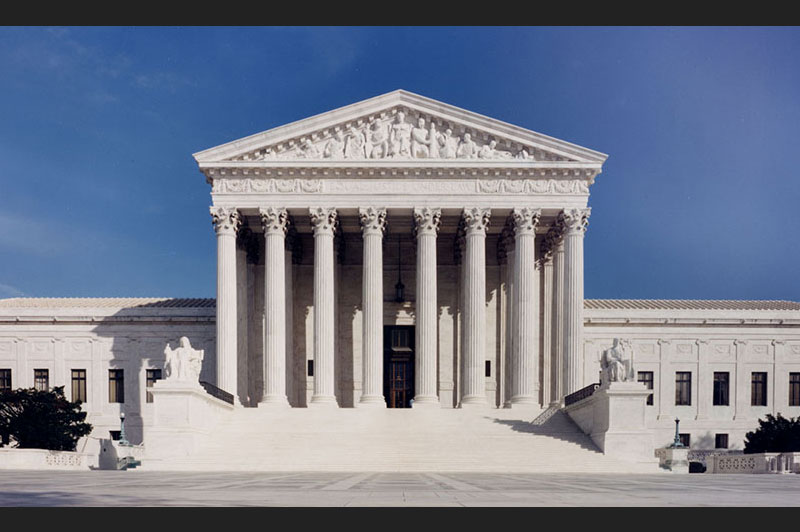
    The U.S. Supreme Court. Photo from Supreme Court website.

    By Ariana Figueroa and Ohio Capital Journal

    The Supreme Court on Friday turned aside a Texas lawsuit that sought to derail the presidential election results from four battleground states, despite pressure on the justices from President Donald Trump on social media.

    “Texas has not demonstrated a judicially cognizable interest in the manner in which another State conducts its elections,” according to the unsigned court order. “All other pending motions are dismissed as moot.”

    A second paragraph from Justice Samuel Alito that was joined by Justice Clarence Thomas stated: “In my view, we do not have discretion to deny the filing of a bill of complaint in a case that falls within our original jurisdiction. See Arizona v. California, 589 U. S. ___ (Feb. 24, 2020) (Thomas, J., dissenting). I would therefore grant the motion to file the bill of complaint but would not grant other relief, and I express no view on any other issue.”

    More than half of the Republicans in the U.S. House — 126, with 20 added on Friday after they were left out earlier by a “clerical error” — had signed on to back a brief put forth earlier this week by Texas Attorney General Ken Paxton. Paxton sued to invalidate the voting results of Michigan, Georgia, Wisconsin and Pennsylvania.

    From Ohio, the signers included Republican Congressmen Bob Gibbs, Jim Jordan, Bill Johnson, Bob Latta and Brad Wenstrup.

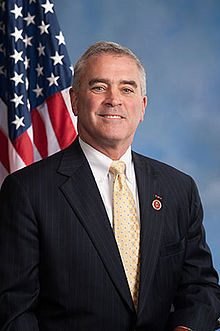
    Brad Wenstrup

    The new GOP signers included a member of leadership—House Minority Leader Kevin McCarthy of California, who joined a push spearheaded by Louisiana Rep. Mike Johnson.

    Other Republicans added Friday included Bill Posey of Florida; Doug Collins, Jody Hice and Barry Loudermilk of Georgia; Jim Hagedorn and Pete Stauber of Minnesota; Billy Long of Missouri; Mark Walker of North Carolina; Scott DeJarlais of Tennessee; and Morgan Griffith, Carol Miller and Alex Mooney of Virginia.

    Many Republicans in Congress have refused to directly state whether they believe  Trump was defeated by President-elect Joe Biden on Nov. 3. Some have instead said that they support the president’s decision to challenge the election results in the courts.

    Paxton alleges that officials in Michigan, Georgia, Wisconsin and Pennsylvania illegally changed voting laws, which caused voting irregularities and changed the outcome of the 2020 presidential election.

    Trump made similar allegations on Twitter and on Friday he told the justices what they should do.

    “If the Supreme Court shows great Wisdom and Courage, the American People will win perhaps the most important case in history, and our Electoral Process will be respected again!,” he tweeted.

    Trump earlier this year nominated Justice Amy Coney Barrett to the high court, shifting it to a conservative majority.

    Due to the pandemic, many states lobbied voters to submit absentee ballots, so Americans could maintain safety guidelines.

    The FBI, U.S. Attorney General and Department of Justice have repeatedly stated that there is no evidence of voter fraud or election irregularities. On Monday, members of the electoral college will meet in statehouses to cast their ballots, confirming Biden’s win.

    Members of the U.S. Senate on Friday failed to mount a drive to back the Texas suit similar to that of the House GOP.

    Sen. Susan Collins, (R-Maine), expressed doubt to reporters on Capitol Hill that the lawsuit would succeed.

    “I don’t think it’s likely to prevail given what the Supreme Court did in the Pennsylvania case, but I’m not familiar with the details of the lawsuit,” she said, according to pool reports.

    Sen. Josh Hawley, (R-Mo.), told reporters that the Supreme Court could possibly find that the case has no standing.

    He added that there’s not an attempt among Senate Republicans to do the same.

    “My guess is it’s just nobody here sort of rounded up the troops,” he said. “Usually the way these things work on the amicus brief side… is somebody takes the lead and then says ‘I’ll write it and then I’ll get people to sign on.’ This was a pretty short fuse thing.’”

    But some Senate Republicans said that the lawsuit is baseless and that states should not attempt to meddle in the affairs of other states.

    “I’m never surprised by the House of Representatives,” Sen. Lamar Alexander of Tennessee said, according to pool reports.

    Earlier Friday, he appeared on NBC’s “Meet the Press,” where he questioned the legal argument underlying the Texas suit.

    “I mean, our position, my position, Republicans believe that states are in charge of elections. And Texas is a big state, but I don’t know exactly why it has a right to tell four other states how to run their elections,” said Alexander.

    A senior New Jersey Democrat, Rep. Bill Pascrell, chastised House Republicans who supported the Texas suit. Pascrell called for Speaker of the House Nancy Pelosi (D-Calif.), to not swear in the returning and new GOP members who signed the brief into the 117th Congress.

    “Simply stated, men and women who would act to tear the United States government apart cannot serve as Members of the Congress,” he said in a statement.

  • 2020 Loveland area Election results

    2020 Loveland area Election results

    Here are election results as of November 23 as reported by Clermont, Hamilton, and Warren counties. The State-wide and U.S. Congress results are those reported from the Ohio Secretary of State.

    If you notice any errors in this report please EMAIL us so we can make corrections.

    The Voter Turnout in Clermont County was 76.71%

    The Voter Turnout in Hamilton County was 72.44%

    The Voter Turnout in Warren County was 81.8%


    For President

    Clermont County

    Joe Biden 34,092 (30.79%)

    Donald Trump 74,570 (67.36%)

    Hamilton County

    Joe Biden 246,266 (57.15%)

    Donald Trump 177,886 (41.28%)

    Warren County

    Joe Biden 46,069 (33.76%)

    Donald Trump 87,988 (64.49%)

    State-Wide

    Joe Biden 2,603,681 (45.18%)

    Donald Trump 3,074,418 (53.35%) 

    The AP reported National Totals on November 23:

    Joe Biden has 306 Electoral College Votes –  51.1% (79,896,713 total votes)

    Donald Trump has 232 Electoral College Votes 47.2% (total 73,826,657)
    ccc
    270 Electoral College Votes are needed to win
    ccc
    The Associated Press has called this race for Joe Biden · Learn more
    ccc
    On Monday, November 23 the U.S. General Services Administration formally “Ascertained” Biden as the “Apparent Winner” and will move ahead with the Presidential transition proceedings.
    ccc

    FOR REPRESENTATIVE TO CONGRESS (1ST DISTRICT)

    Democrat Kate Schroder

    Hamilton County 130,362 (51.85%)

    Warren County 41,660 (31.11%)

    Total 166,061 (44.55%)

    Republican Steve Chabot

    Hamilton County 112,489 (44.74%)

    Warren County 87,071 (65.01%)

    Total 193,637 (51.95%)

    FOR REPRESENTATIVE TO CONGRESS (2ND DISTRICT)

    Democrat Jaime M. Castle

    Clermont County 29,366 (27.09%) 

    Hamilton County 93,554 (54.11%)

    Total 143,436 (38.90%)

    Republican Brad Wenstrup

    Clermont County 78,985 (72.86%)

    Hamilton County 79,319 (45.88%)

    Total 225,271 (61.09%)


    State Races

    For State Representative (65th District)

    Republican Jean Schmidt 44,435 (65.08%)

    Democrat Alan Darnowsky 23,019 (33.71%)

    FOR STATE SENATOR (8TH DISTRICT)

    Democrat Daniel Brown74,565

    Republican Louis W. Blessing III 112,313

    For State Senator (14th District)

    Republican Terry A. Johnson 75,051

    Democratic Ryan Ottney 31,089

    FOR STATE REPRESENTATIVE (27TH DISTRICT)

    Democrat Sara Bitter 33,339

    Republican Tom Brinkman 37,723

    FOR STATE REPRESENTATIVE (28TH DISTRICT)

    Democrat Jessica E. Miranda 35,353

    Chris Monzel 33,039

    FOR STATE REPRESENTATIVE (29TH DISTRICT)

    Cindy Abrams 43,320

    Unopposed

    FOR STATE REPRESENTATIVE (30TH DISTRICT)

    Bill Seitz 42,269

    Tom Roll 16,426

    FOR STATE REPRESENTATIVE (31ST DISTRICT)

    Democrat Brigid Kelly 42,180

    Unopposed

    FOR STATE REPRESENTATIVE (32ND DISTRICT)

    Democrat Catherine D. Ingram 42,055

    Unopposed

    FOR STATE REPRESENTATIVE (33RD DISTRICT)

    Democrat Sedrick Denson 41,500

    Republican Mary Hill 13,901

    FOR STATE REPRESENTATIVE (54th DISTRICT)

    Morgan Showen 22,261 (38.04%)

    Paul Zeltwanger 36,261 (61.96%)

    FOR STATE REPRESENTATIVE (62nd House)

    Scott Lipps 54,802 (74.66%)

    Erin Rosiello 18,596 (25.34%)

    For State Representative (66th District)

    Adam C. Bird 30,976 (93.26%)


    State Supreme Court

    FOR JUSTICE OF THE SUPREME COURT (FULL TERM COMMENCING 1-1-2021)

    John P. O’Donnell 2,177,003

    Sharon L. Kennedy 2,667,548

    FOR JUSTICE OF THE SUPREME COURT (FULL TERM COMMENCING 1-2-2021)

    Jennifer Brunner 2,624,224

    Judi French 2,125,979


    Hamilton County

    FOR JUDGE OF THE COURT OF COMMON PLEAS (FULL TERM COMMENCING 1-1-2021)

    Heidi Rosales 179,070

    Melba Marsh 191,834

    FOR JUDGE OF THE COURT OF APPEALS (1ST DISTRICT)

    Ginger Bock 204,998

    Russell J. Mock 160,641

    FOR JUDGE OF THE COURT OF COMMON PLEAS (JUVENILE DIVISION) (FULL TERM COMMENCING 2-14-2021)

    Kari L. Bloom 206,415

    John M. Williams 159,635

    FOR JUDGE OF THE COURT OF COMMON PLEAS (FULL TERM COMMENCING 1-2-2021)

    Christian A. Jenkins 189,920

    Pat Dinkelacker 182,333

    FOR JUDGE OF THE COURT OF COMMON PLEAS (FULL TERM COMMENCING 1-4-2021)

    Chris Wagner 208,339

    Curt C. Hartman 153,252

    FOR JUDGE OF THE COURT OF COMMON PLEAS (FULL TERM COMMENCING 2-9-2021)

    Democrat Jennifer Branch 202,64

    Elizabeth Callan 159,525

    FOR JUDGE OF THE COURT OF COMMON PLEAS (FULL TERM COMMENCING 2-10-2021)

    Alan C. Triggs 198,81

    Stacey DeGraffenreid 163,225

    FOR JUDGE OF THE COURT OF COMMON PLEAS (FULL TERM COMMENCING 2-11-2021)

    Democrat Thomas O. Beridon 179,567

    Robert A. Goering 189,896

    FOR JUDGE OF THE COURT OF COMMON PLEAS (FULL TERM COMMENCING 2-12-2021)

    Wende Cross 202,503

    Ethna Marie Cooper 159,182

    FOR JUDGE OF THE COURT OF COMMON PLEAS (FULL TERM COMMENCING 2-13-2021)

    Alison Hatheway 213,554

    Charles J. Kubicki, Jr. 150,233

    FOR JUDGE OF THE COURT OF COMMON PLEAS (DRUG COURT DIVISION) (FULL TERM COMMENCING 1-3-2021)

    Nicole Sanders 207,310

    Kim Wilson Burke 153,529

    FOR JUDGE OF THE COURT OF COMMON PLEAS (PROBATE DIVISION) (FULL TERM COMMENCING 2-9-2021)

    Pavan Parikh 177,677

    Ralph Winkler 201,245

    FOR JUDGE OF THE COURT OF COMMON PLEAS (DOMESTIC RELATIONS) (FULL TERM COMMENCING 7-1-2021)

    Anne B. Flottman 177,888

    Amy Searcy189,943

    FOR COUNTY COMMISSIONER (FULL TERM COMMENCING 1-2-2021)

    Democrat Alicia Reece 212,638

    Republican Andy Black 187,263

    Herman J. Najoli18,843

    FOR COUNTY COMMISSIONER (FULL TERM COMMENCING 1-3-2021)

    Democrat Denise Driehaus 241,806

    Republican Matthew Paul O’Neill 174,088

    FOR PROSECUTING ATTORNEY

    Democrat Fanon A. Rucker 200,738

    Republican Joseph T. Deters 221,298

    FOR CLERK OF THE COURT OF COMMON PLEAS

    Democrat Aftab Pureval 237,825

    Republican Alex Glandorf 177,524

    FOR SHERIFF

    Democrat Charmaine McGuffey 218,878

    Republican Bruce Hoffbauer 198,454

    FOR COUNTY RECORDER

    Democrat Scott Crowley 216,427

    Republican Norbert A. Nadel 193,632

    FOR COUNTY TREASURER

    Democrat Jill Schiller 208,705

    Republican Charlie Winburn 201,650

    FOR ENGINEER

    Republican Eric Beck260,343

    Unopposed

    FOR CORONER

    Democrat Lakshmi Kode Sammarco 312,990

    Unopposed


    Clermont County

    For County Commissioner (Full term commencing 1-2-2021) (Vote for not more than 1)

    Republican Bonnie Batchler 75,570

    Democratic Jeff Richards 30,418

    For County Commissioner (Full term commencing 1-3-2021)

    David L. Painter Republican 83,912

    Unopposed

    For Prosecuting Attorney

    Mark J. Tekulve Republican 85,106

    Unopposed

    For Clerk of the Court of Common Pleas

    Acacia Uible Democrat 28,405

    Barbara Wiedenbein Republican 76,835

    For Sheriff

    Robert S. Leahy Republican 86,975

    Unopposed

    For County Recorder

    Deborah Clepper Republican 85,067

    Unopposed

    For County Treasurer

    Jeannie M. Zurmehly Republican 85,710

    Unopposed

    For County Engineer

    Jeremy Evans Republican 85,206

    Unopposed

    For Coroner

    Brian Treon Republican 85,431

    Unopposed

    For Member of the State Board of Education (10th District)

    Mary E. Binegar 38,804

    Brendan P. Shea 49,569

    For Judge of the Court of Appeals (12th District) (Full term commencing 1-1-2021)

    Matthew Byrne 76,347

    Unopposed

    For Judge of the Court of Appeals (12th District) (Full term commencing 2-9-2021)

    Robert A. Hendrickson 76,325

    Unopposed

    For Judge of the Court of Common Pleas (Probate/Juvenile Division) (Full term commencing 2-9-2021)

    James A. Shriver 80,189

    Unopposed

    Proposed Tax Levy (Renewal) Clermont County

    A renewal of a tax for the benefit of Clermont County for the purpose of the support of children services and the care and placement of children at a rate not exceeding 0.8 mill for each one dollar of valuation, which amounts to $0.08 for each one hundred dollars of valuation, for 5 years, commencing in 2021, first due in calendar year 2022.

    For the Tax Levy 74,985

    Against the Tax Levy 31,940

    Proposed Tax Levy (Renewal) Clermont County

    A renewal of a tax for the benefit of Clermont County for the purpose of the operation of community addiction services providers and community mental health services providers and the acquisition, construction, renovation, financing, maintenance, and operation of alcohol and drug addiction facilities and mental health facilities at a rate not exceeding 0.75 mill for each one dollar of valuation, which amounts to $0.075 for each one hundred dollars of valuation, for 5 years, commencing in 2021, first due in calendar year 2022.

    For the Tax Levy 70,089

    Against the Tax Levy 36,332

    Proposed Tax Levy (Renewal) Clermont County

    A renewal of a tax for the benefit of Clermont County for the purpose of providing or maintaining senior citizens services or facilities at a rate not exceeding 1.3 mills for each one dollar of valuation, which amounts to $0.13 for each one hundred dollars of valuation, for 5 years, commencing in 2021, first due in calendar year 2022.

    For the Tax Levy 77,585

    Against the Tax Levy 29,288


    Warren County

    County Commissioner 1-2-21

    Bob Stein 38,458 (29.64%)

    David G. Young 91,286 (70.36%)

    County Commissioner 1-3-21

    Shannon Jones 97,000 (100%)

    Unopposed

    Prosecutor Attorney

    David P. Fornshell 98,161 (100%)

    Unopposed

    Court of Common Pleas

    James L. Spaeth 97,945 (100.00%)

    Unopposed

    Sheriff

    Larry Lee Sims 98,248 (100.00%)

    Unopposed

    County Recorder

    Linda Oda 96,925 (100.00%)

    Unopposed

    County Treasurer

    Barney Wright 96,985 (100.00%)

    Unopposed

    County Engineer

    Neil Tunison 97,242 (100.00%)

    Unopposed

    Coroner

    Russell Uptegrove 96,839 (100.00%)

    Unopposed

    Judge of Court of Appeals (12th District) 1-1-2021

    Matthew Byrne 87,992 (100.00%)

    Unopposed

    Judge of Court of Appeals (12th District) 2-9-2021

    Robert A. Hendrickson 86,131 (100.00%)

    Unopposed

    Judge of the Court of Common Pleas (General Division)

    Robert Peeler 87,945 (100.00%)

    Unopposed

    Judge of the Court of Common Pleas (Probate and Juvenile)

    Joseph Kirby 89,762 (100.00%)

    Unopposed

    Little Miami LSD Tax Levy Renewal

    For the Tax Levy 11,255 (52.95%)

    Against the Tax Levy 10,002 (47.05%)


  • Supreme Court Lets Martin v. Boise Stand:  People Experiencing Homelessness Cannot Be Punished for Living in Absence of Adequate Housing or Sheler

    Supreme Court Lets Martin v. Boise Stand: People Experiencing Homelessness Cannot Be Punished for Living in Absence of Adequate Housing or Sheler

    Persons experiencing homelessness cannot be punished for sleeping outside on public property in the absence of adequate alternatives.


    Cincinnati, Ohio – This morning, the U.S. Supreme Court denied a petition by the city of Boise to review the case Martin v. Boise (formerly Bell v. Boise). This leaves in place earlier rulings by the 9th Circuit that persons experiencing homelessness cannot be punished for sleeping outside on public property in the absence of adequate alternatives.

    The Supreme Court’s decision, issued without comment, means the April 2019 ruling is binding in the 9th Circuit, covering nine states including most of the western states, and carries national influence.

    In a press release issued today, Josh Spring, Executive Director of the Greater Cincinnati Homeless Coalition said, “This is very important news, as our federal lawsuit filed last year by people experiencing homelessness and the Homeless Coalition continues to move forward here in the 6th Circuit.”  Their lawsuit aims to overturn City of Cincinnati policies criminalizing people experiencing homelessness outdoors and hopes to squash last year’s Common Pleas Court order making it an arrestable offense to experience homelessness outdoors anywhere in the Hamilton County including Loveland.

    The Law Center’s Executive Director, Maria Foscarinis, said, “Ultimately, our goal is to end homelessness through housing…so that no one has to sleep on the streets in the first place. We hope that the 9th Circuit decision will help communities find the political will to put that housing in place. Housing, not handcuffs, is what ends homelessness.”

    John Parvensky, Acting Executive Director of the National Coalition for the Homeless described this as a “victory”, saying, “…it will force communities to address homelessness proactively – through the development of an adequate supply of affordable housing, while providing safe and appropriate emergency shelter in the interim”.

    For the full text of the Law Center press release and links to documents from the case, click here.

    For the full text of the National Coalition press release click here.


    Oh Christmas Tree Oh Christmas Tree Why Not Give the Gift of Charity…


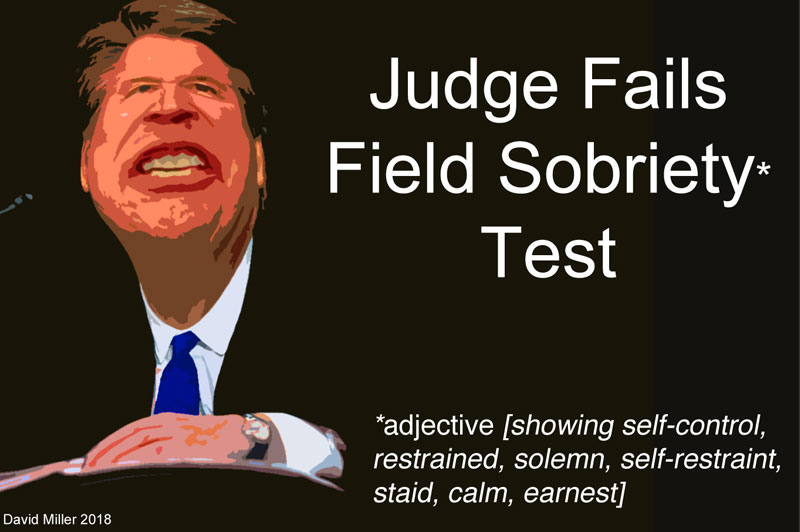
  • OPINION: Judge Brett Kavanaugh fails field sobriety test

    OPINION: Judge Brett Kavanaugh fails field sobriety test

    Loveland Magazine joins those who oppose the appointment of Judge Brett Kavanaugh to the U.S. Supreme Court because during his confirmation hearing he demonstrated he does not have the judicial temperament to sit in judgment of others in a sober and impartial manner.

    We submit his own testimony into evidence into the court of public opinion:

    And also provide this evidence and testimony of others:

    The Senate Should Not Confirm Kavanaugh 

    The National Council of Churches (NCC) (more than 40 denominations including most major Protestant and Eastern Orthodox denominations in the U.S.) calls for the withdrawal of the nomination of Judge Brett Kavanaugh to the Supreme Court of the United States.  We believe he has disqualified himself from this lifetime appointment and must step aside immediately.

    Retired U.S. Supreme Court Justice John Paul Stevens

    Why the ACLU Opposes Brett Kavanaugh’s Nomination to the Supreme Court

    Leadership Conference on Civil and Human Rights, a coalition of more than 200 national organizations committed to promoting and protecting the civil and human rights of all persons in the United States, and more than 180 undersigned organizations.

    73 National State and Local LGBT Organizations Oppose Confirmation of Judge Brett Kavanaugh to the Supreme Court

    League of Conservation Voters, Greenpeace USA, Friends of the Eartht, Sierra Club has urge Senate to reject Kavanaugh’s nomination.

    It is time for the Kavanaugh nomination to be withdrawn

    American Bar Association (400,000 members) and Yale Law School dean call for FBI investigation into Kavanaugh allegations

  • Sherrod Brown meets with President Trump’s Supreme Court nominee

    Sherrod Brown meets with President Trump’s Supreme Court nominee

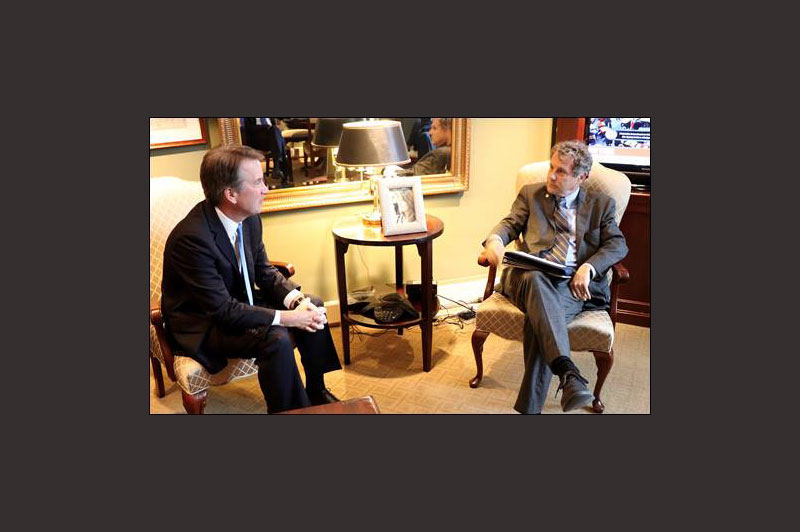
    Washington, D.C. – Today, U.S. Senator Sherrod Brown (D-OH) met with President Trump’s Supreme Court nominee, Judge Brett Kavanaugh. Brown has said he will not support any Justice who would take rights away from Ohioans. He asked questions of Kavanaugh about the judge’s record and views on everything from workers’ rights, to women’s rights, consumer rights, and health care. Brown’s office said he is continuing to carefully examine Kavanaugh’s record before making a final decision on how he will vote.

    “I’m already very troubled by the Supreme Court’s recent decisions stripping rights from Ohioans, and I have serious concerns about some of Judge Kavanaugh’s rulings and positions on health care for Ohioans with pre-existing conditions, and the rights of Ohio workers, women, and consumers,”Brown said.“I am continuing to listen to Ohioans and review Judge Kavanagh’s record as I make my final decision.”