Tag: surgeries

  • Details of Ohio’s “Responsible RestartOhio” plan

    Details of Ohio’s “Responsible RestartOhio” plan

    Columbus, Ohio – Ohio Governor Mike DeWine, Lt. Governor Jon Husted, and Director of the Ohio Department of Health Dr. Amy Acton, made several announcements yesterday regarding Ohio’s plan to restart Ohio’s economy during the ongoing COVID-19 pandemic.

    HEALTHCARE

    Beginning May 1, 2020, all medically necessary procedures that do not require an overnight stay in a healthcare facility or do not require inpatient hospital admission and minimize the use of personal protective equipment may move forward. This includes regular doctor visits, well-care checks, well-baby visits, out-patient surgeries, imaging procedures, and diagnostic tests. Dental services and veterinary services may also proceed if a safe environment can be established.

    Healthcare providers and facilities that plan to resume providing these services must adhere to infection control practices, have sufficient PPE, and talk with patients about the risk of contracting COVID-19.

    Surgeries and procedures that, if not performed, would cause a threat to a patient’s life, a threat of the spread of cancer or the permanent dysfunction of a limb or organ, the presence of severe symptoms causing an inability to perform activities of daily living, and/or the risk of rapidly worsening symptoms have always been permitted even if an overnight stay is necessary.

    “RESPONSIBLE RESTART OHIO”

    The “guiding principles” of the Responsible RestartOhio plan are protecting the health of employees, customers, and their families, supporting community efforts to control the spread of COVID-19, and responsibly getting Ohio back to work.

    “We put this plan together based on all the information we have about how dangerous COVID-19 still is right now, balanced with the fact that it’s also dangerous to have people not working,” said Governor DeWine. “COVID-19 is still out there. It’s still killing people. We’re asking Ohioans to be reasonable and rational. Please don’t take huge chances, and please use common sense when you go out and where you go out.”

    Are you finding this information is important to your daily life?

    Manufacturing, Distribution, and Construction Businesses

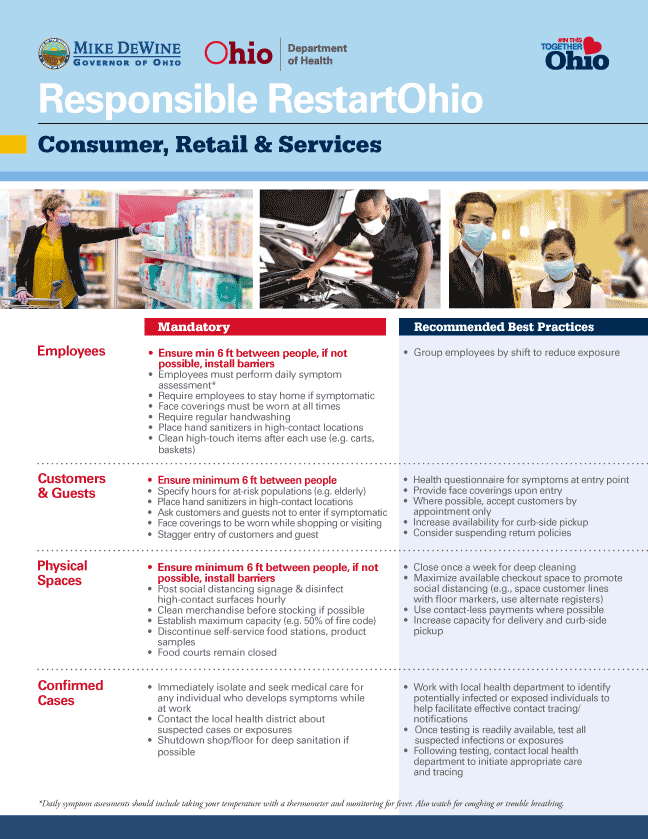
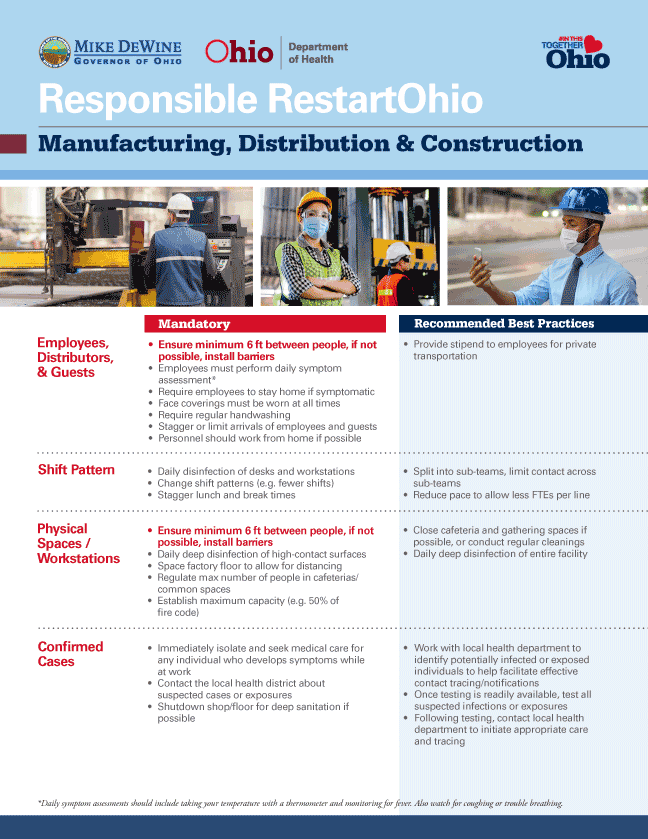
    Beginning on May 4, 2020, manufacturing, distribution, and construction businesses may reopen if these businesses can meet mandatory safety requirements (see graphic below) for customers and employees. The full Responsible RestartOhio plan for manufacturing, distribution, and construction can be found at coronavirus.ohio.gov/ResponsibleRestartOhio.

    General Office Environments

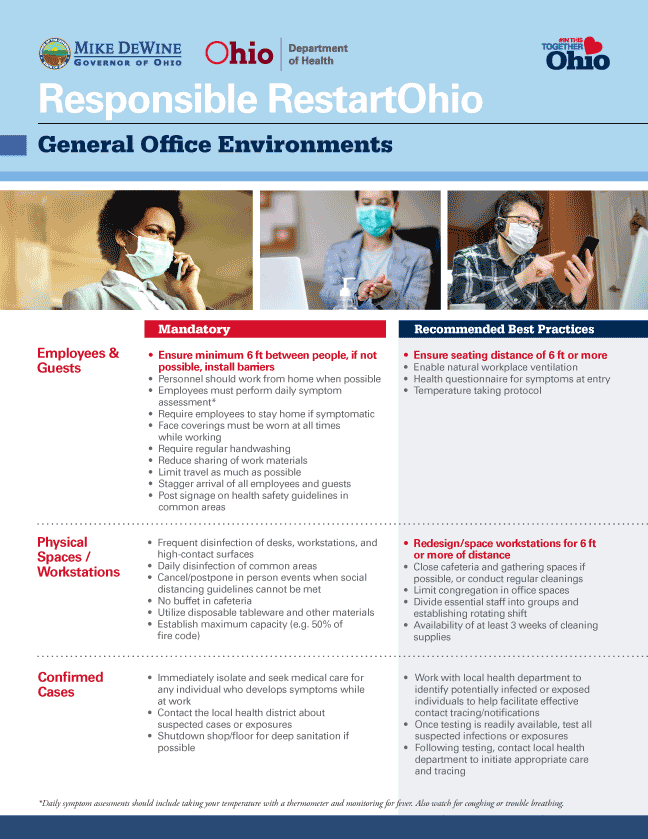
    Beginning on May 4, 2020, general office environments may reopen if these businesses can meet mandatory safety requirements (see graphic below) for customers and employees. The full Responsible RestartOhio plan for general office environments can be found at coronavirus.ohio.gov/ResponsibleRestartOhio.

    CONSUMER, RETAIL, and SERVICES

    Beginning on May 12, 2020, consumer, retail and services, may reopen if these businesses can meet mandatory safety requirements for customers and employees. (see graphic below) The full Responsible RestartOhio plan for consumer, retail, and services can be found at coronavirus.ohio.gov/ResponsibleRestartOhio.

    ALL BUSINESSES

    The general safe business practices that all businesses must follow as they reopen are:

      • Requiring face coverings for all employees, and recommending them for clients and customers at all times
      • Conducting daily health assessments or self-evaluations of employees to determine if they should work
      • Maintaining good hygiene at all times such as hand washing and social distancing
      • Cleaning and sanitizing workplaces throughout the day and at the close of business or between shifts
      • Limiting capacity to meet social distancing guidelines

    “I have an obligation as the Governor of Ohio to get people back to work and keep them safe. Opening everything up at once would not be consistent with the obligation to keep people safe,” said Governor DeWine. “Our Responsible RestartOhio plan is the best guarantee that Ohioans will feel safe going to stores and employees will feel safe going to work. I’m optimistic about our future, but we can’t be reckless.”

    CONTINUED CLOSURES

    Continued Business Closures Graphic

    The following types of establishments are ordered to remain closed due to their increased risk of potential COVID-19 exposure:

        • Schools and daycares
        • Dine-in restaurants and bars (carry-out is still permitted)
        • Personal appearance and beauty businesses
        • Older adult daycare serveries and senior centers
        • Adult day support or vocational rehabilitation services in group settings
        • Entertainment, recreation, and gyms

    For greater detail on the types of businesses that must stay closed, visit coronavirus.ohio.gov/ResponsibleRestartOhio.

    STAY AT HOME ORDER / LARGE GATHERINGS

    Because the danger of COVID-19 still exists, Ohio’s Stay at Home order will remain in effect to encourage Ohioans to continue making reasonable, rational decisions about leaving home.

    Although anyone is susceptible to getting sick with COVID-19, those who are 65 or older are encouraged to be especially careful, as are those with high-risk conditions such as chronic lung disease, moderate to severe asthma, heart conditions, diabetes, chronic kidney disease, or liver disease, as well as those who are immunocompromised or obese.

    Large gatherings of more than 10 people are still prohibited.

    MORE INFORMATION

    More detailed information on the Responsible RestartOhio plan can be found at www.coronavirus.ohio.gov/ResponsibleRestartOhio.

    Current Ohio and Local Data

    There are 16,325 confirmed and probable cases of COVID-19 in Ohio and 753 confirmed and probable COVID-19 deaths. A total of 3,232 people have been hospitalized, including 978 admissions to intensive care units. In-depth data can be accessed by visiting coronavirus.ohio.gov.

    CLERMONT COUNTY

    72 confirmed cases. 4 probable cases. 76 total cases. 47 recovered. 21 hospitalizations. 2 deaths.

    HAMILTON COUNTY

    1048 Hamilton County confirmed cases. 241 hospitalizations. 56 deaths. (Includes Cincinnati, Norwood, and Springdale.)
    WARREN COUNTY
    124 confirmed cases. 22 hospitalizations. 11 deaths.

    Video of yesterday’s full update of the Statehouse briefing, including versions with foreign language closed captioning, can be viewed on the Ohio Channel’s YouTube page.

    Are you finding this information is important to your daily life?

  • Mayo Clinic, Cincinnati Children’s announce rare congenital heart defect collaboration

    Mayo Clinic, Cincinnati Children’s announce rare congenital heart defect collaboration

    Cincinnati, Ohio –  Mayo Clinic’s Todd and Karen Wanek Family Program for Hypoplastic Left Heart Syndrome (HLHS) and Cincinnati Children’s Hospital Medical Center have announced their collaboration within the nationwide HLHS Consortium to provide solutions for patients with hypoplastic left heart syndrome.

    Hypoplastic left heart syndrome is a rare and complex form of congenital heart disease in which the left side of the heart is severely underdeveloped. Infants born with HLHS undergo a series of three surgeries to support the right side of the heart, which must work doubly hard to pump blood to the lungs and the rest of the body. The consortium’s regenerative research continues to look for safe and effective new therapies to further strengthen these young patients’ hearts, with the hope of delaying or eliminating the need for a heart transplant later in life.

    The consortium aligns regional “medical centers of excellence” and advocacy groups with the shared goal of finding solutions for people affected by congenital heart disease, including HLHS. The consortium, which was developed by Mayo Clinic’s Todd and Karen Wanek Family Program for Hypoplastic Left Heart Syndrome, works to sustain a continuous pace of research and innovation by bringing clinical trials and expertise to patients across the country.

    With a 135-year history serving pediatric patients, Cincinnati Children’s will participate in future HLHS Consortium clinical trials under the guidance of James Tweddell, M.D., executive co-director of the Heart Institute and director of cardiothoracic surgery at Cincinnati Children’s.

    “We’re excited to collaborate with Dr. Tweddell and the team at Cincinnati Children’s,” says Tim Nelson, M.D., Ph.D., director of the Todd and Karen Wanek Family Program for Hypoplastic Left Heart Syndrome. “They are not only a center of excellence for the early-stage HLHS surgeries, but they also provide high-quality, comprehensive care for teens and adults with congenital heart disease. We’re proud to work together with them to find new ways to strengthen the hearts of people with HLHS.”

    “A large portion of the patients that we care for have a single pumping chamber, and decreased function continues to plague a subset of our patients with single ventricle anatomy,” says Dr. Tweddell. “Dr. Nelson and the Wanek family have developed a cutting-edge research program into the use of autologous stem cells for maintenance and improvement of single ventricle function.”

    Dr. Nelson and his colleagues have developed techniques to isolate and amplify stem cells from umbilical cord blood, Dr. Tweddell explains. Then the cells are injected into the myocardium of single ventricle patients at the time of the second staged surgery.

    “Preliminary studies have shown the stem cell injections to be safe, and future studies will build on this experience while looking at the benefits of stem cell therapy. We are excited to collaborate with Mayo Clinic and the Wanek family on this important new strategy to improve the lives of some of our most challenging patients,” says Dr. Tweddell.

    Cincinnati Children’s is the ninth member of the HLHS Consortium, joining Mayo Clinic, Children’s Hospital of Philadelphia, Children’s Hospital Los Angeles, Children’s Minnesota, Children’s Hospital Colorado, The Children’s Hospital at OU Medicine, and Ochsner Hospital for Children, as well as the advocacy group Sisters by Heart.


  • Inspiring others to be THANKFUL for all of life’s blessings

    Inspiring others to be THANKFUL for all of life’s blessings

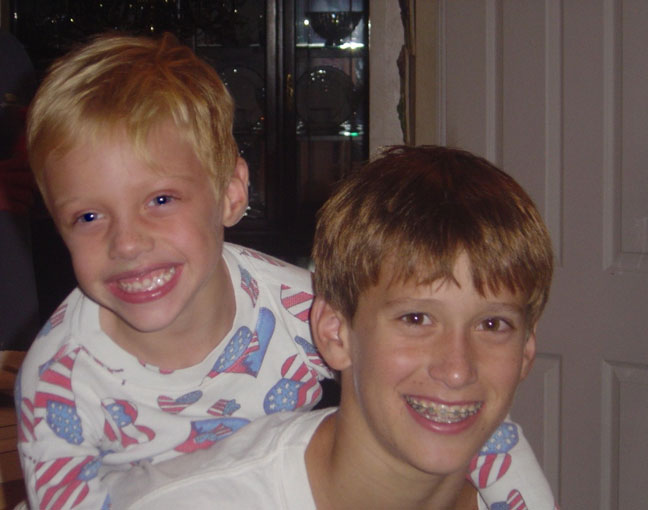
    Cam Louder and Anders Michelson when they were very young buddies

    Two old friends find strength to achieve life’s dreams

    through each other and their disabilities

    Unbreakable Friendship…

    by David Miller,
     

    Loveland and Milford, Ohio – It all began 15 years ago in Mitchell Farm’s subdivision on a small cul-de-sac street with 20 kids. Directly across the street were seven more children. Altogether there were 27 kids running around the neighborhood every single day going house to house. It was a magical time and what formed were friendships beyond your imagination. Especially for two young men named Anders Michelson and Cam Louder. The age gap didn’t make much of a difference. They were glued at the hips from the beginning. They found each other humorous, but the real attraction was soccer. 

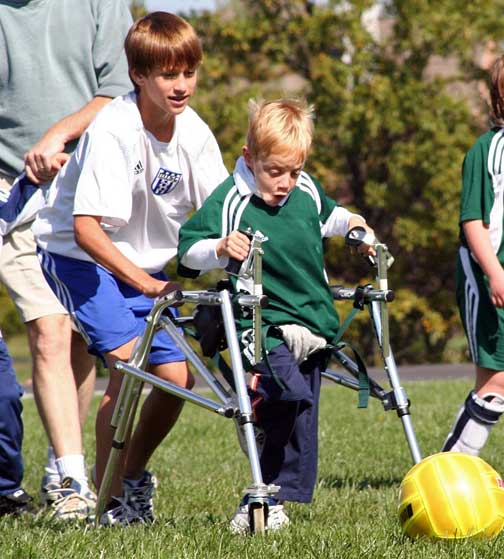
    Anders went to most of Cam’s soccer games. He rolled him everywhere in his walker in order for Cam to make goals.

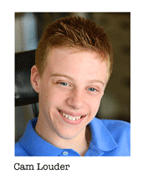
    What Cam and Anders didn’t understand during early childhood was that both would be significantly impacted playing sports because of their disabilities. Cam was born with cerebral palsy and as he aged his disability became progressively more difficult. At the age of 9, Anders was diagnosed with Type 1 Juvenile Diabetes. Cam recalls being very alarmed by the ambulances at Ander’s house when he would go into diabetic shock and the possibility of dying. On the other hand, Anders has agonized over Cam’s 17 surgeries and has been with him every step of the way throughout his journey.

    “Anders and his family have always been a blessing in our lives and Anders and Cam have been a blessing to each other,” said Karen Louder, Cam’s Mother. Anders would steal Cam most evenings and take him to all the Milford soccer games. Karen remembers Anders coming to most of Cam’s Top Soccer games. He rolled him everywhere in his walker in order for Cam to make goals. “I was simply amazed by Ander’s energy and dedication to soccer. He was struggling with Diabetes and he still didn’t give up on himself or Cam” Anders has been an avid soccer player since the age of 3. Anders always dreamed of being a professional soccer player, unfortunately, his diabetes drastically interfered with his lifelong goal.
    “Anders has been there for me every step of the way through my journey and I’m always going to be there for him,” said Cam Louder. “Anders and I push each to do the best we can and we feed off each other’s challenges.”

    Persevering Through His Disability

    Anders Michelson

    Disabilities have a way of affecting a person’s development, confidence, and attitude at different times of their lives. At the onset of Ander’s disease, he weighed only 60 pounds. In one week due to high blood sugar levels and ketones, he lost over 25% of his body weight and dropped to a frail 42 pounds at the age of 9. High blood sugar had a direct impact on Ander’s energy level and physical capabilities and playing on the Milford A team was difficult. Unfortunately, the following season he was cut, but that did not stop him from chasing his dream. He continued to play a year up in age on the B team for 3 years and worked even harder. At the age of 13, he moved back up to the Milford A team. Although small in stature Anders had incredible speed and over the next few years he worked on his technical skills for dribbling and finishing the ball. He became a better soccer player, but size was still a roadblock as he was approaching high school. His teammates were growing at a much faster rate. Most kids were weighing 150 lbs and 5.6 feet tall on average. Anders was under 5 feet tall and weighed under 100 pounds. He couldn’t even lift the bench bar as a freshman in high school which was only 45 pounds. Anders had no alternative, but to play on the Milford JV team for 2 years. However, in his junior year of high school, he made it to Milford’s Varsity Soccer Team. His entire high school career was dedicated to working hard in soccer and academics.

    Anders achieved 1st Team All-City and was awarded MVP of the 1st team All-City Game, Eagle Award, District Champions 2008 and 2011 and 2nd in Conference in 2009 and 2010

    While playing with the Milford Soccer team he achieved 1st Team All-City and was awarded MVP of the 1st team All-City Game, Eagle Award, District Champions 2008 and 2011 and 2nd in Conference in 2009 and 2010. Anders was contacted by several colleges while playing Varsity, but he didn’t have the full confidence to go for his soccer dreams. His disease was still in the forefront and he wondered about the longevity of an athletic career and how diabetes was currently affecting his ability, weight, and size. 

    In college, he started playing pick up soccer and noticed his abilities increased. He actually grew more into his body than ever expected and this is when his regret of choosing not to play soccer sank in.

    Over the years, Anders gained encouragement from his older brother Peter and he was able to consistently work out and gain muscle mass while attending Miami  University. In college, he started playing pick up soccer and noticed his abilities increased. He actually grew more into his body than ever expected and this is when his regret of choosing not to play soccer sank in. Yet, his disease still had a grip on him and his diabetes was actually spinning out of control. His Doctor gave him the bad news of sustaining over time an A1C of over 10 (measure of average blood glucose over the past two to three months) which meant Ander’s diabetes was poorly controlled and will eventually lead to major complications, such as heart attack, stroke, blindness or eye damage, foot infections or amputation, or kidney damage possibly leading to chronic dialysis or even sudden death. Doctors warned him if he didn’t control his diabetes that his life expectancy wasn’t predicted to go beyond 10 years.  

    He’d wake in the middle of the night thinking about his fate of dying young and not playing soccer. That’s when his epiphany began.

    After college Anders worked as a finance broker and continued battling the terrible progression of diabetes. After receiving the news about his A1C tests he had constant nightmares. He’d wake in the middle of the night thinking about his fate of dying young and not playing soccer. That’s when his epiphany began.

    Soccer was the answer

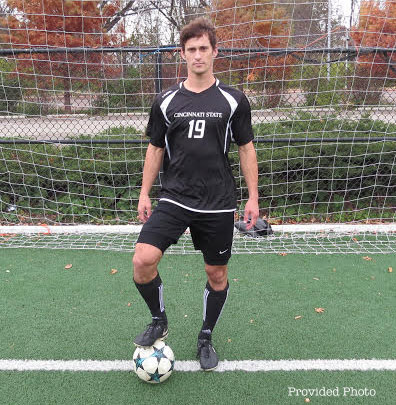
    With the full support of his family, Anders quit his job and began conditioning his body. Part of his conditioning plan was enrolling at Cincinnati State and playing college soccer. For the last year, he has been committed to grueling workouts which include a weekly routine of running 18 miles a week, 30 miles of bike resistance training, 6 hours of weights, 2 hours of abdominal work and 12 hours a week of soccer practice and games.

    Anders and I push each to do the best we can and we feed off each other’s challenges.

    He also trains and works out with his old buddy, Cam 6 hours a week at Five Seasons Sports Club. Anders goal is to increase Cam’s upper body strength for independence and to get Cam strong enough to walk with a Kaye Walker and out of his wheelchair. Cam said, “Anders and I push each to do the best we can and we feed off each other’s challenges.”

    As if this wasn’t physically demanding enough, Anders also has a physical job working for his family business, AquaMarine Pools and Spas part-time. 

    What’s Next…

    Looking back when entering college Anders was 5’10 145 lbs, now he comfortably sits at 6’1’’ 176 lbs. Doctors told Anders that if he could obtain A1C below a 7 his energy levels would triple. He thought it was impossible. Today Anders has achieved an A1C of 7.2 and feels the positive effects physically and mentally.

    My goal is to prove that your disability is not an inhibitor, it can be a motivator, differentiator.

    Perseverance has a way of paying off and now Anders will face one of his biggest challenges thus far; he has applied to the United Soccer League and is awaiting an invitation to try out for FC Cincinnati. He is refusing to allow diabetes to define him and is determined to chase down his lifelong dream of playing competitive soccer. Anders wants to become a role model for all people with disabilities. He said, “My goal is to prove that your disability is not an inhibitor, it can be a motivator, differentiator and improve your stamina and mental strength. I am beyond pumped up to prove my ability to FC Cincinnati.”

    Wishing him luck, Cam added, “I’m thankful for Ander’s lifetime friendship.”


    Follow along on Anders journey to FC tryouts on Instagram anders_michelson@instagram.com