Tag: survivors

  • Rape survivor advocates push for ‘right to know’ provisions in state budget

    Rape survivor advocates push for ‘right to know’ provisions in state budget

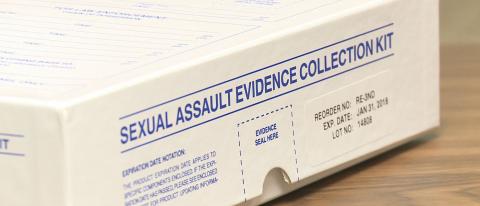
    Sexual assault examination kit. (photo from Department of Justice, Office of Justice Programs, Bureau of Justice Assistance)

    Ohio already tracks rape kits, but the House included a more robust system for keeping survivors informed. The Senate pulled it, arguing it should pass as a standalone bill.

    BY:  Ohio Capital Journal

    The Ohio House put language in the state budget granting sexual assault survivors the “right to know” what’s happening with their rape kit and developments in their case. The state Senate pulled that provision out. Not because they oppose the idea, but because they contend it should advance as a standalone bill. The state has taken numerous steps to track kits already, they add.

    But as budget negotiators prepare for what could be a long scuffle, advocates are working behind the scenes to get the proposal back into the finished product.

    The right to know

    Rep. Michele Grim, D-Toledo, submitted the budget amendment establishing the right to know. The language allows survivors to request updates about the testing of their kit including the date, results, whether they got a DNA profile and whether it matched one in the database, as well as the estimated date of destruction. Survivors can also request updates about the progress of their case, for instance if investigators decide to close or reopen it.

    “Removing that provision, I think that’s really disheartening to a lot of survivors,” she said. “They need a sense of closure, they need to make sure that they have the right to know the status of their rape kits, and the status of where it is and making sure that it’s processed in a timely manner.”

    “It’s a piece of them, you know?” Grim explained. “It’s something that, they feel like they own, because it’s a piece of them. It’s their DNA.”

    Ohio has a tracking system for kits. But Grim said survivors need to know more than just where it is — they need to know where their case stands.

    Thirty one states around the country have passed their own versions of right to know legislation, Ilse Knecht explained. The Joyful Heart Foundation policy and advocacy director heads up the organization’s effort to end the backlog of untested rape kits.

    The organization tracks states according to six pillars relating to how states inventory and test kits as well as inform survivors. Ohio has five of those six covered. The only one missing? Legislation ensuring a survivor’s “right to know” about their kit and case.

    Most survivors, Knecht said, leave the hospital having just gone through an intrusive, uncomfortable procedure right after a traumatic experience. And then they never hear what happened with their kit.

    “Think about if you went in to get a test for cancer or something, right?” Knecht said. “And you left and you could never get a hold of anybody who will tell you what the result was. I mean, it’s a little different — that’s a life and death kind of your medical situation, but I think that survivors feel like that.”

     Ohio Senate President Matt Huffman (R-Lima) and state Sen. Matt Dolan. (Photo by Graham Stokes for Ohio Capital Journal. Republish photo only with original story.) 

    Senate reticence

    In an emailed statement, Senate spokesman John Fortney explained why lawmakers removed the language.

    “Determining the best practice is paramount to these cases and to finding justice for survivors,” he said. “That discussion would be better served by a thorough debate and discussion devoted to a stand-alone bill.”

    Senate President Matt Huffman made a similar point while defending the inclusion of a higher-ed overhaul in the budget. He said lawmakers have looked to the budget as a vehicle for policy changes for years.

    “And my answer to that, and I think when I was Speaker Pro Tem the answer in the House was, we’re not just going to put a bill in the budget, a piece of policy, because we don’t want to talk about it, or it’s easier than having lots of committee hearings and witnesses and things like that,” Huffman explained.

    “Don’t just show up two weeks before the budget and say I got a good bill, throw it in there,” he added.

    It’s worth noting the Senate’s budget maintains a $1 million earmark to fund kit testing and related expenses for local law enforcement. The Senate also included a modest increase beyond the governor and House’s proposal to double spending on rape crisis centers.

    Carrying out the right to know changes would largely fall on the Attorney General’s office. The office didn’t request the changes in its budget request, and it already operates a kit tracking system.

    Didn’t we just do this?

    That tracking system comes from work that began under then-Attorney General Mike DeWine. As recently as 2018, Ohio had a backlog of untested rape kits that ran into the thousands. DeWine’s administration cleared that backlog, and Sen. Stephanie Kunze, R-Dublin, and Rep. Dorothy Pelanda, R-Marysville backed legislation directing the AG’s office to establish a tracking system.

    The system allows survivors to use a unique reference number to track the path of their kit from law enforcement agency to testing lab and back. That puts the onus on survivors to track their kit rather than requiring agencies to inform survivors at their request.

    Grim’s proposed changes also grant survivors more visibility into the investigative process.

    And although Ohio cleared its backlog of untested kits, the fact that the state had one at all gives Grim pause. “We need to make sure that there isn’t that issue again,” she said. To that end, her amendment would also require an annual audit and summary report prepared by the Attorney General’s office.

    The removal of the amendment is a setback, but Grim and Knecht say they’ll keep pushing for its inclusion in the final budget package.

    “It definitely needs to go back (in) in conference committee,” Grim said. “It’s a really important provision.”

    Follow OCJ Reporter Nick Evans on Twitter.


    Nick Evans
    NICK EVANS

    Nick Evans has spent the past seven years reporting for NPR member stations in Florida and Ohio. He got his start in Tallahassee, covering issues like redistricting, same sex marriage and medical marijuana. Since arriving in Columbus in 2018, he has covered everything from city council to football. His work on Ohio politics and local policing have been featured numerous times on NPR.

    MORE FROM AUTHOR

  • DeWine announces development of new sexual assault kit tracking system

    DeWine announces development of new sexual assault kit tracking system

    The “Ohio Attorney General’s Sexual Assault Kit Tracking System” will give those who have undergone a sexual assault forensic examination the option to track the status of their rape kit evidence online.

    Columbus, Ohio – Attorney General Mike DeWine announced Thursday that his office is developing a statewide system that will increase transparency surrounding the collection, submission, and analysis of sexual assault kit evidence in Ohio.

    The “Ohio Attorney General’s Sexual Assault Kit Tracking System” will give those who have undergone a sexual assault forensic examination the option to track the status of their rape kit evidence online.

    “Sexual assault survivors have already gone through unimaginable trauma, and not knowing where their cases stand can be agonizing,” said DeWine. “This new system will empower survivors by giving them the ability to instantly and anonymously find out where their evidence is located and whether or not it has been submitted for testing.”

    By entering a barcode number into the free, online program, survivors who choose to use the system will be able to follow their evidence as it proceeds from collection at a medical facility, to inventory at a law enforcement agency, to analysis at a crime lab, and to storage or destruction.

    By entering a barcode number into the free, online program, survivors who choose to use the system will be able to follow their evidence as it proceeds from collection at a medical facility, to inventory at a law enforcement agency, to analysis at a crime lab, and to storage or destruction.

    New legislation introduced by State Senator Stephanie Kunze (R-Hilliard) and State Representative Dorothy Pelanda (R-Marysville) seeks to require all agencies involved in the chain-of-custody of sexual assault kits to participate in the tracking program.

    “As we continue to help and encourage victims of sexual assault to rebuild their lives, it is imperative that we provide them the ability to check the status of the testing of their rape kits quietly and discreetly,” said Senator Kunze. “Affording them the opportunity to do so in a safe, secure manner ensures their privacy. We can allow survivors to continue moving forward with the option to check on the progress to help with the emotional healing and journey to moving forward from their horrific experience.”

    “Attorney General DeWine and his office have demonstrated tremendous leadership and diligence when it comes to this issue. The bills introduced this week in the House and Senate represent a crucial next step in the process,” said Representative Pelanda. “I look forward to working with Attorney General DeWine, my great colleague Senator Kunze, and my brothers and sisters in the House of Representatives as we move forward with this legislation.”

    The advisory group will include victim advocates, sexual assault nurse examiners, law enforcement, prosecutors, and representatives from hospital associations and crime laboratories.

    DeWine is also creating an advisory group to study best practices and provide advice on how Ohio’s tracking system should operate. The advisory group will include victim advocates, sexual assault nurse examiners, law enforcement, prosecutors, and representatives from hospital associations and crime laboratories. The members of the advisory group, who will be announced at a later date, will give special consideration to protecting the privacy of survivors who use the system.

    “We are excited to see this initiative coming from the Ohio Attorney General’s Office,” said Rosa Beltre, executive director of the Ohio Alliance to End Sexual Violence. “It is important to reform how rape kits are handled and tracked in the state of Ohio, despite the many challenges and difference of opinion. We collectively can choose to do nothing because of funding and road blocks, or as we have done today, we can choose to take steps within our circle of influence to make a difference. We owe this to every survivor in our state.”

    The development of the program, as well as any maintenance and equipment, will be financed through Victim of Crime Act (VOCA) funding. VOCA funds, which are administered by the Ohio Attorney General’s Office, are from federal settlements, fines, and fees and must be used to enhance victim rights and services.

    “This new tracking system will also help ensure that an accumulation of untested rape kits never happens in Ohio again,” said Attorney General DeWine. “Survivors expect their kits to be submitted for analysis in a timely manner, and this new program will increase accountability and transparency throughout the entire process.”

    To date, Attorney General DeWine’s SAK Testing Initiative has led to 5,071 hits in the Combined DNA Index System (CODIS), and hundreds of attackers have been prosecuted according to DeWine’s office. In response to the success of the initiative, new law was enacted in 2015 requiring that law enforcement agencies in Ohio submit sexual assault kit evidence to a crime laboratory within 30 days.