Let me start by saying my family and I have been residents of Loveland for over 25 years. Our children have gone through and graduated from the Loveland School System. Of all the areas we looked at when we moved here from Columbus, we felt at home in Loveland. Until recently.
There is a storm sewer line that runs between mine and my neighbor’s house. The line sits equally on both of our properties. This storm sewer takes the rainwater from a great many homes around us and runs it out to the main sewer in the street.
Over the years, the storm sewer has come apart and has started to cause a large sinkhole between the 2 houses.
Not only is this an eyesore but it is extremely dangerous.
Now we have 2 additional sinkholes starting on the sewer line. We have had a company come out and run a camera through the line and we can see where the pipe has come apart and water is leaking through.
My neighbor has reached out to the City of Loveland and had some communications with City Manager Dave Kennedy about this issue. During a phone call, Mr. Kennedy agreed with my neighbor that we have a problem and the city should look into the issue. In fact, Mr. Kennedy suggested we meet and discuss the problem in person.
Under a prior City Administration when my neighbor called and complained about the other sinkholes appearing in his yard, the City sent out a crew to fill in the holes. So you see, this is not our first time reaching out to them on this matter.
My neighbor did receive an email back from Mr. Kennedy stating that since the storm sewer is on a “Private Easement” the repair is not the responsibility of the City of Loveland.
This property was surveyed way before we moved in. So we had no input into the private vs public easement classification. Nor would we know the difference. We are not surveyors or lawyers.
There are seven other storm sewers in our subdivision and only two are private. The other five are public and the city takes care of them.
This is my opinion is an outrage. How can some surveyor 30-40 years ago arbitrarily pick a description and the City let it stand? Do not the City’s past repairs indicate that they felt the problem belonged to them in the first place?
When we have reached out to Mr. Kennedy to meet and discuss, we have not received a response back. Again this is an outrage.
To anyone living currently in Loveland and anyone planning on moving to Loveland, I say take a good hard look at your decision. The city government has no problem taking your tax dollars but when you need their help, they are nowhere to be found.
It makes you wonder why anyone would want to live here in the first place.
Columbus, Ohio – Auditor of State Keith Faber yesterday released a video to remind public officials that most local governments and public school districts may not use tax dollars to support or oppose levy or bond issues on the ballot.
“You cannot campaign or influence the outcome of a levy or bond issue using tax dollars,” said Faber. “This time of year, my office receives lots of questions regarding the use of tax dollars and resources on these issues, so here are some direct answers.”
Though this is not comprehensive it addresses many concerns that have been expressed to the Auditor of State’s office.
Public money should not be used to support or oppose the passage of a levy or bond issue. This includes compensating employees for time spent on influencing the outcome of a bond or levy.
Information that supports or opposes the outcome of a levy should not be published by the entity or posting on official social media accounts.
The entity cannot spend money to create and send home political subdivision sponsored levy-related communications that support or oppose the passage of a levy.
Employees cannot speak at levy committee meetings during regularly-paid work hours if they are advocating for a preferred outcome.
A levy committee is not allowed to use their subdivision’s resources such as equipment and supplies free-of-charge. The committee must pay for the usage and the committee with the opposite position shall have the same opportunity.
Public funds should not be used to support or oppose the nomination or election of a candidate for public office.
Public funds should not be used to support a particular campaign committee or fund, political action committee, political party, or candidate.
If you suspect any government entity of engaging in fraudulent practices, report it at ohioauditor.gov/fraud.
Residents and business owners in the West Loveland Historic District enjoy having the State and National “Scenic” Little Miami River and it’s many recreational opportunities and beauty, as its eastern border.
Did You Know?
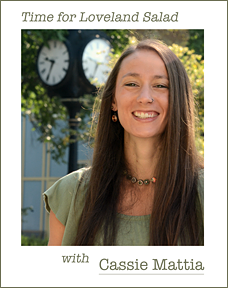
Cassie Mattia lives in Historic Downtown Loveland
Loveland, Ohio – After exploring the history behind Historic Downtown Loveland’s businesses, a question arose; “What about the businesses and history across the river in the West Loveland Historic District?” I found that the question presented a good point, so I decided to take a walk down the sidewalks of the west side to see exactly what interesting secrets I could find about both the new and old businesses.
The West Loveland Historic District (WLHD) is often forgotten due to the big-name businesses being just steps away in Downtown Loveland, but what many people don’t realize is that the West side is just as historic. It is not only very diverse but also architecturally strong. DID YOU KNOW that there have been no public dollars used to renovate any of the businesses or homes there? The businesses have proven to establish themselves using their own resources rather than using extra city services. The WLHD businesses have not only contributed thousands of tax dollars to Loveland’s economy but have also created many employment opportunities. Millions of private dollars have been invested in the last decade improving, restoring, and preserving the historic homes, many converted to professional business spaces and “Live/Work” dwellings.
In Cincinnati, there are more than 100 advertising and marketing agencies. DID YOU KNOW two of the top advertising and marketing agencies are located right in the WLHD?
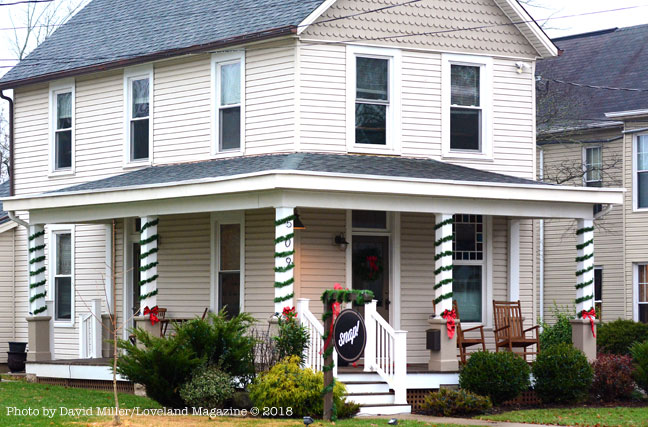
Snap Advertising was moved from Cincinnati to the WLHD in 2018 by Dave Fagin with one goal in mind; to help create stronger brands and brand builders. The advertising agency landed in a historically vacant building that had been remolded but sat vacant for many years. Fortunately, through all the remodeling of the building the historic architecture was kept intact. Snap poured even more money into the historic home. DID YOU KNOW Snap Advertising represents some of the nation’s top brands? Snap represents Zim’s Max Freeze, Invisible Ink Tattoo Removers, P&G Pampers Cruisers, The Hershey Company, and Humana Behavioral Health.
MMG Corporate Communication was founded in 1993 by Claudia McKee. Today, the marketing company serves some really prominent brands such as Ethicon, P&G, AtriCure, Yogi Bear’s, Heidelberg Distributing Company, ISTO Technology, Contech, AdvancePierre Foods, UC Health, EnteroMedics, Merz and SonoSite FujiFilm. MMG is known for helping brands reach their customers effectively through storytelling using marketing, apps, videography, editing, and animation. DID YOU KNOW that MMG has received over 100 national awards for their work? MMG has access to several marketing tools in-house that many marketing companies don’t have such as 2D and 3D animation, full video production services, mobile apps, web design, scripting, and content development. DID YOU KNOW MMG donates to over 50 non-profit charities every year? MMG has always been a huge advocate for community involvement, going as far as giving an employee every year 200 dollars to donate to a charity of their choosing. MMG also supports businesses locally like Paxton’s, The Works and Tano’s Bistro. DID YOU KNOW that Claudia McKee is married to Emmy award-winning, WCPO journalist, Tom McKee?
Xavier knew who to call as APEX has come through before with big orders. Apex owner Paul Elliott delivered 2000 Sweet Sixteen, Xavier University rally towels in 2012 from Loveland to the Georgia Dome with 48 hours notice. Elliott was fishing in Alabama when he got the order. Fishing, a passion of Elliott’s, was supposed to be a break between basketball and lacrosse officiating duties. Alabama wasn’t far enough for Paul to escape the “Madness” of March.
Although this next business isn’t necessarily your traditional advertising or marketing agency, it does its fair share of promoting. DID YOU KNOW Loveland has its very own specialty company that has over 50 years of experience creating promotional products? Apex Imprinted Sportswear has been operating since 1992 in the WLHD and now has over 600,000 promotional products. Apex assists their guests with theme creativity and layout design. DID YOU KNOW Apex offers custom embroidery on many different popular brands such as Nike, Northface, Eddie Bauer, and Port Authority? Apex only offers the best quality regarding brand and material, which is what really sets the shop apart from other shops of its kind. The promotional specialty store can imprint on t-shirts, polos, knits, sweatshirts, fleece, caps, activewear, outerwear, wovens, dress shirts, workwear, bags, accessories, and youth clothing. Many of the business attire with corporate branding you see in retail establishments around Loveland were bought from APEX. Thousands of Loveland’s young athletes wear sports apparel customized with team logos and the athletes’ names at APEX. Apex tees purchased by Toyota have been handed out to every Xavier University fan at “White-Out” games.
A fan wearing the Xavier White Out Tee Before the Defeat of Purdue on December 7, 2012. The 10,250 tee shirts were sold by Loveland businessman, Paul Elliott. Xavier came from a 19-point deficit to win the ESPN televised game. The shirts were credited by local sports commentators with the fan excitement, the extra 2-points X needed, for the Musketeers defeat over the Bulldogs, who later in the year played for the National Championship.
Paul Elliott has officiated Ohio High School Division I Football for decades. In recent years he has taken up blowing the whistle at Ohio High School Lacrosse and Basketball. He keeps on the go during the winter, sometimes officiating as many as seven youth basketball games a day.
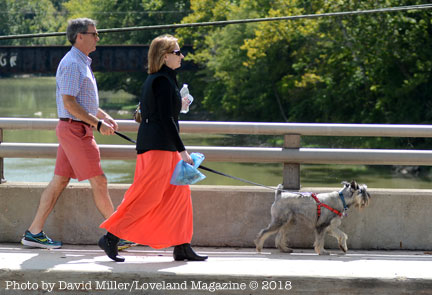
It is a short walk from the WLHD across the State and Scenic Little Miami River to shops and restaurants.
David Elliott, Paul’s son who works at APEX, is the Head Swim Coach for the Wyoming Cowboys swim teams. He has won coach of the year several times in the CHL conference and in the District. Wyoming is more often than not one of the teams shaking up the State finals in Canton.While exploring the businesses within the WLHD I have come to the realization that if you live there you have access to nearly anything and everything you need! DID YOU KNOW Loveland residents have their choice of 3 different insurance agencies located within footsteps of one another? In 2005, Carey Bush and Bill Re opened BRS Insurance in hopes that they could use their years of insurance experience to deliver the best comprehensive buying experience for their guests. Just a few steps away, Ron Delsignore, a State Farm Insurance agent since 2002, has his very own insurance business. Ron focuses primarily on out of state relocations to Loveland. Ron personally holds himself responsible for his guest’s assets, financial dreams, and legacy. Last but not least is Wilber-Price Insurance Group managed by husband and wife Don and Mary Jo Shrout. DID YOU KNOW Don opened the Nationwide insurance agency that now stands today right in Loveland’s WLHD 23 years ago! Both Don and his wife Mary Jo grew up in Loveland and thoroughly enjoy establishing a trusting relationship with each guest they help. Don’s agency provides home, auto, business, boat, equine, golf cart, motorcycle, and life insurance.
Loveland Magazine’s production office is in the Historic West Loveland District.
While you’re walking along the sidewalks on the WLHD of Loveland you certainly can’t forget one of the most well-known businesses; Loveland Magazine. DID YOU KNOW before Loveland Magazine was published it had been four decades since Loveland had a newspaper of its own? Forty-six resident David Miller first published Loveland Magazine in 2004 and has seen a tremendous amount of success ever since. Miller had dreams of creating a publication where Loveland residents could have a voice, Loveland’s youth were recognized and readers received accurate, fully investigated information on even the most controversial subjects. DID YOU KNOW Loveland Magazine has published over 14,000 stories and 850 HD videos? In all its glory Loveland Magazine has received The Booth Spirit Media Award and has been inducted into the Ohio News Media Association as the first digital-only member, and The Ohio Prep Sportswriters Association.
The West Loveland Historic with its ample parking and friendly atmosphere is always a popular viewing spot for the many annual Loveland parades.
If you are interested in visiting any of these amazing local businesses on the West Loveland Historic District please see the contact information for each business below.
Milford, Ohio – On September 9, the Clermont County Port Authority approved issuing $30 million in lease revenue bonds to finance the cost of building a training facility and youth academy in Milford for the professional soccer team, FC Cincinnati.
Chris Hicks
Self-described “Taxpayer Watchdog” and candidate for Clermont County Auditor, Chris Hicks told Loveland Magazine, “This deal is pure crony capitalism. It raises taxes, the hotel tax, specifically to support one private, for-profit, company. It buys land using tax dollars for that company. It then has the government issue bonds to finance it all for the private company and then has the government own the land and buildings so the private, for-profit, company never pays property tax.” Hicks also says that the City of Milford gets no new infrastructure such as road or sidewalk improvements. and it actually makes the citizens of Milford liable for $43,000 to 47,000 per year for 20 years, to pay for the land.
Under the arrangement between Milford, Clermont County, and the Port Authority, construction materials will be also be exempted from paying Ohio sales tax, estimated to be $1 million.
A recent increase in the Clermont County lodging tax will also provide $223,000 a year to support the project.
Because the Port Authority is tax exempt, FC Cincinnati will not have to pay property taxes. It has negotiated annual payments with the Milford School District to help compensate for what they might otherwise lose, however, other public agencies whose funding derives from property taxes will not be made whole.
Under the agreement, the Port Authority will lease the 24 acres of land on U.S. 50 in the City of Milford near Interstate 275, and the facilities to be built, to FC Cincinnati for $1 a year. The bonds will be privately purchased by FC Cincinnati. The Port Authority will receive a one-time fee of $105,000 and an annual average fee of $9,000, most of which will go to support various county levies.
The vote was 4-1. Port Authority Vice Chairman Loretta Rokey the Administrator of Pierce Township; Fiscal Officer Sam DeBonis an Assistant Vice President of Park National Bank, and members Greg DeFisher the President & CEO, Freeman Schwabe Machinery, and Rex Parsons the Administrator of Batavia Township; voted in favor. Member Greg Simpson a Principal with Key Transportation Inc., voted against the resolution.
In a statement released by Clermont County after the vote, Andy Kuchta, Executive Director and Secretary of the Port Authority, offered the following statement:
The structure of the lease answers all of the questions related to what the economic impact will actually be and if it is worth the level of incentives being provided. The Port Authority will have the choice to not renew the lease every 360 days for any reason. This is not a 20-year deal but a 360-day deal, full stop.
Within the next 3-5 years there will be a comprehensive evaluation of the actual economic impacts and benefits once the facility has been constructed and operational for a period of time. If that evaluation determines the economic impacts have not materialized, the Port Authority will be able to substantially renegotiate the terms of these agreements or simply not renew them and return the property to a fully taxable status.
On Aug. 22, Clermont County Commissioners approved an increase in the lodging tax in the county, from 6% to 7%. The revenue generated by the increase in the tax, approximately $223,000 a year, will be used by Milford to pay for the land. Commissioner David Uible said that “As a businessman, I love this deal. Clermont County incentivizes the City of Milford to buy this property for FC with a 1% lodging tax. This will result in $7 million in additional spending each year. The clear winners are the City of Milford, the county as a whole, and all the citizens who call Clermont County home.”
Hicks says that the statement by Uible is misleading because the $7 million figure pertains to all soccer in the region, not from the Milford practice facility. Hicks says in a fact sheet he released on August 29 that even if credible, their own study lists the actual impact at only $1.6 million per year.
Hicks has previously said that the 1% tax increase was not enough to cover the cost of the land. “To fund $3.5 million for land, based on Clermont County Convention & Visitors Bureau estimates, the hotel tax needs to be at least 1.2%, leaving Milford taxpayers holding the bag for $43-47 thousand per year.”
In an analysis of the deals, Hicks says that County agencies that rely on property taxes like library, safety services, developmental disabilities, senior services, mental health, the Park District, Live Oaks, the City of Milford, and the County general fund will all lose the funds they receive now, $1,144,160, because when the FC Cincinnati site is developed there will be zero property taxes assessed. Hicks says that a $30 million development should pay $866,744 per year.
Commissioner David Painter, who voted against the tax increase, said at the time of the vote, “I didn’t think the return was high enough to fully represent the stakeholders of Clermont County, who are the citizens of Clermont County.”
According to the County, the 1% increase in the countywide lodging tax will “sunset” in 2038 or when the balance in the lodging tax account is sufficient to pay off the debt, whichever occurs first.
The $30 million soccer complex is expected to include a 30,000-square-foot training facility and a 6,500-square-foot youth academy. FC Cincinnati said they hope to complete the training facility by next summer.
The Port Authority decision represents the last step before the project can begin. FC Cincinnati also entered into agreements with the City of Milford and the Clermont County Convention & Visitors Bureau.
Also according to the press release issued by the County, a study by Sports Facilities Advisory, a sports management consulting group based in Clearwater, Fla., estimated that the FC complex would generate “almost 65,000 visitor days” by out-of-town visitors and result in almost $7 million in direct spending annually. Hicks said, “Go deeper and find an economic study that has been misrepresented. It actually says a paltry $1.6 million in annual benefit will come from this site.” Hicks also claims that the economic study does not mention that FC Cincinnati will be selling “high dollar academy memberships for millions” as opposed to letting locals come and go as they please. “These type of facilities are money makers selling the ‘academy dream’ of your kid on a pro-soccer team,” added Hicks.
You can look at Hick’s August 10 breakdown of the cost of building the Milford facility: Massive incentives.
FC Cincinnati, whose owners were recently granted expansion status by Major League Soccer, will also build an estimated $200 million stadium in the West End of Cincinnati, which is expected to be open for the 2021 season. The team currently plays at Nippert Stadium at the University of Cincinnati. The City of Cincinnati is contributing 35 million dollars of public money to the West End Stadium.


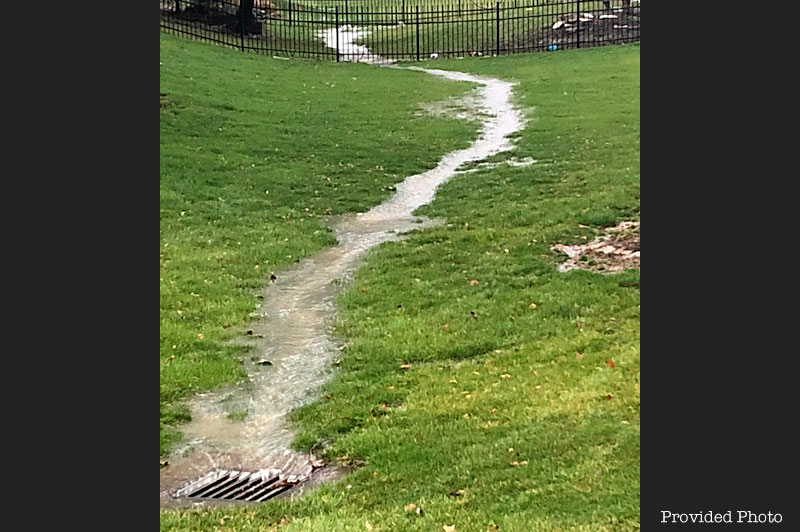
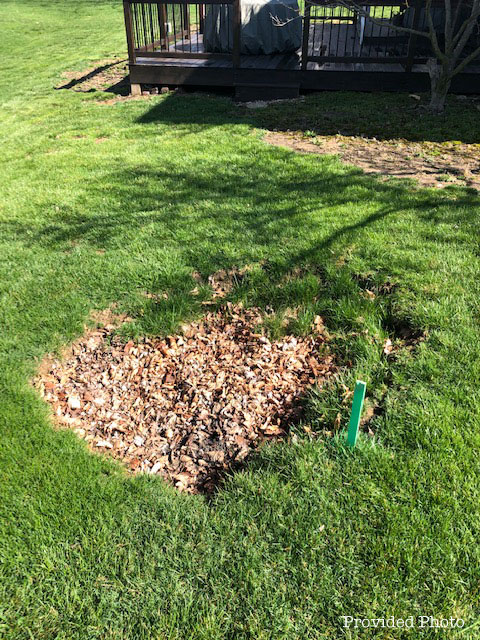 Over the years, the storm sewer has come apart and has started to cause a large sinkhole between the 2 houses.
 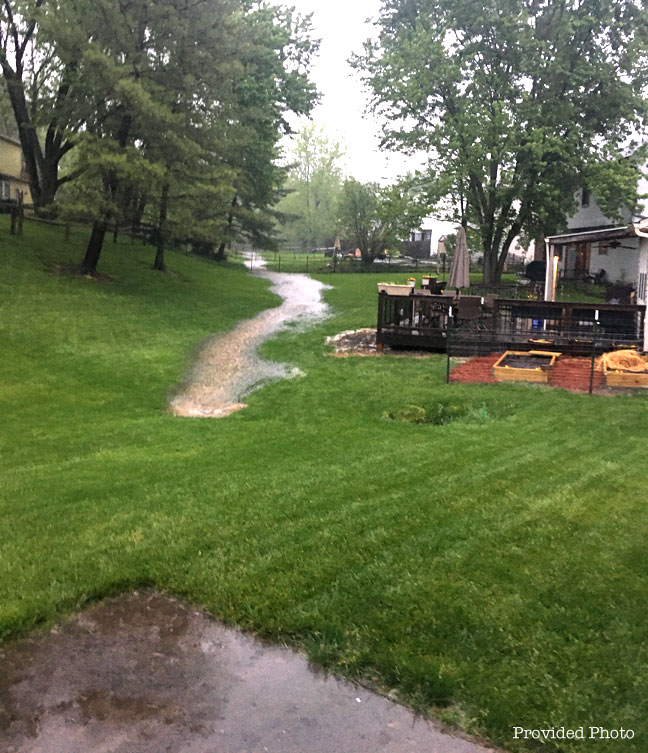 This property was surveyed way before we moved in. So we had no input into the private vs public easement classification. Nor would we know the difference. We are not surveyors or lawyers.
![[Video] Auditor Faber: Public entities may not use public resources to influence Levies or Bonds](https://lovelandmagazine.com/wp-content/uploads/2020/02/maxresdefault-3.jpg)
![[Part 1] My journey to the “West Loveland Historic District”](https://lovelandmagazine.com/wp-content/uploads/2018/11/west-loveland-historic-district.jpg)
 While exploring the businesses within the WLHD I have come to the realization that if you live there you have access to nearly anything and everything you need! DID YOU KNOW Loveland residents have their choice of 3 different insurance agencies located within footsteps of one another? In 2005, Carey Bush and Bill Re opened BRS Insurance in hopes that they could use their years of insurance experience to deliver the best comprehensive buying experience for their guests. Just a few steps away, Ron Delsignore, a State Farm Insurance agent since 2002, has his very own insurance business. Ron focuses primarily on out of state relocations to Loveland. Ron personally holds himself responsible for his guest’s assets, financial dreams, and legacy. Last but not least is Wilber-Price Insurance Group managed by husband and wife Don and Mary Jo Shrout. DID YOU KNOW Don opened the Nationwide insurance agency that now stands today right in Loveland’s WLHD 23 years ago! Both Don and his wife Mary Jo grew up in Loveland and thoroughly enjoy establishing a trusting relationship with each guest they help. Don’s agency provides home, auto, business, boat, equine, golf cart, motorcycle, and life insurance.