Tag: teachers

  • Before leaving Washington, Ohio Sen. Sherrod Brown restores retirement benefits for public workers

    Before leaving Washington, Ohio Sen. Sherrod Brown restores retirement benefits for public workers

    By:  Ohio Capital Journal

    On his way out of town, Ohio Democratic U.S. Sen. Sherrod Brown was able to notch one final long-sought legislative victory that will benefit public sector workers in Ohio and around the country. The Social Security Fairness Act ensures former government workers like police, firefighters and teachers can collect their full retirement benefits by repealing two provisions that reduce social security payouts.

    Many public sector workers aren’t covered by Social Security because their employer runs a pension program for their retirement. But eventually, a lot of those workers move on to other jobs that do pay into the Social Security system. Even though many of them end up working the requisite 40 quarters to be fully eligible for Social Security benefits, the program reduces their payouts because they’re also collecting retirement benefits from their other pension program.

    GET THE MORNING HEADLINES.


    William Johnson, who heads up the National Association of Police Organizations explained, “Most police officers must retire after specific time served, usually in their early to mid-fifties, (but) many look for new opportunities to serve their community.”

    Those workers are penalized by what’s known as the Windfall Elimination Provision, he explained.

    “Instead of receiving full support from their rightfully earned Social Security retirement benefit, their pension heavily offsets it, thus vastly reducing the amount they receive,” Johnson said.

    Surviving spouses can come off even worse though. The Government Pension Offset requires reductions in Social Security dependent benefits if one spouse receives benefits from a public pension. Johnson argued that offset often results in “eliminating most or all of the payment.”

    Those provision were approved by lawmakers in the 1970s and 80s in a bid to keep the program solvent.

    In all, Brown’s office said, the reductions affect 3 million Americans including almost a quarter million Ohioans.

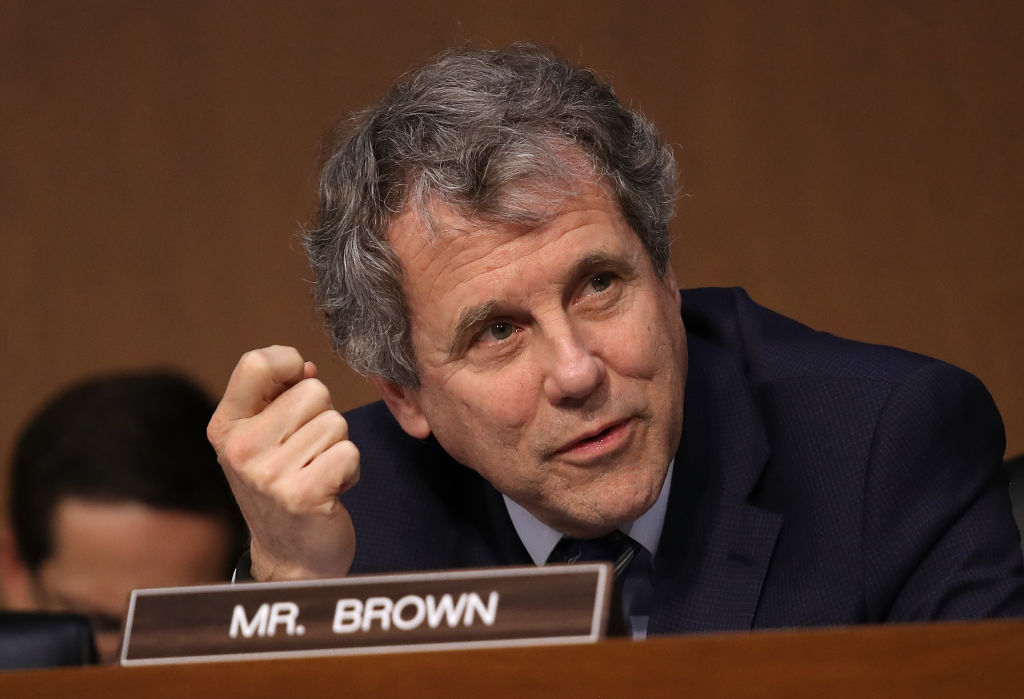
     U.S. Sen. Sherrod Brown, D-OH, leading a panel discussion on public workers’ Social Security benefits. (Photo by Nick Evans for Ohio Capital Journal.) 

    How we got here

    Following an election in which Republicans criticized Brown’s long service in Washington, passage of the Social Security Fairness Act offers one data point in favor of experience. Brown held a field hearing in Columbus discussing the proposal earlier this year and he’s been working to pass it since serving in the U.S. House of Representatives.

    He last served in that chamber 17 years ago.

    In a press release following the vote Brown described working for years to eventually cobble together more than 60 cosponsors.

    “We have spent decades working to pass this legislation and tonight is a victory for all the public servants who will finally get the Social Security they have earned,” he said. “Tonight, Congress ensured that police officers, firefighters, teachers, and public servants across Ohio will be able to retire with the Social Security they spent their lives paying into.”

    Brown’s effort has also been the beneficiary of shifting attitudes in the Republican Party. For many, many years, a core tenet of Republican politics was searching for a way to get Social Security spending under control. Former House Speaker Paul Ryan’s chief legislative goal was privatizing the program. More recently U.S. Sen. Rick Scott, R-FL, proposed a Rescue America Plan in 2023 that would sunset Social Security and Medicare.

    But since the emergence of Donald Trump as the leader of the Republican Party, efforts to overhaul the retirement program have largely taken a back seat. Within weeks of introducing his plan, for instance, Scott backtracked on sunsetting Social Security and Medicare. Last week, he even voted in favor of the Social Security Fairness Act.

    It’s not hard to see why. With Trump leading the party there’s no longer a top-down rhetorical push for cutting spending on a popular program. At the same time, traditionally Republican-leaning constituencies like police have a strong case that it’s unfair to limit Social Security benefits they earned simply because they earned other benefits from a different career.

    All the same, the measure does nothing to improve the long-term balance sheet for Social Security. The most recent report on the Social Security Trust Fund puts its depletion date at 2033. Meanwhile, although Trump has not proposed cutting retirement benefits he has proposed cutting the taxes that pay for that trust fund—potentially burning through its reserves more quickly.

    Reactions

    In the moment however, passage of the bill was met with praise from organizations representing public sector workers. National Fraternal Order of Police President Patrick Yoes argued the WEP and GPO are “inherently unfair provisions that unjustly penalize our nation’s public employees.”

    “No one, even those who did not vote for our bill today, argued that the provisions treated workers fairly,” he went on. “If this scheme were being run by a pension board or private money management group, instead of the social security administration, they would not call it an elimination of a windfall or an offset — it would be considered embezzlement.”

    International Association of Fire Fighters General President Edward Kelly chimed in that “for over 40 years,” firefighters and other public workers have had retirement benefits “stolen” by Congress.

    “But today,” he said, “the United States Senate, in a rarely seen bipartisan effort, stood up to say, ‘No more,’ voting to ensure retirees finally get the benefits they paid into and earned.”

    Ohio Education Association President Scott DiMauro said, “for too long, the federal government has failed to provide the full Social Security benefits many public school educators earned.”

    “For too long,” he added, “potentially great educators have chosen not to enter this profession because they would lose much of the Social Security benefits they had previously earned if they entered a life of public service. That changes now.”

    Follow OCJ Reporter Nick Evans on Twitter.

    YOU MAKE OUR WORK POSSIBLE.

    ______________
    Nick Evans
    Nick Evans

    Nick Evans has spent the past seven years reporting for NPR member stations in Florida and Ohio. He got his start in Tallahassee, covering issues like redistricting, same sex marriage and medical marijuana. Since arriving in Columbus in 2018, he has covered everything from city council to football. His work on Ohio politics and local policing have been featured numerous times on NPR.

    Ohio Capital Journal is part of States Newsroom, the nation’s largest state-focused nonprofit news organization.

    MORE FROM AUTHOR

  • Teachers’ pension system touts clean audit. Retirees unimpressed

    Teachers’ pension system touts clean audit. Retirees unimpressed

    BY: MARTY SCHLADEN – Ohio Capital Journal

    The State Teachers Retirement System of Ohio has been flagging the results of a special audit conducted in response to complaints from some teachers and retirees. But for its part, the group representing the state’s retired teachers isn’t backing down from its critiques of the system.

    The examination, conducted by state Auditor Keith Faber, was prompted by retirees who have received few cost-of-living adjustments in recent years while retirement system employees have gotten big salaries and bonuses. And, in the most recent fiscal year, they did so as their investments lost billions.

    In a Dec. 29 statement, the retirement system noted that the probe found no evidence of illegal conduct.

    “The special audit found no evidence of fraud, illegal acts or data manipulation related to the funds held in trust by STRS Ohio for its members,” the statement said. 

    It added, “The special audit’s findings include, ‘STRS’ organizational structure, control environment and operations are suitably designed and well monitored, both internally and by independent experts. These experts help assure that STRS follows applicable asset and liability measurement, reporting, investing and cash management laws, professional standards, and best practices. Our conclusions are consistent with the findings of these independent firms.’” 

    The same statement quoted STRS Executive Director Bill Neville as saying, “It is noteworthy that the special audit’s findings refute much of the inaccurate information circulated about STRS Ohio over the past two years, and the report provides extensive detail and analysis in support of its conclusions.”

    However, at least some of the complaints retirees have been raising don’t involve claims of criminality.

    At least 200 of the retirement system’s 500 employees make more than $100,000 a year. And, with bonuses, in the 2021-2022 fiscal year 33 of the system’s employees made more than $300,000. Nine made more than $500,000. 

    Meanwhile, the average public teacher salary in 2022 is $67,000 a year, according to the Ohio Department of Education.

    The retirement system manages about $90 million in teachers’ assets. The system makes traditional investments, while also putting money into high-fee “alternative” investments such as private equity and hedge funds. 

    In making such investments, the system is effectively trying to beat the stock market. STRS spokesman Nick Treneff has said alternative investments also allow for a more diversified portfolio, which can help to manage risk.

    But over at least the medium term, the stock market has proven to be the better investment.

    Over the past decade, it has provided a 14.8% return on investments, while the system’s alternative investments have provided 11.84% once fees are subtracted, Treneff said in July.

    Retirement system salaries and bonuses have grown large as retiree benefits have stagnated. 

    The latter group got a 3% cost-of-living bump in their benefits last year — their first since 2017. Treneff has explained that the freeze was due to new rules set down by the legislature in 2012. State and local governments were still reeling from the Great Recession and there were nationwide concerns about unfunded pension liabilities.

    In addition, the General Assembly hasn’t increased its contribution rate to the pension fund in 38 years.

    But what really has retirees incensed is the way the STRS board handled staff bonuses last year. In August, it awarded $10 million in bonuses even though it estimated that it would lose $3 billion in an environment that was brutal for investors. 

    Then in October, the actual numbers for alternative investments came in. System losses were 77% higher than original estimates — $5.3 billion

    For perspective, the losses follow $22.3 billion in gains a year earlier, according to the system’s financial statements. 

    However, the retired teachers union argued, if staffers are going to do well in times of plenty, they shouldn’t do so well when times are bad. Also, the group argued, the system’s board should have delayed awarding bonuses until after the actual loss figures came in instead of using a big underestimate.

    In light of those occurrences, the Ohio Retired Teachers Association wasn’t mollified by a clean audit

    “As expected, the State Auditor confirmed that a broken system yields broken results,” ORTA’s Executive Director Robin Rayfield said in a statement. “Although finding no direct evidence of criminal activity, the Auditor confirmed that the board allowed the staff to use an accounting gimmick to pay themselves $10 million in bonuses despite losing $5.3 billion last year. For years, the board’s bad policies have yielded bad results for teachers, who are working longer and paying more for less, while enriching STRS staff. The only way to change bad policies is to change the STRS board, which teachers will do in this Spring’s election.”

  • Study shows Ohio K-12 teacher burnout rates higher than any other industry

    Study shows Ohio K-12 teacher burnout rates higher than any other industry

    BY: SUSAN TEBBEN – Ohio Capital Journal


    Ohio educators say burnout is real, but with pending legislation regulating lesson-plan choices and security roles in schools, they feel “demoralized” as well.

    A national survey showed 44% of K-12 teachers in the U.S. “always” or “very often” feel burned out, a stat that has surpassed other industries.

    The Gallup poll showed more than 4 in 10 K-12 workers felt that way, topping college/university employees, retail workers and the government/public policy industry in the survey, conducted in February but released this week.

    Researchers found that K-12 workers have “consistently” been leaders in burn-out in the country, but the COVID-19 pandemic “exacerbated existing challenges,” while also introducing new ones.

    Female teachers reporter higher burnout levels than male teachers, at a split of 55% to 44%.

    “The result is a workforce that is burned out and unfortunately leaving the profession at a high rate,” according to the Gallup poll.

    Those who teach in Ohio agree that the increased workload has taken its toll, but to also see mounting legislation regulating their careers and what they see as a continued lack of appropriate support from the state adds a new amount of weight to educators’ shoulders.

    “When you talk about burnout, you’re talking about when you’ve extinguished a flame,” said Wendi Davis, band director and music teacher at Cory-Rawson Local Schools in northwest Ohio. “Teachers, they love what they do, and when they’re put in situations like what they’re dealing with right now, it’s more demoralization than burnout.”

    Teachers have had to don ever-multiplying caps: as teachers, as standardized test guides, as social workers and as guidance counselors. Faced with all those issues already, teachers then faced a pandemic, according to Shari Obrenski, president of the Cleveland Teachers Union.

    “What the pandemic did was essentially lay bare all of the problems that existed in education,” Obrenski said. “More and more is being put on (a teacher’s) plate and nothing is being taken off.”

    When pandemic learning is combined with legislation currently being considered in the Ohio legislature that would dictate the subjects that teachers can discuss, and a recently passed and governor-signed law that allows teachers to carry weapons in school, Obrenski said educators get pushed to their limits.

    That is, the teachers that are still there. Cleveland is short about 200 teachers going into the new school year, not to mention the ongoing shortage of substitute teachers, in the hundreds as well.

    “And we’re not as bad off as other districts,” Obrenski said.

    As school districts struggle to recruit and retain teachers and substitute teachers, teachers also struggle to be heard in their own districts and in their state government.

    “Teachers need to be empowered at the local level by their administrators,” Davis said. “They need to have a voice at the table.”

    Paying teachers more and funding schools in a way that supports the role they play is definitely a need, according to Obrenski, but so, too, is respecting teachers as professionals in order to keep them in schools.

    “Something that is really important is a teacher’s voice in decision-making; Having teachers be part of the solution instead of condemning them as part of the problem,” Obrenski said.

  • U.S. attorney general defends FBI probe of threats against school board members

    U.S. attorney general defends FBI probe of threats against school board members

    BY: ARIANA FIGUEROA and Ohio Capital News

    Washington, DC – U.S. Senate Republicans grilled Attorney General Merrick Garland for more than four hours on Wednesday about a Justice Department investigation into threats made to local school board members in multiple states.

    Garland at the Senate Judiciary Committee hearing declined to revoke a memo he wrote asking the FBI to meet with local law enforcement to look into threats, intimidation and harassment directed at school officials, teachers, administrators and staff.

    He told the top Republican on the committee, Sen. Charles Grassley of Iowa, that the Oct. 4 DOJ memo — which followed an appeal for help from the National School Boards Association — only responds to “concerns about violence, threats of violence, other criminal conduct.”

    “All it asks is for federal law enforcement to consult with, meet with local law enforcement to assess the circumstances, strategize about what may or may not be necessary to provide federal assistance,” he said.

    But Grassley and other senators during the oversight hearing repeatedly pressed Garland to renounce the memo and accused DOJ of relying on the school boards group to characterize parents as domestic terrorists, although his memo did not mention terrorism.

    “Mothers and fathers have a vested interest in how schools educate their children,” Grassley said in his opening statement. “They’re not, as the Biden Justice Department apparently believes them to be, national security threats.”

    Missouri Sen. Josh Hawley told Garland he should resign, and Utah Sen. Mike Lee said that there have been no “explicit death threats” cited by Garland or the national school boards group as a reason for the federal government to take action. Lee said that not every outburst “by neighbors among neighbors” deserves an investigation.

    Garland directed the FBI to coordinate with local law enforcement to investigate threats and harassment by conservative protestors and some parents, often provoked by mask requirements or discussions of race in schools. Many protests have centered around critical race theory, an academic subject which is not generally taught in K-12 schools.

    Garland’s move came after the National School Boards Association sent a letter to President Joe Biden citing harassment and disruption in school board meetings in Georgia, Florida, Michigan, Ohio, New Jersey, Virginia, Wisconsin, Tennessee and Nevada. The organization has since apologized for the letter, although it did not ask that DOJ halt its probe.

    NSBA’s initial letter asking for aid has caused a firestorm among Republicans and conservatives because the group asked the Justice Department to determine if those threats violate a variety of laws, including the PATRIOT Act, which is aimed at deterring terrorism. NSBA affiliates in Ohio, Missouri and Pennsylvania have separated from the parent group, saying they were not consulted before the letter was sent.

    Republican lawmakers have argued that these are simply parents raising their concerns about masking requirements and discussions in public schools about race, which some school districts initiated after the massive Black Lives Matter protests following George Floyd’s murder last summer.

    But school board officials have documented how their personal cell phone numbers have been inundated with threatening messages, and how school board meetings have been derailed by protestors.

    For example, the Florida Phoenix reported that several school board members detailed the harassment they continue to face over masking requirements amid the pandemic.

    Garland pushed back against Republicans’ charges that the Justice Department was infringing on parental rights to free speech.

    “The Justice Department protects that kind of debate,” he said. “The only thing we are concerned about, Senator, is violence and threats of violence against school officials, school teachers, school staff.”

    The committee’s Democratic chairman, Sen. Dick Durbin of Illinois, defended Garland’s move and cited his home state as an example where he is also seeing this pattern.

    “Free speech does not involve threats and violence,” Durbin said. “Those who argue that school board meetings across America are not more dangerous and not more violent than the past are ignoring reality. We are seeing violence at these school board meetings in an unprecedented number.”

    “This memorandum is not about parents being able to object to their school boards. They are protected by the First Amendment. As long as there are no threats of violence, they are completely protected.”

    – U.S. Attorney General Merrick Garland

    In his opening statement, Garland did not give an update on the agency’s investigations into local school board threats. He outlined the Justice Department’s work on combating cyber crimes, violent crimes, the persecution of those who attacked the U.S. Capitol on Jan. 6, civil rights enforcement and increasing accountability in law enforcement with the extended use of body cameras by federal officers.

    Sen. Amy Klobuchar, a Minnesota Democrat, said that she was not only concerned about the threats to school officials but also to election officials.

    “I just want to have a functioning democracy,” she said.

    Klobuchar asked what actions the Justice Department was taking to protect those election officials and what kind of threats they face.

    Garland said he virtually met with numerous election administrators and secretaries of state to listen to their accounts of violence and threats of violence. He said it led him to create a task force to coordinate with federal agencies and state and local law enforcement.

    But most of the hearing, ostensibly for general oversight of DOJ, was taken up by a string of Republicans continuing to press Garland about the federal government getting involved in local school board incidents.

    Lee argued the move will “have a natural tendency to chill free speech.”

    “The memo is aimed only at violence and threats of violence,” Garland said. “It states on its face that vigorous debate is protected. That is what this is about and that is all this is about.”

    Lee asked if harassment and intimidation were federal crimes, which Garland said they were.

    Lee, Grassley and Hawley all asked if Garland would rescind his memo in light of the NSBA apology letter, although school board officials didn’t make that request.

    Garland said he would not because there were news reports of threats of violence at school board meetings from media reports regardless of NSBA’s letter.

    NSBA “apologizes for language in the letter, but it continues its concern about the safety of local officials and school staff,” he said.

    Garland added that the federal government’s role is mostly to help aid local law enforcement.

    “I’m hopeful that many areas of local law enforcement will be well able to handle this on their own, which is what the Justice Department does every day,” he said. “We consult with our local and state partners and see whether assistance is necessary.”

    Hawley asked if “a parent makes a phone call to a school board member that she has elected, that that school board member deems annoying, should (she) be prosecuted?”

    Garland said no, and said that “the Supreme Court has made quite clear that the word intimidation, with respect to the constitutional protection, is one that directs a threat to a person with the intent of placing the victim in fear of bodily harm or death.”

    “I wish, if senators were concerned with this, they would quote my words,” Garland said. “This memorandum is not about parents being able to object to their school boards. They are protected by the First Amendment. As long as there are no threats of violence, they are completely protected.”

    Sen. John Kennedy, a Louisiana Republican, asked if Garland was “just a vessel” for NSBA.

    “The White House is the prophet here, you’re the vessel, isn’t that correct?” asked Kennedy.

    Garland said he did not speak with anyone from the White House when he wrote his memo.

    “This memorandum reflects my views that we need to protect public officials from violence and threats of violence, while at the same time protecting parents’ ability to object to policies they disagree with,” Garland said.

  • Loveland City School District included in COVID-19 Vaccine Distribution Week 2

    Loveland City School District included in COVID-19 Vaccine Distribution Week 2

    * Story up-dated at 6:10 PM on 1-30-2021

    by David Miller

    David Miller

    Loveland, Ohio – Ohio K-12 schools, including public, private, and career-tech entities, yesterday learned when their teachers and staff necessary for in-person learning are able to begin receiving vaccines.

    Loveland City School District is included in COVID-19 Vaccine Distribution Week 2 of first doses, starting February 8 as well as Indian Hill, Moeller, St. Xavier, Cincinnati Hills Christian Academy, Forest Hills (Anderson), Great Oaks Career Campuses, and Sycamore.

    Included in Distribution Week 3 are, Kings, Lebanon, Little Miami, Mason, and St Margaret Of York.

    Included in Distribution Week 4 are, Children’s Meeting House, Goshen, Milford, Ohio Valley Voices, and St. Columban.

    Cincinnati Public Schools were able to jump the line and began their vacinations yesterday.

    Loveland’s schools remain in hybird-learning at all buildings, a combination of some students and staff attending in-person five-days per week and some students and staff teaching or learning in Loveland’s Remote Academy five-days a week.*

    Ohio Governor Mike DeWine has said that he is making it clear his “goal of Ohio returning to in-person learning either full-time or in a hybrid model by March 1st.” In order to do this, the governor identified teachers and school personnel necessary for in-person learning as Phase 1B recipients as part of the Ohio COVID-19 Vaccination program.

    “Vaccine is incredibly scarce, and we simply don’t have enough to vaccinate everyone at the same time. Therefore, this will be a rolling process, just like it has been during other vaccination phases, with a goal of administering all first doses by March 1st,” said Governor DeWine. “This rollout schedule is a heavy logistical lift that aims to ensure the maximum number of people can be vaccinated in the shortest amount of time.”

    In a news release, Dewine said, “The plan also makes the process as simple as possible for staff to be vaccinated and is organized to allow most K-12 staff in a county to be vaccinated within seven days of their assigned vaccination start date. For the limited number of counties where vaccinations will take place over multiple weeks, local leaders will make the logistical and scheduling decisions.”

    Eligible school employees will learn more about the locations and times of the vaccination sites from their administrators. The following documents list the entities by county in the week when teachers and personnel are able to begin vaccinations.

    Week One (Beginning February 1st)

    Week Two (Beginning February 8th)

    Week Three (Beginning February 15th)

    Week Four (Beginning February 22nd)

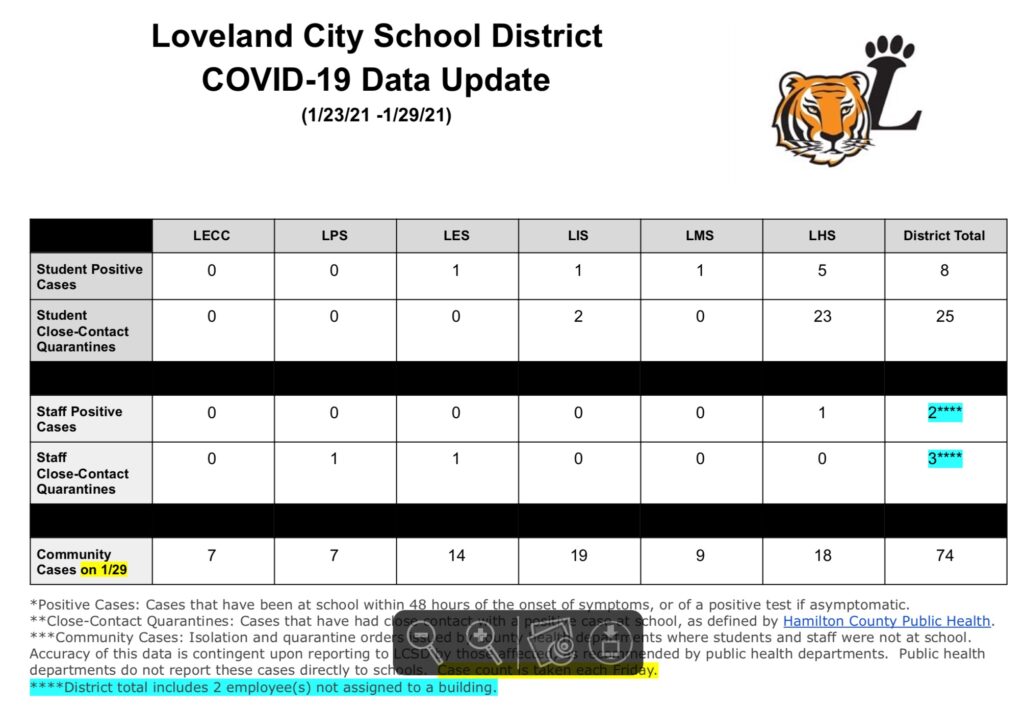
    Here is the Loveland District’s latest Covid 19 Dashboard also released on Friday:

    Below are the recent daily reports issued by the District:

    The district has been notified of the following positive case of COVID-19:

    • On 1/28/21, a student at Loveland Elementary School, last at school on 1/25/21.
    • On 1/26/21, a student at Loveland Intermediate School, last at school on 1/22/21.
    • On 1/23/21, a teaching staff member at Loveland High School, last at school on 1/20/21;
    • On 1/24/21, a student at Loveland High School, last at school on 1/20/21; 
    • On 1/25/21, a non-teaching, non-school-based staff member, last at work on 1/21/21;
    • On 1/25/21, a student at Loveland High School, last at school on 1/20/21; and
    • On 1/25/21, a student at Loveland High School, last at school on 1/22/21.
    • On 1/22/21, a student at Loveland High School, last at school on 1/20/21.
  • Tell Us: How is remote learning going in the Loveland District

    Tell Us: How is remote learning going in the Loveland District

    Hannah Roberts Gwynne

    by Hannah Roberts Gwynne

    Loveland, Ohio – Loveland Magazine is interested in hearing from parents, students, and teachers to find out about their experience so far with attending or teaching in the Loveland City School District’s Remote Online Academy.

    If you are a remote Online Academy teacher, student, or parent or guardian, please tell us about the experience after the first three weeks.

    You can send us an email or your video or audio response to lovelandmagazine@cinci.rr.com. Please use the subject line “Remote Online Academy”.

    Loveland Magazine will respect your desire to keep your response anonymous.

    • As a teacher, has the District supported your technology needs? Are they quick to fix your broken technology? Have they provided you with adequate hardware to teach effectively? Is the computer supplied by the district adequate?
    • As a parent/guardian or student, do you have adequate technology in your home, and is the district doing enough to meet your needs? Is the district responding well to help your child with connectivity problems?
    • Teachers, we would be interested to know how much you have spent of your personal money supplying your virtual classroom for a satisfactory learning experience for teaching. Have you purchased learning materials, microphones, webcams, monitors, etc? (Send us photos of your remote classroom)
    • How about class size?
    • Do your students or child with an IEP, ect., currently, have adequate support to be successful?
    • Teachers – Do all of your students have adequate support at home to succeed in a remote learning environment?
    • In what ways could the community help you as a teacher, parent/guardian, or student have a successful Remote Online Academy experience?
  • Great Oaks Career Listings and Job Postings

    Great Oaks Career Listings and Job Postings

    Openings as of 6/25/2020

    Great Oaks Career Campuses is a continuous improvement organization. Our mission is to provide quality workforce development programs and services to meet the needs of our customers. We rely on a team of enthusiastic, energetic, committed associates to fulfill our mission. Every position is important, every team member is valued. We hire individuals to join our team as:
    • Teachers
    • Administrators
    • Business Office Workers
    • Secretaries
    • Information Processing Personnel
    • Custodians, Maintenance, and Bus Driving Personnel

    For questions, contact:
    Great Oaks District Office
    Human Resources
    110 Great Oaks Drive
    (at 3254 E. Kemper Road)
    Cincinnati, OH 45241-1581
    Phone: 513-771-8840

    Click here for overview of benefits


    Other Area Job Openings listed by Great Oaks

    Job Title Employer Location(s) Posting Date Expiration Date Additional Info
    Building Opener & Welcome Desk Attendant Cooper Creek Events Center
    City of Blue Ash, Ohio
    06/24/2020 08/07/2020
    Rehab / Therapy Assistant HealthQuest, Inc
    Hillsboro, Ohio
    Blanchester, Ohio
    06/24/2020 07/24/2020
    Production Worker Welch Packaging
    Lebanon, Ohio
    06/23/2020 08/03/2020
    Diesel Mechanic Sodrel Truck Lines
    Cincinnati, Ohio
    06/23/2020 12/31/2020
    Collision Repair Apprentice Middletown Ford Body Shop
    Middletown, Ohio
    06/23/2020 07/23/2020
    Facilities Maintenance Laborer II Cooper Creek Events Center
    City of Blue Ash, Ohio
    06/23/2020 07/10/2020
    Mechanic Apprentice Linehaul Heavy Duty
    Cincinnati, Ohio
    06/23/2020 12/31/2020
    Craftsman / Handyman / Carpenter ProMaster Home Repair
    Cincinnati, Ohio
    06/22/2020 08/31/2020
    Endoscopy Technician University Endoscopy Center
    Cincinnati, Ohio
    06/22/2020 07/15/2020
    Laborer Jostin Construction
    Cincinnati, Ohio
    06/19/2020 08/01/2020


    View More Listings

  • Building Tiger Nation facilities master planning moves on to phase two

    Building Tiger Nation facilities master planning moves on to phase two

    At Community Meeting #2 on November 28, students shared their needs as they relate to the Loveland Schools facilities.

    A ballot issue is expected in November 2019.

    Community Meeting #3 is on January 23

    A news release from the Loveland School District

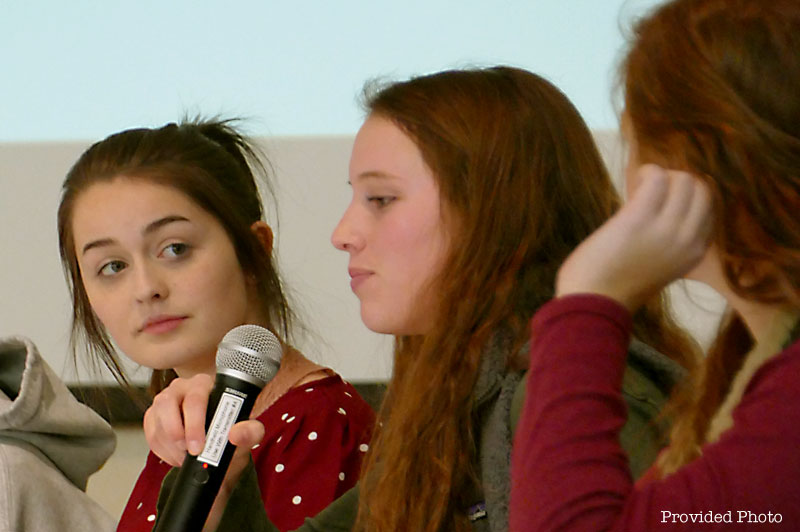
    On November 28, the Loveland City School District held the second Building Tiger Nation Community Meeting, with over 100 members of the Tiger Family and greater Loveland community in attendance. In a presentation of the results of the educational facility evaluation conducted over the past six months, a panel of students and teachers shared their personal experiences regarding the implications of the current school facilities on teaching and learning at Loveland.

    “It was very powerful to hear directly from the ‘experts’ on their impressions and experiences, and see the correlation to the hard data collected during the evaluation process,” said Superintendent Dr. Amy Crouse. “Some of the needs we heard about are recurring themes throughout the district, while others are specific to certain building and campuses. Taking into account enrollment projections and the fact that we can’t provide all the programming we wish to due to space limitations today, our buildings compromise our students’ educational needs.”

    Community members toured the “gallery” and learned about specific needs in the various school buildings.

    The educational facility evaluation, which has been part of the assessment phase in the master planning process, focused on five main areas and how the school facilities currently perform in each: whether there is adequate academic square footage; building navigation (taking into account hallways, circulation spaces within the buildings, as well as parking and traffic patterns); the potential for expansion of buildings at the various campuses; how the buildings serve students and staff in terms of health and wellness; and whether the buildings and learning spaces are inspirational and relevant for today’s students.

    “It’s like a square peg trying to fit in a round hole,” said Cincy Rack, third grade teacher at Loveland Elementary School. “The biggest, single challenge every year is ‘how am I going to make my space work?’”

    Loveland High School Sophomore Anna Colletto spoke of navigation issues and a particularly difficult area in the overcrowded hallways: “Students trying to get upstairs are struggling, students trying to get to their classes are struggling, and students trying to get into their lockers are struggling. It takes two to three minutes just to get through that portion of the hallway, which takes up our five-minute break to get to the next class.”

    The meeting was the second in a series to inform the Loveland community about the facilities master planning process since the start of the 2018-19 school year. Finance Committee meetings, open to the public, continue to be held monthly. The master planning process now moves from the assessment phase on to the translation phase, and the first options for a master plan will be developed over the coming weeks. They will be presented to all Loveland stakeholders at Community Meeting #3 on January 23, and will then be evaluated, prioritized, and finalized. The master plan, along with financing suggestions, will be presented to the Loveland Board of Education in spring, likely April or May. A ballot issue is expected in November 2019.

    For more information, please visit www.buildingtigernation.org.


    Welcome to All About Kids We invite you to come visit one of our convenient locations, talk to our staff and teachers and learn why.


  • Late start for the school year proposal stirring up controversy

    Late start for the school year proposal stirring up controversy

    Statehouse could withhold funding for schools that start before September 3rd

    ““Bills that reduce the flexibility of that local control are cause for concern.” 

    – Loveland City School Superintendent, Dr. Amy Crouse

    Loveland, Ohio – School starting after September 3rd? Well I’m sure the students wouldn’t mind!

    The Ohio General Assembly Senate Bill 34 and House Bill 549 would both require the state to hold education funds if school districts started their school year before September 3rd. The bills do state that schools would be able to make the decision to start before September 3rd, without losing any state funding, only if the school board of that particular district held a public hearing 30 days before the decision would be put into action.

    Local School Openings for 2018

    Loveland: August 21

    Milford: August 15

    Little Miami: August 13

    Kings: August 15

    Sycamore: August 15

    Loveland City School Superintendent, Dr. Amy Crouse strongly supports the local decision-making ability of the Board of Education.

    “Bills that reduce the flexibility of that local control are cause for concern,” Crouse said when asked her opinion on the two bills, “Planning the school calendar takes into consideration many factors and the school boards need to be able to respond to changing local and state factors that might impact the student experience.”

    The majority of the School District Business Administrators as well as Ohio’s Superintendent Association oppose the bill stating that it gets in the way of the boards required “local flexibility” in meeting the educational needs of the students.

    “Some factors are ‘fixed’ that we need to consider. These include things like: Fall sports schedules, increasing student instructional time prior to testing dates for Advanced Placement courses, ACT, or state assessments, planning around holiday breaks, the number of day or hours required by the state, and the number of days in staff contracts. Some factors are locally driven like planning for weather, construction projects, or local community needs,” Crouse said.

    Read the Senate version S. B. No. 34

    State Bill 34 states that it will not make any adjustments to the state’s testing schedule or make any decisions in regards to the school’s calendars. According to Crouse, “The impact of any school start date is reflected in the number of days provided at holiday break times and in the date for the last day of school.”

    A whopping 59 percent of Ohio residents, according to a poll taken by The Ohio Travel Association, supports Ohio schools starting after September 3rd and preferably on the same day to get a sense of uniformity across the state. Ohio residents agree that the later start date would not only benefit students with summer jobs and internships, but also family vacations.

    Read the House version House Bill 549_00_IN

    One of the most interesting statistics pointed out by voters in this poll is that 71 percent claimed that teaching students in the August heat is actually more detrimental to their learning than helpful. Ohio teachers agreed with the voters adding that starting school before Labor Day would be detrimental to their learning as well because they would no longer have as much time to pursue advance degrees and added training over the summer. Unfortunately, advanced learning would also be hard for students seeking college course credits because their high school schedule would no longer align with Ohio’s University schedules.

    With all the pressure being put on the Ohio General Assembly to make a decision on this controversial matter there’s no doubt that a decision will be made sooner than later. Loveland residents can only hope that the final decision made benefits those that matter most; the students and the teachers.


    Want to contact the State House to weigh in on the pending bills?

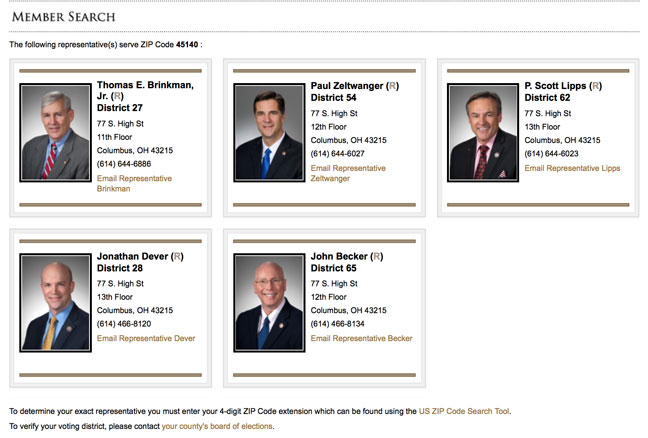
    These are the House members representing the 45140 zip code. Click the image to contact them.

    Contact your Ohio Senator


    RP Diamond Printing & Embroidery

      RP Diamond is the exclusive retailer of LOVELAND HIGH SCHOOL SPIRIT WEAR Welcome to  RP Diamond Printing & Embroidery located at 370 Loveland Madeira Road.


  • Stepping out of our comfort zone

    Stepping out of our comfort zone

    By David Knapp,

     “There is no innovation and creativity without failure. Period.” – Brené Brown

    At the Loveland City School District, our educators hold the growth and development of our students higher than anything else. We empathize with the needs of our students, our families and our community to do all that we can to ensure that we reach and grow every single one of our students. This is no small task, and to pull this off on a daily basis, it truly takes a village and also requires a little bit of magic. Not magic in the sense of the way of the Jedi or the stuff that happens at Hogwarts, but in the magic of stepping outside of our comfort zone from time to time to take on a new challenge. As we adapt to and embrace the changing needs of our students, innovation is the process that continues to allow us to do this. And true innovation requires failure… and grit.

    She told me she had failed – many, many times. But she never gave up.

    Our students “get it” – and, in my position, I have the amazing opportunity to learn from them daily. One young Innovation Lab student at Loveland High School recently stood out to me – she was exploring and learning the world of digital art creation. Working through intricate software programs, pen and stylus combinations, and a multitude of barriers to her success, I was in awe of the complex challenges that this student had taken on to fuel her creative passions.

    She told me she had failed – many, many times. But she never gave up. Her diligence led to works of art that she proudly showcased in a digital portfolio during our chat. Her resilience, laser-focus on her passions and her ability to step out of her comfort zone (on a consistent basis, I might add) allowed her to reach new heights. Pretty impressive stuff.

    So – how do we, as educators, help students like her? We step outside of our own comfort levels to make some magic.

    So – how do we, as educators, help students like her? We step outside of our own comfort levels to make some magic.

    It is with great excitement that we announce the Innovative Classroom Grants for the 2017-18 school year. Continuing with the momentum started last year that awarded 11 grants across the Loveland City School District, and with the purpose of positively impacting student growth and achievement, we couldn’t be more excited to give all of our teachers this unique funding and professional learning opportunity. This year, our teachers will be encouraged to partner with students to create innovative solutions that focus on student-centered learning. We will also be working with our partners at the Xavier University Center for Innovation to support us in the ideation and refinement of these ideas through the process of design thinking.

    We cannot wait to see what Loveland teachers come up with this year to promote #TigerInnovation!

    David Knapp is the Director of Technology & Innovation for the Loveland City School District knappda@lovelandschools.org

    Keep an eye out this year for a special series of district stories (www.lovelandschools.org) that feature several of our 2016-17 Innovative Instructional Grant winners, and we look forward to sharing the results of this year’s applicants with you this winter.

    Your partner in innovation,

    David Knapp


    Start the New Year Right