The Ohio Senate advanced fast-tracked legislation Tuesday that would allow local boards of education to permit teachers to carry guns in classrooms.
Passage would eviscerate current law in Ohio that allows teachers to arm themselves only after completing more than 700 hours of police training and receiving approval from their local school board.
Under House Bill 99 — which was largely rewritten and unveiled at the hearing — a school board could allow teachers to arm themselves. The latest version doesn’t specify any minimum amount of training hours, although it states that four hours must be “scenario-based or simulated training exercises.” Instead, it says teachers would need to undergo “initial instruction and training” to carry a weapon that “shall not exceed” 24 hours. From there, the teacher would need annual recertification training which “shall not exceed” eight hours.
A local board of education would need to opt in to allow its teachers to arm themselves. That board could choose to mandate additional training, but it wouldn’t be required. The training required in the legislation includes the “scenario-based” training, “tactical live firearms training,” and “realistic urban training.”
Earlier versions of the bill established a minimum of 20 hours of training, plus concealed carry training (another eight hours). It also called for more specific, somewhat warrior-like training requirements.
“On signal, take a flanking step while drawing and fire three rounds into the preferred area. Upon completion, take appropriate post-shooting actions,” reads a training requirement of the House-passed version of the bill. “The distance from the target shall be thirty feet, the time allowed shall be eight seconds, and the number of rounds allowed shall be three.”
The Senate committee vote comes on the heels of the May 24 shooting in Uvalde, Texas, in which a teenager purchased two assault style rifles that he used to kill 19 young children and two teachers. Seventeen others were wounded.
At Tuesday’s hearing, two men spoke in support of the bill. The rest of the four hours were occupied by dozens of teachers, teachers’ union officials, anti-gun violence activists, and a Fraternal Order of Police lobbyist, all testifying in opposition.
The teachers who testified argued it’s unrealistic to think an educator would react prudently and fire accurately at a shooter in a chaotic and precarious situation after mere hours of training. They’d need to execute keen marksmanship in a fraught situation to avoid hitting their own students. Several noted the bill makes no consideration as to how teachers must store the weapon, which could yield a flood of gun violence of its own.
At times, Sen. Frank Hoagland, a Republican who chairs the committee that reviewed the bill, struggled to rein in the testy crowd. After hearing the hours of testimony in opposition to the bill, Republican Senators passed it regardless. The vote was a flex of political power, and drew shouts of “Shame! Shame!” from the crowd.
Hoagland, and Sen. Terry Johnson, the number two Republican on the committee, both declined interview requests after the hearing. The legislation will likely go to the Senate floor for a vote Wednesday. The House could, in theory, accept the Senate’s changes on the same day and send the bill to Gov. Mike DeWine.
Republicans in the Ohio House passed HB 99 earlier this year on a 59-33 vote (Republican Rep. Gayle Manning joined Democrats in opposition). Tuesday’s vote came in lieu of the typical process of holding several hearings on a bill before a roll call. Several speakers said they were unable to procure a copy of the latest version of the bill before Tuesday’s hearing.
Standing room only for a possible vote on fast tracked legislation that would allow school boards of education to allow for armed teachers. Bill has been largely rewritten and being publicly unveiled just now.
As of 2019, 18 states allow anyone with permission from school authority to carry a weapon, according to the National Conference of State Legislatures.
The idea, which gained popularity after a spate of school shootings in the U.S., is broadly unpopular with educators. In a 2019 national survey of 2,926 teachers, more than 95% indicated they don’t believe teachers should carry a gun in the classroom. Even among the 16% of respondents who were gun owners, only 11.5% of them said being armed while teaching should be a part of teacher’s duties. Gallup polling from 2018 found 73% of teachers oppose the idea.
More Ohioans died from guns last year than any year on record from the Ohio Department of Health’s data warehouse. Earlier this year, analysis in the New England Journal of Medicine found that firearms have overtaken vehicle crashes as the leading cause of death for American children, teens and young adults.
In the gun friendly and Republican-dominated legislature, the policy response has included eliminating training and background check requirements to carry a concealed weapon; and eliminating a duty to retreat before responding to a perceived attack with deadly force.
At Tuesday’s hearing, Rob Sexton, a lobbyist with the Buckeye Firearms Association, argued in support of the bill. He said it gives students a “fighting chance” in the face of a shooter. Rep. Thomas Hall, R-Madison Twp., who sponsored the bill, told Senators at a previous hearing the legislation is about clearing up Ohio law.
“I’m not here to argue whether or not guns should be in schools,” he said. “I’m here to help clarify a gray area in law that will give schools the tools to protect their students if they wish to utilize them.”
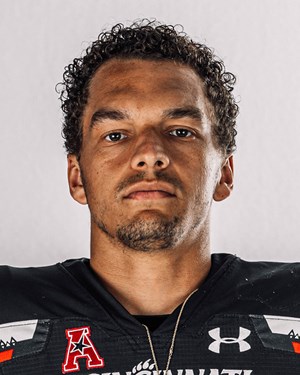
Arlington, Texas – The No. 4-ranked Cincinnati football team went toe-to-toe with the defending national champions before ultimately falling to No. 1 Alabama, 27-6, in the College Football Playoff Semifinals at the 86th Goodyear Cotton Bowl Classic on Friday at AT&T Stadium.
Trailing 24-6, the Bearcats threatened in the fourth quarter after senior quarterback Desmond Ridder found Michael Young for a 28-yard catch that placed Cincinnati inside Alabama territory. Cincinnati had a 4th-and-3 play from the Crimson Tide 22, but Ridder was sacked with just over 10 minutes remaining in the game.
Alabama tacked on field goal on the next drive for the final score.
“It doesn’t feel great right now, but we at least had the opportunity to step back here, reflect a little bit more and recognize where it is that we’ve come from just in the last five years with this group of guys,” head coach Luke Fickell said. “I don’t know if I can see it or pick it up right now, but I promise my wife will make me, later tonight, take a couple deep breaths and recognize where these guys have taken us and what they’ve done for us.”
Led by 32 seniors, the Bearcats finish 13-1, completing the greatest season in school history with their first College Football Playoff appearance, battling the defending national champions in front of a raucous sellout crowd of 76,313 inside the Dallas Cowboys’ stadium.
Cincinnati finished among the nation’s Top 10 teams in scoring offense and scoring defense. UC set single-season school records for touchdowns (70) and points (516), featured the Jim Thorpe Award winner (Coby Bryant), a consensus All-American (Ahmad “Sauce” Gardner) and 12 first-team All-Conference players. Fickell also won nearly every national coach of the year award.
Ridder passed for 144 yards, completing 17 of 32 attempts, and wraps up his career as the most-decorated Bearcat in school history. His 44 wins are the third-most any quarterback in college football history.
“I’ve met a lot of good, close friends that are going to be with me for the rest of my life,” Ridder said in the postgame press conference. “I’ve played a lot of great football with a lot of great players, a lot of great coaches. I’m going to remember every single year, from my true freshman year when I wasn’t playing until now. This loss I just want to thank coach Fick (head coach Luke Fickell) and all the coaching staff, all the training staff, academic staff and all of our fans who supported us even in our down years. Everyone who came out this weekend, traveled to Dallas to support us, I just want to say thank you.”
Jerome Ford led the ground game with 15 rushes for 77 yards, while Young (55 yards) and Tre Tucker (43) each had four catches. Darrian Beavers, whose next game will be the Reese’s Senior Bowl in February, paced the defense with 10 tackles, including two for loss and a sack.
Cincinnati battled tough and kept the game close, holding the Crimson Tide scoreless in the third quarter, and trailed 17-6 entering the fourth quarter.
Perhaps Alabama head coach Nick Saban summed up the Cincinnati performance best.
“There’s no doubt in my mind, Cincinnati belongs in the playoff,” Saban said. “They gave us all we could handle.”
Alabama rushed for 301 yards and was led by Cotton Bowl Most Outstanding Offensive Player Brian Robinson, Jr., who had 204 yards on the ground. Crimson Tide defensive end Will Anderson, Jr. was named the Cotton Bowl Most Outstanding Defensive Player after totaling six tackles and two sacks.
The Bearcats held Alabama quarterback Bryce Young to 181 yards on 17-of-28 passing with an interception, but the Heisman Trophy winner accounted for all of the game’s touchdowns with passes.
Cincinnati opened the second half fast, receiving the ball and promptly marching down the field in 11 plays as Ridder completed his first five passes after the intermission and drove UC to the Tide 19-yard line. However, the Bearcats settled for a 37-yard field goal from Cole Smith that cut Alabama’s lead to 17-6 at the 9:57 mark in the third quarter.
Cincinnati and Alabama traded punts on the next two possessions before Bryce Young sailed an interception to senior safety Brian Cook while he was being hit by senior defensive tackle Curtis Brooks on a third-and-6 play with five minutes left in the third quarter. UC could not capitalize on the turnover as Ridder was sacked on third-and-16 and the Bearcats were forced to punt once again.
Alabama scored first in the game, using 11 plays to move 75 yards on its first possession. The Crimson Tide ran the ball on its first 10 plays before quarterback Bryce Young found receiver Slade Bolden for the game’s first touchdown at the 9:51 mark in the first quarter.
Ridder connected with senior wide receiver Michael Young twice on the first possession for UC, including a 19-yard first down. He found sophomore receiver Tyler Scott for a 22-yard pass that brought the Bearcats inside the 10-yard line and forced Alabama to call timeout at the 5:48 mark. The Bearcats’ drive stalled at the 9, however. Smith drilled a 33-yard field goal – his first since Oct. 8 – to make it 7-3.
A sack for a six-yard loss by Beavers forced Alabama to kick a 26-yard field goal, which gave the Crimson Tide a 10-3 at the start of the second quarter.
After a three-and-out on their first possession of the second quarter, the Bearcats’ defense forced a three-and-out of their own.
Freshman punter Mason Fletcher pinned Alabama back inside their own 10-yard line twice in the second quarter. The first time on a 54-yard punt that had the Tide start from their own 9. The second was a 48-yard punt that was muffed by returner JoJo Earle and left Alabama starting from the 6. The results of the drives were a 44-yard missed field goal by Will Reichard and a 44-yard touchdown pass from Young to Ja’Core Brooks that made the score 17-3 just before halftime.
RESERVE YOUR 2022 SEASON TICKETS NOW The Cincinnati Athletics Ticket Office is now accepting deposits for 2022 football season tickets here.
FOLLOW THE BEARCATS For all the latest information on Cincinnati Athletics, please visit GoBEARCATS.com. For up-to-the-minute updates, follow Cincinnati Athletics on Twitter, Instagram and Facebook.
No. 4 Cincinnati will play in the CFP Semifinals at the Cotton Bowl on Friday at 2:30 CT
Zach Stipe Associate AD / Communications for UC Football
Arlington, Texas – The No. 4-ranked Cincinnati football team has made history all season, advancing to the College Football Playoff, while breaking countless records.
The Bearcats will look to make more history inside AT&T Stadium on Friday when they meet No. 1 Alabama in the 86th Goodyear Cotton Bowl Classic at 2:30 p.m. CT in Arlington, Texas.
On Thursday, UC wrapped up its final practice at the Dallas Cowboys’ stadium before returning to the team hotel for final preparations.
The Bearcats (13-0) will face an Alabama team (12-1) that is in its seventh CFP appearance and coming off a dominant win over No. 3 Georgia in the SEC Championship.
Cincinnati will look to improve to 14-0 for the first time in school history and advance to the national championship game in Indianapolis on Jan. 10.
UC is coming off a convincing win over No. 20 Houston in the American Athletic Conference championship game, 35-20, on Dec. 4.
“This isn’t a team that wants to ‘shock the world’ or anything like that,” said UC head coach Luke Fickell. “It’s a team that really believes in what it is that they’ve done and loves challenges. I think so far, that’s been the message for us. We understand that it’s a larger challenge than maybe anything we’ve faced in the past. The team (Alabama) has obviously been in the playoffs seven times and are, as we refer to them, the champs. I think the messaging is kind of specific to who our guys are and what they’ve been through. It’s definitely about, ‘these are the champs, and to be the champs, you’re going to have to be at your best.’”
FOLLOW THE BEARCATS For all the latest information on Cincinnati Athletics, please visit GoBEARCATS.com. For up-to-the-minute updates, follow Cincinnati Athletics on Twitter, Instagram and Facebook.
Washington – President Joe Biden on Thursday signed into law legislation declaring a legal public holiday annually on June 19, the date of the end of slavery in the U.S. known as Juneteenth.
“Throughout history, Juneteenth has been known by many names—Jubilee Day, Freedom Day, Liberation Day,” Vice President Kamala Harris said at the White House signing ceremony. “And today, a national holiday.”
She noted that the White House was built by enslaved people, and the ceremony was taking place footsteps away from where President Abraham Lincoln signed the Emancipation Proclamation.
“Today is a day of celebration. It is not only a day of pride. It’s also a day for us to reaffirm and rededicate ourselves to action,” Harris said.
Formally called the “Juneteenth National Independence Day Act,” the bipartisan legislation sped through the U.S. Senate earlier this week without objection and passed the House on a 415-14 vote on Wednesday night. It means Juneteenth will be recognized as a federal holiday, like Memorial Day or July Fourth. Many states already designate it as a holiday as well.
All 14 House votes in opposition were from Republicans and included Andy Biggs and Paul Gosar of Arizona; Andrew Clyde of Georgia; Scott DesJarlais of Tennessee; Matt Rosendale of Montana; and Tom Tiffany of Wisconsin. All of Ohio’s U.S. Congressional representatives voted in favor.
The Office of Personnel Management said the holiday would be observed beginning this year, and so federal offices will be closed on Friday since June 19 falls on a Saturday.
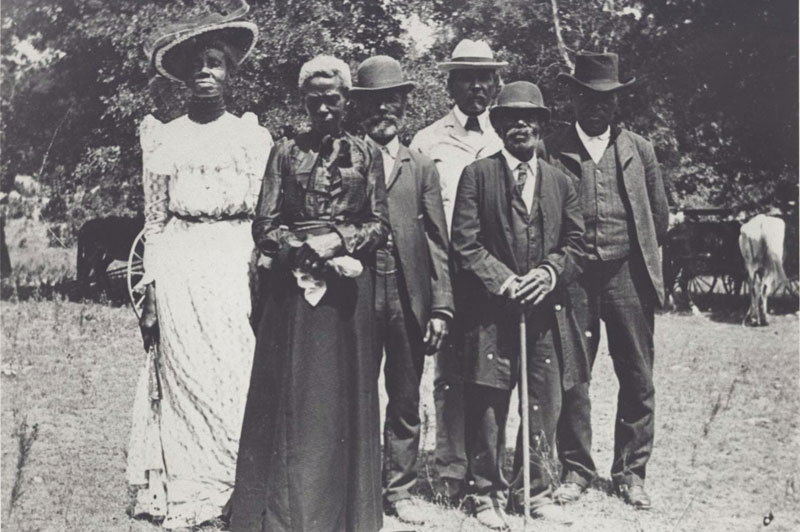
Also called Emancipation Day, the holiday commemorates the day in 1865 that Union soldiers arrived in Galveston, Texas, and ensured that enslaved people there would be freed. Lincoln had issued the Emancipation Proclamation in 1863, but the news took years to reach Texas and many other places.
Rep. Sheila Jackson Lee, a Texas Democrat, pushed the legislation for years in the House and gained more than 170 cosponsors.
“It has been a long journey,” she said on the House floor. “It has not been an easy journey. When we stand here today, we should be reminded of the fact that there were people who continued to experience the whips of a whip for two more years, even as Abraham Lincoln stood in the shining sun in the aftermath of Gettysburg to unite the Union and proclaim the slaves free in 1863.”
A cosponsor, Rep. Kweisi Mfume, a Maryland Democrat, said that the recognition of Juneteenth “is a reminder that we must continue to move forward in honor and in recognition of ourselves, our families, our neighbors, and the nameless and faceless generations of African Americans that we will never know.”
Some House Republicans raised questions about the holiday’s cost and the name of the bill.
Republican Rep. James Comer of Kentucky said that while he would back the measure, the House panel that oversees federal holidays did not have a chance to review it and there was no Congressional Budget Office estimate of the cost.
He said that a 2014 analysis by the Office of Management and Budget found it cost federal taxpayers $660 million in payroll and holiday premium costs when federal employees were given an extra holiday on the day after Christmas that year by executive order.
Rep. Danny K. Davis, an Illinois Democrat, responded that “whatever the cost, it will not come close to the cost of slavery.”
Other Republicans objected to using the term “Independence Day” in connection with Juneteenth, saying it would cause confusion with July Fourth. They suggested instead calling it Emancipation Day or Freedom Day.
“We support the holiday. But why would the Democrats want to politicize this by co-opting the name of our sacred holiday of Independence Day?” said Rep. Clay Higgins of Louisiana.
“Why would it not be named the Juneteenth National Emancipation Day? Why would we want to inject conflict about this? I don’t understand this body and the way it moves forward contrary to the best interests of the American people.”
At the signing ceremony, Biden noted Juneteenth would be the first new national holiday since Martin Luther King Day was enacted nearly 40 years ago, and that signing the bill was “one of the greatest honors I’ve had as president.”
Lawmakers gathered around Biden as he signed the bill included Democratic Sens. Raphael Warnock of Georgia and Tina Smith of Minnesota, and Rep. Joyce Beatty of Ohio, the chair of the Congressional Black Caucus.
Also present was Opal Lee, a 94-year-old activist from Texas who has campaigned for the holiday’s recognition for years. Harris put her arm around Lee as Biden signed the bill.
Biden pointed out that Thursday was the sixth anniversary of the slaying of nine parishioners at Mother Emanuel AME Church in Charleston, S.C., all African Americans, by a 21-year-old man who called himself a white supremacist.
Biden said the anniversary is “a reminder that our work to root out hate never ends.”
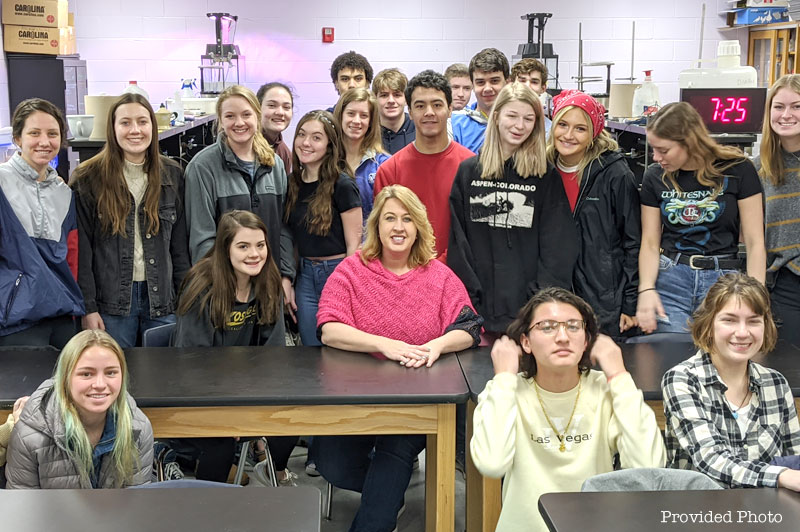
Amy Aspenwall (center), surrounded here by students in one of her AP Environmental Sciences classes at Loveland High School, is one of 20 teachers nationwide selected for “Nourish the Future” national teacher leadership training in San Antonio, Texas, in February.
Loveland, Ohio – As one of only 20 teachers nationwide, Loveland High School Science Teacher Amy Aspenwall has been selected to attend the national teacher leadership training by EducationProjects.org in San Antonio, Texas, in February. The training will take place at the Commodity Classic, the nation’s largest agricultural trade show, and professional development event.
“This is really exciting for me personally, but also for Loveland High School,” said Aspenwall. “It will provide leadership opportunities and allow collaboration with teachers around the country to identify and create new problem-based modules, flipped classroom materials, and science labs for our students.”
It will also highlight the connection between the science they teach in the classroom and the application to food production and food security.
Loveland High School science teacher Amy Aspenwall
EducationProjects.org has connected industry to the classroom for more than 20 years. The upcoming training, “Nourish the Future,” will introduce participants to the latest developments in water quality, sustainable agriculture, and 21st-century tools and technology in precision agriculture. It will allow teachers to take part in a curated tour of the trade show, with a focus on the science and engineering that support the production of food, fiber, and fuel. It will also highlight the connection between the science they teach in the classroom and the application to food production and food security. After the three-day event, teachers will continue to collaborate and access additional training through webinars and national and regional conferences.
“Agriculture is an important aspect of our work and a great opportunity to engage students in concepts and activities that impact their own lives,” said Aspenwall.
“Agriculture is an important aspect of our work and a great opportunity to engage students in concepts and activities that impact their own lives,” said Aspenwall. “When that connection is made, students are empowered to become more involved and engaged in environmental issues.”
Loveland City School District and Amy Aspenwall receives Sustainability Award by local chamber in 2018
Through the nomination of Aspenwall and her AP Environmental Science class at LHS, Loveland City Schools earned the Sustainability Award by the Little Miami River Chamber Alliance in 2018. The award recognized the work with students and the commitment to developing environmental leaders for the future. Aspenwall’s class continues to offer authentic, hands-on opportunities for students to understand issues like water quality and biodiversity, and allows them to develop innovative solutions to problems. The class was implemented at LHS in the fall of 2016 and was filled to capacity after only a couple of years.
Our continuing search for Loveland’s kindest, sweetest people and what they’re made of. What is our DNA match?
Loveland Magazine columnist Cassie Mattia is a resident of Historic Downtown Loveland
Loveland, Ohio – Life presents opportunities in the most unexpected ways. The opportunity could display itself at work, in nature, through another person or while you are simply enjoying an intense session of Netflix. What’s important is when an opportunity presents itself, you run with it because that opportunity may never present itself again. This is one of the many life mottos, former Loveland Prince of Peace Lutheran Church (POP) Pastor, Tom Stroeh lives by.
Tom Stroeh became very active in a church congregation at a young age as he was growing up with his sister in Wisconsin.
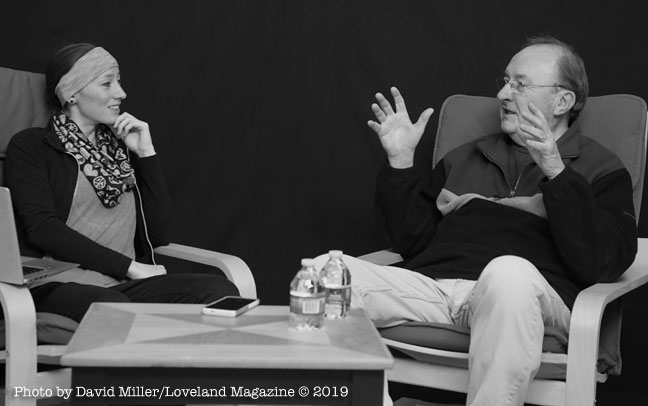
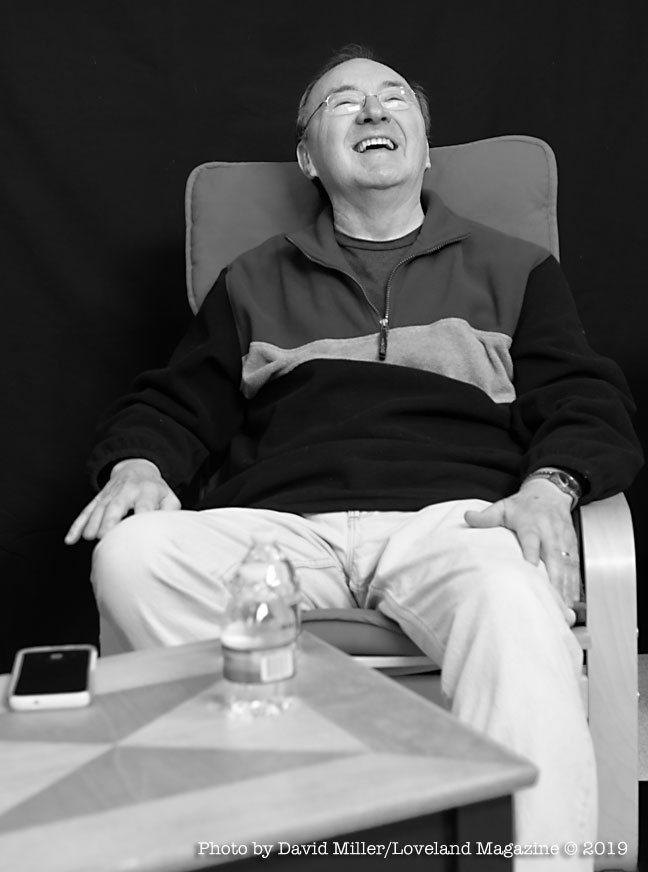
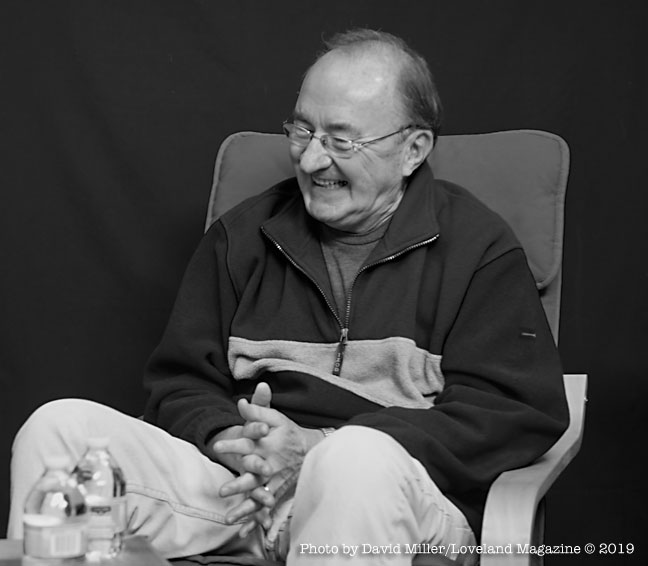
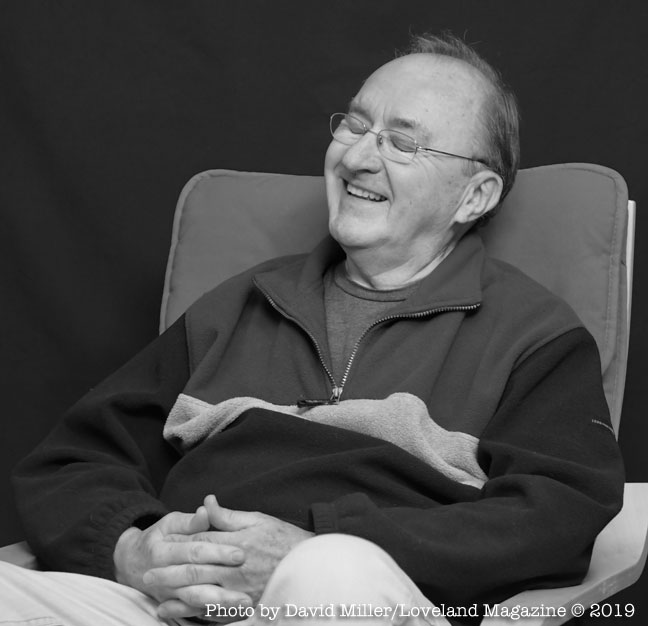
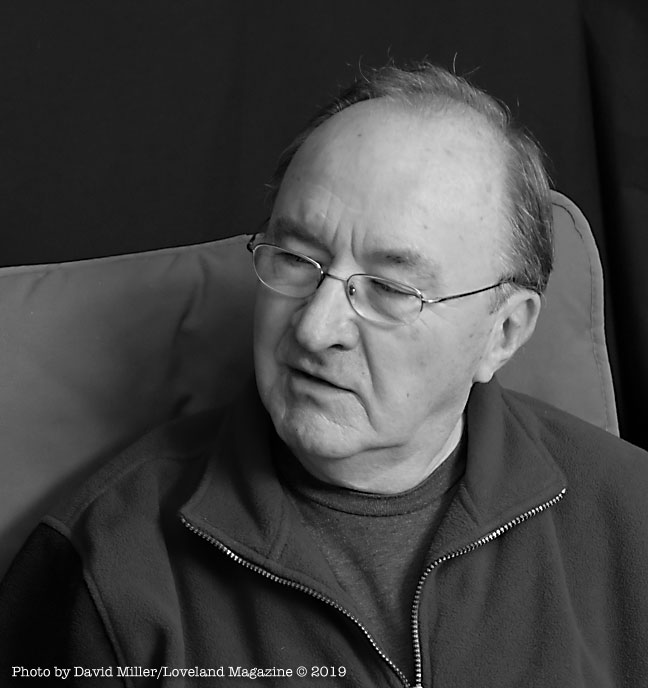
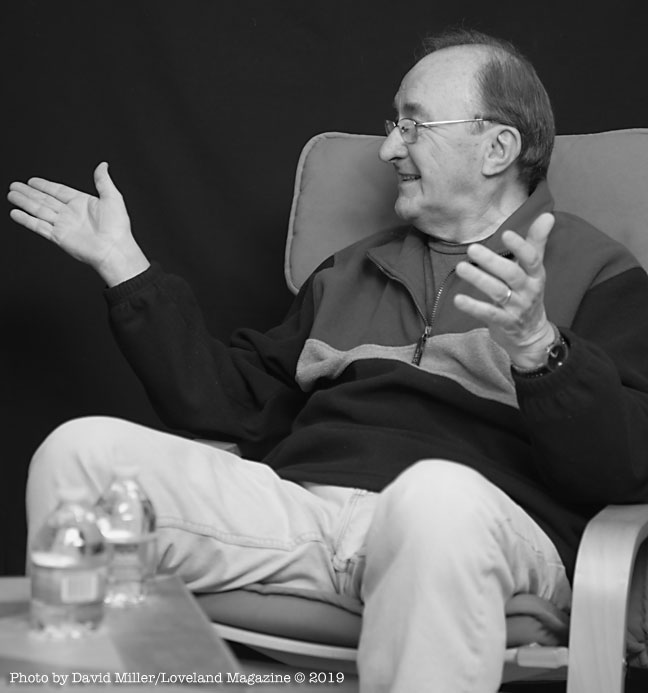
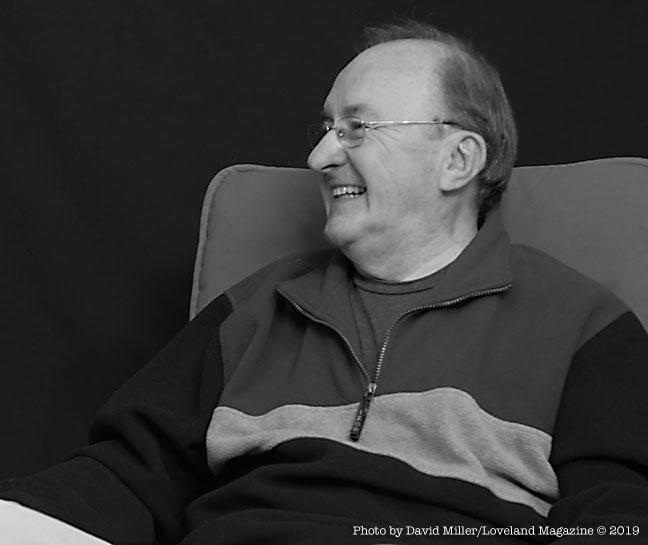
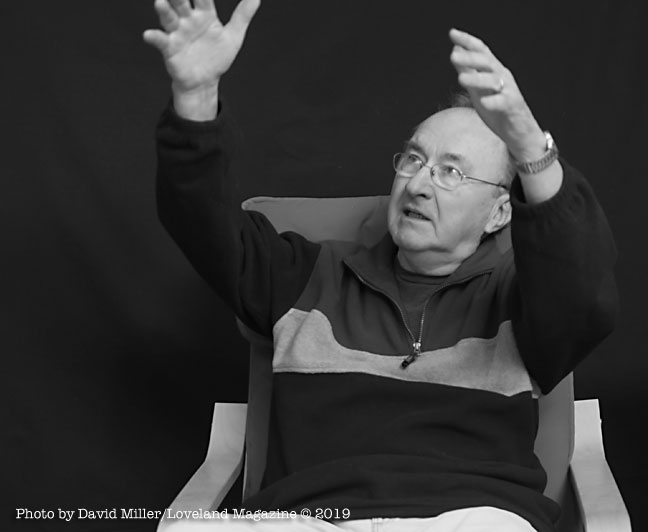
Cassie Mattia interviewing Tom Stroeh at the Loveland Magazine office.
“My parents were very important. Hospitality was really important to them. They were very welcoming. All of that kind of carried over into my involvement with the church congregation,” Stroeh explained.
Both of Stroeh’s parents went to church on a regular basis, but his pastor at the church he attended took a particular interest in Stroeh telling him on multiple occasions that he was going to be a pastor when he grew up.
My hometown pastor was very influential in getting me to where I wanted to be as a pastor,” Stroeh said, “At the congregation, when the choir was singing or the offering was taken up, the pastor would leave after the sermon and go visit Sunday school classes. The next thing that would happen would be the prayers of the church. One Sunday I was the acolyte and I was sitting near the organist and the pastor didn’t come back! I said, ‘The pastor’s not here yet,’ and they said, ‘Well then you go lead the prayers!’ I was 13 at the time. It was what I call an ‘Isaiah’ moment. So with a quivering voice, I led the prayers from the service book.”
That one moment inspired Stroeh to follow his heart and work towards becoming a part of the Ministry. After graduating with an English degree from St. Olaf College, a small Lutheran college in Minnesota, Stroeh went to the Northwestern Lutheran Seminary in Minneapolis. He then conducted his internship in Lancaster, Pennsylvania where he met his wife Joan, who was a member of the church congregation Stroeh was interning at. Shortly after meeting the love of his life, the couple married and moved to Northern Texas, where Tom got his first opportunity to start a congregation.
“We started a ministry in Denton, Texas of basically knocking on doors! There were two universities in town so there was definitely a ministry to students,” Stroeh said.
As Stroeh and his wife worked hard, using their church congregation to unite a divided community that was affected heavily by racism, another opportunity arose. The Stroeh’s took in an African American boy named Alan and raised and nurtured him for 6 months.
“There was no one to take care of him at the time,” Stroeh explained, “So we took him in until they found good care for him. We didn’t think we could have any children, then we had 3 in 18 months!”
During The Stroeh’s time in Texas, they had twins, Dave and Kristen and their son John. In 1971, unfortunate events brought some very fortunate opportunities for Stroeh in the “Sweetheart of Ohio.”
“My wife and I were having health problems at both ends of our family. Joan’s dad had serious heart problems and my mother was diagnosed with terminal cancer,” Stroeh said, “I felt the need to try and get close to both parents so we could travel to see them when we needed to. Turned out there was availability in greater Cincinnati. We took John and the twins, who were at the time 1 and 2, and drove through the night from Denton, Texas to Loveland, Ohio. We moved into Loveland Heights in a fairly small house, but with an expanding family, we moved a year later to another subdivision. Things in Loveland were really quite different then! Loveland was a great town to raise our kids in,” Stroeh added.
Immediately upon arrival to Loveland, Stroeh was welcomed by the POP congregation as their new pastor and by the Loveland community as their newest family member.
“I knew I was a welcomed member of the community back in the summer of 1971 when Mayor Viola Philips invited me to ride with her in a red convertible in the 4th of July parade and throw out candy to the kids along the parade route,” Stroeh said, “One time I even got the opportunity to play the part of Reverend Kemper. It was the bicentennial for Loveland. I came riding in on a horse in a reenactment of Loveland’s first wedding!”
As Loveland and the POP congregation welcomed Stroeh with open arms he began to give back the love and support to the community in more ways than anyone could have ever imagined. Stroeh, the POP congregation, and other Loveland area churches formed Loveland Inter-Church Youth. Every Thursday at 6:30 AM the group would meet at POP for breakfast, listen to a speaker, worship, then the group would walk down to the high school. Stroeh and the POP team also led Bible study, tutoring, and parent support groups at subsidized housing
complexes in Loveland as well as lead worship at the Loveland Health Care Center. Stroeh continued the trend of always taking advantage of opportunities given to him by surveying the neighborhoods that surrounded Loveland and asking those people how he could serve them. By doing that, POP Kids School, a Christian Pre-School, was established. Stroeh and the POP congregation, along with St. Columban Church and Loveland United Methodist Church, also sponsored a family with 6 children from Laos.
While doing so much for the Loveland community and POP, the Stroeh’s added a 4th child to the family and the Loveland Community. Joan then returned to her passion teaching. She taught first grade at Loveland Elementary School and retired in 2005. “Joan made quite the impact on the Loveland school system,” said Tom Stroeh.
“Our youngest son Dan has quite a story. When he was freshman at Wittenberg University he was diagnosed with Neurofibromatosis, which is where tumors form around the nerves. Sometimes the tumors are external but his were internal. We were told they were inoperable.
One of the things about Loveland that I appreciate so much is that we are close to a lot of things especially medical facilities. Dan was a participant in a drug test through the National Institutes of Health in Bethesda Maryland and Cincinnati Children’s Hospital was instrumental in getting him accepted into the program, hoping that maybe it would decrease the size of the tumors and decrease the amount of pain. Along with the tumors against nerves you can imagine what it would do with the pain level. He went back to school and was on this drug for 28 days, then would be off it for 2 weeks and come back to get examined. He continued that cycle for a whole year.
Dan was a creative writing and drama major. For his senior thesis he decided to write a play and he called it ‘‘it is no desert.’ He performed it himself as it was a one person play. By this time he has a brace on both legs and walked with a cane. Every once in a while he had to use a wheelchair but now he is mostly in a wheelchair.
His theater professor called him over summer break and said ‘I think we should enter your play into the Kennedy Center Theater competition.’ It’s a national competition for student playwrights. During Homecoming weekend for the school he performed his play and the judges for the competition were there. We found out a few weeks later that he made the next round. He performed his play again in Milwaukee and then after Christmas that year he found out he won the competition.
He performed his play at the Aronoff Center a couple of times. Again I appreciated the support from the Prince of Peace congregation the Loveland Community. He also to perform it at the John F. Kennedy Center for the Performing Arts in D.C. People came all the way from Loveland to the Kennedy Center!
The play is about him being an athlete on the soccer team and then he got this disease – and the whole diagnostic process and sort of what he had to do to adjust to it. It was sometimes gut wrenching but other times it was actually really funny. One of the rewards for winning was that he got his play published by Samuel French.
It’s quite something for a parent to watch something on stage that’s a story you know all too well.”
“My wife Joan went through cancer in the ’80s. She was a real inspiration to me,” Stroeh said. “She also inspired a lot of her students, so when she got sick, the Loveland community was great. The Loveland teachers brought us food and of course, the POP congregation was there too.”
Stroeh retired after being a pastor for 34 and a half years at POP. During that time Stroeh gave everything he had to his church congregation and to the community of Loveland.
Stroeh said, “I think one of the needs we have these days is that we need to truly listen to what drives a person and what has shaped and molded that person. What value system do they have? What gives them joy or a sense of accomplishment.
“I loved to hear people’s stories,” Stroeh said, “I think one of the needs we have these days is that we need to truly listen to what drives a person and what has shaped and molded that person. What value system do they have? What gives them joy or a sense of accomplishment. We don’t hear each other enough. I remember one story in particular about a Vietnam veteran. He would come to my office at night usually drinking. When he was drinking he would often reminisce about his experience in Vietnam,” Stroeh explained. “Unfortunately he had a friend in Vietnam who would take pictures of the people this guy had killed. So he had this stack of pictures that when he would drink he would go through and become filled with guilt. There were adults and children in those photos. It was terrible. We talked many times about it and finally one night when he came in and it was obvious he had been drinking, I said ‘Come to the sanctuary with me.’ We knelt at the altar and we prayed. Then I said
“Will you give those photos to me? I want to put them on the altar and after you leave I’m going to destroy them.”
‘Will you give those photos to me? I want to put them on the altar and after you leave I’m going to destroy them.’ And he did. Every time he looked at those photos he was reliving the experience. It was destroying him. He probably had those photos for 6 years. Eventually, the family moved from Loveland and I haven’t heard from them since, but it’s my hope that by letting go of the past he was able to find some peace.”
If you ask those around the community about Tom Stroeh many will say that during his career as a pastor he was instrumental in helping those less fortunate and in welcoming diversity into the community of Loveland.
“One of the things that came out of the ministerial association when I was still working was the Loveland food pantry. It was one of the things that I felt was very important for those less fortunate in the community,” Stroeh explained, “It was important to me that the church provided a space for the food pantry and so now the life food pantry is still at Prince of Peace. Loveland has always had a variety of incomes. It’s my hope that we could continue to become more diverse and anything that I can still do to encourage that I want to do,” Stroeh said.
Since retirement Stroeh has been staying heavily involved in the Loveland Community as well as the Prince of Peace congregation.
“I am still singing in two choirs at church. Music is a ministry to me. The fellowship of singing in a group is beyond words. We just started an all men’s choir a year ago that goes to a nursing home once a month and it’s just a really fun experience,” Stroeh said, “I also go to a senior group where we talk about our medications. I also visit retired pastors and their spouses and that’s really fun visiting them. A couple years ago I got involved in local politics as well. My two biggest passions are teaching and preaching,” Stroeh added.
Just last year the Loveland community got their turn to show Stroeh their appreciation for what he has done for them.
“Last May, I had a stroke and when I was at Good Samaritan Hospital I went blind. The next day I was able to see and when I woke up my family was surrounding me. All of my kids were there so I knew that what happened had to have been serious,” Stroeh explained, “I stayed a week in the hospital and then I was told I would need bypass surgery. In July, I had quadruple bypass surgery. It gave me the opportunity to reappropriate the gifts that I have been given. What was truly amazing was what the Loveland community and POP congregation did for my family and me. The church brought us food and of course prayers. They visited and just did everything they could to support Joan and me.
“Gratitude is a prominent theme and motivator for me.”
Gratitude is a prominent theme and motivator for me. I don’t take things for granted like I used to because it could be gone,” Stroeh said.
Stroeh successfully recovered from his bypass surgery and is now focusing on living every day like it’s going to be his last.
“I now take every opportunity that I can to get outdoors and enjoy creation,” Stroeh said.
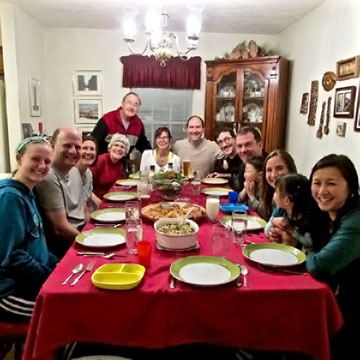
Stroeh family photo around Christmas dinner table
A note from Pastor Stroeh:
Of course, after I got home from our interview, I thought of some things I wished I had said.For what they’re worth here they are:
• I knew I was a welcomed member of the community back in the summer of 1971 when Mayor Viola Philips invited me to ride with her in a red convertible in the 4th of July parade and throw out candy to the kids along the parade route.
• Prince of Peace Church has a long history of outreach and service to the community:
a. Back in the 1970s as an alternative to the prevalent drug culture in the area, we and area churches formed Loveland Inter-Church Youth (ICY —Cool Christians!) — the group would meet in our building for breakfast, a speaker and worship every Thursday at 6:30 a.m. and then walk down to the high school which was on Lebanon Road at that time.
b. A.A. and Al-anon have been meeting at POP since the sixties.
c. We once housed the Hamilton County Well-baby Clinic.
d. For many years:a team from POP would lead worship at the Loveland Health Care Center;a team would lead Bible study, tutoring and parent support groups at the subsidized housing complexes
e. After surveying the surrounding neighborhoods and asking people how we could serve them, it was decided to establish POP Kids School – a Christiian pre-school.
• In the 1980s we helped (with St. Columban and Loveland United Methodist) to sponsor the Sinanthas – family of mother, father and six children from Laos.
• In the 1990’s we establisheda partnership with a Lutheran congregation in the state of Mecklenburg, in the former East Germany, just after the wall came down.
• Now POP supports the Haitian TImoun Foundation.Each year a number of our members spend time in Haiti.
• Among the things I like about Loveland is the school system.
• A watchword for me in life is “Where God guides, God also provides.”
• We have on our front lawn a sign (which was distributed by our church) that says:“HATE HAS NO HOME HERE.”
If you think you know someone in the community that has made a huge impact on Loveland and would be a great candidate for our Loveland’s DNA segment feel free to contact us.
Read MORE about the people who make up Loveland’s unique DNA…
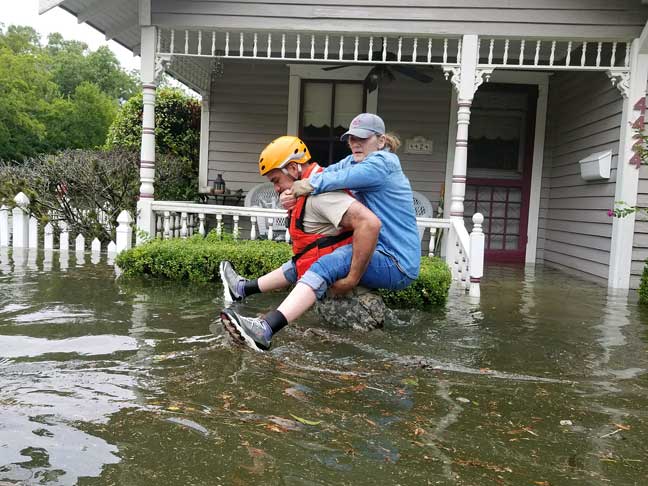
Texas National Guard soldiers conduct rescue operations in flooded areas around Houston, Texas 27 August, 2017. (Photos by 1Lt. Zachary West, 100th MPAD
Are you organizing to provide
Hurricane Harvey relief?
Here is how Loveland Magazine can help
Hello neighbors, friends, and readers,
If you are part of a local nonprofit, Mosque, Synagog, Church, school, company, or community group assisting the victims of Hurricane Harvey please send us information so Loveland Magazine can share it with the broader community.
Please be very specific about what you are doing, besides the Who, Why, What, When, and Where, provide us with specific information about what items you are collecting, and collection hours.
Please illustrate a proven need for items you might be collecting, and links to where your donations, etc., will ultimately be sent.
We will publish a list of ways local folks can help with relief efforts, but not if you do not send us information that people can use to best determine how to effectively help.
If you are heading to Texas or Louisiana to volunteer we’d also like to help tell your story.
We promise the best customer service, and beyond a doubt, the best selection of merchandise in the area Pizazz Studio is a whimsical gift shop in downtown Loveland.





 Classic



 Our continuing search for Loveland’s kindest, sweetest people and what they’re made of. What is our DNA match?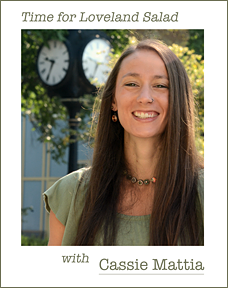
 My hometown pastor was very influential in getting me to where I wanted to be as a pastor,” Stroeh said, “At the congregation, when the choir was singing or the offering was taken up, the pastor would leave after the sermon and go visit Sunday school classes. The next thing that would happen would be the prayers of the church. One Sunday I was the acolyte and I was sitting near the organist and the pastor didn’t come back! I said, ‘The pastor’s not here yet,’ and they said, ‘Well then you go lead the prayers!’ I was 13 at the time. It was what I call an ‘Isaiah’ moment. So with a quivering voice, I led the prayers from the service book.”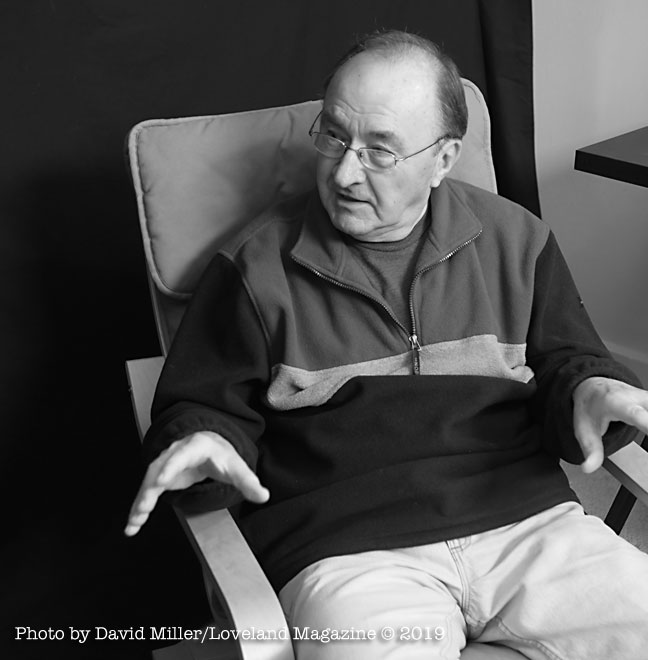
 “There was no one to take care of him at the time,” Stroeh explained, “So we took him in until they found good care for him. We didn’t think we could have any children, then we had 3 in 18 months!”
 Immediately upon arrival to Loveland, Stroeh was welcomed by the POP congregation as their new pastor and by the Loveland community as their newest family member.
 complexes in Loveland as well as lead worship at the Loveland Health Care Center. Stroeh continued the trend of always taking advantage of opportunities given to him by surveying the neighborhoods that surrounded Loveland and asking those people how he could serve them. By doing that, POP Kids School, a Christian Pre-School, was established. Stroeh and the POP congregation, along with St. Columban Church and Loveland United Methodist Church, also sponsored a family with 6 children from Laos.
 “One of the things that came out of the ministerial association when I was still working was the Loveland food pantry. It was one of the things that I felt was very important for those less fortunate in the community,” Stroeh explained, “It was important to me that the church provided a space for the food pantry and so now the life food pantry is still at Prince of Peace. Loveland has always had a variety of incomes. It’s my hope that we could continue to become more diverse and anything that I can still do to encourage that I want to do,” Stroeh said.
 “Last May, I had a stroke and when I was at Good Samaritan Hospital I went blind. The next day I was able to see and when I woke up my family was surrounding me. All of my kids were there so I knew that what happened had to have been serious,” Stroeh explained, “I stayed a week in the hospital and then I was told I would need bypass surgery. In July, I had quadruple bypass surgery. It gave me the opportunity to reappropriate the gifts that I have been given. What was truly amazing was what the Loveland community and POP congregation did for my family and me. The church brought us food and of course prayers. They visited and just did everything they could to support Joan and me.