Tag: training

  • DeWine signs law removing training, background check, permitting requirement to conceal carry

    DeWine signs law removing training, background check, permitting requirement to conceal carry

    BY: JAKE ZUCKERMAN – Ohio Capital Journal

    Gov. Mike DeWine signed a bill into law Monday removing training, background check and permitting requirements to carry a concealed weapon in Ohio.

    When the law takes effect in 90 days, all Ohioans aged 21 and older who are lawfully allowed to possess a weapon will be able to carry it concealed on their persons. Prior law required them to undergo eight hours of training, a background check, and an application through their local sheriff.

    The enactment of “constitutional carry” or “permitless carry” marks a long-coveted win for the gun rights movement and firearms lobby, and a major loss for Democrats, anti-gun violence activists, police organizations and public health researchers who opposed it.

    Ohio is now the 23nd state in the U.S. with a permitless carry law, according to a count from the U.S. Concealed Carry Association. Several states including Iowa, Tennessee, Texas, and Wyoming passed versions of the law in 2021. Alabama signed the legislation into law just last week.“This is a day that will go down in history,” said Dean Rieck, Executive Director of Buckeye Firearms Association. “The brass ring has always been to eliminate the licensing mandate … and now, finally, that day is here. This is a great moment for Ohio and for those who wish to more fully exercise their Constitutional right to keep and bear arms.”

    The bill passed the House 58-36, with only Republicans in support. Two Republicans voted in opposition with Democrats, though at least one said he did so only because the bill does not go far enough.

    It passed in the Senate 24-9. All Democrats voted against the bill. Sen. Jerry Cirino, R-Kirtland, voted against the bill when the Senate first passed it in December. However, he reversed on the final Senate vote.

    Supporters of the legislation say it’s a logical extension of the Second Amendment to the U.S. Constitution, which states: “A well regulated Militia, being necessary to the security of a free State, the right of the people to keep and bear Arms, shall not be infringed.”

    Sen. Terry Johnson, R-McDermott, the bill’s lead sponsor, said in a floor speech the bill is also in some ways a response to protesters “burning down their own cities” — a reference to racial justice protests that formed in the wake of a police officer murdering George Floyd during a stop in the summer of 2020.

    Critics say the policy will enable undertrained and possibly dangerous or unstable people to carry a concealed weapon. Public health research has linked concealed carry policies to increases in violent crimes.

    For instance, the American Journal of Public Health found that states with looser concealed carry regulations were associated with an 11% increase in handgun homicide rates than states with stricter policies. Modeling from the National Bureau of Economic Research found states that adopt concealed carry laws experience between a 13% and 15% increase in violent crime in the 10 years after implementation.

    According to the Health Policy Institute of Ohio, between 1999 and 2020 there have been large increases in annual rates of homicides (123%) and suicides (49%) in the state. While the prevalence of guns in suicides is steady, they’re becoming increasingly prevalent in homicides.

    However, gun supporters often point to a study published in the American College of Surgeons that didn’t identify any significant association after states adopted looser gun policies.

    In a statement, House Minority Leader Allison Russo criticized DeWine, emphasizing the thousands of concealed carry permits that are denied, revoked or suspended every year under the current system. While permitless carry doesn’t change who can possess a gun, it removes an additional layer of scrutiny within the current system.

    “Removing these responsible and reasonable precautions compromises the safety and security of our communities and law enforcement,” Russo said. “SB 215 completely betrays Ohioans who have called time after time for commonsense gun safety legislation, not extreme bills that endanger the lives of our children and families. Republicans have made it crystal clear that they value the approval of the gun lobby more than the lives of Ohioans and the police officers who protect our communities every day.”

    Gary Wolske, president of the Fraternal Order of Police of Ohio, spoke out against the law in a Columbus Dispatch column. He argued the requirement to seek a permit is a reasonable one that strikes a balance between constitutional rights, officer safety, and public safety. The new law also removes a requirement under current law that those carrying a weapon “promptly” notify an officer that they’re armed. Instead, people who are carrying need only inform an officer they’re armed if the officer asks.

    Photo by Matthew Hatcher/Getty Images

    The Ohio Supreme Court has held since 2003 that “there is no constitutional right to bear concealed weapons.” While the right to bear arms, the court said, is fundamental, it is not without limitations.

    Since then, Ohio has steadily loosened its gun laws.

    Ohio first enacted a concealed program shortly thereafter in 2004. Several of its sponsors at the time remain in office including (by their current offices) Auditor Keith Faber, Lt. Gov. Jon Husted; congressmen Bob Gibbs, Jim Jordan and Bob Latta; state Sens. Bob Peterson, Tim Schaffer and Kirk Schuring; and state Reps. Jamie Callender, Bill Seitz, Scott Oelslager, Tom Patton and Jean Schmidt.

    Two years later, the legislature passed a law preemptively blocking Ohio cities from passing any gun restrictions stricter than those established by the state. The law was used to squash lawsuits from Ohio cities including Clyde, Cleveland and Cincinnati seeking to regulate guns within their borders.

    In March 2015, a new law reduced the required training hours to receive a concealed carry permit to eight from 12. Early last year, Gov. Mike DeWine signed a “stand your ground” bill into law, which removes the legal requirement that a person try to retreat from a perceived attack before responding with lethal force.

    The governor announced passage of the permitless carry bill in a news release comingled with several other bills. He didn’t offer any comment.


  • LHS’s Head Women’s Volleyball Coach Tells us What his Athletes are Doing to Stay in Shape!

    LHS’s Head Women’s Volleyball Coach Tells us What his Athletes are Doing to Stay in Shape!

    by Cassie Mattia

    Loveland, Ohio – With May arriving in just a few days, many LHS students are still trying to process that they will not be stepping foot back into their schools for the remainder of the academic year. LHS student-athletes also received some devastating news last week confirming that they would not be competing in their designated Spring sport for the remainder of the school year. With all of the unfortunate news, LHS coaches have been trying to place a positive spin on everything by providing their athletes with workouts that they can do at home as well as a variety of other motivational tools!

    LHS’s Head Women’s Volleyball Coach, Brian Baugh, is one of the LHS Coaches that has really been dedicating a lot of his time during the Stay At Home Order to his team in order to keep them both motivated and dedicated to their craft.

    “For Women’s volleyball, the Spring and Summer are extremely important for getting the girls ready for the season. Typically we would hold open gyms and lift throughout the week,” Baugh said, “Many of the girls would be participating in club season as well, but like every team, we have had to adapt. We are fortunate that at Loveland we have Strength and Conditioning Coach, Derek Berry, on staff. He puts together workouts that are pushed out to our players through the Team Buildr app. It’s a great way for the athletes to work out at home and for me to track their workouts.”
    Coach Baugh told us that many of his players have gotten very creative with their volleyball training, creating things around the house to help them work on their skills. Many of the team’s siblings and parents are helping them at home with their skill sets as well!

    LHS’s Head Women’s Volleyball Coach, Brian Baugh

    “To me, the most important thing is to come together as a team, so that whenever we get back on that court, we are building each other up and have each other’s backs when things get tough,” Baugh explained, “We are fortunate that our future seniors are really leading the charge. We have great leaders in Maya Jepson, Diana Clark, Abbie Miller, Alex Miller, Faith Meece, and Ellie Egan. They are high character girls. They have created different competitions for the team to complete during the quarantine. For example, they did a baking competition where they baked and decorated cakes and then put them on Twitter to have fans vote for the best. They also created a virtual pepper video that they put on Twitter. We have been sharing baby pictures of each player and are having fans guess which player or coach is featured in the picture. We also have been holding Google Meets weekly to check-in on one another.”
    Coach Baugh says he has been challenging his players weekly. One of the ways Coach Baugh has been challenging his team during the isolation period is by asking them once a week how they have improved as a player and a person. After the player comes up with their answer Coach Baugh has them share their response with the team.
    “It has certainly been a challenge not being on the court, but I am so impressed with how the players have responded during this time off,” Coach Baugh said with pride, “I cannot wait to see how they go for that fourth straight ECC title this coming season!”

    For more LHS sports updates stay tuned to the Loveland Sports 411 With Cassie Mattia!


  • LHS’s Men’s Track and Field Coach Tells us What his Athletes are Doing to Stay in Shape!

    LHS’s Men’s Track and Field Coach Tells us What his Athletes are Doing to Stay in Shape!

    On Senior Night, April 26, 2019, during the Dawn Dahart Track and Field Invitational, Cooper Smeller cleared 14’9” to break the school pole vault record by an inch.

    by Cassie Mattia

    Loveland, Ohio – As May inches closer and closer, many LHS athletes are working hard to stay in the best shape they can in preparation for their Spring seasons. School is set to potentially open on May 4th and if indeed that happens Spring sports will reconvene as well!

    Over the past couple of weeks, we have made it our goal to check in with LHS’s coaches and athletes to see just what they are doing to stay in shape in light of the COVID-19 outbreak. We have received some impressive responses from several motivated athletes and coaches! This week we chatted with LHS’s Head Men’s Track and Field Coach, James Vanatsky, to see what he is having his team do just in case the 2020 Track season continues.

    LHS’s Head Men’s Track and Field Coach, James Vanatsky

    Coach Vanatsky shared that he has been consistently sending out optional workouts every morning at 7:30 A.M. for his dedicated team.

    “Some of our guys are early risers and they want to know what the workout will be so they can plan accordingly as to where and how they may have to complete their workouts,” Vanatsky said, “We send our workouts out through an app we have used for several years called ‘Remind 101.’ Before the quarantine I would use the app to send reminders to our guys for all kinds of things in the off-season and in-season but is it obviously handy in our current situation.”

    Vanatsky also mentioned that the other Men’s Track team coaches have been getting involved by sending him daily optional workouts so that he can then add the workouts to what he sends out to the team.

    “Our strength coach Derek Berry sends the team various workouts they can do based on the teams’ access to available weights, dumbbells, stretch bands, etc,” Vanatsky explained, “Our kids have told us they have been using the Loveland Bike Trail quite a bit for their workouts. They are supposed to be practicing social distancing while they workout but without being there in person (which we are not allowed to do) so it is hard to say if kids are completely by themselves or if they are getting up with a teammate or two in order to stay motivated and accountable for their workouts.”

    With large neighborhoods spread throughout Loveland and easy access to the Loveland Bike Trail, Coach Vanatsky told us that he is very fortunate that his team is able to train outside in a safe and open environment.

    “What percent of our kids are actually working out is hard to say,” Vanatsky added, “Also we do not know what intensity and regularity the workouts are being completed. It is obviously difficult to stay motivated when the season is not guaranteed or even probable at this point but we have a lot of very committed guys who I am sure are staying on top of their fitness levels.”

    Here at Loveland Magazine, we commend all of the LHS coaches and athletes that continue to strive for success through these very tough times! We will continue to bring you the latest updates on what LHS athletes and coaches are doing to stay in shape so STAY TUNED!


  • Yost provides training, grants to prevent school violence

    Yost provides training, grants to prevent school violence

    Columbus, Ohio – Ohio Attorney General Dave Yost today announced the development of new resources to address gaps in preventing targeted violence in schools. Training curriculum now available free for local school administrators, local law enforcement and others focuses on stopping violence before it starts.

    “When a shooter attacks a school we often learn afterward, there were people who knew this person posed a threat. But nothing was done,” said Yost. “We aim to prevent school violence using national proven best practices. This is not a top-down approach. Instead, we’re providing guidance to local law enforcement and school districts to fill this critical need.”

    The new training materials provide guidance on the use of threat assessment protocols, recognized by education and safety experts as effective means to enhance proactive targeted violence prevention efforts. The goal of a threat assessment is to identify persons of concern, assess their risk for engaging in violence or other harmful activities, and identify intervention strategies to manage that risk. The training is provided in a series of 10 video installments and a printed reference guide. These Ohio materials are also under review to be offered as an included resource on the new Federal School Safety Clearinghouse website, SchoolSafety.gov, launched earlier this month.

    “This is more than training for cops or school principals,” said Yost. “The local, state and national experts in our videos make it clear that prevention only happens when parents are involved, the local school board is involved, counselors are involved. The material we’re posting today is for everyone. It gives us all a direct connection into the effort.”

    Print and save Loveland Dairy Whip Opening Day Coupon

    “Many people in the education field are aware of the preventative value of threat assessment,” said Professor Dewey Cornell of the University of Virginia. A noted national expert on school safety and the prevention of school violence, Cornell is among the key experts whose insights are included in the new Ohio training materials. “This Ohio effort is unique in bringing together guidance from both law enforcement and educators, both inside and outside the state, and putting that information all in one location, giving schools a great jump-start on implementing it.”

    “We train school administrators, school resource officers and others about using a threat assessment model, and this is an excellent compilation of national, state and local input,” said U.S. Secret Service National Threat Assessment Center Chief Dr. Lina Alathari. “It’s being provided in a manner that can easily and immediately reach any local school building and any local law enforcement agency. We’re pleased to be involved.”

    As part of the program, grants are being made available to help local schools build their own threat assessment teams. School resource officers or other law enforcement personnel with primary responsibilities that include school safety may receive a $500 Ohio School Threat Assessment Training Grant when they complete the training and agree to help form or participate on a school-based threat assessment team.

    In addition to the 10-part video training series focused on threat assessments of concerning persons, an additional companion video available only to law enforcement personnel focuses on identifying vulnerabilities in the physical school building and grounds. Law enforcement personnel must complete all 11 portions of the training to qualify for the grant.

    “There’s no question, threat assessments and vulnerability assessments – when they’re done properly – can stop a lot of these incidents before they happen,” said Max Schachter, who founded the nonprofit Safe Schools For Alex after his 14-year-old son was killed in his English class during the Marjory Stoneman Douglas High School massacre in Parkland, Florida in 2018. Schachter shares his thoughts within the training materials. “I feel that if a threat assessment had been done correctly, my little boy and 16 others might still be alive today. I want to thank Ohio for pushing this information to schools, law enforcement and families across the state.”

    Ohio School Threat Assessment Training materials can be found online at www.ohioattorneygeneral.gov/threatassessment.


  • Governor Kasich issues common sense gun order

    Governor Kasich issues common sense gun order

    The database includes criminal conviction sentences, protection orders, and mental health records that, in Ohio, should be inputted.

    Columbus, Ohio – On Monday, Governor John R. Kasich took action to begin implementing recommendations of a working group he reconvened in April to improve the background check system that helps make sure guns stay out of the hands of people prohibited by law from having them.

    The group reached unanimous agreement on a proposal that has been introduced as legislation in the General Assembly HB 585/SB 288. Those bills include closing gaps in the background check system.

    The working group developed a 39-page report that assessed the current level of compliance in Ohio and identified barriers that exist to achieving comprehensive, up-to-date reporting. Those recommendations include ways to expand training and training to those responsible for submitting data into the system, reforms to reduce duplicative or unclear reporting responsibilities and ensure greater coordination among entities.

    In addition, the working group published a reporting compliance manual for local governments and elected officials who have responsibility for inputting data into the background check system and ways they can overcome compliance barriers.

    By signing Executive Order 2018-10K, Kasich permanently established the National Instant Criminal Background Check System (NICS) Compliance Working Group to continue working to ensure that gaps in the system are closed. Kasich also signed Executive Order 2018-11K to adopt emergency rules to require law enforcement agencies to upload protection order and warrants into theLaw Enforcement Automated Data System (LEADS) to close an existing reporting gap identified by the working group.

    “By closing gaps in the gun-buyer background check system, we can make it less likely that dangerous people are able to purchase firearms,” said Kasich.

    “By closing gaps in the gun-buyer background check system, we can make it less likely that dangerous people are able to purchase firearms,” said Kasich.  “I’m grateful to the working group for putting together such a thorough report and Ohioans will be safer as result of their continued work.”

    Anyone buying a firearm must undergo a background check to make sure they are not prohibited by federal or state law from possessing a firearm.  Those background checks only protect the public if the information in the National Instant Criminal Background Check System is complete, accurate, and up to date.  The database includes criminal conviction sentences, protection orders, and mental health records that, in Ohio, should be inputted.

    Earlier this year, Gov. Kasich brought together leaders with a variety of backgrounds to search for common ground on new policies that can protect Ohioans’ lives and respect their constitutional rights. The group reached unanimous agreement on a proposal that has been introduced as legislation in the General Assembly HB 585/SB 288. Those bills include closing gaps in the background check system.

    The two executive orders can be viewed here and the full report from the working group is available here.


      Take Home Tano is about fresh, wholesome food for the frenzied family   Our goal is to meet the needs of busy families.


  • School safety training grants available for schools in Ohio

    School safety training grants available for schools in Ohio

    Schools will have the flexibility to use these grants for things like training for school resource officers, safety and security materials, and programs to identify and help students who may be struggling with their mental health.

    Ohio Attorney General Mike DeWine has announced that he is awarding $12 million in grants to help enhance safety and security at schools across the state.

    All of Ohio’s public schools, chartered nonpublic schools, and schools operated by county boards of developmental disabilities will receive the greater of $2,500 or $5.65 per student to spend toward school safety programs and training.

    “Schools will have the flexibility to use these grants for things like training for school resource officers, safety and security materials, and programs to identify and help students who may be struggling with their mental health,” said DeWine

    The grants are funded with appropriations made by the Ohio legislature as part of House Bill 318. The bill, which was sponsored by state representatives Sarah LaTourette (R-Chesterland) and John Patterson (D-Jefferson), appointed the Ohio Attorney General’s Office to develop the school safety training grant program in consultation with the Ohio Department of Education and the Ohio Department of Mental Health and Addiction Services.

    The law requires that participating schools and county boards work with law enforcement in their jurisdictions to determine the best use of the grant funding.

    A full list of grant awards can be found on the Ohio Attorney General’s website.

    Other Resourses

    • Active Shooter Response: An Educator’s Guide: This 25-part video series was produced by the Attorney General’s Ohio Peace Officer Training Academy (OPOTA) to aid educators in preparing for and reacting to a potentially violent school incident, such as a school shooting. The brief videos are an update to the training offered by OPOTA beginning in 2013 that provided guidance to nearly 15,000 educators on how to intervene with students who could pose a danger and how to respond in a crisis situation.
    • Emergency Management Plan Aerial Photographs: Special agents with the Attorney General’s Ohio Bureau of Criminal Investigation (BCI) are available to take free aerial photographs of school buildings for inclusion in school emergency management plans. BCI currently has six drones that are used primarily to document crime scenes and assist in missing persons cases, but BCI is offering to use its drones to take aerial photos of school campuses to help law enforcement plan for and respond to an emergency. School administrators, in coordination with local law enforcement, can request photographs by calling 855-BCI-OHIO (855-224-6446).

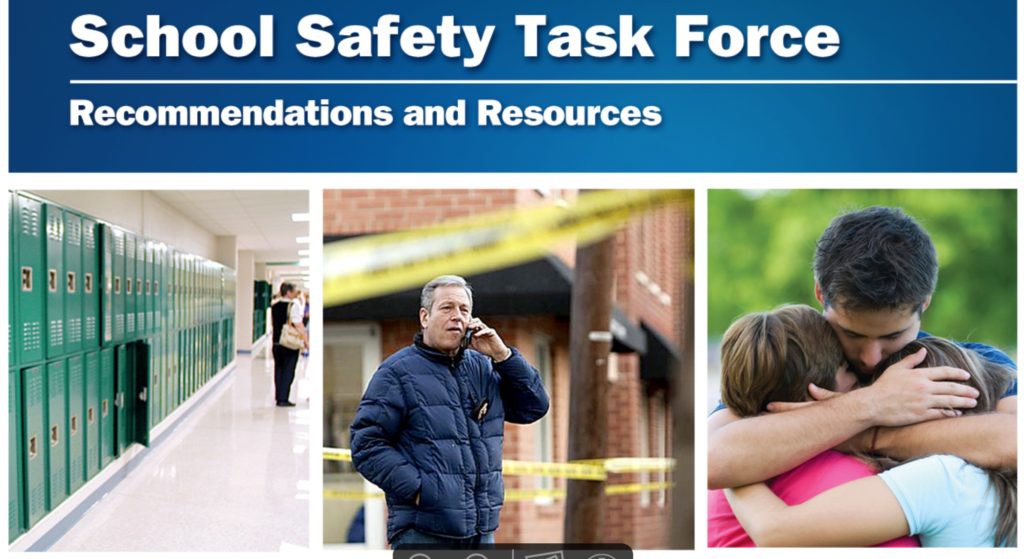
    Attorney General DeWine also worked with schools across the state to achieve greater compliance on school safety plans and convened a School Safety Task Force that issued dozens of school safety recommendations. The task force recognized that mental health awareness was essential for schools to identify and intervene with students who may be at risk.

  • Loveland resident Matt Brennan to climb Mt. Everest in area first

    Loveland resident Matt Brennan to climb Mt. Everest in area first

    by Sam Smith

    Everest has always been the dream for Loveland resident of 26 years, Matt Brennan. At the end of May, he will attempt the 80-day climb that has only completed by 4,000 people in history. Brennan will be the first in the Cincinnati area to make the trek.

    Loveland resident, Matt Brennan, on Mt. Denali. Photos courtesy of Matt Brennan.

    “I dreamed of this as a kid. I had posters on my wall of Mt. Everest as a kid. I’ve dreamed about it, so the opportunity to climb it is really quite emotional,” claimed Matt Brennan in an interview with Loveland Magazine.

    Matt Brennan caught the climbing bug at the age of 14, and has been climbing for the 45 years since. Brennan, founder of the Cincinnati Center For Autism along with Loveland Excavating and Paving Inc, has climbed four of the “Seven Summits”– the tallest mountains on each of the seven continents. He estimates he has climbed over thirty mountains from Ecuador to Washington and “everything tall in the lower fourty-eight”. After months of rigorous daily training as a full-time job, he is nearing the climb. On March 25th, Brennan will begin his trek to conquer the tallest mountain in the world.

    Matt Brennan gives a thumbs up from Mt. Denali, his most recent major climb

    Matt Brennan claims that the real draw to climbing mountains is their beauty, rather than the physical endurance involved. However, he still sees the physical duress involved as a challenge and climbing as a competition of sorts.

    “Everybody’s got some sort of competitive nature in them. To me, it’s a competition, it’s a grind, it’s a challenge, it’s the ability to dial in mentally and physically for a long period of time to achieve a goal,” said Brennan.

    Matt Brennan lounges in his tent at 14,000ft

    Of course, the climb itself is only part of the journey. The soon-to-be Everest climber can be found running up and down the Loveland High School bleachers most Saturdays, and estimates he has been training 30 hours a week since the first of the year, Brennan has been training for over a year and focuses on long-endurance building cardio.

    “Instead of running eight minute miles, I’m trying to run ten minute miles but I’m following up that run with a 25 mile bike ride and an hour on the stairs with a 45 pound pack,” continued Brennan.

    He went on to explain that he will often follow this routine once starting early in the morning and again in the evening. In addition, he gets regular massages along with physical health and progress checkups. All this is risk mitigation, but Brennan explained that if something unfortunate happens above 21,000 feet, it could very well mean death. Something like 1.5% of Everest climbers die. It’s not uncommon to see corpses along a trek.

    Drew Horter, Chief Executive Officer and Founder, Horter Investment Management and Matt Brennan, summiteer.

    But, for Brennan, this is a calculated risk worth taking with an incredible potential payoff. Matt Brennan hopes all his work will culminate in one single event: summiting mount everest and standing on top of the world.

    “I’ll probably be on my hands and knees crying, because that’s typically what I do. It’s pretty emotional. You work so hard, so long. […] In some respects, I’ve been training for a year and a half. So when you reach the top, the culmination of those goals, those emotions… I’ll probably be on my hands and knees crying,” predicted Matt Brennan.

    The thousands of hours of training and years of work lead up to one potential 5.5 mile-high peak. But, Brennan, explained, the climb to the summit is only half the trek– the rest is getting back down.

    Matt Brennan summits Mt. Denali

    “On these big mountains, there’s no guarantee. Nothing’s guaranteed. Nothing’s given to you. I’ve known some of the best climbers who get to these mountains and they get stuck. I’m going to keep walking uphill until somebody tells me to stop or my body tells me to stop or I’m standing on top,” Brennan finished.

    You can follow Brennan on his Facebook update page.


    Jarvis Global Investments, LLC

    Jarvis Global is an investment advisory firm in Symmes Township, Ohio which offers private portfolio management and retirement services to high net worth individuals.


  • Loveland-Symmes Fire Department awarded two grants

    Loveland-Symmes Fire Department awarded two grants

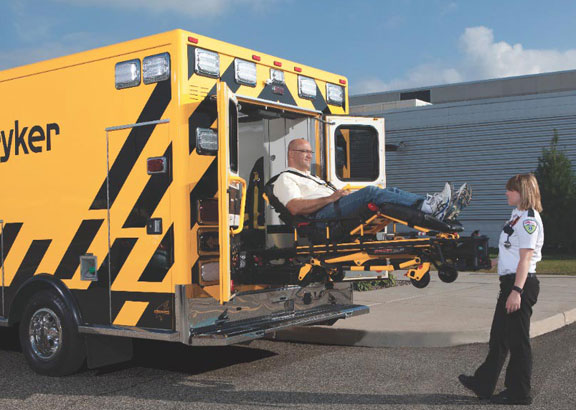
    Stryker Powerpro XT Cot Systems will give firefighters and paramedics assistance with the lifting of patients up to 700 pounds

    Photo above is a sample of the Stryker Powerpro XT Cot System

    Loveland, Ohio – The Ohio Bureau of Workers’ Compensation has awarded a Safety Intervention Grant (SIG) to the Loveland-Symmes Fire Department (LSFD) for assistance with purchasing two Stryker Powerpro XT Cot Systems.

    The Safety Intervention Grant is available to any Ohio state-fund or public employer who wishes to purchase equipment to substantially reduce or eliminate injuries associated with a particular task or operation. The Stryker Powerpro XT Cot Systems will give firefighters and paramedics assistance with the lifting of patients up to 700 pounds from the ground to a rolling transport level.

    Lieutenant Kyle Riley, EMS Lieutenant for the Loveland-Symmes Fire Department said, “The awarded grant funds provide our firefighters with a major equipment upgrade that will provide a safer and more effective system. This will help them provide the highest quality service to our customers, while reducing the potential for injury to our personnel.”

    The SIG Grant was a matching grant and it was nearly $40,000.00

    According to the press release issued by the Department, “The Loveland-Symmes Fire Department is continuously seeking methods to improve the emergency medical services that are provided to their residents. The funds received from the SIG will be utilized to purchase essential EMS equipment that will improve the Loveland-Symmes Fire Department’s ability to provide critical care to their customers, while reducing the risk of injury to our members.”

    PRIORITY ONE EMS GRANT

    The purpose of the State Board of Emergency Medical, Fire, and Transportation Services Grant Program, administered by the Ohio Department of Public Safety, Division of Emergency Medical Services, is to improve and enhance EMS and trauma patient care in Ohio through the provision of grant funding for equipment, training, and research. There are six types of grants (Priorities 1-6) available. The amount awarded for each priority is determined by the State Board of Emergency, Medical, Fire, and Transportation Services and by the amount of funds available during the award year.

    The Priority One Grant was for $3,075.00.

    Deputy Chief Michael Books, Chief of EMS for the Loveland-Symmes Fire Department said, “The Priority One Grant is a grant offered by the State of Ohio to assist fire departments with the purchase of equipment, supplies, and personal protective equipment (PPE) that would not normally be able to be purchased.”

    According to the press releases issued by the Department, “The Loveland-Symmes Fire Department is continuously seeking methods to improve the emergency medical services that are provided to their residents. The funds received from the SIG will be utilized to purchase essential EMS equipment that will improve the Loveland-Symmes Fire Department’s ability to provide critical care to their customers, while reducing the risk of injury to our members.”


    Wards Corner Chiropractic & Sports Rehab

     
    Loveland chiropractor Douglas Portmann, DC at Wards Corner Chiropractic & Sports Rehab is one of the best chiropractors in the Loveland area.