Tag: trans youth

  • Ohio Senate overrides DeWine vetoes on trans youth gender-affirming care and local tobacco bans

    Ohio Senate overrides DeWine vetoes on trans youth gender-affirming care and local tobacco bans

    COLUMBUS, OH — JANUARY 24: A protester asks senators to not override Gov. Mike DeWine’s veto of House Bill 68 that would limit medical care for transgender minors and block transgender girls from sports during the Ohio Senate session, January 24, 2024, at the Statehouse in Columbus, Ohio. (Photo by Graham Stokes for Ohio Capital Journal)

    Both laws — banning gender-affirming care and local flavored tobacco regulations — are now set to take effect at the end of April.

    BY:  Ohio Capital Journal

    The Ohio Senate voted to override two of Gov. Mike DeWine’s vetoes Wednesday — one on a bill blocking gender-affirming care for trans youth and the other blocking cities from banning flavored tobacco sales. Both laws are now set to take effect at the end of April.

    The Senate voted 24-8 to override DeWine’s veto of House Bill 68, which blocks gender-affirming care for trans youth and prevents transgender athletes from playing women’s sports. The bill prohibits transgender youth from starting hormone therapy and puberty blockers.

    “I think parents should make those decisions and not the government,” DeWine said before the vote Wednesday.

    The Senate also voted 24-8 to override DeWine’s veto of a provision that would prevent cities from banning flavored tobacco sales. A flavored tobacco ban took effect in Columbus earlier this month after Columbus City Council voted to stop the sale of flavored tobacco products in December 2022.

    “It will be a win for big tobacco and it will be a loss for Ohio,” DeWine said before the vote Wednesday.

    A three-fifths majority vote from the members of the House and Senate is necessary to override the governor’s veto. The Ohio House voted to override HB 68 earlier this month and voted to override the flavored tobacco ban in December. State Sen. Nathan Manning of North Ridgeville was the only Republican to vote against overriding the Republican governor on the gender-affirming care ban, and state Sen. Louis Blessing of Colerain Township was the sole Republican to vote against overriding DeWine on the tobacco law.

    The laws are set to go into effect 90 days after they are delivered to the Secretary of State’s office, meaning it would likely take effect April 23.

    House Bill 68

     COLUMBUS, OH — JANUARY 24: A protester asking senators to not override Gov. Mike DeWine’s veto of House Bill 68 that would limit medical care for transgender minors and block transgender girls from sports is removed from the gallery during the Ohio Senate session, January 24, 2024, at the Statehouse in Columbus, Ohio. (Photo by Graham Stokes for Ohio Capital Journal) 

    Ohio Senators discussed House Bill 68 for about an hour before taking a vote. Democrats said they celebrated DeWine’s veto while Republicans expressed their disappointment in last month’s veto.

    “There are men and there are women and there are boys and there are girls and they are different,” said State Sen. Kristina Roegner, R-Hudson.

    “Gender is not fluid. There is no such thing as a gender spectrum,” she claimed.

    State Sen. Bill DeMora, D-Columbus, said this bill becoming law will lead to loss of life.

    “Politicians have no business banning evidence-based, life-saving medical care – especially when it is endorsed by every major medical and mental health association,”said Ohio Senate Democratic Leader Nickie J. Antonio, D-Lakewood.

    “We should listen to parents, providers and patients, not willfully and purposely pass harmful legislation that will add to the mass exodus of individuals from the state of Ohio,” Antonio said.

    A protester was removed from the Senate chamber after she interrupted Roegner.

    “Jesus loves the little children, all the children of the world, LGBTQIA,” she screamed. “Jesus would be here on their side today. We need to support them.”

    HB 68 has a grandfather clause that would allow doctors who already started treatment on patients to continue.

    Gender-affirming care is supported by every major medical organization in the United States. Children’s hospitals across Ohio, the Ohio Children’s Hospital Association, and the Ohio Academy of Family Physicians all oppose HB 68. No Ohio children’s hospital performs gender-affirming surgery on patients under 18 currently.

    DeWine said his veto of HB 68 was “about protecting human life.”

    “These are gut-wrenching decisions that should be made by parents and should be informed by teams of doctors who are advising them,”  he said during a press conference on Dec. 29.

    It’s likely this new law will end up in court.

    Twenty-two other states have passed a law that bans gender affirming care for transgender youth, but most have faced legal challenges, according to the Human Rights Campaign.

    Federal appeals judges on the 6th U.S. Circuit Court of Appeals ruled that Tennessee and Kentucky can continue banning gender-affirming care for trans youth while legal challenges against state laws continue. The 6th Circuit has jurisdiction over Ohio.

    Before the Senate voted to override his veto, DeWine said he does not plan to pursue legal against HB 68.

    “The legislature has the constitutional right to override anything, any bill that I sign, or any or any bill that I veto,” DeWine said. “That’s part of our system. And I respect our system. It doesn’t mean I like the vote, but I respect our system.”

    Senate President Matt Huffman, R-Lima, told reporters Wednesday he believes HB 68 will hold up in court.

    “I do think that it’ll pass constitutional scrutiny,” he said.

    State Rep. Gary Click

    The bill’s author state Rep. Gary Click, R-Vickery, has denied that HB 68 has any religious backing, but Click can be heard saying in a recorded sermon from 2018 that trans people break from God’s plan for the family.

     COLUMBUS, Ohio — JANUARY 10: State Rep. Gary Click, R-Vickery, celebrates the vote to override Gov. Mike DeWine’s veto of HB 68 during the Ohio House session, January 10, 2024, at the Statehouse in Columbus, Ohio. (Photo by Graham Stokes for Ohio Capital Journal. Republish photo only with original article.) 

    “You’re not born that way,” Click says about trans people during the sermon. “God’s not going to curse you in the wrong body. He’s not going to curse you with desires that cannot be adequately and appropriately and biologically fulfilled correctly.”

    Click is a pastor at Fremont Baptist Church and celebrated Wednesday’s Senate vote.

    “The SAFE Act and Save Women’s Sports Act are the civil rights issues of our day, ensuring that children have the right to grow up intact and that women are no longer subject to men invading their spaces,” he said in a statement.

    Gender-affirming care

    Gender-affirming care can “include any single or combination of a number of social, psychological, behavioral or medical interventions designed to support and affirm an individual’s gender identity,” according to the World Health Organization.

    It typically consists of four general practices: social affirmation, puberty blockers, hormone therapy and gender-affirming surgeries, according to the U.S. Department of Health and Human Services’s Office of Population Affairs.

    Puberty blockers use hormones to pause puberty development and are reversible.

    Hormone therapy helps align a person’s body with their gender identity by giving testosterone hormones to those who were assigned female at birth and giving estrogen hormones to those who were assigned male at birth. This is partially reversible.

    A 2022 study published in JAMA Network Open found access to hormones and puberty blockers for young people ages 13-20 was associated with a 60% lower odds of moderate to severe depression and a 73% lower odds of self-harm or suicidal thoughts compared to youths who didn’t get these medications.

    Transgender athletes

    House Bill 6, which prevents trans athletes from playing Ohio women’s sports, was rolled into HB 68 during the summer.

    “It’s too bad that House Bill 68 and House Bill 6 were combined into one piece of legislation because the only commonality these two pieces of legislation have is they both target the same small portion of transgender kids,” said State Senator Kent Smith, D-Euclid.

    Twenty-three states have passed similar laws in regards to transgender athletes since 2020, according to ESPN.

    Currently, if a trans girl wants to play on a team with cis girls in Ohio, she must go through hormone treatments for at least one year or show no physical or  physiological advantages, according to the Ohio High School Athletic Association.

    There were only six transgender high school female student athletes in Ohio, the Capital Journal previously reported in the spring.

    Reactions to HB 68 override

    ​​Minna Zelch, the mother of a 19-year-old transgender daughter, said Wednesday’s Senate vote was completely devastating.

    “They think that they can erase transgender people with this legislation and the other legislation they’re passing, but our kids will still be trans and trans people will still be trans no matter what they do,” Zelch said. “And we’re here to fight and continue fighting.”

    Human Rights Campaign President Kelley Robinson said the override of HB 68 will harm innocent children.

    “Despite the fact that they have no medical training, these politicians believe they know better than parents and transgender youth seeking health care. It’s shameful,” Robinson said in a statement.

    Dara Adkison, board secretary of TransOhio, said trans youth deserve better.

    “Our community is strong and resilient in ways that hateful legislators can not comprehend, and trans Ohioans across the state cannot and will not be legislated away,” Adkison said.

    Carson Hartlage, an Ohio medical student, said this is a dark day for the Ohio trans community.

    “I was a trans kid who became a trans adult in Ohio, and it feels so dehumanizing to see my home state spend years trying to stop healthcare from my community,” Harlage said.

    Tobacco

    Back in January 2023, DeWine vetoed a bill that would have prevented any city or municipality from regulating smoking, vaping and other e-cigarette usage and sales. Before the Senate voted to override the tobacco veto, DeWine said a veto override would be horrible for Ohio children.

    “I just don’t know how anybody thinks it was a great idea,” DeWine said. “To have more children in the state of Ohio become addicted (to nicotine).”

    One out of every five children in Ohio vape, DeWine said.

    “It’s the Tutti Frutti and all the other kinds of crazy flavors that masked all nicotine and it gets them addicted,” he said.

    The American Cancer Society Cancer Action Network said lawmakers have turned their backs on Ohio kids with the veto override.

    “Instead of offering solutions to address the health of Ohioans, lawmakers have now rolled back existing local laws regulating the sale of tobacco products and limited what local governments can do to prevent people from starting to use tobacco and help people quit,” ACS CAN said in a statement.

    Municipal home rule gives cities and villages in Ohio the constitutional right to certain powers, including establishing laws in accordance with the self-government clause. Cities have the right to make their own policies, as long as it doesn’t get in the way of laws in the Ohio Revised Code.

    Ohio Capital Journal reporter Zurie Pope contributed to this report. 

    Follow OCJ Reporter Megan Henry on X.

    ________________
    Megan Henry
    MEGAN HENRY

    Megan Henry is a reporter for the Ohio Capital Journal and has spent the past five years reporting in Ohio on various topics including education, healthcare, business and crime. She previously worked at The Columbus Dispatch, part of the USA Today Network.

    MORE FROM AUTHOR

  • Ohio transgender adults speak against proposed administrative rules that would change health care

    Ohio transgender adults speak against proposed administrative rules that would change health care

     Getty Images

    The rules would collect data on transgender medical care and modify the treatment of those with gender dysphoria, requiring medical consent from a psychiatrist, an endocrinologist and a bioethicist before moving forward with treatment.

    BY:  –  

    Ohio transgender adults are deeply concerned Gov. Mike DeWine’s proposed administrative rules would make it harder for them to access gender-affirming care.

    DeWine announced two proposed rules earlier this month that would collect data on transgender medical care and modify the treatment of those with gender dysphoria, including requiring patients under 21 undergo six months of counseling before receiving more treatment.

    “Anytime the government is telling its citizens what they can and cannot do with their own bodies, it sets a very, very, very dangerous precedent,” said Vincent-Natasha Gay, a transgender adult who lives in central Ohio.

    The rules are just proposals at this point and have not gone into effect. Ohioans still have time to submit comments regarding the proposed rules.

    “They need to not be implemented,” said Lis Regula, a transgender man living in Columbus. “It would make us the worst state in the entire nation for adults and children who want to obtain gender-affirming care.”

    A major issue Terry Brown has with the administrative rules is that they deal with adults.

    “You’re talking about restricting people who are classified as adults in the eyes of the law,” Brown, a trans man, said.

    The Ohio Senate Democratic Caucus recently sent a letter to DeWine expressing their concerns about how the proposed rules could get in the way of adults accessing gender-affirming care.

    “While these rules may have been drafted with the intention of taking a more pragmatic approach than the legislature, in reality, this proposal could make it more difficult for trans Ohioans to receive the life-saving medical care that they need,” the letter said. “The proposed rules go even further than House Bill 68 by interfering with the lives and medical care of both trans children and trans adults.”

    House Bill 68 would ban gender-affirming care for trans youth. DeWine vetoed HB 68, but the House voted to override his veto last week. The Senate will vote to override the veto on Wednesday next week.

    One of the proposed administrative rules would require obtaining medical consent from a psychiatrist, an endocrinologist, and a bioethicist before moving forward with treatment.

    DeWine’s spokesperson Dan Tierney said this rule would only apply to people who start receiving treatment after the rule takes effect.

    “It’s the Department of Health’s intention that it applies to treatment that starts moving forward after the enactment of the rule,” Tierney said. “That’s the way House Bill 68 was written. We intend this to be consistent with that.”

    Lawmakers added a grandfather clause to HB 86 that would allow doctors who already started treatment on patients to continue.

    But transgender adults argue the language of the proposed rules is vague and ambiguous.

    Silhouette of doctor in white coat with stethoscope and LGBT badge on pocket
     Getty Images. 

    “I feel like that was not very clear at all,” Brown said. “Because of that vagueness, we really still don’t know how it’s going to be applied.”

    This just leaves Regula with more questions about continuing care.

    “That doesn’t address if someone has to put a pause on things for some reason if they’re going to be able to get back to their treatment,” Regula said.

    Vincent-Natasha Gay is currently receiving gender-affirming care and would be considered grandfathered in under the proposed administrative rules.

    “But that shouldn’t matter,” Gay said. “There are so many people out there who are trans and just don’t know they’re trans yet, or are in the closet and hiding because they’re afraid for their life. And my goodness, with these proposed rule changes, that’s just going to make that even worse.”

    Health experts say it would be harmful if someone who’s already receiving treatment abruptly stopped, Tierney said.

    “That could have some negative health consequences,” he said. “That’s certainly not the intent for anything along those lines.”

    Instead, Tierney said these rules are meant to prohibit health care providers from giving treatment without consultation.

    “Most of the providers are doing this in the comprehensive, multidisciplinary way, anyways, so they would likely be in compliance with the rule,” he said.

    The proposed rule doesn’t mean people have to sit down with a psychiatrist, an endocrinologist, and a bioethicist, Tierney said

    “The bioethicist helps develop how each facility is going to deal with cases of how the treatments occur at that particular facility,” he said. “At the very least, mental health care is generally provided by the psychiatrist, not the endocrinologist, and endocrinology is generally provided by the endocrinologist, not by the psychiatrist.”

    But Ares Page is concerned about adding people to the medical team that might not have proper training in treating transgender patients.

    “I don’t see where that’s going to be safe, and where that’s going to help us improve our safety,” said Page, a transgender adult living in Akron.

    Page is also worried how much extra it will cost to add these specialists to a person’s medical team.

    “Some people’s insurance companies may not allow them, or approve them for these specialists,” Page said.

    Ohioans have until 5 p.m. Friday to give feedback on the proposed transition care rule by emailing out to MH-SOT-rules@mha.ohio.gov with the subject line, “Comments on Gender Transition Care Rules.”

    Data Collection

    The second proposed administrative rule would require data collection around gender-affirming care, including requiring a health care provider to report non-identifying treatment for “gender-reassignment surgery, gender-transition services, genital gender reassignment surgery,” according to the proposed administrative rules.

    Under the proposed administrative rules, the Ohio Department of Health would share the aggregate data collected with Ohio lawmakers starting Jan. 31, 2025.

    But many transgender adults question why the data collection is necessary.

    “You can assign a code …  But there always has to be a place where my name goes back to the code,” Brown said.  “That is a problem.”

    Having a common data set on medical treatment will help people make an informed decision, Tierney said, who explained ODH collects data on things like pediatric flu deaths, food poisoning and abortion.

    “It’s all de-identified, it’s all aggregate,” Tierney said. “There’s really no way you could identify any patient from the data.”

    But people are concerned it would be hard to have the data be completely anonymous, especially for folks who live in a small community.

    “If it’s a matter of three (trans) people in a community and a doctor’s office or hospital system is treating all three of those people, how do you really anonymize three folks?” Regula said.

    Feedback for the data collection proposal must be sent to ODHrules@odh.ohio.gov by Feb. 5.

    Despite these proposed rules and ongoing legislation targeting trans youth, most people interviewed for this story say they would like to stay in Ohio if they can.

    “This is my home,” Regula said. “I’m an Ohio boy born and bred. I was raised here, my family is here. … I can’t imagine leaving home …  I also want to be able to make sure that my daughter and I have the medical care that we need.”

    But Page has contemplated leaving the country altogether.

    “(The government) has no right to tell me what to do with my body,” Page said.

    Follow OCJ Reporter Megan Henry on X.


    Megan Henry
    MEGAN HENRY

    Megan Henry is a reporter for the Ohio Capital Journal and has spent the past five years reporting in Ohio on various topics including education, healthcare, business and crime. She previously worked at The Columbus Dispatch, part of the USA Today Network.

    MORE FROM AUTHOR

  • Ohio Gov. Mike DeWine vetoes bill that would’ve banned gender-affirming care for trans youth

    Ohio Gov. Mike DeWine vetoes bill that would’ve banned gender-affirming care for trans youth

    JANUARY 31: Ohio Governor Mike DeWine gives the State of the State Address, January 31, 2023, in the House Chamber at the Statehouse in Columbus, Ohio. (Photo by Graham Stokes for Ohio Capital Journal. Republish photo only with original story.)

    BY:  Ohio Capital Journal

    Republican Ohio Gov. Mike DeWine has vetoed legislation that would have prohibited transgender youth from accessing gender-affirming care. His veto shoots down the controversial bill, which would also stop middle and high school trans students from participating in athletics with cisgender peers.

    He announced the decision in a press conference Friday morning, the last day that he was allowed to veto it.

    DeWine said he listened to the bill’s sponsor and also listened to physicians at the five children’s hospitals in Ohio. He said he listened to families of youth, some who had negative experiences and detransitioned, as well as those who said gender-affirming treatment saved their child’s life.

    “They told me their child is alive only because they received care,” he said, adding that he thinks people on both sides truly believe they are trying to protect youth.

    While the law would impact only a very small number of children, the consequences of the bill would be profound, DeWine said.

    “Ultimately, I believe this is about protecting human life,” he said. Both parents of trans kids and adults who received care told him that the care saved their lives.

    “These are gut-wrenching decisions that should be made my parents and should be informed by teams of doctors who are advising them. These are parents who have watched their children suffer for years, and have real concerns their children would not survive without it… Families are basing their decisions on the best medical advice they can get.”

    While he vetoed the bill, DeWine said he would pursue administrative rules to help address several concerns, including the banning of gender-affirming surgery on minors (which currently is not practiced in Ohio). He also is looking at administrative rules to collect data, and to combat clinics that might pop up to try to perform ideologically-driven care, which he said was a concern from both sides of the issue.

    What happens now?

    Trans youth, LGBTQ+ rights advocates and doctors are rejoicing at the decision.

    However, the lawmakers against the bill have another option to take away rights for trans children: The House and the Senate can override the governor on his veto. There may be an effort to do this, but it is possible it doesn’t have enough votes, according to one Republican lawmaker who originally voted in favor of the bill.

    A three-fifths vote of the members of the House and Senate is necessary to override the governor’s veto — meaning 60 representatives and 20 senators. The bill passed forward with 64 representatives originally (62 after amendments) and 24 senators. Only three Republicans have publicly been against the bill. When it was passing the House, Republican state Reps. Jamie Callender and Brett Hillyer voted against it. In the Senate, state Sen. Nathan Manning voted against it. All the GOP no votes came from Northeast Ohio lawmakers.

    In a one-on-one interview with Statehouse reporter Morgan Trau just a week before his decision, DeWine explained the research he was doing into H.B. 68.

    Morgan Trau: “Are you going to sign [H.B. 68]?”

    Governor DeWine: “Well, this is something that I’m really thinking a lot about… So I went to children’s hospital here in Columbus; I went to the children’s hospital in Akron and children’s hospital in Cincinnati — just to see how they do it, what kind of care they give to these young people. But I’ve also talked to opponents who don’t think that kind of care is appropriate… I’ve also talked to families who have told me that care is just vitally important and save their child’s life. So I’m trying to weigh all this and trying to get as much information together.”

    Morgan Trau: “You’ve always been somebody to care about children, but also parental rights. How would you reckon with signing this?”

    Governor DeWine: “I really don’t want to get too deeply into this… We’ve got to get this — I have to get this right… There’s a lot of testimony in the Statehouse that you covered and I want to look at that testimony — both pro and con.”


    Morgan Trau
    MORGAN TRAU

    Morgan Trau is a political reporter and multimedia journalist based out of the WEWS Columbus Bureau. A graduate of Syracuse University’s S.I. Newhouse School of Public Communications, Trau has previously worked as an investigative, political and fact-checking reporter in Grand Rapids, Mich. at WZZM-TV; a reporter and MMJ in Spokane, Wash. at KREM-TV and has interned at 60 Minutes and worked for CBS Interactive and PBS NewsHour.

    MORE FROM AUTHOR

  • Ohio law banning gender-affirming care and trans athletes heads to Gov. Mike DeWine’s desk

    Ohio law banning gender-affirming care and trans athletes heads to Gov. Mike DeWine’s desk

    COLUMBUS, Ohio — DECEMBER 13: Advocates for the trans community protest outside the Senate Chamber while inside lawmakers debated and passed HB 68 that bans gender-affirming care for transgender youth and bars transgender kids from participating on sports teams, December 13, 2023, at the Statehouse in Columbus, Ohio. (Photo by Graham Stokes for Ohio Capital Journal. Republish photo only with original article.)

    BY:  Ohio Capital Journal

    A bill that would block doctors from providing gender-affirming care to trans youth and prevent trans athletes from participating in Ohio women’s sports is going to Ohio Gov. Mike DeWine’s desk.

    The Ohio Senate passed House Bill 68 in a 24-8 vote Wednesday afternoon and the Ohio House concurred with the Senate amendments in a 61-27 vote Wednesday night. DeWine now has 10 business days to sign or veto the bill.

    “We await a final bill to review before offering formal comment,” DeWine’s press secretary Dan Tierney said in an email Wednesday afternoon.

    State Senator Nathan Manning, R-North Ridgeville, was the lone Republican who joined Senate Democrats in voting against the bill.

    HB 68, introduced by Rep. Gary Click, R-Vickery, would block doctors from providing gender-affirming care to trans youth, including puberty blockers and hormone therapy.

    The bill would ban physicians from performing gender reassignment surgery on a minor, but many opponents have testified that no Ohio children’s hospital currently performs gender-affirming surgery on those under 18. An amendment was added to HB 68 Wednesday that added a grandfather clause that would allow doctors who already started treatment on patients to continue.

    Gender-affirming care is supported by every major medical organization in the United States. Children’s hospitals across Ohio, the Ohio Children’s Hospital Association and the Ohio Academy of Family Physicians all oppose HB 68.

    House Minority Leader Allison Russo, D-Upper Arlington, said she hopes DeWine will listen to the medical professionals who oppose the bill.

    “The bill is so cruel on so many levels but at the end of the day this violates parents rights to make decisions about their children’s own healthcare,” she said. “It’s putting the government in the middle of families and their healthcare providers.”

    Twenty-two other states have passed a law that blocks gender affirming care, according to the Human Rights Campaign.

    Gender-affirming surgery for minors is not common with less than 3,700 performed in the U.S. on patients ages 12 to 18 from 2016 through 2019, according to a study published in August in JAMA Network Open. It’s unclear how many of those patients were 18 when they underwent those surgeries.

    Ohio House Speaker Jason Stephens, R-Kitts Hill, said the bill empowers parents.

    “The important part is protecting children and making sure parents know what’s going on,” he said.

    State Senator Bill DeMora, D-Columbus, called HB 68 a disgusting piece of legislation.

    “Current hospital policies ensure gender-affirming care for minors who seek it is safe, medically necessary, and appropriate,” DeMora said in a statement. “It’s clear that this bill is targeting youth already at an increased risk of suicide and violence, and subjecting them to even more risk.”

    He took a moment to speak directly to transgender people during the Senate session.

    “Your life has meaning and purpose,” DeMora said. “You are seen, valued and loved.”

    Trans athlete ban

    House Bill 6 — which prevents trans athletes from participating in Ohio women’s sports — was rolled into HB 68 back in June. The would prevent males from playing female sports, but everyone would still be able to play on co-ed teams.

    There were only six transgender high school female student athletes in Ohio, the Capital Journal previously reported in the spring.

    If a trans girl wants to play on a team with cis girls in Ohio, she must go through hormone treatments for at least one year or show no physical or  physiological advantages, according to the Ohio High School Athletic Association.

    Twenty-three states have passed similar laws in regards to transgender athletes since 2020, according to ESPN.

     COLUMBUS, Ohio — DECEMBER 13: An advocate for the trans community protests outside the Senate Chamber while inside lawmakers debated and passed HB 68 that bans gender-affirming care for transgender youth and bars transgender kids from participating on sports teams, December 13, 2023, at the Statehouse in Columbus, Ohio. (Photo by Graham Stokes for Ohio Capital Journal) 

    “It is two bills, so much for single subject,” Senate Minority Leader Nickie J. Antonio, D-Lakewood, said.

    She sent a letter to Senators urging them not to pass the bill on Monday.

    “This bill strips rights away from parents and bans children’s access to evidence-based healthcare,” Antonio said in a statement after the bill passed the Senate. “Physicians need to be able to have comprehensive care discussions with patients and their families, but this bill puts them in an impossible position.”

    Hundreds of people submitted opponent testimony against the bill last week during a marathon Senate Government Oversight Committee meeting.

    “We don’t make laws just for the hundreds of people that come and testify,” Senate President Matt Huffman said when asked about this. “We make laws for over 11 million people.”

    Opponents speaks out and protest

    LGBTQ+ advocates who oppose HB 68 had a press conference Wednesday morning to speak out against HB 68 —  arguing families shouldn’t have to decide whether it’s safe to stay in Ohio.

    “Ohio is home and I will not be legislated to leave,” said Densil Porteous, Executive Director of Stonewall Columbus.

     COLUMBUS, Ohio — DECEMBER 13: Advocates for the trans community protest outside the Senate Chamber and repeatedly shouted “shame” when they heard that lawmakers had passed HB 68 that bans gender-affirming care for transgender youth and bars transgender kids from participating on sports teams, December 13, 2023, at the Statehouse in Columbus, Ohio. (Photo by Graham Stokes for Ohio Capital Journal) 

    This bill will make it more challenging for trans and non-binary people, said Dara Adkison, a member of TransOhio.

    “HB 68 will cause people to leave Ohio and no one should be forced from their home for any reason, but especially not because of extreme laws undermining their freedom and safety,” Adkison said.

    Mallory Golski, the civic engagement & advocacy manager for Kaleidoscope Youth Center, spoke in place of a high school student who couldn’t attend the event because they had school tests to take.

    “The people who this bill targets are teenagers,” Golski said. “They are young people who shouldn’t have to make a decision about whether they should show up to school or show up to the statehouse to convince lawmakers of their inherent dignity.”

    She knows many transgender kids who are happier when they receive gender affirmation or care.

    “Taking that away from trans minors would be a detriment,” Golski said.

    Evangelical Lutheran Deacon Nick Bates and father of a 13-year-old nonbinary child said bills like HB 68 force trans children and adults back into hiding.

    “Sadly, HB 68 and other bills targeting trans and non-conforming youth take this peace, comfort and joy up the chimney like the Grinch stealing the Christmas tree,” Bates said.

    Follow OCJ Reporter Megan Henry on Twitter.


    Megan Henry
    MEGAN HENRY

    Megan Henry is a reporter for the Ohio Capital Journal and has spent the past five years reporting in Ohio on various topics including education, healthcare, business and crime. She previously worked at The Columbus Dispatch, part of the USA Today Network.

    MORE FROM AUTHOR

  • “An attack on all trans people,” transgender youth speak out against Ohio legislation

    “An attack on all trans people,” transgender youth speak out against Ohio legislation

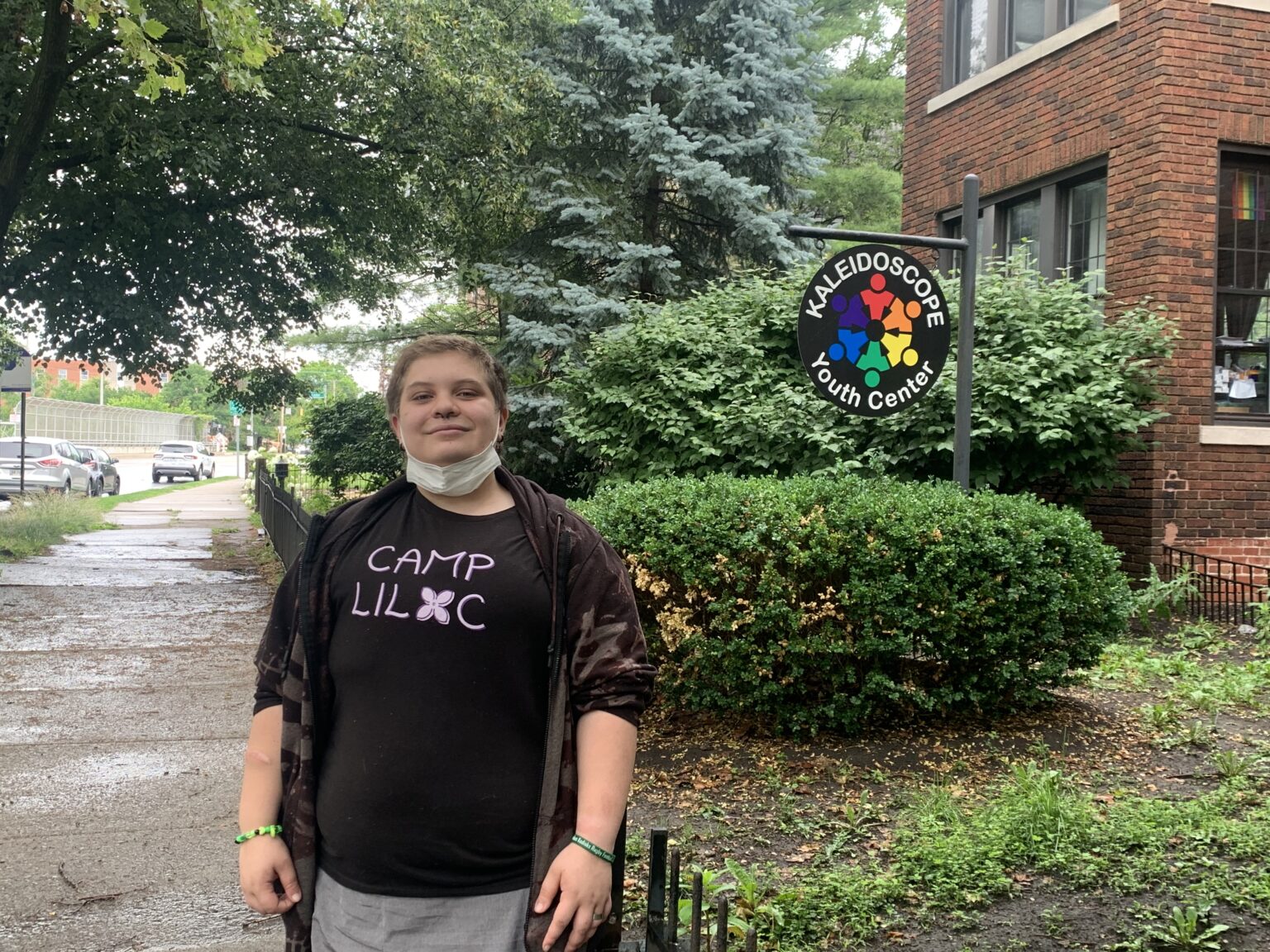
    Nathan Alvarez, 15, stands outside Kaleidoscope Youth Center on June 23. He is worried about a bill that would require K-12 schools and colleges to mandate that students could only use the bathroom or locker room that matches their sex assigned at birth. (Photo by Megan Henry, Ohio Capital Journal) Ohio Capital Journal talked to three transgender youths who are concerned about these bills and their potential implications.

    BY:  – Ohio Capital Journal

    Nathan Alvarez is used to people laughing or snickering at him when he uses the men’s bathroom.

    Despite that, the 15-year-old says his high school is one place he doesn’t have to worry about that happening because they have a couple of gender neutral bathrooms and anyone can use the men and women’s restroom.

    But a bill banning transgender students from being able to use the bathroom and locker room that aligns with their gender identity would change all that.

    State Reps. Beth Lear, R-Galena, and Adam Bird, R-New Richmond, recently introduced House Bill 183 which would require K-12 schools and colleges to mandate that students could only use the bathroom or locker room that matches their sex assigned at birth. HB 183 is still in House committee, awaiting sponsor testimony.

    “It would be hell (if the bill were to pass),” Alvarez said, who uses he/him pronouns. “Hearing about it disgusted me. Like it violently disgusted me.”

    HB 183 is one of a handful of anti-trans bills that have been introduced so far in the Ohio General Assembly.

    Doctors wouldn’t be able to give puberty blockers and hormone therapy to trans youth, trans athletes wouldn’t be able to participate in women’s sports, educators would be forced to out students to their parents and require public schools to give parental notification before teaching “sexuality content” if these various anti-trans bills pass through the Republican-controlled Ohio Statehouse.

    OCJ talked to three transgender youths who are concerned about these bills and their potential implications.

    “It’s an attack on all trans people,” said Ko Rupert, who uses she/it pronouns. “They are all uniquely bad, but their uniqueness is important.”

    And it’s not just happening in Ohio.

    There have been more than 220 bills introduced nationwide specifically targeting transgender and non-binary people, according to the Human Rights Campaign year-to-date snapshot from May 23.

    Fifteen laws have been enacted banning gender affirming care for transgender youth and four additional laws have been passed that censor school curriculum like books, according to HRC.

    “It’s very hard to see what’s been already happening in other states and how the bills that they are trying to pass here in Ohio are not even that different,” Jaylah Hollins, 19 said. “I feel like it’s not really in the interest of Ohioans, but only in the interest of anti-trans lobbyists from out of state.”

    House Bill 8

    Hollins is going to start attending Columbus State Community College this fall for social work and hopes to one day work for an organization that helps transgender people.

    “Hopefully if these bills don’t pass, we can try and make Ohio a place where it can be a refuge for trans kids and trans adults,” Hollins, said, who uses she/her pronouns. “Ensuring that trans kids have access to medical care and that adults have access to the facilities that align with their gender identity shouldn’t be politicized in the first place.”

     An advocate for the rights of trans children and their parents holds up a sign. Photo by Morgan Trau, WEWS. 

    While she said all the anti-trans bills are harmful, House Bill 8 stands out to her as the most damning.

    State Reps. D.J. Swearingen, R-Huron, and Sara Carruthers, R-Hamilton, introduced HB 8 which would require public schools to give parents a heads up before teaching “sexuality content” and school staff would have to out students to their parents. HB 8 recently passed the Ohio House.

    “I feel like they don’t see it as putting children in harm’s way when it most likely is because you can’t expect a parent to be able to deal with knowing that their child is within an LGBT umbrella and not have to try and resort to what they may not see at the time as harmful approaches to their child’s identity,” Hollins said.

    She said these bills would prevent children from learning more about themselves and make them feel as though they deserved to be punished because of how they identify.

    “It won’t allow children to be able to understand others who are maybe different from them,” Hollins said. “It will encourage isolation and I think the most devastating would be suicidal ideation, especially with trans and non-binaries who already know that they are coming from families who are unaccepting of those identities.”

    She’s said she’s still debating if she’ll stay in Ohio after college.

    “It’s still hard for me to think about, but for me, I think I would want to stay in Ohio and fight for trans youth,” Hollins said.

    Rupert, a 20-year-old Ohio State University graduate student, is also worried about HB 8 and the stripping away of youth rights.

    “Young people can make decisions, can know their bodies and understand and have a deep relationship with their gender and sexuality and romantic orientations,” Rupert said.

    Alvarez tries to speak out against the anti-trans bills when he gets the chance and even recently appeared on Good Morning America. But he’s not old enough to vote.

    “It’s upsetting to know that there are adults making choices for people to make choices about me. And I don’t have a choice,” Alvarez, of Reynoldsburg, said. “It’s scary.”

    He hopes to move out of Ohio one day and relocate to Washington.

    Anti-trans and anti-LGBTQ bills

    House Bill 68, also known as the  Save Adolescents from Experimentation Act (SAFE Act), would prevent doctors from giving puberty blockers and hormone therapy to trans youth. It would also ban physicians from performing gender reassignment surgery on a minor.

    Many opponents, however, have testified that no Ohio children’s hospital currently performs gender-affirming surgery on those under 18.

    House Bill 6 would prevent trans athletes from participating in Ohio women’s sports and was woven into HB 68, which recently passed the House and now awaits Senate committee consideration.

    Follow OCJ Reporter Megan Henry on Twitter.

    ______________________

    Megan Henry
    MEGAN HENRY

    Megan Henry is a reporter for the Ohio Capital Journal and has spent the past five years reporting in Ohio on various topics including education, healthcare, business and crime. She previously worked at The Columbus Dispatch, part of the USA Today Network.

    MORE FROM AUTHOR

  • Ohio Right to Life makes spurious, anti-trans argument in favor of supermajority amendment

    Ohio Right to Life makes spurious, anti-trans argument in favor of supermajority amendment

    [vc_row][vc_column][vc_column_text]

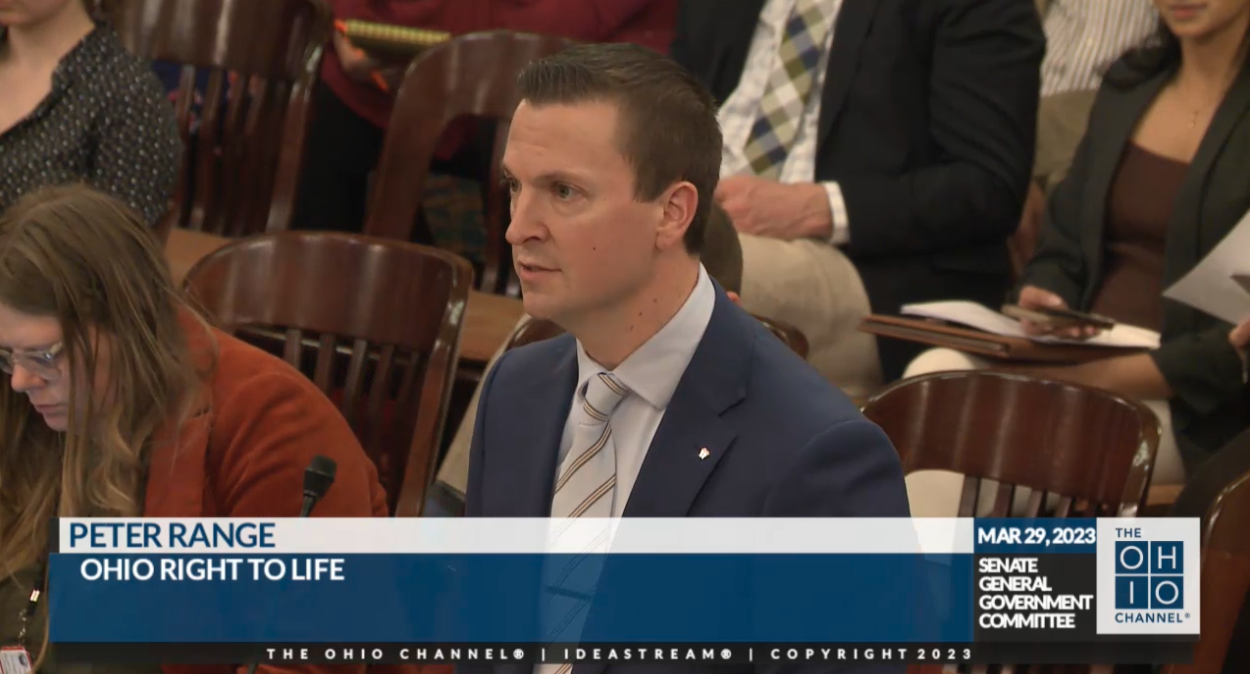
    Ohio Right to Life CEO Peter Range speaking before the Senate General Government committee in favor of SJR 2. (Screen grab from the Ohio Channel)

    [/vc_column_text][vc_column_text]

    Right to Life officials claim a reproductive rights amendment would allow youth to receive gender affirming care without parental notification

    BY:  Ohio Capital Journal

    Late last year, Rep. Brian Stewart, R-Ashville, and Secretary of State Frank LaRose introduced their plan requiring supermajority for constitutional amendments. It didn’t take long for opponents to check the calendar and argue the resolution was advancing — and advancing now — to block an abortion rights amendment on the horizon.

    Despite Stewart and LaRose’s contentions to the contrary, Republican leaders have given up the charade that the two ballot measures are unconnected. On Wednesday in a Senate committee hearing for SJR 2, outside conservative organizations doubled down. A 60% threshold for future constitutional amendments is necessary, they argued, to head off the reproductive rights amendment before November.

    But they went a step further, too.

    Speakers from Ohio Right to Life argued — without evidence — that the reproductive rights amendment would open the door to minors receiving gender affirming care without parental notification.

    It’s a specious argument that presages an exceptionally bitter march to November, marked by disinformation and fear-mongering, with critics of the argument noting that nothing in the proposed amendment mentions or supersedes Ohio’s parental consent laws.

    A “healthy tension”

    Unlike the last year’s attempt to establish a supermajority threshold, numerous proponents showed up to speak in favor of the idea.

    Some, like University of Toledo professor Lee Strang, stuck to the policy,

    “Ohio adopted this initiative mechanism for a variety of reasons,” he explained. “The most common reason was the belief that the state legislature was not sufficiently responsive to average Ohioans and was instead subject to control of large nationwide trusts.”

    Of course, that might sound familiar. Ohio’s last redistricting became a debacle in which Republican leaders repeatedly defied the state supreme court. It’s been less than a month since a jury convicted former House speaker Larry Householder in a multimillion-dollar bribery scheme funded by two major utilities.

    Strang contends the amendment process needs to maintain a “healthy tension” between two ideals: stability and flexibility. The higher threshold would insulate the constitution from provisions that belong in statutes, he said.

    Other speakers, however, wandered farther afield.

    Right to Life

    Ohio Right to Life CEO Peter Range argued passing SJR 2 is about “building a culture of life.” His testimony made no bones about wanting the higher threshold to undermine the reproductive rights amendment. But he also injected one of the latest rallying cries of the culture war.

    “This amendment that’s coming up in November will wipe away parental rights to be engaged in their teenagers decision to get an abortion or not, in their teenagers decision to get sex change operation or not.”

    He wasn’t the only right to life official to make a “parental rights” argument tied to trans youth. Kate Batra insisted, “I’m not being hyperbolic at all, when I say lives are stake.”

    “If this extreme amendment is passed, parents will have their rights obliterated,” Batra argued. “So moms and dads won’t be notified, let alone be able to consent, to their underage daughters undergoing abortion procedures. This also opens the door for adolescents to pursue controversial sex change operations, puberty blockers, sterilization procedures and the like—all without the parents’ knowledge or consent.”

    The amendment itself, however, makes no mention of gender affirming care. It’s first section reads, in full:

    “Every individual has a right to make and carry out one’s own reproductive decisions, including but not limited to decisions on contraception; fertility treatment; continuing ones own pregnancy; miscarriage care; and abortion.”

    It goes on to prohibit state interference except that abortion “may be prohibited after fetal viability.” The amendment carries an exception for the life or health of the mother.

    After the committee hearing, Sen. Rob McColley, R-Napoleon, who is one of the resolution’s sponsors, offered a tepid response to the parental rights argument.

    “There’s been an argument proffered by some that says they’re concerned with the language that says ‘but not limited to,’” he explained. “I’m not 100% well versed on that argument, so I can’t really opine on it.”

    “Demonstrably and totally false”

    Organizers leading the push for the reproductive rights amendment didn’t seem surprised by the line of argument.

    Television ads from the dark money organization Protect Women Ohio make the same spurious allegations about parental rights. The ad’s script actually leads with trans fear-mongering.

    “Your daughter is young, vulnerable, online,” the narrartor says. “You fear the worst: pushed to change her sex or to get an abortion.”

    Executive director of Ohio Physicians for Reproductive Rights, Dr. Lauren Beene, pushed back forcefully on the ad’s claims.

    “The ad is demonstrably and totally false. There is absolutely nothing in the amendment that mentions or supersedes Ohio’s parental consent laws,” she said.

    In a recent NBC4 factcheck, a Capital University law school professor rated Protect Women Ohio’s claims as four out of four Pinocchios.

    “Their intentionally deceptive ad is the beginning of a multi-million-dollar disinformation campaign,” she added, “designed to raise unsubstantiated fears and distract from the fact that the amendment will ensure Ohioans have access to comprehensive reproductive health care, including abortion, and preserve the sanctity of the doctor-patient relationship.”

    Equality Ohio executive director Alana Jochum criticized the ad as well for making “false claims” and “ignoring the facts.”

    “Not only does the proposed amendment have nothing to do with gender affirming healthcare, those arguing that it does are implying that life-saving healthcare is something nefarious,” she said. “The ballot initiative being referenced specifically protects the right to abortion, another form of lifesaving medical care that Ohioans deserve to have access to.”

    “False claims about what the proposed abortion amendment would do attempt to mislead voters by spreading lies that have been debunked by legal experts,” she added. “They are once again dragging precious children, their families, and their health care providers into a conversation that has nothing to do with them — especially when we should actually be talking about protecting democracy.”

    Cincinnati attorney David Langdon registered Protect Women Ohio as an Ohio non-profit a little over a month ago. Langdon helped draft the 2004 Ohio constitutional amendment defining marriage as between one man and one woman. He has also represented the Center for Christian Virtue — another organization pushing for the supermajority threshold.

    Follow OCJ Reporter Nick Evans on Twitter.[/vc_column_text][vc_separator border_width=”10″][vc_column_text]

    Nick Evans has spent the past seven years reporting for NPR member stations in Florida and Ohio. He got his start in Tallahassee, covering issues like redistricting, same sex marriage and medical marijuana. Since arriving in Columbus in 2018, he has covered everything from city council to football. His work on Ohio politics and local policing have been featured numerous times on NPR.


    MORE FROM AUTHOR[/vc_column_text][/vc_column][/vc_row]

  • Education sees some funding boosts, some missed opportunities in 2022

    Education sees some funding boosts, some missed opportunities in 2022

    BY: SUSAN TEBBEN – Ohio Capital Journal

    Next year is sure to be a busy one when it comes to education in Ohio, with potential state agency overhauls and funding changes still on the agenda for the state legislature.

    The end of 2022 was capped by an 11th-hour push and ultimately failure for an attempted overhaul of the Ohio Department of Education and the state Board of Education. Senate Bill 178 was never passed in an Ohio House committee, so it was folded into another bill with controversial provisions, House Bill 151.

    House Bill 151 included bans for trans youth in participating in sports based on their gender identity, and after SB 178 was included, the bill came in at more than 2,000 pages. But despite delaying the vote until after 2 a.m. on the last day of the legislative session, the bill and its many provisions failed to garner enough votes in the House.

    LGBTQ advocates hailed the failure of House Bill 151, which still would have required the use of birth certificates to prove a student’s gender, despite the elimination of a provision that would have required a genital exam.

    “I can not begin to express my gratitude to the hundreds of community members and advocates who stood up for the rights of all transgender youth to participate in all parts of life as whole people, including sports, just like everyone else,” said Alana Jochum, executive director of Equality Ohio, after the bill failed to pass.

    Dr. Rhea Debussy, director of external affairs for Equitas Health and former facilitator for the NCAA’s Division III LGBTQ OneTeam Program, said the thrill of seeing the legislation voted down was tempered by concern that the bill even existed.

    “It’s very alarming that a group of legislators thought bullying gender expansive and intersex youth was an urgent need for the final hours of Ohio’s 134th General Assembly,” Debussy said in a statement.

    Senate Bill 178

    Education officials not only celebrated the failure of HB 151’s anti-trans legislation, but the downfall of the rapid-fire education overhaul they overwhelmingly said needed more time and more vetting.

    “OEA believes it is worth taking a hard look at how Ohio’s schools are governed and supported at the state level,” said OEA President Scott DiMauro in a statement. “However, collaboration is key.”

    Senate President Matt Huffman said he was “disappointed that our school reform bill and our attempt to do something about girls’ sports … I’m disappointed that those things failed.”

    But Huffman maintained the stance he took after the Senate passed HB 151 on to the House for a vote earlier this month, that if the education overhaul part of the bill didn’t pass during the 134th GA, it would move on to the 135th.

    “I’m glad we took the vote because we kind of have on the record who’s where, and there probably is a lot more due diligence that needs to be done on that issue,” Huffman said.

    Some ups, more downs

    While some funding changes were implemented — such as $56 million in state funding for Disadvantaged Pupil Impact Aid, increases in Elementary and Secondary School Emergency Relief funds and federal monies for school security and safety — public schools are still looking for full funding of the Fair School Funding Plan (formerly called the Cupp-Patterson plan, after Speaker Bob Cupp and former state Rep. John Patterson, the legislators who created it). The plan was previously funded for the two years of the current General Assembly, but needs another four-year commitment of funds to be fully phased in.

    That plan, according to the OEA, “represents the first constitutional school funding system in the state in decades.”

    The effort for better public school funding is flanked by a lawsuit moving forward in Franklin County Common Pleas Court that seeks to nullify the EdChoice private school voucher system in the state. A coalition of school districts and individuals joined together to file the lawsuit, and Franklin County Judge Jaiza Page recently ruled against the Ohio Attorney General’s Office, who argued the lawsuit should not be allowed to continue.

    “This means we will put vouchers on trial in a court of law,” the coalition behind the lawsuit, Vouchers Hurt Ohio, wrote in an email newsletter, though the timeline for the court case could go on for some time.

    Private school vouchers are on the minds of congressional Ohioans as well, with U.S. Sen. Sherrod Brown pushing for more investment in federal Head Start programs and more funding for public schools.

    “We have a state government, one of whose major aims seems to be to privatize public schools,” Brown said in a press call. “They have moved more and more money out of public education into religious schools and other private schools … and really undermined what state government should be doing and that is funding public education for the great majority of students in our state.”

    Teachers unions and public officials alike wanted to see efforts to stem the state’s teacher shortage, a rise in the teacher wages that have stagnated over the last 25 years and changes to the third-grade reading guarantee, both of which saw action in the legislature, but did not come to fruition.

    As the state’s Board of Education awaits the fate of the department and the board itself, they still have a decision to make: the search for a superintendent of public instruction.

    The board spent months on issues such as a resolution condemning racism in education, then a resolution repealing that racism measure, and finally a resolution urging the federal government not to include gender identity in anti-discrimination language that would impact education policy.

    But in their December meeting, they decided to punt on the issue of hiring a search firm to select candidates to fill the open position that heads the department.

    The board voted to wait until SB 178 was passed or rejected by the legislature, for fear that candidates for the position might change their minds once they found out how the roles of superintendent would change under the new bill.

  • Ohio representatives file new anti-trans bill, targeting health care providers

    Ohio representatives file new anti-trans bill, targeting health care providers

    BY: NICK EVANS and Ohio Capital Journal

    Ohio House lawmakers are running back a fight over trans youth in the state. But this time, instead of focusing on school sports, the proposal would prohibit offering minors any kind of gender affirming treatment — from hormones to surgery. The measure, H.B. 454, puts the onus on health care providers by defining that treatment as “unprofessional conduct” for state licensing boards, and making “actual or threatened violations” of the bill grounds for a lawsuit.

    Erin Upchurch, executive director of Columbus’ Kaleidoscope Youth Center, calls the bill dehumanizing.

    “I feel frustrated and angry and extremely disappointed that people who were voted into office to protect all Ohioans are using their platform and their power to actually attack a really specific portion of our communities,” she said. “It is a gross misuse of power and completely an overreach.”

    The bill’s sponsors, Rep. Gary Click, R-Vickery, and Diane Grendell, R-Chesterland, begin by enumerating a series of legislative findings—a laundry list of dubious assertions meant to cast doubt on trans identities and the safety of medical procedures.

    “The risks of gender transition procedures far outweigh any benefit at this stage of clinical study on these procedures,” the legislation claims.

    Upchurch disputes that, noting national organizations like the American Academy of Pediatrics support gender affirming care.

    In a 2018 policy statement on the issue, the organization’s very first recommendation contends transgender youth should have access, “to comprehensive, gender-affirming, and developmentally appropriate health care that is provided in a safe and inclusive clinical space.”

    In addition to punishing providers who offer care, H.B. 454 threatens school workers including teachers, nurses and counselors. The bill says they can’t “withhold” information about a student who is questioning their gender identity from that child’s parent or guardian. But Upchurch, who is a licensed social worker, explained the ethical standard is to maintain confidentiality unless a minor is harming themselves or others.

    “Are you withholding or are you protecting the young person’s confidentiality?” Upchurch asked. “So when we look at what’s accurate and what’s in there, language can be used in a lot of ways to serve our agendas.”

    The bill’s sponsors did not respond to a request for comment, but Sen. Nickie Antonio, D-Lakewood, was quick to condemn the move.

    “I am incredibly frustrated that some members of the General Assembly continue to challenge our most vulnerable children’s right to exist for a political soundbite,” she wrote in a statement.

    Antonio argued lawmakers do not have a role in the health care decisions of individual children.

    “Those decisions must be made in concert with medical experts and physicians,” Antonio said. “Frankly, it is time for the legislature to stop these unnecessary and hateful attacks on transgender youth once and for all.”

    Earlier this year, lawmakers put forward a so-called “Save Women’s Sports Act.” The bill would limit a student’s participation in sports to the team corresponding with the sex they were assigned at birth. Although the proposal got a few hearings, it never passed a committee.

    In June, bill sponsor Rep. Jena Powell (R-Arcanum) tried to force the issue by tacking the language onto an unrelated Senate bill dealing with name, image and likeness policy for college athletes. Her move scuttled the bill, and Gov. Mike DeWine instead issued an executive order giving athletes the green light to sign sponsorship deals.

    The latest proposal has yet to be assigned to a committee.