More than 1,000 turned out to protest outside a Columbus Tesla dealership. They’re angered by the deep cuts Elon Musk and President Donald Trump are attempting to make. (Photo by Marty Schladen, Ohio Capital Journal.)
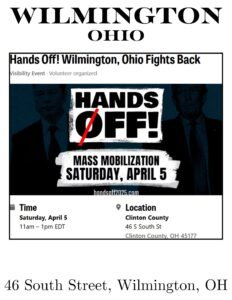
Fifty-five protests are planned throughout Ohio for this weekend, and more were being added as of mid-morning on Friday, an organizer said. They’re part of more than 1,000 protests of the Trump administration slated for all 50 states and Washington, D.C.
_______________
__________________
Organizers have posted an interactive map of where they’re planned.
A map of protests of the Trump administration planned for Ohio on April 5 and 6. (Image provided by HandsOff 2025.)
Those sponsoring this weekend’s rallies include dozens of advocacy organizations, including the AFL-CIO, Americans for Financial Reform, Common Cause, the Consumer Federation of America, Indivisible, and Planned Parenthood.
A website for the demonstrations explains their goal.
“Donald Trump and Elon Musk believe this country belongs to them,” it says. “They’re taking everything they can get their hands on, and daring the world to stop them. On Saturday, April 5th, we’re taking to the streets nationwide to fight back with a clear message: Hands Off!”
It adds, “A core principle of Hands Off! is a commitment to nonviolent action. We expect all participants to de-escalate any potential confrontations with those who disagree with our values, and to act lawfully at these events.”
In Ohio at least, protests are planned for Saturday and Sunday. One is slated for noon on Saturday on the Western Plaza of the Ohio Statehouse in Columbus. Others are planned for Cleveland, Cincinnati, Dayton, Akron, and Toledo, in addition to smaller cities and towns such as Portsmouth, Marietta, Sandusky, and others.
Mia Lewis of Common Cause Ohio provided a Facebook page listing the events that are being planned for the Buckeye State. It continues to be updated, she said.
“For many people, this will be the first protest they have attended,” Lewis said in an email. “They are coming out not to tear anything down, but to stand up for the Constitution, for the rule of law, for our democracy. Enough is enough!”
She added that a broad swath of Ohioans are expected.
“The folks planning to attend range from the elderly — I’ve had many questions about accessible parking — to young families bringing their children. Yes, WE THE PEOPLE are showing up to say enough is enough! Hands off our government and our democracy.”
YOU MAKE OUR WORK POSSIBLE.
GET THE MORNING HEADLINES.
_____________
Marty Schladen
Marty Schladen has been a reporter for decades, working in Indiana, Texas and other places before returning to his native Ohio to work at The Columbus Dispatch in 2017. He’s won state and national journalism awards for investigations into utility regulation, public corruption, the environment, prescription drug spending and other matters.
Ohio Capital Journal is part of States Newsroom, the nation’s largest state-focused nonprofit news organization.
by Cincinnati Public Radio’s President & CEO, Richard Eiswerth
Richard Eiswerth
Dear Loveland Friend,
Thank you for your support of Cincinnati Public Radio, and for listening every day to WVXU, WMUB and/or WGUC!
As you know better than most, Cincinnati Public Radio is more than just three radio stations—it’s a trusted source of local news, a hub for meaningful conversations, and a vital part of the southwest Ohio’s civic and cultural landscape. Every day, WVXU journalists deliver fact-based reporting and programming that keep you informed and connected. And every week, WGUC hosts present the finest in classical music and keep you up-to-date on Greater Cincinnati’s arts and culture scene.
Through initiatives such as our fact-checking partnership, in-depth election coverage and voters’ guides, broadcasts of the Cincinnati Symphony, Opera and May Festival, and community engagement events, we provide news and information that provide entertainment, education, enrichment, and foster critical thinking and informed decision-making.
However, recent actions by the Administration and Congress have raised broad concerns about the future of public media:
Grants from the Corporation for Public Broadcasting (CPB) that support essential services and reporting are at risk.
The Federal Communications Commission has launched an investigation into NPR’s and PBS’s sponsorship messaging.
The CEOs of NPR and PBS have been requested to appear before Congress.
NPR has been ordered to vacate its Pentagon workspace.
Since its establishment in 1967, CPB has been a crucial funding source for public radio and television stations nationwide. Although CPB support represents only 0.0076% of the federal budget, it is a lifeline for smaller stations, accounting for up to 50% of their revenue.
In addition, defunding CPB would have devastating consequences, particularly for tribal, rural, Spanish-language and religious nonprofit stations that provide critical news, emergency alerts and cultural programming. Public radio reaches 99 percent of the American population with free over-the-air and online programming and connects communities with national, state, and local news and information, as well as emergency alerts and warnings.
At Cincinnati Public Radio, CPB funding accounts for about 5% of our annual budget. Losing this support would place a strain on our operations and diminish our ability to deliver the in-depth journalism and programming you rely on. But CPB’s impact goes beyond direct funding—it also provides indirect support that offsets the costs of our reporting, broadcasting and publishing efforts.
For example, The Ohio Newsroom, our statewide partnership among public radio stations that brings news stories from parts of the state that would otherwise go unreported and ignored, would not have been possible without grants funded through CPB. The Ohio Newsroom builds upon the partnership of public radio stations in Ohio to increase and enhance high-quality, in-depth, fact-driven journalism to serve the public on radio, digital, and video platforms. It increases reporting from all regions of Ohio featuring a wide range of diverse voices.
At Cincinnati Public Radio, our mission is clear: to provide accurate, fact-based journalism, and the best in fine arts entertainment — not to push an agenda. And ongoing federal support is critical to fulfilling that mission, especially at a time when other reliable sources of news and information continue to decline.
Now, more than ever, public media needs your voice. We encourage you to join the Protect My Public Media campaign and advocate for the essential role that public media like Cincinnati Public Radio play in our communities. Together, we can ensure that independent local media continues to thrive.
How You Can Take Action
Visit the Website – Go to protectmypublicmedia.org to send a message to your congressional representatives.
Send Your Message – Follow the prompts on the website to submit your support for public media.
Check Your Email – Look for a confirmation email from your representative’s office.
Reply with a Personal Note – Respond to the confirmation email with your own message about what public media and WFAE mean to you.
Want to go a step further? Forward this message to a friend or share your support on social media. Express how WFAE impacts you and the community to highlight the importance of preserving free, fact-based news and diverse programming.
Thank you for your support and listenership. We are proud to be your public radio station and remain committed to serving our community with integrity and transparency.
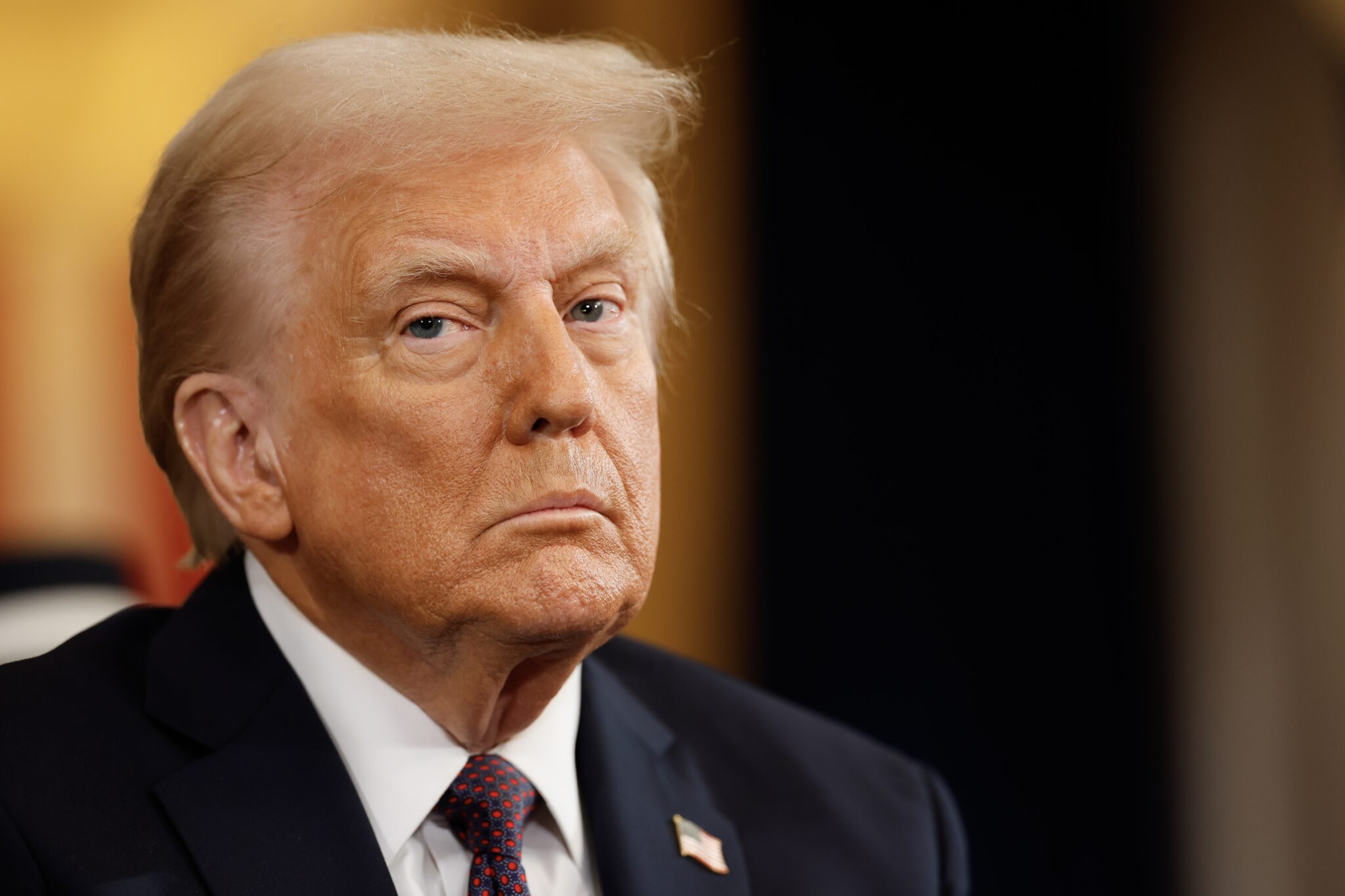
President Donald Trump attends inauguration ceremonies in the rotunda of the U.S. Capitol on Jan. 20, 2025, in Washington, D.C. (Photo by Chip Somodevilla/Getty Images)
WASHINGTON — A second federal judge appears ready to issue an order blocking the Trump administration from freezing funding on grant and loan programs, despite a move by the Office of Management and Budget to rescind a controversial memo Wednesday just before the hearing.
Chief Judge John J. McConnell Jr. of the U.S. District Court in Rhode Island opted not to issue his ruling during the virtual hearing, saying that he first wanted the Democratic attorneys general who filed the suit to suggest how such an order might be worded. He then wants to hear from the Justice Department lawyer arguing the case on behalf of the Trump administration about the scope of that possible order.
McConnell, who was appointed by former President Barack Obama, said the state attorneys general had convinced him that the Trump administration was likely to continue with the funding halt detailed in the now-revoked OMB memo in some way, based on a social media post from White House press secretary Karoline Leavitt.
“That hasn’t changed based on comments by the president’s press secretary,” McConnell said. “And so I’m inclined to grant the restraining order, though I’m struggling with how it would be worded and what effect it would have.”
A ruling from McConnell would be the second order blocking the Trump administration from implementing a spending pause on certain grant and loan programs.
District Judge Loren L. AliKhan on Tuesday issued a short-term administrative stay preventing President Donald Trump’s administration from starting the spending freeze. She then set a hearing in that case, brought by organizations that receive federal funding, for Feb. 3.
The original memo, released Monday evening by the Office of Management and Budget, led to widespread confusion and frustration among organizations like Meals on Wheels and grantees that rely on funding from the Department of Veterans’ Affairs, as well as members of Congress from both political parties.
Memo rescinded
The Trump administration’s Office of Management and Budget rescinded that memo Wednesday, though comments from Leavitt just afterward led to even more confusion just before the hearing began.
Leavitt wrote in a social media post that OMB rescinding the memo was “NOT a rescission of the federal funding freeze.”
“It is simply a rescission of the OMB memo,” Leavitt wrote. “Why? To end any confusion created by the court’s injunction.”
“The President’s EO’s on federal funding remain in full force and effect, and will be rigorously implemented,” she added.
Separately, Leavitt issued a written statement to reporters that seemed to suggest rescinding the OMB funding freeze memo was meant to get around AliKhan’s order.
“In light of the injunction, OMB has rescinded the memo to end any confusion on federal policy created by the court ruling and the dishonest media coverage,” Leavitt wrote in a statement. “The Executive Orders issued by the President on funding reviews remain in full force and effect and will be rigorously implemented by all agencies and departments. This action should effectively end the court case and allow the government to focus on enforcing the President’s orders on controlling federal spending. In the coming weeks and months, more executive action will continue to end the egregious waste of federal funding.”
Appropriators praise withdrawal of memo
Maine Republican Sen. Susan Collins, chairwoman of the Senate Appropriations Committee, welcomed OMB’s action before Leavitt’s post and the hearing.
“I am pleased that OMB is rescinding the memo imposing sweeping pauses in federal programs,” Collins wrote in a statement. “While it is not unusual for incoming administrations to review federal programs and policies, this memo was overreaching and created unnecessary confusion and consternation.”
Senate Appropriations Committee ranking member Patty Murray, D-Wash., released a statement that the Trump administration reversal was the right decision. That was also before Leavitt weighed in.
“This is an important victory for the American people whose voices were heard after massive pressure from every corner of this country — real people made a difference by speaking out,” Murray wrote. “Still, the Trump administration — through a combination of sheer incompetence, cruel intentions, and a willful disregard of the law — caused real harm and chaos for millions over the span of the last 48 hours which is still ongoing.”
White House assurances
OMB’s decision to rescind the memo Wednesday followed the White House making public assurances Tuesday that the spending freeze wouldn’t impact Social Security, Medicare, Medicaid and direct food assistance programs like the Supplemental Nutrition Assistance Program, or SNAP.
Two separate lawsuits seeking to block the OMB memo from taking effect on Tuesday evening at 5 p.m. were filed in federal district court.
The lawsuit filed by the National Council of Nonprofits, American Public Health Association and Main Street Alliance led to federal District Court Judge AliKhan placing a temporary hold on the planned spending freeze until Feb. 3 at 5 p.m.
The second lawsuit, heard Wednesday, was filed by Democratic attorneys general from New York, Arizona, California, Colorado, Connecticut, Delaware, Hawaii, Illinois, Maine, Maryland, Massachusetts, Michigan, Minnesota, Nevada, North Carolina, New Jersey, New Mexico, Oregon, Rhode Island, Vermont, Washington, Wisconsin, and the District of Columbia.
Last updated 5:42 p.m., Jan. 29, 2025
Jennifer Shutt
Jennifer covers the nation’s capital as a senior reporter for States Newsroom. Her coverage areas include congressional policy, politics and legal challenges with a focus on health care, unemployment, housing and aid to families.
Ohio Capital Journal is part of States Newsroom, the nation’s largest state-focused nonprofit news organization.
After hitting a historically low rate in 2016, the number of uninsured children has gradually grown to eliminate progress made in the country. Ohio, alone, had a double-digit jump in the three-year study.
Susan Tebben is an award-winning journalist with a decade of experience covering Ohio news, including courts and crime, Appalachian social issues, government, education, diversity and culture. She has worked for The Newark Advocate, The Glasgow Daily Times, The Athens Messenger, and WOUB Public Media. She has also had work featured on National Public Radio.
In 2019, the rate had jumped to 5.7%, an increase of 726,000 more children since the Trump Administration took office in 2016, the study showed.
“Much of the gain in coverage that children made as a consequence of the Affordable Care Act’s major coverage expansions implemented in 2014 has now been eliminated,” the study noted in its key findings.
The data was collected from single-year estimates by the U.S. Census Bureau’s American Community Survey from the three years.
Ohio was one of several states that saw an increase of more than 20,000 uninsured children from 2016 to 2019.
Ohio’s uninsured rate went up 26% from 2016 to 2019. Data from 2019 show 131,000 Ohio children without insurance, up from 104,000 in 2016.
Ohio child health advocates say a lack of health insurance contributes to worse life outcomes, which extend to education and societal shortcomings.
“This damaging trend will have long-term consequences for children and communities across Ohio because without health coverage, children cannot access the care they need to grow and thrive,” said Tracy Najera, executive director of the Children’s Defense Fund Ohio, in response to the study.
The study attributed declines in Medicaid enrollment as the start of the decrease in insured children. Public coverage for children includes Medicaid and the Children’s Health Insurance Program (CHIP).
The largest national increase in uninsured children, 320,000, came between 2018 and 2019, and represents the largest annual jump in more than a decade, the authors of the study said.
“Moreover, since this data was collected prior to the pandemic, the number of uninsured children is likely considerably higher in 2020, as families have lost their jobs and employer-sponsored insurance, though it is impossible to know yet by precisely how much,” the study stated.
The study comes as some K-12 schools see spikes in COVID-19 rates, and cases in ages 0-19 represent the fifth highest age group in the state, according to state data.
Texas and Florida had the highest rates, representing 41% of the overall increase in child non-coverage, with about 1 million children in Texas lacking health insurance in 2019, and an estimated 343,000 uninsured children in Florida.
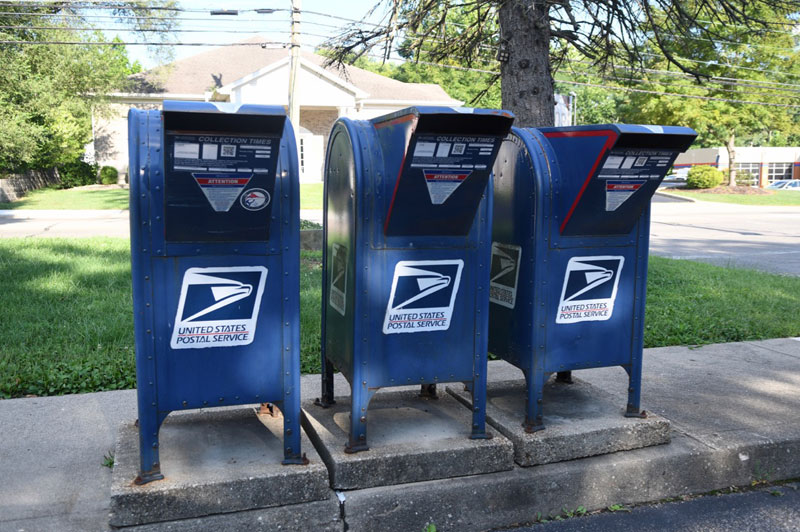
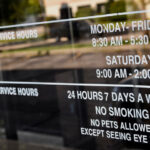
Loveland, Ohio – To supplement the story below (4 Ohio Republicans join House Dems to pass bill to boost post office funding by $25B) from the Ohio Capital Journal, Loveland Magazine visited two of the closest local U.S. Post Offices to document the number of mailboxes placed outside the buildings. We also documented the days and hours of operation of each.
While unlikely that the Trump Administration would attempt to interfere with the delivery of election-related mail in our heavily Republican voting area, nearly all Loveland mail does go to or from the Dalton Street processing center in Cincinnati. Interfering with mail delivery in the heavily Democratic voting urban areas of Cincinnati’s urban core is not beyond reasonable suspicion. And, the President may use mail problems in any part of the country to delegitimize and dispute the November election results.
One day ago the President tweeted, “The greatest Election Fraud in our history is about to happen. This may top the Democrats illegally spying on my campaign!”
On August 20 the President tweeted this, “They are sending out 51,000,000 Ballots to people who haven’t even requested a Ballot. Many of those people don’t even exist. They are trying to STEAL this election. This should not be allowed!”
Trump said last week on Fox News that he opposes some funding because he doesn’t want it used for mail-in votes, repeating his claim that it would lead to “fraudulent” election results.
WCPO has reported that processing machines from Cincinnati’s Dalton Street post office have been removed and remain offline and unusable.
The Cincinnati Enquirer recently reported that according to Jim Sizemore, president of the American Postal Workers Union in Cincinnati that in May and June, the USPS “pulled the plug on eight mail processing machines in Cincinnati, accounting for 19% of the processing center’s capacity.” The eight machines could process collectively 243,000 pieces of mail an hour according to the Enquirer. Mail is piling up on the floor at the Queensgate facility according to Sizemore.
WCPO’s John Matarese says the VA is now notifying veterans that they should order their medicine earlier than usual because at this time it cannot guarantee on-time delivery. And, by law, it cannot ship medication via private services.
Sen. Rob Portman said on August 21 on his FaceBook page, “A number of veterans have reached out to my office recently expressing concern about delays in the USPS delivery of their critical prescription medications. This is not acceptable. This morning I pressed Postmaster General DeJoy for answers.” And on August 19 Portman said, “We must protect Ohioans right to vote during to the ongoing COVID-19 pandemic. That’s why I sent a letter to the Postmaster General with Congressman Bob Latta calling on the USPS to ensure the timely & accurate delivery of election-related materials in Ohio.”
Rep. Brad Wenstrup told constituents in an email on Monday that the postal service has enough money on hand, “$14 billion cash” and that he voted to “open a $10 billion line of credit through the CARES Act” to help with any COVID-19 issues. Wenstrup said the USPS has enough money on hand to remain “fully function” until August of next year and that Speaker Pelosi has “manufactured a crisis and rushed the House back to vote on an irresponsible and unneeded amount of money on a problem that does not currently exist.”
Paige Pfleger reported in a Cincinnati Public Radio story on August 20 that, “Since the pandemic, even more Ohioans have opted to receive their medications by mail, to avoid possible exposure or to save money.”
Antonio Ciaccia of the Ohio Pharmacists Association is quoted in the story, “We have heard some extreme anecdotes over the last couple weeks where patients are waiting one, two, three weeks for their medications,” and adds that he’s never heard so many complaints about delivery delays.
On August 18, Senator Sherrod Brown is quoted in a Cleveland.com article about mail sorting equipment being dismantled in Cleveland. Brown said, “As the U.S. Postal Service has warned Ohio and other states that it may not be able to meet mail-voting deadlines this November, the visibly idle equipment along with mail delays and post office budget shortfalls have fueled fears that the upcoming election will be undermined.”
Reporter Sabrina Eaton writes in the Cleveland.com article:
President Donald Trump’s assaults on mail-in balloting, even as he has requested an absentee ballot to vote from his new residence in Florida, have raised questions over whether he’s deliberately trying to sabotage an election that will likely have more mail-in ballots than ever because of reluctance to vote in person during the coronavirus pandemic.
In a news conference over the weekend, Trump said universal mail-in voting would be “catastrophic. It’s going to make our country a laughingstock all over the world.”
“The ballots are lost, there’s fraud, there’s theft, it’s happening all over the place,” said Trump. “Now we’re going to do it with this whole, vast, big section of the country? It’s crazy.
Check out these two voter guides recently published by Loveland Magazine with information about requesting absentee ballots. Keep in mind that Ohio officials are recommending you stay ahead of these absolute dates to ensure your mail coming to and from the post office is delivered in time for your vote to count.
Loveland Magazine is interested in hearing from readers if they have experienced any delays in receiving mail (timely delivery of medicine, paychecks and other essentials) or about concerns they may have about receiving absent ballot requests or sending their ballot back to the local Boards of Elections. Please send us your thoughts.
These photos were taken on the evening of August 16 at the Loveland and Symmes post offices. We do not know if any additional boxes were recently removed but is does not appear so. Although the quantity of mailboxes and hours of operation at these locations would not necessarily reflect current delays in mail delivery, we did want to document current conditions in advance of the November 3rd Presidential Election.
Mail boxes at the Symmes Township Post Office at 9370 Fields Ertel Road
Mail boxes at the Loveland Post Office at 200 Loveland Madeira Road
Loveland Post Office at 200 Loveland Madeira Road
Collection times on the mailboxes at the Loveland Post Office at 200 Loveland Madeira Road
Service times at the Symmes Township Post Office at 9370 Fields Ertel Road
Service times at the Loveland Post Office
4 Ohio Republicans join House Dems to pass bill to boost post office funding by $25B
House Speaker Nancy Pelosi said Saturday that mail delays are depriving Americans of timely delivery of medicine, paychecks and other essentials. Photo by Justin Sullivan | Getty Images
WASHINGTON — The U.S. House convened a rare weekend session Saturday in an attempt to stop the U.S. Postal Service from allegedly disrupting mail service to sabotage the November elections.
The Democratic-led chamber passed a bill 257-150 that would infuse $25 billion into the agency as it prepares for a surge in mail-in ballots and bar it from changing operations or service levels in place at the beginning of the year.
The prohibition would remain in effect through January 2021 or for the duration of the coronavirus crisis — whichever is later.
The bill passed largely along party lines, though more than two dozen Republicans joined Democrats in backing the legislation, including four Ohio Republicans: Reps. Troy Balderson (12th District), David Joyce (14th District), Steve Stivers (15th District) and Mike Turner (10th District). Rep. Bob Gibbs (R-7th District) did not vote. No Democrats voted against the bill.
One Republican in favor was Rep. Brian Fitzpatrick of Pennsylvania, who said the post office needed to be funded so his constituents could get their mail delivered on time. “Republicans and Democrats must come together and address the serious challenges that USPS has been facing for some time now,” he said.
Senate Majority Leader Mitch McConnell (R-Ky.) is not expected to take up the measure. He told his hometown paper Tuesday that he doesn’t think a stand-alone bill funding the postal service would pass the chamber.
The White House threatened Friday to veto the post office boost, calling it “an overreaction to sensationalized media reports that have made evidence-free accusations that USPS has undertaken reforms to achieve political rather than operational objectives.”
But House Speaker Nancy Pelosi (D-Calif.) maintains that the administration is trying to suppress votes as the nation heads into a fraught election season in which the postal service will serve as “election central.”
In addition to undermining the integrity of the elections, the delays are depriving Americans of timely delivery of medicine, paychecks and other essentials, Pelosi said at a press conference Saturday.
Democratic lawmakers made similar allegations on the House floor.
The administration has mounted a “sabotage campaign” to manipulate the vote, Rep. Debbie Dingell, a Michigan Democrat, said Saturday morning.
Democratic Rep. Brenda Lawrence of Michigan and a member of the House Oversight and Reform Committee, said the bill would prohibit the postmaster general from making any changes that would undermine the post office. She said the postmaster general has “tried to rip it apart from the inside” and “our democracy is hinging” on delivery of the mail.
“Don’t mess with the USPS,” said Rep. Debbie Wasserman Schultz (D-Fla.).
Republicans charged Democrats with ginning up a manufactured crisis intended to deny the president a second term. House Minority Leader Kevin McCarthy (R-Calif.) said postal problems predate 2020 and the Trump administration.
GOP Rep. Rob Woodall of Georgia called Saturday’s vote a “punctuation mark” at the close of last week’s Democratic National Convention. This “wasteful partisan exercise” will “go nowhere” in the GOP-controlled Senate and “help no one,” he added.
Rep. Debbie Lesko, a Republican from Arizona, echoed the sentiment, calling the controversy “phony political theater.” Pelosi has gone “politically postal,” she said, quoting a recent Wall Street Journaleditorial.
The House approved $25 billion for the postal service in a $3 trillion coronavirus relief package approved in May. Pelosi pointed out Saturday that the USPS board of governors — a bipartisan group of members appointed by Trump — backs the funding.
Trump said last week on Fox News that he opposes some funding because he doesn’t want it used for mail-in votes, repeating his claim that it would lead to “fraudulent” election results.
He said changes to overtime, retail hours and the location of mail processing machines and blue mailboxes were made to save costs and streamline operations but said earlier this week he would suspend some of his moves until after the elections to avoid the appearance of impropriety. He also said he wouldn’t close existing mail processing facilities and would use “standby” resources in October to meet mail surges.
On Friday, he insisted that secure elections are his “sacred duty” and top priority this fall.
But Pelosi on Saturday called DeJoy’s promise into question, pointing to his decision not to replace mail infrastructure that has already been removed. She also pointed to Trump’s comment earlier this week calling for law enforcement officers at polling places.
“It is all designed to suppress the vote,” Pelosi said.
DeJoy is slated to testify again on Monday in a hearing before the Democratic-led House Oversight and Reform Committee, where he is expected to face more withering questioning. Robert Duncan, chair of the U.S. Postal Service Board of Governors, will also appear before the committee.
Allison Stevens is a Washington D.C. reporter for States Newsroom, a network of state-based nonprofit news outlets that includes the Ohio Capital Journal.
The Loveland Board of Education voted unanimously on Wednesday to fully re-open schools. During their discussion, we heard repeatedly how the devil’s daily details are not yet known because staff and administrators are waiting for advice and guidelines from various local, State, and Federal agencies that have yet to be released. (In unanimous vote Loveland Board of Education approves reopening plan)
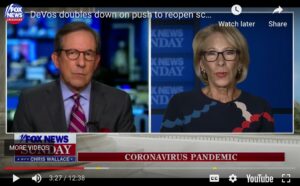
Chris Wallace asks Education Secretary Betsy DeVos if she has authority to pull funding from schools that don’t reopen and about safely re-opening schools
Meanwhile, we find out today as Bianca Quilantan reports in Politico that the White House is blocking CDC officials from testifying next week at a hearing on reopening schools.
Separately, the CDC confirmed that more guidance for opening schools won’t be released until later this month. The report was expected to already be available.
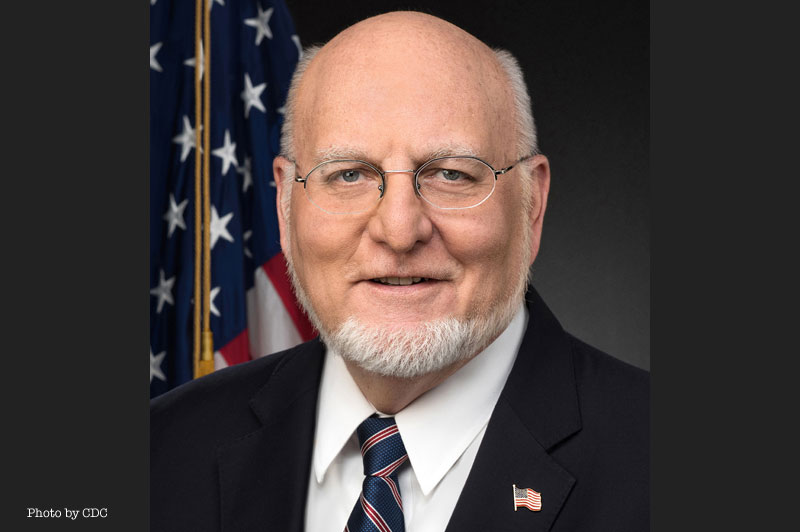
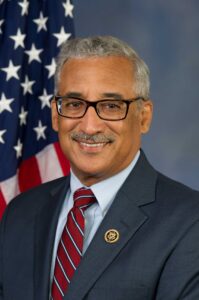
House Education and Labor Committee Chair Bobby Scott (VA-03) had invited CDC Director Robert Redfield, or a designee, to testify before the Early Childhood, Elementary and Secondary Education Subcommittee on July 23 at a hearing on safely reopening schools.
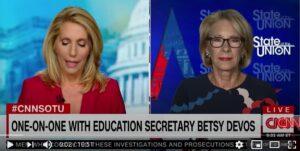
CNN’s Dana Bash speaks to Education Secretary Betsy DeVos about whether or not she has a plan for schools to safely reopen for students as Covid-19 cases surge in the US.
Scott asked Redfield to discuss the immediate needs of K-12 public schools as many districts, including Loveland, Ohio schools, prepare to reopen in a few weeks.
“It is alarming that the Trump Administration is preventing the CDC from appearing before the Committee at a time when its expertise and guidance is so critical to the health and safety of students, parents, and educators,” Scott said in a statement to Politico. “This lack of transparency does a great disservice to the many communities across the country facing difficult decisions about reopening schools this fall.”
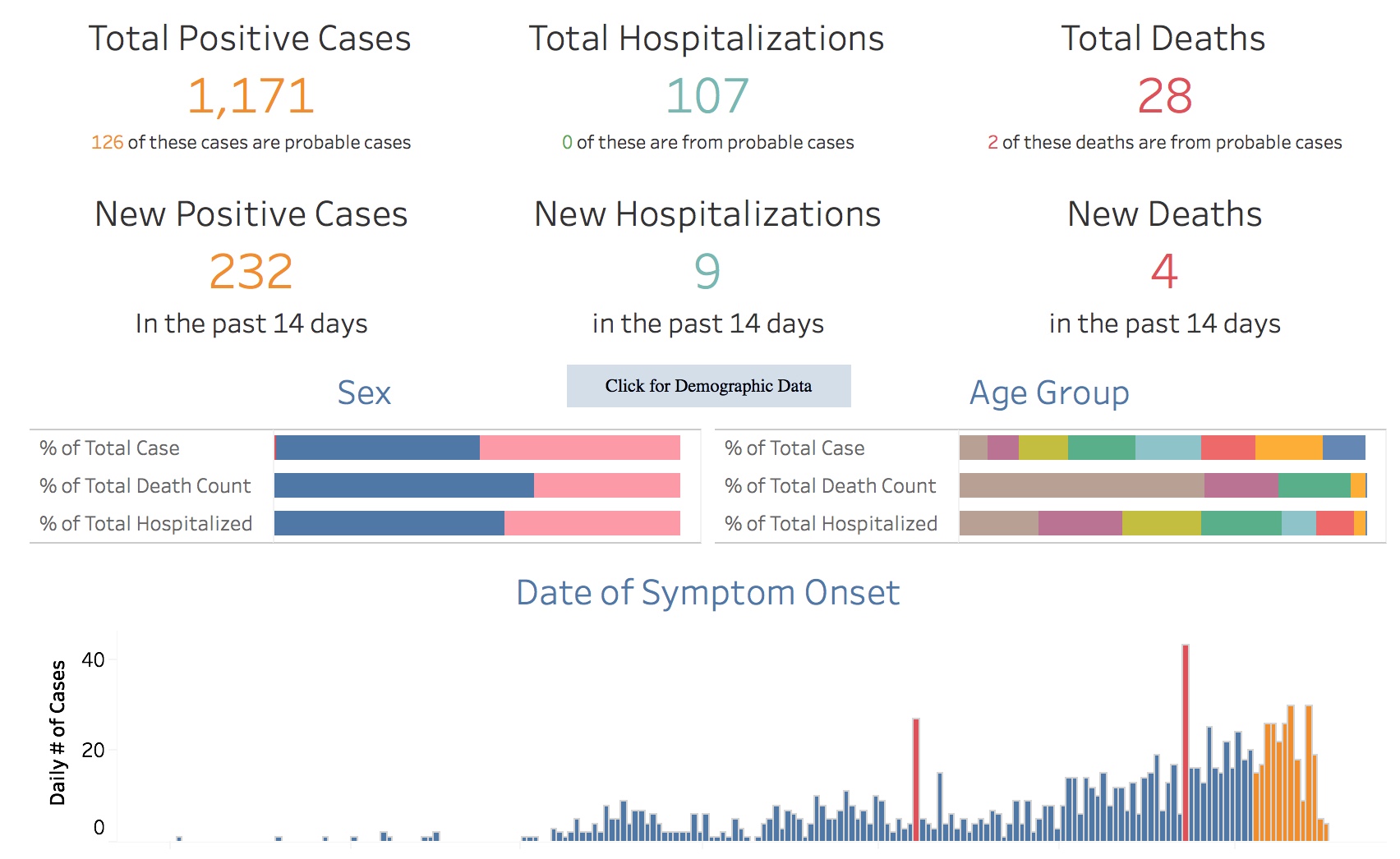
Ohio’s COVID 19 DASHBOARD today at 7:48 AM
Aides, speaking on background, said the committee was told that Redfield would not appear, at the direction of the White House according to Politico.
Science and evidence-based resources and tools could provide additional information for administrators, teachers and staff, parents, caregivers and guardians in Loveland, as they work towards the public health-oriented goal of safely opening schools this fall.
House Education and Labor Committee Chair Bobby Scott
Scott released this statement on Friday:
“School reopening plans must be guided by the advice of public health experts. For that reason, we asked the Centers for Disease Control and Prevention (CDC) to testify in a public hearing to provide greater clarity on the steps we can take to help schools reopen safely.
“It is alarming that the Trump administration is preventing the CDC from appearing before the Committee at a time when its expertise and guidance is so critical to the health and safety of students, parents, and educators. This lack of transparency does a great disservice to the many communities across the country facing difficult decisions about reopening schools this fall.
“The administration’s strategy of prioritizing politics over science has had a devastating impact on our country throughout this pandemic. It should not make that same mistake when it comes to reopening schools.”
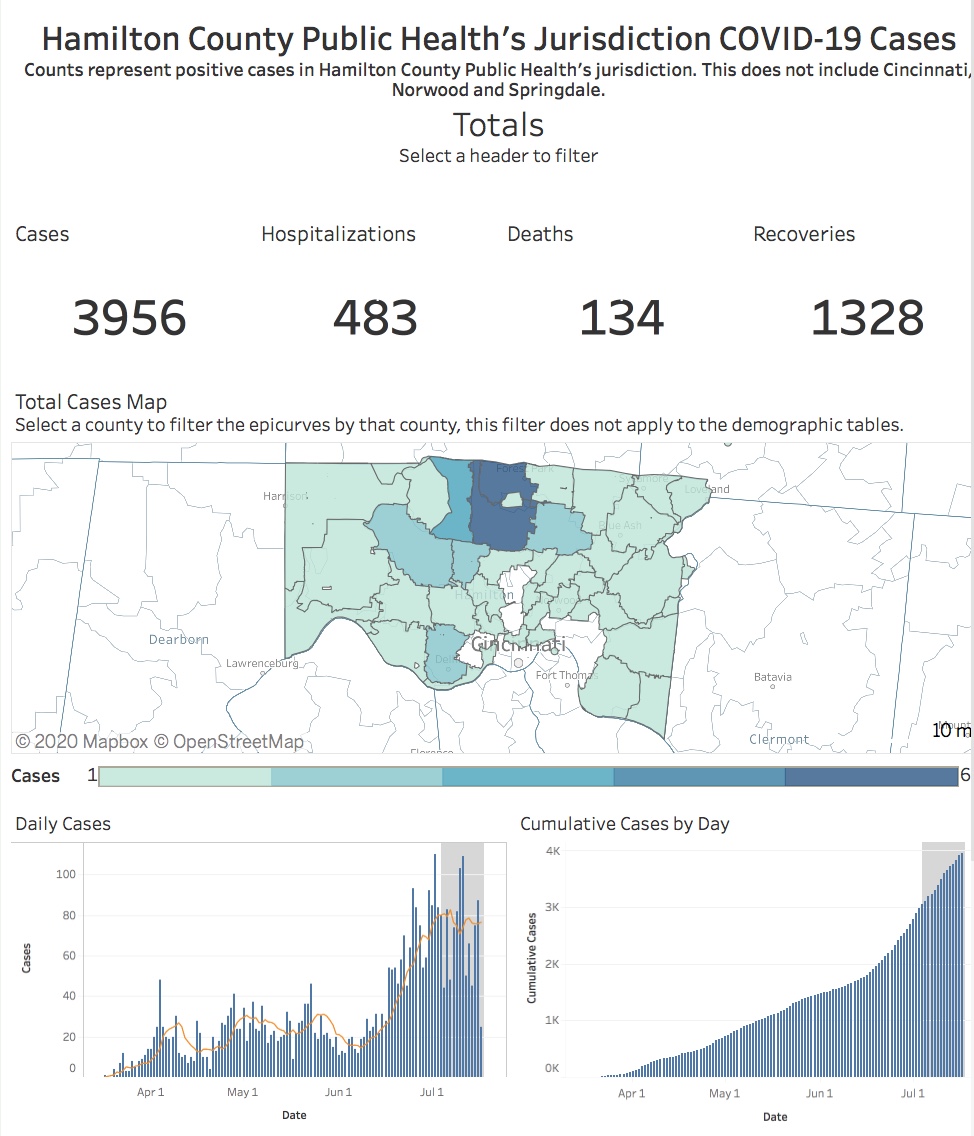
Hamilton County COVID 19 Dashboard today at 7:55 AM
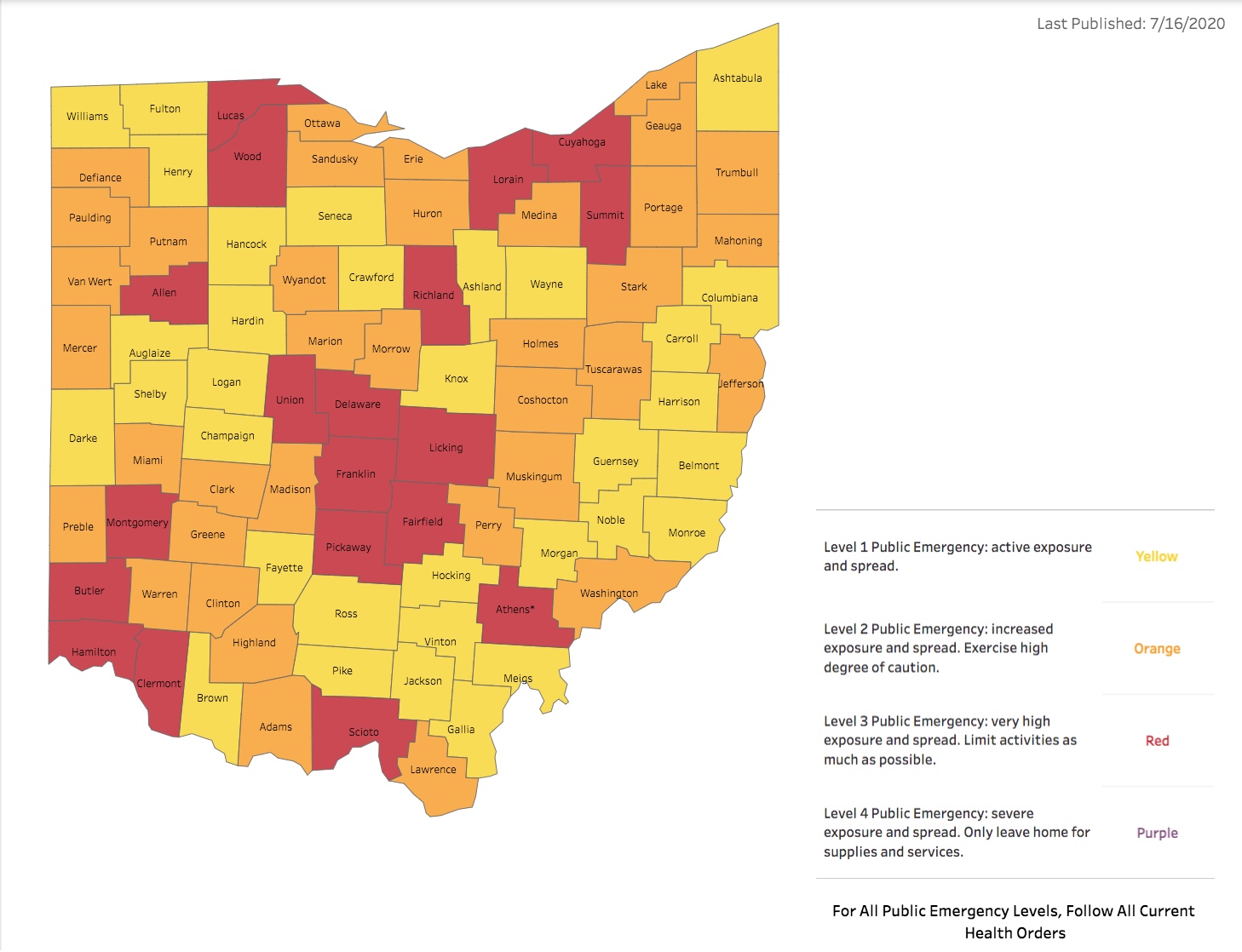
Ohio Public Health Advisory System The Public Health Advisory Alert System is a color-coded system designed to supplement existing statewide orders through a data-driven framework to assess the degree of the virus’ spread and to engage and empower individuals, businesses, communities, local governments, and others in their response and actions. (7-18-2020)
Warren County COVID 19 Dashboard today at 8:02 AM
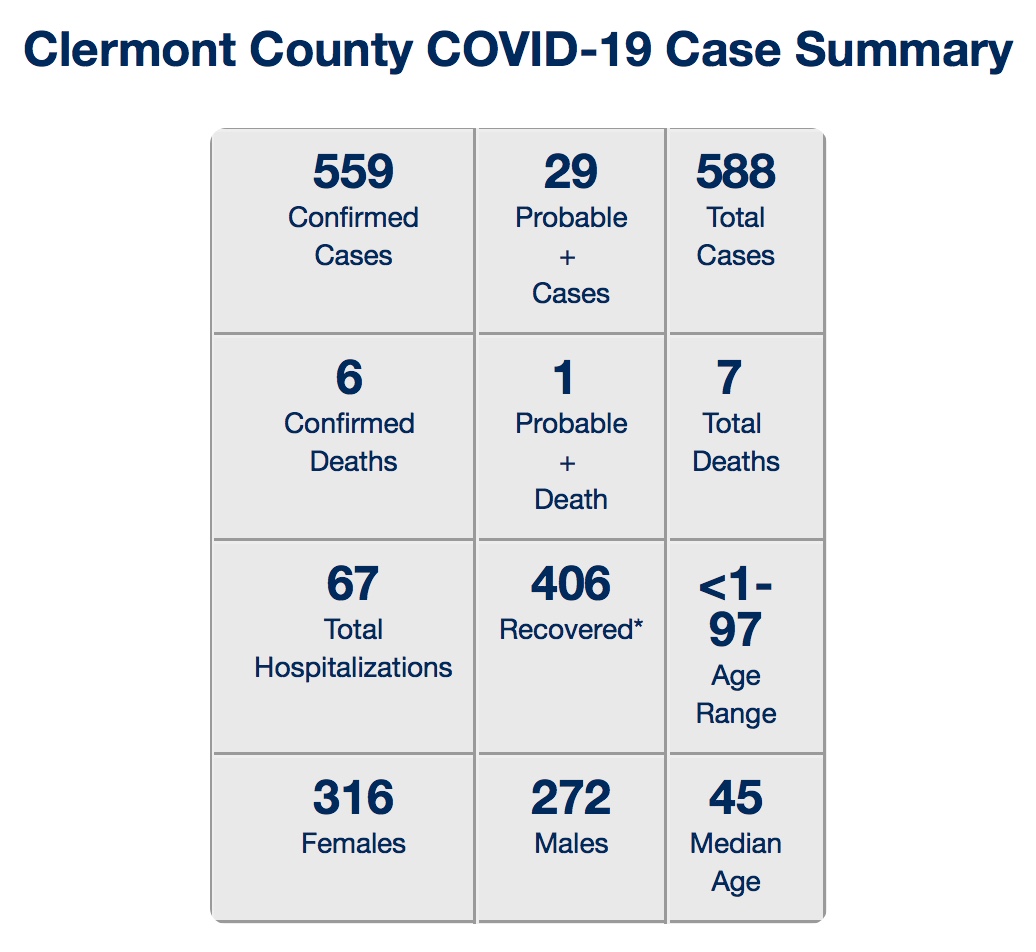
Clermont County COVID 19 Dashboard today at 8:02 AM
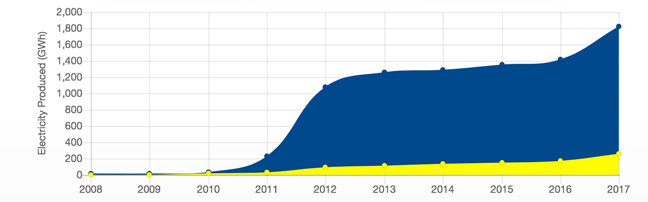
Columbus, Ohio – As the Trump Administration puts efforts into weakening the Clean Power Plan, renewable energy is still increasing in Ohio. According to a new report by Environment Ohio Research & Policy Center, Ohio went from producing 1 Gigawatt hour of solar energy and 15 GWh of wind energy in 2008, to now producing 260 GWh of solar energy and 1,563 GWh of wind energy.
Environment [STATE] Research & Policy Center is dedicated to protecting our air, water and open spaces. We investigate problems, craft solutions, educate the public and decision-makers, and help the public make their voices heard in local, state and national debates over the quality of our environment and our lives.
“The last decade has seen explosive growth in the key technologies to power Ohio with clean, renewable energy,” said Nancy Goodes, Campaign Organizer for Environment Ohio “Ohio is poised to accelerate its shift away from fossil fuels. With renewable energy prices falling and new energy-saving technologies coming on line every day, Ohio should work towards the long-term goal of obtaining 100 percent of our energy from clean, renewable sources.”
For the report, Renewables on the Rise: A Decade of Progress Towards a Clean Energy Future, Environment Ohio Research & Policy Center, and Frontier Group reviewed statistics from 2008 to 2018 in solar energy capacity, wind energy capacity, energy efficiency, electric vehicle sales, and battery storage.
The report’s authors called on the state and federal government to strengthen, not weaken, clean power standards and continue to allow Ohio to grow its renewable energy industry.
“At the federal, state and local level, elected officials representing Ohio must enact policies to strengthen the renewable energy industry here.” said Goodes “We must accelerate our progress, not hit the brakes on effective programs like the Clean Power Plan.”
Ohio
Click buttons to view progress by clean energy technology.
Clean energy progress in Ohio, 2008 to 2017:
Solar: 183-fold growth in annual solar generation, an increase of 259 GWh. U.S. rank: 24 (ranked by increase in generation)
Wind: 104-fold growth in annual wind generation, an increase of 1,548 GWh. U.S. rank: 24 (ranked by increase in generation)
Total wind and solar: 1,823 GWh generated in 2017, enough to power 169 thousand homes.
Electric Vehicles: 3,139 sold through 2017. U.S. rank: 34 (ranked by EVs per registered vehicle)
Energy Storage: Utility-scale battery storage capacity increased by 51 MW. U.S. rank: 5 (ranked by increase in capacity)























 Chris Wallace asks Education Secretary Betsy DeVos if she has authority to pull funding from schools that don’t reopen and about safely re-opening schools
 CNN’s Dana Bash speaks to Education Secretary Betsy DeVos about whether or not she has a plan for schools to safely reopen for students as Covid-19 cases surge in the US.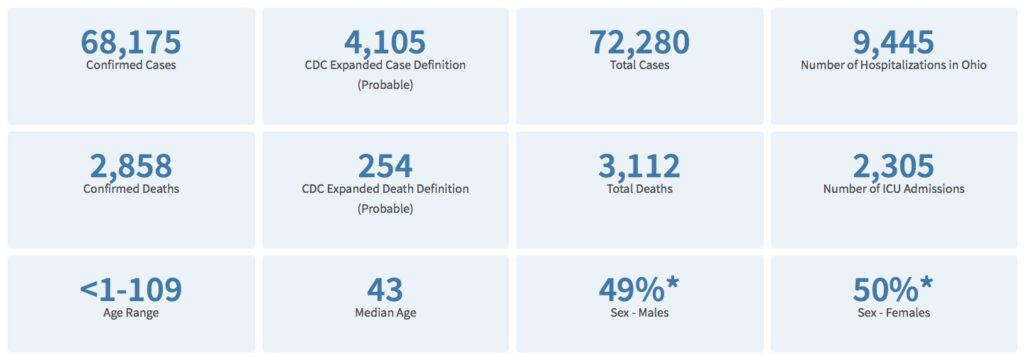

 Click buttons to view progress by clean energy technology.