Tag: trump

  • The 19th Explains: Can Trump eliminate the Department of Education?

    The 19th Explains: Can Trump eliminate the Department of Education?

    (File photo by Elaine S. Povich/Stateline.)

    The president can’t eliminate a federal agency with an executive order lawfully. But he can undermine its functions and redistribute duties.

    This story was originally reported by Nadra Nittle of The 19th. Meet Nadra and read more of their reporting on gender, politics and policy.

    President Donald Trump reportedly plans to fulfill a campaign promise aimed at sweeping changes for public schools: closing the Department of Education.

    An executive order from the White House outlining this goal is expected imminently, sources close to the matter told news organizations including NBC News, The Washington Post and The Wall Street Journal this week. The placement of multiple Department of Education employees on administrative leave and a probe of the agency by the Elon Musk-led Department of Government Efficiency have lent credibility to the claims. So has Trump.

    Asked by a reporter Tuesday why he was nominating Linda McMahon education secretary if he plans to scrap the department, the president said, “I told Linda — ‘Linda, I hope you do a great job and put yourself out of a job.’ I want her to put herself out of a job [in the] Education Department.”

    In a 2023 campaign video, Trump shared his vision for education, expressing his intention for local school boards and parents to control their children’s education, incorporate prayer into schools and expand school choice — or options for families to choose the public, private or religious school they prefer.

    “One other thing I’ll be doing very early in the administration is closing up the Department of Education in Washington, D.C., and sending all education and education work and needs back to the states,” he said, disregarding that states and school districts already run public schools.

    The prospect of the agency closing has sparked outcry from education leaders, elected officials and families with vulnerable children. Eliminating the Department of Education, they say, could have a ripple effect across the country — with particular consequences for children with disabilities, youth from low-income households and student loan borrowers, most of whom are women.

    “Students across the country benefit from programs run by the Department of Education, especially lower-income students in rural, suburban and urban communities, students who qualify for federal grants or loans to receive career training or attend 2- and 4-year colleges, and students with disabilities,” Becky Pringle, president of the National Education Association (NEA), said in a statement Monday. The nation’s largest labor union, the NEA represents over 3 million educators and other school stakeholders.

    Shuttering the Department of Education would adversely affect nearly all of the nation’s students, Pringle said, as 90 percent of students overall and 95 percent of students with disabilities are educated in public schools. “Trump’s power grab would steal resources for our most vulnerable students, explode class sizes, cut job training programs, make higher education more expensive and out of reach for middle class families, take away special education services for students with disabilities, and gut student civil rights protections.”

    As alarm grows over the Department of Education’s possible elimination, questions are also mounting — namely if an executive order is all it takes to axe the federal agency.

    Can a president shut down the Department of Education?

    The president cannot close a federal agency with an executive order lawfully.

    “But what I think is important to remember here is that you don’t have to dismantle the Department of Education to really, really limit its reach and its effectiveness,” said Jasmine Bolton, who served as senior counsel in the Department of Education’s Office for Civil Rights from 2021 to 2023. “Although it is less likely that they are able to fully dismantle the Department of Education, they could very easily limit its ability to do a lot of things. They could also really take a look at its grant making, its funding — who it’s funding, what it’s funding and really strike at the heart of some of those provisions.”

    Bolton said that it’s not inconceivable that the Trump administration would dial back some of the large funding grants that school districts in blue and red states rely on to serve their students.

    “We have to be vigilant and aware of all possibilities,” she said.

    The Department of Education dates back to former President Jimmy Carter’s administration. In 1979, Congress passed legislation to create the agency. To dismantle the Department of Education, Congress would have to approve its abolishment. Rep. Thomas Massie of Kentucky on January 31 reintroduced legislation to dissolve the agency, a goal shared by the Republican Party and conservative think tank the Heritage Foundation, which wrote Project 2025, its blueprint for Trump’s return to the White House. But the chance of such a bill surviving is a long shot, experts say, especially in the Senate.

    “I think it’d be very challenging to do because you’d have to overcome the filibuster in the Senate,” said Wil Del Pilar, senior vice president of the Education Trust, a nonprofit advocating for equity in education. “They don’t have 60 votes in the Senate unless they disband the filibuster. So, it’s possible, but I think it’s highly unlikely.”

    Most of Congress, including 60 House Republicans, opposed legislation to eliminate the department last session. Del Pilar said that abolishing the agency would prevent Republicans from pursuing some of their objectives.

    “Given all the things that they want to do in terms of what I would call a deregulatory agenda, what I expect them to come in and want to do is undo all of the Biden-era regulations that were put in place through negotiated rule making,” he said.

    Pedro Noguera, dean of the Rossier School of Education at the University of Southern California, said the Trump administration needs the Department of Education to carry out goals like withholding funding from education institutions that practice DEI (diversity, equity and inclusion) or teach critical race theory.

    “I don’t know how he does that without using the powers of the Department of Education,” Noguera said. “On the other hand, if he wants to redistribute the duties that are present in the Department of Education into other departments, that’s kind of a rebranding. I could see them doing that.”
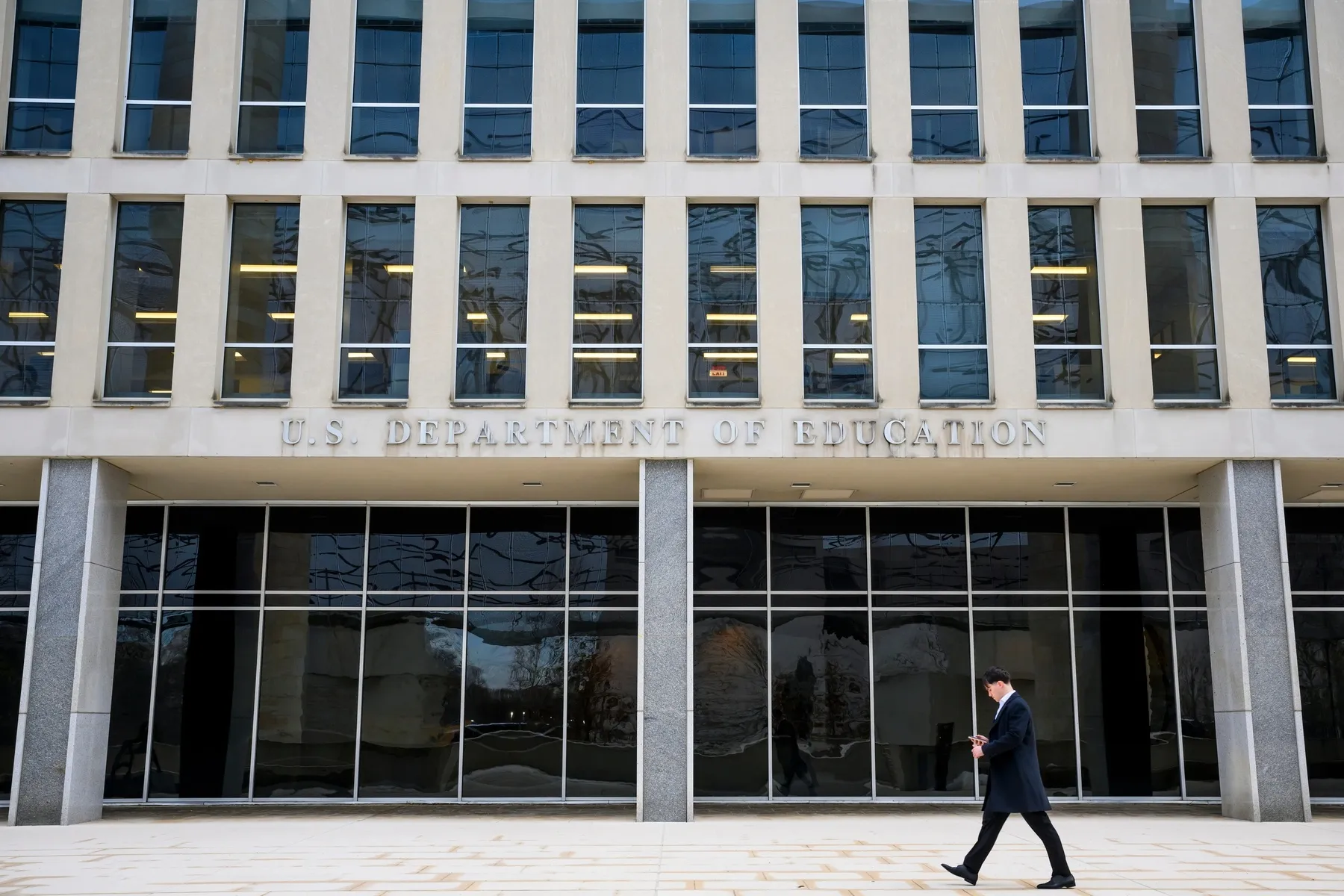
    A pedestrian walks by The Lyndon Baines Johnson Department of Education Building.
    A pedestrian walks by The Lyndon Baines Johnson Department of Education Building on February 3, 2025 in Washington, DC.
    (Pete Kiehart/The Washington Post/Getty Images

    What does the Department of Education do?

    Ensuring that all students have equal access to education is the agency’s overarching responsibility. It includes a civil rights division that investigates allegations of discrimination related to factors such as sex, race and disability.

    Trump can’t close the Department of Education with the sweep of a pen, but he can drive out its senior personnel or issue an executive order instructing the agency to severely reorganize, both of which would render it largely ineffectual. Placing dozens of the department’s employees on unexplained leave on Friday has already prompted a letter from a lawyer representing some of the staffers; it accuses the agency of retaliating against them for attending a DEI training. Should it be dismantled, the Department of Education’s key functions are expected to go to other federal agencies. Congressional approval, though, would be needed to transfer many of those duties.

    While states, by far, provide most of the money public schools need to operate, the Department of Education, which has a $79 billion annual budget, disperses billions of dollars in federal funding. This includes to the Title I program, which gives supplemental funding to schools that primarily serve economically disadvantaged students. The agency also directs funding toward students with disabilities in line with the Individuals with Disabilities Education Act (IDEA), federal legislation that guarantees this population an education appropriate for their needs. Both IDEA and Title I, created in 1975 and 1965, respectively, predate the Department of Education and can be dissolved only by an act of Congress.

    “I’m not sure what it accomplishes if they try to go after programs like Title I,” Noguera said. “They’re going to get a lot of opposition, not just from blue areas, but from red areas as well, and from Congress, because people tend to support the public schools.”

    Like Title I and IDEA, the National Assessment of Educational Progress (NAEP) also predates the agency, which administers the test today. Known as the “Nation’s Report Card,” the results of the assessment provide the department with a baseline of how well students are doing in reading, math and other areas.

    Upon last week’s release of NAEP scores showing that students’ reading scores had worsened and math scores had stalled, the Department of Education issued a statement unveiling the Trump administration’s plans to upend public schools and give states more control, a deceptive remark since states and school districts already have authority over what students learn. The federal government does not shape local curriculum.

    But the Department of Education does track the academic progress of K-12 and college students. At the higher education level, the agency monitors how well institutions serve students by compiling data about admissions numbers and graduation rates. It also oversees funding for the federal student loan program and the Free Application for Federal Student Aid (FAFSA), which students complete to receive financial assistance for college. This aid includes the Pell Grants that supplement higher education costs for students from low-income households.

    Braxton Brewington, a spokesperson for the Debt Collective, which works to abolish debt and transform how public goods and services are distributed, said that he’s concerned about how marginalized students will fare under an Education Department run by the Trump administration, though the Debt Collective also criticized Biden officials for not overhauling the student loan system.

    “We are expecting the Trump administration to carry out a deeply catastrophic agenda,” Brewington said. “So that will look like privatizing education — K-12 to higher education — incentivizing private loans to pay for college, rolling back repayment plans like Public Service Loan Forgiveness and other types of safety nets. These plans are not ideal, but to the extent that they’ve helped borrowers, we’re expecting a Trump administration to roll those back.”

    Does the public support closing the department?

    Surveys of the public have found different attitudes about the Department of Education. A new poll released Tuesday by Data for Progress, a progressive think tank and polling firm, found that likely voters oppose eliminating the federal agency by about a two-to-one margin. Data for Progress conducted the poll of 1,294 likely voters from January 31 to February 2 on behalf of the Student Borrower Protection Center, which works to improve the student loan system, and Groundwork Collaborative, which advocates for an equitable economy.

    Fifty-two percent of likely voters under age 45 strongly oppose closing the agency compared with 13 percent of this demographic who strongly support such a move. Forty-six percent of likely voters over 45 strongly oppose elimination, while 19 percent strongly support it. College-educated likely voters object to slashing the agency the most, with 55 percent strongly opposing this effort and 14 percent strongly supporting it.

    A 2024 survey of Americans by the Pew Research Center found that partisanship shaped opinions about the federal agency, with 64 percent of Republican and Republican-leaning respondents holding an unfavorable view of the department. Just 26 percent of Democrats and Democratic-leaning voters felt the same. Overall, 44 percent of respondents had a favorable opinion of the agency and 45 percent had the opposite view.

    Beyond partisanship, attitudes about the Department of Education may depend on whether people feel the agency plays a key role in their lives. Advocates for students with disabilities and student loan borrowers are among the loudest raising concerns about its potential dismantling or diminishment.

    “The last time Trump was in office, he significantly understaffed the Office for Civil Rights,” Del Pilar said. “So I do think we should be concerned about what this potentially means for students with disabilities, for English language learners, for immigrant students, because if they don’t staff up and investigate, then we’re not going to see institutions, schools and districts’ feet held to the fire around the inequities that are being placed on our students.”

    Why do Republicans want to kill this federal agency?

    Republicans have wanted to eliminate the federal agency since its launch.

    “Some of it was the old Republican focus on smaller government,” Noguera said. “They’re just shrinking the size of government and seeing the department as largely regulatory, but what they don’t understand is that many of the functions that are now within the U.S. Department of Education, such as funding Pell Grants, are essential to higher ed and access to higher ed for all kinds of Americans across the country. You can’t just get rid of that without a lot of resistance.”

    Without congressional support, Noguera continued, the Trump administration will find it difficult to achieve its goals for the nation’s schools. Many of them, such as implementing school prayer, expanding voucher programs and limiting what students can learn and read in class, directly clash with the public education system.

    On January 29, the White House issued an executive order asking the Department of Education to spend the next two months developing guidance to help states apply federal funding to school choice initiatives, mirroring a trend that’s been unfolding at the state level. For years, billionaires have collaborated with conservative lawmakers to route funding away from public schools and send it to private schools through voucher programs, according to a 2024 report by the Senate Committee on Health, Education, Labor and Pensions (HELP). Billionaires have funneled their financial resources into the School Freedom Fund, a political action committee that attempts to remove state lawmakers who oppose private school vouchers from office.

    Billionaires have a vested interest in privatized education because they can cash in on it through voucher tax credits and federal business expense deductions, the HELP report posits. For example, over 20 states provide voucher tax credits to companies that make contributions to pay students’ private school tuition. Moreover, vouchers overwhelmingly benefit students from high-income families since they typically cover just part of tuition costs. Lower-income families can’t afford to make up the difference. The effort to defund the nation’s public schools, the study contends, is ultimately one to make the elite class even wealthier.

    Vouchers harm communities that are already vulnerable due to systemic underfunding and disinvestment, Bolton said.

    “By pulling out this money and constantly pulling the rug out under schools, folks who support vouchers, particularly in this administration, are really intentionally undermining the schools that will continue to serve the majority of our students,” said Bolton, who is now policy director at the Partnership for the Future of Learning, a network of organizations fighting for high-quality public schools. “It’s incredibly frustrating that this administration seems to want to pour into a federal voucher program that doesn’t serve us and isn’t really responsive to what people are telling our leadership.”
  • Matt Gaetz bows out as Trump’s pick for attorney general

    Matt Gaetz bows out as Trump’s pick for attorney general

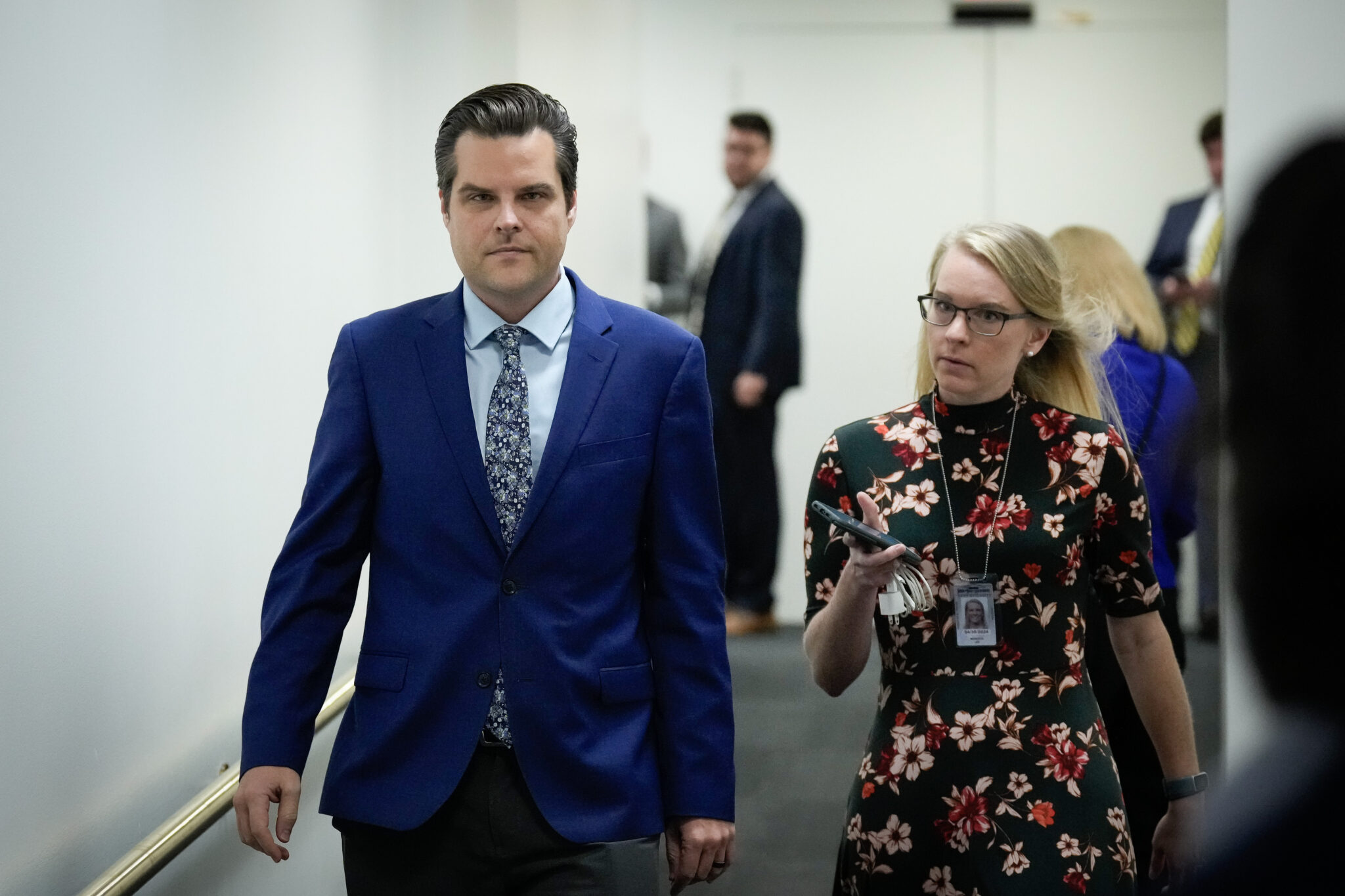
    Former U.S. Rep. Matt Gaetz leaves a House Republican Conference meeting at the U.S. Capitol on Oct. 3, 2023 in Washington, D.C. (Photo by Drew Angerer/Getty Images)

    By: Jennifer Shutt and Ariana Figueroa – Ohio Capital Journal

    WASHINGTON — Former Florida Congressman Matt Gaetz announced Thursday he’s withdrawing as President-elect Donald Trump’s planned nominee for attorney general days after securing the appointment.

    Gaetz’s path to Senate confirmation was highly unlikely following years of investigations about alleged drug usage and payments for sex, including with an underage girl. He submitted his resignation to Congress last week.

    “While the momentum was strong, it is clear that my confirmation was unfairly becoming a distraction to the critical work of the Trump/Vance Transition,” Gaetz wrote in a social media post. “There is no time to waste on a needlessly protracted Washington scuffle, thus I’ll be withdrawing my name from consideration to serve as Attorney General. Trump’s DOJ must be in place and ready on Day 1.”

    Trump posted on social media afterward that he “greatly” appreciated “the recent efforts of Matt Gaetz in seeking approval to be Attorney General.”

    “He was doing very well but, at the same time, did not want to be a distraction for the Administration, for which he has much respect,” Trump wrote. “Matt has a wonderful future, and I look forward to watching all of the great things he will do!”

    When asked if the Trump-Vance transition team had another nominee choice lined up, and whether they viewed the Gaetz withdrawal as a setback, spokesperson Karoline Leavitt did not provide details.

    “President Trump remains committed to choosing a leader for the Department of Justice who will strongly defend the Constitution and end the weaponization of our justice system. President Trump will announce his new decision when it is made,” Leavitt told States Newsroom in an emailed statement.

    The House Ethics Committee voted along party lines Wednesday not to release its report on Gaetz, following more than three years of investigation. Gaetz has repeatedly denied any wrongdoing, including the allegations that he had sex with a minor.

    Meetings with senators

    Trump’s running mate, Ohio Sen. J.D. Vance, spent Wednesday shuffling Gaetz between meetings with Republicans on the Senate Judiciary Committee, which would have held his confirmation hearing. Republicans will control the Senate in the new session of Congress beginning in January.

    South Carolina Sen. Lindsey Graham, the top Republican on the Judiciary Committee, wrote on social media that he respected Gaetz’s decision to withdraw his name from consideration as AG.

    “I look forward to working with President Trump regarding future nominees to get this important job up and running,” Graham said.

    GOP Sen. Chuck Grassley, incoming Judiciary Committee chair, posted the following on X: “I respect Gaetz decision &look fwd 2helping PresTrump confirm qualified noms 2reform Dept of Justice &bring TRANSPARENCY/ACCOUNTABILITY Trump’s mission = DRAIN THE SWAMP& I would add get some1 who will answer my hundreds of outstanding oversight letters sitting at Biden DOJ/FBI.”

    Grassley’s staff referred States Newsroom to the social media post when the outlet reached out for comment.

    The offices of Sens. John Kennedy of Louisiana and Tom Cotton of Arkansas, fellow Senate Judiciary Committee Republicans, declined to comment.

    Gaetz’s future is unclear, given that he resigned from the U.S. House last week and notified the chamber he didn’t plan to take the oath of office for the upcoming 119th Congress.

    He first joined the House in January 2017 and led efforts to remove former House Speaker Kevin McCarthy from that role last year, setting off a month-long stalemate within the House Republican Conference over who should lead the party.

    The race to fill his empty seat in a special election has already attracted six candidates, mostly Republicans in a heavily conservative-leaning district.

    Gaetz could jump into the race for his old seat, possibly winning a place back in the House of Representative next year following the special election.

    He could also try to take the oath of office when the next session of Congress begins on Jan. 3, since he wrote in his resignation letter that he did “not intend to take the oath of office for the same office in the 119th Congress, to pursue the position of Attorney General in the Trump Administration.”

    That would give the House Ethics Committee jurisdiction to complete its report on Gaetz and release it publicly.

    AG oversees Department of Justice

    The attorney general is responsible for overseeing the Department of Justice, which includes the federal government’s top law enforcement agencies as well as prosecutors.

    The Bureau of Alcohol, Tobacco, Firearms and Explosives, or ATF, Drug Enforcement Administration, Federal Bureau of Investigation, Federal Bureau of Prisons, Office for Victims of Crime, Office on Violence Against Women and U.S. Attorneys’ offices are among the 40 entities within the DOJ and its 115,000-person workforce.

    Congress approved $37.52 billion for the Department of Justice in the most recent full-year spending bill.

    Trump had two attorneys general during his first term as president. He first nominated former Alabama Sen. Jeff Sessions, whom Trump later fired amid disputes, and then Bill Barr.

    Ashley Murray contributed to this story.

    Last updated 3:03 p.m., Nov. 21, 2024


    Jennifer Shutt
    Jennifer Shutt

    Jennifer covers the nation’s capital as a senior reporter for States Newsroom. Her coverage areas include congressional policy, politics and legal challenges with a focus on health care, unemployment, housing and aid to families.

    Ohio Capital Journal is part of States Newsroom, the nation’s largest state-focused nonprofit news organization.

    MORE FROM AUTHOR

    Ariana Figueroa
    Ariana Figueroa

    Ariana covers the nation’s capital for States Newsroom. Her areas of coverage include politics and policy, lobbying, elections and campaign finance.

    Ohio Capital Journal is part of States Newsroom, the nation’s largest state-focused nonprofit news organization.

    MORE FROM AUTHOR

  • Trump taps vaccine skeptic RFK Jr. to lead Department of Health and Human Services

    Trump taps vaccine skeptic RFK Jr. to lead Department of Health and Human Services

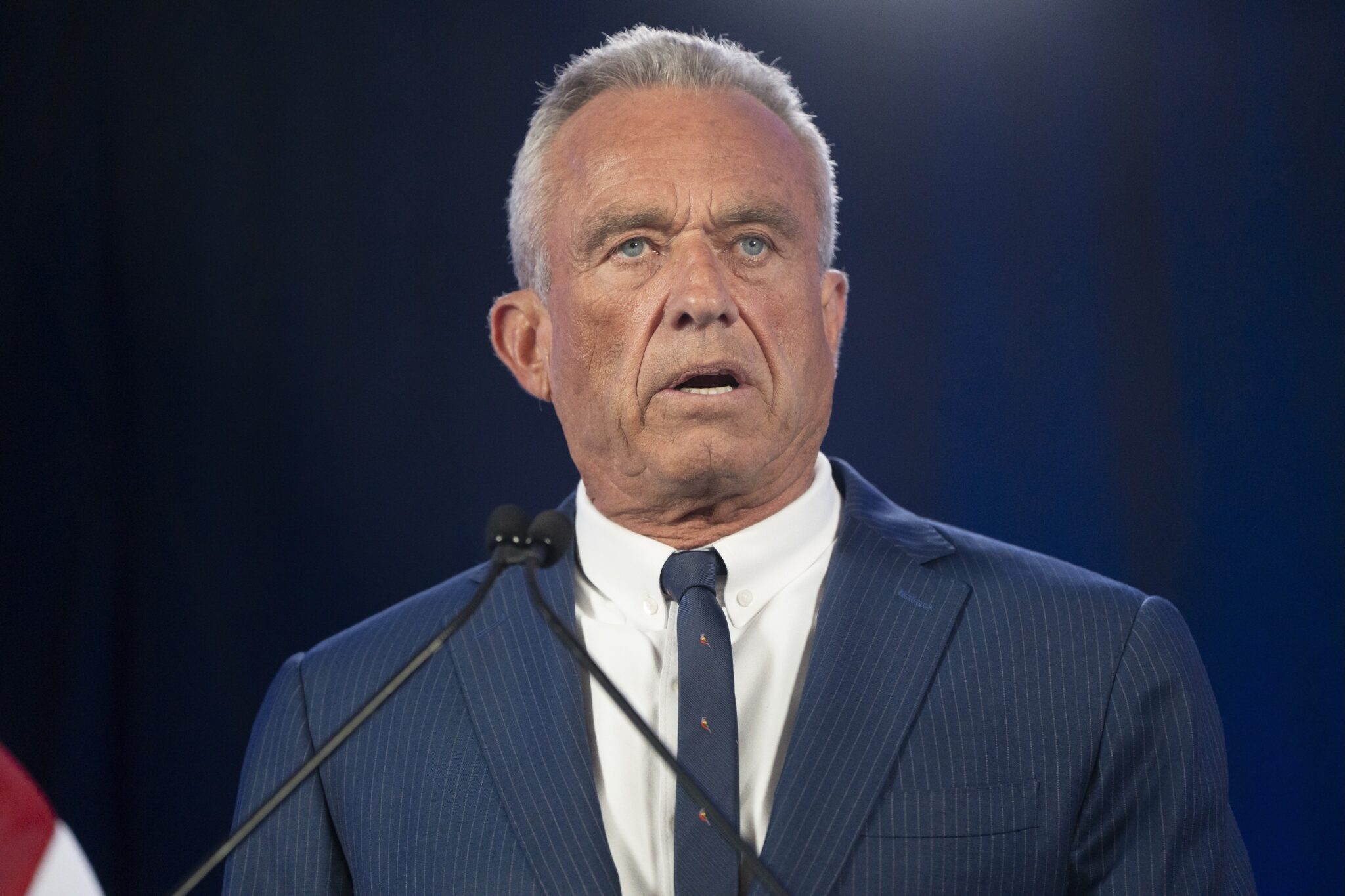
    Robert F. Kennedy Jr. gives remarks at the Renaissance Phoenix Downtown Hotel on Aug. 23, 2024 in Phoenix, Arizona. (Photo by Rebecca Noble/Getty Images)

    By:  Ohio Capital Journal

    WASHINGTON — President-elect Donald Trump announced Thursday he plans to nominate Robert F. Kennedy Jr. to head the Department of Health and Human Services, another controversial candidate who could face a challenging confirmation process in the U.S. Senate given his non-scientific beliefs about public health, including his anti-vaccine stance.

    “I am thrilled to announce Robert F. Kennedy Jr. as The United States Secretary of Health and Human Services (HHS),” Trump posted on social media. “For too long, Americans have been crushed by the industrial food complex and drug companies who have engaged in deception, misinformation, and disinformation when it comes to Public Health.

    “The Safety and Health of all Americans is the most important role of any Administration, and HHS will play a big role in helping ensure that everybody will be protected from harmful chemicals, pollutants, pesticides, pharmaceutical products, and food additives that have contributed to the overwhelming Health Crisis in this Country.”

    HHS receives about $116.8 billion in discretionary federal funds and about $1.7 trillion in mandatory spending each year and houses several big-name public health agencies, including the Administration for Strategic Preparedness and Response or ASPR, the Centers for Disease Control and Prevention, the Centers for Medicare & Medicaid Services, the Food and Drug Administration, the National Institutes of Health and the Substance Abuse and Mental Health Services Administration.

    Kennedy ran in this year’s presidential election as an independent candidate, often repeating inaccurate information about vaccines and spreading other conspiracy theories about public health.

    He has no background in science, research, or medicine. He graduated from Harvard University before going on to receive a law degree from the University of Virginia Law School.

    He pleaded guilty to felony heroin possession in Rapid City, S.D., in February 1984, before receiving two years of probation, which ended a year early. He volunteered with the Natural Resources Defense Council as part of that probation.

    Kennedy spent much of his career as an environmental lawyer and published several books.

    After ending his own presidential bid this year, Kennedy endorsed Trump and campaigned frequently for him.

    Criticism of the nomination began quickly after news broke Thursday, though far-right Republicans are expected to celebrate the nomination.

    Lisa Gilbert, co-president of the watchdog nonprofit organization Public Citizen, released a written statement saying, “Kennedy is a science-denying, morally-bankrupt conspiracy theorist who will endanger people’s lives if placed in a position of authority over health. The U.S. Senate should unanimously reject this nomination.”

    Louisiana Republican Sen. Bill Cassidy, ranking member on the Health, Education, Labor, and Pensions Committee, released a written statement that he’s interested in learning more about Kennedy during the confirmation process.

    “RFK Jr. has championed issues like healthy foods and the need for greater transparency in our public health infrastructure,” Cassidy wrote. “I look forward to learning more about his other policy positions and how they will support a conservative, pro-American agenda.”

    Washington state Democratic Sen. Patty Murray, a senior member of the HELP panel that will hold the confirmation hearing, wrote in a statement that Kennedy “could not be more dangerous — this is cause for deep concern for every American.”

    “There is no telling how far a fringe conspiracy theorist like RFK Jr. could set back America in terms of public health, reproductive rights, research and innovation, and so much else,” Murray wrote. “The consequences here are not theoretical or superficial — health care access, coverage, research, and public health are life or death issues for people — and the COVID pandemic was an all too recent, all too painful reminder.”

    Kentucky Republican Sen. Rand Paul congratulated Kennedy on social media, writing “Congratulations to @RobertKennedyJr on his nomination as Secretary of Health and Human Services. Finally, someone to detox the place after the Fauci era. Get ready for health care freedom and MAHA!”

    Colorado’s Democratic Gov. Jared Polis, a former member of Congress who previously criticized Kennedy’s anti-vaccine stance as a way to bring back polio and measles, cheered his nomination in a lengthy social media post.

    “I hope he leans into personal choice on vaccines rather than bans (which I think are terrible, just like mandates) but what I’m most optimistic about is taking on big pharma and the corporate ag oligopoly to improve our health.”

    Polis added another post about an hour later, writing that science “must remain THE cornerstone of our nation’s health policy and the science-backed decision to get vaccinated improves public health and safety.”

    “But if as a country we follow the science we would also be far more concerned about the impact of pesticides on public health, ag policy on nutrition, and the lack of access to prescription drugs due to drug high prices,” Polis added. “This is why I am for a major shake-up in institutions like the FDA that have been barriers to lowering drug costs and promoting healthy food choices. Lest there by any doubt, I am vaccinated as is my family. I will hold any HHS Secretary to the same high standard of protecting and improving public health.”

    _______

    Jennifer Shutt
    Jennifer Shutt

    Jennifer covers the nation’s capital as a senior reporter for States Newsroom. Her coverage areas include congressional policy, politics and legal challenges with a focus on health care, unemployment, housing and aid to families.

    Ohio Capital Journal is part of States Newsroom, the nation’s largest state-focused nonprofit news organization.

    MORE FROM AUTHOR

  • January 6 Police Officer Michael Fanone warns November election could bring more violence

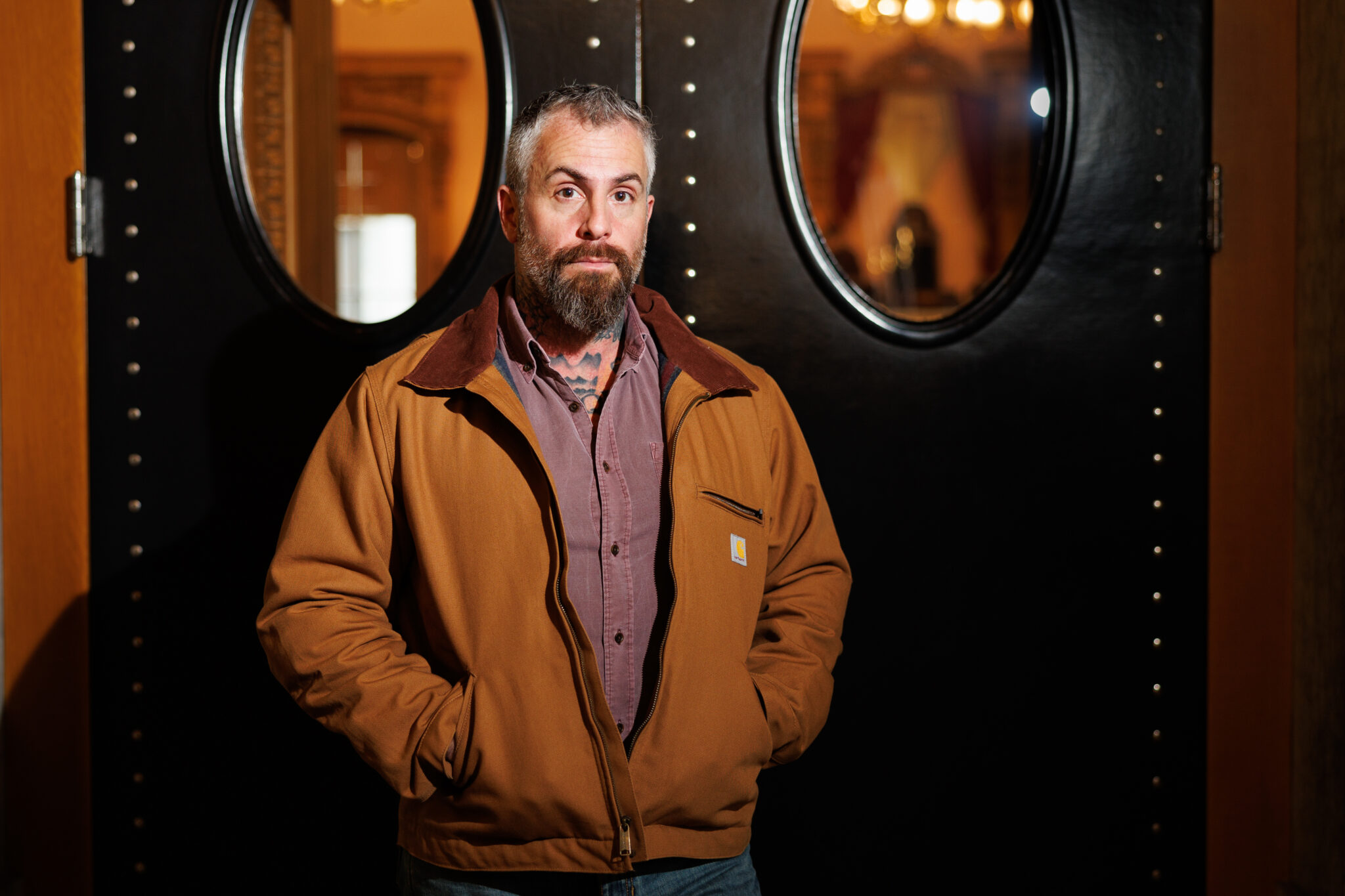
    January 6 Police Officer Michael Fanone warns November election could bring more violence

    The 20-year Metro DC police veteran argues violence didn’t stop after January 6, and voters should prioritize candidates who respect rule of law

    BY:  Ohio Capital Journal

    A new feature of the Trump rally traveling road show has the former president walking out on stage and intoning the pledge of allegiance. At the end of phrases, he pauses. On the big screens rally-goers see footage of January 6 defendants singing the national anthem in jail.

    “You see the spirit from the hostages,” Trump told the crowd at a rally in Dayton last month. “And that’s what they are, is hostages. They’ve been treated terribly and very unfairly, and you know that. Everybody knows that.”

    He went on to promise, if reelected, on his first day in office, he’d take action to help those “unbelievable patriots.”

    It all makes Michael Fanone a bit sick.

    “I recognize that, very similar to like when he told the Proud Boys to ‘stand by,’ he’s keeping this violent element of supporters in his camp, so to speak,” he said. “And I think he fully intends to unleash them on the rest of us if he loses the 2024 election.”

    “Or if he wins, to be completely honest with you,” Fanone added.

    The former Washington Metropolitan Police officer served in uniform for 20 years, and on Jan. 6, 2021, he was one of the officers defending the U.S. Capitol building.

    He wasn’t supposed to be there.

    A vice investigator, Fanone had been planning to conduct an undercover drug buy that day, but when he heard distress calls from the riot, he rushed to the Capitol instead. As the violence unfolded, he was dragged into the crowd, beaten and tased. Fanone suffered a heart attack. One of the hardest things for him reconcile was the sense of helplessness.

    “For a cop, you know, somebody that aspires to be in control of each and every situation that we encounter, that is probably like the worst possible feeling,” he explained. “I felt weak. I felt vulnerable.”

    “If it wasn’t for the fact that some people in the crowd intervened on my behalf,” he added, “You know, to literally have to depend on the people that were attacking me — that was a difficult, difficult pill to swallow.”

    Fanone retired from the Metropolitan police at the end of 2021. Since then he’s written a book, and he appears on CNN. Now, he’s putting his time into making sure Americans understand what happened on January 6, and that they think about it when they head into the voting booth.

    “In the hopes of avoiding another January 6, another event of that magnitude,” he said, “I want to make sure that people are well informed, so that when they go to the ballot box they choose leaders — from either political party — that are committed to the peaceful transfer of power, to respecting the rule of law and abiding by our Constitution.”

     Ohio U.S. Rep. Jim Jordan, R-Urbana. Photo by Chip Somodevilla/Getty Images. 

    Shifting perceptions, conspiracy theorizing

    Opinions about the January 6 riot have changed dramatically among Republicans in the years since. After insisting “what happened today is wrong and not what America is about,” shortly after rioters dispersed, Ohio Republican U.S. Rep. Jim Jordan has since taken to downplaying or deflecting the incident. The January 6 commission was a distraction, he argued, when Americans “can’t afford to fill up their gas tank, buy groceries, or take a summer vacation with their family.” At other points he argued the real purpose of the commission was to “stigmatize conservative voices” or “abolish the electoral college.


    Fanone went so far as to label Jordan an “insurrectionist” member of congress.

    “(He) was very instrumental in the orchestrating of the electoral scheme,” Fanone described, “and spreading the lies and misinformation that inspired his own supporters and the supporters of the former president to commit crimes.”

    While Jordan never testified before the January 6 commission, from other evidence it collected the panel concluded he was “a significant player” in the scheme to overturn the 2020 election. According to the report, Jordan participated in several strategy meetings following the election in which members discussed encouraging Trump supporters to march on the capitol. In a text message, he proposed Vice President Mike Pence “call out all the electoral votes that he believes are unconstitutional as no electoral votes at all.”

    Also from Ohio, former Presidential candidate Vivek Ramaswamy has been even more provocative about the riot. This year on its anniversary, he posted a thread of conspiracy theories, blaming the incident on lack of coverage of Hunter Biden’s laptop, or the incitement of undercover FBI agents or a plot by capitol police to “entrap” demonstrators in a “peaceful crowd.”

     VANDALIA, OHIO -Former U.S. President Donald Trump and Ohio Republican U.S. Senator JD Vance. (Photo by Drew Angerer/Getty Images.) 

    Fanone dismissed Ramaswamy’s statements as “pandering” and turned his attention to Ohio Republican U.S. Sen. J.D. Vance, who he said has “shown a level of sympathy to those that stormed the Capitol on January 6, that I think is highly inappropriate for someone serving this country.”

    One year after the riot, Vance posted a link to Patriot Freedom Project, a nonprofit raising money for January 6 defendants’ legal bills.

    “These people are political prisoners,” Vance insisted, “and their captivity is an assault on democracy.”

    “Listen, I struggle every day with finding any degree of compassion or empathy for the people that attacked me and my colleagues at the Capitol on January 6,” Fanone said. “but I do recognize the fact that they were manipulated and lied to.”

    “It doesn’t excuse the behavior,” he added, “but it certainly, in my mind, means that there are more people to be held accountable than just those that that were present at the Capitol on January 6.”

    Looking toward November

    Fanone worries about this year’s election, he argued, “because the violence has never stopped.”

    Reuters investigation indicated political violence in the U.S. is at its highest level since the 1970s, although the authors note unlike today, the violence then was primarily directed at property, not people. Most of the incidents were smaller scale — lone assailants or clashes between rival groups at local protests, but they note at least 39 people have been killed as a result.

    It’s unclear whether that violence will result in another incident like January 6, but Fanone warns if it does, that event will likely be much worse.

    “Groups who may have toyed with the idea of coming armed to the Capitol, but did not, in the future, in order to be effective, they would feel that the use of firearms was necessary,” Fanone said.

    He argued the way to diffuse that violence is to elect people who reject violence and respect the peaceful transfer of power.

    “If your candidate — your political party’s candidate — can’t do that,” he said, “I think you have an obligation as an American to vote for the candidate that will.”

    Fanone has already taken that journey. He voted for Donald Trump in 2016, but soured on the president after he fired FBI director James Comey.

    “I have conversations with people often who describe themselves as a lifelong Republican or a lifelong Democrat,” he said, “I tell people, I’m not anything other than a lifelong American.”

    Still, he acknowledged if someone wants to speak with him at all, they’re likely open-minded. “We’re talking about a small slice of America,” he said. When it comes to the “harder conversations,” he said, a win is convincing someone that the January 6 riot actually happened, it was bad and it was carried out by Trump’s supporters.

    “Unfortunately,” Fanone said, “there’s a lot of people that knowing all of that would still, and will still, support Donald Trump and vote for him in the upcoming election.”

    Follow OCJ Reporter Nick Evans on Twitter.


    Nick Evans
    NICK EVANS

    Nick Evans has spent the past seven years reporting for NPR member stations in Florida and Ohio. He got his start in Tallahassee, covering issues like redistricting, same sex marriage and medical marijuana. Since arriving in Columbus in 2018, he has covered everything from city council to football. His work on Ohio politics and local policing have been featured numerous times on NPR.

    Ohio Capital Journal is part of States Newsroom, the nation’s largest state-focused nonprofit news organization.

    MORE FROM AUTHOR

  • A tale of two countries and two parties

    A tale of two countries and two parties

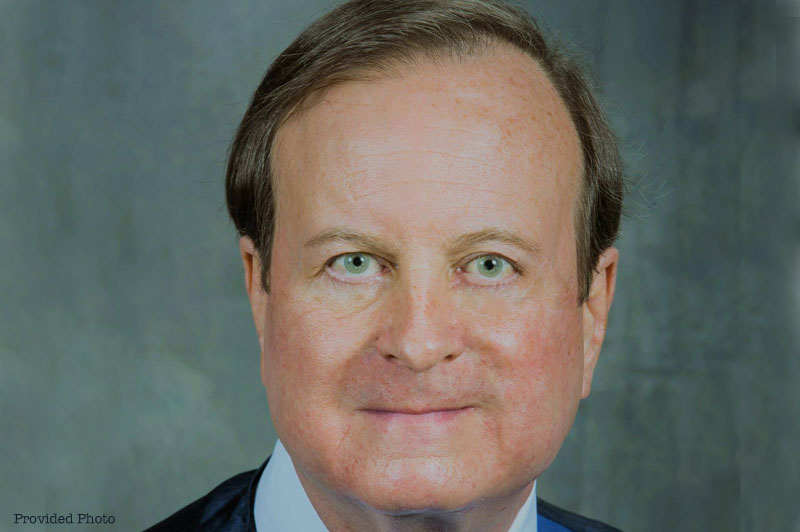
    by Mark P. Painter

    In 2016 one country elected a narcistic, opportunist, bigoted, congenital liar, claiming populism but born to wealth and privilege, a cheating and mostly failed businessman, to head the party and the government. He proceeded to appoint grifters and incompetents to the cabinet, valued loyalty to himself above loyalty to the country. He lied to the country, his colleagues, courts, and then lied about the lies. He was clearly the worst and most dangerous leader the country ever had.

    But his party allowed, even encouraged, his behavior. Except for a very few righteous Republicans—who were drummed out—the party became his enablers, parroting his lies and excusing his behavior. Other enablers—corrupt media—also spread the lies as fact, duping many people.

    His party even had a chance to remove him, twice, to stop the harm. But they still abetted his designs. The whole party was trapped by the Orwellian Big Lies they helped spread.

    Even after he was defeated by a vote of the people, most party members backed his lies. In effect, they sanctioned his efforts to cling to power by subverting democracy. When he attempted to stage a coup—a rejection of democracy itself—those who could act stayed silent. Yes, a few criticized the leader for sedition—but they quickly backtracked and again swore fealty to an aspiring tyrant.  

    Now this country stands in danger of another coup attempt.

    Now this country stands in danger of another coup attempt. The danger is real—we are just now seeing the full and awful truth of January 6. And the leader, far from being disgraced, stands tall in his party still—and remains a threat to our very democracy.

    In 2019 another country, albeit through a different but democratic system, elected a narcistic, bigoted, congenital liar, claiming populism but born to wealth and privilege, to head the party and the government. He proceeded to appoint grifters and incompetents to the cabinet, valued loyalty to himself above loyalty to the country. He lied to everyone about everything. He broke laws and rules that he himself had enacted.  

    Some in his party criticized him. But not nearly enough. But he went too far—he lied to the legislature and was caught. About a month after that, leaders of his own party denounced him. They went to him and told him he must resign. And he did. He is now disgraced and no longer a danger to his country or the world.

    In three years, Great Britain ridded itself of a cancer.  In the United States, we still have ours after six. 

  • A presidential election like none other, and now an inauguration like none other

    A presidential election like none other, and now an inauguration like none other

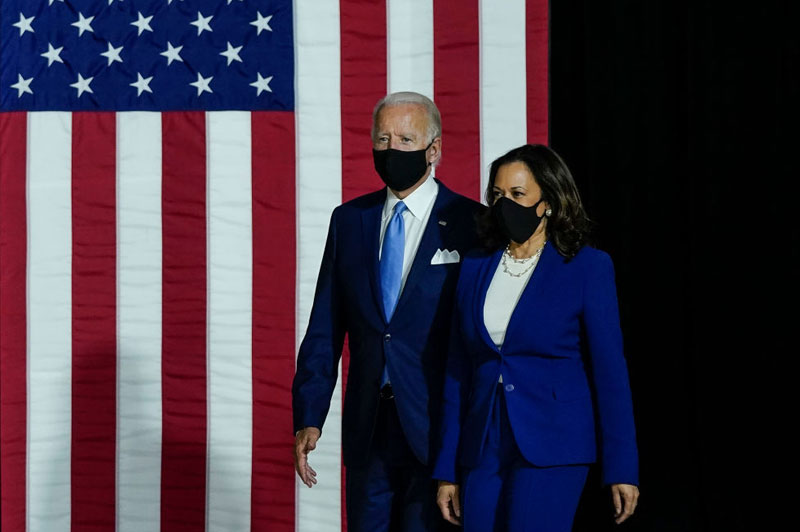
    President-elect Joe Biden and Vice President-elect Kamala Harris. Photo by Drew Angerer/Getty Images

    By Laura Olson and Ohio Capital Journal

    Washington D.C. – As with so many other events during the year preceding it, the inauguration of President-elect Joe Biden will be a ceremony unlike those of his predecessors.

    Tempering the celebratory tone is a directive from Biden’s inaugural team for supporters to refrain from traveling to D.C. for the Jan. 20 swearing-in. Instead, they’ve urged Americans to participate in the inaugural activities from home.

    It’s not yet clear what exactly those virtual festivities will include — or if President Donald Trump will attend Biden’s swearing-in. But the event will be scaled down in size, with an emphasis on safety precautions.

    “First and foremost, my objective is to keep America safe but still allow people to celebrate,” Biden said at a news conference this month.

    The crowd on the platform of the west front of the Capitol will be far less crowded than a typical inauguration. The Joint Congressional Committee on Inaugural Ceremonies typically would be distributing 200,000 tickets, but instead will hand out enough for each of the 535 members of Congress to attend with only one guest each.

    U.S. Sen. Roy Blunt (R-Mo.), who is chairman of the joint committee, said in a statement this month that the ongoing coronavirus pandemic and rising case counts “warranted a difficult decision to limit attendance.”

    Blunt added that the committee is “working on enhanced opportunities to watch the ceremonies online, in addition to the traditional televised national broadcast.”

    “The election of President-elect Biden and Vice President-elect Harris was historic and we know that many Americans would have wanted to attend the inauguration in-person,” said Sen. Amy Klobuchar (D-Minn.), who also serves on the inaugural committee. “At the same time, safety must be our top priority.”

    Biden’s inaugural committee has tapped medical experts to oversee safety precautions, including former Food and Drug Administration Commissioner David Kessler as its chief medical adviser.

    The details released so far have been vague beyond the limited number of tickets. A news release from Biden’s inaugural team described an “extremely limited” footprint for the swearing-in ceremony, and a parade that will be “reimagined.”

    That revamped parade could look similar to the Democratic National Convention’s virtual roll call, which featured video clips of delegates in their home states.

    “There probably will not be a gigantic inaugural parade down Pennsylvania Avenue,” Biden said. “But my guess is you’ll see a lot of virtual activity in states all across America, engaging even more people.”

    Crowded inaugural balls also are likely out of the question due to the pandemic.

    The Walter E. Washington Convention Center that typically would host soirees was once again prepped this month for use as a COVID-19 field hospital.

    Another question looming over the inauguration: What will Trump do?

    Traditionally, the outgoing president and first lady would meet with the incoming first family at the White House, and then ride together to the Capitol for the noontime ceremony.

    But Trump has refused to accept the election results, launching a failed series of legal challenges and posting unfounded claims of election fraud, even after the Electoral College certified his defeat. Asked in a Fox News interview this month if he’ll attend Biden’s inauguration, Trump replied: “I don’t want to talk about that.”

    The last time a president did not participate in their successor’s inauguration was in 1869, when President Andrew Johnson left office and Ulysses S. Grant was sworn in.

  • Portman/McConnell: Electoral College vote makes clear that Joe Biden President-Elect

    Portman/McConnell: Electoral College vote makes clear that Joe Biden President-Elect

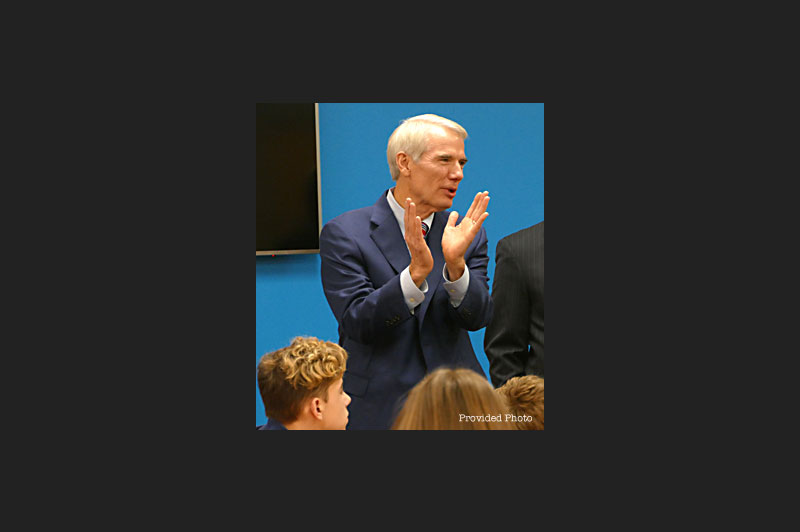
    Sen. Rob Portman said on FaceBook on Monday:

    In accordance with the Constitution and federal law, the Electoral College cast their votes for President today. The Electors met in their respective state following certification of the results. I think we need to respect this process the Founding Fathers established, and we must respect the will of the voters. 

    As I’ve said previously, the Trump campaign had every right to pursue recounts and legal challenges. That has now happened over the past six weeks, and although there were instances of fraud and irregularities, it has not been shown to be widespread enough to change the result of the election. 

    States must take seriously the proven examples of fraud and irregularities, prosecute anyone who engaged in it, and review voting systems to maintain the integrity of our elections. 

    The transition process and briefings for the Biden team began three weeks ago at the direction of President Trump, and I commend him for that. The orderly transfer of power is a hallmark of our democracy, and although I supported President Trump, the Electoral College vote today makes clear that Joe Biden is now President-Elect.

    https://www.facebook.com/senrobportman/posts/10157739862581074

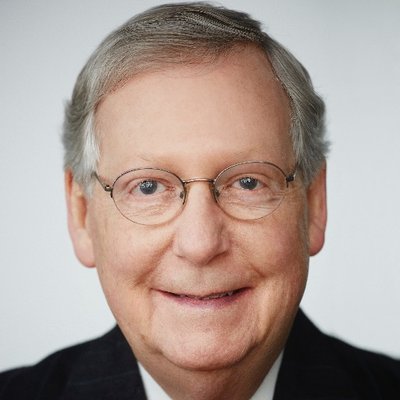
    Meanwhile, The A.P reports that Senate Majority Leader Mitch McConnell congratulated his former colleague, Joe Biden, as president-elect. The two men spoke later in the day. “Many of us had hoped the presidential election would yield a different result,” McConnell said. “But our system of government has the processes to determine who will be sworn in on Jan. 20. The Electoral College has spoken.”

  • Trump swipe at DeWine follows year of campaign support, and COVID-19 praise

    Trump swipe at DeWine follows year of campaign support, and COVID-19 praise

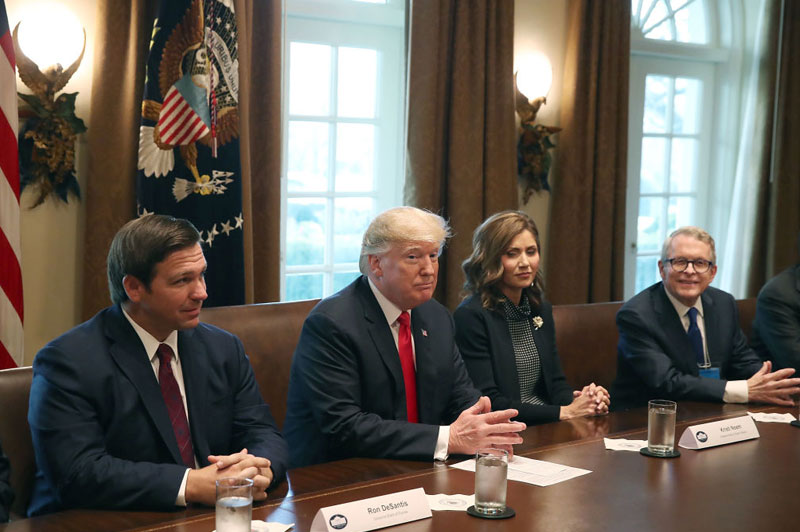
    President Donald Trump meeting with governors, including Ohio Gov. Mike DeWine. Photo by Mark Wilson/Getty Images.


    By Tyler Buchanan

    A year of Gov. Mike DeWine defending the president’s pandemic response and supporting his reelection effort was undone by a brief acknowledgment of reality on cable TV.

    To President Donald Trump, one comment is all it takes for someone to go from political ally to persona non grata.

    On Sunday, DeWine said on CNN that Trump has a right to legally challenge the 2020 election result, but should begin working toward a transition for President-elect Joe Biden. That clip was aired Monday morning on Fox News, a network Trump frequently watches at the White House, leading the president to target DeWine’s own reelection hopes in 2022:

    This tweet to the president’s 89 million followers bookends a year in which DeWine has consistently praised Trump and frequently dodged questions related to the president’s handling of the pandemic.

    DeWine’s office issued this statement in response to the president’s tweet: “I have always had a great working relationship with the President. I am proud to have served as President Trump’s Campaign Co-Chairman in Ohio where we won by the largest margin of any swing state in the country. And I intend to run a winning campaign for governor in 2022.”

    DeWine served as an honorary co-chair to Trump’s campaign in Ohio and recorded a video in support of Trump for the 2020 Republican National Convention. His lieutenant governor, Jon Husted, spoke at a Trump rally in September in favor of the president’s reelection — though the crowd of Trump supporters booed Husted for promoting mask-wearing to prevent COVID-19 spread. 

    While DeWine has emphasized the need for masks and social distancing, Trump has often undercut this public health message by hosting large campaign rallies and downplaying the effectiveness of face coverings.

    DeWine has sidestepped questions from reporters about these contradicting messages, instead choosing to praise the White House for its conference calls with governors and for its work in helping develop a vaccine. 

    The Trump tweet came anyway. 

    The president’s suggestion of a Republican primary comes as DeWine faces increasingly sharp attacks from seemingly all sides regarding his handling of the COVID-19 pandemic. Democratic leaders, who have generally been supportive of the Republican governor and the Ohio Department of Health, want him to take more aggressive steps to slow the spread as Ohio sees record numbers of infections and hospitalizations.

    Republican legislators have dialed up their own criticism of their party’s leader, insisting DeWine should refrain from issuing any further health orders such as business shutdowns.

    DeWine earned very high marks from the general public early in the pandemic for his aggressive response in partnership with then-Ohio Department of Health Director Dr. Amy Acton. That support led to widespread cooperation in the early weeks as the two enacted business closures and a stay-at-home order.

    Support for DeWine has gradually waned in the months since, though a Great Lakes poll in September found a majority of Ohioans still viewed DeWine’s coronavirus response favorably.

    Hours after Trump’s tweet, DeWine did receive a compliment from President-elect Joe Biden at a Monday afternoon press conference. Biden referred to DeWine as a leader in having “stepped up” to issue a mask mandate in Ohio.

    Outside of the electoral ramifications of Trump’s tweet, the public sentiment over the Ohio pandemic approach may impact DeWine’s ability to amass future cooperation for any health orders still to come.

    DeWine has hinted that orders pertaining to bars, restaurants and social gatherings could come as soon as this week. 

    The governor spent early Monday in West Virginia speaking to TV stations which broadcast to the southern and eastern portions of Ohio. DeWine has offered region-specific messages to Ohioans about the virus spike and how residents can slow the spread in their areas.

    With this year’s election now over, some Ohio Republicans have begun turning their attention to 2022. Among them is Jim Renacci, a former Congressman from Medina County and fervent Trump supporter who ran for governor against DeWine in 2017. Renacci quit the Republican primary to instead campaign for U.S. Senate against Democratic incumbent Sherrod Brown, who defeated Renacci in the 2018 General Election.

    State Rep. Jena Powell, R-Arcanum, has offered a similar view.

    “The solution today is taking away (DeWine’s) emergency powers,” Powell wrote on Facebook after the governor’s statewide address on Nov. 11. “The solution in two years is to not re-elect Mike DeWine.”

    Powell shared Trump’s tweet in agreement.

    “Even President Donald J. Trump knows Governor Mike DeWine is doing a terrible job,” she posted. “Ohio needs conservative leadership that actually represent the people first.”

    Some Ohio Democrats see the Trump tweet as a political lesson.

    U.S. Sen. Rob Portman, R-Ohio, is another Republican facing reelection in 2022. He has not yet acknowledged the presidential election result.

  • Firefighter Cancer Registry Act signed by President

    Firefighter Cancer Registry Act signed by President

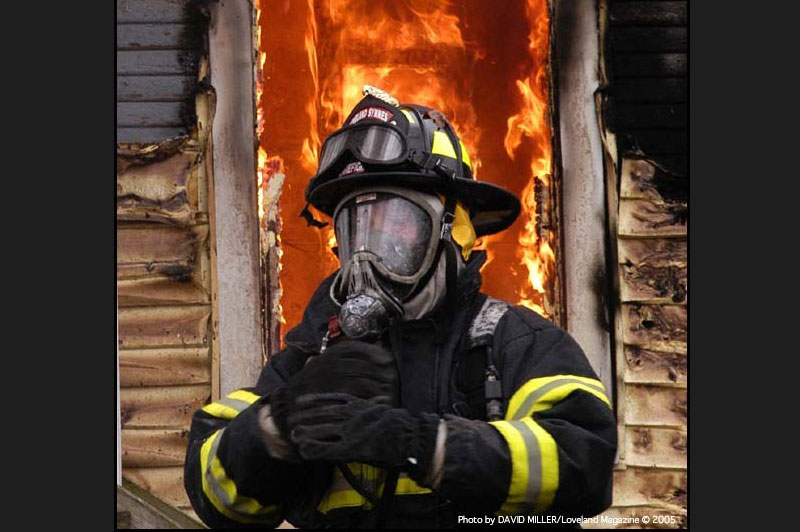
    Loveland, Ohio – Today, President Trump signed U.S. Sen. Sherrod Brown’s (D-OH) bipartisan legislation to establish a voluntary cancer registry for firefighters into law. Brown’s bill, the Firefighter Cancer Registry Act, requires the Centers for Disease Control and Prevention (CDC) to create and maintain a voluntary registry to collect data on cancer incidence among firefighters.

    Loveland/Symmes Fire Chief Otto Huber said in reaction to the announcement, “Any data collection that will  assist the national fire service in evaluating the risk associated with Firefighting will go along way to improving how we manage risk on the fire ground.”

    The data collected by the registry will be used with existing state data to better assess and prevent cancer among firefighters. The Senate passed Brown’s bill by unanimous consent in May.

    “Ohio firefighters put their lives on the line every day,” said Brown. “The enactment of the Firefighter Cancer Registry Act will help ensure we’re using all of the tools at our disposal to prevent and treat cancer in first responders who sacrifice their own safety to protect others.”

    Huber said, “Today’s modern construction and products of combustion from petroleum based furnishing place our members in a higher risk then ever. We must rethink how we deploy and how we protect our members against today’s risks.”

    In addition to establishing the volunteer registry, Brown’s bill requires the CDC to develop a strategy to maximize participation, develop guidance for state agencies, encourage inclusion among participants and to seek feedback from nonfederal experts. The CDC would also be required to ensure the data collected is made public and accessible for research.

    “I am pleased that the national spot light is on this subject. We need to work collaboratively to improve fire ground safety and reduce the exposure to our members of the products of combustion,” said Huber.


    Findings from a Study of Cancer among U.S. Fire Fighters

    In 2010, the National Institute for Occupational Safety and Health (NIOSH) began a multi-year study of nearly 30,000 fire fighters from the Chicago, Philadelphia, and San Francisco Fire Departments to better understand the potential link between fire fighting and cancer. The study was a joint effort led by researchers at NIOSH in collaboration with researchers at the National Cancer Institute and the University of California at Davis Department of Public Health Sciences, and supported in part by the U.S Fire Administration. This study was completed in late 2015.

    What we found

    The fire fighters we studied showed higher rates of certain types of cancer than the general U.S. population.

    Based on U.S. cancer rates:
    ●● Fire fighters in our study had a greater number of cancer diagnoses and cancer-related deaths.

    ○● These were mostly digestive, oral, respiratory, and urinary cancers.
    ●● There were about twice as many fire fighters with malignant mesothelioma, a rare type of cancer caused by exposure to asbestos.

    ○● Exposure to asbestos while fire fighting is the most likely explanation for this.●● There were more cases of certain cancers among younger fire fighters.

    ○● For example, fire fighters in our study who were under 65 years of age had more bladder and prostate cancers than expected.

    When comparing fire fighters in our study to each other:

    • ●●  The chance of lung cancer diagnosis or death increased with amount of time spent at fires.
    • ●●  The chance of leukemia death increased with the number of fire runs.

    Read on from CDC.GOV…


  • Like the President: Rep. Steve Chabot has his “That being said” moment

    Like the President: Rep. Steve Chabot has his “That being said” moment

    Today from Rep. Steve Chabot’s “Steve’s Weekly Blog


    Mayhem in Charlottesville

    Let me be clear – Nazis, the KKK, and white supremacists are scum. There is no place in America for them. There is no place in the Republican party for them. I don’t want their support. I don’t want their votes.

    That being said, the Constitution guarantees the “right of the people peaceably to assemble”, whether the majority of us agrees with the point of view over which they’re assembling or not. Those racist idiots therefore had the right to gather and express their racist point of view in Charlottesville on Saturday, as loathsome as that point of view might have been. Likewise, the left-wing counter protesters, many of them helmeted, club-wielding acolytes of the so-called antifa (anti-fascists) movement, anarchists really, also had the Constitutional right to be there in Charlottesville on Saturday.

    That is, up to the point that either side gets violent. Then they’re breaking the law, and deserve to be arrested and prosecuted to the fullest extent of the law.

    And as an observer of this unfolding event on TV Saturday, it appeared to me that there were trouble-makers and thugs on both sides, pushing and shoving, striking out with sticks and clubs, hurling projectiles, and overall acting like jerks. And then some 20-year-old Hitler-loving punk from Ohio/Kentucky decided to use an automobile as a deadly weapon, and mow it into a crowd of people, killing one innocent young woman and injuring many others. What he did is despicable, criminal, and must also be prosecuted to the fullest extent of the law.

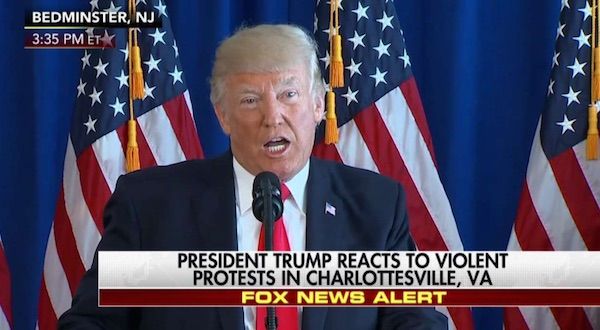
    Since Saturday, President Trump has been receiving significant criticism for the words he used (or didn’t) in addressing the event as it unfolded. On Saturday Trump blamed “hatred, bigotry and violence, on many sides.” On Monday he said more specifically that “racism is evil, and those who cause violence in its name are criminals and thugs, including the KKK, neo-Nazis, and white supremacists and other hate groups that are repugnant to everything we hold dear as Americans.”

    Should Trump have more specifically named the KKK, neo-Nazis and white supremacists on Saturday? In my opinion, yes. However, had he done so, would The Left and much of the mainstream media have found some reason to criticize President Trump for the ugliness in Charlottesville anyway? In my opinion, absolutely. He will be the bad guy in virtually every story for the next 3 ½ or 7 ½ years. In order for The Left to win, they must destroy this President, and anyone who supports him. That’s just the way it is.