Tag: type 1 diabetes

  • COVID-19 is causing more type 1 diabetes in kids, who will be saddled with high insulin prices

    COVID-19 is causing more type 1 diabetes in kids, who will be saddled with high insulin prices

    Commentary

    by Jennifer Schuerman – Ohio Capital Journal

    As nurses, my husband and I witnessed truly awful and devastating things treating patients on the frontlines of this pandemic. Hundreds of thousands of Americans have died, while the millions who survived, now faced with disability, are left to grapple with the harsh realities of long COVID-19.

    Among those millions of people living with long-term health impacts is our son Carter.

    Four days before the COVID-19 vaccine was available for kids under 12, my 11-year-old son Carter tested positive for COVID-19. He had the common symptoms for the first few days, but as those subsided, I began noticing new ones like extreme thirst and frequent urination. In my gut, I knew it was diabetes. And sure enough, a mother always knows: Twelve days after his COVID-positive test, Carter was officially diagnosed with Type 1 diabetes.

    In less than a month, everything about our lives changed. We don’t have any family history of any type of diabetes, so Carter’s diagnosis came out of nowhere, and we were not prepared. Our days now revolve around his blood sugar levels. Meal times are planned around insulin doses, mornings and evenings have a new medicine routine. Even as nurses, my husband and I could have never anticipated the severity of impact this diagnosis would have on our family.

    I hear fellow nurses say there are more kids coming into the hospital and leaving with a diabetes diagnosis. Many of the newly diagnosed diabetics often had a recent COVID-19 infection. When a recent CDC report found children under 18 infected with COVID-19 are 2.66 times more likely to develop diabetes, it only confirmed the trend I witnessed in my hospital.

    Carter was prescribed two different kinds of insulin, Humalog and Basaglar. Only a couple months into his treatment, our insurance decided it would no longer cover Humalog beginning in January of this year. We had just enough to last us through March. We cannot afford the out-of-pocket costs to keep Carter on the same kind of insulin, so we will need to switch him to a new kind of insulin before his body has even adapted to the current regimen.

    We lose sight of the human cost when we ignore insulin price gouging. At the end of the day, we are putting a price on human life — on a child’s life.

    I realize we are extremely lucky to have health insurance that keeps insulin costs manageable for our family. Since becoming part of the diabetes community, I’ve learned how rare it is to have sufficient insurance coverage and be able to afford insulin at all. As I read the heart-breaking posts from parents pleading for insulin donations in online communities, I think about how one unfortunate diagnosis can send a family to economic ruin through no fault of their own.

    So, when the House passed the Affordable Insulin Now Act last week, I felt like Congress finally listened to the pleas of Americans with diabetes. The bill will cap insulin copays at $35 a month — reducing insulin costs by hundreds each year. In America, around 1 in 4 diabetics have rationed their insulin due to high costs. With nearly 60% of Americans under 17 having been infected with COVID-19, some of them may develop type 1 diabetes. It is more important than ever to do something about insulin prices.

    By lowering the price of insulin and passing other federal prescription drug reforms, we can help existing diabetics and prevent newly diagnosed diabetics, especially kids, from being forced to ration life-saving medication.

    I couldn’t imagine going through this emotional journey with the added stress of not being able to afford the one thing you need to keep your child alive. Type 1 diabetes is a lifelong condition; my son will never escape this. It’s not his fault he caught COVID-19. It’s not his fault that COVID-19 may have caused his diabetes. But he will be forever burdened by the price of insulin.

    We are fortunate to be able to afford Carter’s insulin and supplies. But what about the families who aren’t so lucky? What happens to all of the kids who will eventually age off of their parents’ insurance, and their plans barely cover insulin? We lose sight of the human cost when we ignore insulin price gouging. At the end of the day, we are putting a price on human life — on a child’s life.

    I would do whatever I could to get my child what he needs. I would give up my house, I would give up everything to keep him alive. I don’t know any parent who wouldn’t do the same. Our leaders in Congress must do everything they can, so people with diabetes and their caretakers aren’t left with such impossible choices. Now, it’s up to our representatives in the Senate to stand with parents like me and stop hiding behind the donations of pharmaceutical companies.

    This commentary was first published in the Arizona Mirror.

  • Hamilton County reports new developments in the battle against COVID-19

    Hamilton County reports new developments in the battle against COVID-19

    Loveland, Ohio – The U.S. Food and Drug Administration issued an emergency use authorization (EUA) for the third vaccine for the prevention of coronavirus disease 2019 (COVID-19), according to the Hamilton County Department of Health. The EUA allows the Janssen (Johnson & Johnson) COVID-19 Vaccine to be distributed in the U.S for use in individuals 18 years of age and older. The vaccine is administered as a single dose, which will allow vaccination for more people while also providing opportunities for vaccination for groups requiring special consideration, such as the homebound.

    Expanded Vaccine Eligibility
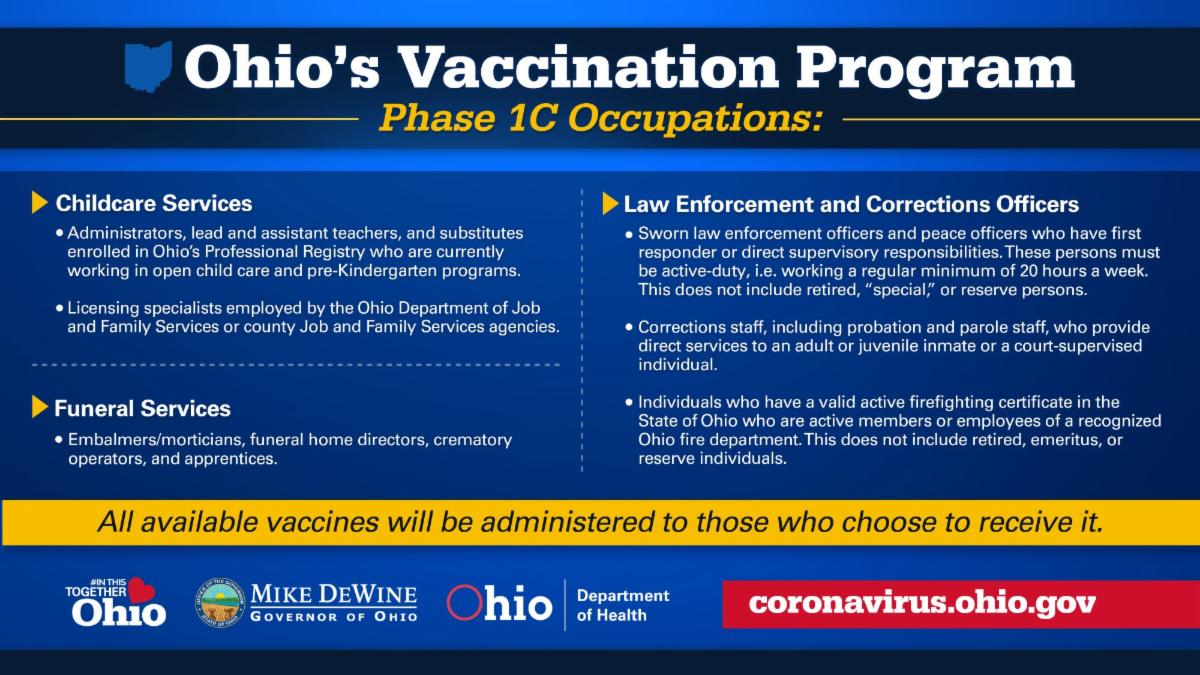
    In response to this significant increase in the amount of vaccine coming into Ohio, Governor DeWine outlined the individuals who are included in Phase 1C and Phase 2 of Ohio’s vaccination plan which will go into effect on March 4.

    Phase 1C:
    Ohioans with certain occupations and with certain medical conditions not addressed in previous phases.

    Medical Groups Eligible in 1C
    Type 1 diabetes, Pregnant women, Bone marrow transplant recipients, and ALS (Lou Gehrig’s Disease)

    Occupations Eligible in 1C (see full description in the graphic below)
    Childcare Services, Funeral Services, Law Enforcement, and Corrections Officers
    Follow the hyperlink to read the full press release from the Ohio Department of Health on the expanded vaccine eligibility criteria

    Phase 2:
    Because the risk of more severe reactions and outcomes of COVID-19 increase with age, Phase 2 will open vaccinations based on age, beginning with Ohioans ages 60 and older.

    IF YOU ARE NEWLY ELIGIBLE PER THE EXPANDED GUIDELINES ABOVE:
    The Health Department is asking that you register on their website. They have added these occupations and conditions to the registration that were not previously included.

    Click HERE to re-register*

    If you already registered and do not have a newly eligible occupation or condition per the above you DO NOT need to re-register.*

    Reduced Restrictions
    Last week, Governor Mike DeWine announced that sporting and entertainment events will be able to reopen with 25 percent maximum indoor capacity and 30 percent maximum outdoor capacity, provided they follow established precautions such as mandatory mask wearing for employees and customers, spectator pathways that allow for social distancing, and seating in groups in six-foot intervals of no more than six people from the same household.

    General admission (lawns, standing room, infields) will be permitted if masks are worn and if six-foot distancing can be marked and maintained.  New guidance for proms, banquets, wedding receptions, fairs, festivals, and parades is forthcoming.
    *If you are needing a vaccine appointment please do not unsubscribe. Unsubscribing will disable our ability to contact you for appointments.
    VISIT THE HCPH COVID-19 PAGE
  • Loveland Student Hayley Creasy, Joins JDRF Ambassador Program

    Loveland Student Hayley Creasy, Joins JDRF Ambassador Program

    by Mihaela Manova

    Loveland, Ohio – Loveland Middle School student Hayley Creasy is set to join the highly selective, JDRF Ambassador program for the 2019-2020 year. JDRF or the Juvenile Diabetes Research Foundation specializes in diabetic research, advocacy, and fundraising to find the ultimate cure for diabetes. At six-years-old, Hayley was diagnosed with type one diabetes (T1D) and now at twelve, she will join other ambassadors on their mission to educate the public about her condition. 

    JDRF has recognized Hayley’s strong work ethic and commitment, as she is passionate to talk about her battle with T1D and helps to educate others. When asked about living with T1D she explains, “ It means that your pancreas is completely dead and you have to give yourself insulin to survive. You have to be brave and strong even on your weakest days!” With strong positivity, Hayley will be speaking about the cause and sharing her story to schools, hospitals, and businesses while also participating in the JDRF’s other programs. 

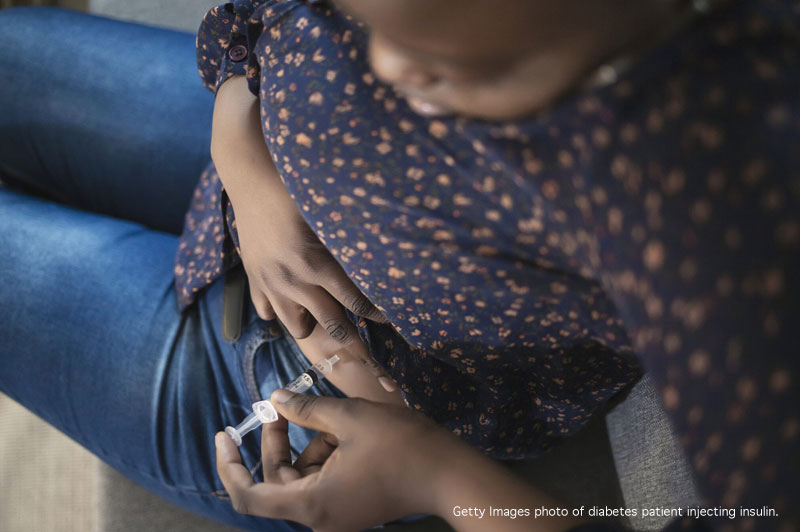
    Living with T1D, Hayley is one of the estimated 38,000 people affected by this condition in southwest Ohio. T1D is an autoimmune disease – a condition where your immune system mistakenly attacks your body, which can affect people at any age and any time. With this condition, the pancreas will stop producing insulin, a hormone that allows your body to store energy for future use. When dealing with T1D, insulin is injected into the body through the abdomen, thigh, or arm for the pancreas to receive its needed supply.

    JDRF selects a small number of applicants who are vocal and open to put their stories and themselves in front of the public, to bring awareness and relate to those who feel underrepresented. While doing so, Youth

    Ambassadors can make close bonds with each other, bringing teamwork and inclusiveness as a bonus to their work. Executive Director Melissa Newman explains the company’s goal, “JDRF Youth Ambassadors are a critical part of our work, as they help advance the cause and bring awareness to type 1 diabetes. These young people volunteer their time and put themselves out there in sharing their story, which includes the struggles of living with T1D, and we are appreciative of their efforts.”

    As said by the organization’s website, JDRF is the leading global organization and the largest charitable supporter of type 1 diabetes research. It has awarded more than $1.6 million to diabetes research and has expanded the critical scientific understanding of T1D. While their numbers sky-rocket every year, this foundation makes it clear, “JDRF will not rest until T1D is fully conquered.”