Tag: U.S. Department of Education

  • U.S. Education Department to restart defaulted student loan collections

    U.S. Education Department to restart defaulted student loan collections

    side the U.S. Department of Education headquarters in Washington, D.C., on April 2, 2025. (Photo by Shauneen Miranda/States Newsroom)

    By:  Ohio Capital Journal

    WASHINGTON — The U.S. Department of Education said Monday that it will resume collections May 5 for defaulted federal student loans.

    After pausing during the early weeks of the COVID-19 pandemic, the agency has not collected on defaulted loans in over five years. More than 5 million borrowers sit in default on their federal student loans, and just 38% of borrowers are current on their payments, the department said.

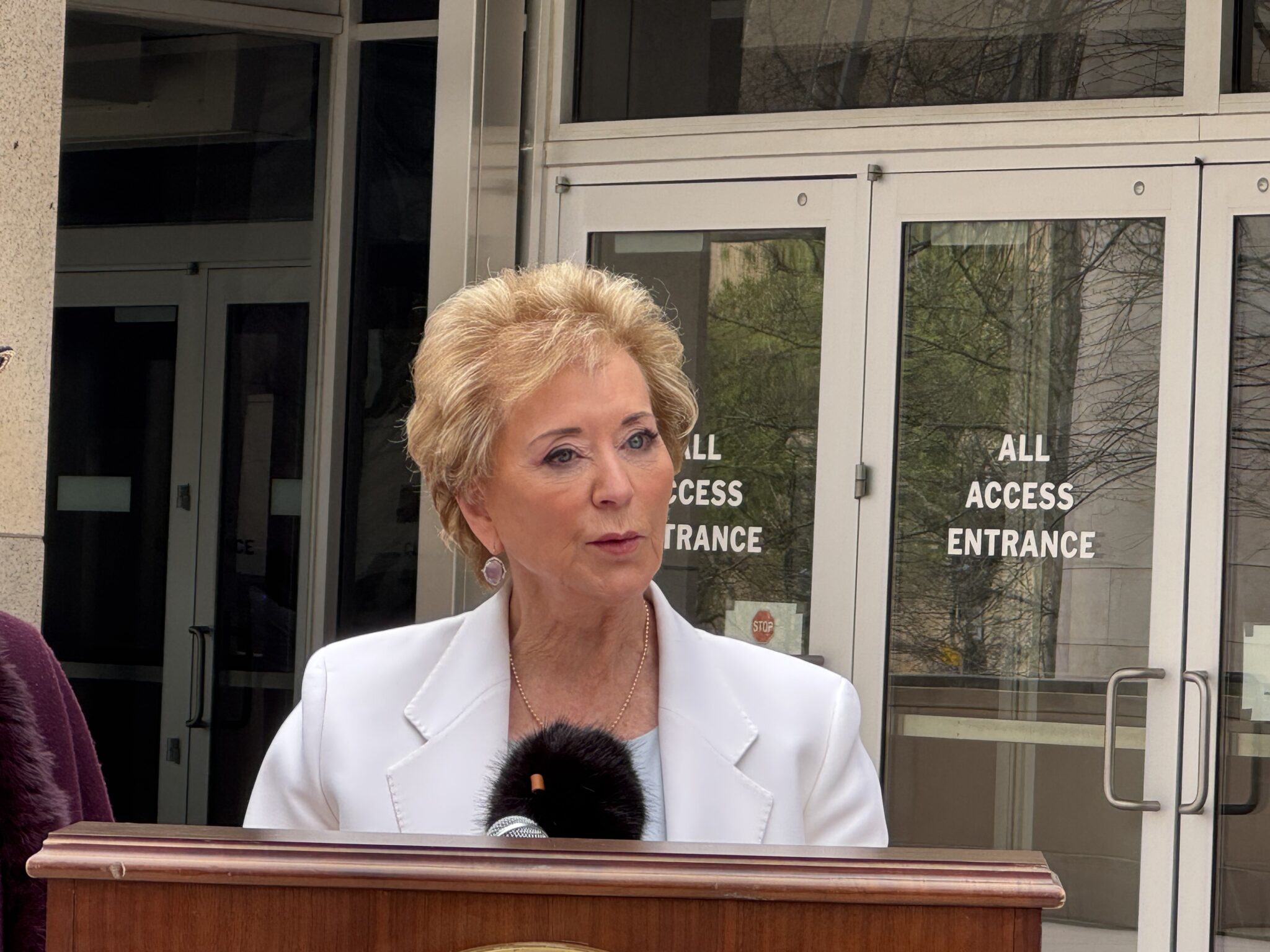
    “American taxpayers will no longer be forced to serve as collateral for irresponsible student loan policies,” U.S. Secretary of Education Linda McMahon said in a statement Monday.

    During last year’s presidential campaign, President Donald Trump criticized his predecessor and successor, President Joe Biden, for his efforts to erase student debt. McMahon resumed that line of attack Monday, blaming Biden’s administration for unreasonably raising borrowers’ expectations of forgiveness.

    “The Biden Administration misled borrowers: the executive branch does not have the constitutional authority to wipe debt away, nor do the loan balances simply disappear. Hundreds of billions have already been transferred to taxpayers,” McMahon said.

    She added that “going forward, the Department of Education, in conjunction with the Department of Treasury, will shepherd the student loan program responsibly and according to the law, which means helping borrowers return to repayment — both for the sake of their own financial health and our nation’s economic outlook.”

    The department said the Office of Federal Student Aid will restart the Treasury Offset Program, which the U.S. Treasury Department administers, on May 5.

    The Education Department statement said all borrowers who are in default will get emails over the next two weeks “making them aware of these developments and urging them to contact the Default Resolution Group to make a monthly payment, enroll in an income-driven repayment plan, or sign up for loan rehabilitation.”

    The department said the Office of Federal Student Aid will “send required notices beginning administrative wage garnishment” later this summer.

    More than 42.7 million borrowers owe more than $1.6 trillion in student debt, according to the department.

    The administration claims that “instead of protecting responsible taxpayers, the Biden-Harris Administration put them on the hook for irresponsible lending, pushing the federal student loan portfolio toward a fiscal cliff.”

    ____________

    Shauneen Miranda
    Shauneen Miranda

    Shauneen Miranda is a reporter for States Newsroom’s Washington bureau. An alumna of the University of Maryland, she previously covered breaking news for Axios.

    Ohio Capital Journal is part of States Newsroom, the nation’s largest state-focused nonprofit news organization.

    MORE FROM AUTHOR

  • Ohio Republicans celebrate Trump’s executive order to get rid of the Department of Education

    Ohio Republicans celebrate Trump’s executive order to get rid of the Department of Education

    The executive order does not automatically close the Department of Education since eliminating a federal agency requires congressional approval.

    By:  Ohio Capital Journal

    Ohio Republicans praised President Donald Trump’s executive order to dismantle the U.S. Department of Education.

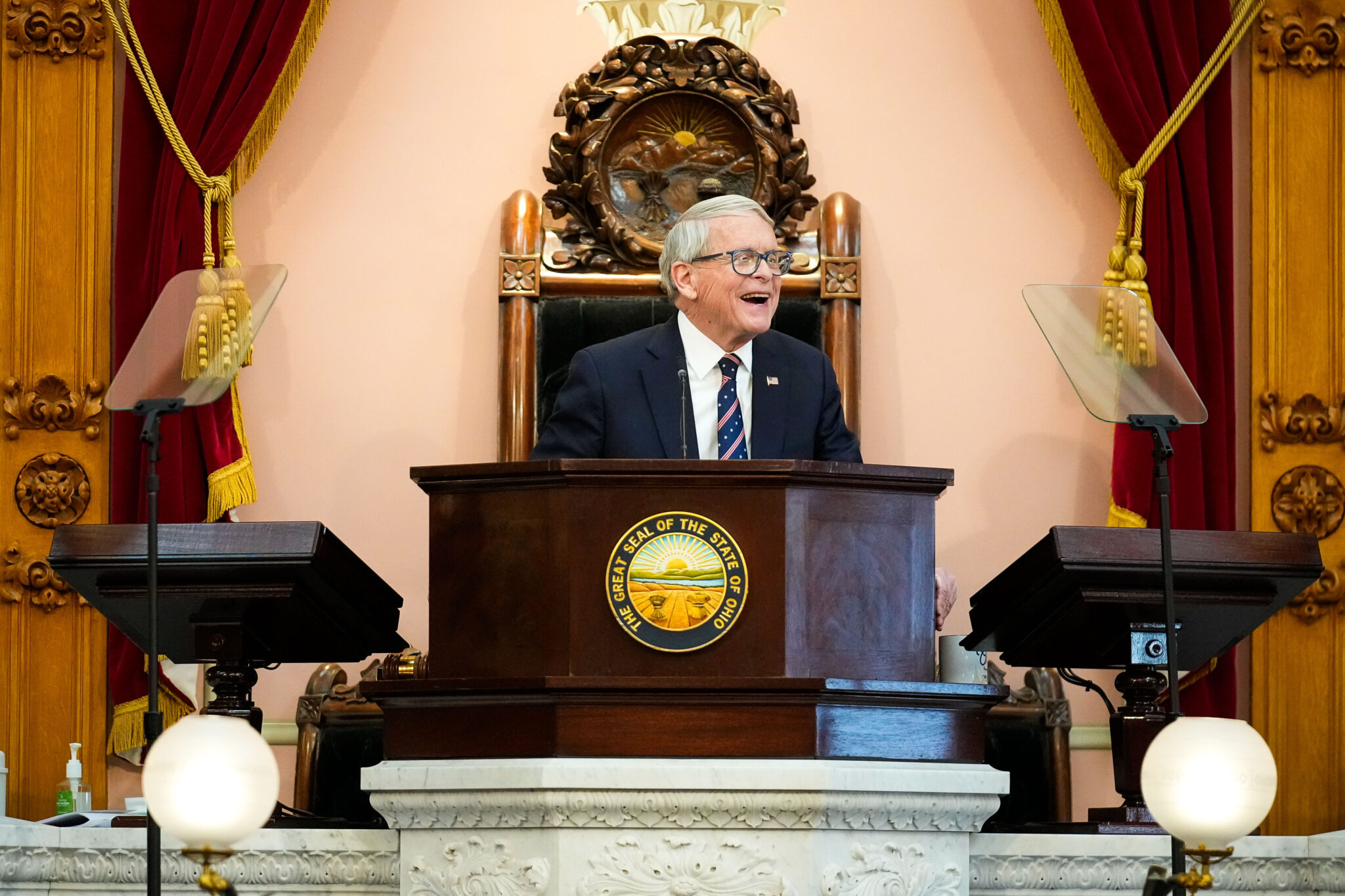
    Ohio Gov. Mike DeWine joined other Republican governors in attending Trump’s signing of the executive order Thursday afternoon at the White House. The executive order does not automatically close the department since eliminating a federal agency requires congressional approval.

    “I joined President Trump and several fellow governors at the White House in support of the president’s proposal to return education back to the states,” DeWine said in a statement posted on X, formerly known as Twitter. “By giving states more authority over education, we will have the flexibility to focus our effort on tailoring an educational experience that is best for our children and meets Ohio’s needs, rather than trying to chase federal priorities.”

    The Ohio Department of Education and Workforce said the department agrees with DeWine’s statement, said ODEW spokesperson Lacey Snoke.

    DEW agrees with Governor DeWine’s statement following yesterday’s announcement.

    GET THE MORNING HEADLINES.


    Ohio Senate President Rob McColley, R-Napoleon, said Trump’s executive order is long overdue.


    “Education policy belongs in the states and the federal government’s ‘one size fits all’ meddling has hurt our country for decades,” McColley said in a statement. “President Trump’s order will allow our 50 laboratories of democracy to deliver innovative solutions that meet each state’s unique needs.”

    The Department of Education was established as a cabinet-level agency by Congress in 1979 under President Jimmy Carter and it doesn’t determine what is taught in schools. Instead, learning standards are set at the state level and curriculum is adopted by local school boards.

    The department allocates Title I funds, which are federal funds given to school districts with a high percentage of low-income students, and administers the Individuals with Disabilities Education Act (IDEA), a law guaranteeing a free public education for children with disabilities.

    Ohio school districts on average receive about 10% of their revenue from the federal government, Ohio Education Association President Scott DiMauro said. About 90% of Ohio students attended public school during the 2023-24 school year, according to the Ohio Department of Education and Workforce.

    “Every single student in Ohio will pay the price for the move to dismantle the U.S. Department of Education,” DiMauro said in a statement. “Any measures to stop the vital work of Department employees to serve Ohio’s students or to reduce federal education funding will cause terrible harm to our students, our state, and our future.”

    About 16% of Ohio public school students had a disability during the 2023-24 school year, according to the Ohio education department.

    “Anyone who cares for a child who has struggled in school because of a disability or had to advocate for access to school services or opportunities should be concerned with the actions of the federal and state governments, regardless of political affiliation or how one voted in the last election,” Policy Matters Ohio Executive Director Hannah Halbert said in a statement.

    Abolishing the Department of Education will mean chaos and uncertainty for Ohio schools, Ohio Federation of Teachers President Melissa Cropper said.

    “The need for federal funding and support for public education will be even more critical if our upcoming state budget cuts school funding, as Governor DeWine’s own budget proposal does with $103 million in cuts to public school districts,” she said in a statement.

    The department announced earlier this month that about half of its staff was going to be laid off as part of the department’s “final mission.”

    Follow Capital Journal Reporter Megan Henry on Bluesky.

    YOU MAKE OUR WORK POSSIBLE.

    _______________
    Megan Henry
    Megan Henry

    Megan Henry is a reporter for the Ohio Capital Journal and has spent the past five years reporting in Ohio on various topics including education, healthcare, business and crime. She previously worked at The Columbus Dispatch, part of the USA Today Network.

    Ohio Capital Journal is part of States Newsroom, the nation’s largest state-focused nonprofit news organization.

    MORE FROM AUTHOR

  • Biden student debt relief plan thrown out by Texas judge; new applications halted

    Biden student debt relief plan thrown out by Texas judge; new applications halted

    BY: ARIANA FIGUEROA – Ohio Capital Journal

    WASHINGTON — Late Thursday a federal judge in Texas struck down the Biden administration’s student debt relief plan, ruling that the program is unlawful, in a blow to 16 million student debt borrowers already approved for relief.

    The U.S. Department of Education now is no longer accepting applications for the program, according to the student aid federal website.

    “Courts have issued orders blocking our student debt relief program,” according to the website. “As a result, at this time, we are not accepting applications. We are seeking to overturn those orders.  If you’ve already applied, we’ll hold your application.”

    In Fort Worth, U.S. District Judge Mark Pittman, an appointee of former President Donald Trump, in his 26-page judgment called the program an “unconstitutional exercise of Congress’s legislative power” and ruled in favor of two borrowers, backed by a conservative advocacy group, who brought the challenge.

    The Department of Justice has already filed an appeal of the ruling, White House press secretary Karine Jean-Pierre said in a statement.

    “The President and this Administration are determined to help working and middle-class Americans get back on their feet, while our opponents — backed by extreme Republican special interests — sued to block millions of Americans from getting much-needed relief,” Jean-Pierre said.

    She added that the Department of Education will continue to hold onto the information of student debt borrowers who applied for the program — about 26 million — so the department “can quickly process their relief once we prevail in court.”

    Of those 26 million borrowers who applied for the program that launched in October, 16 million have been approved, she said.

    The debt relief program was initially halted by an appeals court in late October following an emergency request from six Republican-led states who argued that the president does not have the authority to wipe out debt, and it should be left to Congress to make that decision. The court is considering the request by the states for an injunction.

    That lawsuit was filed on behalf of Republican Iowa Gov. Kim Reynolds, and by Republican attorneys general in Nebraska, Arkansas, Missouri, South Carolina and Kansas.

    Legal barrage

    Since the White House’s announcement of the program last month, there have been multiple challenges to it.

    The plaintiffs in Thursday’s case argued that the Biden administration did not follow the proper rule making procedure and was unlawful.

    The conservative advocacy group that backed the plaintiffs is the Job Creators Network Foundation, which was founded by billionaire Bernie Marcus, who also co-founded Home Depot.

    Elaine Parker, the president of Job Creators Network Foundation, said in a statement that Thursday’s ruling “protects the rule of law which requires all Americans to have their voices heard by their federal government.”

    “This attempted illegal student loan bailout would have done nothing to address the root cause of unaffordable tuition: greedy and bloated colleges that raise tuition far more than inflation year after year while sitting on $700 billion in endowments,” Parker said.  “We hope that the court’s decision today will lay the groundwork for real solutions to the student loan crisis.”

    One of the two plaintiffs, Myra Brown, had a business loan forgiven through the Biden administration’s Paycheck Protection Program. She owns the Texas business Desert Star Enterprises Inc, which was granted a $48,000 loan, where $47,996 was forgiven on April 27, 2022.

    Under the Biden administration’s plan, student loan borrowers can qualify for up to $10,000 in loan forgiveness, while the recipients of Pell Grants can apply for up to $20,000 in debt relief. The program is intended to assist borrowers who, in 2021, earned no more than $125,000 per year, and couples who earned up to $250,000 per year.

    ​​More than 43 million Americans have student loan debt, and the Federal Reserve estimates that the total U.S. student loan debt is more than $1.76 trillion.

    The non-partisan Congressional Budget Office in September found that as of June, the White House’s debt forgiveness program would eliminate about $430 billion of the $1.6 trillion of student debt. The report in June preceded another increase in the total debt to $1.76 trillion.

    The Texas federal judge, Pittman, wrote in his opinion that “[w]hether the Program constitutes good public policy is not the role of this Court to determine.”

    He determined that the student loan debt forgiveness program was one of the “the largest exercises of legislative power without congressional authority in the history of the United States.”

    Pittman said that the HEROES Act did not grant the approval of the $400 billion student loan forgiveness program.  The Biden administration relied on the 2003 HEROES Act while enacting its debt relief program, because that law provides loan assistance to military personnel.

    “In this country, we are not ruled by an all-powerful executive with a pen and a phone. Instead, we are ruled by a Constitution that provides for three distinct and independent branches of government,” Pittman wrote.

    Legal standing questions

    Another lawsuit filed against Biden’s student loan forgiveness program has been dismissed due to lack of standing.

    The Brown County Taxpayers Association, a Wisconsin organization that advocates for conservative economic policy on behalf of its members, brought an emergency request to block the program to Justice Amy Coney Barrett — who is assigned to the 7th Circuit Court of Appeals — but was denied.

    A federal district court in Missouri threw out the case by the six Republican-led states that argued the Biden administration violated the Administrative Procedure Act by not adhering to the proper rule making process.

    U.S. District Judge Henry Autrey, an appointed judge of former President George W. Bush, of the Eastern District of Missouri issued a 19-page ruling that declared those states didn’t have legal standing to sue the Biden administration over its student debt cancellation program, despite the “important and significant challenges” they have raised in the case.

    In Autrey’s decision, he seemed to agree with attorneys from the Biden administration that a potential loss of tax revenue in the future did not give the states enough standing to sue.

    “It is hard to make a cake if you don’t have a pan to put that cake in,” Autrey said during oral arguments. “That pan is standing. It doesn’t matter if you have all the ingredients.”

    But GOP states brought a successful emergency request to the 8th Circuit Court of Appeals, asking the federal appeals court to block the Biden administration’s plan from rolling out until the court ruled on the emergency request from the GOP state’s legal challenge.

    Following the Texas judge’s decision, the Student Borrower Protection Center, an advocacy group that focuses on relieving student debt, called on the Biden administration to extend the pause in student loan payments, which is set to end Jan. 1, 2023. The pause was set in place in early 2020 by the Trump administration due to the pandemic.

    “The devastating result of this court’s decision today is that tens of millions of student loan borrowers across the country now have their vital debt relief blocked as a result of this farcical and fabricated legal claim,” SBPC deputy executive director and managing counsel Persis Yu said in a statement. “The Biden Administration cannot now resume payments. It must use all of its tools to fight to ensure that borrowers receive the debt relief they need.”


  • Students defrauded by for-profit colleges to get millions in loan repayments

    Students defrauded by for-profit colleges to get millions in loan repayments

    BY: ARIANA FIGUEROA –  Ohio Capital Journal


    WASHINGTON — The U.S. Department of Education announced Wednesday that nearly 16,000 student borrowers would receive millions in loan repayments, after the department found that four private for-profit institutions made misleading claims about their job placement rates.

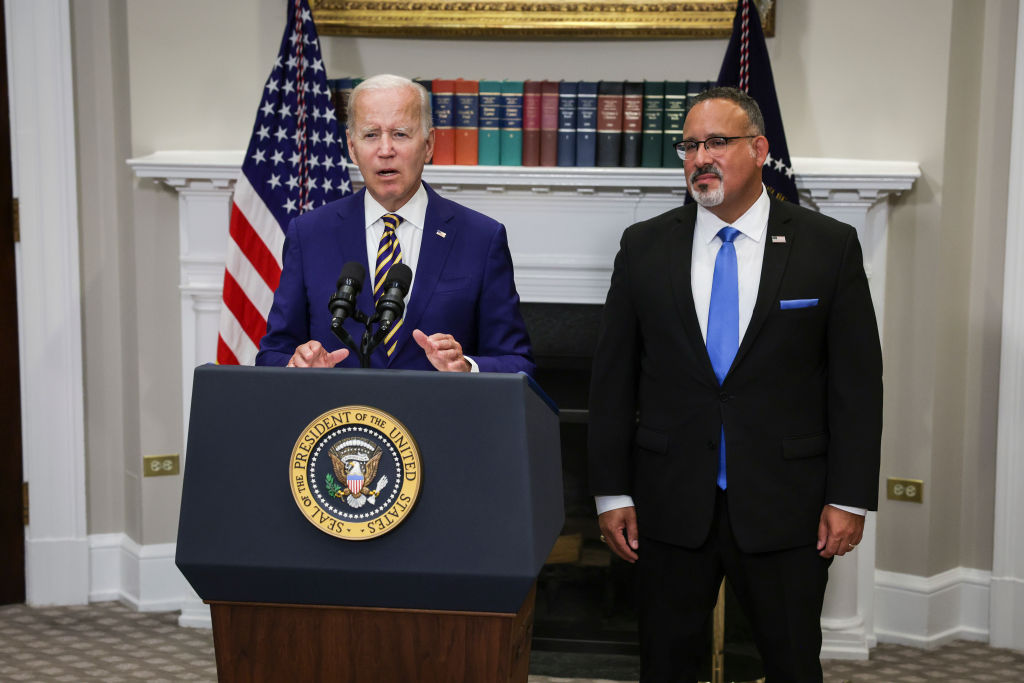
    “The Department remains committed to giving borrowers discharges when the evidence shows their college violated the law and standards,” U.S. Secretary of Education Miguel Cardona said in a statement.

    “Students count on their colleges to be truthful. Unfortunately, today’s findings show too many instances in which students were misled into loans at institutions or programs that could not deliver what they’d promised.”

    Cardona said this was part of the Department of Education’s targeted borrower defense policy, which provides relief to students who are found to have been defrauded.

    The four institutions include DeVry University, which is based in Illinois, but has 40 locations in 18 states; Westwood College, based in Colorado, which closed in 2016; ITT Nursing, based in Indiana, which filed for bankruptcy in 2016; and the Minnesota School of Business/Globe University, which closed in 2017.

    “Today marks the first findings against a school, DeVry University, that is open and still enrolling new students,” Federal Student Aid Chief Operating Officer Richard Cordray, representing the department, said during a call with reporters.

    Cordray said that students who attended DeVry University from 2008 to 2015 can file claims to the department. DeVry asserted that 90% of its students who graduated found employment, when the job placement rate was really about 58%.

    The department will approve $71.1 million in borrower defense charges for about 1,800 former DeVry students.

    “In this case, we reviewed considerable evidence showing that DeVry substantially misstated its job placement rates, and the likelihood of students finding new jobs in their field of study after graduation,” he said.

    Officials at DeVry could not be reached for comment.

    Cordray said that from 2007 to 2016, officials from ITT Technical Institute lied to students seeking to enroll in its associate nursing degree program.

    “The program was not accredited,” he said. “And students were unable to get the benefit they were promised from their courses (of) study.”

    The department plans to approve about $3 million to 130 students. This is the fourth time the department has issued discharges to students who attended that institution, for a combined $660 million in discharges for about 23,000 students who attended ITT Tech during those years.

    Student borrowers who attended the criminal justice programs at the Minnesota School of Business and/or Globe University will be entitled to full borrower defense discharges, department officials said. The department has already approved about $3 million in discharges for 270 students.

    The department is also approving $284.5 million in discharges to more than 11,900 student borrowers who attended beauty schools such as Corinthian Colleges, which closed in 2015, and Marinello Schools of Beauty, which closed in 2015.

    Cordray said the department also found that Westwood College misled student about graduate job placement rates of 80% or higher and falsely claimed that graduates would make salaries of $50,000 or more. The department found that the salary data was based on national federal data and that graduates of the institution made half or less of those salary claims.

    The Department of Education will approve about $53.1 million for 1,600 student borrowers who submit those claims.

    During the Biden administration, the Education Department has distributed more than $2 billion in borrower defense discharges.

    Last year, the department announced that more than 323,000 borrowers who have a permanent disability would receive $5.8 million in automatic student loan discharges.

    The Biden administration has resisted lawmakers’ call to cancel up to $50,000 worth of federal student loan debt per student. The Federal Reserve estimates that the total U.S. student loan debt is more than $1.75 trillion. The Department of Education owns about 92% of that student loan debt.

    White House Press Secretary Jen Psaki said during a Tuesday briefing that Biden has “forgiven $15 billion in student loans, benefiting more than 675,000 student loan borrowers since he took office.”

    As part of Biden’s campaign platform, he said he would forgive up to $10,000 per student in federal student loans, but he has not directed the Department of Education to make that change. Biden has said he wants Congress to put forth legislation to cancel up to $10,000 worth of debt per student for him to sign into law.

    Psaki also pointed to the pause on student loan repayment due to the coronavirus pandemic.

    “No one has been required to pay a single dime in federal student loans, and he extended the hiatus of payment until May to give people some extra breathing room,” she said.

  • Ohio AG Yost joins another national lawsuit, this time to overturn LGBTQ protections

    Ohio AG Yost joins another national lawsuit, this time to overturn LGBTQ protections

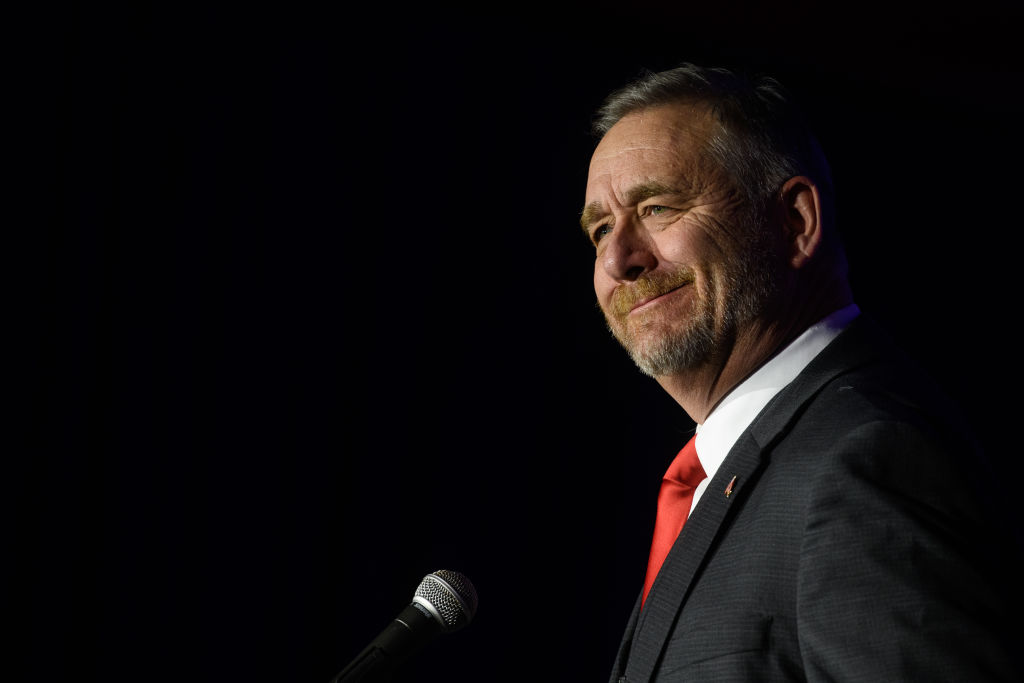
    Ohio Attorney General Dave Yost. (Photo by Justin Merriman/Getty Images)

    The state should be more focused on economic recovery than on lawsuits “fighting for the right to discriminate.”

    Equality Ohio

    BY: SUSAN TEBBEN and Ohio Capital Journal

    Joining 19 other state attorneys general, Ohio’s Dave Yost has jumped in on a lawsuit demanding that sexual orientation and gender identity not be included in discrimination protections.

    The complaint, filed in U.S. District Court for the Eastern District of Tennessee, argues “administrative agencies,” in this case the Biden administration, don’t have the power to change laws, but also challenges a recent U.S. Supreme Court ruling saying employers could not fire employees based on their sexual orientation or gender identity.

    “This case is not about the wisdom of the administration’s policy,” Yost said in a statement. “It is about power.”

    State Sen. Nickie Antonio, D-Lakewood, sent a letter to Yost on Tuesday expressing her disappointment in his decision.

    State Sen. Nickie Antonio

    “It is the Attorney General’s duty as the state’s chief legal officer to protect our children and families, not to attack and malign hardworking Ohioans who happen to be from the LGBTQ community,” Antonio said in a statement.

    LGBTQ policy organization Equality Ohio said the state should be more focused on economic recovery than on lawsuits “fighting for the right to discriminate.”

    “AG Yost’s decision to participate in this misguided lawsuit against LGBTQ+ people pushes Ohio down the wrong path,” said Maria Bruno, public policy director for Equality Ohio.

    The Biden administration directed federal agencies through an executive order to review existing regulations, policies, and other directives for consistency with the U.S. Supreme Court decision.

    The lawsuit accuses the U.S. Department of Education and the Equal Employment Opportunity Commission of “flouting procedural requirements in their rush to overreach” by interpreting federal antidiscrimination law “far beyond what the statutory text, regulatory requirements, judicial precedent and the Constitution permit.”

    The attorneys general said guidance from the DOE and EEOC “concerns issues of enormous importance to the states,” according to court documents.

    “The guidance purports to resolve highly controversial and localized issues such as whether employers and schools may maintain sex-separated showers and locker rooms, whether schools must allow biological males (transgender females) to compete on female athletic teams and whether individuals may be compelled to use another person’s preferred pronouns,” the lawsuit states.

    With regard to the Supreme Court decision, the states say the court “narrowly held” that terminating an employee for being LGBTQ constituted sex discrimination, and the court “declined to consider whether employer conduct other than terminating an employee simply because the employee is homosexual or transgender — for example, ‘sex-segregated bathrooms, locker rooms and dress codes’” — would constitute discrimination.

    The states of Tennessee, Alabama, Alaska, Arizona, Arkansas, Georgia, Idaho, Indiana, Kansas, Kentucky, Louisiana, Mississippi, Missouri, Montana, Nebraska, Oklahoma, South Carolina, South Dakota and West Virginia are also represented in the lawsuit.

    Ohio’s legislature has brought its own movements — or lack thereof — on LGBTQ issues in the past few years. In June, the Ohio House pushed through a ban on transgender female athletes competing on the side that matches their gender identity. The Senate later rejected the addition, but the bill targeting the same goal remains up for consideration.

    A bill to add sexual orientation and gender identity to protected classes in the state, the Ohio Fairness Act, has been introduced multiple times, and has not made it past committee hearings.

  • State testing bill passes committee without stopping exams this year

    State testing bill passes committee without stopping exams this year

    By Susan Tebben and Ohio Capital Journal

    An Ohio House committee passed a bill regarding state education testing on Wednesday, with the bill looking quite different than its original version. It now extends the period for testing and reporting of grades.

    The bill changed significantly because of a decision made last week by the U.S. Department of Education that will not allow blanket waivers of federal testing in schools.

    The federal agency said, however, that tests can be shorter and participation can be less than the usual 95% requirement, according to a letter from the agency. Schools can also request that test scores not be counted against them.

    Wednesday’s bill passed through the House Primary and Secondary Education Committee along party lines.

    Before the committee favorably passed the bill, several amendments were inserted into the bill to make up for the moot federal waiver measure.

    “These are all changes to help schools and students be held harmless as much as possible,” said cosponsor Kyle Koehler, R-Springfield.

    The bill doesn’t stop state testing, but extends the testing period, including for versions of English, math, science and social studies.

    The third-grade English/Language Arts testing period will not be extended from its deadline of April 23, according to Koehler.

    “The reason that is, is because those third-grade reports are used to promote kids to the fourth grade,” Koehler said.

    The deadline for reporting the third-grade ELA tests is extended from June 15 to June 28 as part of the bill, and reporting for report cards will be moved from Sep. 15 to Oct. 14.

    ELA tests for fourth grade through 12th grade will be extended one week, similar to tests in other subjects.

    Math tests will continue, and the bill’s cosponsor, state Rep. Adam Bird, R-New Richmond, said Ohio has a unique circumstance that forces them to continue math testing. Because Ohio allows integrated math studies that can’t be separated for testing purposes, those tests couldn’t be waived, he said.

    The only state test that has been eliminated is American History, which some legislators took issue with, partly because they felt if one test could be eliminated, others could be as well.

    “We can waive state testing; we chose one, American History, which right now in our climate is probably the most important one that is taught and tested in our buildings,” said state Rep. Lisa Sobecki, D-Toledo.

    Removed from the bill was a provision regarding the ACT and SAT because many schools have already administered those exams.

    The Ohio Department of Education was asked about virtual testing ahead of Wednesday’s committee meeting, according to chair Gayle Manning, R-North Ridgeville.

    “These discussions we’ve had with ODE, there’s no way of doing virtual testing,” Manning said.

    State Rep. Joe Miller, D-Amherst, has expressed in the multiple committee hearings his disapproval of standardized testing as a whole, but said he’d be willing to compromise if the test administration could be expanded further, to include summer tests, for example.

    Miller was skeptical about the amount of parents who are placing stock in these state tests over individual evaluations in schools, negating a study of more than 700 parents done by non-profit education organization Ohio Excels, who testified at a previous committee meeting that eight out of 10 parents they surveyed wanted to use state testing as a benchmark for achievement.

    “I think you’ll find that not eight out of 10 parents care about the end score of these tests, and you’ll probably get a 30% to 40% participation rate on these exams,” Miller said.

    Koehler said he’s received push-back from both sides on the bill and keeping the testing, but said quick passage of the bill would move it along in the legislative process for more discussion in the Senate, and at least bring some relief, rather than leaving school districts to resolve the issues.

    “If I could come up with another 90 days to do that, that would be great, but unfortunately last (week), the federal government did something that caused an issue with that,” Koehler said.

    Several former teachers on the committee focused on the underlying flaws in state testing, which they said could have been further exposed if sponsors of the bill had done more to halt testing.

    “I don’t know that any of these tests are going to give us any information beyond what we already know,” said state Rep. Mary Lightbody, D-Westerville. “That we have a lot of problems in administering and in providing education for our students that adequately supports them.”

    Supporters of the bill said while it has its issues brought on by the federal complications, those that have had in-person instruction want to see their progress in the way they’re used to seeing it every year, especially when there is no punishment attached.

    “Let’s keep the kids in mind and put the differences aside about whether we’re going to do really well or we’re not going to do well,” said state Rep. Don Jones, R-Freeport. “Because let’s face it, in any given year, students are going to succeed and students are going to fail.”

    The bill now moves on for a full House vote.

  • Federal Student Aid debt relief extended for students, borrowers, and parents

    Federal Student Aid debt relief extended for students, borrowers, and parents

    The office of Federal Student Aid of the U.S. Department of Education has released this information about extending COVID Emergency Relief Flexibilities for students, borrowers, and parents until least through Sept. 30, 2021.


    At the U.S. Department of Education (ED) office of Federal Student Aid, we are actively monitoring the coronavirus/COVID-19 emergency.

    COVID Emergency Relief Flexibilities Extended At Least Through Sept. 30, 2021

    We will continue to update this page as more information becomes available.

    • On March 20, 2020, the office of Federal Student Aid began providing the following temporary relief on ED-owned federal student loans: suspension of loan payments, stopped collections on defaulted loans, and a 0% interest rate.
    • On March 27, 2020, the Coronavirus Aid, Relief, and Economic Security Act (CARES Act) became law, providing for the above relief measures on ED-owned federal student loans through Sept. 30, 2020.
    • On Aug. 8, 2020, the COVID-19 emergency relief measures were extended on ED-owned federal student loans through Dec. 31, 2020.
    • On Dec. 4, 2020, the COVID-19 emergency relief measures were extended on ED-owned federal student loans through Jan. 31, 2021.
    • On Jan. 20, 2021, the COVID-19 emergency relief measures were extended on ED-owned federal student loans through Sept. 30, 2021.

    Below, we have answered questions about these COVID-19 emergency relief measures and the resulting flexibilities for federal student loans. You will also find answers to questions about preparing for payments to resume.

    Check out related articles! We’ll add links here as we publish articles.

    NOTE: You do not have to pay to get 0% interest or suspended payments for your student loans. Some companies may charge a fee to give you repayment help for federal student loans during the COVID-19 emergency. These companies are not affiliated with or endorsed by the U.S. Department of Education (ED). Learn more about avoiding student loan scams.


    For full details visit THIS WEBSITE:

  • Ohio Department of Education awarded $43 million focused on literacy improvements

    Ohio Department of Education awarded $43 million focused on literacy improvements

    Columbus, Ohio – The Ohio Department of Education has announced it has been awarded two competitive grants by the U.S. Department of Education — for a combined total of $43,200,000. These grants focus on improving student literacy from birth through grade 12.

    The Comprehensive Literacy State Development Grant provides funding to establish model literacy sites across Ohio in preschools and elementary, middle and high schools. The model sites will concentrate on implementing practices consistent with Ohio’s Plan to Raise Literacy Achievement. The grant also will support professional learning and coaching.

    The partnership between the model sites and the Department will allow early childhood programs, districts and families to improve student literacy and increase educational options available to students who have been traditionally underserved.

    The literacy development grant is for $42 million over five years. Activities will begin in January 2020.

    The Model Demonstration Projects for Early Identification of Students with Dyslexia Grant aims to improve the literacy of students with — or at risk for — dyslexia. Nationally, it has been estimated approximately 10 percent of students have dyslexia, a learning disability that can cause problems with reading, writing and spelling.

    This grant will support pilot programs to address the literacy needs of students in three model schools (preschool through grade 1). These schools will offer professional learning and support for teachers, coaches and principals, along with regional supports focused on instruction for children with dyslexia.

    The grant involving the early identification of students with dyslexia is for $1.2 million over four years. Activities in the three elementary schools will start in January 2020.

    “Literacy is truly the foundation of a solid education,” said Ohio Governor Mike DeWine. “By helping children learn and by meeting their unique needs, Ohio’s teachers are giving children the opportunity to ultimately pursue their dreams. These grants will help establish model programs that could be replicated across the state.”

    “Ohio’s strategic plan for education, Each Child, Our Future, developed by the State Board of Education, includes literacy as an essential component. These grants will support an aggressive agenda to improve student’s reading skills,” said State Board President Laura Kohler.

    “Ohio’s success with these grant applications reflects recognition of the great work already happening in the state,said Paolo DeMaria, state superintendent of public instruction. “Everywhere I go, there is energy focused on helping students master reading. It’s essential to each child’s success.”

    If you find this story useful and helpful in your daily life…

  • Trump Administration rescinds special ed guidance

    Trump Administration rescinds special ed guidance

    by Michelle Diament | October 20, 2017


    The U.S. Department of Education is withdrawing dozens of guidance documents addressing everything from transition to due process as part of a Trump administration effort to do away with unnecessary regulation.

    The Education Department said Friday that it has rescinded 72 guidance documents — 63 from the Office of Special Education Programs and nine from the Rehabilitation Services Administration — some of which have been on record for decades.

    The move comes as the agency works to follow through on an executive order signed by President Donald Trump in February requiring the federal government to “to alleviate unnecessary regulatory burdens.”

    Read on at:

    Disability Scoop