Tag: U.S. Department of Health and Human Services

  • Ohio legislators, medical leader fear vaccine hesitancy, health care impacts if RFK Jr. confirmed

    Ohio legislators, medical leader fear vaccine hesitancy, health care impacts if RFK Jr. confirmed

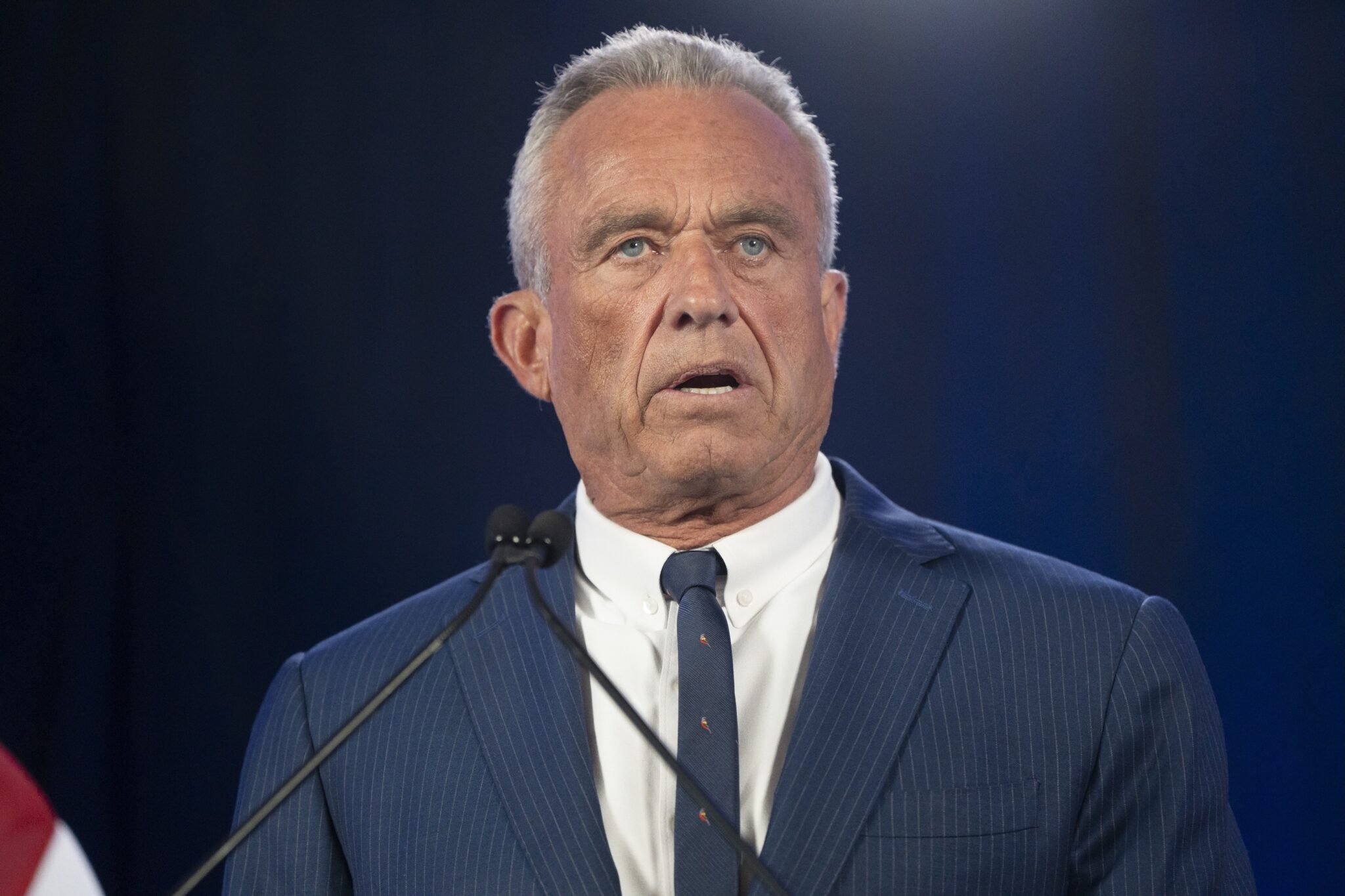
     Robert F. Kennedy Jr. (Photo by Rebecca Noble/Getty Images)

    By:  Ohio Capital Journal

    State legislators and medical experts in Ohio are decrying the nomination of Robert F. Kennedy, Jr., to the U.S. Department of Health and Human Services.

    Democratic lawmakers and a leader at the Toledo Lucas County Health Department expressed particular concern over access to health care and the future of vaccination requirements and information.

    “I think the question is are you going to trust somebody to run our entire health enterprise in this country who has no scientific background to understand why doctors, nurses, dentists are recommending that we actually do these things,” said Dr. Jonathan Ross, board president for the TLCHD.

    State Rep. Michele Grim, D-Toledo, who holds a master’s in public health, said the comments Kennedy, Jr., has made about vaccines in the past makes her nervous about his leadership of a federal medical agency with a multi-billion-dollar budget.

    “I know that vaccines save lives,” Grim said during a press conference hosted by Protect Our Care. “We eradicated small pox with vaccines, we almost eradicated polio, but now that is coming back because of the vaccine hesitancy.”

    Grim also takes issue with Kennedy’s “arcane” views on HIV/AIDS, something she focused on as part of her public health education. She said the views he’s expressed, are “very problematic in that space.”

    Ross, Grim and her fellow state Reps. Terrence Upchurch and Elgin Rogers said they hope the Trump administration will reconsider Kennedy, Jr.’s appointment, but failing that, they urged the U.S. Senate to conduct thorough questioning of the nominee, ultimately stopping the appointment.

    “I think that this appointment is probably the most dangerous, because it has a great impact on the public health, not just of the people of Ohio, but everyone in this country,” Upchurch, D-Cleveland said.

    GET THE MORNING HEADLINES.


    Ross and the legislators are concerned about the state of the overall national health care system with the appointment of Kennedy, Jr., but they see potential problems at the state level as well.

    “I think what impacts we’ll see is there could be less funding for our health departments, there could be some vaccine hesitancy, and I think we’ve seen that on the local level and also on the state level,” Grim said.

    Ross pointed to the possible reversal of insurance protections for Americans up to age 26 and undoing of Medicaid expansion as issues that could lead to increased health issues, and increased economic issues on top of everything else.

    With a loss of coverage in the Medicaid space, and if threats the Trump administration has made previously about repealing the Affordable Care Act come to fruition, crippling medical debt could fall on more and more Americans, leading to bankruptcies, along with unnecessary hospitalizations because of a lack of health coverage.

    “Being poor is also very bad for your health,” Ross said.

    Rogers, D-Toledo, said the disparities that already exist in health care for communities of color could also get worse with leaders lacking the information they need to make positive change.

    “If you have leaders who don’t understand the science, who are willing to ignore the science, they’re going to ignore other factors across the state of Ohio and that impact the people of Ohio who come from the most trying conditions,” Rogers said.

    A way forward could include state-level legislative action to protect certain aspects of the health care system that may be impacted by the new administration, and the new appointment. Ross said Medicaid work requirements that were considered in Ohio and federally would not be the way forward, and keeping an eye on efforts to require work as part of the Medicaid eligibility would help preserve the health care landscape.

    “People are more likely to be able to work if they have health care coverage, so precluding health care coverage for people who are not working is the opposite of what you want to do,” according to Ross.

    The legislators pledged to keep public health at the forefront of the minority caucuses priorities, though they face a tough slog leading a charge in a Statehouse with GOP supermajorities in both chambers.

    “I can see a world where there is another effort to attack vaccinations (on the state level),” Upchurch said.

    For Grim, whether Kennedy, Jr., is confirmed or not, it’s up to legislators to make sure the public and their fellow legislators know that a loss of Medicaid benefits or any hits to public health would negatively impact all Ohioans, not just a small minority.

    “We need to make sure that our caucus is a voice for public health and the benefits of vaccines,” Grim said.

    YOU MAKE OUR WORK POSSIBLE.

    _______________
    Susan Tebben
    Susan Tebben

    Susan Tebben is an award-winning journalist with a decade of experience covering Ohio news, including courts and crime, Appalachian social issues, government, education, diversity and culture. She has worked for The Newark Advocate, The Glasgow (KY) Daily Times, The Athens Messenger, and WOUB Public Media. She has also had work featured on National Public Radio.

    Ohio Capital Journal is part of States Newsroom, the nation’s largest state-focused nonprofit news organization.

    MORE FROM AUTHOR

  • Federal agency asks DeWine to improve child Medicaid enrollment

    Federal agency asks DeWine to improve child Medicaid enrollment

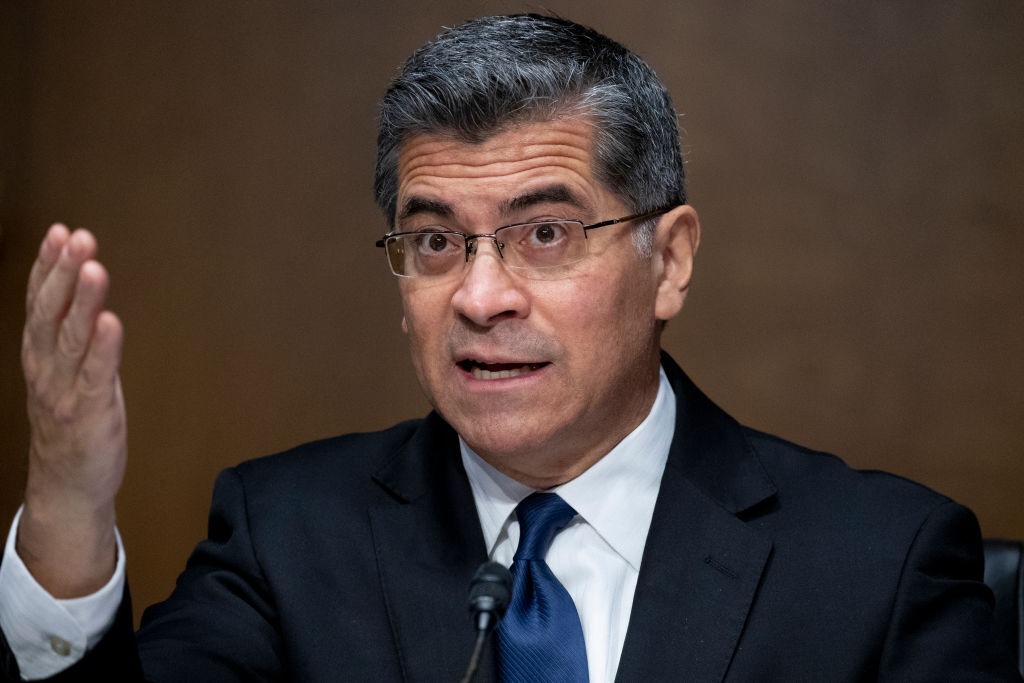
    Xavier Becerra, U.S. Secretary of Health and Human Services. (Photo by Michael Reynolds-Pool/Getty Images)

    BY:  Ohio Capital Journal

    In a recent letter to Ohio Gov. Mike DeWine, the U.S. Department of Health and Human Services said Ohio is among the top states with children losing Medicaid coverage.

    HHS Secretary Xavier Becerra sent a letter to DeWine urging the state to “ensure that no child in your state who still meets eligibility criteria for Medicaid or (the Children’s Health Insurance Program) loses their health coverage” for any reason, including “red tape” or “other avoidable reasons” as COVID-19 enrollment provisions start to fade away.

    The letter said Ohio’s Medicaid and CHIP — a program that gives health coverage to children whose families aren’t eligible for Medicaid — enrollment declined by more than 86,000 children as of Sept. 2023.

    That represents a 6% drop since March of this year, and makes Ohio the fourth-highest in declines across the U.S. during that period, the U.S. Department of Medicaid found.

    Texas was the highest with a decline of 524,909, followed by Florida with 366,633 and Georgia with 149,080.

    Becerra said keeping Medicaid enrollment up is especially important for communities of color, with more than half of children in the U.S. on Medicaid or CHIP in Hispanic, Black, Asian/Pacific Islander, American Indian or Alaska Native communities, according to the U.S. Department of Medicaid.

    “My department stands ready to do all that we can to help your state advance this goal, including by providing Ohio with the flexibility to pause procedural disenrollments for children while it adopts other strategies to ensure eligible children remain enrolled,” Becerra wrote.

    Procedural disenrollments happen when program participants don’t complete the renewal process, which can happen because the state does not have correct contact information, or simply because the participant doesn’t meet the renewal timeline.

    Those disenrollments had been halted in March 2020, but the halt ended on March 31 of this year.

    According to a tracker by KFF — nonpartisan health policy researchers formerly known as the Kaiser Family Foundation — Ohio has seen more than 514,000 individuals disenrolled as of Dec. 13, 2023, and across the states KFF studied, 71% of disenrolled participants lost their coverage because of procedural disenrollment.

    In Ohio, that number was slightly higher than the national amount, at 74%. Only 26% of those who lost coverage in Ohio were disenrolled because they were determined to be ineligible, according to KFF.

    Nationally, the analysis showed four in 10 Medicaid disenrollments were children for the 21 states who released data by age group.

    Becerra noted suggestions from HHS for Ohio to improve enrollment rates by allowing Medicaid managed care organizations to help with renewals, and giving an extra year for those who haven’t gone through the renewal process yet.

    He also encouraged improvements to the auto-renewal process, and increased outreach efforts to places such as schools and community organizations.

    The Ohio House Democratic Caucus was quick to jump on the letter’s contents, with state Rep. Dr. Beth Liston, D-Dublin, writing on behalf of the caucus to urge DeWine to continue the pause on procedural disenrollment for the next year, “while Medicaid works with the Centers for Medicare & Medicaid Services to adopt policies ensuring that children remain enrolled.”

    “No child in Ohio should go without access to the care they need,” Liston wrote in a letter to DeWine. “Every Ohioans deserves to know that their family will have coverage when they need it most.”

    DeWine’s spokesperson, Dan Tierney, verified to the OCJ that the HHS “has communicated with our administration and noted Ohio is farther ahead in redeterminations than other states, which means Ohio Medicaid is doing a better job complying with these directives than other states, which is something to be commended.”

    Tierney also said with Medicaid/CHIP numbers, perspective is also needed.

    “Ohio is our nation’s seventh largest state, so it is unsurprising that Ohio ranks where it does in this ranking of raw numbers,” he said.


    Susan Tebben
    SUSAN TEBBEN

    Susan Tebben is an award-winning journalist with a decade of experience covering Ohio news, including courts and crime, Appalachian social issues, government, education, diversity and culture. She has worked for The Newark Advocate, The Glasgow (KY) Daily Times, The Athens Messenger, and WOUB Public Media. She has also had work featured on National Public Radio.

    MORE FROM AUTHOR

  • Federal funding coming to Ohio for kindergarten readiness

    Federal funding coming to Ohio for kindergarten readiness

    BY: SUSAN TEBBEN Ohio Capital Journal

    An infusion of federal funds is coming to Ohio, targeted at improving kindergarten readiness.

    The Ohio Department of Job and Family Services is set to receive a total of $48 million over three years as part of the U.S. Department of Health and Human Services’ Preschool Development Grant, according to an announcement from Gov. Mike DeWine’s office.

    ODJFS Director Matt Damschroder said plans for the grant are “expansive,” and will include “culturally appropriate trauma training, credentialing and parent supports,” along with “creating long-term and sustainable local, state and federal funding for early childhood education programs.”

    Through a partnership with the state departments of education, health, mental health and addiction, Medicaid and developmental disabilities, the grant will also be used to expand child care for special needs, homeless and English language learners.

  • Medicare open enrollment period kicked off October 15

    Medicare open enrollment period kicked off October 15

    News from the U.S. Department of Health and Human Services:

    The Centers for Medicare & Medicaid Services (CMS) is reminding people with Medicare that Medicare Open Enrollment began October 15, 2021, and now is the time to review their coverage options and make a choice that meets their health care needs. Medicare’s Open Enrollment period gives those who rely on Medicare the opportunity to make changes to their health plans or prescription drug plans, pick a Medicare Advantage Plan, or return to Original Medicare.

    The Medicare Open Enrollment period occurs every year from October 15 through December 7, with coverage changes taking effect January 1. During this time, people can find a plan that better meets their needs, saves money, or both.

    “This is an important time of year for 63 million Medicare beneficiaries across the country to compare coverage options to ensure they are getting the best benefits available at low cost,” said Health and Human Services Secretary Xavier Becerra. “We will continue to strengthen and build upon this critical program that has vastly improved the lives of our seniors. I encourage everyone to take stock of their health and find the best plan for them in 2022.”

    Medicare plans can change year to year – even an enrollee’s current calendar year 2021 plan may have changes for 2022. Medicare.gov makes it easier than ever to compare coverage options and shop for plans. People can do a side-by-side comparison of plan coverage, costs, and quality ratings to help them more easily see the differences between plans.

    “Medicare Open Enrollment is an important time of year for people with Medicare and their families to review their options and make choices about the health care coverage that best meets their needs,” said CMS Administrator Chiquita Brooks-LaSure. “It is also a time for people with Medicare to check their eligibility for Medicare Savings Programs, which can help with premiums and other costs. Enrollment assistance is available in your community and 24/7 at 1-800-MEDICARE to connect you to coverage that best fits your needs and budget.”

    Here are some things to consider when shopping for Medicare coverage:

    • Check if doctors are still in-network and prescriptions are on the plan’s formulary.
    • Realize that the plan with the lowest monthly premium may not always be the best fit for specific health needs.
    • Look at the plan’s deductible and other out-of-pocket costs that factor into total costs.
    • Know that some plans offer extra benefits, like vision, hearing, or dental coverage, which could help meet individual health care needs.
    • Consider whether Original Medicare or a Medicare Advantage Plan is the best choice.

    Medicare is Here to Help

    Here are four ways you can compare plans and look at savings options:

    • Find plans at Medicare.gov and do side-by-side comparisons of costs and coverage.
    • Call 1-800-MEDICARE. Help is available 24 hours a day, including weekends.
    • Access personalized health insurance counseling at no cost, available from State Health Insurance Assistance Program (SHIP). Visit shiptacenter.org or call 1-800-MEDICARE for each SHIP’s phone number. Many SHIPs also offer virtual counseling. 
    • Check eligibility for Medicare Savings Programs. People with Medicare facing challenges paying for health care may qualify for Medicare Saving Programs run by their state. These programs can help save money on premiums, prescription drugs, and other health care costs. If your income for 2021 is below $18,000, it may be worth contacting your state’s Medicaid program about help that may be available to you. Contact 1-800-MEDICARE to find out where to apply.

    For more information, visit Medicare.gov or call 1-800-MEDICARE (1-800-633-4227). TTY users can call 1-877-486-2048. Help is available 24 hours a day, including weekends.