Tag: U.S. Department of Housing and Urban Development

  • Veteran’s Village planned for Clermont County

    Veteran’s Village planned for Clermont County

    Batavia, Ohio – The Board Clermont County Board of Commissioners and Clermont Metropolitan Housing Authority (CMHA) have announced plans for a Veteran’s Village in Clermont County to address gaps in housing and services for veterans.

    “We know of no other facility like this in the area,” said Bonnie Batchler, President, Board of County Commissioners. “We hope this will serve as an example for others around the county.”

    The facility is to include 28 cottages/houses and a community center offering wrap-around services from the Veteran’s Administration (VA) for county veterans who are homeless or living in substandard housing. There will be 22 one-bedroom units and six two-bedroom units for individuals and families. They will range from 700 to 1,100 square feet. They will be fully furnished, with a washer/dryer, broadband access, patio areas and parking spots.

    A community center will provide on-site clinical services to individuals who need them, on-site management to address issues that arise, a large gathering space, a kitchenette, and a computer/media area.

    Some units will be subsidized, depending on income. Others will be based on “fair market” rent.

    Plans call for the village to open in Franklin Township/Felicity in the spring of 2025.

    On May 17, the Board of County Commissioners gave their support to a proposed Veteran’s Village in Felicity or Franklin Township, reserving $1 million in federal HUD HOME funds for the $4-million project. Commissioners also expressed the board’s support for a Clermont Metropolitan Housing Authority (CMHA) request for $400,000 from the 2024-2025 State of Ohio Budget for the project.

    In Clermont County alone, there are 12,000 veterans, with more than 900 facing significant housing instability. The U.S. Department of Housing and Urban Development (HUD) estimates that veterans account for more than eight percent of all adults experiencing homelessness throughout the country.

    There simply isn’t enough affordable housing – and, besides high costs, veterans can face barriers such as drug and alcohol history, PTSD, and inconsistent rental history. That’s on top of normal barriers to low-income families such as higher rents, a limited landlord pool, and inability to get utilities, transportation, and deposits.

    Plans are being made to address these barriers. The Clermont County Veteran’s Administration has agreed to provide van services to veterans. Twenty-five percent of the units will be wheelchair accessible. Veterans will have the support of nearby VFW membership.

    While the CMHA has an allotment of 40 HUD-VASH vouchers to offer veterans, it has been a struggle to fully utilize them. Nationwide the number of landlords willing to participate in the Housing Choice Voucher (HHCV) program is dwindling, and the number of landlords willing to accept an individual with a poor police background check or without consistent rental history is nearly impossible.

    CMHA Executive Director Alicia Morlatt said plans originated from the mutual frustration shared by staff of the Veteran’s Administration and CMHA.

    “Our veterans have served us,” Batchler said. “Now, it’s our turn to serve them.”

  • Clermont County Board of Commissioners select partnerships for Federal grants

    Clermont County Board of Commissioners select partnerships for Federal grants

    Batavia, Ohio – Nearly $1.75 million in federal funds have been targeted for a variety of projects to benefit communities and non-profits throughout Clermont County, ranging from home repairs for seniors to a program that teaches about gardening and healthy food preparation.

    The Clermont County Board of Commissioners on June 28 selected the 2023 Community Development Block Grant (CDBG) and HOME Investment Partnerships Program (HOME) projects to be included in the Action Plan to the U.S. Department of Housing and Urban Development (HUD).

    CDBG projects were selected from 2023 CDBG applications as submitted from local jurisdictions and non-profits. Projects were awarded based on the overall benefit to low and moderate income areas and persons.

    The Clermont County Department of Community and Economic Development (CED) works with communities to leverage multiple funding sources for their projects, such as CDBG, HOME, Capital Bill Funds, ODOD Demolition Funds, OPWC, FEMA, FAA, OEPA, as well as others.

    The 2023 CDBG projects include:

    Clermont Senior Services Inc. Home Safety Repair Program: $115,000
    Home Repairs for Seniors including accessibility, furnace, plumbing, electrical repairs. Many wheel chair ramps and grab bars that keep seniors living in their homes and damaged floor repairs will be completed. It is estimated that 36 families and over 50 people will be assisted.

    Clermont County Community Alternative Sentencing Center (CASC): $71,000
    This is the very successful program the Board has funded for a number of years as an alternative to jail for those residents struggling with addictions. This provides much needed counseling and treatment and helps many of our residents turn their lives around.

    Clermont County General Health District Homeowner Septic Rehab Program: $100,000
    Fund 10-15 septic system repairs or replacements for Low income residents through forgivable loan. The Health Department will combine these funds with WPCLF and H2Ohio funding from Ohio EPA.

    Clermont County General Health District Newtonsville Sewer Connection Program: $100,000
    Fund 10-15 sewer connections for low income residents through forgivable loan.

    Housing Opportunities Made Equal Fair Housing Program: $15,000
    HUD required Fair Housing Program. This organization provides fair housing training to groups such as realtors and landlords and assists renters when they have complaints or concerns about their housing situation.

    Ohio Township Mt. Pisgah Playground Phase 2: $12,000
    Replace outdated playground equipment at Mt. Pisgah Park.

    OSU Extension Clermont County Demonstration Gardens/Food Science Lab: $82,000
    Construct demonstration vegetable gardens and replace outdated food science kitchen for demonstration of gardening and healthy food preparation to JFS Clients and other low to moderate income persons.

    Felicity Franklin PTO Felicity Cool Tools for School: $10,000
    Purchase of school supplies for children of needy families including backpacks, binders, pencils. This program was run successfully before but funding has been lost currently for the program. Approximately 300 back packs will be stocked with supplies and additional supplies on hand during the school year.

    Streetlight Ministry Homeless Outreach Program: $25,000
    Outreach to homeless in form of sleeping bags, meals, clothing, transportation, ID and Birth certificates, and connecting clients with services such as helping them with IDs and Birth Certificates.

    Tate Township Parking Lot at Bethel Cemetery/Park: $90,000
    Construction of parking lot with paving. Township has provided the gravel base which is installed. The Township has purchased additional land adjacent for a park and plans for trails.

    Wayne Township Former Newtonsville School Roof: $70,000
    Pay 70% of Roof for building up to maximum of $70,000. The building houses two non-profit food pantries that serve the LMI community.

    Williamsburg Township Emergency Service Building Upgrades: $147,000
    Upgrade outdated and dangerous electric system in building to operate while on backup generator already purchased. Switch electric from 3 phase to 1 phase.3 new HVAC Units that operate on 1 phase electric. Update Kitchen for EMS/ Fire employees.

    Clermont County Community and Economic Development (CED) planning and administration of grants: $189,469

    The 2023  HOME projects include:

    Clermont Housing Corporation (CMHA) Veterans Village Housing Project: $640,000

    Clermont County Community and Economic Development (CED) planning and administration of grants: $70,000

    • Clermont County Community and Economic Development (CED) activity delivery: $40,000
  • Sen Brown announces more than $21.1 million in affordable housing funds for Ohio

    Sen Brown announces more than $21.1 million in affordable housing funds for Ohio

    Investment is a Part of the Housing Trust Fund and Will Help Create and Preserve Affordable Housing for Ohioans

    Washington, D.C. – Today, U.S. Sen. Sherrod Brown (D-OH) – Chairman of the U.S. Senate Committee on Banking, Housing, and Urban Affairs – announced that the U.S. Department of Housing and Urban Development (HUD) has awarded Ohio $21,186,076 through the national Housing Trust Fund to help create and preserve safe, affordable housing for low-income households and families experiencing homelessness.

    U.S. Sen. Sherrod Brown (D-OH) (provided photo)

    “Even before the pandemic, one in four renters in Ohio were paying over half of their incomes on housing, leaving many to choose between buying groceries or paying rent,” said Brown. “This Housing Trust Fund grant will provide over $21 million to create and preserve affordable housing for Ohioans, and give more families a stable foundation for accessing healthcare, jobs, and educational opportunities.”

    Ohio’s affordable housing providers can use the funds from this investment for property acquisition, site improvements and development hard costs, demolition, relocation assistance, financing costs, and operating cost assistance for rental housing. The funds will be allocated by the Ohio Housing Finance Agency. 

    Brown has been a longtime supporter of the Housing Trust Fund, which was created by the Housing and Economic Recovery Act of 2008 and is funded by contributions from Government Sponsored Enterprises (GSEs) Fannie Mae and Freddie Mac. However, after its creation, the Housing Trust Fund was not consistently funded as intended, but, in December 2014, at Brown’s request, the Federal Housing Finance Agency (FHFA) directed Fannie Mae and Freddie Mac to begin regular contributions.   

    And in 2019, following inexplicable delays in the release of these funds by the Trump Administration’s acting GSE regulator, Brown demanded that the Administration quickly disburse the funds so they can be used to create and preserve affordable housing.

  • U.S. Department of Housing and Urban Development awarded $1 million to People Working Cooperatively

    U.S. Department of Housing and Urban Development awarded $1 million to People Working Cooperatively

    Hamilton, Ohio – The U.S. Department of Housing and Urban Development (HUD) today awarded $5 million in demonstration grants to five local government and non-profit organizations across the nation to help households with young children or seniors promote energy efficiency and healthy housing. The City of Toledo and People Working Cooperatively, Inc in Cincinnati each were awarded $1 million to promote healthy housing.

    The funding announced today promotes the coordinated delivery of services by local HUD-funded Lead Hazard Reduction and Weatherization Assistance Programs funded by the U.S. Department of Energy (DOE). This model will provide additional benefits to low-income households in the form of lower energy costs and a reduction in residential health and safety hazards.  Read a complete project-by-project summary of the programs awarded grants today.

     “These grants will allow local programs to explore different strategies to increase the supply of safe and energy-efficient housing for low-income households,” said HUD Secretary Marcia Fudge. “These services are expected to both improve resident health and reduce emissions of greenhouse gases.”

     “Both of the programs supported through these grants target services to similar populations and housing. Coordinating services enhances the benefits to households and can reduce program costs by achieving greater efficiencies compared to the usual independent provision of program services,” said Matt Ammon, Director of the Office of Lead Hazard Control and Healthy Homes. “We know that substandard housing contributes to injury and illness, which is entirely preventable.”

     HUD’s Office of Lead Hazard Control and Healthy Homes promotes state and local efforts to eliminate dangerous lead-paint and other housing-related health and safety hazards from lower income homes, stimulate private sector investment in lead hazard control, support cutting-edge research on methods for assessing and controlling housing-related health and safety hazards, and educate the public about the dangers of hazards in the home.

    People Working Cooperatively (PWC) will partner with the City of Cincinnati and the Hamilton County Health Department to demonstrate the cost savings and impact of integrating services from the Home Weatherization Assistance Program (HWAP) and Lead Hazard Control (LHC) programs.  PWC will conduct the HWAP services and Cincinnati and the Hamilton County Health Department will execute their LHC programs. PWC will partner with Cincinnati Children’s Hospital and the U. of Cincinnati for health-based referrals. The project will develop common enrollment applications, common assessment tools and cross-train staff and technicians to provide coordinated LHC, HWAP and other Healthy Homes services to minimum of 50 households. Contact Person/Authorizing Official: Jeffrey Pitts; pittsj@pwchomerepairs.org.

    Go to this link to find out more about People Working Cooperatively and see if you qualify for their services or have skills that will help them with their mission.

    Saving Homes. Restoring Pride. 

    For more than 45 years, PWC has been strengthening our communities by providing critical home repairs, energy conservation, and accessibility modification services in an effort to help residents remain independent and healthy in their homes. PWC proudly performs more than 8,000 services for eligible homeowners each year, whose typical income is just $14,000 a year. Often, these individuals face challenges due to illness, disability, job loss, or other circumstances.

    PWC is supported by a robust group of more than 110 licensed, professionally trained staff members and administrative personnel. In addition, PWC boasts a dedicated corps of 3,500-plus volunteers making it one of the largest volunteer corps in the region. Together, PWC volunteers and skilled staff are in more than 4,500 homes annually assisting nearly 9,000 individuals in southwestern Ohio, northern Kentucky, and southeast Indiana.

  • HUD awards $104 million to improve, preserve public housing in OHIO

    HUD awards $104 million to improve, preserve public housing in OHIO

    Columbus, Ohio – The U.S. Department of Housing and Urban Development today awarded more than $2.7 billion in funding to nearly 2,900 public housing authorities (PHAs) in all 50 states, as well as the District of Columbia, Guam, Puerto Rico, and the U.S. Virgin Islands to make capital investments in their public housing units. This includes $104 million to 49 PHAs throughout the state of Ohio.  View all grants announced today.

    The grants announced today are provided through HUD’s Capital Fund Program, which offers annual funding to all public housing authorities to build, renovate, and/or modernize the public housing in their communities. Housing authorities can use the funding to complete large-scale improvements such as replacing roofs or making energy-efficient upgrades to the heating system and installing water conservation measures.

    See the funding for Ohio public housing authorities below.
     

    Ohio Public Housing Authorities Amount Awarded
    ADAMS METROPOLITAN HOUSING AUTHORITY $                   326,667
    Akron Metropolitan Housing Authority $             11,939,242
    Allen Metropolitan Housing Authority $                   605,264
    ASHTABULA METROPOLITAN HOUSING AUTHORITY $               1,503,583
    Athens Metropolitan Housing Authority $                   163,105
    Belmont Metropolitan Housing Authority $               1,692,003
    BROWN METROPOLITAN HOUSING AUTHORITY $                     40,949
    BUTLER METROPOLITAN HOUSING AUTHORITY $               2,802,316
    Cambridge Metropolitan Housing Authority $                   402,027
    Chillicothe Metropolitan Housing Authority $                   967,441
    CINCINNATI METROPOLITAN HOUSING AUTHORITY $             11,734,562
    CLERMONT METROPOLITAN HOUSING AUTHORITY $                   354,305
    COLUMBIANA METROPOLITAN HOUSING AUTHORITY $               1,117,191
    Columbus Metropolitan Housing Authority $               1,003,770
    Coshocton Metropolitan Housing Authority $                   293,447
    Cuyahoga Metropolitan Housing Authority $             24,850,253
    ERIE METROPOLITAN HOUSING AUTHORITY $                   475,986
    Gallia Metropolitan Housing Authority $                   335,725
    GEAUGA METROPOLITAN HOUSING AUTHORITY $                   440,887
    GREAT DAYTON PREMIER MANAGEMENT $               6,873,913
    GREENE METROPOLITAN HOUSING AUTHORITY $                   900,998
    HARRISON METROPOLITAN HOUSING AUTHORITY $                   100,157
    Hocking Metropolitan Housing Authority $                   353,244
    Ironton Metropolitan Housing Authority $                   691,379
    Jackson County Metropolitan Housing Authority $                   333,319
    Jefferson Metropolitan Housing Authority $               1,642,259
    LAKE METROPOLITAN HOUSING AUTHORITY $                     34,826
    Licking Metropolitan Housing Authority $                   146,682
    Logan County Metropolitan Housing Authority $                   219,657
    London Metropolitan Housing Authority $                   181,978
    Lorain Metropolitan Housing Authority $               3,871,351
    Lucas Metropolitan Housing Authority $               6,798,244
    MIAMI METROPOLITAN HOUSING AUTHORITY $                   228,516
    Morgan Metropolitan Housing Authority $                   131,472
    Noble Metropolitan Housing Authority $                     60,960
    PARMA PUBLIC HOUSING AGENCY $                   109,198
    Perry County Metropolitan Housing Authority $                   256,914
    Pickaway Metropolitan Housing Authority $                   226,495
    Portage Metropolitan Housing Authority $                   751,276
    Portsmouth Metropolitan Housing Authority $               1,704,169
    SANDUSKY METROPOLITAN HOUSING AUTHORITY $                   113,610
    Shelby Metropolitan Housing Authority $                   413,268
    Springfield Metropolitan Housing Authority $               1,781,496
    STARK METROPOLITAN HOUSING AUTHORITY $               6,737,200
    Trumbull Metropolitan Housing Authority $               3,580,093
    WARREN METROPOLITAN HOUSING AUTHORITY $                   390,646
    WAYNE METROPOLITAN HOUSING AUTHORITY $                   490,512
    Youngstown Metropolitan Housing Authority $               3,182,792
    Zanesville Metropolitan Housing Authority $                   983,602
    Ohio Total $          104,338,949
  • Hamilton County Public Health Awarded HUD Grant to protect children and families from lead-based paint

    Hamilton County Public Health Awarded HUD Grant to protect children and families from lead-based paint

    Hamilton County, Ohio – The U.S. Department of Housing and Urban Development (HUD) has awarded $2 million to Hamilton County Public Health (HCPH) to protect children and families from lead-based paint and home health hazards.  HCPH was one of 44 state and local government agencies in 23 states to receive funding and one of only 15 first-time grantees.  Hamilton County, through its Community Development Block Grant funds, is adding another $300,000 in matching funds for the program.

    In announcing the award, HUD stated that it is providing these grants through its Lead Based Paint Hazard Reduction (LBPHR) Grant Program to identify and clean up dangerous lead in low-income families’ homes. These grant includes funds from HUD’s Healthy Homes Supplemental funding to help communities with housing-related health and safety hazards in addition to lead-based paint hazards.

    “Hamilton County has a considerable number of properties in need of remediation,” according to Hamilton County Health Commissioner Greg Kesterman.  “The age of housing, coupled with a lack of maintenance, contribute to the danger of childhood lead poisoning due to unmitigated lead-based paint hazards.”

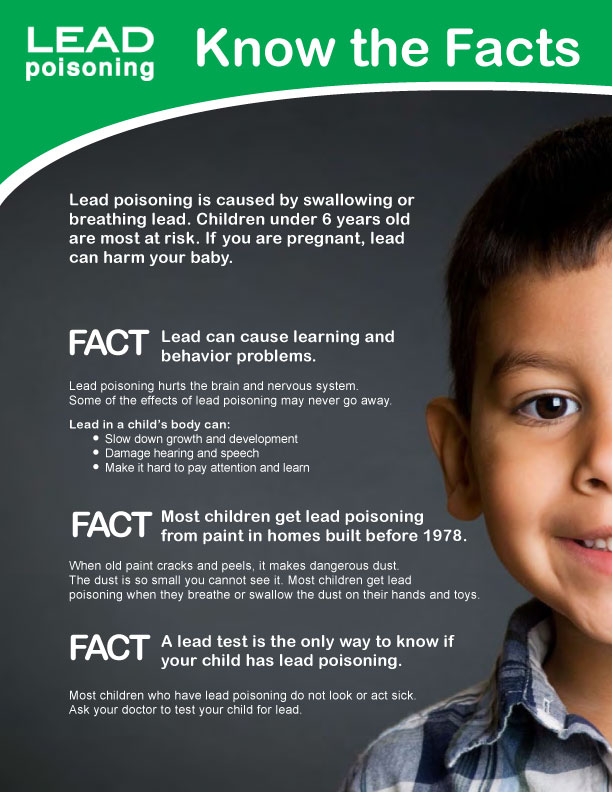
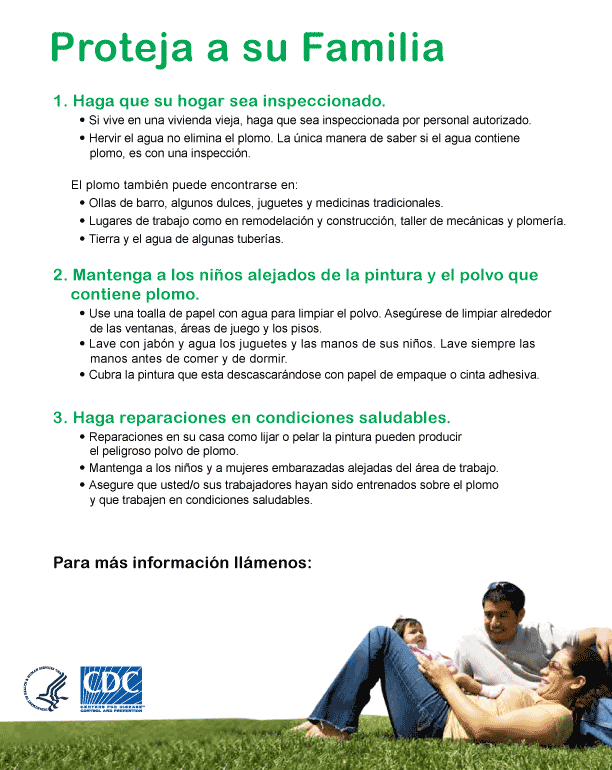
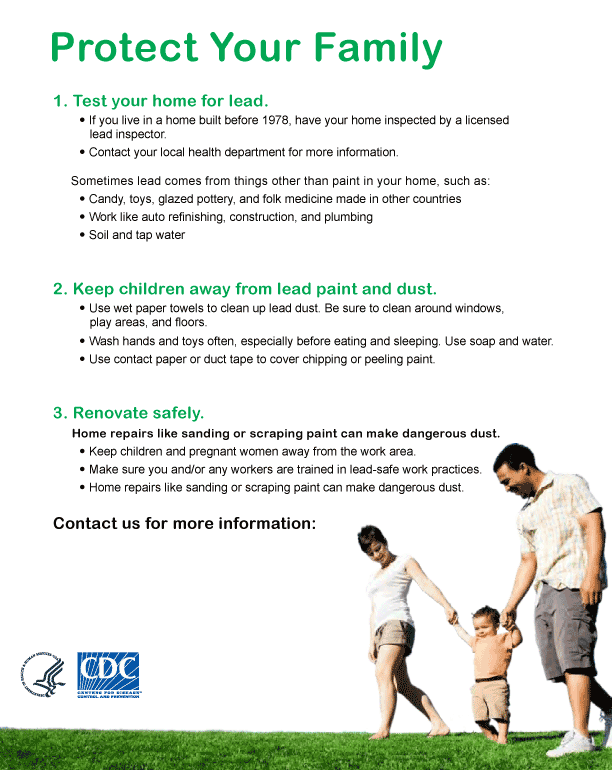
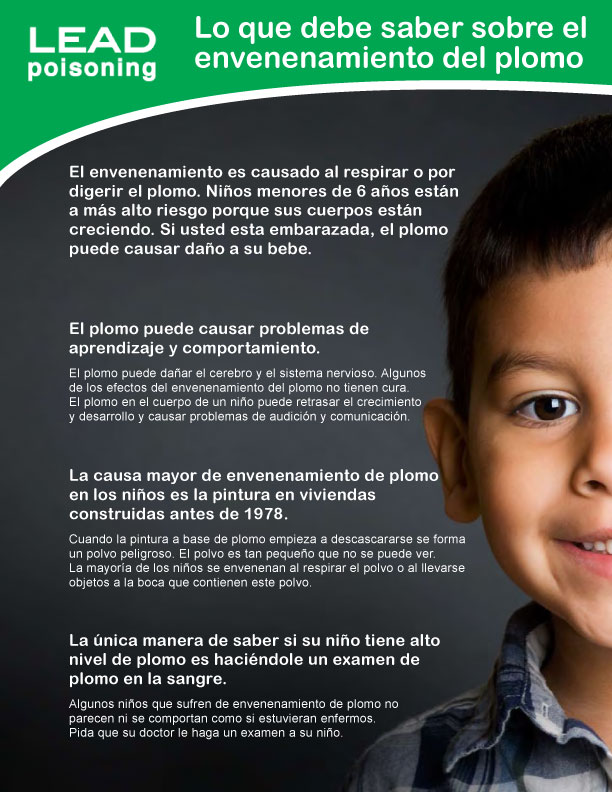
    HCPH addresses lead poisoning through its Childhood Lead Poisoning Prevention Program (CLPPP). The CLPPP includes outreach, education, and case management for children under six years of age that have been lead poisoned. Without financial support, properties with outstanding lead hazard control orders stand vacant for years, contributing to further disrepair and blight in the community. The funding will allow HCPH to perform lead-based paint remediation and abatement in 97 units in HCPH’s jurisdiction over the 42-month grant period.

    Lead Poisoning Prevention

    Waste Management conducts investigations of reports of lead poisoning in children under 6 years of age. Certified Lead Risk Assessors inspect homes for potential lead risks from exposure to lead-based paint, dust, soil, or water.