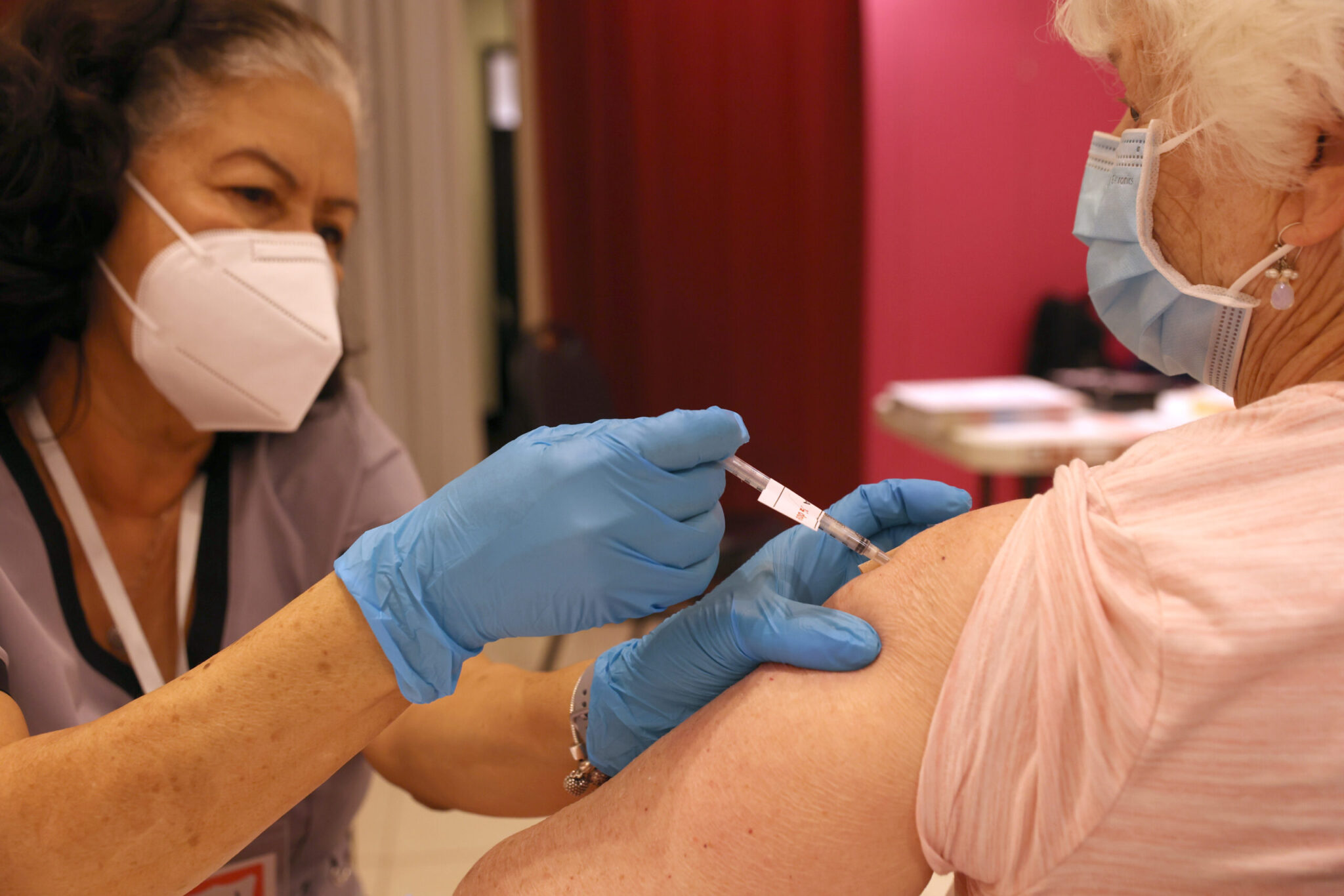
WASHINGTON — The U.S. Food and Drug Administration on Monday approved the latest round of COVID-19 boosters, as public health officials brace for another cold and flu season.
An advisory panel at the Centers for Disease Control and Prevention is scheduled to vote on recommendations Tuesday, the final step in the process before people will be able to get the shots.
“Vaccination remains critical to public health and continued protection against serious consequences of COVID-19, including hospitalization and death,” said Peter Marks, director of the FDA’s Center for Biologics Evaluation and Research.
“The public can be assured that these updated vaccines have met the agency’s rigorous scientific standards for safety, effectiveness, and manufacturing quality,” Marks added. “We very much encourage those who are eligible to consider getting vaccinated.”
The updated COVID-19 booster shots are made by Moderna and Pfizer.
The FDA said in a statement that people 5 and older can get one dose of the updated mRNA COVID-19 vaccine as long as it’s been at least two months since their last dose of the vaccine.
Vaccinated children between six months and 4 years old can get one or two doses of the updated vaccine. Unvaccinated children in the same age range are eligible for three doses of the updated Pfizer-BioNTech vaccine or two doses of the updated Moderna shot.
“The updated vaccines are expected to provide good protection against COVID-19 from the currently circulating variants,” the FDA said in a statement. “Barring the emergence of a markedly more virulent variant, the FDA anticipates that the composition of COVID-19 vaccines may need to be updated annually, as is done for the seasonal influenza vaccine.”
Hospitalizations and deaths from COVID-19 have been trending upward in recent weeks, though officials aren’t expressing alarm at the rise in severe illness.
The number of hospitalizations has risen by nearly 16% while deaths increased by almost 11%, according to data from the CDC.
The percentage of Americans getting COVID-19 shots has steadily decreased since the first round of vaccinations rolled out in the last weeks of 2020.
More than 81% of the country got at least one dose of the original vaccine, but 70% completed the primary two-dose series. Just 17% of the U.S. population decided to get the bivalent vaccine that was approved last year, according to CDC data.
JENNIFER SHUTT
Jennifer covers the nation’s capital as a senior reporter for States Newsroom. Her coverage areas include congressional policy, politics and legal challenges with a focus on health care, unemployment, housing and aid to families.
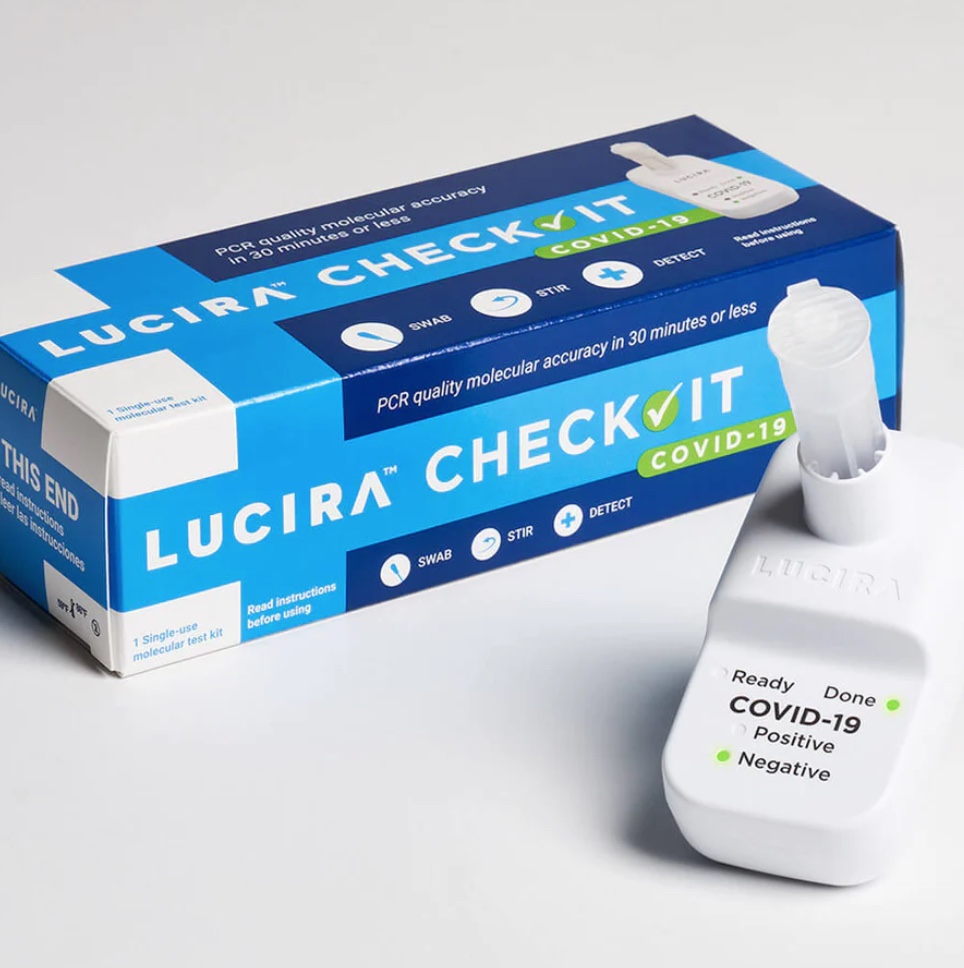
On February 24, the U.S. Food and Drug Administration issued an emergency use authorization (EUA) for the first over-the-counter (OTC) at-home diagnostic test that can differentiate and detect influenza A and B, commonly known as the flu, and SARS-CoV-2, the virus that causes COVID-19. The Lucira COVID-19 & Flu Home Test is a single-use at-home test kit that provides results from self-collected nasal swab samples in roughly 30 minutes.
https://youtu.be/HA0n05d73Gc
The Lucira COVID-19 & Flu Home Test is a single use test for individuals with signs and symptoms consistent with a respiratory tract infection, including COVID-19. The test can be purchased without a prescription and performed completely at home using nasal swab samples self-collected by individuals ages 14 years or older or collected by an adult for individuals 2 years of age or older.
The test works by swirling the sample swab in a vial that is placed in the test unit. In 30 minutes or less, the test unit will display the results that show whether a person is positive or negative for each of the following: Influenza A, Influenza B and COVID-19.
Individuals should report all results obtained to their healthcare provider for public health reporting and to receive appropriate medical care.
According to the FDA, in individuals with symptoms, the Lucira COVID-19 & Flu Home Test correctly identified 99.3% of negative and 90% of positive Influenza A samples, 100% of negative and 88.3% of positive COVID-19 samples and 99.9% of negative Influenza B samples. Since there are currently not enough cases of Influenza B circulating to include in a clinical study, validation confirmed that the test can identify the virus in contrived specimens, and the EUA requires Lucira to continue to collect samples to study the test’s ability to detect Influenza B in real-world settings.
“As with all rapid diagnostic tests, there is a risk of false positive and false negative results. Individuals who test positive for either flu or COVID-19 should take appropriate precautions to avoid spreading the virus and should seek follow-up care with their physician or healthcare provider as additional testing may be necessary,” said the FDA in announcing the test. “Negative results for SARS-CoV-2 and influenza B should be confirmed, if necessary for patient management, with an authorized or cleared molecular test performed in a CLIA-certified laboratory that meets requirements to perform high or moderate complexity tests. Individuals who test negative and continue to experience symptoms of fever, cough and/or shortness of breath may still have a respiratory infection and should seek follow up care with their healthcare provider.”
Today, the U.S. Food and Drug Administration amended the emergency use authorizations (EUAs) of the updated (bivalent) Moderna and Pfizer-BioNTech COVID-19 vaccines to include use in children down to 6 months of age.
“More children now have the opportunity to update their protection against COVID-19 with a bivalent COVID-19 vaccine, and we encourage parents and caregivers of those eligible to consider doing so – especially as we head into the holidays and winter months where more time will be spent indoors,” said FDA Commissioner Robert M. Califf, M.D. “As this virus has changed, and immunity from previous COVID-19 vaccination wanes, the more people who keep up to date on COVID-19 vaccinations, the more benefit there will be for individuals, families and public health by helping prevent severe illnesses, hospitalizations, and deaths.”
What parents and caregivers need to know:
Children 6 months through 5 years of age who received the original (monovalent) Moderna COVID-19 Vaccine are now eligible to receive a single booster of the updated (bivalent) Moderna COVID-19 Vaccine two months after completing a primary series with the monovalent Moderna COVID-19 Vaccine.
Children 6 months through 4 years of age who have not yet begun their three-dose primary series of the Pfizer-BioNTech COVID-19 Vaccine or have not yet received the third dose of their primary series will now receive the updated (bivalent) Pfizer-BioNTech COVID-19 vaccine as the third dose in their primary series following two doses of the original (monovalent) Pfizer-BioNTech COVID-19 Vaccine.
Children 6 months through 4 years of age who have already completed their three-dose primary series with the original (monovalent) Pfizer-BioNTech COVID-19 Vaccine will not be eligible for a booster dose of an updated bivalent vaccine at this time. Children in this age group who already completed their primary series would still be expected to have protection against the most serious outcomes from the currently circulating omicron variant. The data to support giving an updated bivalent booster dose for these children are expected in January. The agency is committed to evaluating those data as quickly as possible.
The Moderna and Pfizer-BioNTech bivalent COVID-19 vaccines include an mRNA component corresponding to the original strain to provide an immune response that is broadly protective against COVID-19 and an mRNA component corresponding to the omicron variant BA.4 and BA.5 lineages to provide better protection against COVID-19 caused by the omicron variant.
Individuals who receive the updated (bivalent) vaccines may experience similar side effects reported by individuals who received previous doses of the original (monovalent) mRNA COVID-19 vaccines.
The fact sheets for both bivalent COVID-19 vaccines for recipients and caregivers and for healthcare providers include information about the potential side effects, as well as the risks of myocarditis and pericarditis.
“Vaccines remain the best defense against the most devastating consequences of disease caused by the currently circulating omicron variant, such as hospitalization and death. Based on available data, the updated, bivalent vaccines are expected to provide increased protection against COVID-19,” said Peter Marks, M.D., Ph.D., director of the FDA’s Center for Biologics Evaluation and Research. “Parents and caregivers can be assured that the FDA has taken a great deal of care in our review, and we encourage parents of children of any age who are eligible for primary vaccination or a bivalent COVID-19 vaccine booster dose to consider seeking vaccination now as it can potentially help protect them from COVID-19 during a time when cases are increasing.”
Moderna COVID-19 Vaccine, Bivalent
The monovalent Moderna COVID-19 Vaccine is authorized as a two-dose primary series in individuals six months of age and older and as a third primary series dose for individuals 6 months of age and older who have been determined to have certain kinds of immunocompromise. With today’s authorization, the Moderna COVID-19 Vaccine, Bivalent is now authorized for administration in individuals 6 months through 5 years of age as a single booster dose at least 2 months after completion of primary vaccination with the monovalent Moderna COVID-19 Vaccine. The Moderna COVID-19 Vaccine, Bivalent is also authorized for use in individuals 6 years and older as a single booster dose at least two months after completion of either primary vaccination with any authorized or approved COVID-19 vaccine, or receipt of the most recent booster dose with any authorized or approved monovalent COVID-19 vaccine.
For the authorization of a single booster dose of the Moderna COVID-19 Vaccine, Bivalent for children 6 months through 5 years of age, the FDA relied on immune response data that it had previously evaluated from a clinical study in adults of a booster dose of Moderna’s investigational bivalent COVID-19 vaccine that contained a component corresponding to the original strain of SARS-CoV-2 and a component corresponding to the omicron lineage BA.1.
In addition, the FDA conducted an analysis of data from a clinical study that compared the immune response among 56 study participants 17 months through 5 years of age who received a single booster dose of monovalent Moderna COVID-19 Vaccine at least six months after completion of a two-dose primary series of the vaccine to the immune response among approximately 300 study participants 18 through 25 years of age who had received a two-dose primary series of monovalent Moderna COVID-19 Vaccine in a previous study which determined the vaccine to be effective in preventing COVID-19. The immune response to the booster dose of monovalent Moderna COVID-19 Vaccine in the 17 months through 5 years age group was comparable to the immune response to the two-dose primary series in the adult participants.
The safety of a single booster dose of the Moderna COVID-19 Vaccine, Bivalent for children 6 months through 5 years of age is supported by safety data from a clinical study which evaluated a booster dose of Moderna’s investigational bivalent COVID-19 vaccine (original and omicron BA.1), safety data from clinical trials which evaluated primary and booster vaccination with the monovalent Moderna COVID-19 Vaccine, and postmarketing safety data with the monovalent Moderna COVID-19 Vaccine and Moderna COVID-19 Vaccine, Bivalent.
In one clinical study, the safety of a single booster dose of monovalent Moderna COVID-19 Vaccine was evaluated in 145 clinical study participants 6 months through 5 years of age who received a booster dose of monovalent Moderna COVID-19 Vaccine at least six months after completion of the monovalent Moderna COVID-19 Vaccine two-dose primary series. The most commonly reported side effects after a booster dose of the monovalent Moderna COVID-19 Vaccine across this age group included pain, redness and swelling at the injection site, swelling/tenderness of the lymph nodes of the injected arm or thigh, and fever. In clinical study participants 17 months through 36 months of age, other commonly reported side effects included irritability/crying, sleepiness, and loss of appetite. In clinical trial participants 37 months through 5 years of age, other commonly reported side effects included fatigue, headache, muscle pain, joint pain, chills, and nausea/vomiting.
The data accrued with the investigational Moderna bivalent COVID-19 vaccine (original and omicron BA.1) and with the monovalent Moderna COVID-19 Vaccine are relevant to the Moderna COVID-19 Vaccine, Bivalent because these vaccines are manufactured using the same process.
Pfizer-BioNTech COVID-19 Vaccine, Bivalent
With today’s authorization, children 6 months through 4 years of age who have not yet received the third dose of the three-dose primary series with the monovalent Pfizer-BioNTech COVID-19 Vaccine will now receive the Pfizer-BioNTech COVID-19 Vaccine, Bivalent as the third dose of the primary series. The Pfizer-BioNTech COVID-19 Vaccine, Bivalent is also authorized for administration in individuals 5 years of age and older as a single booster dose at least two months after completion of either primary vaccination with any authorized or approved COVID-19 vaccine, or receipt of the most recent booster dose with any authorized or approved monovalent COVID-19 vaccine.
With today’s action, the monovalent Pfizer-BioNTech COVID-19 Vaccine is no longer authorized for use as the third dose of the three-dose primary series in children 6 months through 4 years of age. The monovalent Pfizer-BioNTech COVID-19 Vaccine remains authorized for administration as the first two doses of the three-dose primary series in individuals 6 months through 4 years of age, as a two-dose primary series for individuals 5 years of age and older, and as a third primary series dose for individuals 5 years of age and older who have been determined to have certain kinds of immunocompromise.
The authorization of the Pfizer-BioNTech COVID-19 Vaccine, Bivalent for administration as the third dose of a three-dose primary series following two doses of the monovalent Pfizer-BioNTech COVID-19 Vaccine in children 6 months through 4 years of age is supported by the FDA’s previous analyses of the effectiveness of primary vaccination with the monovalent Pfizer-BioNTech COVID-19 Vaccine in individuals 16 years of age and older and individuals 6 months through 4 years of age, and previous analyses of immune response data in adults greater than 55 years of age who had received a two-dose primary series and one booster dose with the monovalent Pfizer-BioNTech COVID-19 Vaccine and a second booster dose with the investigational Pfizer-BioNTech bivalent COVID-19 vaccine (original and omicron BA.1).
The safety of the Pfizer-BioNTech COVID-19 Vaccine, Bivalent for administration as the third dose of a three-dose primary series following two doses of the monovalent Pfizer-BioNTech COVID-19 Vaccine in children 6 months through 4 years of age is based on safety data from a clinical study which evaluated a booster dose of Pfizer-BioNTech’s investigational bivalent COVID-19 vaccine (original and omicron BA.1) in individuals greater than 55 years of age, safety data from clinical trials which evaluated primary vaccination in individuals 6 months of age and older with the monovalent Pfizer-BioNTech COVID-19 Vaccine, safety data from clinical trials which evaluated booster vaccination in individuals 5 years of age and older with the monovalent Pfizer-BioNTech COVID-19 Vaccine and postmarketing safety data with the monovalent Pfizer-BioNTech COVID-19 Vaccine and the Pfizer-BioNTech COVID-19 Vaccine, Bivalent.
The data accrued with the investigational Pfizer-BioNTech bivalent COVID-19 vaccine (original and omicron BA.1) and with the monovalent Pfizer-BioNTech COVID-19 Vaccine are relevant to the Pfizer-BioNTech COVID 19 Vaccine, Bivalent because these vaccines are manufactured using the same process.
The amendments to the EUAs were issued to Moderna TX Inc. and Pfizer Inc.
The virus that causes COVID-19 changes over time. Keep your protection against COVID-19 up to date by getting a bivalent COVID-19 vaccine booster dose.
The bivalent COVID-19 vaccines include a component of the original virus strain to provide broad protection against COVID-19 and a component of the omicron variant to provide better protection against COVID-19 caused by the omicron variant. These are called bivalent COVID-19 vaccines because they contain these two components. A bivalent COVID-19 vaccine may also be referred to as “updated” COVID-19 vaccine booster dose.
COVID-19 vaccines can help protect against severe illness, hospitalization and death from COVID-19. As the virus changes and your immunity naturally decreases over time, you may lose some of that protection.
Search in your zip code to find a location where a bivalent COVID-19 vaccine booster dose is available near you.
What bivalent COVID-19 vaccines has FDA authorized for use as a booster dose?
Video: Why should I get the updated COVID-19 vaccine now? [1:35]
The FDA authorized bivalent formulations of the Moderna and Pfizer-BioNTech COVID-19 vaccines for use as a single booster dose.
The Moderna COVID-19 Vaccine, Bivalent is authorized for use as single booster dose in children 6 months through 5 years of age at least two months after completion of a primary series with the monovalent Moderna COVID-19 Vaccine. It is also authorized for use as a single booster dose in individuals 6 years of age and older at least two months after completion of either primary vaccination with any authorized or approved COVID-19 vaccine, or receipt of the most recent booster dose with any authorized or approved monovalent COVID-19 vaccine.
The Pfizer-BioNTech COVID-19 Vaccine, Bivalent is authorized for use as a single booster dose in individuals 5 years of age and older at least two months after completion of either primary vaccination with any authorized or approved COVID-19 vaccine or receipt of the most recent booster dose with any authorized or approved monovalent COVID-19 vaccine.
Am I eligible for an updated (bivalent) COVID-19 vaccine booster?
Eligibility for a booster depends on:
Your age
When you completed your primary vaccination OR
When received your most recent booster dose of a monovalent COVID-19 vaccine
If eligible, consider getting a bivalent COVID-19 vaccine booster dose.
Video: Are the new bivalent COVID-19 vaccines safe? [1:57]
A single booster dose with an updated bivalent COVID-19 vaccine provides broad protection against COVID-19 and is expected to provide better protection against COVID-19 caused by the currently circulating Omicron variant.
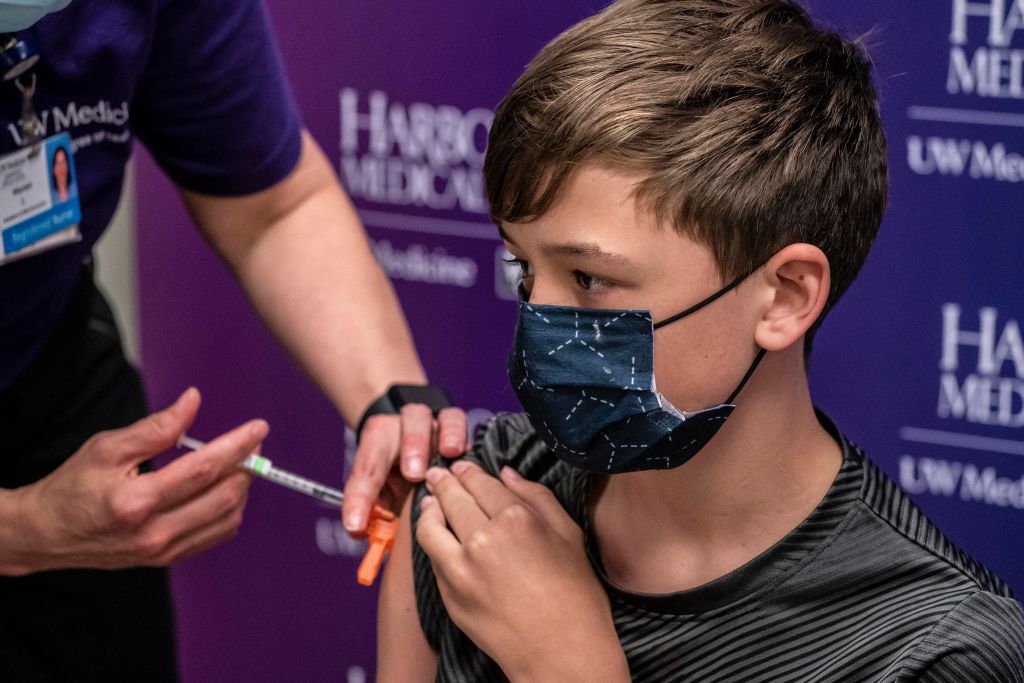
Gavin Smits receives a first dose of the Pfizer COVID-19 vaccine at Harborview Medical Center on May 13, 2021 in Seattle, Washington. (Photo by David Ryder/Getty Images)
WASHINGTON — The federal government on Wednesday recommended an updated COVID-19 booster for kids between 5 and 11, expanding use of the new bivalent shots beyond people 12 and older.
The U.S. Food and Drug Administration first authorized the updated vaccines use in the morning before the Centers for Disease Control and Prevention recommended them in the afternoon, completing the two-step process needed before shots could begin
CDC Director Rochelle Walensky announced her recommendation in a tweet, saying it’s “a critical step in our fight against COVID-19.”
“An updated vaccine can help bolster protection for our children this winter,” she added, encouraging parents to talk to their child’s healthcare provider.
The announcement Wednesday for kids between 5 and 11 follows the FDA authorizing and the CDC recommending the bivalent booster dose for people 12 and older in early September.
“While it has largely been the case that COVID-19 tends to be less severe in children than adults, as the various waves of COVID-19 have occurred, more children have gotten sick with the disease and have been hospitalized,” Peter Marks, director of the FDA’s Center for Biologics Evaluation and Research, said in a statement.
“Children may also experience long-term effects, even following initially mild disease,” Marks added.
The shot is updated to provide protection against the latest omicron variants of COVID-19, known as BA.4 and BA.5.
The move comes as public health officials are monitoring new variants that could cause disruptions this winter during the annual cold and flu season.
Winter surge in cases possible
White House COVID-19 Response Coordinator Ashish Jha said Tuesday during a press briefing that everyone eligible for the latest booster should get it as soon as they can, though he declined to list any goals for the new shot.
Jha then warned that a surge of COVID-19 cases could be on the horizon this winter.
“We have seen an increase in COVID infections, hospitalizations, and deaths each of the last two winters. And we are carefully monitoring the rise of several subvariants that are evolving rapidly and emerging around the world, including ones that evade some of our treatments,” Jha said.
The Biden administration, he said, is tracking COVID-19 variants that “either have a lot more immune invasiveness or they render many of our treatments ineffective.”
The good news, however, is that the variants public health officials are tracking come from omicron strains BA.2 and BA.5, Jha said.
“That means our updated bivalent vaccines should provide a much higher degree of protection than the original prototype vaccine would have,” he said. “Obviously, we’re going to do the studies to figure out how much protection, but I’m confident that our vaccines will continue to work very well.”
No vaccine goals set
Despite encouraging everyone eligible for the updated COVID-19 bivalent booster dose to get vaccinated, Jha said the White House hasn’t set any goals for how many people it wants to get the shot.
“We’re not setting targets,” Jha said. “We are focused on driving deaths down, getting more people vaccinated.”
The U.S. Centers for Disease Control and Prevention’s website shows that 11.5 million people have received the updated booster dose, a fraction of those eligible.
WASHINGTON — The U.S. Food and Drug Administration on Friday authorized emergency use of two COVID-19 vaccines for children under 5, moving the country one step closer to having shots for all age groups.
The decision leaves just one hurdle, a recommendation from the Centers for Disease Control and Prevention, before parents can begin getting babies and toddlers vaccinated against the virus. That CDC decision was expected this weekend.
“As we have seen with older age groups, we expect that the vaccines for younger children will provide protection from the most severe outcomes of COVID-19, such as hospitalization and death,” FDA Commissioner Robert M. Califf said in a statement.
“Those trusted with the care of children can have confidence in the safety and effectiveness of these COVID-19 vaccines and can be assured that the agency was thorough in its evaluation of the data.”
The FDA’s decision to grant emergency use requests for a two-dose Moderna shot and a three-dose Pfizer vaccine came two days after its outside panel of advisers unanimously voted on Wednesday to recommend use of the two vaccines.
White House COVID-19 Response Coordinator Ashish Jha said earlier this month that the federal government would begin shipping the vaccines to states as soon as the FDA granted the emergency use authorization.
He expects shots can begin next week as long as the CDC issues its recommendation over the weekend.
The Biden administration made 10 million doses of vaccine for kids under 5 available for states during a two-week pre-ordering period that closed Tuesday.
States, tribes, territories, pharmacies and other federal partners ordered 2.5 million Pfizer doses, about 50% of those available, and 1.3 million Moderna doses, about 25%, according to a spokesperson for the U.S. Department of Health and Human Services.
“Jurisdictions will have an opportunity to order additional doses if and when the vaccines are authorized by FDA and recommended by CDC,” an HHS spokesperson said in a statement.
Florida vaccination distribution in question
Florida remains the only state not to have placed any pre-orders.
White House press secretary Karine Jean-Pierre said Thursday that some pharmacies and community health centers in the state would have COVID-19 vaccines for kids under 5 through federal distribution. But those options are limited for parents wishing to vaccinate their kids, she said.
“By being the only state, this is Florida, not pre-ordering … pediatricians, for example, in Florida will not have immediate ready access to vaccines,” Jean-Pierre said.
“Some pharmacies and community health centers in the state get access through federal distribution channels, but those options are limited for parents. We encouraged Florida on several occasions to order vaccines. We’ve been aware of this, and we will continue to do so.”
Florida not pre-ordering, Jean-Pierre said, will “make it harder” for parents to get their children vaccinated.
“That’s why we continued to, on several occasions, encourage Florida to do this,” she said.
The Florida Department of Health said in a statement Thursday that its officials have “made it clear to the federal government that states do not need to be involved in the convoluted vaccine distribution process, especially when the federal government has a track record of developing inconsistent and unsustainable COVID-19 policies.”
“Doctors can order vaccines if they are in need, and there are currently no orders in the Department’s ordering system for the COVID-19 vaccine for this age group,” the statement continued.
Florida Gov. Ron DeSantis said Thursday that “there’s not going to be any state programs,” to vaccinate babies and toddlers against COVID-19.
“That’s not something that we think is appropriate and so that’s not what we’re going to be utilizing our resources in that regard,” DeSantis said.
On Tuesday, the U.S. Food and Drug Administration amended the emergency use authorization (EUA) for the Pfizer-BioNTech COVID-19 Vaccine, authorizing the use of a single booster dose for administration to individuals 5 through 11 years of age at least five months after completion of a primary series with the Pfizer-BioNTech COVID-19 Vaccine.
“While it has largely been the case that COVID-19 tends to be less severe in children than adults, the omicron wave has seen more kids getting sick with the disease and being hospitalized, and children may also experience longer term effects, even following initially mild disease,” said FDA Commissioner Robert M. Califf, M.D. “The FDA is authorizing the use of a single booster dose of the Pfizer-BioNTech COVID-19 Vaccine for children 5 through 11 years of age to provide continued protection against COVID-19. Vaccination continues to be the most effective way to prevent COVID-19 and its severe consequences, and it is safe. If your child is eligible for the Pfizer-BioNTech COVID-19 Vaccine and has not yet received their primary series, getting them vaccinated can help protect them from the potentially severe consequences that can occur, such as hospitalization and death.”
On Jan. 3, the FDA authorized the use of a single booster dose of the Pfizer-BioNTech COVID-19 Vaccine for administration to individuals 12 through 15 years of age after completion of primary vaccination with the Pfizer-BioNTech COVID-19 Vaccine. Today’s action expands the use of a single booster dose of the vaccine for administration to individuals 5 through 11 years age at least five months after completion of a primary series of the Pfizer-BioNTech COVID-19 Vaccine. The FDA has authorized the Pfizer-BioNTech COVID-19 Vaccine for use in individuals 5 years of age and older and has approved Comirnaty (COVID-19 Vaccine, mRNA) for use in individuals 16 years of age and older.
“The Pfizer-BioNTech COVID-19 Vaccine is effective in helping to prevent the most severe consequences of COVID-19 in individuals 5 years of age and older,” said Peter Marks, M.D., Ph.D., director of the FDA’s Center for Biologics Evaluation and Research. “Since authorizing the vaccine for children down to 5 years of age in October 2021, emerging data suggest that vaccine effectiveness against COVID-19 wanes after the second dose of the vaccine in all authorized populations. The FDA has determined that the known and potential benefits of a single booster dose of the Pfizer-BioNTech COVID-19 Vaccine for children 5 through 11 years of age at least five months after completing a primary series outweigh its known and potential risks and that a booster dose can help provide continued protection against COVID-19 in this and older age groups.”
Data Supporting Effectiveness
The EUA for a single booster dose of the Pfizer-BioNTech COVID-19 Vaccine for children 5 through 11 years of age is based on FDA’s analysis of immune response data in a subset of children from the ongoing randomized placebo-controlled trial that supported the October 2021 authorization of the Pfizer-BioNTech COVID-19 Vaccine primary series in this age group. Antibody responses were evaluated in 67 study participants who received a booster dose 7 to 9 months after completing a two-dose primary series of the Pfizer-BioNTech COVID-19 Vaccine. The antibody level against the SARS-CoV-2 virus one month after the booster dose was increased compared to before the booster dose.
FDA Evaluation of Safety
The safety of a single booster dose of the Pfizer-BioNTech COVID-19 Vaccine in this age group was assessed in approximately 400 children who received a booster dose at least five months (range 5 to 9 months) after completing a two-dose primary series. The most commonly reported side effects were pain, redness and swelling at the injection site, as well as fatigue, headache, muscle or joint pain and chills and fever.
The FDA did not hold a meeting of its Vaccines and Related Biological Products Advisory Committee on today’s action, as the agency previously convened the committee for extensive discussions regarding the use of booster doses of COVID-19 vaccines and, after review of Pfizer’s EUA request, the FDA concluded that the request did not raise questions that would benefit from additional discussion by committee members. The FDA will make available on its website relevant documents regarding today’s authorization.
The amendment to the EUA was granted to Pfizer Inc.
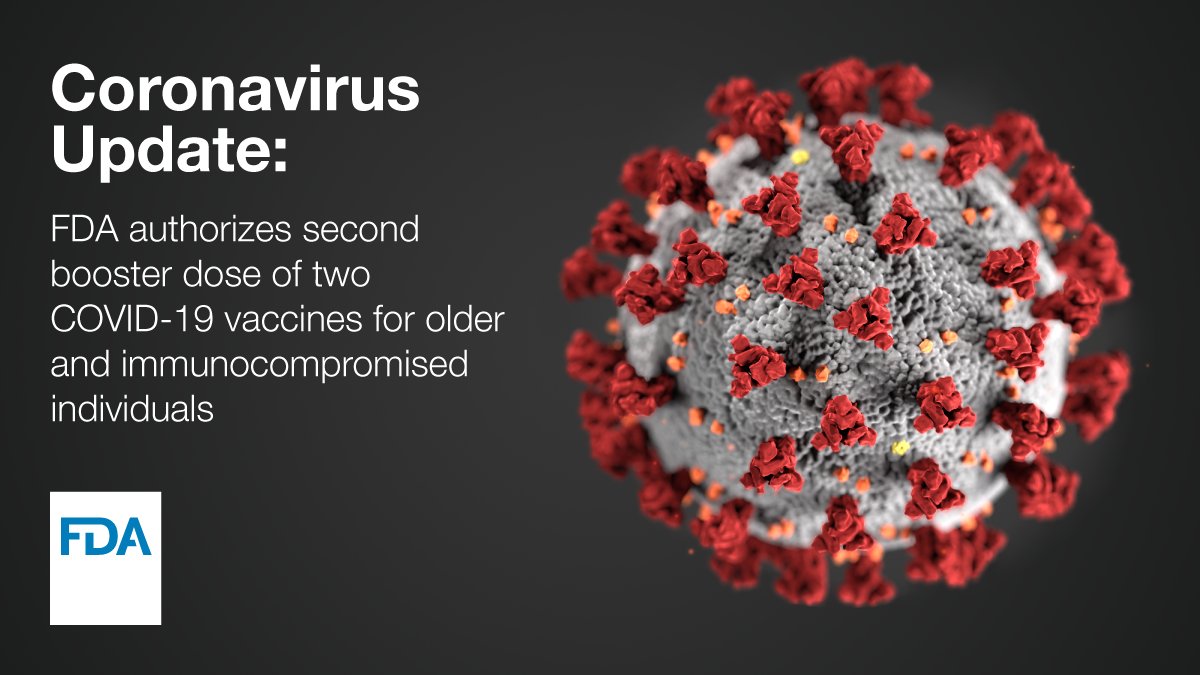
Today, the U.S. Food and Drug Administration (FDA). authorized a second booster dose of either the Pfizer-BioNTech or the Moderna COVID-19 vaccines for older people and certain immunocompromised individuals. https://bit.ly/3NuxvY6
They previously authorized a single booster dose for certain immunocompromised individuals following completion of a three-dose primary vaccination series.
This action will now make a second booster dose of these vaccines available to other populations at higher risk for severe disease, hospitalization and death according to a FDA news release.
The emergency use authorizations was amended as follows:
A 2nd booster dose of the Pfizer-BioNTech or Moderna COVID-19 vaccines may be administered to people 50+ years old at least 4 months after receipt of a 1st booster dose of any authorized or approved COVID-19 vaccine.
A 2nd booster dose of the Pfizer-BioNTech COVID-19 Vaccine may be administered to people 12+ years old with certain kinds of immunocompromise at least 4 months after receipt of a 1st booster dose of any authorized or approved COVID-19 vaccine.
A 2nd booster dose of the Moderna COVID-19 Vaccine may be administered at least 4 months after the 1st booster dose of any authorized or approved COVID-19 vaccine to people 18+ years old with the same certain kinds of immunocompromise.
Today’s announcement applies only to the Pfizer-BioNTech and Moderna COVID-19 vaccines, and the authorization of a single booster dose for other age groups with these vaccines remains unchanged.
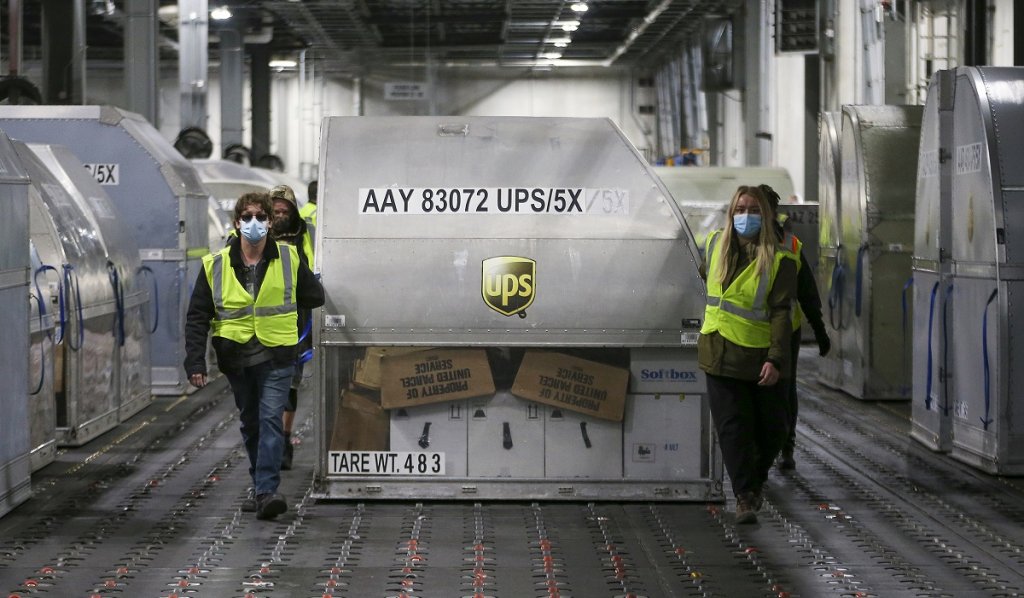
UPS employees move one of two shipping containers containing shipments of the Pfizer and BioNTech COVID-19 vaccine inside a sorting facility. (Photo by Michael Clevenger – Pool/Getty Images).
WASHINGTON — Regulators at the U.S. Food and Drug Administration on Friday granted emergency authorization to Pfizer’s COVID-19 vaccine for 5- to 11-year-olds, a step that means kid-sized doses can begin shipping to health care providers across the country.
Vials of the two-shot vaccine will be headed to pediatricians’ offices, hospitals, pharmacies and other providers, so they can be deployed as soon as the Centers for Disease Control and Prevention gives its sign off.
The CDC’s panel of vaccine experts is scheduled to meet Tuesday to discuss guidelines for the vaccine’s use in the younger age group.
Some 28 million U.S. kids are poised to become eligible for a COVID-19 vaccine, which would offer them significant protection against the disease that has disrupted three separate school years and so many other aspects of children’s lives.
While kids have been at lower risk of infection and severe complications from the virus, the nearly 100 deaths among 5- to 11-year-olds mean it is one of the top 10 causes of death for that age group. Infections among children also have risen amid the summer surge from the delta variant.
“As a mother and a physician, I know that parents, caregivers, school staff, and children have been waiting for today’s authorization,” acting FDA Commissioner Janet Woodcock said in a news release announcing the shot’s authorization. “Vaccinating younger children against COVID-19 will bring us closer to returning to a sense of normalcy.”
As with Pfizer’s shot for teens and adults, the version for children also requires two doses spaced three weeks apart. The dosage for the younger age group is much smaller: 10 micrograms for kids, compared to 30 micrograms for adults.
Data from Pfizer that was analyzed by FDA regulators indicates that the company’s vaccine would offer strong protection. The two-shot regimen had a 90.7 percent efficacy rate in preventing symptomatic COVID-19 in a clinical trial of children ages 5 to 11, with similar side effects to those in adults, such as headache and fever.
While millions of parents have been eagerly awaiting a vaccine option for their children, health care providers and public officials urging vaccination are likely to encounter greater hesitancy as COVID-19 shots become available to those under age 12.
One-third of parents say they will wait and see how the vaccine is working before seeking an appointment for their child, while another 3 in 10 say they definitely won’t get their 5- to 11-year-old inoculated against COVID-19.
The most common concerns cited by parents in that KFF survey were related to safety: More than seven in 10 said they were concerned about the long-term effects of such a new vaccine, or that their child may experience severe, short-term side effects from the shot.
The Biden administration’s COVID-19 advisers say they will be launching a comprehensive effort to encourage vaccinations in the new age group, with a paid media campaign and a network of trusted local leaders who they hope will be able to sway skeptics.
“We will be ready to answer questions and build confidence through local efforts and national efforts,” said Jeff Zients, White House coronavirus response coordinator. “The bottom line is, we expect more and more kids to get vaccinated across time.”
From a press release by the U.S. Food and Drug Administration
Today, the U.S. Food and Drug Administration approved the first COVID-19 vaccine. The vaccine has been known as the Pfizer-BioNTech COVID-19 Vaccine, and will now be marketed as Comirnaty (koe-mir’-na-tee), for the prevention of COVID-19 disease in individuals 16 years of age and older.
The vaccine also continues to be available under emergency use authorization (EUA), including for individuals 12 through 15 years of age and for the administration of a third dose in certain immunocompromised individuals.
“The FDA’s approval of this vaccine is a milestone as we continue to battle the COVID-19 pandemic. While this and other vaccines have met the FDA’s rigorous, scientific standards for emergency use authorization, as the first FDA-approved COVID-19 vaccine, the public can be very confident that this vaccine meets the high standards for safety, effectiveness, and manufacturing quality the FDA requires of an approved product,” said Acting FDA Commissioner Janet Woodcock, M.D. “While millions of people have already safely received COVID-19 vaccines, we recognize that for some, the FDA approval of a vaccine may now instill additional confidence to get vaccinated. Today’s milestone puts us one step closer to altering the course of this pandemic in the U.S.”
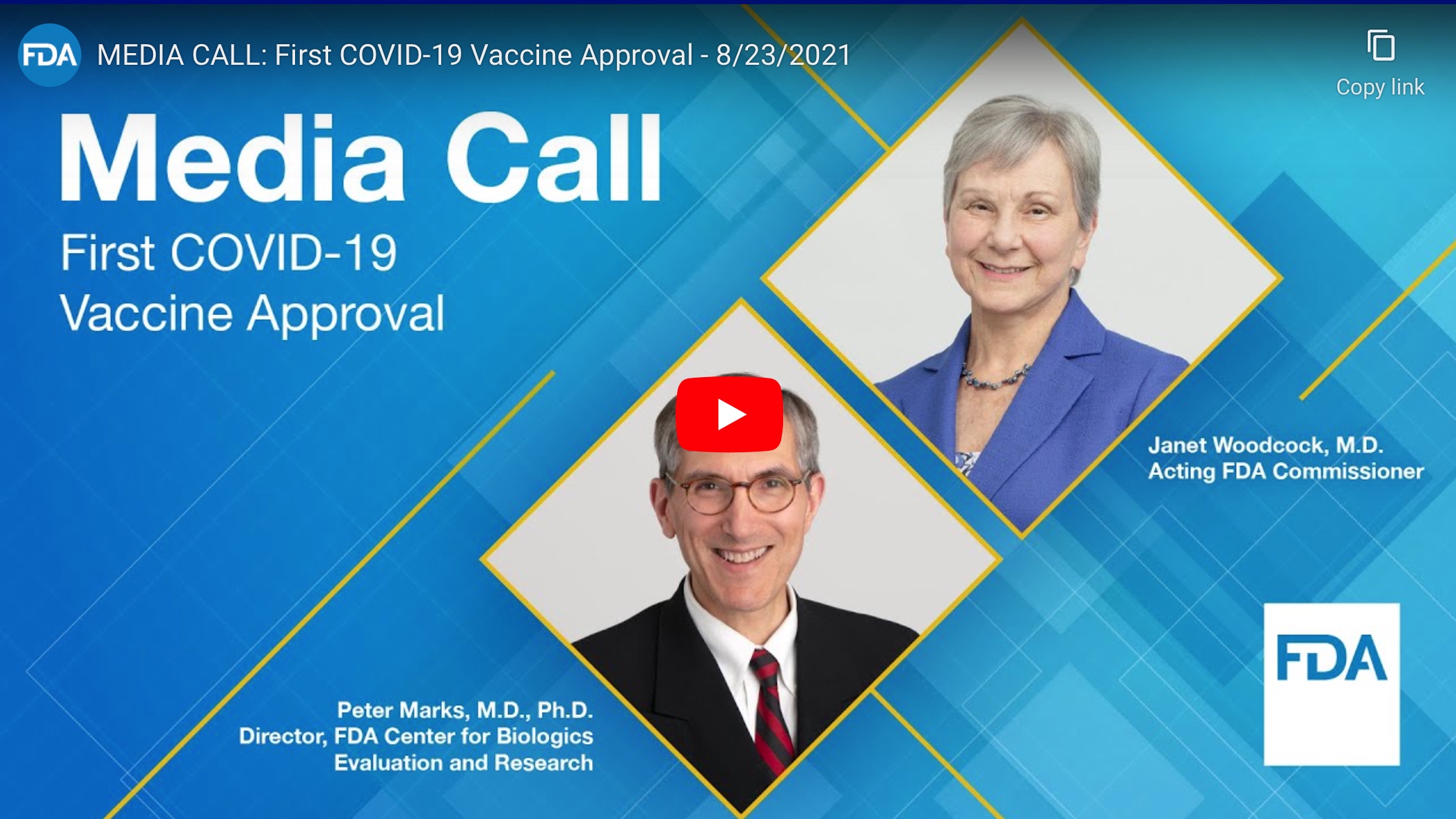
Watch Acting FDA Commissioner Dr. Janet Woodcock and FDA Center for Biologics Evaluation and Research Director Dr. Peter Marks participate in a media call to discuss FDA’s approval of the first COVID-19 vaccine.
Since Dec. 11, 2020, the Pfizer-BioNTech COVID-19 Vaccine has been available under EUA in individuals 16 years of age and older, and the authorization was expanded to include those 12 through 15 years of age on May 10, 2021. EUAs can be used by the FDA during public health emergencies to provide access to medical products that may be effective in preventing, diagnosing, or treating a disease, provided that the FDA determines that the known and potential benefits of a product, when used to prevent, diagnose, or treat the disease, outweigh the known and potential risks of the product.
FDA-approved vaccines undergo the agency’s standard process for reviewing the quality, safety and effectiveness of medical products. For all vaccines, the FDA evaluates data and information included in the manufacturer’s submission of a biologics license application (BLA). A BLA is a comprehensive document that is submitted to the agency providing very specific requirements. For Comirnaty, the BLA builds on the extensive data and information previously submitted that supported the EUA, such as preclinical and clinical data and information, as well as details of the manufacturing process, vaccine testing results to ensure vaccine quality, and inspections of the sites where the vaccine is made. The agency conducts its own analyses of the information in the BLA to make sure the vaccine is safe and effective and meets the FDA’s standards for approval.
Comirnaty contains messenger RNA (mRNA), a kind of genetic material. The mRNA is used by the body to make a mimic of one of the proteins in the virus that causes COVID-19. The result of a person receiving this vaccine is that their immune system will ultimately react defensively to the virus that causes COVID-19. The mRNA in Comirnaty is only present in the body for a short time and is not incorporated into – nor does it alter – an individual’s genetic material. Comirnaty has the same formulation as the EUA vaccine and is administered as a series of two doses, three weeks apart.
“Our scientific and medical experts conducted an incredibly thorough and thoughtful evaluation of this vaccine. We evaluated scientific data and information included in hundreds of thousands of pages, conducted our own analyses of Comirnaty’s safety and effectiveness, and performed a detailed assessment of the manufacturing processes, including inspections of the manufacturing facilities,” said Peter Marks, M.D., Ph.D., director of FDA’s Center for Biologics Evaluation and Research. “We have not lost sight that the COVID-19 public health crisis continues in the U.S. and that the public is counting on safe and effective vaccines. The public and medical community can be confident that although we approved this vaccine expeditiously, it was fully in keeping with our existing high standards for vaccines in the U.S.”
FDA Evaluation of Safety and Effectiveness Data for Approval for 16 Years of Age and Older
The first EUA, issued Dec. 11, for the Pfizer-BioNTech COVID-19 Vaccine for individuals 16 years of age and older was based on safety and effectiveness datafrom a randomized, controlled, blinded ongoing clinical trial of thousands of individuals.
To support the FDA’s approval decision today, the FDA reviewed updated data from the clinical trial which supported the EUA and included a longer duration of follow-up in a larger clinical trial population.
Additionally, the FDA conducted a rigorous evaluation of the post-authorization safety surveillance data pertaining to myocarditis and pericarditis following administration of the Pfizer-BioNTech COVID-19 Vaccine and has determined that the data demonstrate increased risks, particularly within the seven days following the second dose. The observed risk is higher among males under 40 years of age compared to females and older males. The observed risk is highest in males 12 through 17 years of age. Available data from short-term follow-up suggest that most individuals have had resolution of symptoms. However, some individuals required intensive care support. Information is not yet available about potential long-term health outcomes. The Comirnaty Prescribing Information includes a warning about these risks.
Ongoing Safety Monitoring
Specifically, in the FDA’s review for approval, the agency analyzed effectiveness data from approximately 20,000 vaccine and 20,000 placebo recipients ages 16 and older who did not have evidence of the COVID-19 virus infection within a week of receiving the second dose. The safety of Comirnaty was evaluated in approximately 22,000 people who received the vaccine and 22,000 people who received a placebo 16 years of age and older.
Based on results from the clinical trial, the vaccine was 91% effective in preventing COVID-19 disease.
More than half of the clinical trial participants were followed for safety outcomes for at least four months after the second dose. Overall, approximately 12,000 recipients have been followed for at least 6 months.
The most commonly reported side effects by those clinical trial participants who received Comirnaty were pain, redness and swelling at the injection site, fatigue, headache, muscle or joint pain, chills, and fever. The vaccine is effective in preventing COVID-19 and potentially serious outcomes including hospitalization and death.
The FDA and Centers for Disease Control and Prevention have monitoring systems in place to ensure that any safety concerns continue to be identified and evaluated in a timely manner. In addition, the FDA is requiring the company to conduct postmarketing studies to further assess the risks of myocarditis and pericarditis following vaccination with Comirnaty. These studies will include an evaluation of long-term outcomes among individuals who develop myocarditis following vaccination with Comirnaty. In addition, although not FDA requirements, the company has committed to additional post-marketing safety studies, including conducting a pregnancy registry study to evaluate pregnancy and infant outcomes after receipt of Comirnaty during pregnancy.
The FDA granted this application Priority Review. The approval was granted to BioNTech Manufacturing GmbH.
Yesterday, the U.S. Food and Drug Administration amended the emergency use authorizations (EUAs) for both the Pfizer-BioNTech COVID-19 Vaccine and the Moderna COVID-19 Vaccine to allow for the use of an additional dose in certain immunocompromised individuals, specifically, solid organ transplant recipients or those who are diagnosed with conditions that are considered to have an equivalent level of immunocompromise. The Centers for Disease Control and Prevention’s Advisory Committee on Immunization Practices is scheduled to meet Friday to discuss further clinical recommendations regarding immunocompromised individuals. Today’s action does not apply to people who are not immunocompromised.
Read more from the announcement…
“The country has entered yet another wave of the COVID-19 pandemic, and the FDA is especially cognizant that immunocompromised people are particularly at risk for severe disease. After a thorough review of the available data, the FDA determined that this small, vulnerable group may benefit from a third dose of the Pfizer-BioNTech or Moderna Vaccines,” said Acting FDA Commissioner Janet Woodcock, M.D. “Today’s action allows doctors to boost immunity in certain immunocompromised individuals who need extra protection from COVID-19. As we’ve previously stated, other individuals who are fully vaccinated are adequately protected and do not need an additional dose of COVID-19 vaccine at this time. The FDA is actively engaged in a science-based, rigorous process with our federal partners to consider whether an additional dose may be needed in the future.”
People who are immunocompromised in a manner similar to those who have undergone solid organ transplantation have a reduced ability to fight infections and other diseases, and they are especially vulnerable to infections, including COVID-19. The FDA evaluated information on the use of a third dose of the Pfizer-BioNTech or Moderna Vaccines in these individuals and determined that the administration of third vaccine doses may increase protection in this population. These patients should be counseled to maintain physical precautions to help prevent COVID-19. In addition, close contacts of immunocompromised persons should get vaccinated, as appropriate for their health status, to provide increased protection to their loved ones.
It is recommended that immunocompromised individuals discuss monoclonal antibody treatment options with their health care provider should they contract or be exposed to COVID-19. The FDA has authorized monoclonal antibody treatments for emergency use during this public health emergency for adults and pediatric patients (ages 12 and older weighing at least 40 kilograms or about 88 pounds) with positive results of direct SARS-CoV-2 viral testing, and who are at high risk for progressing to severe COVID-19 and/or hospitalization. One authorized product includes use for preventative (prophylaxis) treatment after being exposed to SARS-CoV-2; however, this product is not a substitute for vaccination.
The Pfizer-BioNTech COVID-19 Vaccine is currently authorized for emergency use in individuals ages 12 and older, and the Moderna COVID-19 Vaccine is authorized for emergency use in individuals ages 18 and older. Both vaccines are administered as a series of two shots: the Pfizer-BioNTech COVID-19 Vaccine is administered three weeks apart, and the Moderna COVID-19 Vaccine is administered one month apart. The authorizations for these vaccines have been amended to allow for an additional, or third, dose to be administered at least 28 days following the two-dose regimen of the same vaccine to individuals 18 years of age or older (ages 12 or older for Pfizer-BioNTech) who have undergone solid organ transplantation, or who are diagnosed with conditions that are considered to have an equivalent level of immunocompromise.
The EUA amendments for the Pfizer-BioNTech COVID-19 Vaccine and the Moderna COVID-19 Vaccine were issued to Pfizer Inc. and ModernaTX Inc., respectively.