Tag: ultrasound

  • HEALTH CARE POLITICS & GOV Proposed Ohio abortion bills would impose new mandates, spread misinformation

    HEALTH CARE POLITICS & GOV Proposed Ohio abortion bills would impose new mandates, spread misinformation

    BY: and Ohio Capital Journal

    Returning from summer break, the Ohio legislature could review two GOP-led pieces of legislation that would place health mandates on patients considering abortions.

    One of the bills, recently introduced by state Rep. Jennifer Gross, would require physicians to dictate the results of a mandated ultrasound and also provide information about a link between breast cancer that has been disproven by multiple medical organizations.

    State Rep. Jennifer Gross, R-West Chester 

    Gross, usually known for and outspoken in her disapproval of health care mandates, introduced the bill this week.

    Patients already have to meet with a physician 24 hours before an abortion, but under this bill, along with hearing about the medical risks of the procedure and the probably gestational age, a patient would be told “the possible increased risk of breast cancer that is associated with women who have undergone an abortion,” along with the “short-term and long-term risk of psychological or emotional harm” from choosing to have an abortion.

    Multiple organizations, including the American Cancer Society, the American College of Gynecologists and the Susan G. Komen Breast Cancer Foundation have denied the link, citing research studies on the relationship between breast cancer and abortion.

    The American Cancer Society said these research studies “have not found a cause-and-effect relationship between abortion and breast cancer.”

    The Gross bill has not been assigned to a committee for consideration, but it has several sponsors, all Republican.

    Meanwhile, a separate bill seeking to notify abortion patients of possible risks was introduced during the legislature’s summer break, and has been assigned to the House Health Committee.

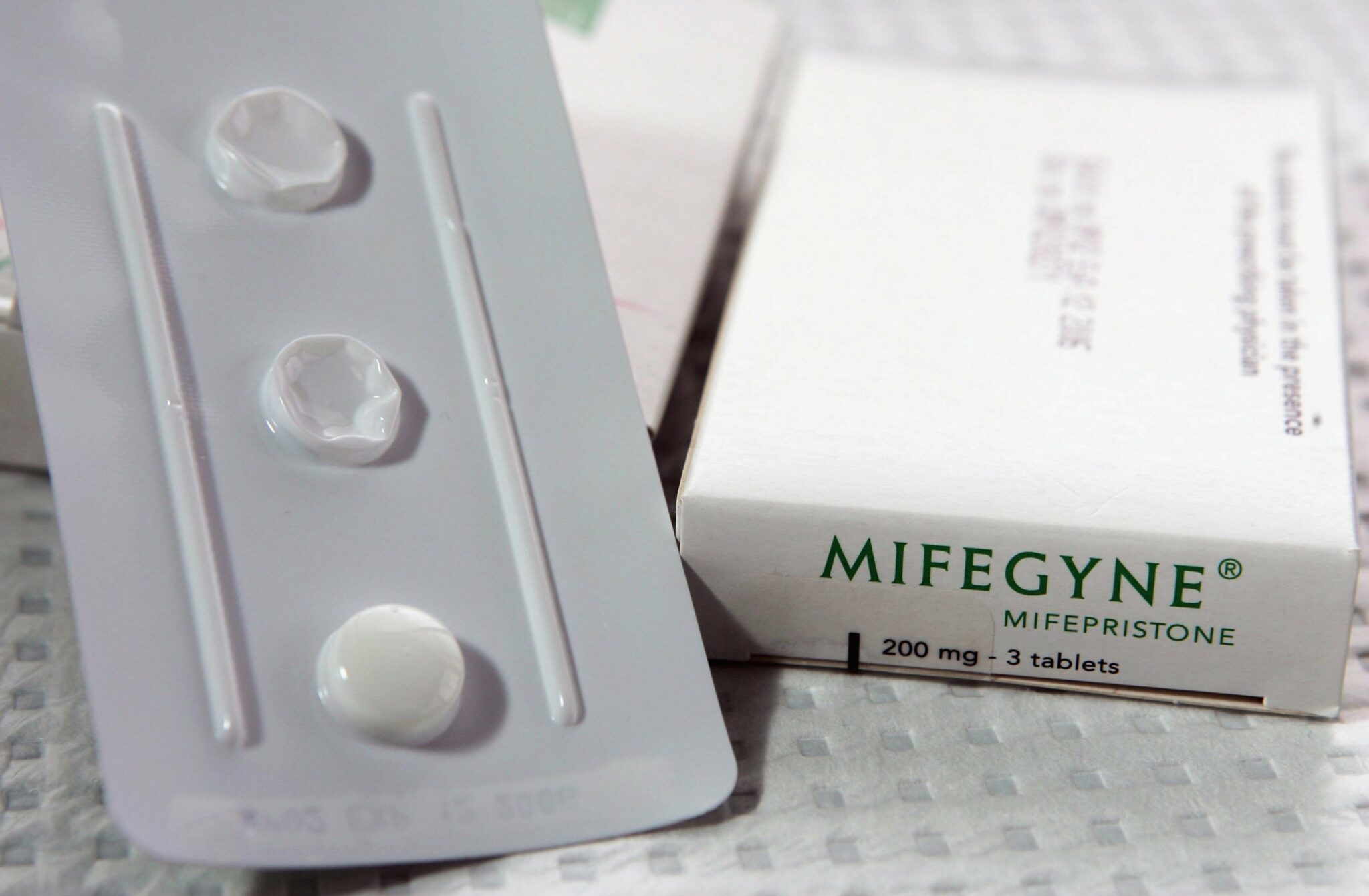
    House Bill 378  was introduced in July by state Reps. Kyle Koehler, R-Springfield, and Sarah Fowler Arthur, R-Ashtabula, and specifically targets medication abortion, which is done through a two-pill regimen, rather than surgery.

    The bill would require medical professionals to explain a controversial and medically unproven method of “reversing” the abortion by not taking the second of the two-pill regimen and giving additional progesterone to counteract the first pill.

    The American College of Obstetricians and Gynecologists said claims about the “reversal” method “are not based in science and do not meet clinical standards.”

    The bill is a reintroduction of a similar one that passed the Senate in 2019, but didn’t make it through the House.

    Abortion is legal in the state of Ohio up to 20 weeks gestation.


    Susan Tebben is an award-winning journalist with a decade of experience covering Ohio news, including courts and crime, Appalachian social issues, government, education, diversity and culture. She has worked for The Newark Advocate, The Glasgow Daily Times, The Athens Messenger, and WOUB Public Media. She has also had work featured on National Public Radio.


  • Chiropractors: More Than a “Back Doctor”

    Chiropractors: More Than a “Back Doctor”

    “In our office, we offer several modalities that go right to the heart of inflammation, no matter what joints or muscles in the body are affected.”

    By Dr. Doug Portmann DC, CCSP, CSCS

    When asked the other day what I do for a living, I proudly responded I was a Chiropractor. He said, “Oh, you are a back Doctor”. As I reflected on my week of patients, many of which came in with shoulder, jaw, knee, hip and foot pain, I told him that I really am a musculoskeletal Doctor. Yes, I see plenty of patients with back, neck, headaches and nerve pain in my office. However, as a profession we are really more than that. The thing I love about coming to work each day is being able to help all types of injuries throughout the body. I see a lot of athletes in the office and which allows us to see our share of extremities to treat. 

    This individual went onto to ask “How does a Chiropractor help knee, shoulder and other types of pain?”. In our office, we offer several modalities that go right to the heart of inflammation, no matter what joints or muscles in the body are affected. We use things like cold laser to turn on the cells energy which allows it to heal it at a faster pace. We also have electrical muscle stimulation, ultrasound, and cupping to break up areas of inflammation.

    Recently we began using a technique called dry needling which takes acupuncture needles right into the trigger points of injured muscles and relieves the inflamed tissue.

    More recently we began using a technique called dry needling which takes acupuncture needles right into the trigger points of injured muscles and relieves the inflamed tissue. Additionally, we provide deep tissue and fascia massage, by the use of our hands or a trigger point instrument to get into areas that need inflammation and scar tissue removed. Of course, Chiropractor’s still do the traditional alignment of the spine. However, when there is a need for a fixated or “stuck” joint in an extremity, which may cause the muscles and tendons to be impaired, we also can adjust those areas. 

    We have the ability to diagnose and treat many different types of injuries in the body.

    You now can see why I believe Chiropractors are a lot more than back Doctors. We have the ability to diagnose and treat many different types of injuries in the body, both inside and outside of the spinal column. We do this not by the use of drugs but by the use of safe and effective modalities that can heal and aid in breaking up inflamed muscles, tendons and ligaments. When you see a Chiropractor, you will probably be given some home exercises. These exercises will aid in the healing process, expedite your treatment and help reduce the risk of reinjury.

    Remember, the next time you have pain in an area that may be outside the spinal region, your local Chiropractor might be able to get you back on your game in no time.

    If you have any questions or you would like additional information please do not hesitate to call our office at 513-677-6787.

    Dr. Douglas. R. Portmann DC,CCSP,CSCS Wards Corner Chiropractic and Sports Rehab 550 Wards Corner Rd. Ste. 101 Loveland Ohio 45140

  • Facts about Ohio’s abortion rate

    Facts about Ohio’s abortion rate

    The Ohio Department of Health’s 2017 Annual Abortion Report presents information derived from both the “Confidential Abortion Reports” and “Post-Abortion Care Reports for Complications” in Ohio. 

    Readers should note that abortion statistics in this report are limited to terminations occurring in Ohio; they do not include Ohio residents who obtained abortions outside the state. 

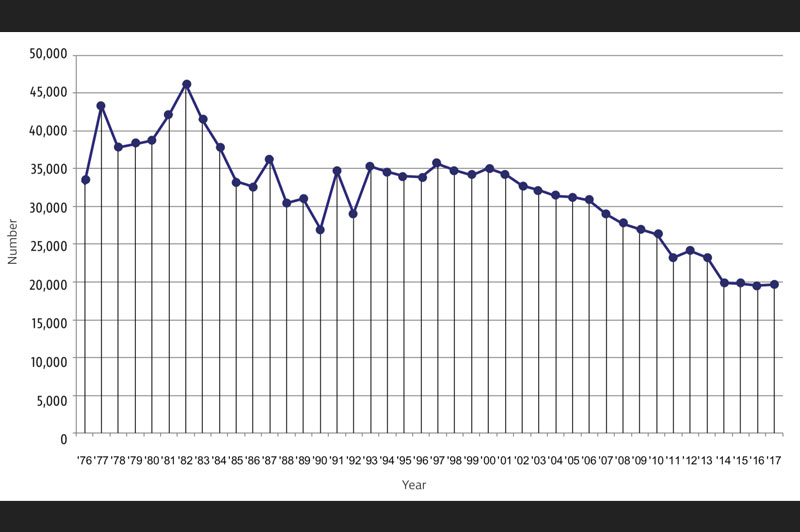
    Induced abortion statistics have been prepared in Ohio since 1976. Several trend comparisons in the 2017 Annual Abortion Report date back to 2003. A total of 20,893 induced pregnancy terminations were reported in Ohio for 2017, including 19,615 obtained by Ohio resident women (93.9%). This represents a 1% increase in induced pregnancy terminations from 2016 to 2017. Overall, since 2001 there has been a steady decline in terminations. When examined from 2001 to 2017, the annual decline averaged approximately 830 per year 

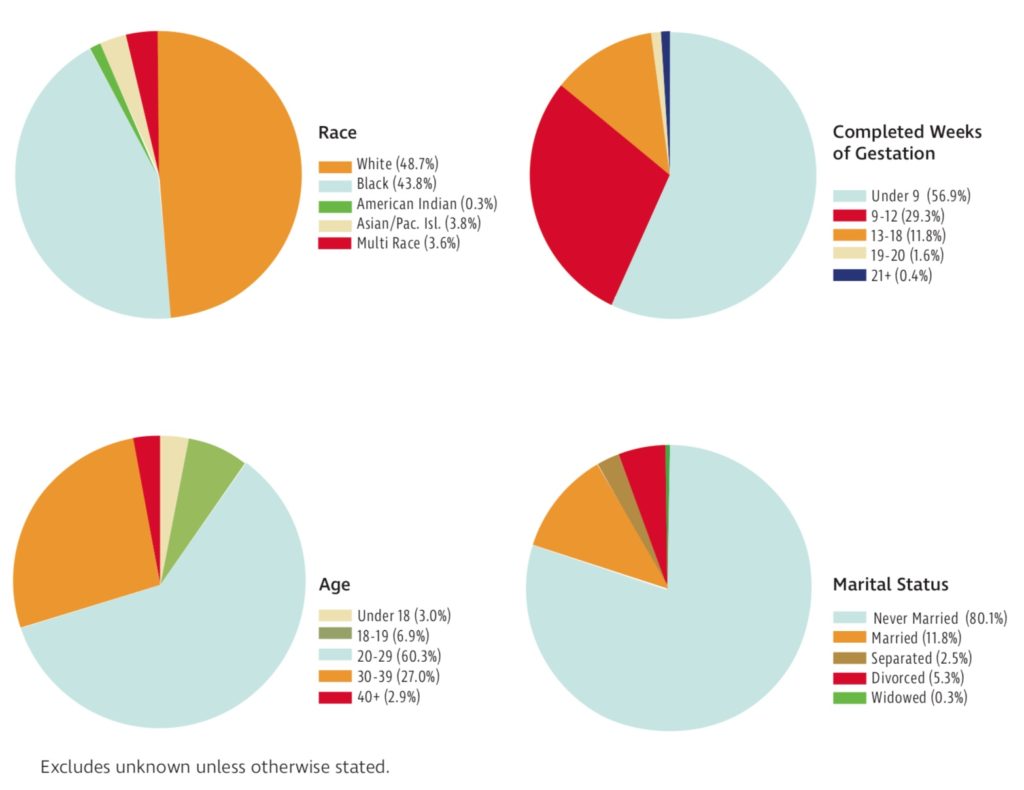
    Approximately one in ten women who obtained abortions in 2017 were under 20 years of age, with another one-third between the ages of 20-24 years of age. 

    While the age distribution of women obtaining abortions has remained relatively unchanged since 2001, the age-specific abortion rates for women under age 25 have steadily decreased. Approximately 85% of women with known marital status who obtained abortions were never married, divorced, or widowed. Fifteen percent of women who obtained abortions and whose marital status was known were married or separated. 

    Forty-nine percent of resident women who obtained abortions and for whom race was reported were White; 44% were African American; 4% were Asian/ Pacific Islander; and 4% reported more than one race (Figure 2). Five percent of women with known ethnicity who obtained abortions were of Hispanic origin. 

    The 2017 Ohio abortion rate was 8.9 per 1,000 resident women ages 15-44 years old; unchanged from the rate in 2016. The 2017 Ohio resident abortion ratio was 144 abortions per 1,000 live births; slightly increased from the ratio in 2016. 

    More than half of all induced abortions involved pregnancies of less than nine weeks (56%), with approximately 29% involving pregnancies of nine to 12 weeks. The proportion involving abortions of less than nine weeks increased from 49% in 1997, while the proportion between nine and 12 weeks declined from 35% to 29%. There were 454 abortions in 2017 involving pregnancies of 19 or more completed weeks of gestation. That represents a decrease from the 508 reported in 2016. The abortion reporting form requests method used to determine gestational age: ultrasound was used in 92% of cases. The vast majority of reported abortions were obtained in six major metropolitan areas of Ohio. 

    Curettage was the most used method of termination in 2017 (58%). That method has decreased since 2001, when 87% of terminations were by curettage. Mifepristone was reported as the medication for non-surgical termination for 5,279 abortions, followed by 489 terminations using misoprostol, and 40 terminations using methotrexate.

    View the full report and many more details HERE.

    Also READ this discussion of abortion laws under the U.S. Constitution and any restrictions by individual states in Wikipedia.

    Abortion in Ohio: What are the CURRENT LAWS?

    Ohio Abortion Law