

Tag: UnitedHealth

  • Pharmacies file antitrust suit against massive drug middleman

    Pharmacies file antitrust suit against massive drug middleman

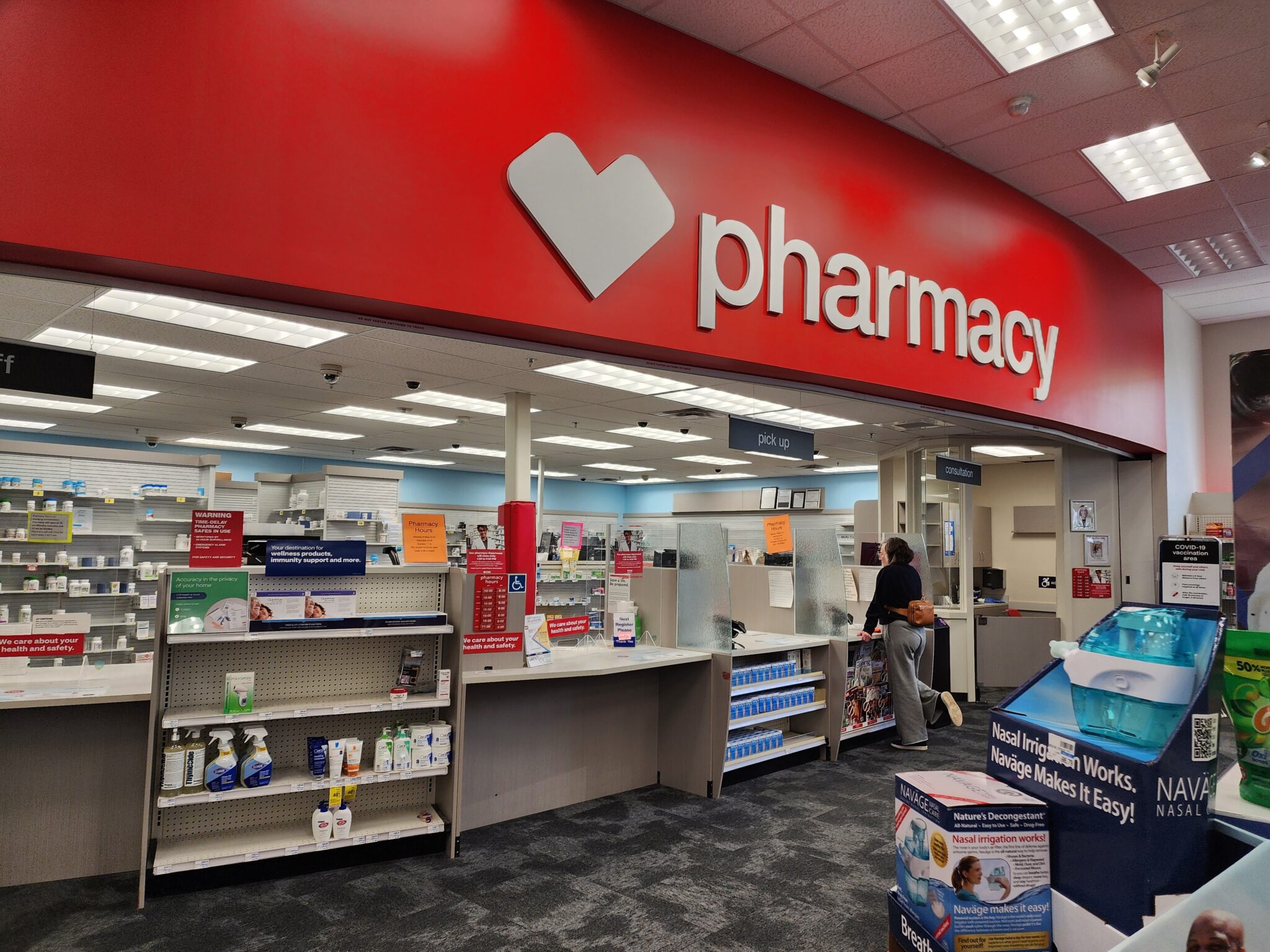
    A CVS store. Photo by Lynne Terry, Oregon Capital Chronicle, States Newsroom.

    BY:  Ohio Capital Journal

    A class-action suit has been filed in federal court on behalf of community pharmacies claiming that health giant CVS has used its dominance as a drug middleman to force pharmacies to pay large, after-the-fact fees in Medicare transactions.

    The suit was filed last week in Seattle on behalf of Osterhaus Pharmacy, which until last year did business in Maquoketa, a small town in eastern Iowa. The lawyers representing the pharmacy say they also represent other, “similarly situated” pharmacies.

    It’s the latest antitrust action against CVS and two other dominant middlemen — Express Scripts and OptumRx — which are known as pharmacy benefit managers. The Federal Trade Commission last year opened an investigation into all three companies, and Ohio Attorney General Dave Yost in March sued Express Scripts, alleging violations of the state’s antitrust law.

    Pharmacy benefit managers, or PBMs, occupy a pivotal position in the drug-supply chain.

    Each of the big three is part of a corporation that also owns a major health insurer. CVS owns Aetna, UnitedHealth owns OptumRx and Express Scripts and Cigna are part of the same corporation.

    The PBMs represent those and other insurers when it comes to filling prescriptions for people covered by the insurers. Among their functions, they create lists of drugs that are covered by the plans, create networks of pharmacies and they determine how much to reimburse those businesses for the medicines they dispense.

    The suit filed in Seattle argues that under the Medicare Part D program — which covers prescriptions for the elderly — CVS is forcing pharmacies to join its networks and agree to a system of arbitrary clawbacks long after CVS Caremark initially reconciles claims.

    The company is able to do so because it and the other two large PBMs are estimated to control 80% of that marketplace, the suit says. In other words, pharmacies have to sign contracts on CVS’s terms or give up the business of millions of insured patients.

    And in addition to its heft as a PBM, CVS is “vertically integrated.” It owns the largest retail pharmacy chain, a large mail-order pharmacy operation and a top-10 insurer. The lawsuit filed last week said CVS is able to control too many sides of prescription transactions.

    “This vertical consolidation has served CVS Caremark well,” it said. “It now controls not just the pricing of drugs, not just the selection of the drugs covered by Part D Plans, and not just the selection of pharmacies in each Part D network; CVS Caremark also controls access to at least a third of the Medicare beneficiaries enrolled in PBM-affiliated Plans. Pharmacies must accept the increasingly anti-competitive pricing and contract terms set forth by CVS Caremark or face exclusion from its Part D network.”

    For its part, CVS said the claims are false.

    “We believe the allegations are without merit and intend to defend ourselves vigorously,” spokesman Phillip Blando said in an email Monday.

    The suit alleges that some CVS fees in the Medicare Part D program violate the Sherman Antitrust Act of 1890 — which is aimed at keeping companies from using market dominance to suppress competition.

    That body of law has strong ties to Ohio. The Sherman Act was sponsored by an Ohio senator, John Sherman, and signed by an Ohio (and Indiana) president, Benjamin Harrison.

    The Buckeye State also has long had its own antitrust law, which the suit filed in Seattle last week referenced as it quoted from Yost’s suit against Express Scripts.

    “PBMs are modern gangsters… ” the Ohio suit says. “They were designed to protect and negotiate on behalf of employers and consumers after Big Pharma was criticized for overpricing medications, but instead they have absolutely destroyed transparency, scheming in the shadows to control drug prices on all sides of the market.”

    The latest suit specifically targets direct-and-indirect remuneration, or DIR, fees charged by CVS in its Part D program.

    Those are performance-based fees pharmacies have to pay if they want to be in the CVS network. The suit says CVS’s use of them has grown dramatically and increasingly rapidly over the past 13 years.

    “From 2010 to 2020, pharmacy DIR fees increased by more than 100,000%—that is, they grew more than 1,000 times larger,” the suit said. “In 2021, DIR fees increased an additional 33% from 2020 levels to $12.6 billion.”

    The suit says that all network pharmacies must pay minimum DIR fees, but they can be forced to pay much more because of factors pharmacies can’t control.

    “For example, CVS Caremark penalizes an Independent Pharmacy on adherence if a patient discontinues fulfilling her prescriptions at the pharmacy, regardless of circumstances,” the suit says. “The cause may be that the patient spends winters in a different part of the country and fills her prescriptions there, or the patient was told by the physician to discontinue using a drug, or the patient died, or the manufacturer has discontinued manufacturing the drug. CVS Caremark could assess performance so that Independent Pharmacies are not penalized for these events, none of which is within pharmacy control or actually measures pharmacy performance, but it has chosen not to do so.”

    Marty Schladen
    MARTY SCHLADEN

    Marty Schladen has been a reporter for decades, working in Indiana, Texas and other places before returning to his native Ohio to work at The Columbus Dispatch in 2017. He’s won state and national journalism awards for investigations into utility regulation, public corruption, the environment, prescription drug spending and other matters.

    MORE FROM AUTHOR

  • Ohio’s Medicaid director owns the stock of some major contractors, but won’t say how much

    Ohio’s Medicaid director owns the stock of some major contractors, but won’t say how much

    A group representing small pharmacists says large chains, especially CVS, are moving patients’ prescriptions to their own stores without consent. CVS adamantly denies that. Photo by Marty Schladen, Ohio Capital Journal.

    It’s unclear if she disclosed potential conflict during massive procurement

    BY: MARTY SCHLADEN and Ohio Capital Journal

    Since she became director of the Ohio Department of Medicaid in January 2019, Maureen Corcoran has owned stock in some of the department’s biggest contractors. Given the size of those contracts, they could have increased the value of the stock Corcoran owned.

     Ohio Medicaid Director Maureen Corcoran. Official photo.

    But while she complied with one set of state disclosure requirements, Corcoran won’t say just how much stock she owns in such companies as CVS Health, UnitedHealth Group and Express Scripts — each of which has done billions of dollars worth of business with the Medicaid department since Corcoran started running it. 

    In addition, Corcoran won’t say if she filed legally required affidavits disclosing that she had an ownership stake in corporations the department hired earlier this year as part of its $20 billion managed-care re-procurement or the company the state hired to run its $1 billion OhioRISE program. Should they be found, violations of the law could carry criminal penalties and invalidate contracts signed without proper disclosures.

    Big money

    When Corcoran took the reins of the Medicaid department, she held a stake in some companies that were getting a lot of scrutiny over their business with the state. Two were CVS Caremark and OptumRX, pharmacy middlemen that together were handling more than $2 billion a year in prescription-drug transactions for the department.

    Ohio’s independent pharmacists and others accused the companies of several questionable practices — including charging a lot more for drugs than they were paying pharmacists. A state-commissioned analysis showed that in 2017, CVS and Optum charged almost a quarter-billion dollars more for drugs than they reimbursed the pharmacies that had bought and dispensed them.

    The findings were still big news — and the companies were suing the Medicaid department — when Corcoran took control just after Gov. Mike DeWine took office at the start of 2019. Even so, Corcoran held onto stocks in CVS Caremark owner CVS Health and in OptumRX owner UnitedHealth.

    According to disclosures filed with the Ohio Ethics Commission, Corcoran owned at least $1,000 worth of those companies’ stock. 

    Given that they were among 180 stocks and mutual funds she disclosed owning as of Jan. 31, 2019, it’s possible that Corcoran wasn’t even aware that she held stakes in companies that did such high-profile business with her agency. Whatever the case, Corcoran held onto shares in the companies through 2019 and 2020, her ethics filings show.

    Under Ohio’s aging ethics laws, agency bigwigs like Corcoran are allowed to own stock in companies with which their departments do business so long as their holdings don’t exceed 5% of the company’s outstanding stock. In the case of Medicaid’s big contractors, that would mean the director would have to be one of the wealthiest people in Ohio to violate the provision.

    CVS and UnitedHealth are the fourth and fifth-largest corporations in the country by revenue. In order to violate the ethics provision, Corcoran would have to have owned a combined $18 billion worth of the companies’ stock in 2019. 

    Potential for conflict

    That’s a clear sign that the state’s ethics laws need to be updated, said Catherine Turcer, executive director of Common Cause Ohio, a watchdog group.

    “Five percent of a company’s stock in the 70s, 80s or even the 90s wasn’t anywhere near what it is now,” Turcer said.

    In addition, knowing just how much Corcoran’s investments with Medicaid contractors were worth would go a long way toward showing how big a conflict of interest she has. If it’s just over $1,000, the conflict might seem nominal, but if it’s much more, it would be a lot more serious, Turcer said.

    “There are two things Maureen Corcoran could do,” Turcer said. “One would be to publicly identify how much over the $1,000 she owns and allow the public to weigh in. The other thing she could do so the public didn’t worry about the conflict of interest is actually divest herself of these stocks.”

    Last Friday, the Medicaid department was asked the value of Corcoran’s investments in CVS, UnitedHealth and Express Scripts, a third pharmacy middleman with which the department has done business.

    A spokeswoman for the department said it would respond to those and other questions, but as of Tuesday afternoon, it hadn’t. The spokeswoman also didn’t answer questions about when responses would be forthcoming.

    Bigger problem?

    Potentially more ominous for Corcoran and her department is another question they haven’t responded to: Whether Corcoran filed affidavits disclosing her interest in companies with whom the department recently entered into huge contracts.

    This year, the Medicaid department implemented a big redesign of its managed care program. 

    To gain more insight into drug transactions, the department will work next year with a single drug middleman contracted directly with the department — instead of being hired by managed-care providers as they have in the past.

    But while UnitedHealthcare’s OptumRx might be losing that business, the Medicaid department is hiring UnitedHealthcare Community Plan of Ohio to be one of six companies administering the state’s $20 billion-a-year managed-care program.

    The re-procurement has raised other questions. Also hired was a plan owned by managed-care giant Centene, which agreed earlier this year to pay out more than $1 billion to Ohio and 21 other states after being accused by Attorney General Dave Yost of fleecing taxpayers. Corcoran has struggled to explain why her department would keep doing business with the company.

    The state also is creating OhioRISE, an ambitious program intended to help 60,000 Ohio children with the most complex behavioral health and other needs. Aetna Better Health of Ohio was selected in April to administer the $1 billion program.

    The company is a subsidiary of insurer Aetna. CVS — in which Corcoran has been invested — bought the Aetna for $70 billion in 2019.

    It’s unclear whether Corcoran continues to own stock in UnitedHealth or CVS, or whether she disclosed any ownership when contracts were let this year. 

    But the state law governing such disclosures spells out potential criminal penalties for violations and it says any contract so made “is void and unenforceable.”