Tag: University of Toledo

  • More Ohio universities added to Senate bill that would create ‘intellectual diversity’ centers

    More Ohio universities added to Senate bill that would create ‘intellectual diversity’ centers

    Miami University, Cleveland State University, and the University of Cincinnati were added to Senate Bill 117, which was voted out of the Senate

    BY:  Ohio Capital Journal

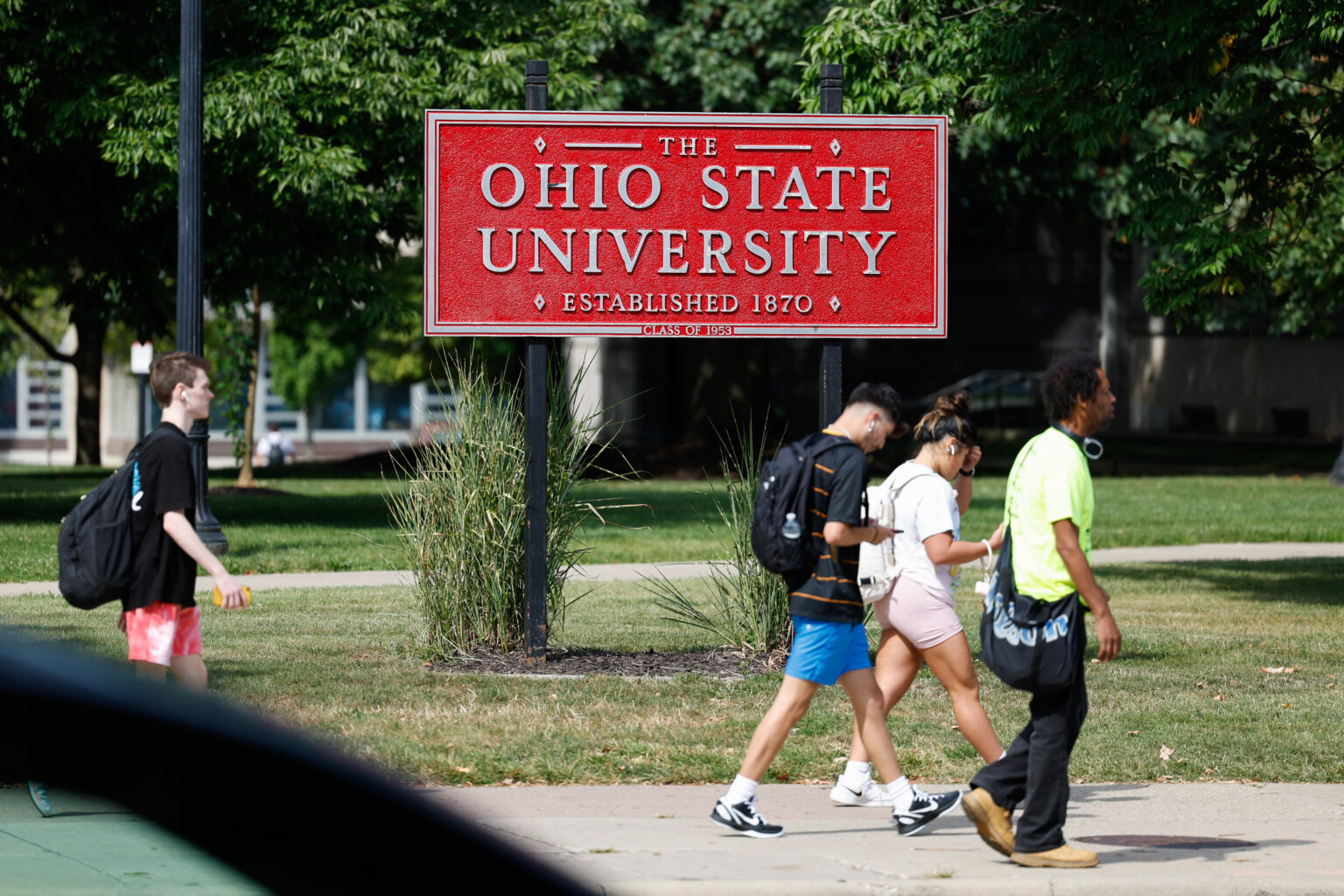
    The Ohio Senate passed a bill Wednesday that would create “intellectual diversity” centers at Ohio State University, the University of Toledo, Miami University, Cleveland State University, and the University of Cincinnati.

    The party line vote came after an amendment was added during the Senate session that tacks on Miami, Cleveland State, and Cincinnati to Senate Bill 117. The bill now moves to the House for committee consideration.

    SB 117 would create the Salmon P. Chase Center for Civics, Culture, and Society at Ohio State University’s College of Public Affairs and the Institute of American Constitutional Thought and Leadership at the University of Toledo’s College of Law. It would also now create centers for civics, culture and society at Miami, Cleveland State and Cincinnati.

    “The (Ohio State) center will educate students by means of free, open and rigorous intellectual inquiry, to seek truth, equip students with the skills they need to reach their own informed conclusions in matters of social and political importance,” said Sen. Jerry Cirino, R-Kirtland, one of the bill’s sponsors.

    SB 117 amendment

    Many Senate Democrats slammed SB 117 and the amendment during Wednesday’s session.

    “SB 117 is forcing the installation of conservative think-tanks at our public universities across the state of Ohio and they are using taxpayer money to do it,” said state Sen. Bill DeMora, D-Columbus.

    “The amendment is atrocious,” said Sen. Catherine Ingram, D-Cincinnati.

    Miami and Cleveland State were not aware of the potential amendment adding them to the bill before Wednesday afternoon’s Senate Session.

    “They had absolutely no idea,” Senate Minority Leader Nickie Antonio, D-Lakewood, told reporters when she reached out to her alma mater Cleveland State. “They did not ask for it … and are very concerned about this being imposed on them.”

    State Sen. Kent Smith, D-Euclid, did something similar with his alma maters Miami and Cleveland State, and both institutions of higher education said this was the first time they were hearing about the amendment.

    “Committees are the best forums for thoroughly studying bills,” he said.

    Senate President Matt Huffman said making the amendment on the Senate floor was not ideal.

    “Certainly that’s not the best way to do these things,” he said to reporters. “I don’t like substantive floor amendments. We’re at a lengthy legislative break. Secondly, the House in their negotiations of essentially, at least for the moment, have rejected the concept of this higher education reform that we want to have. And so what we really want to do is tee these things up.”

    The amendments also clarified that both these centers are “independent academic units in their respective universities,” Cirino said.

     COLUMBUS, Ohio — JUNE 15: Senate Majority Floor Leader Rob McColley, R-Napoleon, speaks during the Ohio Senate session, June 15, 2023, at the Statehouse in Columbus, Ohio. (Photo by Graham Stokes for Ohio Capital Journal) 

    He introduced the bill in May along with Sen. Rob McColley, R-Napoleon — arguing that university faculty are predominantly liberal.

    But McColley insisted Wednesday that SB 117 is not a conservative takeover of higher education.

    “There is not a single letter, there is not a single word, there is not a single phrase that requires this to teach conservative principles,” he said. “The University of Toledo Law is supportive of this. The Ohio State University does not oppose this either.”

    But Ohio State already has more than 70 centers, and many students and professors at both universities have spoken out against SB 117.

    State Sen. Andrew Brenner, R-Delaware, said college students do want these centers, but are afraid to speak out.

    “If they speak out, they are afraid it might impact their academic career,” he claimed.

    The bill would give UT $1 million in fiscal year 2024 and $2 million in fiscal year 2025 for the Institute, and Ohio State $5 million in fiscal years 2024 and 2025 for the Center.

    The bill’s amendment would each give Miami, Cleveland, and Cincinnati $2 million each fiscal year to support the centers, Cirino said.

    State budget

    SB 117 is one of the bills that the Senate added to their version of the state budget, which is currently in conference committee.

    McColley clarified that what’s in the proposed budget when it comes to SB 117 doesn’t include the three new universities that were added to the bill through Wednesday’s amendment.

    The Ohio House has pushed back on the higher education bills being added to the budget.

    “We’re maybe not going to get 117 in the budget,” Huffman said. “You don’t know what the deal is until there’s a deal. So we’re just putting 117 forward as a bill.”

    Senate Bill 83, also introduced by Cirino and which would overhaul higher education, was added to the budget by the Senate.

    Among other things, SB 83 would ban university staff and employees from striking, college students would be forced to take certain American history courses, professor tenure would be based around “bias,” and mandatory diversity, equity and inclusion training would be prohibited, with only specific exemptions.

    “The House are not fans of 83,” Huffman said. “I think we’ve offered a pretty good higher education package that they rejected.”

    While the constitutional deadline for Ohio Gov. Mike DeWine to sign the budget is Friday, it seems unclear at this point if that is actually going to happen.

    “I’m optimistic and I think we’ll see what happens on Friday,” Huffmann said.

    Lee Strang

     Professor Lee Strang is the John W. Stoepler Professor of Law & Values at the University of Toledo Law School. (Photo from University of Toledo website.) 

    UT Law Professor Lee Strang first got the idea for the Institute of American Constitutional Thought and Leadership in 2019 after visiting the Georgetown Center for the Constitution and Princeton University’s James Madison Program.

    He has also helped lawmakers get Issue 1 on the ballot in a special Aug. 8 election, which would make it harder for voters to amend the state constitution.

    Lawmakers have insisted Issue 1 is not about abortion, but Ohio Secretary of State Frank LaRose recently said it is “100%” because of efforts to legalize abortion.

    Strang has closely aligned himself with groups trying to stop an abortion rights amendment and has shown support for banning abortion care.

    Follow OCJ Reporter Megan Henry on Twitter.


    Megan Henry
    MEGAN HENRY

    Megan Henry is a reporter for the Ohio Capital Journal and has spent the last five years reporting on various topics including education, healthcare, business and crime at The Columbus Dispatch, part of the USA Today Network.

    MORE FROM AUTHOR

  • Loveland’s John Muenzer’s attempts the Grand Slam and Triple Crown of open water swimming

    Loveland’s John Muenzer’s attempts the Grand Slam and Triple Crown of open water swimming

    by David Miller

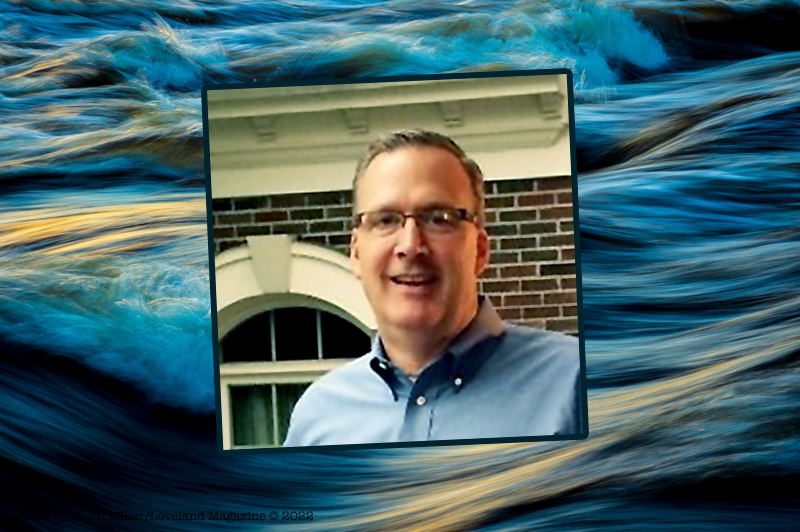
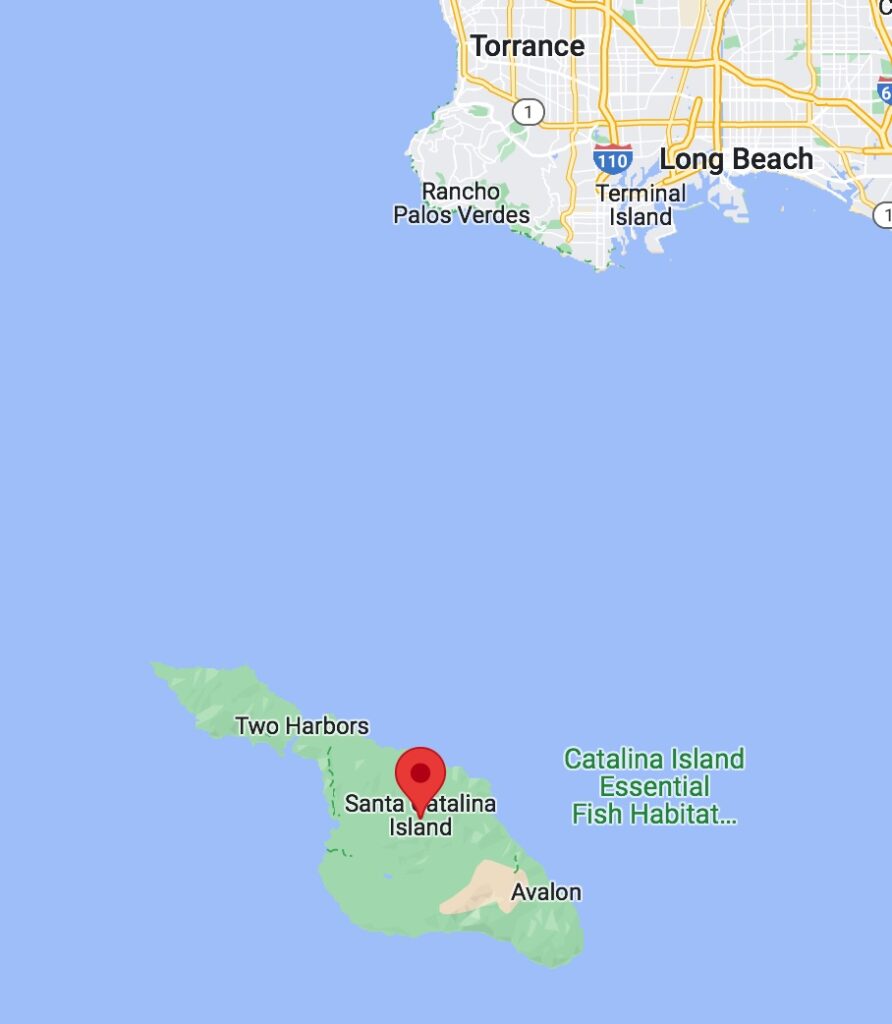
    Loveland, Ohio – John Muenzer will be attempting to swim from Catalina Island to Long Beach California August 2, at 11 PM. If accomplished, this will be the final leg needed for his Grand Slam and Triple Crown of open water swimming.

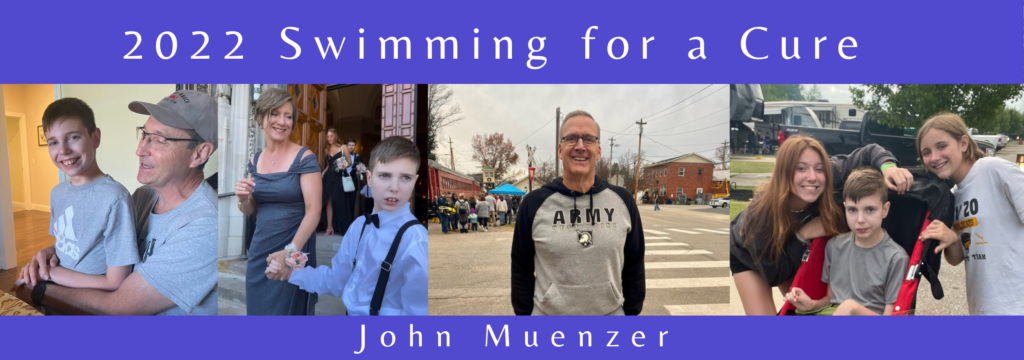
    Muenzer says it will be his last long-distance swim and he decided to add more purpose. In addition to obtaining his personal goal, he’s is raising money for his nephew Graeme who was born with Dravet Syndrome. “This is a devastating form of epilepsy. Children afflicted with this have many seizures from daily to monthly and often times are resistant to medication,” Muenzer said.

    John Muenzer

    Muenzer was born in 1961 and grew up in Maumee, Ohio. He started swimming in high school and went on to have a successful career at the University of Toledo where he set 7 school records and was inducted into the Hall of Fame in 2000.

    Muenzer had hopes of qualifying for the Olympics. However, in 1980, led by the United States, 66 countries boycotted the Olympics entirely, because of the Soviet-Afghan War so Muenzer went to Indiana University and trained under Doc Councilman that summer. Councilman had just become the oldest person to swim the English Channel. He was the Olympic Coach in 1976 and coached Mark Spitz to seven gold medals. Councilman told Muenzer, “You can’t make it deep into the Olympics, you can make the trials, maybe, but, I think you can be a great open-water swimmer.”

    Muenzer said it was the first he’d ever heard of this sport.

    If successful, the 60-year-old will become the oldest person and 27th person in history to accomplish the Grand Slam of Open Water Swimming which includes the English Channel, 20 Bridges, Catalina Channel, and Tampa Bay Marathon Swim.

    Muenzer on August 25, 2018 at Manhattan Swim in the Hudson River

    Fast forward, Muenzer set a World record in 1984, a 36- mile swim taking 24 hours and 20 minutes swimming from Point Pelee, Canada to Ohio. “There was no GPS in those days. Laugh out loud. So it took a long dang time,” says Muenzer.

    Upon setting this record Muenzer got married to Mary and they have seven children. Their last three were adopted, “By the grace of God at birth. So, we have a blended family. My first four are white and my last three are black. It’s been a beautiful experience and I will forever be grateful to God,” said Muenzer

    Muenzer also started a business, so from 1984 until 2007 he swam 4,000 yards 4 or 5 days a week waiting for the chance to do the swims. He did the Tampa Bay 24 mile and English Channel 20.5 mile swims in 2009 at 48 years of age. Then the economy hit his business very hard. “I had to take care of my family and business so back to the pool 4-5 days a week swimming 4,000 yards a day until the Fall of 2015. Then I started training for a “Manhattan” which is 28.5 miles.

    “Then while training in March of 2016 my beautiful son Dan was killed in a motorcycle accident. Obviously, a tragedy I can’t explain except a deep sadness and loss that never goes away. My wife Mary and I made a pact going down on the 5 AM flight to the hospital that we would form a pact to keep our family together and navigate through the terrible loss. We knew Dan would want this,” said Muenzer. He added, “We have a beautiful daughter-in-law and granddaughter, so we were blessed.” Muenzer’s son’s best friend from West Point would eventually go on and marry his daughter-in-law. “Again, so blessed, I think my son Dan was involved with this, with God.”

    “So, I heard Dan tell me, Pops, time to do the Manhattan Swim. I started training and did the swim in August of 2018 at 57 years of age.” He said that The Manhattan Swim Organization was gracious and let him in without having to go back on the waiting list. Then, started delays like Covid so, MuenzerI began swimming 4,000 yards a day again.

    Muenzer said, “So, here I am four years later, just about 61 years old and way past where I saw myself doing these swims.” He began training again last October with world-renowned coach Marcia Cleveland who had been his coach on all of his swims.

    Muenzer leaves on July 29 for Long Beach, California. His swim will start at 11 PM West Coast time on August 2. It’s a night swim so it is dangerous. He will leave at night so he can get a solid push in the first seven hours before the winds pick up. “My crew is coming in for the swim. They have been with me on all my swims. We have aged together,” said Muenzer. His lead is Mike Carson who he believes is the best manager. There will be real-time tracking and videos and pictures. Muenzer has a camera crew doing underwater and drone footage. He said, “I want to give people the opportunity to see what this sport is all about.”

    Muenzer will be the 27th person to do the Grand Slam and the oldest. He will be the 269th to do the Triple Crown and the 6th oldest. To date, 268 have done this challenge, 103 women and 165 men. Only 124 of this 269 have been Americans.

    “I hope the story is interesting. With my 12th and 13th  grandchildren on the way, this has really changed for me over all these years. In the beginning, I was about the records, now, I want to make competitive swimmers aware of this world of open water swimming. Most importantly, I want to be an example to my grandkids that you set goals, work hard, and never give up. It’s funny how my mindset has changed with age,” Muenzer mused before he set out on his adventure.

    Muenzer has had a title sponsor step forward in a big way. He said, “It’s the company MEGA CORP. They have been in the news lately for building a new corporate office and naming rights to the Cincinnati music pavilion. This was so appreciated. These swims cost $10,000 plus to do, so it’s a big deal for me.” Five Seasons Family Sports Club also provided Muenzer with pool facilities for training.

    Muenzer is renowned for his feedings during his marathon swims. His menu for the Catalina Channel includes chocolate, Lays potato chips, peanut butter and jelly squares, three cans of Coca-Cola, tea, and water.


    This will be my last swim and I decided to add more purpose in addition to obtaining my personal goal. I am raising money for my nephew Graeme who was born with Dravet Syndrome. This is a devastating form of epilepsy. Children afflicted with this have many seizures from daily to monthly and often times are resistant to medication. All funds raised will be donated to life saving research as well as necessary medical equipment to help these children with this debilitating disease. Graeme is happy go lucky and would steal your heart in seconds. He has inspired me at some of my toughest moments to push through and stay determined! Please help me to raise funds for the Dravet Foundation.

    Dravet syndrome, also known as Severe Myoclonic Epilepsy of Infancy (SMEI), is a rare form of intractable epilepsy that begins in infancy and proceeds with accumulating morbidity that significantly impacts individuals throughout their lifetime. It has an estimated incidence rate of 1:15,700. To better understand this condition, and the work DSF does, check out their website www.dravetfoundation.org

    Thank you,

    John Muenzer

    DONATE NOW

  • Reopening begins for Ohio’s colleges: Here’s how it looks

    Reopening begins for Ohio’s colleges: Here’s how it looks

    Susan Tebben

    By Susan Tebben – The Ohio Capital Journal

    Some of Ohio’s colleges and universities have begun moving students in, but the navigation of a school year amid a pandemic is still a balancing act.

    For Miami University, classes began this week, with all undergraduate courses online or remote. The plan is to keep it that way until at least Sept. 21, according to the plan posted to the school’s website. 

    “When we began planning last spring, we had hoped that the COVID-19 pandemic would be in significant decline before classes were scheduled to begin,” Miami president Greg Crawford told students. “Instead, cases are rising in many states. With 40% of our Oxford students coming from outside Ohio, we’ve been monitoring the situation closely.”

    Those that are on campus are required to wear masks, and as students come back, they can be reported to the Office of Community Standards if they repeatedly refuse to comply with an instructor’s direction to use a mask or face covering.

    Mask requirements are the norm among Ohio’s public colleges and universities, as are 14-day quarantines for students coming from states considered COVID-19 hotspots. 

    Also the norm this school year are phased reopenings, like those at The Ohio State University, Ohio University, Kent State University, Shawnee State University, Cleveland State University, and the University of Cincinnati.

    The first move-in dates for UC, Aug. 14 and 15 were considered “drop-off only,” meaning students could bring their stuff to campus, but then had to return home until the 16th. 

    Another regular part of public colleges’ and universities’ schedules is a return to at least some form of in-person class instruction that ends after Thanksgiving break. The last two weeks, including final exams, will be taken remotely at OSU, Central State University, UC, KSU and Wright State University, among others.

    Kent State and the University of Toledo have eliminated their fall break to allow students to receive a full semester despite adjusted opening dates.

    Toledo said they adjusted their Fall semester “based on the possibility of having a second wave of COVID-19 in late fall,” taking into account CDC data on the pandemic and state recommendations for higher education.

    Bowling Green State University went so far as to cancel their Winter 2021 session and provide a $1,500 credit for the first 2,000 students who cancelled their housing assignment before the school year began this week. 

    “It is important you understand that we are HIGHLY encouraging you not to live on campus this fall,” information on the university’s COVID-19 plan page stated.

    BGSU started their staggered move-in this week for those that had no other option than to take up residence, and are set to begin classes on Aug. 31. Students there will also be online only beginning Nov. 30. 

    OU phased in their reopening by allowing certain graduates and undergraduates “in a carefully selected set of academic programs” to begin their time on campus. Most students will begin remotely on Aug. 24, but students like third-year students in the College of Health Sciences and Professions’ nursing program and juniors and seniors in the Army Reserve Officer Training Corps (ROTC) are eligible to participate in the university’s first phase of schooling. 

    Universities throughout the state sticking with in-person instruction have instituted class-size reductions, along with “hybrid-remote” forms of teaching. Central State spelled out a “cohort attendance” model in its reopening plan, which would break large classes into groups, with the cohorts attending classes on alternating days. This model goes along with a 50% reduction in class sizes, something Wright State anticipates as part of its plan as well.

    “At this time, the university conservatively estimates that one-third of classes will have in-person components while the majority of in-person classes will also deliver all content remotely to provide flexibility to students who are unable or do not feel comfortable returning to campus,” said Wright State president Susan Edwards in a letter to the university community.

    Many of Ohio’s public higher education institutions have also created pledges for students connected to prevention of coronavirus, and in some cases can spur disciplinary action if not signed. 

    Testing and contact tracing for COVID-19 are a regular part of all public school plans, though the ways in which the testing is done vary from school to school

    The spring semester plan is still to be determined for most schools. The University of Akron plans to continue hybrid online and in-person instruction into the spring, but others are still watching the success of their fall semesters to plan for the future.

    “Decisions are forthcoming,” stated the UC reopening plan.


    Susan Tebben

    Susan Tebben is an award-winning journalist with a decade of experience covering Ohio news, including courts and crime, Appalachian social issues, government, education, diversity and culture. She has worked for The Newark Advocate, The Glasgow Daily Times, The Athens Messenger, and WOUB Public Media. She has also had work featured on National Public Radio.
  • Winter National Signing Day for Loveland High School

    Winter National Signing Day for Loveland High School

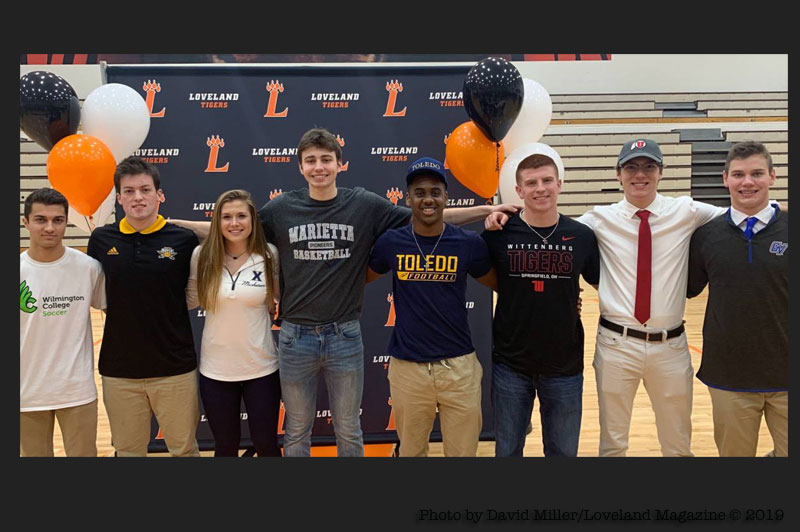
    Loveland, Ohio – Winter National Signing Day took place on Wednesday, February 6, in the Loveland High School gym. Here are the Loveland High School student/athletes, who have committed to play their sport at the collegiate level:

    Andrew Hartman – Soccer (Wilmington College)

    Kyle Beasley – Lacrosse (University of Utah)

    J.T. Popp – Football (Grand Valley State University)

    Dakota Blum – Football (Wittenberg University)

    Natron Webster – Football (University of Toledo)

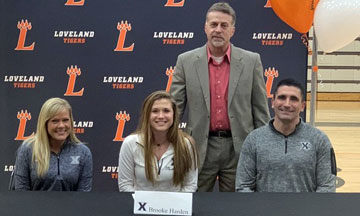
    Brooke Harden – Soccer (Xavier University)

    Jalen Greiser – Basketball (Marietta College)

    Josiah Pokopac – Soccer (Northern Kentucky University)

    (Photos curtesy of Loveland Athletics)


    Jarvis Global is an investment advisory firm in Symmes Township, Ohio which offers private portfolio management and retirement services to high net worth individuals.