The U.S. Department of Agriculture (USDA) in August released a re-evaluation of the Thrifty Food Plan, used to calculate Supplemental Nutrition Assistance Program (SNAP) benefits. As a result, the average SNAP benefit – excluding additional funds provided as part of pandemic relief – will increase for Fiscal Year 2022 beginning on Oct. 1, 2021.
“Ensuring low-income families have access to a healthy diet helps prevent disease, supports children in the classroom, reduces health care costs, and more.
– Agriculture Secretary Tom Vilsack
As directed by Congress in the 2018 Farm Bill – and with the expressed support of President Biden’s January 22 Executive Order – USDA conducted a data-driven review of the Thrifty Food Plan. The resulting cost adjustment is the first time the purchasing power of the plan has changed since it was first introduced in 1975, reflecting notable shifts in the food marketplace and consumers’ circumstances over the past 45 years.
“A modernized Thrifty Food Plan is more than a commitment to good nutrition – it’s an investment in our nation’s health, economy, and security,” said Agriculture Secretary Tom Vilsack. “Ensuring low-income families have access to a healthy diet helps prevent disease, supports children in the classroom, reduces health care costs, and more. And the additional money families will spend on groceries helps grow the food economy, creating thousands of new jobs along the way.”
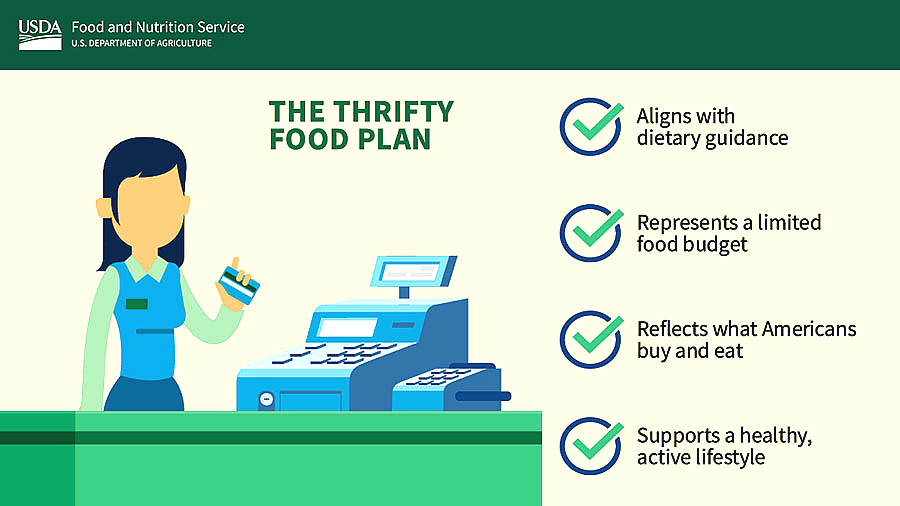
In its re-evaluation, USDA was driven by the latest available data on the four key factors identified in the 2018 Farm Bill: current food prices, what Americans typically eat, dietary guidance, and the nutrients in food items. For example, the revised plan includes more fish and red and orange vegetables to align with recommendations in the Dietary Guidelines for Americans, 2020-2025. Additionally, the plan was calculated using updated purchasing data – collected from stores versus self-reported by households – to reflect the current price of foods in today’s marketplace. The revised Thrifty Food Plan also includes a modest increase in calories to reflect the latest data and support an active lifestyle.
The 2021 Thrifty Food Plan puts healthy food in reach for SNAP families. Recent evidence consistently shows that benefit levels are too low to provide for a realistic, healthy diet, even with households contributing their own funds toward groceries. A USDA study published earlier this summer found that nearly nine out of 10 SNAP participants reported facing barriers to achieving a healthy diet, with the most common barrier being the cost of healthy foods. These findings were echoed in listening sessions USDA held with a broad range of Thrifty Food Plan stakeholders.
Recent evidence consistently shows that benefit levels are too low to provide for a realistic, healthy diet, even with households contributing their own funds toward groceries.
The reevaluation concluded that the cost of a nutritious, practical, cost effective diet is 21% higher than the current Thrifty Food Plan. As a result, the average SNAP benefit – excluding additional funds provided as part of pandemic relief – will increase by $36.24 per person, per month, or $1.19 per day, for Fiscal Year 2022 beginning on Oct. 1, 2021.
To set SNAP families up for success, we need a Thrifty Food Plan that supports current dietary guidance on a budget,” said Stacy Dean, deputy undersecretary for food, nutrition, and consumer services. “Too many of our fellow Americans struggle to afford healthy meals. The revised plan is one step toward getting them the support they need to feed their families.”
In good times and tough times, SNAP is the most far-reaching, powerful tool available to ensure that all Americans, regardless of background, can afford healthy food. The program helps to feed more than 42 million Americans – 1 in 8 – each month. Evidence is clear that SNAP increases food security, including among households with children who have been disproportionately impacted by hunger during COVID.
USDA touches the lives of all Americans each day in so many positive ways. In the Biden-Harris Administration, USDA is transforming America’s food system with a greater focus on more resilient local and regional food production, ensuring access to healthy and nutritious food in all communities, building new markets and streams of income for farmers and producers using climate smart food and forestry practices, making historic investments in infrastructure and clean energy capabilities in rural America, and committing to equity across the Department by removing systemic barriers and building a workforce more representative of America. To learn more, visit www.usda.gov.
For questions about your SNAP benefits, please contact your SNAP state agency.
Additional Resources:
- The Thrifty Food Plan and SNAP Benefits (Website)
- Changes in Benefits by State (Tables)
- Thrifty Food Plan Re-evaluation Puts Nutrition in Reach for SNAP Participants (Blog)
- What is the TFP? (Blog)
- TFP Listening Sessions (Summary) (Blog)
- The TFP Re-Evaluation Process (Infographic)
- SNAP Participants’ Barriers to Healthy Eating (Infographic)
- Barriers that Constrain the Adequacy of SNAP Allotments (Report)
- SNAP – Fiscal Year 2022 Cost-of-Living Adjustments (Memo)
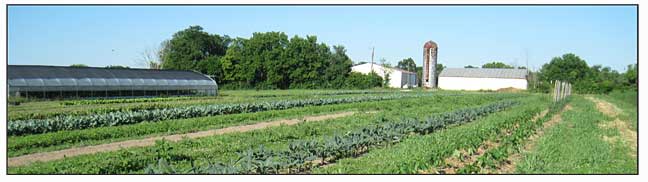
 Is 180 lbs too much for you? Then consider buying your produce at our retail store at the Grailville Milk and Honey House. We will have fresh organic produce in stock every day during the growing season in our store.
 Earth-Shares CSA also has a booth at the Loveland Farmers Market.
  Our members enjoy fresh seasonal produce, all grown on our farm in Loveland; our land is Certified Organic by the USDA and the Ohio Ecological Food and Farm Association (OEFFA). In 2016, each member received over 180 pounds of vegetables over the course of the growing season, which runs approximately 22 weeks. The harvest varies by week, and each year is different, depending on many variables including weather conditions, pest activity, crop rotation, and planting patterns.