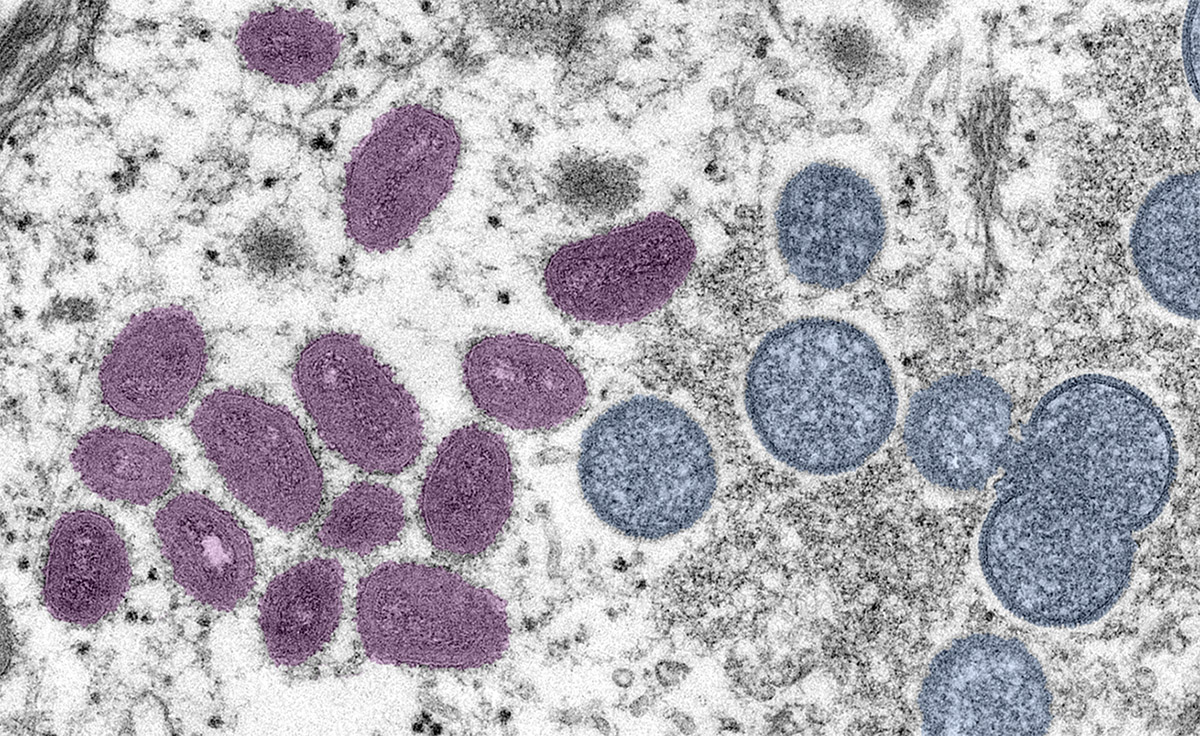
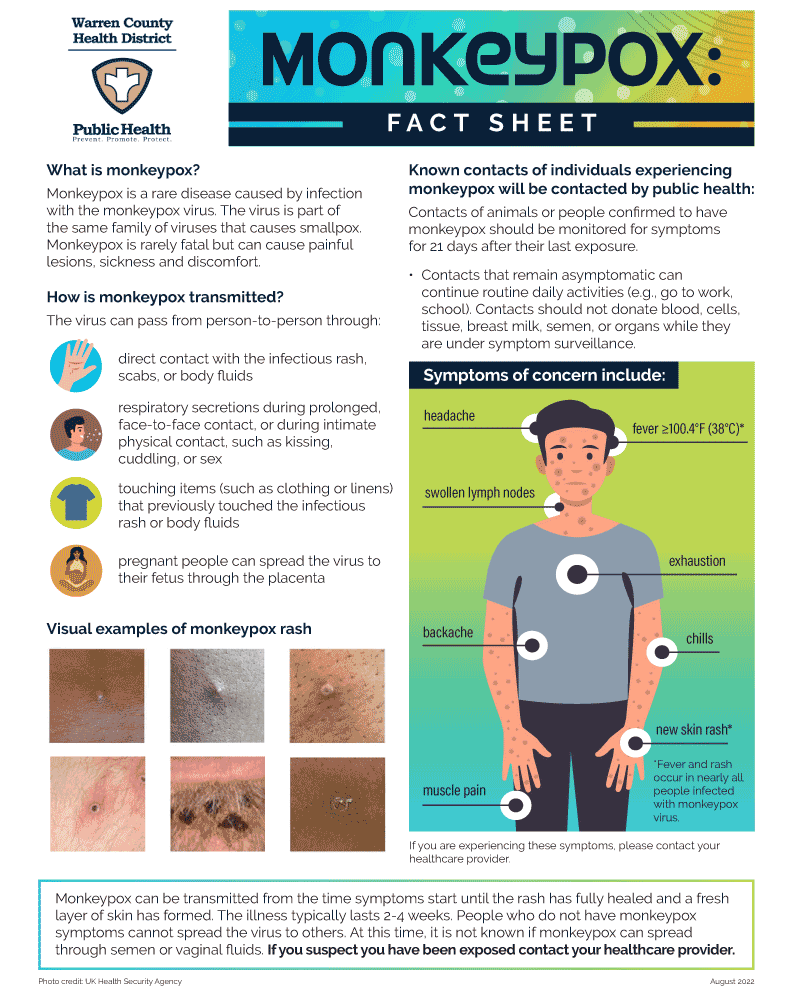
Warren County, Ohio – This is the information the Warren County Health District is providing:
If you suspect you have been exposed to someone with monkeypox, please contact your healthcare provider for guidance. There are no plans to provide Monkeypox vaccinations to the general public in Warren County at this time. Vaccine is only available on a case-by-case basis for individuals who have been identified close contacts of an individual experiencing Monkeypox.
That has overall disease, hospitalization and death numbers plummeting as Ohio Gov. Mike DeWine ends covid restrictions on Wednesday.
But the 64% of Ohioans who haven’t begun their vaccinations appear to be in as much danger as they were in the deadly days of February. That’s when nearly 2,000 Ohioans were hospitalized with covid — about three times the 622 who were hospitalized with the disease on Tuesday.
In other words, unvaccinated Ohioans might not be getting the right message from good coronavirus news because it doesn’t seem to apply to them.
Unfortunately, state health officials can’t say for sure.
The Washington Post last week published a state-by-state analysis assuming that vaccinations were at least 85% effective at keeping people out of the hospital with covid. It recalculated covid metrics excluding 85% of vaccinated people and compared resulting rates to what they were for the general population before vaccines were widely available.
Ohio came out in the middle of the pack, which isn’t great. It showed that among the unvaccinated, the state’s daily rate of covid hospitalizations of 40 per 100,000 people is similar to what it was for the population as a whole on Feb. 16.
Most of Ohio’s neighbors have similar hospitalization rates among the unvaccinated. In Indiana, West Virginia and Kentucky it’s 40 per 100,000.
Neighboring Michigan for months has been hammered with a fast-spreading variant and its unvaccinated population is estimated to have 60 hospitalizations per 100,000. Pennsylvania also has an unvaccinated hospitalization rate of 60 per 100,000, the analysis said.
The analysis used conservative assumptions about how effective the vaccines are based on scientific data. Even so, they’re still just estimates.
Tantalizingly, officials with the Ohio Department of Health have data about who’s sick and who’s been vaccinated, but not the technology to match them up.
“Within the disease reporting system (ODRS), there is a notation for whether someone is vaccinated or not,” spokeswoman Megan Smith said in an email. “However, it is not possible to run a report by vaccine status at the state level because of the limitations of the system.”
Meanwhile, state leaders are continuing to try to persuade Ohioans to get vaccinated. They have credited the Vax-a-Million promotion for a 28% vaccination increase during the first two weeks of the promotion among people who could have gotten shots before it was announced.
“Ohio’s Vax-a-Million drawing was designed to bring attention and excitement to vaccination efforts around the state,” ODH Director Stephanie McCloud said in a statement. “This data showing significant increases in vaccination numbers during the two weeks since the contest was announced demonstrates it is working. Vaccines are our best tool to return to the lives we remember from before the pandemic.”
Columbus, Ohio – Ohio Governor Mike DeWine issued a statement Monday evening following the approval by the Food and Drug Administration’s to administer the Pfizer COVID-19 vaccine to those ages 12-15.
DeWine said, “I am encouraged that the FDA has already updated Pfizer’s Emergency Use Authorization to include youth ages 12-15. Following a recommendation, as soon as Wednesday, from the Advisory Committee on Immunization Practices (ACIP) and the CDC, Ohio will immediately expand vaccine eligibility to youth ages 12-15 and provide appropriate guidance for parents, guardians, and vaccine providers across the state. Vaccinations are our way back to a more normal life.”
Watch the virtual press conference with the FDA to discuss the authorization of the Pfizer-BioNTech COVID-19 vaccine for use in adolescents.
Below is the Press Release issued today by the FDA
Today, the U.S. Food and Drug Administration expanded the emergency use authorization (EUA) for the Pfizer-BioNTech COVID-19 Vaccine for the prevention of coronavirus disease 2019 (COVID-19) caused by severe acute respiratory syndrome coronavirus 2 (SARS-CoV-2) to include adolescents 12 through 15 years of age. The FDA amended the EUA originally issued on Dec. 11, 2020 for administration in individuals 16 years of age and older.
“The FDA’s expansion of the emergency use authorization for the Pfizer-BioNTech COVID-19 Vaccine to include adolescents 12 through 15 years of age is a significant step in the fight against the COVID-19 pandemic,” said Acting FDA Commissioner Janet Woodcock, M.D. “Today’s action allows for a younger population to be protected from COVID-19, bringing us closer to returning to a sense of normalcy and to ending the pandemic. Parents and guardians can rest assured that the agency undertook a rigorous and thorough review of all available data, as we have with all of our COVID-19 vaccine emergency use authorizations.”
From March 1, 2020 through April 30, 2021, approximately 1.5 million COVID-19 cases in individuals 11 to 17 years of age have been reported to the Centers for Disease Control and Prevention (CDC). Children and adolescents generally have a milder COVID-19 disease course as compared to adults. The Pfizer-BioNTech COVID-19 Vaccine is administered as a series of two doses, three weeks apart, the same dosage and dosing regimen for 16 years of age and older.
The FDA has determined that Pfizer-BioNTech COVID-19 Vaccine has met the statutory criteria to amend the EUA, and that the known and potential benefits of this vaccine in individuals 12 years of age and older outweigh the known and potential risks, supporting the vaccine’s use in this population.
“Having a vaccine authorized for a younger population is a critical step in continuing to lessen the immense public health burden caused by the COVID-19 pandemic,” said Peter Marks, M.D., Ph.D., director of the FDA’s Center for Biologics Evaluation and Research. “With science guiding our evaluation and decision-making process, the FDA can assure the public and medical community that the available data meet our rigorous standards to support the emergency use of this vaccine in the adolescent population 12 years of age and older.”
The EUA amendment for the Pfizer-BioNTech COVID-19 Vaccine was issued to Pfizer Inc. The issuance of an EUA is not an FDA approval (licensure) of a vaccine. The EUA will be effective until the declaration that circumstances exist justifying the authorization of the emergency use of drugs and biologics for prevention and treatment of COVID-19 is terminated, and may be revised or revoked if it is determined the EUA no longer meets the statutory criteria for issuance or to protect public health or safety.
FDA Evaluation of Available Safety Data
The available safety data to support the EUA in adolescents down to 12 years of age, include 2,260 participants ages 12 through 15 years old enrolled in an ongoing randomized, placebo-controlled clinical trial in the United States. Of these, 1,131 adolescent participants received the vaccine and 1,129 received a saline placebo. More than half of the participants were followed for safety for at least two months following the second dose.
The most commonly reported side effects in the adolescent clinical trial participants, which typically lasted 1-3 days, were pain at the injection site, tiredness, headache, chills, muscle pain, fever and joint pain. With the exception of pain at the injection site, more adolescents reported these side effects after the second dose than after the first dose, so it is important for vaccination providers and recipients to expect that there may be some side effects after either dose, but even more so after the second dose. The side effects in adolescents were consistent with those reported in clinical trial participants 16 years of age and older. It is important to note that as a general matter, while some individuals experience side effects following any vaccination, not every individual’s experience will be the same and some people may not experience side effects.
The Pfizer-BioNTech COVID-19 Vaccine should not be given to anyone with a known history of a severe allergic reaction, including anaphylaxis—to any component of the vaccine. Since its authorization for emergency use, rare severe allergic reactions, including anaphylaxis, have been reported following administration of the Pfizer-BioNTech COVID-19 Vaccine in some recipients.
FDA Evaluation of Available Effectiveness Data
The effectiveness data to support the EUA in adolescents down to 12 years of age is based on immunogenicity and an analysis of COVID-19 cases. The immune response to the vaccine in 190 participants, 12 through 15 years of age, was compared to the immune response of 170 participants, 16 through 25 years of age. In this analysis, the immune response of adolescents was non-inferior to (at least as good as) the immune response of the older participants. An analysis of cases of COVID-19 occurring among participants, 12 through 15 years of age, seven days after the second dose was also conducted. In this analysis, among participants without evidence of prior infection with SARS-CoV-2, no cases of COVID-19 occurred among 1,005 vaccine recipients and 16 cases of COVID-19 occurred among 978 placebo recipients; the vaccine was 100% effective in preventing COVID-19. At this time, there are limited data to address whether the vaccine can prevent transmission of the virus from person to person. In addition, at this time, data are not available to determine how long the vaccine will provide protection.
Ongoing Safety Monitoring
As part of the original EUA request, Pfizer Inc. submitted a plan to continue monitoring the safety of the vaccine as it is used under EUA. This plan has been updated to include the newly authorized adolescent population, and includes longer-term safety follow-up for participants enrolled in ongoing clinical trials, as well as other activities aimed at monitoring the safety of the Pfizer-BioNTech COVID-19 vaccine and ensuring that any safety concerns are identified and evaluated in a timely manner.
It is mandatory for Pfizer Inc. and vaccination providers to report the following to the Vaccine Adverse Event Reporting System for Pfizer-BioNTech COVID-19 Vaccine: all vaccine administration errors, serious adverse events, cases of Multisystem Inflammatory Syndrome and cases of COVID-19 that result in hospitalization or death.
Governor Mike DeWine today issued the following statement on nursing home visitation:
The number of new COVID-19 cases in Ohio’s nursing homes has dropped significantly to 343 new cases last week compared to the peak of 2,832 new cases in December.
As the number of nursing-home cases continues to drop due to vaccinations in long-term facilities, Governor DeWine today reminded nursing home staff and families of nursing home residents about the status of visitation in Ohio’s nursing homes. Visitation is permitted at nursing homes in Ohio if the facilities meet the federal Centers for Medicare and Medicaid Services (CMS) criteria to allow visits:
No new onset of COVID-19 cases in the last 14 days;
The facility is not currently conducting outbreak testing; and
CMS reports the COVID-19 county positivity rate at less than 10 percent.
Compassionate care visits, which are special visits in which a family member or other visitor provides comfort, support, and assistance to a resident whose well-being is suffering or at risk, are always permitted regardless of the criteria above.
Governor DeWine sent a letter today to all nursing homes in Ohio reminding them to check their county positivity rate every week to determine their visitation status and to remind them to allow for compassionate care visits.
If you have a loved one in need of a compassionate care visit but are having trouble scheduling a visit, contact Ohio’s Office of the State Long-Term Care Ombudsman at OhioOmbudsman@age.ohio.gov or 1-800-282-1206.
Ohio Governor Mike DeWine and Lt. Governor Jon Husted yesterday provided the following updates on Ohio’s response to the COVID-19 pandemic.
VACCINE DISTRIBUTION UPDATE
Governor DeWine announced today that Ohio received a total of 214,525 first doses of vaccine this week. A total of 223,025 first doses are scheduled to arrive in Ohio during the week of February 15.
The federal retail pharmacy program will soon begin allotting doses to Ohio’s more than 160 Rite Aid pharmacies. Vaccine distribution will also expand into all 194 Kroger pharmacies.
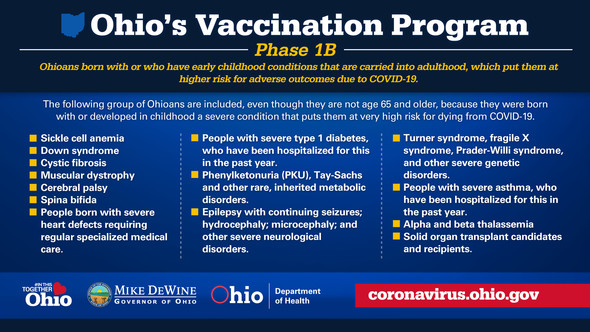
Those with specific medical conditions that put them at a very high risk of dying from COVID-19 will be eligible for vaccinations next week.
Ohioans born with the medical conditions outlined below, or those who were diagnosed in early childhood whose conditions continued into adulthood, will qualify to be vaccinated beginning on February 15.
Dr. Bruce Vanderhoff, chief medical officer at Ohio Department of Health, explained these conditions in more detail. His remarks are available on the Ohio Channel’s YouTube page.
Approximately 12,000 individuals with these severe medical conditions and developmental disabilities have already been vaccinated, and vaccinations of those in this group will continue.
NURSING HOME CASES
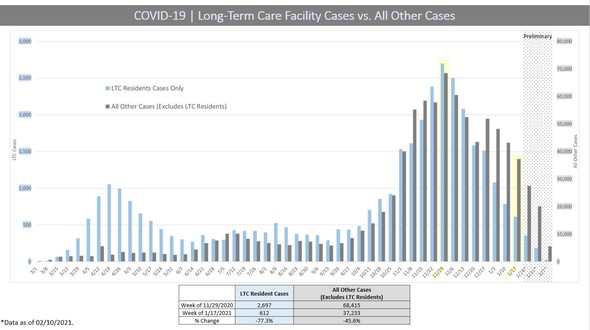
Governor DeWine announced today that the number of COVID-19 cases in Ohio’s nursing homes has dropped more than 77 percent since late November. This dramatic drop in cases follows Ohio’s aggressive efforts to vaccinate residents and staff in Ohio’s long-term care facilities.
As outlined in the chart below, there were 2,697 COVID-19 cases in long-term care facilities in Ohio during the week of November 29, 2021. During the week of January 17, there were 612 positive cases.
SCHOOL MODEL UPDATE
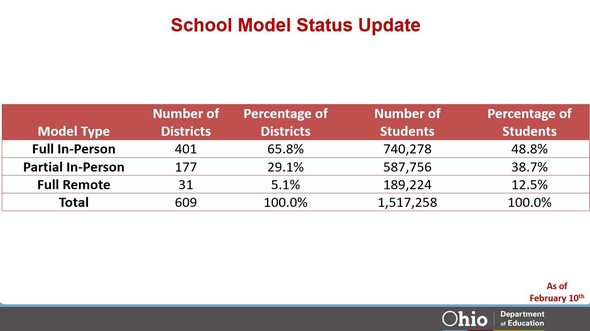
Governor DeWine shared the latest information on the number of school districts that are physically in school versus those that are fully or partially remote. As a condition to receive priority access to the vaccine, schools were required to commit to full or partial in-person learning by March 1. All but one school district in Ohio have committed to this plan.
OHIO PUBLIC HEALTH ADVISORY SYSTEM
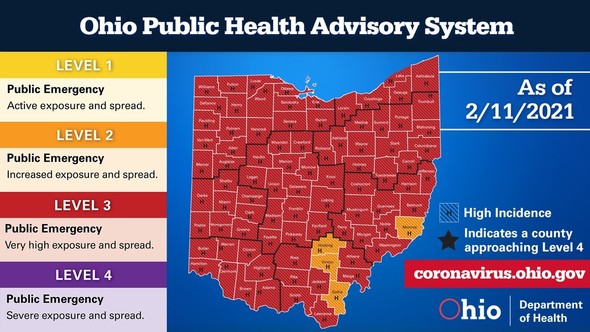
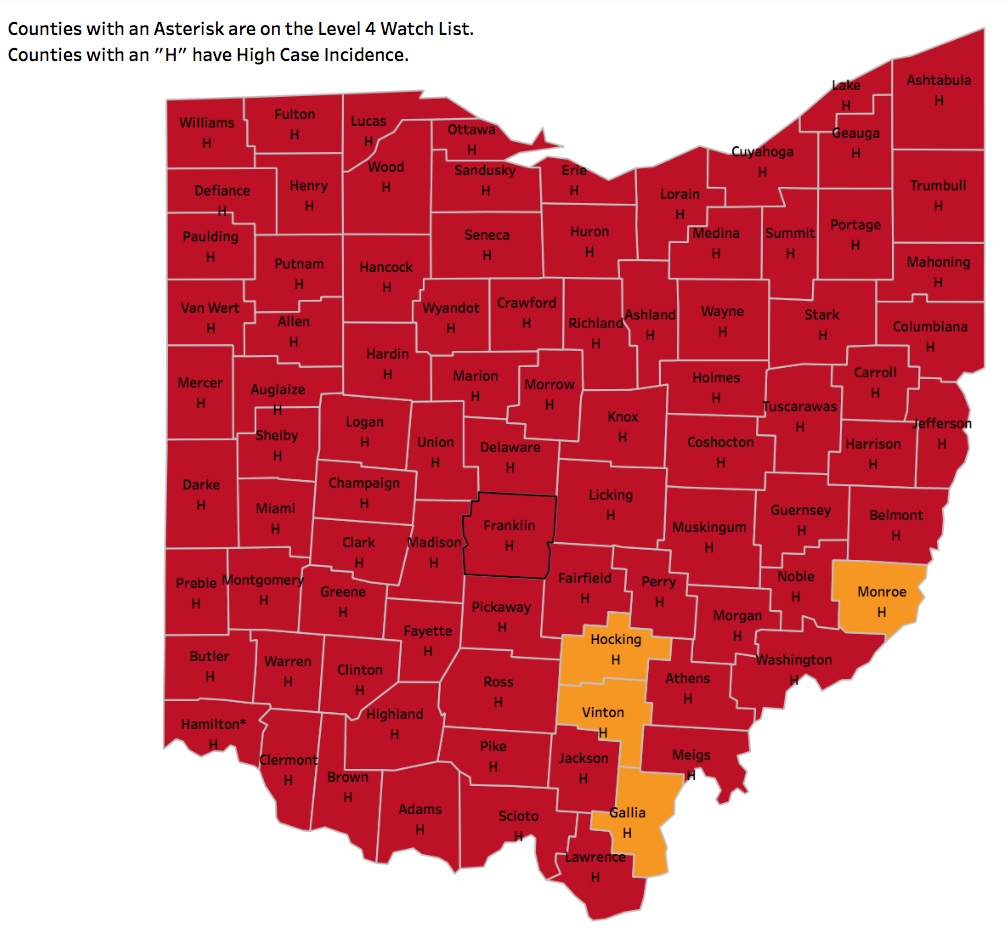
There was no change in this week’s Ohio Public Health Advisory System map. A county-by-county breakdown outlining the presence of COVID-19 in all of Ohio’s 88 counties can be found on the Ohio Public Health Advisory System’s website.
CURRENT CASE DATA (2-12-21)
In total, there are 931,437 confirmed and probable cases of COVID-19 reported in Ohio and 12,577 confirmed and probable COVID-19 deaths. A total of 48,269 people have been hospitalized throughout the pandemic, including 6,908 admissions to intensive care units. In-depth data can be accessed by visiting coronavirus.ohio.gov.
Video of today’s full update, including versions with foreign language translation, can be viewed on the Ohio Channel’s YouTube page.
For more information on Ohio’s response to COVID-19, visit coronavirus.ohio.gov or call 1-833-4-ASK-ODH.
Loveland, Ohio – Warren County Health officials say that as of today they do not have additional availability of vaccine beyond the Phase 1A priority group.
The Warren County Health District released the below information for residents this morning about vaccinations for Covid -19 in Warren County:
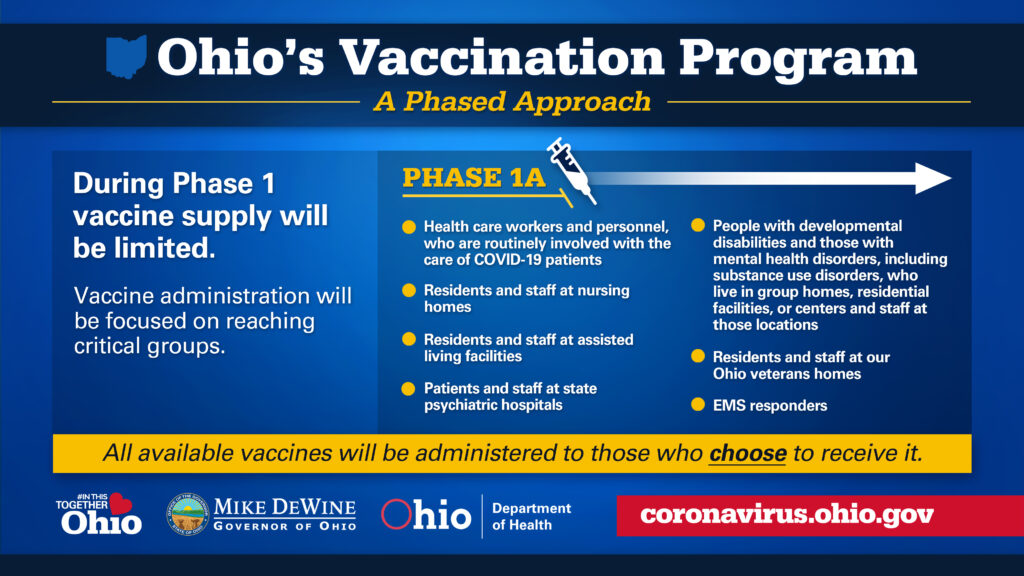
The Warren County Health District (WCHD) is continuing its COVID-19 Vaccination Program for those individuals who are in Phase 1A as determined by the Ohio Department of Health. Phase 1A population groups are defined as healthcare providers and long-term care facility staff and residents who provide direct medical care.
As of today, January 15, 2021, we do not have additional availability of vaccine. The vaccine that has been received up to this point has been allocated for Phase 1A. These are appointments are full.
According to the Ohio Department of Health (ODH), Ohio will be distributing 100,000 doses of vaccine statewide beginning next week for the next phase of Ohio’s vaccine distribution list. Warren County will receive 1,600 of those doses. The WCHD will receive 100 of those doses next week. The remaining 1,500 doses will go to:
Kroger Pharmacies (seven locations)
Discount Drug Mart Inc (two locations)
Atrium Medical Center
HealthSource of Ohio
How do you get vaccinated if eligible?
Warren County Health District – Visit www.warrenchd.com or call 513-695-7468
HealthSource of Ohio – Register beginning January 16th on line at www.healthsourceofohio.org or call 513-732-8500.
WCHD asks for your patience as we continue to work through this process on vaccinating Phases 1A & 1B priority groups. It is important to get as many people vaccinated. Please continue to wear your mask, wash your hands, and stay home if you are sick. We need to work together, Warren County.
For the most update information on the COVID and the vaccination process visit: www.odh.gov and www.warrenchd.com
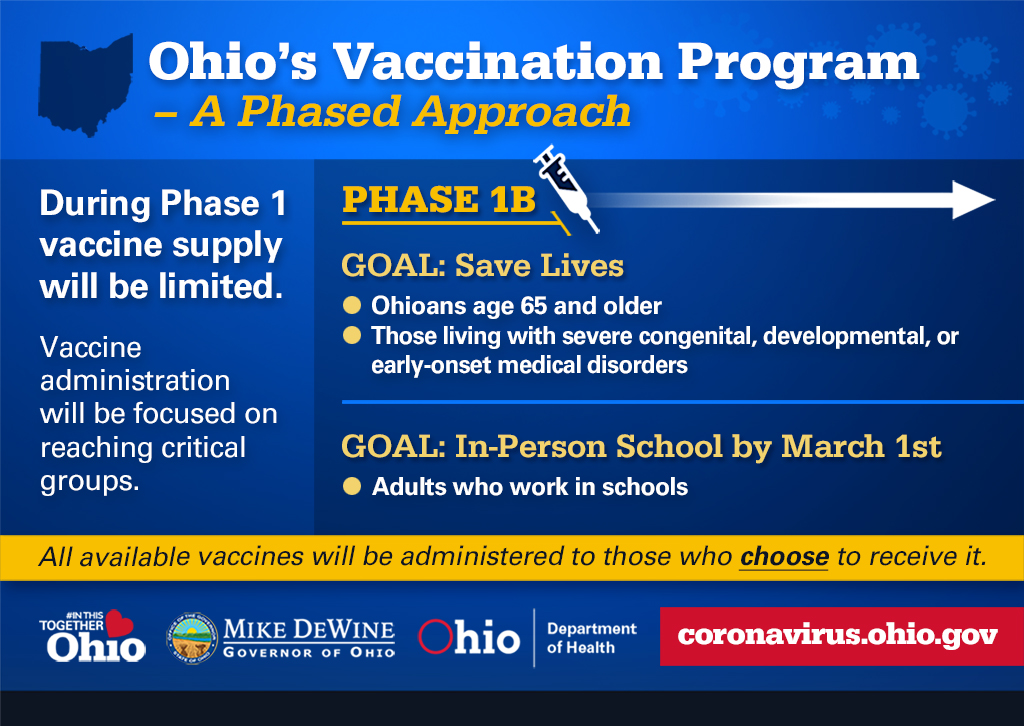
Today, Governor DeWine announced that people in phase 1B of Ohio’s vaccination distribution plan will be able to receive vaccinations beginning on Tuesday, January 19.
Those 80 years of age and older will be prioritized first in this next phase, roughly totaling 420,000 Ohioans. Ohio is expected to receive 100,000 doses during the first week of distribution to Phase 1B.
“With up to 420,000 people 80 years and above, and only 100,000 doses available the first week, it will take several weeks to vaccinate those 80 years of age and older,” said DeWine. “Phase 1B will take a few weeks, and a lot of coordination in distribution.”
DeWine says that vaccines for Ohioans 80 years of age and older will be administered by physicians, local health departments, hospitals, federally qualified health centers, in-home health service providers, and some retail pharmacies. As of today, the Ohio Department of Health said that approximately 1,700 providers have registered to distribute vaccines.
Phase 1A
Additionally, the Ohio Department of Health will be hosting a webinar for registered providers to discuss expectations, and instructions for distribution. Additional details will be shared with registered providers in the coming days.
Governor DeWine anticipates vaccinations will be available to Ohioans 75 years of age and older beginning Monday, January 25. The following week, vaccinations will be available to those 65 years of age and older.
“As we include other age ranges, please know that does not mean vaccinations will be complete for the previous age range,” said Governor DeWine.
The week of January 25 will also include vaccinations for Ohioans with severe congenital, developmental, or early onset medical disorders. Additional details about distribution for this group is not yet available.
CURRENT CASE DATA
In total, there are 753,068 confirmed and probable cases of COVID-19 reported in Ohio and 9,462 confirmed and probable COVID-19 deaths. A total of 40,469 people have been hospitalized throughout the pandemic, including 6,092 admissions to intensive care units. In-depth data can be accessed by visiting coronavirus.ohio.gov.
Schools
DeWine also announced that during the week of February 1 that vaccinations will be available for personnel in Ohio schools. The Ohio Department of Heath will send forms to Ohio superintendents to indicate their school plans to go back to in full in-person and hybrid learning by March 1, as well as indicate the number of staff they believe will choose to take the vaccination. Superintendents will also be asked if a community partner has been identified to help with the administering of the COVID-19 vaccines to school personnel.
Dr. Bruce Vanderhoff, Chief Medical Officer for the Ohio Department of Health, provides this statement related to the coronavirus variation that was first seen in the United Kingdom.
“Although virus variations are normal, and most do not impact the behavior of a virus, this variation is notable because it appears to be more contagious than other variants of the coronavirus,” said Dr. Vanderhoff. “Fortunately, this variant doesn’t appear to be more severe or to impact those who are already immune, but it worries us because a more contagious variant could lead to more people getting sick, more people being hospitalized, and more people dying.”
Ohio currently has three times the number of COVID-19 hospitalizations that it had on November 1 and nearly seven times the number of COVID-19 hospitalizations that it had on October 1.
Dr. Vanderhoff stressed the importance of continuing Ohio’s coronavirus protocols of social distancing, avoiding crowds, washing hands, wearing masks, and accepting the vaccine when available to prevent the spread of all variants of the coronavirus and to prevent further increases in hospitalizations.
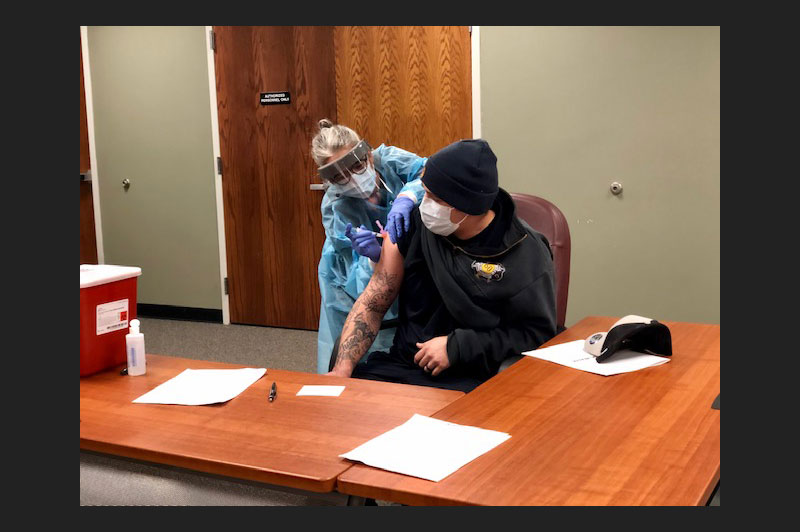
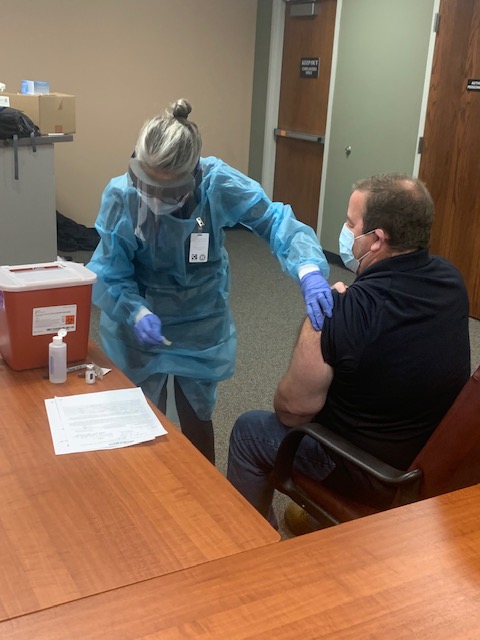
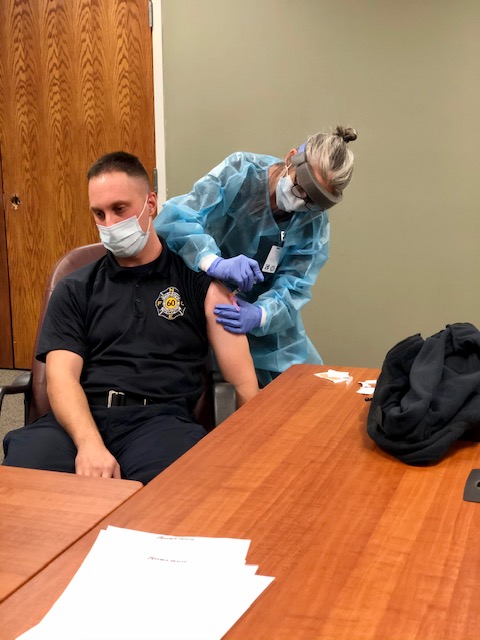
Loveland, Ohio – The Loveland-Symmes Fire Department started receiving their first vaccinations for the COVID 19 virus yesterday, Tuesday, December 29, from the Hamilton County Public Health Department. “We will be vaccinating additional personnel in the future,” said Deputy Chief Michael Books.
While the world anxiously awaits the day a vaccine becomes available to help prevent COVID-19, I wanted to take a moment for a more general vaccine discussion.
xxx
As has been evidenced through the COVID-19 pandemic, vaccination is perhaps the most valuable public health tool available. Some of us are old enough to remember friends, relatives and classmates stricken by polio. Many of us remember chicken pox, mumps and measles – the disease staples of childhoods past.
xxx
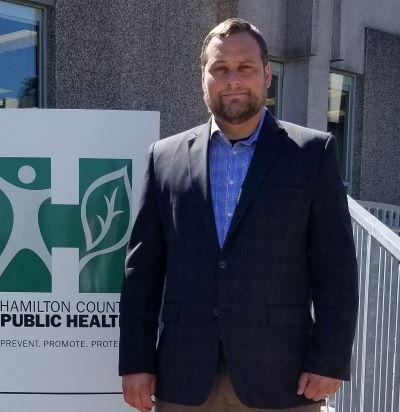
Greg Kesterman is the Hamilton County Health Commissioner
xxx
When is the last time you heard about a child with polio? For young parents, how many of you have comforted your sick children through chicken pox, mumps or measles. My guess is that there are not many parents, if any at all, who have had to deal with these issues in the last 25 years.
xxx
The reason we hear so little about these diseases today is simple – immunization has significantly reduced these illnesses in the United States. However, without continued immunization programs, these diseases, many of which are still prevalent in less-developed countries, can quickly return.
xxx
That is what makes our current trend of vaccinations disturbing. Hamilton County Public Health has experienced a decline of more than 50 percent in the number of vaccines administered in our clinics as compared to the same time period last year. Our trend mirrors current national vaccination numbers.
For the upcoming influenza (flu) season, influenza vaccination will be more important than ever.
xxx
Efforts to reduce transmission of COVID-19, such as stay-at-home and shelter-in-place orders, have led to decreased use of routine preventive medical services, including immunizations. Ensuring that routine vaccination is maintained during the COVID-19 pandemic is essential for protecting individuals and communities from vaccine-preventable diseases and outbreaks. Routine vaccination prevents illnesses that lead to unnecessary medical visits, hospitalizations and further strain the healthcare system.
xxx
For the upcoming influenza (flu) season, influenza vaccination will be more important than ever to reduce the impact of respiratory illnesses in the population and resulting burdens on the healthcare system during the COVID-19 pandemic.
Vaccination is most effective when the majority of a community receives it.
xxx
Many parents are concerned about vaccine safety. After all, if these diseases are truly things of the past, why do we need to vaccinate our children? Vaccination is most effective when the majority of a community receives it. No vaccine is 100 percent effective and for this reason, immunization of the majority of a community helps prevent communicable disease from spreading. This theory is called “herd immunity” and is particularly effective in protecting the most vulnerable in our society, such as infants and those with compromised immune systems.
xxx
There has also been considerable misinformation about potential side effects of various vaccines. According to the Centers for Disease Control and Prevention (CDC), the United States has the safest vaccine supply in its history. The United States’ long-standing vaccine safety system ensures that vaccines are as safe as possible. It detects problems rapidly and allows us to respond.
xxx
Please make certain vaccinations for you and your children are up-to-date.
The U.S. Food and Drug Administration (FDA) ensures the safety, effectiveness, and availability of vaccines for the United States. Before the FDA licenses (approves) a vaccine, the vaccine is tested extensively by its manufacturer. FDA scientists and medical professionals carefully evaluate all the available information about the vaccine to determine its safety and effectiveness.
xxx
As we enter the fall, back-to-school season and of course, flu season, I urge everyone to get a flu shot. In addition, please make certain vaccinations for you and your children are up-to-date. Need help with vaccination? We can help those either under-insured or with no insurance, as well as those on Medicaid or in a Medicaid HMO to get properly immunized. Call us at 513-946-7882 for information.
There are 4 vaccines recommended for preteens. These vaccines can prevent very serious diseases like meningitis and HPV cancers.
Call the Hamilton County Public Health Clinic at 513-946-7600
Immunizations play an important role in the health of children and adults. Vaccines help prevent diseases that were once common in this country, including polio, measles and whooping cough. The Centers for Disease Control and Prevention (CDC) estimates that each year, 43,000 U.S. adults die from vaccine-preventable diseases.
Hamilton County Public Health holds immunization clinics across the county. No one is turned away based on ability to pay.