Tag: vaccine hesitancy

  • Ohio legislators, medical leader fear vaccine hesitancy, health care impacts if RFK Jr. confirmed

    Ohio legislators, medical leader fear vaccine hesitancy, health care impacts if RFK Jr. confirmed

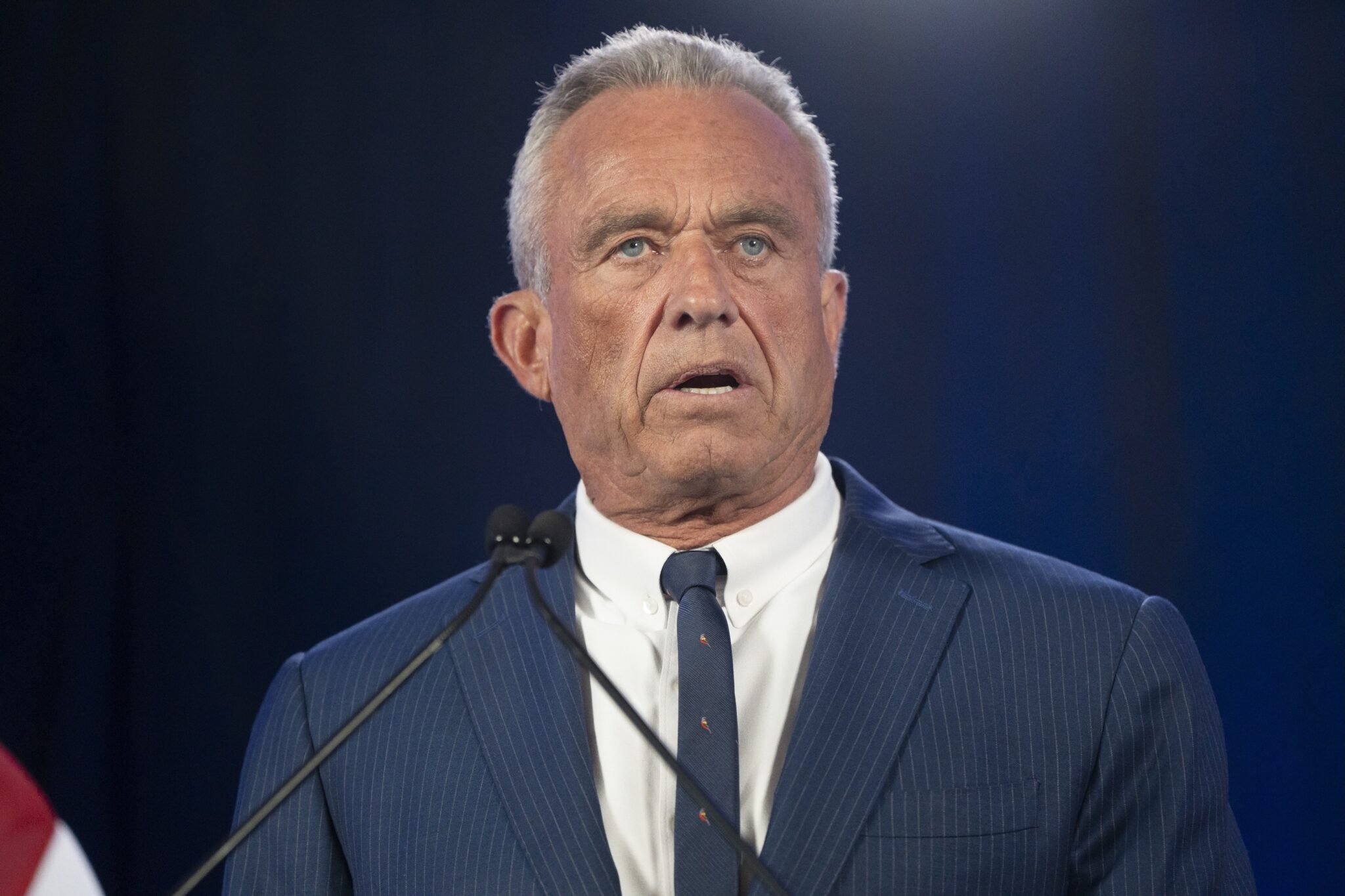
     Robert F. Kennedy Jr. (Photo by Rebecca Noble/Getty Images)

    By:  Ohio Capital Journal

    State legislators and medical experts in Ohio are decrying the nomination of Robert F. Kennedy, Jr., to the U.S. Department of Health and Human Services.

    Democratic lawmakers and a leader at the Toledo Lucas County Health Department expressed particular concern over access to health care and the future of vaccination requirements and information.

    “I think the question is are you going to trust somebody to run our entire health enterprise in this country who has no scientific background to understand why doctors, nurses, dentists are recommending that we actually do these things,” said Dr. Jonathan Ross, board president for the TLCHD.

    State Rep. Michele Grim, D-Toledo, who holds a master’s in public health, said the comments Kennedy, Jr., has made about vaccines in the past makes her nervous about his leadership of a federal medical agency with a multi-billion-dollar budget.

    “I know that vaccines save lives,” Grim said during a press conference hosted by Protect Our Care. “We eradicated small pox with vaccines, we almost eradicated polio, but now that is coming back because of the vaccine hesitancy.”

    Grim also takes issue with Kennedy’s “arcane” views on HIV/AIDS, something she focused on as part of her public health education. She said the views he’s expressed, are “very problematic in that space.”

    Ross, Grim and her fellow state Reps. Terrence Upchurch and Elgin Rogers said they hope the Trump administration will reconsider Kennedy, Jr.’s appointment, but failing that, they urged the U.S. Senate to conduct thorough questioning of the nominee, ultimately stopping the appointment.

    “I think that this appointment is probably the most dangerous, because it has a great impact on the public health, not just of the people of Ohio, but everyone in this country,” Upchurch, D-Cleveland said.

    GET THE MORNING HEADLINES.


    Ross and the legislators are concerned about the state of the overall national health care system with the appointment of Kennedy, Jr., but they see potential problems at the state level as well.

    “I think what impacts we’ll see is there could be less funding for our health departments, there could be some vaccine hesitancy, and I think we’ve seen that on the local level and also on the state level,” Grim said.

    Ross pointed to the possible reversal of insurance protections for Americans up to age 26 and undoing of Medicaid expansion as issues that could lead to increased health issues, and increased economic issues on top of everything else.

    With a loss of coverage in the Medicaid space, and if threats the Trump administration has made previously about repealing the Affordable Care Act come to fruition, crippling medical debt could fall on more and more Americans, leading to bankruptcies, along with unnecessary hospitalizations because of a lack of health coverage.

    “Being poor is also very bad for your health,” Ross said.

    Rogers, D-Toledo, said the disparities that already exist in health care for communities of color could also get worse with leaders lacking the information they need to make positive change.

    “If you have leaders who don’t understand the science, who are willing to ignore the science, they’re going to ignore other factors across the state of Ohio and that impact the people of Ohio who come from the most trying conditions,” Rogers said.

    A way forward could include state-level legislative action to protect certain aspects of the health care system that may be impacted by the new administration, and the new appointment. Ross said Medicaid work requirements that were considered in Ohio and federally would not be the way forward, and keeping an eye on efforts to require work as part of the Medicaid eligibility would help preserve the health care landscape.

    “People are more likely to be able to work if they have health care coverage, so precluding health care coverage for people who are not working is the opposite of what you want to do,” according to Ross.

    The legislators pledged to keep public health at the forefront of the minority caucuses priorities, though they face a tough slog leading a charge in a Statehouse with GOP supermajorities in both chambers.

    “I can see a world where there is another effort to attack vaccinations (on the state level),” Upchurch said.

    For Grim, whether Kennedy, Jr., is confirmed or not, it’s up to legislators to make sure the public and their fellow legislators know that a loss of Medicaid benefits or any hits to public health would negatively impact all Ohioans, not just a small minority.

    “We need to make sure that our caucus is a voice for public health and the benefits of vaccines,” Grim said.

    YOU MAKE OUR WORK POSSIBLE.

    _______________
    Susan Tebben
    Susan Tebben

    Susan Tebben is an award-winning journalist with a decade of experience covering Ohio news, including courts and crime, Appalachian social issues, government, education, diversity and culture. She has worked for The Newark Advocate, The Glasgow (KY) Daily Times, The Athens Messenger, and WOUB Public Media. She has also had work featured on National Public Radio.

    Ohio Capital Journal is part of States Newsroom, the nation’s largest state-focused nonprofit news organization.

    MORE FROM AUTHOR

  • ‘Trust issues’ prompt nursing home workers to decline COVID-19 vaccine, union says

    ‘Trust issues’ prompt nursing home workers to decline COVID-19 vaccine, union says

    By Jake Zuckerman and Ohio Capital Journal

    Nursing home workers are passing on their chance at early access to the COVID-19 vaccine, officials say, blowing a crosswind against a scarce supply of doses and a pandemic in a tailspin.

    Gov. Mike DeWine first drew attention to the issue Wednesday, claiming during a televised press briefing that roughly 60% of staffers who were offered the vaccine declined it.

    “I think in this case, [DeWine] is on target,” said Pete Van Runkle, executive director of an industry association representing Ohio’s long term care facilities.

    “I talk to a lot of members on a regular basis. They are reporting a pretty low uptake among staff.”

    Patrick Schwartz

    Patrick Schwartz, a spokesman for Leading Age Ohio, an elder advocacy group, said he’s hearing mixed reports of some providers finding that 90% of staff chose to take the vaccine while others are “well below 50%.”

    He attributed the shortfalls to misinformation and fear surrounding the potential for an adverse reaction to the vaccine.

    “Many staff are simply ‘not yet ready,’ which will hopefully change as they see more and more colleagues vaccinated without side effects and confidence continues to build,” he said.

    “By contrast, an overwhelming majority of residents seem willing to accept the vaccine, with many coming from the generation that saw polio and other deadly diseases wiped out by life-saving vaccines.”

    The local Service Employees International Union surveyed its members on the issue, it said in a statement Monday.

    The responses, according to SEIU 1199 President Becky Williams, indicate a trust problem between an exhausted, underpaid, underappreciated, and in many cases already-infected staff and health authorities.

    She said this is a “substantial issue” that’s bigger than just the union and requires outreach and education from the state.

    “Workers commented that the vaccine appeared rushed and unproven without enough data to show that it would be effective,” she said.

    “Some workers are also concerned that the vaccine could cause fertility issues among women who may want to have a child. There are trust issues among frontline health care workers — some of which preceded the pandemic. These trust issues continue after so many nursing home workers have been on the frontlines of the pandemic without hazard pay and support such as needed personal protective equipment.”

    Several news outlets have debunked this notion of ‘fertility issues’ related to the vaccine. A quick scroll through the right Facebook group can deluge visitors with this and similar pieces of misinformation relating to the vaccine.

    The Ohio Capital Journal called 13 state long-term care facilities Monday, who have each reported at least 100 COVID-19 cases among their residents, to discuss vaccination among their staffs. No administrators agreed to an interview.

    Two vaccines (one from Moderna and one jointly from Pfizer and BioNTech) are currently approved for emergency use against COVID-19. They are both two-dose vaccines, taken several weeks apart.

    Company data reviewed by the Food and Drug Administration shows both vaccines are about 95% effective preventing symptoms of COVID-19. While side effects (sometimes more intense than a standard flu vaccine) have been reported with both products, none of the vaccine trials have reported any serious safety concerns, according to information from Johns Hopkins University.

    Before coming to market, both vaccines underwent large scale clinical trials over the course of months. They are now under review via continuous monitoring for problems and side effects from the FDA and the CDC.

    The vaccine hesitancy comes as COVID-19 has infected 727,000 Ohioans, put about 39,000 in the hospital, and killed at least 9,143 since March.

    At least 4,856 of those deaths occurred among residents of Ohio’s long-term care facilities.

    Nationally, more than 353,000 Americans have died of COVID-19 and nearly 21 million have been infected.

    Tory Harper Hogan, PhD

    There are several theories as to why nursing home workers would rebuff a vaccine dose, according to Tory Hogan, an Ohio State University professor who researches nursing homes and infection control.

    She said some probably just don’t trust health authority; some have “been in the trenches” of the pandemic for a year now, prompting them to shrug off the unknown risk of vaccine for the better-known risk of infection; some probably just don’t want to be the guinea pigs.

    “There has been so much misinformation about everything in this process,” she said.

    Wood County Health Commissioner Ben Robison said he’s detected some vaccine hesitancy and refusal across all industries. However, some who deny at first are likely to come around.

    “Anecdotally, we’ve heard among some of the populations we’re reaching with our vaccine, some have initially said no and then later said yes,” he said.

    Some employers, especially in the health care industry, mandate the flu vaccine and other immunization. However, Van Runkle said the industry is already dealing with a widespread staffing shortage, only worsened by the pandemic.

    He said most of Ohio’s nursing homes do not even mandate the flu vaccine. Mandating a COVID-19 vaccine would worsen staffing problems.

    “We don’t need another reason for people not to work in our facilities,” he said.

    A vaccine mandate would backfire

    Hogan agreed that a vaccine mandate would backfire, and Williams, from SEIU, said education and outreach should drive universal vaccination.

    The Ohio Department of Health has shipped 341,100 Moderna first-doses, as well as 9,750 Pfizer first-doses plus another 9,750 Pfizer second-doses, according to ODH spokeswoman Melanie Amato. Only about 162,942 Ohioans have started the vaccination process, which is prioritizing health care workers, first responders and nursing home staff and residents.

    ODH said it is not actively tracking vaccine declination rates. CVS Health, a company administering the doses in state long term care facilities, isn’t either.

    “We do not have visibility to how many staff members at a facility decline to be vaccinated,” said CVS Health Spokesman Charlie Rice-Minoso.

    “While we aren’t provided with full staff rosters, based on feedback from our teams in the field we’re seeing more vaccine hesitancy among staff when compared with residents.”

    Walgreens, another company administering the vaccines, did not respond to inquiries.

    Looking at the bigger picture, Hogan said governments from the federal to local level need to do a better job understanding why some are declining vaccination. Similarly, she said they need to emphasize, as they did during the polio years, that vaccination is the patriotic thing for Americans to do.

    “It takes consistently pushing the right message, the correct and accurate information,” she said. “That takes money, a federal response, all levels. We’re struggling with that a lot.”