Ohio health officials are urging caution again this winter. But entering our third holiday season with COVID-19, the nature of those warnings is a bit different.
Three at once
As Ohio Department of Health Director Dr. Bruce Vanderhoff explained, this year the threat is multiple respiratory viruses at once.
“Unlike the last two winters, it’s not just about COVID,” he said. “But the combination of COVID, influenza, and RSV, especially for those whose health is more vulnerable or who have not been adequately vaccinated against flu and COVID-19.”
RSV, or respiratory syncytial virus, often feels like a common cold for adults and otherwise healthy children. But for infants, the elderly or immunocompromised people it can be dangerous. According to the CDC, RSV is the most common cause of bronchitis and pneumonia among kids 12 months old and younger.
Unlike COVID-19 and flu, RSV has no vaccine.
Precautions and metrics
As ever, Vanderhoff’s chief precautionary recommendations are for people feeling ill to stay home and for everyone to wash their hands regularly. In situations where people must leave the house, officials recommend wearing an N95 mask.
He also urged those who haven’t gotten vaccinated for the flu or COVID-19 to do so.
“Vaccination is the safest and most dependable way to assure that you’re maximizing that cellular immunity I talked about,” Vanderhoff explained. “It gives your immune system its best opportunity to confront and beat the virus.”
According to the CDC, the COVID-19 community level — a statistic based on number of hospital admissions and number of cases per 100k population — is low in many Ohio counties. Twelve rank as ‘high’ based on those metrics.
Dr. Joe Gastaldo, OhioHealth medical director for infectious diseases, said people should be especially cautious in those counties.
“In those scenarios, regardless of vaccination status, the recommendation is to wear a mask,” he said. “If you’re not feeling well wear a mask. I think specifically if you have an at-risk condition, or are immunocompromised, I would advise you as an infectious disease doctor to wear a mask indoors in public.”
The CDC’s more familiar community transmission metric, based on cases per 100k population and percentage of positive tests, remains high throughout the state. All but nine of the Ohio’s 88 counties rank high for community transmission and none are low.
As for RSV and the flu, Vanderhoff noted this year both started earlier and rose more rapidly than in past years. Both viruses have receded from their peak, he explained, but remain dangerous for some populations.
Background: On 8/12/22 new guidance for school came out from both the CDC and ODH (ODH memo 8/12/22 updated COVID guidance. Here is the information that will help you here in LCSD:
Positive cases
5+5 (5 days of isolation followed by 5 days of masking) plan as outlined by CDC/ ODH (Ohio Dept of Health). This is calculated from the first day of symptoms or positive test which is considered day 0. If a student is not ready to come back after 5 days (your child needs to be fever free for 24 hours without fever-reducing medications and symptoms improving), parents would call to tell attendance daily if their child is not ready to return. These are considered non-absence days
Masking is not optional. If you have been positive, you will need to mask for 5 days after being in isolation for 5 days.
There are no online learning links available.
Extracurriculars- able to participate as long as able to mask. Removing mask is not an option
District nurses (DN) make the follow up phone calls to parents once we are notified of a positive case.
Close contacts/ exposures
Quarantine is no longer recommended for people who are exposed to COVID-19 except in certain high-risk congregate settings (not schools). Instead of quarantining if you were exposed to COVID 19, it is recommended that you wear a high quality mask for 10 days and get tested on day 5. For extracurriculars, they can mask as able to.
If your child has symptoms or develops symptoms, parents should keep them home and connect with their healthcare provider for further guidance and/ or covid testing. Testing on the same day as symptoms is now recommended.
Parents should tell the attendance person the absence is covid related.
If a student has a pending test and they have symptoms, we support keeping their child home until test results. If asymptomatic, they can be at school masked during that time
We will no longer be monitoring vaccination status
These days are excused absences, but we will continue to monitor
3 . Testing
Any testing except antibody testing is acceptable.
Recommend testing day five per HCPH guidelines for exposures, but not required
4. Vaccines
We encourage everyone to talk to their health care provider for themselves and their children regarding getting vaccinated for COVID. It is the best way to address COVID going forward. Students over 5 are now eligible for the first booster vaccine
LCSD will continue to focus on “The Bundle”- handwashing, cleaning, distancing as needed/ able to, and masking when appropriate/ optional choice. Our entire staff is committed to keeping our students safe and healthy. We need your support by you doing the wellness checks daily with your child(ren) and keeping them home if they are sick. Thanks for partnering with us- we can do anything together!!
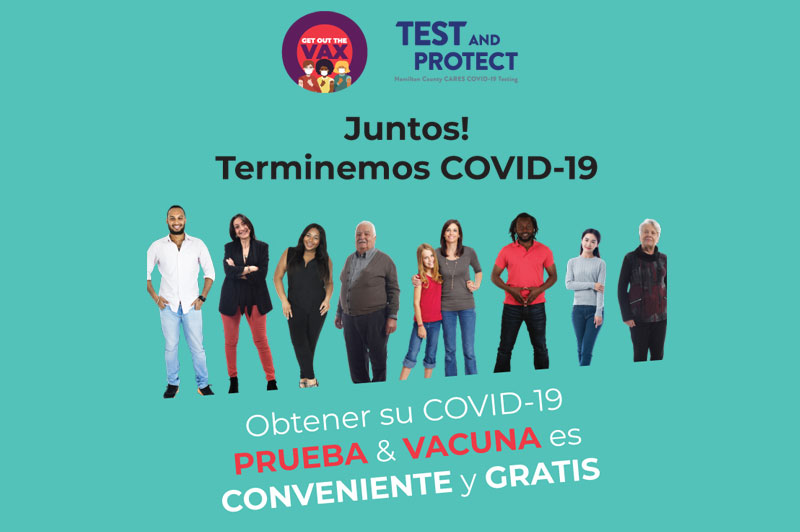
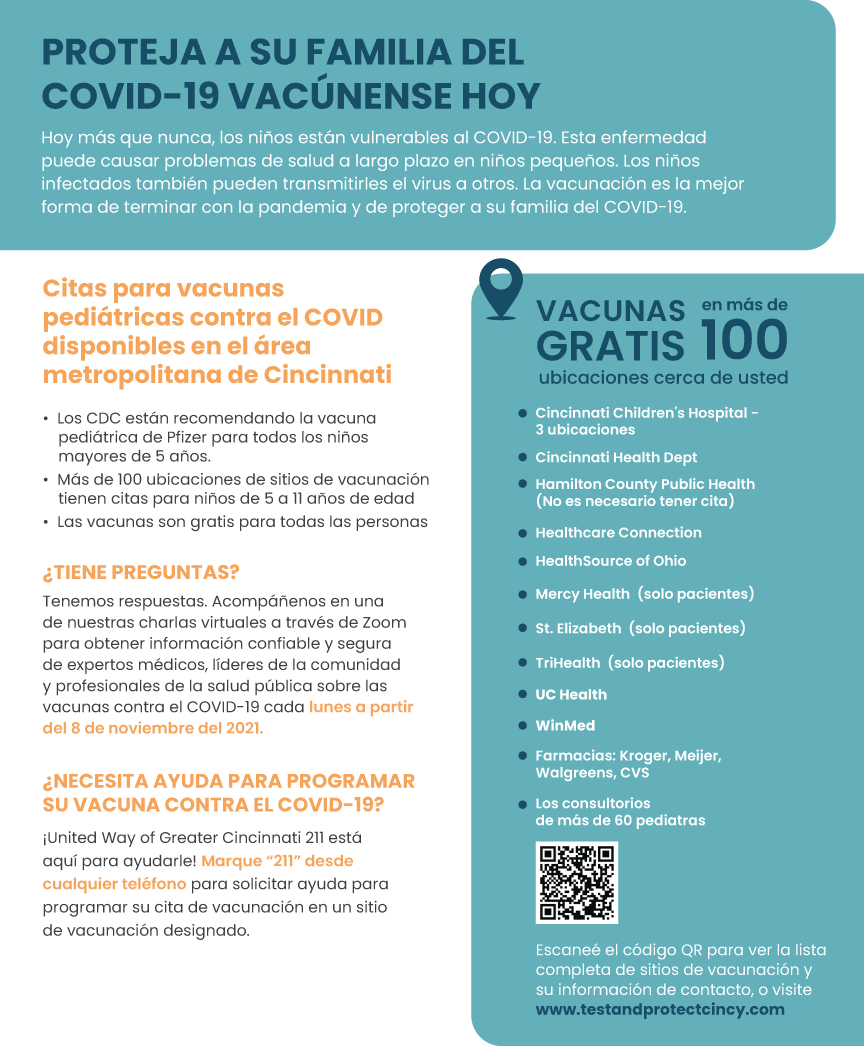
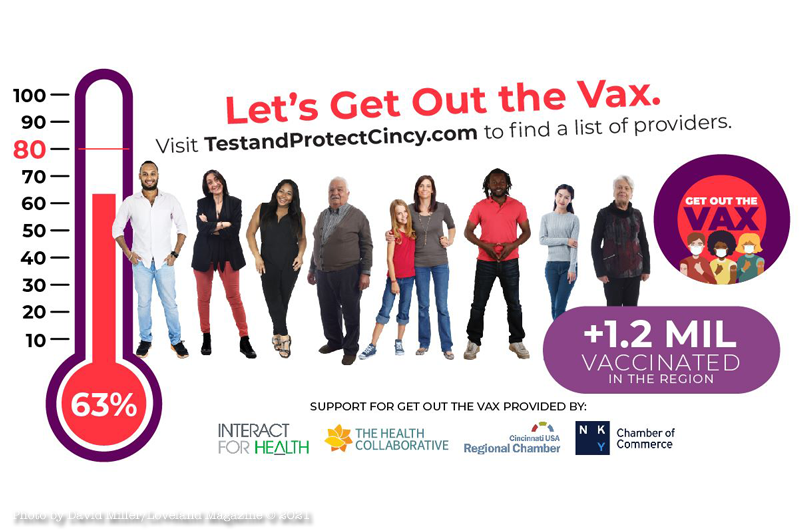
If you aren’t yet vaccinated for COVID-19, visit TestandProtectCincy.com to find locations near you this week! Make a plan to join your neighbors in trying to keep our community safe.
The Ohio Children’s Hospitals Association made a direct appeal on Tuesday, September 14 to school superintendents to require masks for staff and students during the current surge of the coronavirus.
Patty Manning, MD, is the Chief of Staff at Cincinnati Children’s Hospital Medical Center (Photo by CCHMC)
Patty Manning, MD, Chief of Staff, Cincinnati Children’s Hospital Medical Center said, “Our inpatient numbers are the highest they’ve been. Our ICUs are caring for more patients than there’s ever been. More children are on ventilators than there has ever been. There are more children than ever entering our emergency departments and our urgent care centers. That impacts the care of all children, not just those that are COVID-19 positive.”
The plea was made during a virtual meeting with superintendents and the clinical leadership from six Ohio children’s hospitals including Dayton Children’s Hospital, ProMedica Russell J. Ebeid Children’s Hospital, Cincinnati Children’s Hospital Medical Center, Nationwide Children’s Hospital, Akron Children’s Hospital, and University Hospitals Rainbow Babies & Children’s Hospital.
“The data are now clear that there is a higher level of COVID-19 in school districts where masks are not required,” said Governor DeWine. “If we want our schools to stay open, the best way to do that is for those 12 and over to get vaccinated. But because those under 12 are still too young to be vaccinated, we need students who come in to school to wear a mask until we get through this.”
The current policy of the Loveland City School District is that students in grades PreK-6 are required to wear a mask indoors. Students in grades 7-12 do not have to wear face coverings. All others, while in the buildings must wear masks.
Efforts to reach Loveland Superintendant Mike Broadwater via email, asking him if he attended the virtual meeting and had any comment about it have not been successful securing an email response.
In the background of this urgent plea is that State Reps. Jean Schmidt (R-Loveland/Miami Township) announced on August 25 she has introduced House Bill 400, which would prohibit public schools from mandating students to wear a mask. The bill introduction comes as statewide concerns from parents have heightened as several public schools, including the Loveland District have implemented school mask mandates for some of their students.
Data that support this appeal according to a new release from the Ohio Children’s Hospitals Association include:
Since August 15, 2021, there have been 29,823 Ohio school-aged kids ages 5 to 17 with confirmed and probable cases of COVID-19.
Cases among this age group increased 198 percent from the week of August 15th as compared to the week ending September 4.
As reported yesterday by the American Academy of Pediatrics, COVID-19 cases among children have increased 240 percent nationally since early July when the Delta variant began to surge. During that same period in Ohio, there has been a 2000 percent increase in cases among Ohio children.
COVID-19 cases are increasing at nearly twice the rate among school-aged kids as compared to the rest of the population. This past week Ohio saw a 44 percent increase among school-aged children and only a 17 percent increase among the rest of the population.
Over the two-week period ending September 4, 2021, there was an average of 909 cases per 100,000 school-aged Ohio kids versus 561 cases per 100,000 people comprising the rest of the population.
The 16 days with the highest number of cases per day throughout the entire pandemic for kids aged 5 to 17 in Ohio have all been in the last 19 days. This includes every day except the three days of the Labor Day weekend.
In Ohio school districts where masks are optional, among school-aged kids, there are both higher case rates per 100,000 at 945.7 and a greater week-over-week increase in cases. School districts where masks are optional have seen a 54 percent week-over-week increase compared to a 34 percent increase in school districts where masks are either required for all or required for some (usually K-8th grade).
Nick Lashutka, President and CEO of the Ohio Children’s Hospital Association “This is a perfect storm, and it’s impacting kids like it hasn’t before. It’s a combination driven by COVID-19 cases increasing, primarily driven by the Delta variant, increasing respiratory illnesses, more mental health challenges, and staffing challenges. Everyone can agree that our number one goal is to keep children in schools five days a week, and that’s what we shared with the state’s superintendents today.”
Debbie Feldman, President and CEO of Dayton Children’s Hospitals “Ohio is truly blessed to have some of the best children’s hospitals in the country. We pride ourselves on meeting the needs of our kids. Our commitment is really threatened right now. For a long time, COVID-19 was perceived as a disease that didn’t impact children. That’s not the case anymore. Today, 25 percent of COVID-19 cases are in kids. We’re feeling that in our children’s hospitals.”
Paula Grieb, DNP, RN, Chief Nursing Officer, ProMedica Russell J. Ebeid Children’s Hospital “In the city of Toledo and at Ebeid Children’s Hospital, we’ve seen significant in-patient and out-patient volumes, and we’ve seen a significant increase in kids with respiratory illnesses. We had a significant event occur last night in Lucas County. That means if a rescue squad responded to a 911 call and picked up a patient to take them to a hospital that was on EMS bypass, that rescue squad would not be allowed to stop at that hospital. The county EMS system would have to dispatch each call one at a time. That means a patient wouldn’t necessarily go to the hospital closest to them or best-suited to take care of the patients’ needs.”
Rustin Morse, MD, CEO, Nationwide Children’s Hospital “We are in uncharted territory. Not just in children’s hospitals, but adult hospitals as well. The infrastructure is strained like it hasn’t been before. We are asking people to get vaccinated if they aren’t already, and we are asking them to wear masks.”
Patty Manning, MD, Chief of Staff, Cincinnati Children’s Hospital Medical Center
“Our inpatient numbers are the highest they’ve been. Our ICUs are caring for more patients than there’s ever been. More children are on ventilators than there has ever been. There are more children than ever entering our emergency departments and our urgent care centers. That impacts the care of all children, not just those that are COVID-19 positive.”
From a press release by the U.S. Food and Drug Administration
Today, the U.S. Food and Drug Administration approved the first COVID-19 vaccine. The vaccine has been known as the Pfizer-BioNTech COVID-19 Vaccine, and will now be marketed as Comirnaty (koe-mir’-na-tee), for the prevention of COVID-19 disease in individuals 16 years of age and older.
The vaccine also continues to be available under emergency use authorization (EUA), including for individuals 12 through 15 years of age and for the administration of a third dose in certain immunocompromised individuals.
“The FDA’s approval of this vaccine is a milestone as we continue to battle the COVID-19 pandemic. While this and other vaccines have met the FDA’s rigorous, scientific standards for emergency use authorization, as the first FDA-approved COVID-19 vaccine, the public can be very confident that this vaccine meets the high standards for safety, effectiveness, and manufacturing quality the FDA requires of an approved product,” said Acting FDA Commissioner Janet Woodcock, M.D. “While millions of people have already safely received COVID-19 vaccines, we recognize that for some, the FDA approval of a vaccine may now instill additional confidence to get vaccinated. Today’s milestone puts us one step closer to altering the course of this pandemic in the U.S.”
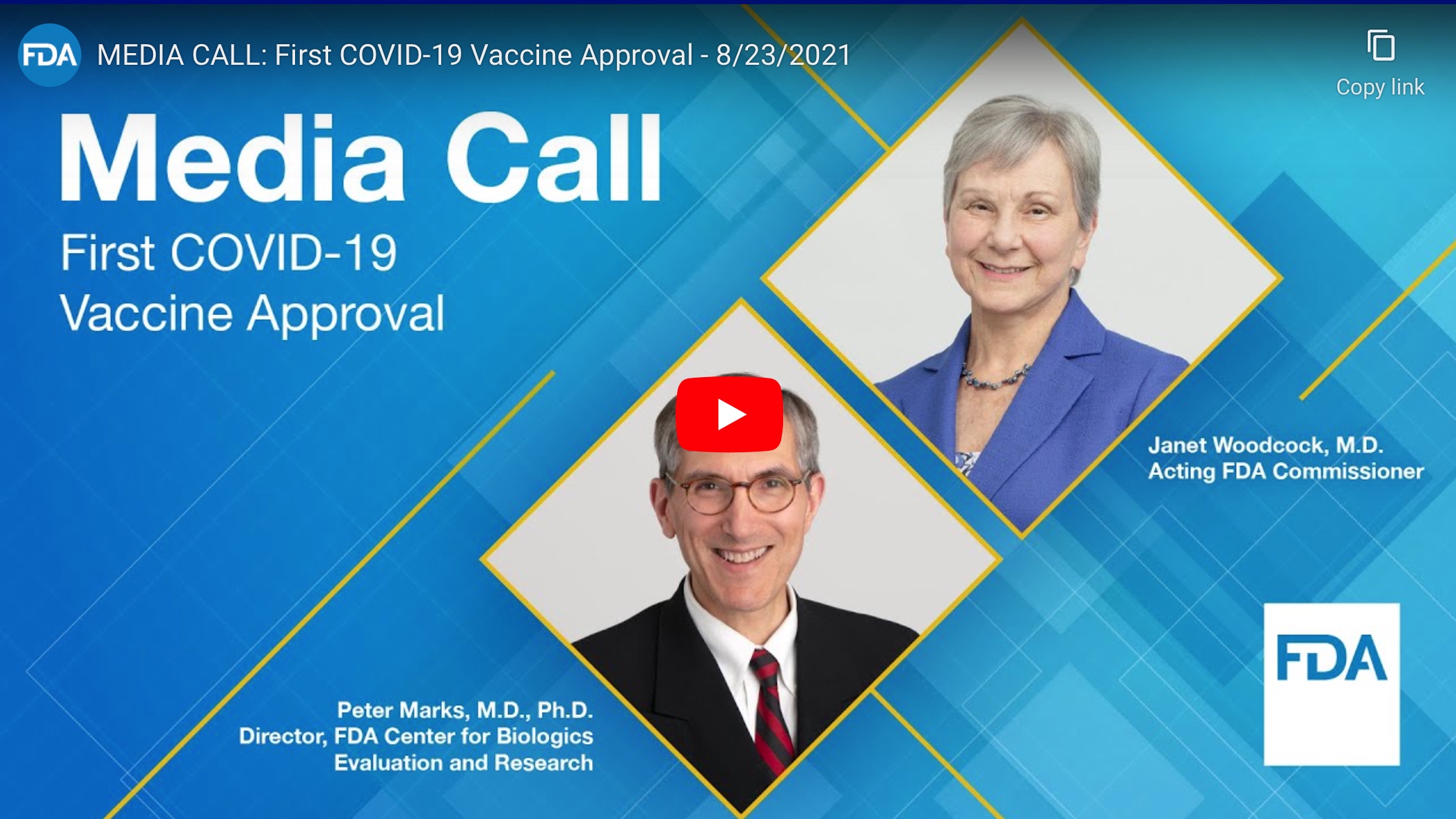
Watch Acting FDA Commissioner Dr. Janet Woodcock and FDA Center for Biologics Evaluation and Research Director Dr. Peter Marks participate in a media call to discuss FDA’s approval of the first COVID-19 vaccine.
Since Dec. 11, 2020, the Pfizer-BioNTech COVID-19 Vaccine has been available under EUA in individuals 16 years of age and older, and the authorization was expanded to include those 12 through 15 years of age on May 10, 2021. EUAs can be used by the FDA during public health emergencies to provide access to medical products that may be effective in preventing, diagnosing, or treating a disease, provided that the FDA determines that the known and potential benefits of a product, when used to prevent, diagnose, or treat the disease, outweigh the known and potential risks of the product.
FDA-approved vaccines undergo the agency’s standard process for reviewing the quality, safety and effectiveness of medical products. For all vaccines, the FDA evaluates data and information included in the manufacturer’s submission of a biologics license application (BLA). A BLA is a comprehensive document that is submitted to the agency providing very specific requirements. For Comirnaty, the BLA builds on the extensive data and information previously submitted that supported the EUA, such as preclinical and clinical data and information, as well as details of the manufacturing process, vaccine testing results to ensure vaccine quality, and inspections of the sites where the vaccine is made. The agency conducts its own analyses of the information in the BLA to make sure the vaccine is safe and effective and meets the FDA’s standards for approval.
Comirnaty contains messenger RNA (mRNA), a kind of genetic material. The mRNA is used by the body to make a mimic of one of the proteins in the virus that causes COVID-19. The result of a person receiving this vaccine is that their immune system will ultimately react defensively to the virus that causes COVID-19. The mRNA in Comirnaty is only present in the body for a short time and is not incorporated into – nor does it alter – an individual’s genetic material. Comirnaty has the same formulation as the EUA vaccine and is administered as a series of two doses, three weeks apart.
“Our scientific and medical experts conducted an incredibly thorough and thoughtful evaluation of this vaccine. We evaluated scientific data and information included in hundreds of thousands of pages, conducted our own analyses of Comirnaty’s safety and effectiveness, and performed a detailed assessment of the manufacturing processes, including inspections of the manufacturing facilities,” said Peter Marks, M.D., Ph.D., director of FDA’s Center for Biologics Evaluation and Research. “We have not lost sight that the COVID-19 public health crisis continues in the U.S. and that the public is counting on safe and effective vaccines. The public and medical community can be confident that although we approved this vaccine expeditiously, it was fully in keeping with our existing high standards for vaccines in the U.S.”
FDA Evaluation of Safety and Effectiveness Data for Approval for 16 Years of Age and Older
The first EUA, issued Dec. 11, for the Pfizer-BioNTech COVID-19 Vaccine for individuals 16 years of age and older was based on safety and effectiveness datafrom a randomized, controlled, blinded ongoing clinical trial of thousands of individuals.
To support the FDA’s approval decision today, the FDA reviewed updated data from the clinical trial which supported the EUA and included a longer duration of follow-up in a larger clinical trial population.
Additionally, the FDA conducted a rigorous evaluation of the post-authorization safety surveillance data pertaining to myocarditis and pericarditis following administration of the Pfizer-BioNTech COVID-19 Vaccine and has determined that the data demonstrate increased risks, particularly within the seven days following the second dose. The observed risk is higher among males under 40 years of age compared to females and older males. The observed risk is highest in males 12 through 17 years of age. Available data from short-term follow-up suggest that most individuals have had resolution of symptoms. However, some individuals required intensive care support. Information is not yet available about potential long-term health outcomes. The Comirnaty Prescribing Information includes a warning about these risks.
Ongoing Safety Monitoring
Specifically, in the FDA’s review for approval, the agency analyzed effectiveness data from approximately 20,000 vaccine and 20,000 placebo recipients ages 16 and older who did not have evidence of the COVID-19 virus infection within a week of receiving the second dose. The safety of Comirnaty was evaluated in approximately 22,000 people who received the vaccine and 22,000 people who received a placebo 16 years of age and older.
Based on results from the clinical trial, the vaccine was 91% effective in preventing COVID-19 disease.
More than half of the clinical trial participants were followed for safety outcomes for at least four months after the second dose. Overall, approximately 12,000 recipients have been followed for at least 6 months.
The most commonly reported side effects by those clinical trial participants who received Comirnaty were pain, redness and swelling at the injection site, fatigue, headache, muscle or joint pain, chills, and fever. The vaccine is effective in preventing COVID-19 and potentially serious outcomes including hospitalization and death.
The FDA and Centers for Disease Control and Prevention have monitoring systems in place to ensure that any safety concerns continue to be identified and evaluated in a timely manner. In addition, the FDA is requiring the company to conduct postmarketing studies to further assess the risks of myocarditis and pericarditis following vaccination with Comirnaty. These studies will include an evaluation of long-term outcomes among individuals who develop myocarditis following vaccination with Comirnaty. In addition, although not FDA requirements, the company has committed to additional post-marketing safety studies, including conducting a pregnancy registry study to evaluate pregnancy and infant outcomes after receipt of Comirnaty during pregnancy.
The FDA granted this application Priority Review. The approval was granted to BioNTech Manufacturing GmbH.
EDITOR’S NOTE: This story was updated 6:55 AM 7-29 to reflect that Loveland Schools will return to full in-person learning in August.
Loveland, Ohio – Below is the face covering and mask requirements for the current school year in Loveland schools. This policy was adopted by the Board of Education on June 3, 2021.
There will be no remote learning opportunities for teachers or students as all school buildings will return to full capacity in-person classes in August. The District announced on May 7 that, “Due to a lack of interest from our families, Loveland City School District will not be offering the Remote Academy for the 2021-2022 school year. We look forward to welcoming back all of our students for five-day per week in-person learning in the fall!”
Revised June 3, 2021
8450.01 – USE OF FACE COVERINGS/MASKS
The Loveland Board of Education is committed to providing students, staff, and visitors with a safe and healthy environment.
On May 12, 2021, Ohio Governor Mike DeWine lifted the State’s COVID – 19 mask requirements, including the requirement of face coverings inside public buildings, effective June 2, 2021 Furthermore, he declared that local school districts will make their own determinations on Covid-19 mitigation efforts, including the wearing of masks and/or face shields.
As of the adoption date, June 3, 2021, of this updated policy, unless required by additional mandates, the decision to wear face coverings/masks on school buses, in school buildings, or at other school events, will be left to adult individuals and parents/guardians of K-12 students. The Loveland City Schools will continue to follow COVID-19 mitigation protocols to maintain a healthy environment for students, staff, and visitors and will continue to provide recommendations for personal protection from the spread of infectious diseases.
In order to maintain a healthy environment, the Board will follow any mandates set forth by the Ohio Governor, Ohio State Health Department, Hamilton County Health Department, and Ohio Department of Education, (“Directing Entities”) as it relates to protecting the health of students, staff and visitors. When any of these Directing Entities requires staff, students, and visitors to wear face coverings/masks while attending school, reporting to work at a school, or visiting a school, the District’s Administration will follow and enforce such directives.
For the final Ohio Vax-a-Million drawing, 3,469,542 vaccinated adults entered for a chance to win $1 million, and 154,889 vaccinated youth entered for a chance to win a college scholarship. This is an increase of 41,028 adult entries and 4,702 youth entries over last week.
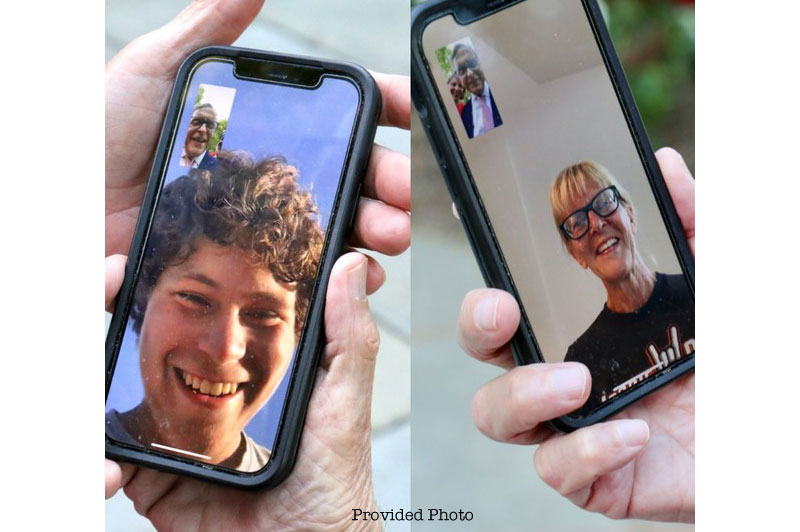
Ohio Vax-A-Million’s newest winners joined Governor DeWine Thursday morning to discuss why they chose to be vaccinated and their excitement of being selected during this week’s drawing.
Esperanza Diaz from Cincinnati won the final week’s $1 million prize, and Sydney Daum from Brecksville in Cuyahoga County won the college scholarship prize.
“I got the Pfizer vaccine, and I didn’t have any side effects, I was completely OK,” said Diaz. I would recommend it to everyone. I think it can save a lot of lives.”
“We were always planning to get her vaccinated, but we were going to wait later in the summer to have her fully vaccinated by the time school started,” said Jennifer Daum, Sydney’s mother. “When (Governor DeWine) announced Vax-a-Million we thought this would be a good time to do it now, and we did, and we can’t believe it paid off.”
For week four of Ohio Vax-a-Million drawing, 3,428,514 vaccinated adults entered for a chance to win $1 million, and 150,187 vaccinated youth entered for a chance to win a college scholarship. This is an increase in 66,311 adult entries and 6,583 youth entries over the previous week.
Ohio Vax-A-Million’s newest winners joined Governor DeWine Thursday morning to discuss why they chose to be vaccinated and their excitement of being selected during this week’s drawing.
Suzanne Ward from Findlay in Hancock County won this week’s $1 million prize, and Sean Horning from Cincinnati won this week’s college scholarship prize.
“I did not have any hesitation when my age group came up to get vaccinated,” said Ward. “I would encourage anybody to get vaccinated. I think it’s the smart thing to do from a health perspective.”
“I always knew it was the best for everyone,” said Lina Horning, who is Sean’s mother and experienced having COVID-19. “I encouraged my son to do it for the safety of our community and everyone.”
Week 1:
Abbigail Bugenske, 22, of Silverton.
Joseph Costello, 14, of Englewood, won the college scholarship.
Week 2:
Jonathan Carlyle, of Toledo
Zoie Vincent, of Mayfield Village won the college scholarship.
Week 3:
Mark Cline, of Richwood.
Sheffield Lake 13-year-old Sara Afaneh from Sheffield Lake won the college scholarship.
Week 4:
Suzanne Ward, of Findlay
Sean Horning, of Cincinnati won the college scholarship.
There is one more Ohio Vax-a-Million drawing left and Governor DeWine encouraged all eligible Ohioans to get vaccinated and enter to win. For more information and to enter, visit ohiovaxamillion.com. Ohioans 18 and older who have received at least one dose of the COVID-19 vaccine can enter to win a $1 million prize. Ohioans ages 12-17 who have received at least one dose of the COVID-19 vaccine can enter to win a four-year college scholarship to any Ohio state college or university.
When Ohio reaches 50 cases per 100,000 people for two weeks, all health orders will be lifted.
Read on and watch this message from Anthony Munoz, retired Cincinnati Bengal and Pro Football Hall of Famer, who was recently vaccinated.
Yesterday, Ohio Governor Mike DeWine provided the following updates on Ohio’s response to the COVID-19 pandemic.
STATEWIDE CASE RATE
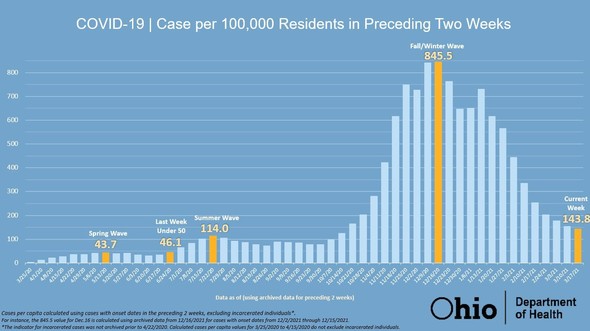
Governor DeWine announced that Ohio’s statewide case rate stands at 143.8 cases per 100,000 people over the past two weeks. When Ohio reaches 50 cases per 100,000 people for two weeks, all health orders will be lifted.
OHIO PUBLIC HEALTH ADVISORY SYSTEM
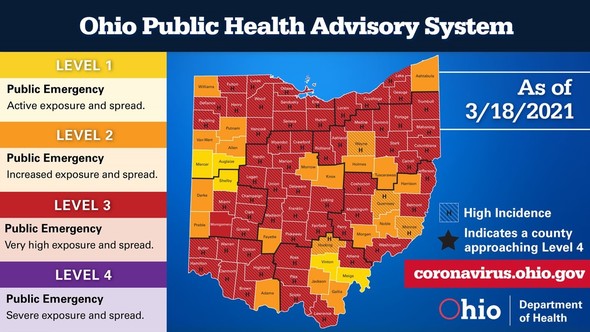
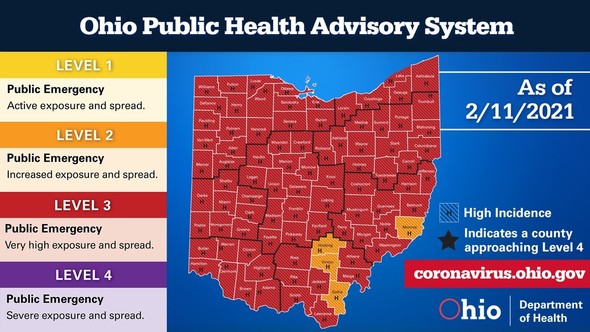
New health data compiled by the Ohio Department of Health shows declining rates of COVID-19 exposure and spread in ten counties.
Dropping from Alert Level 3 to Alert Level 2: Ashtabula, Carroll, Fayette, Jackson, Morrow, and Tuscarawas.
Dropping from Alert Level 2 to Alert Level 1: Auglaize, Mercer, Shelby, and Vinton.
NURSING HOME UPDATE
This week, Ohio’s long-term care facilities reported just 70 new COVID-19 cases, compared to 157 new cases reported the previous week and 2,832 new cases reported at the peak of the pandemic in December.
“In addition to wearing masks, social distancing, and cleaning, there is no doubt of the significant impact vaccination is having on protecting nursing home residents and preventing severe illness and death among those most targeted by the virus,” said Governor DeWine.
A total of 93 percent of Ohio’s nursing homes and 77 percent of assisted living facilities have signed up to get additional vaccine for new staff and new residents through Ohio’s COVID-19 Vaccine Maintenance Program. Governor DeWine urged the 243 facilities in Ohio that have not requested additional vaccine for new staff and residents to alert the state to its process to offer the vaccine by filling out the survey at aging.ohio.gov/COVIDvaccine.
INDOOR AIR QUALITY ASSISTANCE PROGRAM
The Ohio Bureau of Workers’ Compensation has expanded the eligibility of the COVID-19 Indoor Air Quality Assistance Program, which provides reimbursements to eligible applicants to help cover the costs of inspections, assessments, maintenance, and improvements to indoor heating, ventilation, and air conditioning systems to control the spread of COVID-19. The program also provides reimbursement for secondary devices designed to destroy bacteria, mold, and viruses.
Launched in December, this $28 million federally-funded program targeted nursing homes, assisted living centers, and adult day centers that invested in HVAC improvements that weaken COVID-19’s spread. The expanded eligibility extends to:
Intermediate care facilities;
Hospices;
Senior centers;
Adult care facilities;
Waiver settings (group homes); and
Substance use treatment centers.
More information, including the application, can be found at BWC.ohio.gov.
Ohio Governor Mike DeWine and Lt. Governor Jon Husted yesterday provided the following updates on Ohio’s response to the COVID-19 pandemic.
VACCINE DISTRIBUTION UPDATE
Governor DeWine announced today that Ohio received a total of 214,525 first doses of vaccine this week. A total of 223,025 first doses are scheduled to arrive in Ohio during the week of February 15.
The federal retail pharmacy program will soon begin allotting doses to Ohio’s more than 160 Rite Aid pharmacies. Vaccine distribution will also expand into all 194 Kroger pharmacies.
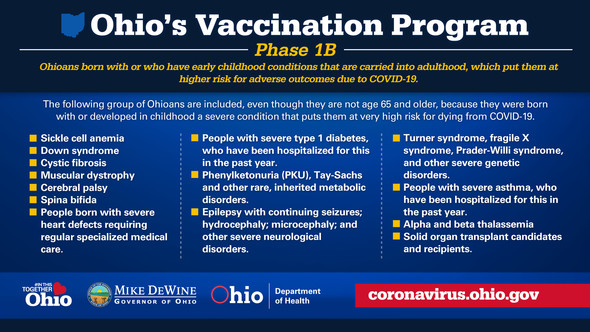
Those with specific medical conditions that put them at a very high risk of dying from COVID-19 will be eligible for vaccinations next week.
Ohioans born with the medical conditions outlined below, or those who were diagnosed in early childhood whose conditions continued into adulthood, will qualify to be vaccinated beginning on February 15.
Dr. Bruce Vanderhoff, chief medical officer at Ohio Department of Health, explained these conditions in more detail. His remarks are available on the Ohio Channel’s YouTube page.
Approximately 12,000 individuals with these severe medical conditions and developmental disabilities have already been vaccinated, and vaccinations of those in this group will continue.
NURSING HOME CASES
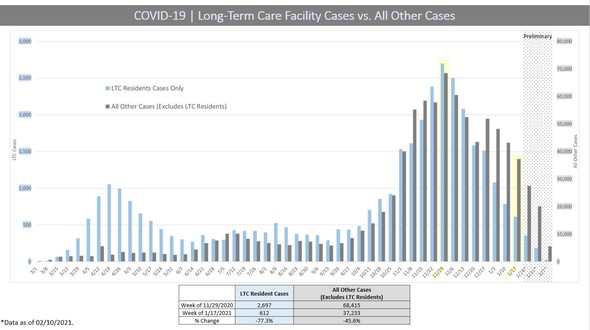
Governor DeWine announced today that the number of COVID-19 cases in Ohio’s nursing homes has dropped more than 77 percent since late November. This dramatic drop in cases follows Ohio’s aggressive efforts to vaccinate residents and staff in Ohio’s long-term care facilities.
As outlined in the chart below, there were 2,697 COVID-19 cases in long-term care facilities in Ohio during the week of November 29, 2021. During the week of January 17, there were 612 positive cases.
SCHOOL MODEL UPDATE
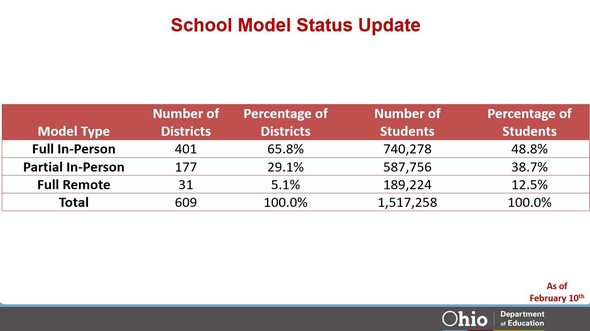
Governor DeWine shared the latest information on the number of school districts that are physically in school versus those that are fully or partially remote. As a condition to receive priority access to the vaccine, schools were required to commit to full or partial in-person learning by March 1. All but one school district in Ohio have committed to this plan.
OHIO PUBLIC HEALTH ADVISORY SYSTEM
There was no change in this week’s Ohio Public Health Advisory System map. A county-by-county breakdown outlining the presence of COVID-19 in all of Ohio’s 88 counties can be found on the Ohio Public Health Advisory System’s website.
CURRENT CASE DATA (2-12-21)
In total, there are 931,437 confirmed and probable cases of COVID-19 reported in Ohio and 12,577 confirmed and probable COVID-19 deaths. A total of 48,269 people have been hospitalized throughout the pandemic, including 6,908 admissions to intensive care units. In-depth data can be accessed by visiting coronavirus.ohio.gov.
Video of today’s full update, including versions with foreign language translation, can be viewed on the Ohio Channel’s YouTube page.
For more information on Ohio’s response to COVID-19, visit coronavirus.ohio.gov or call 1-833-4-ASK-ODH.



![[Watch video] Ohio Children’s Hospital leaders briefing for school administrators – September 14, 2021](https://lovelandmagazine.com/wp-content/uploads/2021/09/Childrens-Hospitals-Association-video.jpg)