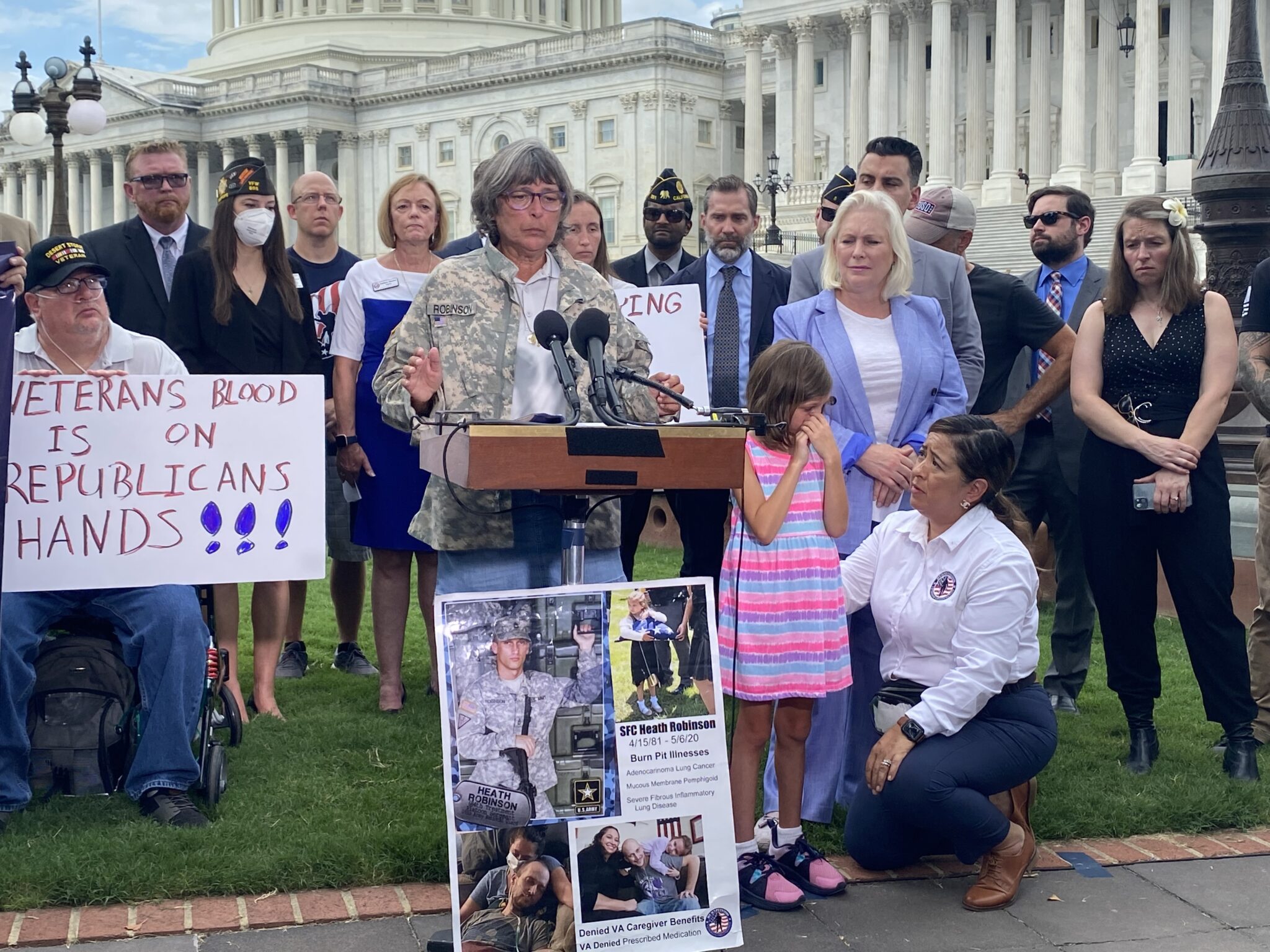
Susan Zeier, mother-in-law of late Sgt. First Class Heath Robinson of the Ohio National Guard, speaks during a press conference on the PACT Act on July 28, 2022 while Rosie Torres, co-founder of Burn Pits 360, comforts Robinson’s daughter, Brielle Robinson. (Photo by Jennifer Shutt, States Newsroom.)
WASHINGTON — President Joe Biden on Friday celebrated the number of veterans enrolled in VA health care and benefits as part of a law he signed nearly two years ago, though he said more work must be done for troops who were stationed at a base in Uzbekistan in the early 2000s.
“Two years ago, I signed the bipartisan Sergeant First Class Heath Robinson Honoring Our Promise to Address Comprehensive Toxins (PACT) Act enacting the most significant expansion of benefits and health care for toxic exposed veterans and their survivors in over thirty years,” Biden wrote in a statement.
The law, which spent years gaining the support it needed in Congress, expanded health care coverage and benefits for veterans exposed to toxic substances like Agent Orange and open-air burn pits.
To date, more than 1 million veterans and 10,000 survivors of veterans who died have begun to receive disability benefits stemming from the law, accounting for approximately $6.8 billion in earned benefits.
Biden said in his statement that his administration would continue studying veterans’ other illnesses for a “presumptive status,” which could ensure them access to health care and benefits without having to prove to the VA that their conditions are directly linked to their military service.
The VA is also planning to “close loopholes for certain veterans exposed to harmful toxins during their military service,” Biden wrote, without elaborating.
A White House fact sheet says the VA is looking into providing benefits for 16,000 veterans who served at Karshi-Khanabad in Uzbekistan, also known as K2, between 2001 and 2005, since there were “several contaminants…in either the air, water, soil, or soil gas.”
“VA plans to take steps to consider veterans who served in Uzbekistan as Persian Gulf Veterans so that any veteran who served at K2 and who experience undiagnosed illness and medically unexplained chronic multi-symptom illnesses can get the benefits they deserve,” it states. “VA will also create new training materials for claims processors and examiners on the hazards identified at K2.”
Since the law — known as the Promise to Address Comprehensive Toxics Act or the PACT Act — took effect nearly two years ago, the VA says that 739,421 veterans have enrolled in its health care programs.
Of that total, 333,767 veterans are covered under the new law, including those who served in the Vietnam War, the Gulf War and the wars that followed the Sept. 11 attacks.
The numbers released Friday are significantly higher than they were when Biden gave a speech on the law’s one-year anniversary. The VA said at the time, which was one year ago, that 408,581 veterans had filed their claims and that 348,469 of those had been approved.
Secretary of Veterans Affairs Denis McDonough said on a call with reporters at the time the law had led to “more than $5.7 billion in earned benefits for veterans.”
The exact number of veterans with approved PACT Act claims as of Friday stood at 1,005,341 while the number of survivors approved had reached 10,777.
A total of 1,251,720 veterans so far have completed filing Pact Act claims as have 21,416 survivors.
The VA has an interactive dashboard that provides veterans with information about how to apply for health care and benefits under the PACT Act as well as how many claims have been submitted.
The VA has a calendar of in-person events that can be found here. Veterans or their family members can also call the VA at 800-698-2411 to inquire about PACT Act benefits.
Jennifer Shutt
Jennifer covers the nation’s capital as a senior reporter for States Newsroom. Her coverage areas include congressional policy, politics and legal challenges with a focus on health care, unemployment, housing and aid to families.
Ohio Capital Journal is part of States Newsroom, the nation’s largest state-focused nonprofit news organization.
Rocky is a member of the Congressional Committee for the 50th Anniversary of the Vietnam War and the Purple Heart Foundation. He is an active board member of the Warriors to Citizens Foundation, which is devoted to helping soldiers, police, fire, EMTs, and their families recover from the psychological harm caused by career-induced stress.
Rocky will share his story about his time in Vietnam and his amazing journey to recovery from injuries sustained while in the service.
6 PM: Pre-event live music from the ‘60s and ‘70s with The Remains
Live music from the ‘60s and ‘70s with The Remains
Concessions available for purchase throughout the event
7 PM: Tribute program begins
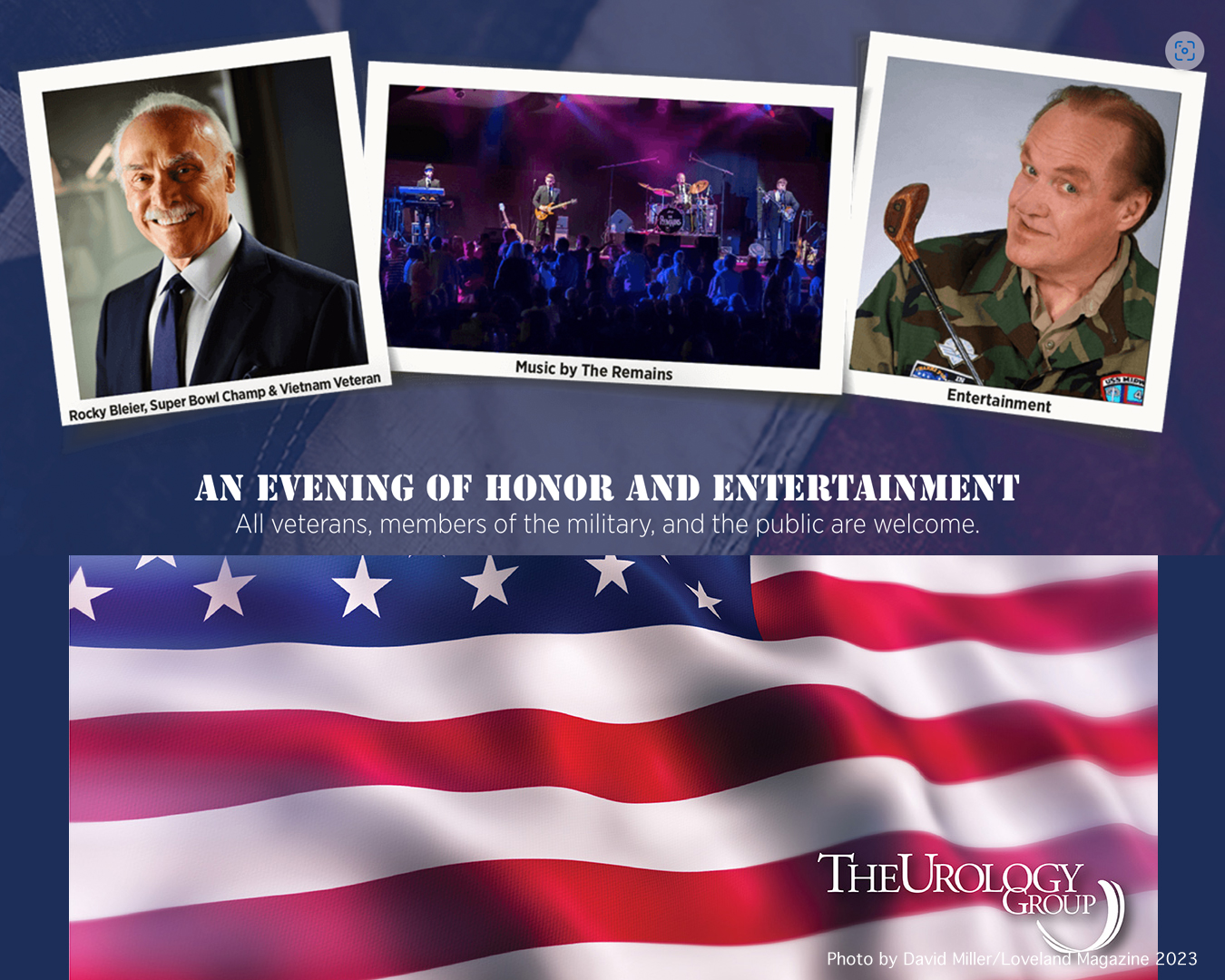
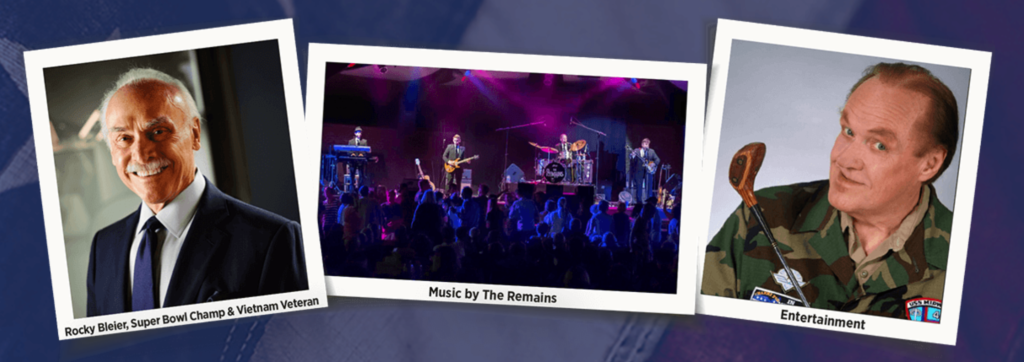
Rocky Bleier, Super Bowl Champ and Vietnam Veteran
Entertainment acts, including Bob Hope impersonator and tribute by Bill Cunningham
Stories of Vietnam veterans
Recognition of veterans from all eras and military branches
Rocky is a member of the Congressional Committee for the 50th Anniversary of the Vietnam War and the Purple Heart Foundation. He is an active board member of the Warriors to Citizens Foundation, which is devoted to helping soldiers, police, fire, EMTs, and their families recover from the psychological harm caused by career-induced stress.
Rocky will share his story about his time in Vietnam and his amazing journey to recovery from injuries sustained while in the service.
6 PM: Pre-event live music from the ‘60s and ‘70s with The Remains
Live music from the ‘60s and ‘70s with The Remains
Concessions available for purchase throughout the event
7 PM: Tribute program begins
Rocky Bleier, Super Bowl Champ and Vietnam Veteran
Entertainment acts, including Bob Hope impersonator and tribute by Bill Cunningham
Stories of Vietnam veterans
Recognition of veterans from all eras and military branches
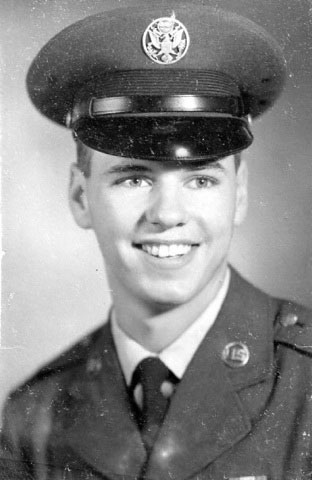
My name is Gerald (Jerry), Wilson. I was a Sergeant, USAF (United States Air Force) 1966-1970, and my title was Security Police Specialist.
Gerald (Jerry), Wilson was drafted but enlisted in the Air Force and served from 1966 until 1969
From 1966-1969 I was stationed at Altus AFB, Oklahoma. I was a Security Police Specialist and worked in the Pass & Identification Office on the base. In Vietnam, I was the Liaison Officer and my job was to communicate and plot on a map of the locations of the Korean, Australian and American patrols, so they wouldn’t be hit by airstrikes that were called in by the jungle patrols.
In 1965, I graduated from Loveland High School at the age of 18. It was a Government requirement to register for the draft if you were a male and 18 years old.
Read my invitation to join our local VFW Post.
In May of 1966, I was hired by the General Electric Company as a Computer Operator. I thought I was on top of the world, having a good job and earning a decent wage.
Then my world was turned upside down when I received my draft notice and date to take a physical exam for the US Army. The Vietnam War had already begun in the early 1960s. The government was escalating the buildup of troops (particularly the Army and Marines) in going to Vietnam.
The media and local television networks were very vocal about the escalation of troops for the military. A lot of political unrest and an extreme amount of protests were held across America. There was lots of turmoil from coast to coast and the late 1960s in the U.S. and it became a time of youth rebellion, mass gatherings, and riots.
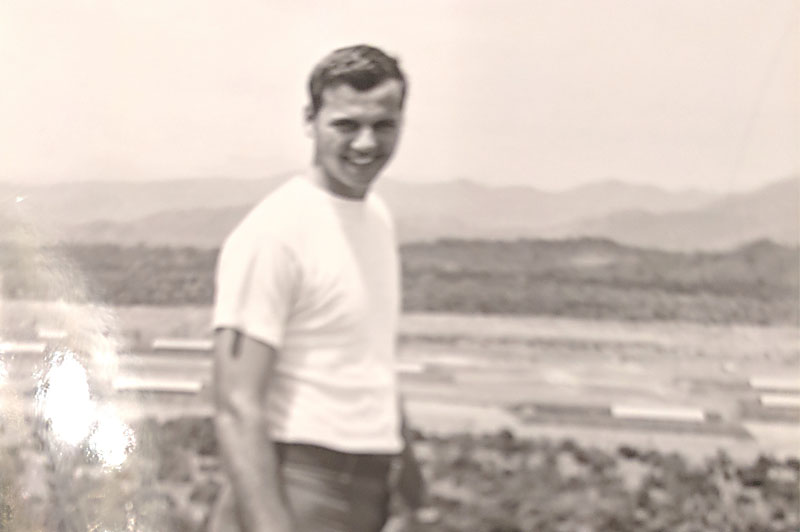
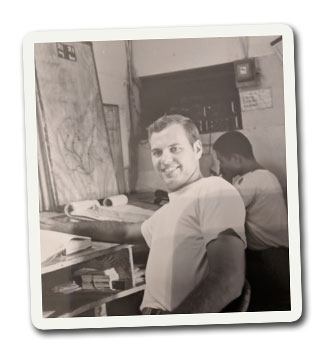
Here I am in 1969 at Phan Rang Air Force Base in the Republic of Vietnam. My job was to communicate and plot on a map of the locations of the Korean, Australian and American patrols, so they wouldn’t be hit by airstrikes that were called in by the jungle patrols.
There was a very high-profile opposition to the Vietnam War which turned into street protests to turn U.S. political opinion against the war. The protests gained momentum from the Civil Rights Movement. The opposition to the war contributed to the Counterculture of the 1960s and the war contributed towards youth cynicism towards actions of the government.
My parents were quite aware of this situation. They were in fear as much as I was of me having to join the Army and be sent to Vietnam. There was no doubt as to where I would be going if I went into the Army. My parents did not want me to make that choice. Their assistance and guidance were to enlist into another branch of the military. However, I had no choice but to take the physical exam that day.
During the 1960s, you could take the physical exam and still have a choice to select what branch of the service to enlist. My initial and first choice was the Navy. I visited the naval recruiter the same day I took the physical exam. I was disappointed when the recruiter told me that their quota for the month had been filled and that there was not a waiting list that I could be put on.
Fortunately, the USAF Recruiting office was on the same floor as the Navy, so I went next door and talked to the Air Force recruiter. Since I had passed the physical exam all that was required of me, was to pass the selective service exam. I went back the following week to take that exam.
After several hours of waiting for the results of the exam, I was told that I had passed. Again, I was disappointed when they told me that I had to wait for the following month to enlist because their quota had also been filled for September.
On October 10th, 1966 I was sworn into the USAF. We had a few hours to spend with our families before we were immediately loaded on a bus to ride to the Greater Cincinnati Airport to fly to San Antonio, Texas Lakeland AFB to begin (BMTS) the basic military training school. This was a bittersweet moment for me at this stage of my life. I was thrilled about flying on an airplane for the very first time but yet scared of having to leave my family and girlfriend behind for the very first time. I had ten sisters and three brothers and we were very close to each other. I had never spent more than a couple of days away from my family, so this was a very hard adjustment period for me.
My parents were quite relieved when I finished basic training and technical school and would be assigned to the Altus Air Force Base in Altus, Oklahoma. I stayed at this airbase from Dec. 1966 through April of 1969.
I received my orders that I was going to Phan Rang AFB, Vietnam in April 1969 but first I had to report for AZR training, a combat preparedness course once again in San Antonio, Texas for 6 weeks. This was a very intensive combat training while in all kinds of weather elements. The conditions ranged from being very hot, humid, and at times extremely wet.
These conditions were extreme and it was very difficult to learn the guerrilla warfare and tactical training skills for one’s survival. But learn these skills I did! I was able to go home for three weeks prior to my departure to Vietnam. I spent this short period of time with my family and fiancée. It was a very tearful goodbye at the airport on the day I left.
I knew several people who were drafted into the Army and Marines. Several classmates from my high school were killed in Vietnam. Most of the friends I knew either went to college or enlisted in the military. I did not have any close friends that tried to get out of going into the military.
I had read in the local newspaper at that time that several individuals in the Cincinnati area had evaded the draft and went to Canada. They were soon to be known or labeled as draft dodgers. At the time they were not allowed to come back to the United States to live.
The Air Force provided all appropriate military clothing which was camouflaged and lightweight. I had to be vaccinated for typhoid, tetanus, malaria, measles, smallpox, and diphtheria.
I left for Vietnam on May 26, 1969, when he was 21 years old. “My thoughts when I left my family for Vietnam were of concern and definitely frightened of the unknown.”
My family and close friends naturally did not want me to go but they knew that it was the right thing to do and they were very proud and supportive of me while serving in both the military and Vietnam.
I left for Vietnam on May 26, 1969. I was 21 years old. My thoughts when I left my family for Vietnam were of concern and definitely frightened of the unknown. There were always thoughts of fear and uncertainty. However, due to my strong Christian faith, belief in God, and lots of prayers I found the strength and courage to face any obstacles that came along. I received lots of encouragement and support from my family and friends.
The military communication about the war was very low key and kept out of the Stars and Stripes newspaper that we read in Vietnam. The war had a major impact on U.S. politics, culture, and foreign policy of the United States including foreign relations. Americans were deeply divided over the U.S. government’s justification for and means of fighting the war. At that time, I truly did not understand why we were at war and it didn’t make sense to being there at the time. After I got out of the service, immediately following my tour of Vietnam, I was able to comprehend and understand what the war was about and why we were there.
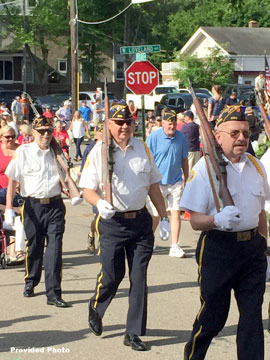
Jerry Wilson is the Quartermaster of the Loveland Veterans of Foreign Wars and a member of the Loveland American Legion Color Guard. This photo is of Jerry (center) marching in the 2019 Memorial Day Parade in Loveland.
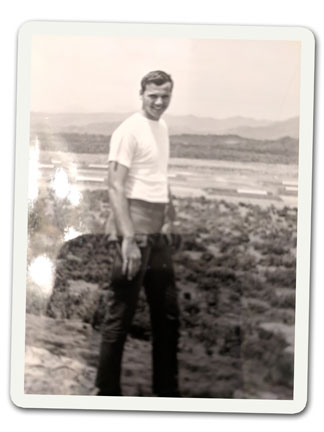
When we first arrived in Vietnam we saw beautiful beaches with white sand and the prettiest blue water that I had ever seen. It was really a beautiful country with mountains and ocean so close to each other. But the reality of what lay ahead was the tropical jungle and forest and the many hundreds, thousands of rice patties. I guess what impacted my memory the most was seeing my first dead Viet Cong. It was not a pretty picture.
I made friends with several Koreans, Australians and other Americans with whom I keep in contact with today.
The worse part of the war for me was being away from my family and fiancée for a whole year. We didn’t have computers to email nor cell phones that we could use for calling home. Writing letters was our only means of communication, some were few and far between. The best was receiving packages of real food and homemade cookies along with letters filled with love and hope from home.
Being in Vietnam, the military allowed you to take a week of R&R (rest and relaxation) and I chose to go with a buddy to Hong Kong. I was able to travel there to see the Hong Kong Province and visit the country of China which included seeing the Great Wall, as well as shopping and buying clothes, shoes, camera, and video equipment that I got to send home.
I left Vietnam on May 26th, 1970. I was 22 years old. When I arrived home, I was treated with respect by my family and close friends, however, the public view was entirely different.
Protestors were waiting at the airports and bus stations to pounce on the soldiers as they arrived home. Most soldiers were met with unkind and vulgar words. Large gatherings of people were seen spitting and shouting at them saying that they were baby killers and murderers of innocent men, women, and children.
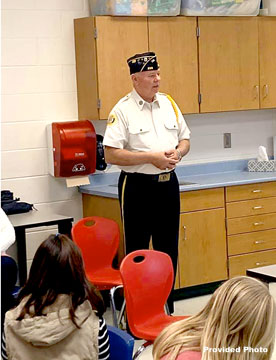
Jerry Wilson speaking to a class at Meadowview Elementary School
I’ve often been asked if I would do it again if requested by the U.S.? Of course, my answer would be yes – because I love my country.
When duty called, we answered. Some were drafted, others enlisted. It didn’t matter where we came from and how we got there. None could imagine what waited for us on the other side of the world.
More than two million Americans served in the Vietnam War. Together we fought against a relentless enemy in an unforgiving country. Some were wounded, some became prisoners of war, and others paid the ultimate price. In Vietnam, boys became men, men became warriors, and warriors became Brothers. We built a bond of “Brotherhood” that will never be broken.
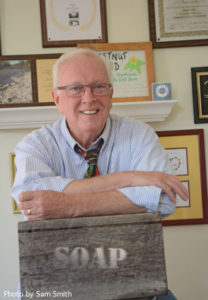
David Miller is the Publisher and Editor of Loveland Magazine and a Vietnam combat veteran.
by David Miller
Back in early 2011, I heard that the Vietnam Veterans of America Chapter 649, from the Batavia area, were collecting torn and tattered American flags. They would have a proper retirement ceremony for the flags they collected. I contacted the organization to see if Loveland folks could participate. As much as anything, it was a selfish question because I had several old flags in my own basement that I never knew what to do with. When they said, “Yes of course.”, I began to think of a way to collect flags in Loveland.
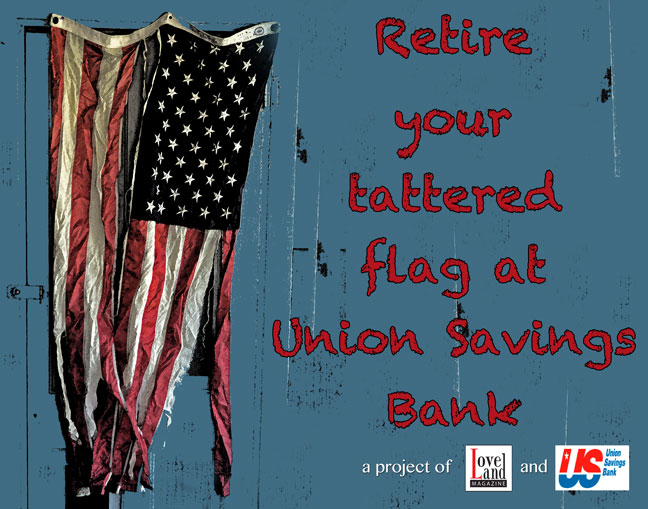
Union Savings Bank is right next door to our office on West Loveland and I had known the Branch Manager for many decades so decided to ask that if I put a collection bin in the lobby of the bank, would it be OK. Marla Simiele thought it would be a great service to offer her customers, and over the last 4-years we have collected perhaps 500 old, torn, and tattered flags. The first batch was taken to the Veteran’s group and those flags were then taken after a retirement ceremony to the Tufts Schildmeyer Family Funeral Homes Cremation Center in Goshen where they were turned into ashes. The ashes were buried in a Goshen Township cemetery.
Simiele and I decided that because of the popularity of the program we would do it year-round and although they have never been counted, I estimate we have collected more than 500. Simiele says it has been very popular with bank customers.
Over the years, every time I spoke to a scout leader I would ask if their troop would like to conduct a flag retirement ceremony to help me properly dispose of all the flags. I put pleas on community bulletin boards and still had no takers until I met a local leader this winter who I was buying a record turntable from. As we talked, he mentioned his son was in scouting and that he would ask at their next scout meeting about doing a retirement ceremony for the flags. After another couple months, I finally got a call from Kirk McCracken a local Cub Master, who said he would like some flags for a project. Kirk visited Loveland Magazine and he told me the story of taking his father on an “Honor Flight” and that one of the favorite things about the trip was when his father received a star from a retired American flag when he returned from Washington D.C. and was greeted at Cincinnati/Northern Kentucky International Airport. Kirk wanted local scouts to have a supply of stars for projects like Honor Flight.
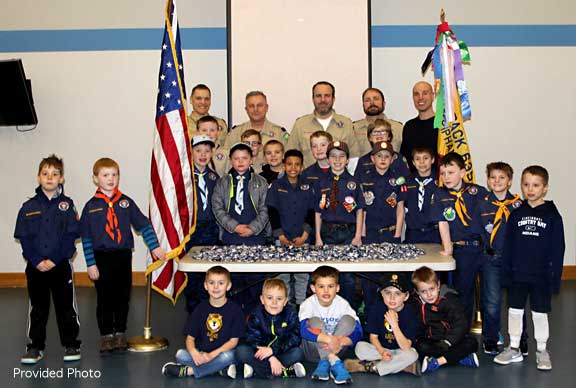
“A nice picture of some of the boys with all of the stars we cut out for the Vets! 2750 Stars in all, and more to come!” – Kirk McCracken
In this LOVELAND MAGAZINE TV interview, I spoke to McCracken and his son Liam, Bob Solimeno and his son Tanner, and Dee Daniels an Ambassador with Honor Flight Tri-State. Both Liam and Tanner helped cut out about 2,800 stars from the flags from only a portion of the flags that have been collected by Loveland Magazine and Union Savings Bank.
Daniels talks about the purpose of Honor Flight, and how local folks can get involved. You can support their trips to the Nation’s Capital as they take Veterans to see the war memorials, and how you may honor your own loved one with a free flight to visit their memorials in Washington, D.C. All World War II, Korean War and Vietnam War veterans aged 65 and older, who served either stateside or overseas, are eligible for the free flights.
Loveland Magazine and McCracken are arranging for a flag retirement ceremony conducted by the local scouts to be held soon in Loveland. Stay tuned.




 My parents were quite relieved when I finished basic training and technical school and would be assigned to the Altus Air Force Base in Altus, Oklahoma. I stayed at this airbase from Dec. 1966 through April of 1969.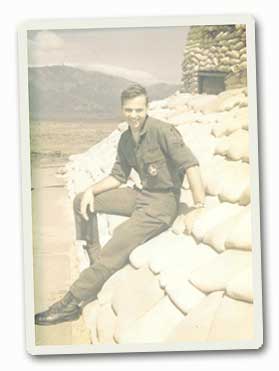


![[Video Interview] Scouts, Tattered Flags, Stars, and Honor Flight](https://lovelandmagazine.com/wp-content/uploads/2019/04/maxresdefault-3.jpg)
 Union Savings Bank is located at