Tag: virus

  • CDC “streamlines” COVID-19 guidance 

    CDC “streamlines” COVID-19 guidance 

    A Press Release from the CDC


    Today, CDC is streamlining its COVID-19 guidance to help people better understand their risk, how to protect themselves and others, what actions to take if exposed to COVID-19, and what actions to take if they are sick or test positive for the virus. COVID-19 continues to circulate globally, however, with so many tools available to us for reducing COVID-19 severity, there is significantly less risk of severe illness, hospitalization and death compared to earlier in the pandemic.

    “We’re in a stronger place today as a nation, with more tools—like vaccination, boosters, and treatments—to protect ourselves, and our communities, from severe illness from COVID-19,” said Greta Massetti, PhD, MPH, MMWR author. “We also have a better understanding of how to protect people from being exposed to the virus, like wearing high-quality masks, testing, and improved ventilation.  This guidance acknowledges that the pandemic is not over, but also helps us move to a point where COVID-19 no longer severely disrupts our daily lives.”

    In support of this update CDC is:

    • Continuing to promote the importance of being up to date with vaccination to protect people against serious illness, hospitalization, and death. Protection provided by the current vaccine against symptomatic infection and transmission is less than that against severe disease and diminishes over time, especially against the currently circulating variants. For this reason, it is important to stay up to date, especially as new vaccines become available.
    • Updating its guidance for people who are not up to date on COVID-19 vaccines on what to do if exposed to someone with COVID-19.  This is consistent with the existing guidance for people who are up to date on COVID-19 vaccines.
    • Recommending that instead of quarantining if you were exposed to COVID-19, you wear a high-quality mask for 10 days and get tested on day 5.
    • Reiterating that regardless of vaccination status, you should isolate from others when you have COVID-19.
      • You should also isolate if you are sick and suspect that you have COVID-19 but do not yet have test results.
        • If your results are positive, follow CDC’s full isolation recommendations.
        • If your results are negative, you can end your isolation.
    • Recommending that if you test positive for COVID-19, you stay home for at least 5 days and isolate from others in your home.  You are likely most infectious during these first 5 days. Wear a high-quality mask when you must be around others at home and in public.
      • If after 5 days you are fever-free for 24 hours without the use of medication, and your symptoms are improving, or you never had symptoms, you may end isolation after day 5.
      • Regardless of when you end isolation, avoid being around people who are more likely to get very sick from COVID-19 until at least day 11.
      • You should wear a high-quality mask through day 10.
    • Recommending that if you had moderate illness (if you experienced shortness of breath or had difficulty breathing) or severe illness (you were hospitalized) due to COVID-19 or you have a weakened immune system, you need to isolate through day 10.
    • Recommending that if you had  severe illness or have a weakened immune system, consult your doctor before ending isolation. Ending isolation without a viral test may not be an option for you. If you are unsure if your symptoms are moderate or severe or if you have a weakened immune system, talk to a healthcare provider for further guidance.
    • Clarifying that after you have ended isolation, if your COVID-19 symptoms worsen, restart your isolation at day 0. Talk to a healthcare provider if you have questions about your symptoms or when to end isolation.
    • Recommending screening testing of asymptomatic people without known exposures will no longer be recommended in most community settings.
    • Emphasizing that physical distance is just one component of how to protect yourself and others.  It is important to consider the risk in a particular setting, including local COVID-19 Community Levels and the important role of ventilation, when assessing the need to maintain physical distance.

    Actions to take will continue to be informed by the COVID-19 Community Levels, launched in February. CDC will continue to focus efforts on preventing severe illness and post-COVID conditions, while ensuring everyone have the information and tools, they need to lower their risk.

    This updated guidance is intended to apply to community settings. In the coming weeks CDC will work to align stand-alone guidance documents, such as those for healthcare settings, congregate settings at higher risk of transmission, and travel, with today’s update.


  • OHIO VAX-2-SCHOOL offers 50 scholarships worth $10,000 each and five $100,000 scholarships

    OHIO VAX-2-SCHOOL offers 50 scholarships worth $10,000 each and five $100,000 scholarships

    Governor Mike DeWine emphasized that keeping kids in school, in-person, five days a week, remains a priority. He said, “We know that the best way to do that is to get students vaccinated. In addition to protecting kids from the severe effects of the virus, students who are vaccinated, do not have to quarantine if exposed, which means they won’t miss out on school.”

    To encourage eligible children to get vaccinated, DeWine on Friday announced the Ohio Vax-2-School program, which will be open to Ohioans between the ages of 12 and 25, and will be similar to the scholarship portion of the successful Vax-a-Million program. Prizes will include 50 scholarships worth $10,000 each and five $100,000 scholarships to an Ohio college or university for career or technical education.  Prizes will be announced Monday through Friday beginning the week of October 11th.

    More details will be announced, including how to register, in the coming days.

  • Hamilton County Public Health responds to request for back to school info

    Hamilton County Public Health responds to request for back to school info

    “It is strongly recommended that schools implement masking.”

    Loveland, Ohio – When asked, this morning to provide Loveland Magazine with the current Board of Health guidance for covid 19 protocol for K-12 schools “Mike Samet, the Public Information Officer for Hamilton County Public Health responded, “We are following the Ohio Dept. of Health guidelines (attached) until we develop our own, if necessary.”

    The current Loveland school protocol reads in part, “…the Board will follow any mandates set forth by the Ohio Governor, Ohio State Health Department, Hamilton County Health Department, and Ohio Department of Education, (“Directing Entities”) as it relates to protecting the health of students, staff and visitors.”

    There will be no remote learning opportunities (Remote Academy) for Loveland teachers or students as all school buildings will return to full capacity in-person classes in August.

    Samet referred Loveland Magazine to the Ohio Dept. of Health (ODH) guidelines which are currently Hamilton County Health Department’s as well.

    The ODH guidelines begin with this opening introduction:

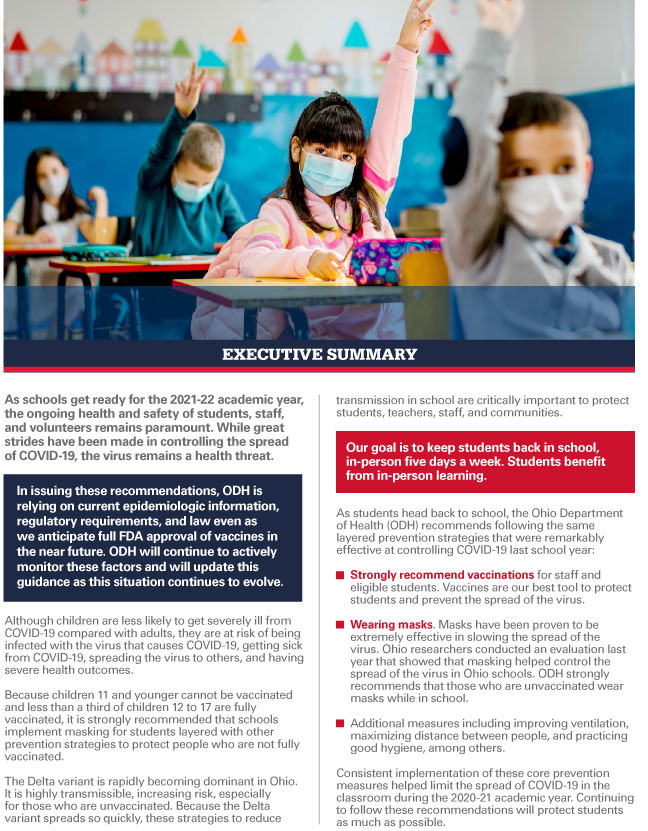
    As schools get ready for the 2021-22 academic year, the ongoing health and safety of students, staff, and volunteers remains paramount. While great strides have been made in controlling the spread of COVID-19, the virus remains a health threat. 

    Although children are less likely to get severely ill from COVID-19 compared with adults, they are at risk of being infected with the virus that causes COVID-19, getting sick from COVID-19, spreading the virus to others, and having severe health outcomes. 

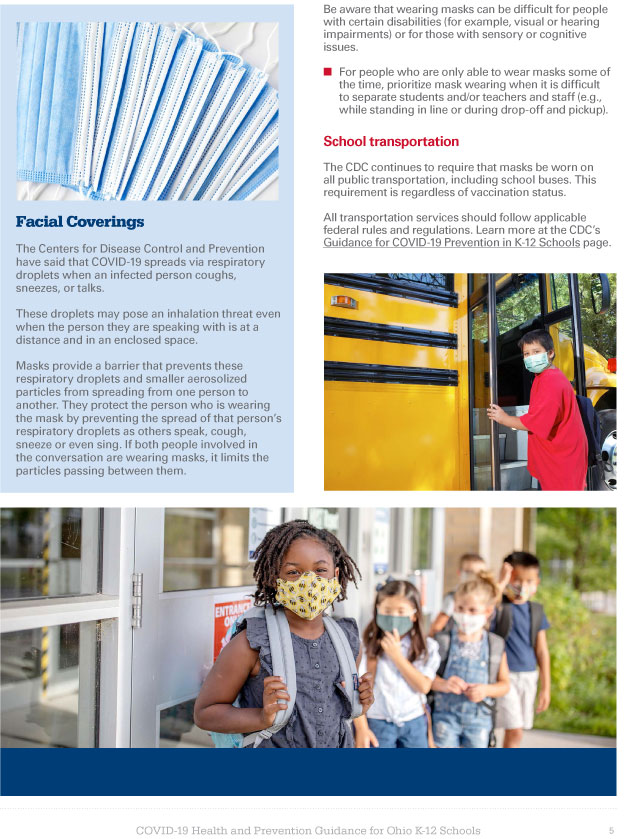
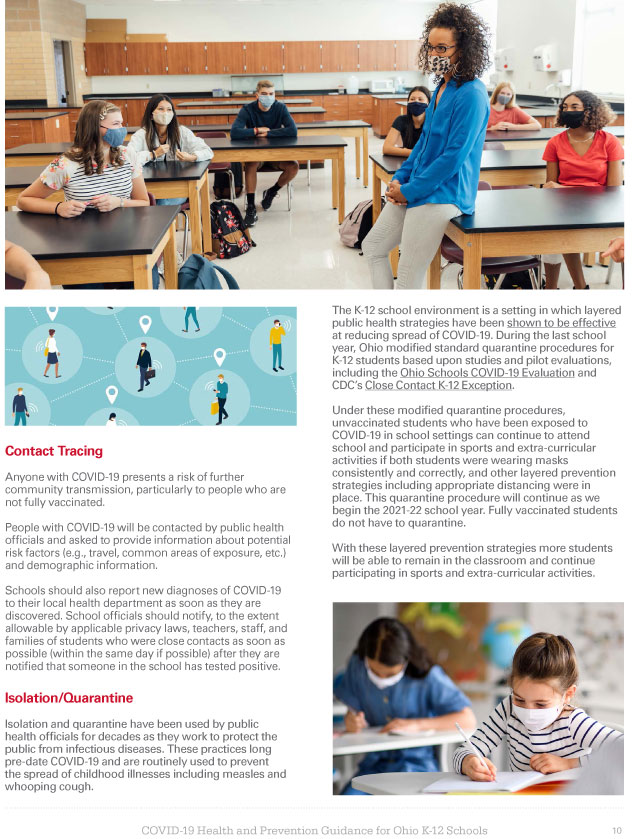
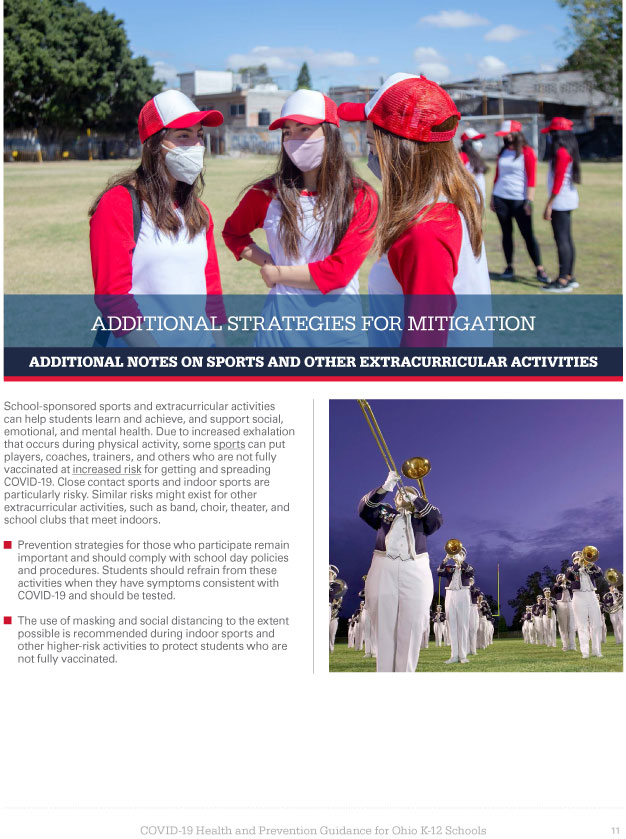
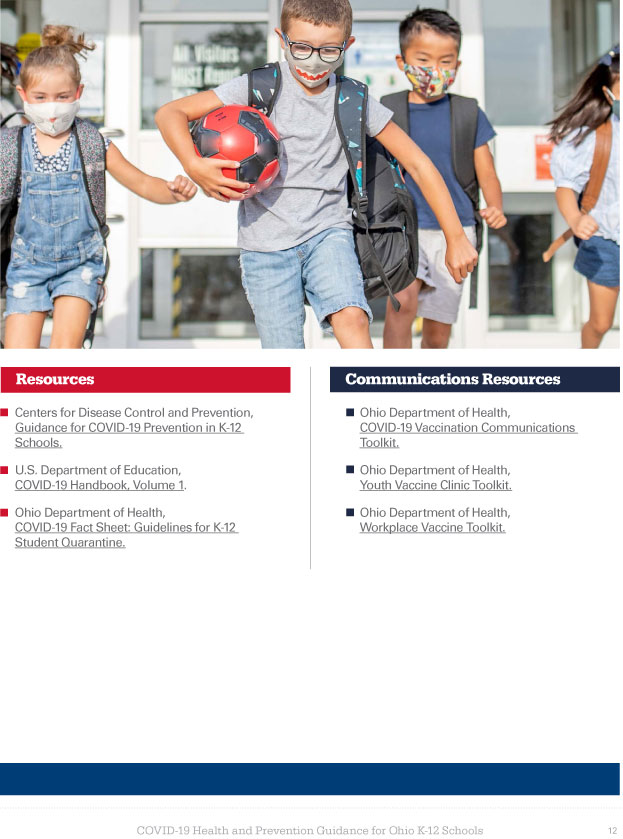
    Because children 11 and younger cannot be vaccinated and less than a third of children 12 to 17 are fully vaccinated, it is strongly recommended that schools implement masking for students layered with other prevention strategies to protect people who are not fully vaccinated. 

    The Delta variant is rapidly becoming dominant in Ohio. It is highly transmissible, increasing risk, especially for those who are unvaccinated. Because the Delta variant spreads so quickly, these strategies to reduce transmission in school are critically important to protect students, teachers, staff, and communities.

    As students head back to school, the Ohio Department of Health (ODH) recommends following the same layered prevention strategies that were remarkably effective at controlling COVID-19 last school year: 

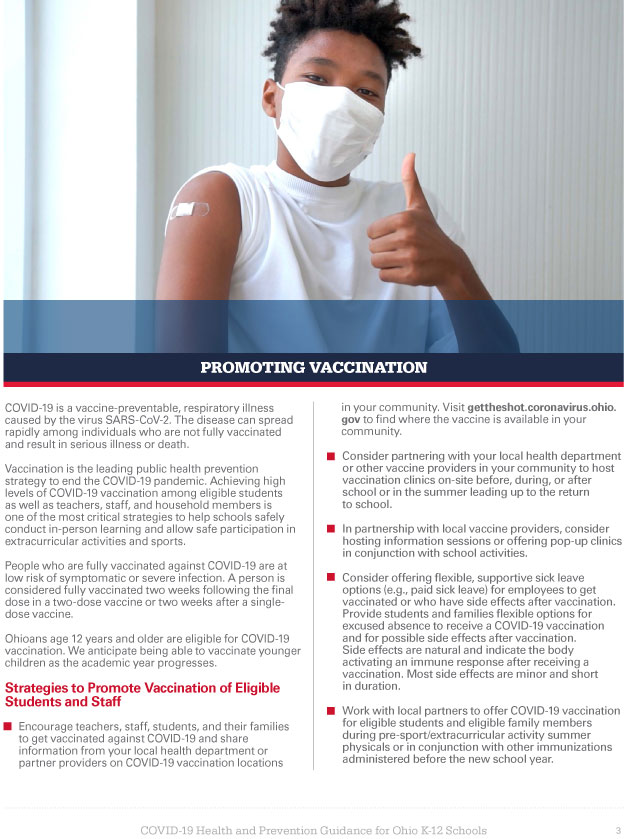
    Strongly recommend vaccinations for staff and eligible students. Vaccines are our best tool to protect students and prevent the spread of the virus. 

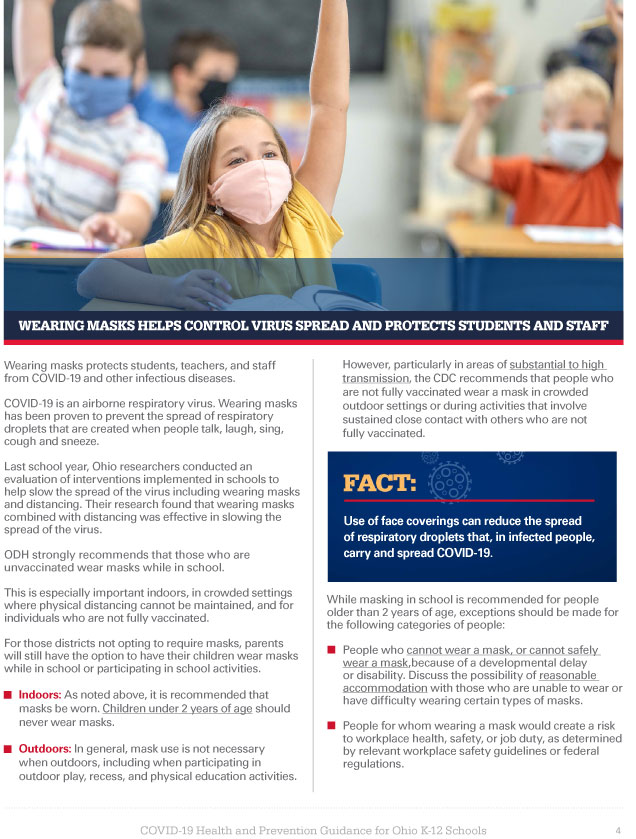
    Wearing masks. Masks have been proven to be extremely effective in slowing the spread of the virus. Ohio researchers conducted an evaluation last year that showed that masking helped control the spread of the virus in Ohio schools. ODH strongly recommends that those who are unvaccinated wear masks while in school. 

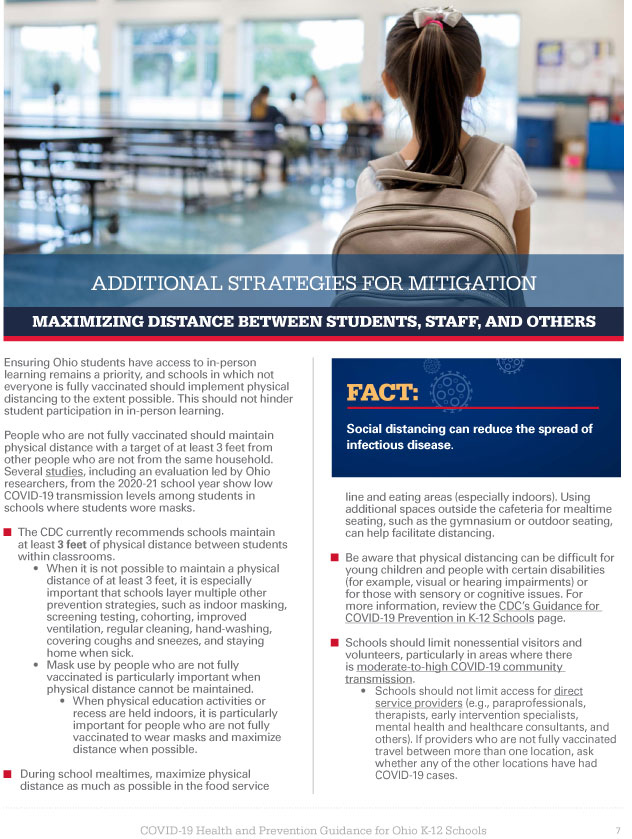
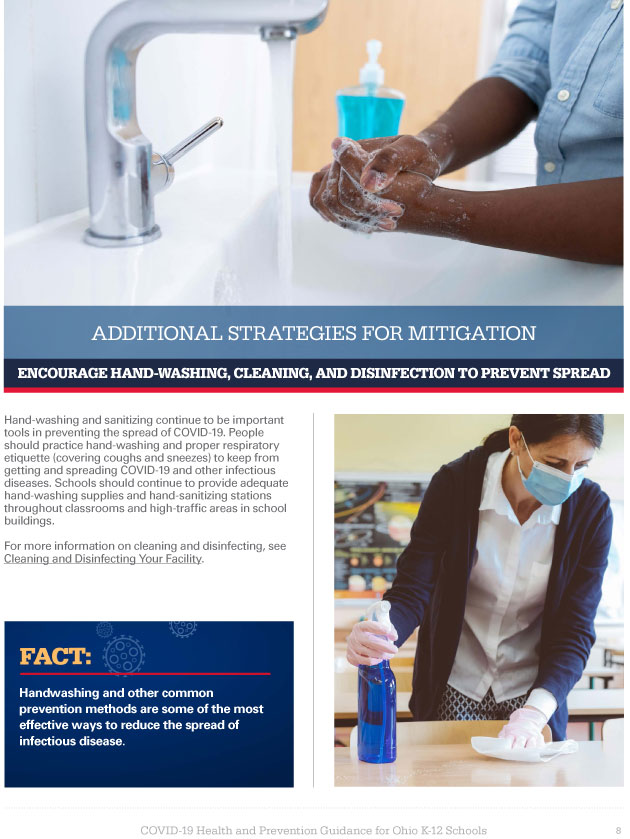
    Additional measures including improving ventilation, maximizing distance between people, and practicing good hygiene, among others. 

    Consistent implementation of these core prevention measures helped limit the spread of COVID-19 in the classroom during the 2020-21 academic year. Continuing to follow these recommendations will protect students as much as possible. 

    Below is the full ODH document:

  • Ohio Health Chief: The COVID-19 pandemic is becoming more dire for Ohio

    Ohio Health Chief: The COVID-19 pandemic is becoming more dire for Ohio

    In an announcement today, Ohio Department of Health Chief Medical Officer Dr. Bruce Vanderhoff and Mike Abrams, president and CEO, Ohio Hospital Association said:

    Ohio Department of Health Chief Medical Officer Dr. Bruce Vanderhoff

    “In Ohio, we are seeing an unprecedented spike in hospital utilization and it is impacting all areas of the state. While we are better prepared with personal protective equipment and physical capacity, what we are seeing now is an increasing demand on our staffing,” said Dr. Vanderhoff. “If we don’t control the spread of this virus, we won’t be able to care for those who are acutely ill without postponing important, but less urgent, care. We anticipate that this kind of shift could happen in a matter of weeks if trends don’t change.”

    “The COVID-19 pandemic is becoming more dire for Ohio as hospitalizations have escalated 350 percent in the past 50 days to 2,533 COVID patients in Ohio hospitals today,” said Mike Abrams, president and CEO, Ohio Hospital Association. “Our hospitals are capable of managing capacity needs, but we must stem the spread now. This steep climb creates a severe strain on our caregivers who are braving the frontline of this pandemic. We can stop this spread, and we call on Ohioans to join hospitals and caregivers to take action now and do the right thing to slow the spread.”

  • DeWine announces revised mask and social gathering orders

    DeWine announces revised mask and social gathering orders

    At the end of September, Ohio averaged under 1,000 new cases per day; this week, Ohio hit a record high of more than 6,500 new cases reported in a single 24-hour period.

    At the end of September, Ohio averaged under 1,000 new cases per day; this week, Ohio hit a record high of more than 6,500 new cases reported in a single 24-hour period.

    In a statewide address to Ohioans Wednesday evening, Ohio Governor Mike DeWine called on citizens to recommit to their individual efforts to prevent coronavirus spread as Ohio moves through its most intense, widespread, and dangerous surge of cases to date.

    Ohio is currently facing a record number of coronavirus-related hospitalizations and intensive care admissions, with nearly 3,000 people in the hospital, including more than 700 people in the ICU.

    During the first week of November alone, 104 Ohioans infected with the coronavirus died.

    To reinforce the necessity of wearing masks and slowing virus spread, Governor DeWine announced two forthcoming orders:

    Revised Mask Order

    DeWine said, “To protect frontline workers and customers, the Ohio Department of Health will reissue Ohio’s mask order and add the following provisions:

    • Each store will be required to post a sign outlining face-covering requirements at all public entrances to the store;
    • Each store will be responsible for ensuring that customers and employees are wearing masks; and
    • A new Retail Compliance Unit, comprised of agents led by the Ohio Bureau of Workers’ Compensation, will inspect to ensure compliance. 
    • A first violation will result in a written warning and a second violation will result in closure of the store for up to 24 hours.

    New Social Gathering Order

    Ohio’s April order that limits public events and private gatherings of more than 10 people is still in effect, however, there has been rampant spread of the virus as a result of banquets, wedding receptions, and social gatherings following funerals according to DeWine.

    “To address the tragedies that have resulted from such events, the Ohio Department of Health will issue an order that will place significant new restrictions on these social activities,” DeWine said.

    Specifically, open congregate areas will no longer be permitted to open, and everyone will be required to be seated and masked unless they are actively consuming food or drinks.

    Bars, restaurants, and fitness centers may remain open, but this will be reassessed one week from tomorrow for potential closure. 

    “If the current trend continues and cases keep increasing, we will be forced to make these closures,” said DeWine. “I am very well aware of the burden this will place on employees and owners, but these are places where it is difficult or impossible to maintain mask-wearing, which we know now is the chief way of slowing this virus.”

    Concern for healthcare workers

    “With this new wave of COVID-19, the onset of flu season, and an already-exhausted group of healthcare workers, there are serious concerns that there won’t be enough people to fully staff our healthcare facilities in the next few weeks,” said DeWine. “If we don’t change this, Ohio won’t be able to provide appropriate care for COVID patients or for Ohioans who require other emergency care for things like accidents, strokes, and heart attacks. Hospitals will again be forced to postpone important, but less urgent, care.”

    Although testing capacity in Ohio has nearly doubled, the number of people testing positive for the coronavirus has increased almost four times. At the end of September, Ohio averaged under 1,000 new cases per day; this week, Ohio hit a record high of more than 6,500 new cases reported in a single 24-hour period.

    “As we wait for the vaccine, which could come as soon as December, we have so much to protect,” said DeWine. “What each Ohioan does in his or her own life impacts every citizen and every place we desperately want and need to keep open– our schools, nursing homes, hospitals, and businesses.”

    For Governor DeWine’s entire address, visit ohiochannel.org or read his prepared remarks at coronavirus.ohio.gov.

  • Record-Breaking Cases & Hospitalizations, Statewide High Incidence

    Record-Breaking Cases & Hospitalizations, Statewide High Incidence

    CURRENT COVID-19 DATA
    There are 235,170 confirmed and probable cases of COVID-19 in Ohio and 5,461 confirmed and probable COVID-19 deaths. A total of 20,015 people have been hospitalized, including 3,969 admissions to intensive care units. In-depth data can be accessed by visiting coronavirus.ohio.gov.  Video of today’s full update, including versions with foreign language translation, can be viewed on the Ohio Channel’s YouTube page.  For more information on Ohio’s response to COVID-19, visit coronavirus.ohio.gov or call 1-833-4-ASK-ODH.

    Columbus, Ohio – Ohio Governor Mike DeWine and Lt. Governor Jon Husted today provided the following updates on Ohio’s response to the COVID-19 pandemic. 

    RECORD-BREAKING CASES & HOSPITALIZATIONS
    DeWine announced today that Ohio is once again breaking records in regard to COVID-19 cases and hospitalizations.

    • Between yesterday and today, health officials have reported a total of 4,961 new positive coronavirus cases in Ohio, the highest number of new cases in a 24-hour period to date.

    • There are currently 2,075 patients hospitalized with COVID-19 which is a 55 percent increase in hospitalized patients compared to two weeks ago. 

    • Of the hospitalized patients, 541 people are in intensive care. The previous record for intensive care admissions was 533 in April. 


    “This virus is flaring up, and we have to push it down – the economy depends on it,” said Governor DeWine. “If the virus continues to aggressively spread, people will lose confidence in their ability to safely go to stores, restaurants, and other businesses. If we want to keep our economy moving, we must all live with this virus and we must all be more careful.”

    Governor DeWine stressed that the new record number of cases is not due to increased testing capacity in the state. Since September 24, the total number of tests in Ohio has increased by approximately 44 percent, but positive cases have increased 280 percent in the same time period. If a person is tested multiple times, they are only counted once.

    STATEWIDE HIGH INCIDENCE 

    New health data compiled by the Ohio Department of Health revealed today that all 88 counties in Ohio are now considered “high incidence” as defined by the Centers for Disease Control and Prevention. 

    “There have been so many cases in the past two weeks that the risk of catching this virus in every county of this state is very real and very concerning,” said Governor DeWine. “Again, I ask everyone to recognize their personal responsibility in slowing the spread of this deadly disease. It’s up to every citizen in Ohio to choose to slow the spread by wearing masks, distancing, and making overall smart decisions.”

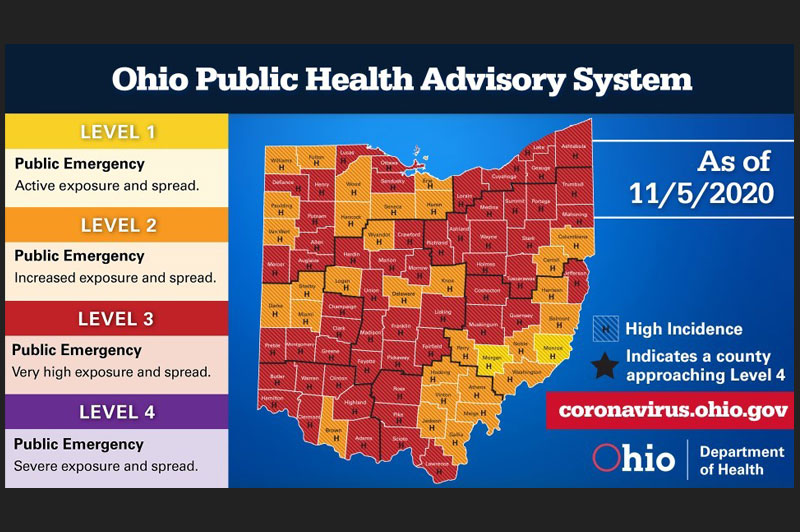
    According to today’s updated Ohio Public Health Advisory System map, 56 counties are currently rated as having a very high risk of exposure and spread (Red Level 3), up from 43 counties last week. This represents the highest number of Red Level 3 counties since the launch of the advisory system in July. As of today, 86 percent of Ohioans are living in a Red Level 3 county. 

    A county-by-county breakdown outlining the presence of COVID-19 in all of Ohio’s 88 counties can be found on the Ohio Public Health Advisory System’s website.


    NEW OHIO DEPARTMENT OF HEALTH STRUCTURE

    Governor DeWine announced multiple key additions to the existing administration at the Ohio Department of Health (ODH). 


    Chief Medical Officer Dr. Bruce Vanderhoff: 
    Dr. Vanderhoff previously served for more than a decade as a Senior Vice President and as the Chief Medical Officer at OhioHealth. He has years of experience leading large teams in successfully dealing with important healthcare issues in Ohio and prepared OhioHealth to deal with the threat of Ebola and the H1N1 flu pandemic.  

    Director Stephanie McCloud: 
    Director McCloud previously served as Governor DeWine’s administrator of the Ohio Bureau of Workers’ Compensation, managing an agency of 1,800 colleagues and over $28 billion in assets. She has considerable experience in the area of mental health and addiction treatment which is a priority in Ohio’s health improvement plan. 

    Senior Deputy Lance Himes: 
    Himes had previously served as the interim director of ODH where he has played an integral role in running and managing many aspects of the pandemic response operation. He will lead the coordination of the state’s vaccine distribution plan and will continue to work directly with Ohio’s local health commissioners.

    Chief of Staff Kathleen Madden: 
    Madden had previously served as Assistant Director at the Ohio Office of Budget and Management and will now play a key role in keeping ODH’s pandemic and non-pandemic programs and operations on track. She will work to prioritize and resolve critical issues, provide oversight and guidance to ODH staff, and ensure that ODH funds are spent responsibly and strategically. Other key members of the ongoing COVID-19 response who will continue their roles in assisting ODH are: 

    Adjutant General Maj. Gen. John Harris, Ohio National Guard: 
    Maj. Gen. Harris will continue work to ensure complex operations, such as COVID testing and contact tracing, are well-coordinated, monitored, and improved when necessary.  He will also work directly with Senior Deputy Himes on the planning and logistics of the forthcoming vaccine distribution program.  

    Director Ursel McElroy, Ohio Department of Aging: 
    Director McElroy will continue to direct virus prevention efforts for older adults in the community and in long-term settings, including nursing homes and assisted living facilities.  

    Director Lori Criss, Ohio Department of Mental Health and Addiction Services: 
    Director Criss will continue to lead efforts to address the increasing mental health needs of citizens during the pandemic.

    NEW OHIO BWC ADMINISTRATOR
    Governor DeWine announced that John Logue, the Ohio Bureau of Workers’ Compensation’s (BWC) Chief of Strategic Direction, will become the new administrator of Ohio BWC effective on November 16. Logue has worked for 26 years in the industry. Before returning to BWC in 2019, he most recently served as the vice president of client services for International Absence Management Company where he focused on Ohio workers’ compensation.


  • High risk conditions for COVID-19 span far and wide in Ohio

    High risk conditions for COVID-19 span far and wide in Ohio

    Along with diseases known to increase risk, the CDC lists 12 other conditions that “might” increase the risk of people who have them. These include other massively common conditions like hypertension, liver disease, pregnancy, smoking and others.

    By Jake Zuckerman and Ohio Capital Journal Edited by Loveland Magazine

    cccccc

    The underlying health conditions that lay a path for severe COVID-19 complications are widespread in Ohio, potentially affecting as much as half the population, according to experts, state data and government research.  

    Take obesity: Ohio Department of Health 2017 survey data estimates that 34% of Ohioans are obese. Similarly, more than 74,000 Ohioans were diagnosed with cancer that same year.

    Dr. Peter Pronovost (Photo by University Hospitals)

    “The statistics are about 60% of the public has one or more chronic diseases,” said Dr. Peter Pronovost, a University Hospitals physician. “Four in 10 have two or more diseases.”

    The ubiquity of chronic disease in Ohio complicates any policy response when there’s no easy-to-draw line between people at low-risk for COVID-19 and those at higher risk levels.

    It also illuminates the reality of a “herd immunity” strategy, as reportedly offered by an influential adviser to President Donald Trump. This would entail allowing the virus to run its course through the population unimpeded, purportedly allowing healthier people to develop antibodies at a large enough volume to break down chains of transmission.

    The CDC lists eight diseases known to increase risk of severe illness from COVID-19. The list, coupled with data from the Ohio Annual Cancer Report, Behavioral Risk Factor Surveillance System annual report from 2018, and other state and federal sources, shows how deep chronic disease runs in the Buckeye state.

    • Cancer: 74,000 cases diagnosed in 2017
    • Chronic kidney disease: About 15% of U.S. adults have chronic kidney disease, per the CDC
    • COPD (chronic obstructive pulmonary disease): 8.3% of Ohio adults have COPD
    • Immunocompromised state from solid organ transplant: 1,916 Ohioans received organ transplants in 2019
    • Obesity: 34% of Ohio adults are obese. An additional 34% are overweight
    • Serious heart conditions: Heart disease is the leading cause of death in Ohio
    • Sickle cell disease: Not tracked population wide, but 181 newborns in 2019 tested for the disease, and another 3,444 newborns are carriers
    • Type 2 diabetes: 11.3% of Ohio adults are diabetic — about 1 million people

    According to recent CDC research analyzing survey data from more than 3,000 U.S. counties, nearly half the population had at least one condition placing them at high risk for COVID-19 complications.

    In rural counties, it’s even higher.  

    Dr. Nirav Vakharia (Photo by the Cleveland Clinic)

    “When we go beyond age as a risk factor … if we’re just thinking about these chronic diseases, they’re so prevalent, it’s hard to isolate a young, healthy cohort,” said Dr. Nirav Vakharia, a physician from the Cleveland Clinic.

    Health care groups in Ohio are undertaking different efforts to help residents with some of these conditions to stay at home.

    LifeCare Alliance, an in-home health care agency, has seen a spike in the number of meals it has delivered to the homes of its diabetic patients since the pandemic began.

    “If you have diabetes, the chances of you having a mild case of the coronavirus is much less — you’re gonna have a harder case, because your immune system just can’t fight it off,” said CEO Charles Gehring. “Patients have been scared to death by coronavirus.”

    Similarly, Pronovost, the chief clinical transformation officer with University Hospitals, said the health care network recently accelerated its efforts to provide proactive care for people with chronic diseases.

    He said staff is reaching out to patients to ensure they’re properly managing and controlling their diseases, like keeping insulin or blood pressure at healthy levels.

    “The idea is we want to make sure chronic disease people are doing all they can to avoid being hospitalized and avoid needing to go to the [emergency room],” he said.

    Early data shows the network reduced hospital admissions of certain chronic disease patients by 28%, and emergency visits by 79%, he said. 

    “The idea is we want to make sure chronic disease people are doing all they can to avoid being hospitalized and avoid needing to go to the [emergency room],” he said.

    Along with diseases known to increase risk, the CDC lists 12 conditions that “might” increase the risk of people who have them. These include other massively common conditions like hypertension, liver disease, pregnancy, smoking and others.

    As of Wednesday, COVID-19 has killed 4,176 Ohioans. The virus has infected nearly 120,000 state residents and put more than 13,500 in the hospital.

    Jake ZuckermanJake Zuckerman is a statehouse reporter. He spent three years chronicling the West Virginia Legislature for The Charleston Gazette-Mail after covering cops and courts for The Northern Virginia Daily.
  • Donate $socks4homeless2020

    Donate $socks4homeless2020

    Dear Loveland Magazine Readers,

    I’m William Gibbs-Heard, a graduating senior at Loveland High School, and instead of having a graduation party, I decided, because of the virus, that I should hold a sock drive.

    For the graduation year of 2020, I would like to collect 2,020 pairs of new socks, or more, by the time I turn 18 on June 11th.

    I want to do this in an effort to help those who are homeless and less fortunate than us. Due to all of the depression and fear surrounding the community in times like these, I want to be able to be a light in someone’s life by providing something to them that is so simple, yet very necessary.

    I am accepting money donations through Paypal, Venmo, and Cashapp (all of which are listed below), as well as setting up a drop-off point at my house, 1205 W Main Street, Loveland, OH 45140.

    Venmo

    Paypal

    Cashapp: $socks4homeless2020

    Thank you for your time,

    William Gibbs-Heard

    For more information and to find out how you can help
  • Ohio Department of Health classifies 2019-novel Coronavirus  (2019-nCoV) immediately reportable disease

    Ohio Department of Health classifies 2019-novel Coronavirus (2019-nCoV) immediately reportable disease

    Centers for Disease Control and Prevention (CDC) says the risk to the American public is low. 

    A News Release from the Ohio Department of Health

    COLUMBUS — Amy Acton, MD, MPH, Director of the Ohio Department of Health (ODH), declared novel Coronavirus (2019-nCoV), an immediately reportable disease.

    By issuing a Director’s Journal Entry, Dr. Acton elevated 2019-nCoV to a Class A disease. This is a proactive step to ensure appropriate reporting of suspected cases, should the need arise in Ohio. No cases have been reported in Ohio to date. However, one case has been reported in Washington state and this step helps reinforce Ohio’s ongoing preparedness work.

    The Ohio Department of Health has been closely monitoring developments related to 2019-nCoV in tandem with the Centers for Disease Control. 2019-nCoV is considered a low risk to the American public, according to the CDC.

    Classifying a disease as Class A means that confirmed or suspected cases of 2019-nCoV must be reported immediately to the local health district where the person lives (or the local health district where the person is being evaluated if the person’s residence is unknown or not in Ohio). Required reporters include physicians providing care, administrators in charge of hospitals, clinics or other institutions providing care or treatment, laboratory administrators, or any individual having knowledge of a person with nCoV.

    What is 2019-nCoV?

    An outbreak of 2019-nCoV started in Wuhan City, Hubei Province, China in December 2019. Chinese authorities are reporting an ongoing spread of the virus in the community and so far more than 830 individuals are ill and 25 people have died. As families prepare to celebrate Chinese/Lunar New Year this week, multiple international travel advisories have been issued to help curb the spread of the illness.

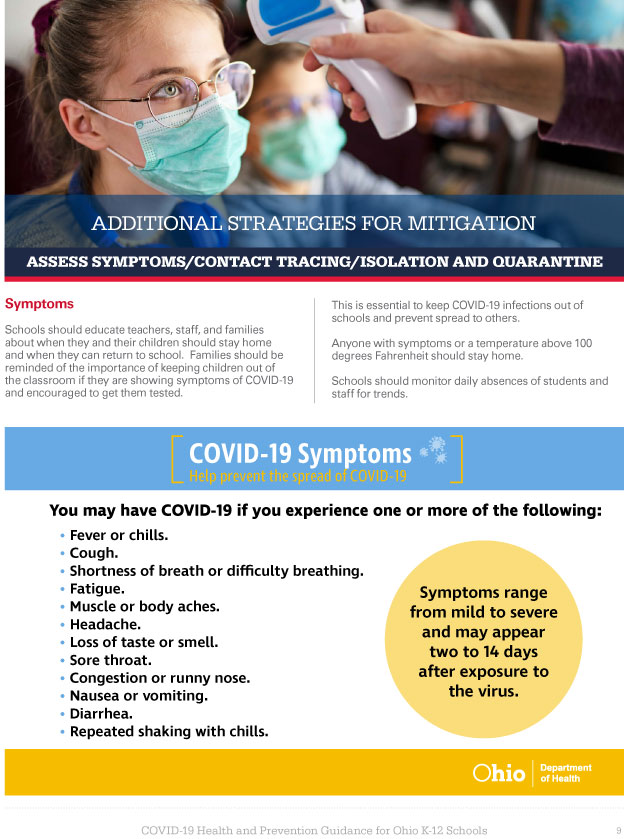
    2019-nCoV is part of a large family of coronaviruses, some of which cause illness in people and others that circulate among animals. Rarely, animal coronaviruses can evolve and infect people and then spread between people. This happened with severe acute respiratory syndrome (SARS) in 2003 and Middle East respiratory syndrome (MERS) in 2014, and now 2019-nCoV. These viruses may cause mild to severe respiratory illnesses with symptoms of fever, cough, and shortness of breath.

    How is Ohio tracking 2019-nCoV?

    Ohio’s public health system includes a team of state experts, local health departments, and local partners that perform daily monitoring of reportable diseases, including 2019-nCoV. ODH is closely monitoring the 2019-nCoV situation in lockstep with the Centers for Disease Control and is ready to respond if a case is reported in Ohio.

    “This situation is at the heart of public health,” said Dr. Acton. “We are working proactively with healthcare providers and local health districts/partners to identify and appropriately address emerging threats like novel Coronavirus.”

    What happens if a case is reported?

    • A case or suspected case of 2019-nCoV is reported to a local health department.
    • ODH reports to the CDC and, if indicated, patient specimens will be collected and shipped.
    • Currently, testing for this virus must take place at CDC.
    • ODH will work with local, state, and federal partners to investigate reports of 2019-nCoV in order to identify cases and prevent the spread of infection.

    What can you do to limit risk?        

    If you suspect you may have been exposed to 2019-nCoV because you have traveled to China or have been around people who may have been exposed and/or are exhibiting symptoms, contact your healthcare provider and let them know you may have been exposed to 2019-nCoV before visiting the healthcare facility. This will help the healthcare provider’s office take precautionary steps to keep other people from being exposed.

    Just as with influenza and other illnesses, it’s critical to protect yourself. Experts at the Ohio Department of Health recommend these tips:

    • Practice good hand hygiene.
    • Follow appropriate cough and sneeze etiquette.
    • Don’t go to work or school when you feel ill. Stay home and rest.
    • Avoid exposure to others who are sick.

    “Anticipatory action like this is critical to ensuring that we are protecting Ohioans,” Dr. Acton said. “It is our sincere hope that this virus does not spread but if it does, Ohio’s public health system is prepared.”

    Although 2019-nCoV is an emerging illness, the Ohio Department of Health has addressed similar issues in the past including two previous coronavirus outbreaks, MERS in 2014 and SARS in 2003.

    In addition to the latest work of declaring 2019-nCoV a Class A disease, ODH also routinely collaborates with healthcare providers, local health departments, local health partners, and the CDC to share information and best practices for addressing other potential infectious diseases.

    For more information about 2019-nCoV, visit our website at www.odh.ohio.gov.

  • Milford IHOP employee diagnosed with hepatitis A

    Milford IHOP employee diagnosed with hepatitis A

    Milford, Ohio – Clermont County Public Health has identified a case of hepatitis A in an employee at the IHOP restaurant at 5699 Romar Drive in Milford.

    According to the Clermont County Board of Health the risk to patrons is extremely low. However, as a precaution they are asking anyone who has eaten at IHOP from December 25 – December 31 to monitor for symptoms of the virus for up to 50 days.

    Symptoms of hepatitis A include:

    • Fatigue
    • Low appetite
    • Stomach pain
    • Nausea
    • Clay-colored stools
    • Jaundice (yellowish color to the skin and eyes)

    The disease, which affects the liver, can be spread through eating or drinking contaminated food. Food can get contaminated if a person who has the virus does not wash their hands properly after using the bathroom and before preparing or touching food.

    “The restaurant management has been very cooperative and we are working with them to review safe food handling techniques,” said Assistant Health Commissioner Tim Kelly.

    A vaccine can protect you from getting sick if received within two weeks of contact with the virus. Patrons should contact their health care provider if they have questions or concerns.

    “Though it is possible to spread hepatitis A through contaminated food, the risk is extremely low,” said Kelly. “The majority of cases we are seeing during this outbreak are from other risk factors.”

    The Ohio Department of Health declared a statewide outbreak of hepatitis A in June. So far, there have been 1,370 cases statewide and 42 cases in Clermont County that are linked to this outbreak.

    People at the highest risk of hepatitis A during this outbreak include:

    • People with direct contact with anyone who has the virus
    • People who use illegal drugs
    • People who are homeless
    • People who have traveled to other areas of the U.S. that are currently experiencing an outbreak
    • People who have been incarcerated
    • Men who have sex with men

    In addition to getting a vaccine, the best way to protect yourself from hepatitis A is to wash your hands thoroughly after using the bathroom and before eating.

    Illness from hepatitis A can range from a mild case that lasts a few weeks to a severe illness lasting several months.

    For more information on hepatitis A, click here.


    Bethel McDonald’s employee diagnosed with hepatitis A


    Felicity IGA employee diagnosed with hepatitis A