On Sunday, November 10th the Cincinnati Reds hosted a 14-hour visitation for Pete Rose — honoring the “Hit King” and the number he wore for Cincinnati, Philadelphia and Montreal during his 24-year career in the Major Leagues. The visitation was free and open to the public. These are the photos the Reds organization posted to their FaceBook page.
EDITOR’S NOTE: This story has been updated to reflect that there is visitation at Vineyard Church from 10 AM until the service at 11 AM.
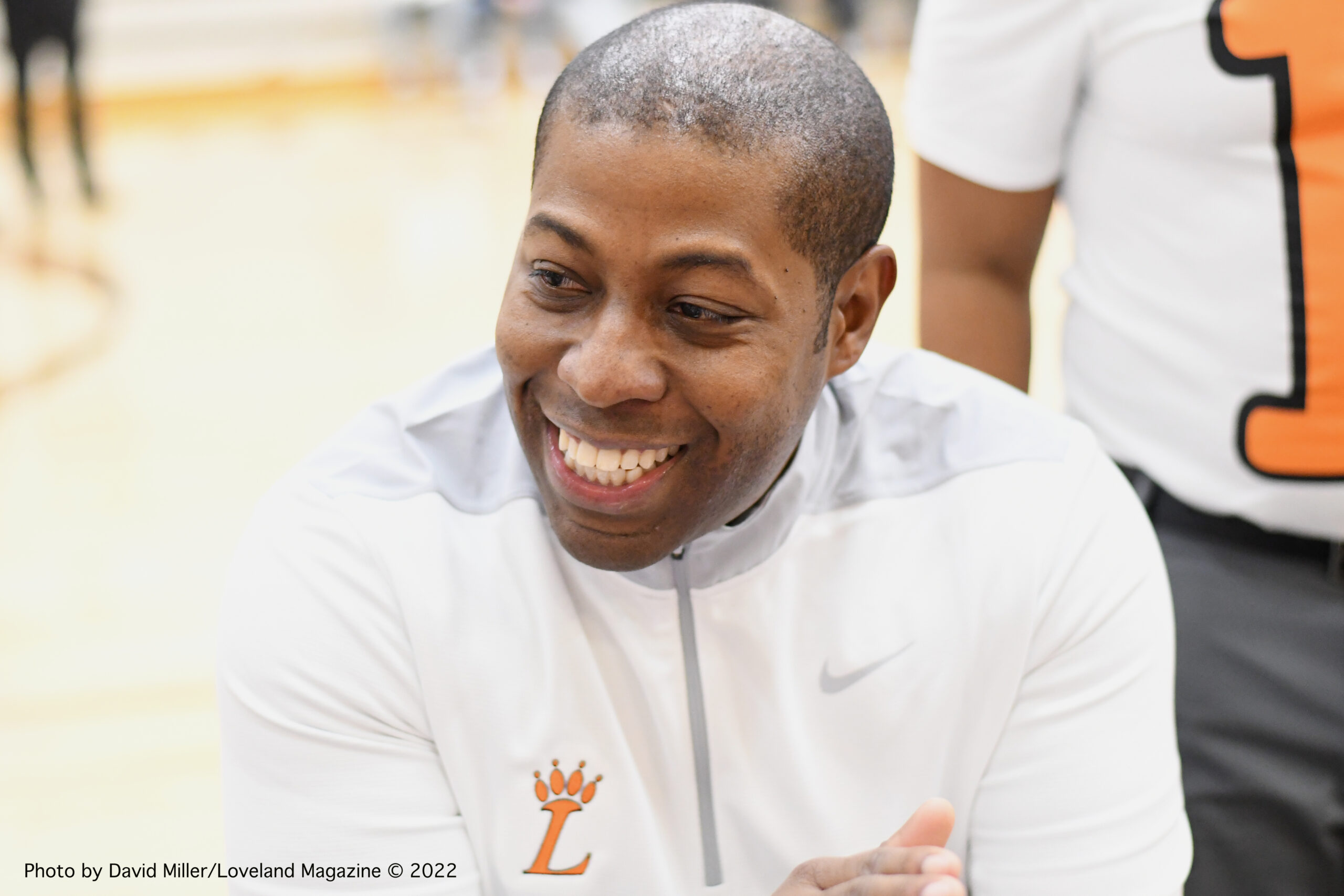
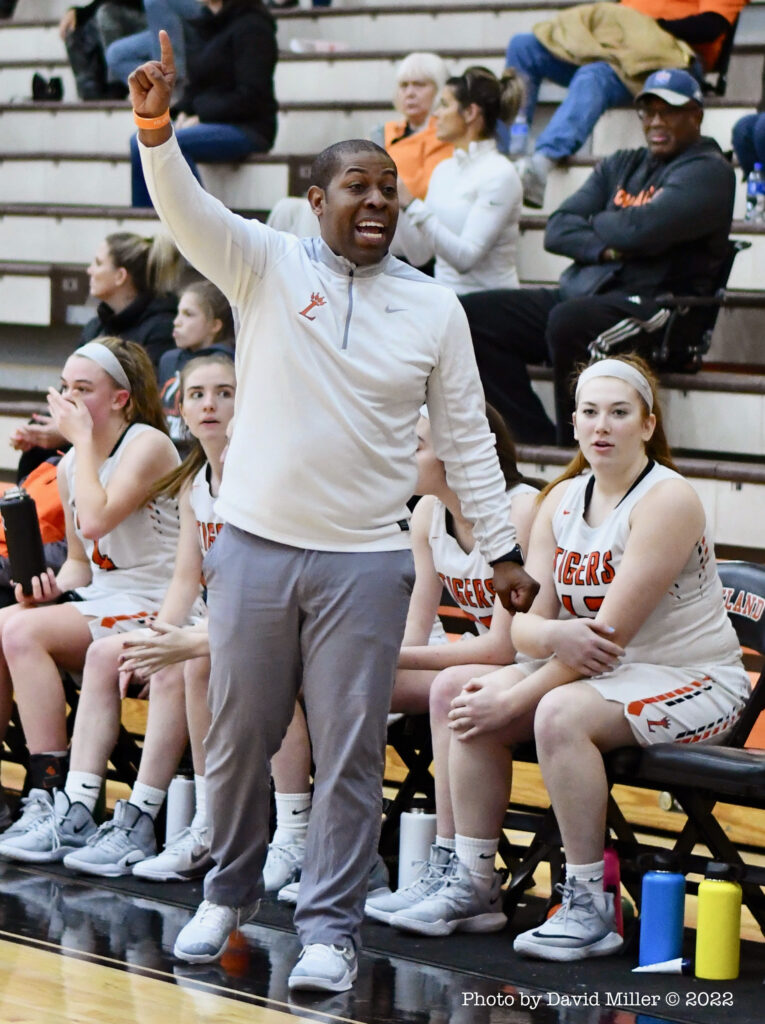
Loveland, Ohio – The beloved head coach of the Loveland High School Women’s Basketball team Darnell Parker succumbed to cancer on Sunday, July 24, 2022.
Here are the funeral, visitation, and celebration events for Coach Parker:
Family & Friends:
The funeral will be held Saturday, July 30th at 11 AM at Vineyard Church located at 11340 Century Circle East in Springdale. (MAP)
Visitation will be at Vineyard Church from 10 AM until the service at 11 AM.
Family & Friends:
A Celebration of Life will be held on Saturday, July 30th from 2 until 4 PM at Loveland High School located at 1 Tiger Trail.
Here are stories and videos produced by Loveland Magazine and Loveland Magazine TV
Governor Mike DeWine today issued the following statement on nursing home visitation:
The number of new COVID-19 cases in Ohio’s nursing homes has dropped significantly to 343 new cases last week compared to the peak of 2,832 new cases in December.
As the number of nursing-home cases continues to drop due to vaccinations in long-term facilities, Governor DeWine today reminded nursing home staff and families of nursing home residents about the status of visitation in Ohio’s nursing homes. Visitation is permitted at nursing homes in Ohio if the facilities meet the federal Centers for Medicare and Medicaid Services (CMS) criteria to allow visits:
No new onset of COVID-19 cases in the last 14 days;
The facility is not currently conducting outbreak testing; and
CMS reports the COVID-19 county positivity rate at less than 10 percent.
Compassionate care visits, which are special visits in which a family member or other visitor provides comfort, support, and assistance to a resident whose well-being is suffering or at risk, are always permitted regardless of the criteria above.
Governor DeWine sent a letter today to all nursing homes in Ohio reminding them to check their county positivity rate every week to determine their visitation status and to remind them to allow for compassionate care visits.
If you have a loved one in need of a compassionate care visit but are having trouble scheduling a visit, contact Ohio’s Office of the State Long-Term Care Ombudsman at OhioOmbudsman@age.ohio.gov or 1-800-282-1206.
A reoccurring theme rang at the visitation, funeral, and two nights of Shiva for Loveland resident Judy Leever.
This is a reprint of an Editorial Published in Loveland Magazine on October 17, 2012. October 12 is the anniversary of Judy Leever’s passing
Judy always made us see things from the perspective of others, and we all tried to plant in our subconscious, the lessons of her life and vowed to attempt to spend our remaining days living a life wearing HER shoes.
Judy owned a thousand pairs of shoes, nearly all belonging to other people. She possessed an uncanny ability to make these shoes fit our own feet as well.
We wore each other’s shoes three weeks ago, during our mourning time. We listened to one another’s other’s sadness at her too early passing at age 59 on September 29, 2012 after battling breast cancer and its drugs – because we were sure she had more to teach us. Truth be told however was that if we were listening and watching – her life was one lived, always… with certitude and steadfastness. She had nothing more to teach, because Judy wasn’t going to change and suddenly teach a more profound lesson. She had already lived her quite profound life. She saw life’s complexities and confusion, it’s conundrums, its needs filled, from the perspective of others.
About 400 family and friends, standing room for the late arrivers, attended the service, at midweek, a mid-morning service at Congregation Beth Adam, just outside of Loveland. A hundred or more helped bury her humble poplar coffin; waiting in silence until a entire mound of earth was put back in place by family and friends shoveling, not departing until finished by a backhoe at the United Jewish Cemetery in Montgomery.
Later, hundreds gathered in the side yard at her downtown home in Loveland for two nights of Shiva. Prayers, and songs on the bank of a popular stream. Lovers holding hands. On one side O’Bannon Creek. On one side the “Loveland Bike Trail”. A fitting setting now decorated for Judy with homegrown flower bouquets, brought by mourners and adorers in simple household jars scattered about and placed on any available ledge, garden rock, or garden table. Loud crashing walnuts thumped to the earth on this late summer evening looking to get to the earth and begin a new life – punctured the sometimes silence like drumbeats. From the not to distant Nisbet Park, children sounds of late summer evening play. Muffled chinwag from couples walking nearby. Runners, joggers, and bicyclists along the Little Miami Scenic Trail, most unaware of the contributions Judy made to preserve its natural beauty and oblivious to the sadness nearby.
During prayer, “It’s a dangerous thing to love what death will take away.”
Six stacked canoes on top of one another nearby. A bicycle leaning against a tree. A clothes line with faded brownish grey pins. Sparks from the fire pit near the creek aided conversation. Wooden garden cart. A weeping willow. A hammock tied to Maples starting to turn. A sitting bench also. All of it spoke to the family lifestyle. Absent her home was a TV. Inside the home was now packed almost beyond capacity as mourners filled plates of potluck. Two by two faces, memories shared until they had to again go outside to make room for others. Outside again… resumed these intimate, quiet, two on two conversations. The downtown chimes on top of the nearby, old water works plant wept sentiment. Newborns clenched to mother’s breasts.
Judy’s mate was her husband Bruce. They shared a real estate business. They lived in a passive solar home they crafted in Maineville before moving to Loveland in 1994. The Leever family once spent the entire summer living in a modest tent in their back yard in Maineville, to “teach their children well.” They were married for 32 years. Three tall proud successful sons, Glen, Will, and Michael. A brother Robert from Silver Spring Maryland. And, a cast of thousands of close friends and acquaintances; recipients of her generosity of devoted personal time, a gentler community because of her console, a cleaner river, cleaner drinking water, green space that condo projects and “progress” once threatened, food on the food bank shelves.
She welcomed teens into her home. She loved and nurtured her close religious community, helped organize concerts in the park and celebrations of Martin luther King Day in Loveland. She sang in the Martin Luther King Chorus in Cincinnati’s celebration.
We were recipients of her grace as she lost the fight with her disease.
Was Judy the community weaver? Didn’t she straighten our fibers? Did she stretch our seams?
The town cobbler?
All that aside, even though more than enough public service for ten long lifetimes, Judy left behind shoes to fill. What was it about Judy? How did she so often see that you would fit into the shoes of others if only given some of her wise second thoughts? No one quite had the answer to “How” but, non-the-less it was the subject of most of the conversation, because most knew it was her most inspiring legacy – that should be imitated in a fair, just, town… for raising children and growing old in.
Judy genuinely loved the outdoors… loved walking errands, walking on the grounds of Grailville several times a week. Walked 400 miles of the Appalachian Trail. It felt as if she belonged on the ground some how or another. Rode her bike to the library and Kroger.
Judy made you feel at home in her own house as if you belonged. “Yes. Yes.” She was well grounded.
Judy hosted meet the candidate nights for presidential campaigns, locals, and judges – and grant writing workshops for non-profits.
She was active in fermenting plans for “Heartland Eco Village” at Grailville. She wrote the first prospectus for what may some day be a worldwide example of self sustainable community living. She volunteered in the organic Grailville Gardens.
She wrote the 501-C-3 the application for the Loveland Farmers Market and often volunteered on market day.
She and family were early members of Leaves of Learning, a cooperative home school network. Her sons were home schooled, or “unschooled” until they entered high school. Each son has since graduated with honors from prestigious liberal arts colleges. Judy earned a teaching degree in Special Education from the University of Maryland, and a Masters Degree from the University of Cincinnati in Special Education. She taught middle school in Maryland for three years, and at Mason Middle School for four years. She was born in Hyattsville, Maryland, near D.C.
When Loveland’s annual Martin Luther King Day celebration seemed faltering, Judy dove head long. When efforts to save the Simpson Farm from a condo project seemed faltering, Judy put on muck boots and got muddy. She was that kind of person. She would change shoes – jump in anywhere she was needed. A doer.
Judy was a faithful volunteer with the Shalom Initiative (now the Loveland Initiative) opening her house to their Teen Group for meetings, games, and just relaxing. She served them a Passover meal one year, teaching them her Jewish traditions. One of those young teens, Judy placed under her wings as she graduated high school; helping her apply for college and financial aid, continuing to mentor into young adulthood. Sobbing uncontrollably now with the reality of moving on without Judy. She said, “Judy was like a mother to me. I always wanted to live here with her family. I will miss her so much.”
Years ago Judy taught GED classes for adults at the Shalom Initiative. She recently jumped in again when the Initiative was going through a difficult transition.
She served as a Trustee for Little Miami Inc., for twenty-years. The Little Miami is 125 miles long. A lot of property owners, swimmers, canoers, kayackers, fishers and hunters benefit from the work of Judy Leever. A lot of birds, critters, and fish as well. We drink cleaner water along those 125 miles because of Judy. She participated in annual river cleanup programs adopting the river banks nearest her home. In the early 90’s, she brought regional attention to areas around the Peters Cartridge site along the Little Miami Scenic Trail and adjacent to Kings Island, that was contaminated with hazardous waste. It was her first foray fighting city halls, township commissions, county commissioners, the EPA, and the Army Corps of Engineers. The men who scoffed, eventually crowded before TV cameras to be aside the truth teller because they were now wearing Judy’s shoes. A few weeks before her death, the site was at last placed on the USEPA’s Super Fund Priorities List for cleanup.
Judy was active in the Loveland Greenbelt Community Council’s establishment of the East Loveland Nature Preserve.
Her house was opened for a week to “Open House” an international Jewish, Arab, and American teen exchange program.
Judith Barbara Leever, nee Ginsberg often spoke about community issues at city council meetings, and was on city committees that directed downtown development. She was passionate about keeping downtown comfortable for existing residents. She wanted more housing downtown not overshadowed by boutiques and bars. Leaders listened to her because she wore all of our shoes in these roles, seeing each perspective through the eyes of a diverse community and its needs.
When people went to Judy seeking personal advice about a community problem, she always made the person see the problem through the eyes of the perceived problem maker. She said in her insightful way, “Try to put the other fella’s shoes on for a moment.” When leaving, your own shoes felt more comfortable, because she stretched them a bit for you.
Late after Shiva, the basketball court in the Cul-de-Sac again filled with young people.
Judy could put a businessman’s shoes on a housewife. Put the renter’s shoes on the landlord. Put the water drinker’s shoes on the polluter. Because she did these things, she lived a life of extreme optimism.
This article provided to Loveland Magazine was edited by David Miller and is by by Eye on Ohio, the nonprofit, nonpartisan Ohio Center for Journalism. Please join their free mailing list as this helps us provide more public service reporting.
In early March, just as Ohioans were learning about the first cases of novel coronavirus in the state, Anna Bondar’s grandfather fell at his Cleveland home.
Luckily, the 92-year old, who lives with dementia, wasn’t injured badly.
The tight-knit family started to discuss the possibility of a nursing home, though they had serious reservations.
Their tough choice was made even more difficult by mounting fears about the coronavirus. In nearly four months, COVID-19 has infected more than 31,191 people statewide and has proven particularly deadly for residents of long-term care facilities in Ohio.
Seventy percent of the reported deaths in Ohio due to COVID-19 complications have been in long-term care facilities, which is among the highest in the country.
Nationally the portion of COVID-19-related deaths in long-term care facilities has hovered just over 40%, though the amount of testing done in nursing homes varies significantly by state.
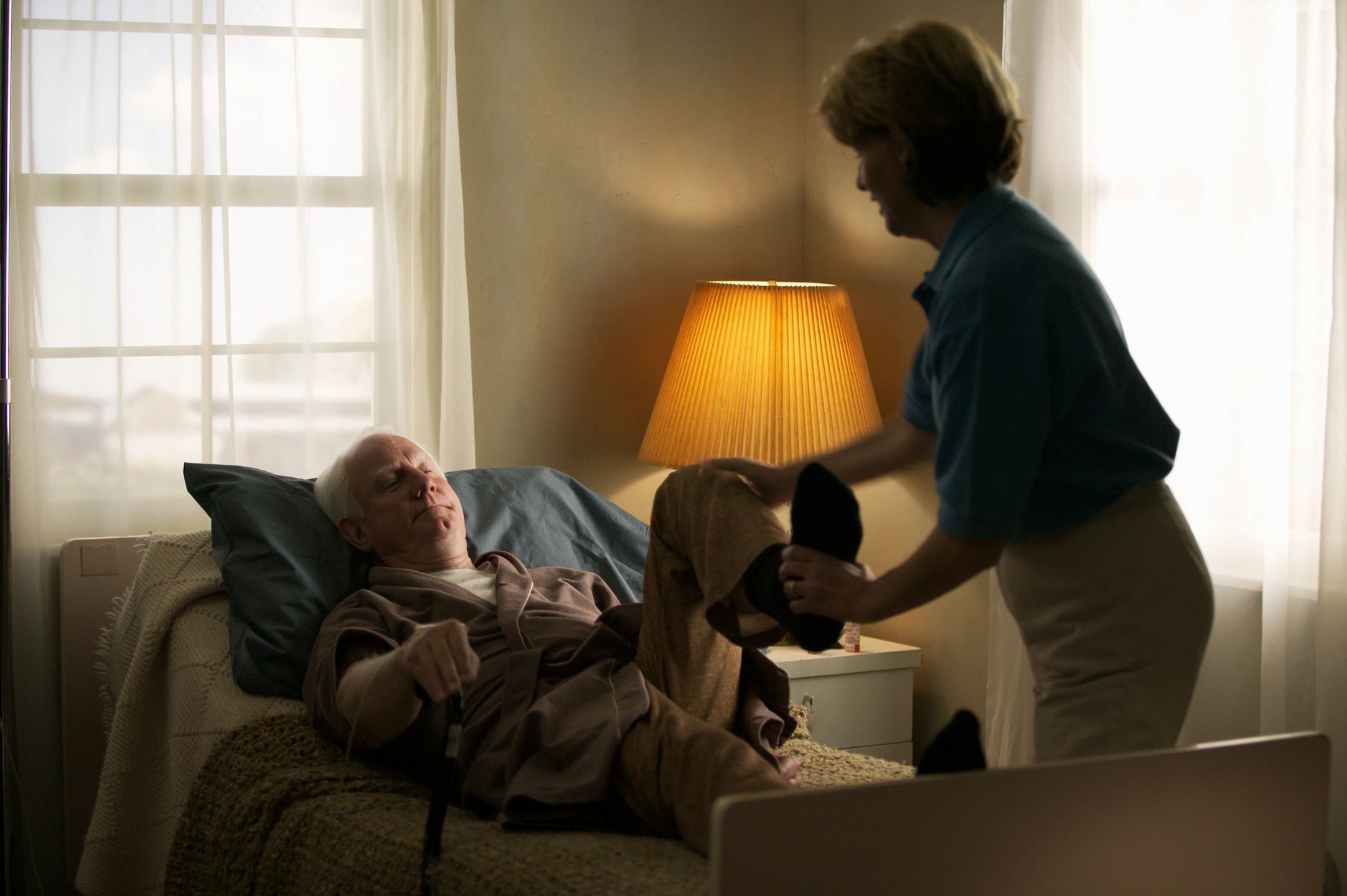
Every day, families like Bondar’s are making what can feel like an impossible choice – whether to send a loved one to a nursing home where they will receive around-the-clock specialized care but face a greater risk of contracting COVID-19, or to care for that person at home where risk of transmission is lower but providing care can be more challenging.
Even before the pandemic, sorting through the myriad of quality ratings and measures was daunting enough. Then, COVID-19 deaths started to soar.
Now, families and seniors agonize over what could be life or death choice using confusing numbers on infection “hotspots” and without the ability to visit nursing homes to observe how the staff cares for residents – which is the number one recommendation of most advocates.
Dr. Amy Acton, director of the Department of Health
State officials, including Dr. Amy Acton, the former director of the Department of Health, have emphasized that “congregate” settings like nursing homes are at highest risk of infection. Staff, who often travel between facilities, need to be in close contact with residents to provide care. And residents, who are primarily older and have multiple medical conditions, are more susceptible to COVID-19-related complications.
“All of this makes it high risk. At the same time, it’s really necessary for many patients to be there,” said Dr. Steven Schwartz, a geriatric physician at the Cleveland Clinic who travels to nursing homes as part of the Clinic’s Center for Connected Care.
Ohio National Guardmembers will begin testing all staff members and any residents who likely were exposed to COVID-19 in the state’s nursing homes, Gov. Mike DeWine announced May 27. What are being called Congregate Care Unified Response Teams will focus on facilities where confirmed or assumed positive cases are reported in hopes of reducing the number of COVID-19 cases and deaths in Ohio’s nursing homes, which as of May 27 was 5,324 resident cases and more than 1,442 deaths.
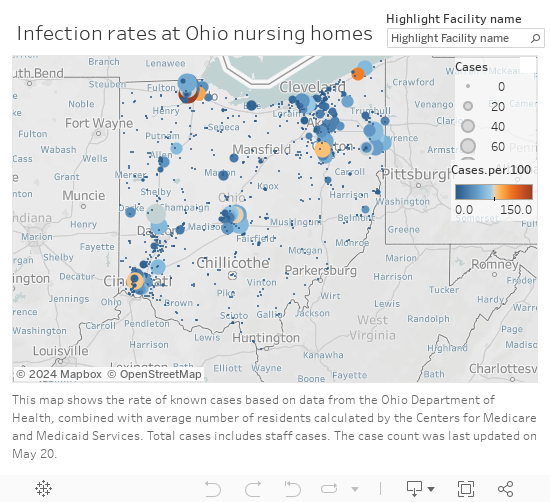
Infection rates in Ohio Nursing Homes
Making an educated decision
Last month, state officials began to release the numbers of reported infections and deaths in long-term care facilities, which include nursing homes, rehabilitation centers, and assisted living centers.
But it’s unclear how much the numbers – which are reported weekly and are also tracked cumulatively – matter for families currently trying to choose a facility.
The state, on its coronavirus website, says the infection and death numbers shouldn’t replace a thoughtful conversation with a nursing facility about infection control practices and that “residents and family members should understand that the presence of COVID-19 at a facility is [in] no way an indicator of a facility that isn’t following proper procedures.”
Yet many in the health care industry say infection information should be considered, along with other factors, when deciding which site to choose.
“If you see a nursing home with a large outbreak, that’s something to worry about. If you see a nursing home with a small outbreak, I’m not sure it means anything but bad luck.”
“If you see a nursing home with a large outbreak, that’s something to worry about. If you see a nursing home with a small outbreak, I’m not sure it means anything but bad luck,” said Dr. James Campbell, department chair of geriatric medicine at MetroHealth.
The infection information provided by the state can be useful, for instance, if a family is choosing between two similar facilities, said Nate Cyrill, a Long Term Care Ombudsman for Cuyahoga, Geauga, Lake, Lorain and Medina counties.
Since information on the virus changes rapidly, most families still rely on the quality measures that were available before COVID-19, including existing state and federal online guides Cyril said.
One of the commonly-used ranking systems, maintained by the Centers for Medicare and Medicaid Services, assigns ratings – from 1 to 5 “stars” – to facilities based on performance on quality measures, staffing and inspections.
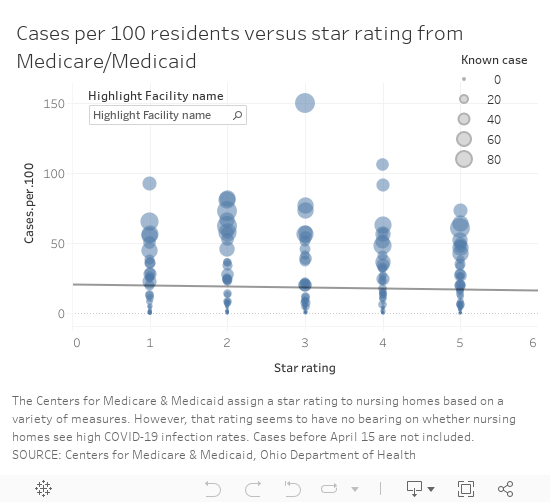
The number of “stars” Ohio’s nursing homes received, however, does not appear to have a correlation to the number of infections reported to the state, based on a comparison of the publicly available information. The analysis did not include assisted living facilities.
Cases vs. Star rating
“You want to look for a nursing home that’s four of five stars preferably but even that doesn’t tell you the whole story,” Steven Schwartz said.
There are numerous 1-star rated facilities that have reported few infections, like Whetstone Gardens and Care Center in Columbus, which has reported 9 cases or 8 per 100 residents.
Salem North Healthcare Center
Salem North Healthcare Center in northern Columbiana County had 51 patients test positive for the virus as of May 20, as well as five staff, according to the state. It is rated a 5-star facility, the highest rating from CMS.
It’s one of four 5-star facilities with an infection rate over 50 casesper 100 residents, based on Medicare’s calculation of each facility’s average number of residents. (The rate does not include infections among staff because the number of staff in each facility was not available.)
Since April, the focus on high numbers of reported infections, often referred to as clusters, in long-term care facilities has intensified. In some cases, those numbers are a reflection of the level of testing, said Fred Stratmann, general counsel and chief compliance officer for CommuniCare Health Services. It doesn’t mean all of the residents with a positive test had symptoms of COVID-19. The state infection numbers also don’t show the residents who have recovered from the virus, he said.
CommuniCare, which operates close to 90 health care facilities in seven states has been proactive about testing, Stratmann said. When COVID-19 cases started to appear at the North Salem facility, the company enlisted the state’s “strike team” to proactively test all of the residents. It has since re-tested all of the residents who were initially negative and purchased 3,000 testing kits to supplement what the state could provide.
“We wanted to be certain of the extent of COVID in this center in order to be able to properly treat it and to fight back against it,” Stratmann said. The facility does that by isolating any COVID-19-postive patients in a separate unit with its own dedicated staff and by admitting new residents to an observation unit for 14 days to make sure they have no symptoms of infection, he said.
Restrictions on visits make choices harder
The most effective way to scout out a facility typically is to visit it, preferably unannounced, said Dr. James Campbell, department chair of geriatric medicine at MetroHealth. However, because visitors aren’t permitted in nursing homes right now, the next best thing is to ask detailed questions about care, any COVID-19 cases and infection control measures, he said.
Campbell also suggested turning to hospital staff, who work with nursing homes regularly, for advice. Social workers can place five people in a week, while most individuals face that decision, at most, only a few times in their lives, he said.
Cyrill said his agency can also provide information that can’t be found online for families trying to choose between facilities.
Cyrill said his agency can also provide information that can’t be found online for families trying to choose between facilities.
The agency, along with other similar independent agencies across the state, investigates complaints in long-term care, skilled nursing, group homes and rehabilitation facilities and can share what are called “verified complaints” that aren’t otherwise available publicly.
Most of the complaints investigated in relation to COVID-19, Cyrill said, have been related to visitation or the ability of families to get information on a loved one’s condition.
It’s been harder, though, for Cyrill and his colleagues to investigate complaints with COVID-19 restrictions in place.
It’s been harder, though, for Cyrill and his colleagues to investigate complaints with COVID-19 restrictions in place.
Under normal circumstances, an ombudsperson would go to the facility and talk to patients and could do so without announcing the visit in advance. Since visits are restricted for infection control reasons, they have to work through staff to speak to residents or to ask questions, which isn’t optimal. And they aren’t able to make direct observations.
“It makes our job much more challenging,” Cyrill said.
At the North Salem facility, which has had about a dozen new residents admitted or transfered from other facilities, the staff has given “virtual tours” over the phone to family members or prospective residents who were in the hospital, Stratmann said. The company also invested in technology that won’t replace face-to-face visits but enables more family contact and the ability and for staff to help keep residents’ spirits up by making videos of activities, like dancing and singing, to keep them connected with the local community.
In addition, Stratmann said they walk families through the infection control procedures and share techniques they have implemented to improve health outcomes for patients with COVID-19 including, when appropriate:
Treating residents with anticoagulant medications to reduce the risk of blood clots and strokes, which has been a factor in some COVID-19-related fatalities.
Practicing “proning” or positioning residents, while awake, flat on their belly and chest to reduce the buildup of fluid in lung tissue and reduce the risk of Acute Respiratory Distress Syndrome, which has been associated with many COVID-19 fatalities.
The idea of putting their beloved grandfather in a nursing home was gut-wrenching
Choosing home
For Bondar’s family, the idea of putting their beloved grandfather in a nursing home was gut-wrenching, especially as visitation was curtailed to limit the virus’ spread. He speaks Russian, his native language, and would not have been able to communicate well with the staff caring for him.
“It felt like admitting him [to a facility] would be like saying goodbye,” Bondar said. “Like leaving him to die.”
Bondar’s family ultimately decided to care for her grandfather at home, in his Mayfield Heights senior highrise, where they could limit his exposure to the virus.
Before his fall, an aide visited for about eight hours a week. After the Ohio’s “stay at home” order was put in place March 23, Bondar and her mother were able to work from home and pitch in with care.
The advice of the Clinic’s Steven Schwartz led them to a hospice program, which helped the family find additional aides, including one who speaks Russian, as well as a hospital bed for safer sleeping and a wheelchair.
The home care route isn’t the easiest but Bondar said the family feels like they have more contact and control over the quality of care.
The home care route isn’t the easiest but Bondar said the family feels like they have more contact and control over the quality of care.
“We’ll do this as long as we can manage it,” Bondar said.
Anecdotally, it is a choice more families are making: the decision to use home care or even pull family members out of nursing homes out of fear or because they miss them and can’t visit, Steven Schwartz said.
“Sometimes it’s appropriate. But sometimes, even given everything, it may be safer to have your family member there to get stronger and get the necessary care,” said Steven Schwartz. “I would really try to balance the benefit of going to a nursing home versus the risk.”
Patients with dementia or Alzehimer’s may be unsafe going back home.
Patients with dementia or Alzehimer’s may be unsafe going back home, he said, and families may need to decide if a nursing home really is the safer place.
One of the first orders Ohio put in place to prevent the spread of COVID-19 was to halt in-person visitation in more than 900 nursing and long-term care facilities. The state is not yet ready to lift those restrictions and resume visits in those settings, Gov. Mike DeWine said, but on June 8 will start allowing outdoor visits at assisted living facilities care centers for individuals with disabilities.
“We are not to nursing homes yet and I know that causes anguish for a lot of people who are watching this but we’re trying to do this so that we don’t increase the COVID inside the nursing homes or the assisted living or the immediate care facilities,” DeWine said during a May 28 briefing.
Decisions made harder
Figuring out what kind of care might be best for a patient has become more challenging, too.
Previously, nurses and social workers would visit clients in their homes to assess how they functioned – whether they could independently bathe, cook and grocery shop, said Theresa Foster, a nurse and licensed social worker at Western Reserve Area Office on Aging.
They relied on conversations with clients and family and also observations of the environment in the home and possible risks, said Foster, who runs the agency’s resource center.
Those assessments were used to determine whether a person could safely remain at home with community support or whether they needed facility-level care and what resources, whether subsidized or private, existed to pay for the services.
Now, those assessments are done by phone and can be done successfully, but it is more difficult, Foster said.
At UH’s hospitals, medical staff use a scoring system to determine the best place for a patient being discharged, said Dr. Sean Cannone, UH’s medical director for population health.
Patients are assessed on their ability to perform daily tasks and on their cognitive abilities.
“We’re trying as much as we can to get patients home if at all possible,” he said. The goal is to provide patients with resources so they can receive care in whichever setting they prefer.
The goal is to provide patients with resources so they can receive care in whichever setting they prefer.
“We want to respond to what people really want for their own care,” Cannone said.
The shift started before COVID-19 cases surfaced but has accelerated as more families worry about potential exposure to the virus in congregate living situations.
As technology has advanced, the capabilities of what can be done in a patient’s home has also increased. In March, UH introduced a new patient management system, Massimo SafetyNet, for remote monitoring.
When patients are released from the emergency room or from a COVID-19 floor, providers now put a bluetooth sensor on their wrist — it looks like an Apple Watch — that streams data about a patient’s vitals to a central monitoring center, said Jonathan Sague, UH’s vice president of clinical operations. That way, providers can make sure a patient is safe at home.
Douglas Beach is the chief executive officer at Western Reserve Area Office on Aging
Douglas Beach, chief executive officer at Western Reserve Area Office on Aging, has had firsthand experience weighing care decisions amid COVID-19 worries. His mother is rehabilitating in a nursing home after a six-week hospital stay related to a heart condition.
Not being able to visit her in the hospital or the facility has been hard, Beach said. He and his brother, who is a doctor, had to make all of the arrangements by phone, including figuring the best way to transport her that would have the lowest risk of exposure to the virus.
“Home and community-based services is what I do,” Beach said. Part of his mission is to advocate for the setting that allows for any person, whether they are older adults or live with a disability, to be as independent as possible .
But for his mother, a nursing facility was the right choice because she needed 24-hour care that her family could not provide at home.
Beach said nursing homes have had to deal with an unprecedented set of circumstances: a new virus, initial unknowns about transmission and populations at extremely high risk for complications.
Nursing homes will continue to play a vital role and will remain the best option for people who need more care than can be safely provided at home, Beach said.
For the more than 9,500 clients his agency serves in Cuyahoga, Geauga, Lake, Lorain and Medina counties, delivering care at home, with health aides, nurses and community and family supports, has proven a low risk. As of mid-May only 35 clients had tested positive for the virus, he said. That is roughly 0.3% of clients, though not all clients are tested.
Managing COVID-19
Cuyahoga County nursing homes have been paired with one of the area’s three largest hospital systems during the pandemic, Campbell said. The hospitals help the facilities both prepare for and respond to COVID-19 cases.
“The goal is when you have one patient in a nursing home with COVID is to make sure you don’t end up with 30 patients with COVID,” Campbell said.
UH developed what is being called a playbook for local nursing homes. The playbook gives facilities a plan for how to respond if there’s a COVID-19 outbreak on-site, said Sague, who works as a firefighter and medic on the weekends.
“It can be pretty startling and pretty alarming if they’re not ready for it,” Sague said.
The playbook gives guidelines on screening, triaging, determining exposure, testing and isolating those who test positive, as well as how to get personal protective equipment, increase staffing and to eventually reopen safely, Sague said.
Once a case is identified at a facility, what is known as an intercept team is dispatched — either virtually or in person — to help a nursing home handle it, he said.
Patrick Schwartz, director of strategic communications for LeadingAge Ohio, a long-term care trade association, said access to testing and safety equipment has been a consistent problem for Ohio’s nursing homes.
But in the past month or so, the state has made “a definite shift” and started prioritizing testing at nursing homes, which is helping, he said.
Patrick Schwartz said he hoped the expanded testing would enable facilities to test their entire population— of residents and staff — so they can better limit the spread of the virus.
Throughout Ohio, populations that have received mass testing — health care workers, first responders, those incarcerated and those in nursing homes — have had higher numbers of positive cases. Many people with COVID-19 are asymptomatic, so it is unknown if they have the virus until they are tested.
“Since this pandemic first reared its head, it was clear to long-term care providers that the front lines would be in long-term care,” Patrick Schwartz said. The populations at those congregate living facilities, many of whom are older and have multiple medical conditions, are among the most vulnerable for complications from COVID-19, he said.
In Cuyahoga County, and elsewhere, local health departments have deployed limited testing resources to nursing homes quickly in hopes of limiting spread in and between facilities and given guidance to homes about how to isolate patients and trace exposures between facilities to limit the spread of infection.
Cuyahoga County Health Commissioner Terry Allan said nursing homes try to guard against outbreaks but have varying degrees of resources. The assistance from the National Guard will allow more residents and staff at facilities in Northeast Ohio to be tested, he said.
Support for this project was provided by the Center for Community Solutions.
Questions to ask:
How can family members stay in touch with residents while visiting is restricted?
Does staff facilitate video visits? Is window visiting allowed?
How often will the facility provide updates on a resident’s condition?
How much COVID-19 testing is being done? Is the facility proactively testing patients or only those with symptoms?
Are private rooms available?
Do staffing ratios allow for residents to be taken outside?
Are residents currently restricted to rooms?
Are separate units and staffs used for COVID-19-positive patients and COVID-19-negative patients?
How does the facility work to limit COVID-19 complications?
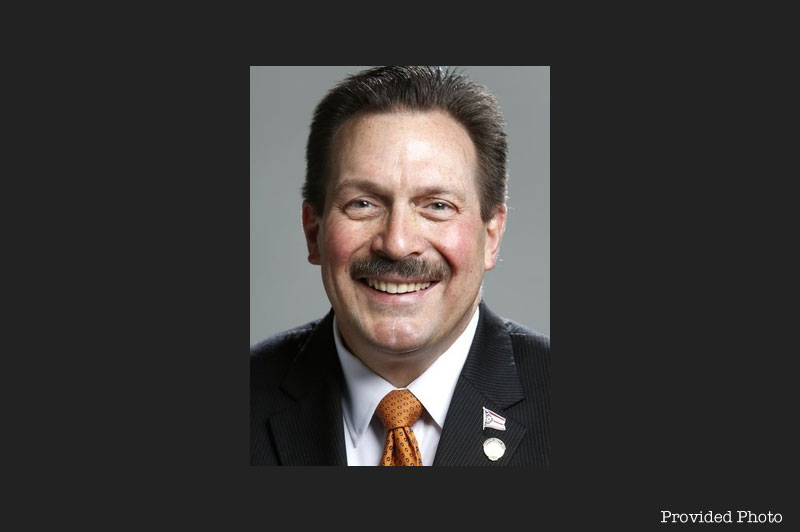
Cincinnati, Ohio – Portune, Todd, age 61, Hamilton County Commissioner, Oberlin College Hall of Fame, passed away peacefully on January 25, 2020, with his family by his side. Loving father of Ethan, Ellyse and Emma Portune, he is also survived by his brothers Ned (Lisa) from Loveland, and Bob (Cuqui) Portune, and numerous nieces and nephews. He was predeceased by his parents Robert and Alice Portune.
Portune was born in Cincinnati in 1958. He graduated from Colerain High School in 1976 and graduated from Oberlin College in 1980 with a political science degree. In 1983 he graduated from the University of Cincinnati College of Law and became an attorney in Cincinnati.
Todd leaves a long legacy of care for the people of Hamilton County and will be remembered as a tireless servant of our city and county even at times of great personal challenge and sacrifice. Todd considered his public service a calling, and his devotion to the needs of average citizens spanned 27 years across Cincinnati City Council and the Hamilton County Board of Commissioners.
Portune was appointed to fill a vacancy on the Cincinnati City Council in 1993. He won elections to two-year terms in 1993, 1995, 1997 and 1999.
In 2000 Portune was elected as a Hamilton County Commissioner. The city of Cincinnati has voted solidly for Democratic candidates in the early 21st Century; the suburbs have supported the Republicans. Portune was the first Democratic commissioner elected from the suburbs in 36 years. Portune’s opponent Bob Bedinghaus won 43% of the 363,948 votes cast in 2000, while Portune won 48%. Portune was sworn in on January 2, 2001. In 2004 Portune was re-elected, with 57% to his opponent’s 42%. His winning in a conservative county was attributed to his moderate policies, and to effective campaigning. He won reelection in 2008, 2012 and 2016.
Public Visitation to be held Monday, February 3, 2020, at the Duke Energy Convention Center from 10 AM until noon with service immediately following. Burial will be at Spring Grove Cemetery.
Portune was diagnosed with cancer in 2003. Later that year, his spinal tumors erupted, causing paralysis of the legs. Portune’s left leg was amputated in 2018. After years of remission, his cancer returned and metastasized. Portune stated in September 2019 that he would not run for re-election in 2020, and announced the following month he would retire at the end of the year. His chief of staff, Victoria Parks, began acting in his role for the remainder of his term, which ends at the end of 2020. Portune died from cancer on January 25, 2020.
Donations can be made in his honor to the Down Syndrome Association of Greater Cincinnati at www.dsagc.com or 4623 Wesley Avenue, Cincinnati, OH 45212. Arrangements are being handled by Spring Grove Funeral Homes. www.springgrove.org
On December 30, 2019, Portune submitted a letter of resignation from his service to the Hamilton County Commission. It reads in part:
On September 12, 2019, I announced both my intent not to seek a new term for the Hamilton CountyCommission and in the process alluded to the probability that I would also resign my seat on the county commission prior to its statutory termination date of January 1, 2021. Please accept this letter as such notice of my official resignation, effective as of 5:00 pm on December 31, 2019.
It has been a joy, honor and a privilege to work you and with all of the men and women, both those under board supervision and those who have worked under those who have been independently elected, 2 past and present, in the best interest of the people of Hamilton County.
I ask that you humbly assist in the transition of all of the duties and responsibilities to the new county commissioner, who will undertake the full duties and responsibilities of this office as required by law. I have the utmost faith in each of you in doing so.
Please let me know if there is anything at all that you require of me as we close out this year and my service.
I also pledge my cooperation and support to do anything that you may require of me, on and after December 31 to assist in that process, should it be required.
I remain most sincerely and respectfully yours,
Todd Portune
This report is from Portune’s obituary and from Wikipedia, the free encyclopedia.
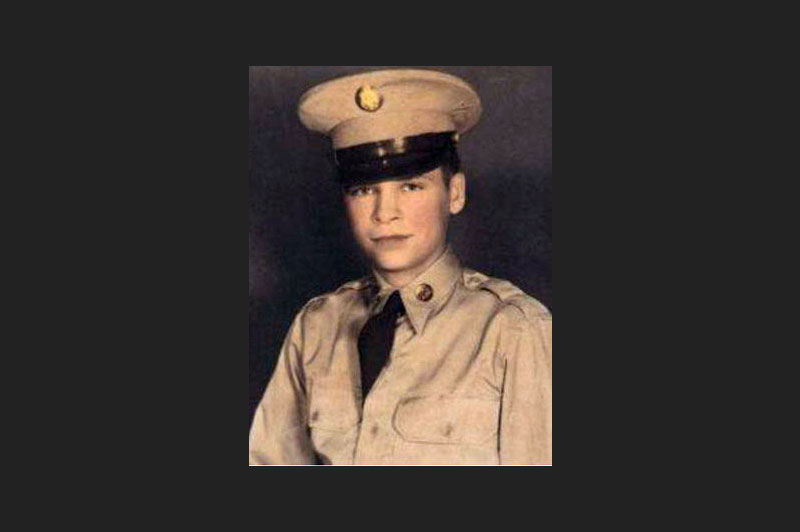
On Tuesday, July 9, between 11:45 AM – Noon, the funeral procession for United States Army Private First Class (PFC) Roger Woods, a previous Unknown Soldier from the Korean War, is expected to pass through Miami Township northbound on I-275 and eastbound along State Route 28 into Goshen Township.
According to a Facebook post by the Miami Township Police, “The family of PFC Woods invites everyone to safely line the procession route and wave American flags to welcome this American Hero home nearly 70 years after he went missing in action and made the ultimate sacrifice for his country.”
PFC Roger Lee Woods was born on May 31, 1932 in Hamilton County to Aubrey C. Woods and Nina Marie Woods.
He was last seen on July 29, 1950. Roger had been missing for 69 years but he never forgotten by his parents or his siblings Aubrey C. Woods Jr., Thomas Woods, George W. Woods, Roger Woods, Donald Woods, Carolyn King and Gary Woods all of whom have all already passed.
Roger is survived by many nieces and nephews. Roger was one of the first soldiers to be sent to Korea where they were greatly outnumbered while given the task of stalling the enemy advance to provide time for the UN forces to amass.
His unidentified body was later recovered and placed at the National Memorial Cemetery of the Pacific in Honolulu. Upon many contributing factors, his body was finally identified and his surviving family was notified.
A visitation will be held at Evans Funeral Home, 1944 State Route 28, Goshen, on Wednesday, July 10th from 5-8 PM. A funeral service will be held on Thursday, July 11th at 11 AM. Burial and military honors will be held immediately following the funeral service at Goshen Cemetery.







































 Those assessments were used to determine whether a person could safely remain at home with community support or whether they needed facility-level care and what resources, whether subsidized or private, existed to pay for the services.