

Tag: Walmart

  • What’s next after the FTC said the biggest grocers were inflating food costs?

    What’s next after the FTC said the biggest grocers were inflating food costs?

    BY:  Ohio Capital Journal

    The Federal Trade Commission in March released a report saying that the three largest grocers “accelerated and distorted” food costs amid supply disruptions caused by the coronavirus pandemic. It also said that prices — and profits — remain high for Kroger, Walmart and Amazon even after the supply kinks have straightened themselves out.

    But the country’s trade watchdog didn’t say in its report what might be done about it. The agency this week might have given a hint.

    The commission is already suing to block a proposed merger between Cincinnati-based Kroger and Boise, Idaho-based Albertsons, arguing that the deal will “eliminate fierce competition … leading to higher prices for groceries and other essential household items for millions of Americans.”

    But that’s unrelated to the findings of the “6(b)” report, which was started during the pandemic in November 2021. It found problems with consolidation in the grocery sector even without the Kroger-Albersons merger.

    Asked if the FTC planned to do anything about those problems, an agency official speaking on background on Monday said, “The report outlines several areas where further scrutiny by the FTC and policymakers is warranted. The report doesn’t specifically spell out any enforcement actions to be taken as a result of the report, but the report will inform the FTC’s future work as the Commission reviews potentially anticompetitive mergers and conduct as it works to protect consumers.”

    The report itself found several broad areas in which it said the three big grocers were using their size to suppress competition.

    One had to do with the big boys’ use of “on time, in full,” or OTIF, contracts with their suppliers. Because they’re such huge customers, they’re able to get strict guarantees that they’ll have their orders completely and promptly fulfilled or the supplier has to pay a steep penalty.

    The FTC report said that at the beginning of the pandemic, virtually no grocers were insisting that the terms of their OTIF contracts be met — an acknowledgement that supply-chain disruptions made it impossible. But as time wore on, some of the biggest grocers reimposed them with a vengeance, the report said.

    “Even as the supply chain crisis brought on by the pandemic continued, some retailers reimposed or even heightened the standards for their OTIF policies later in 2020,” it said. “For example, Walmart tightened its OTIF requirements in September 2020, requiring suppliers to achieve 98 percent OTIF compliance to avoid fines of 3%.”

    Imposition of the contracts had an anticompetitive effect because, in a time of scarcity, they directed limited supplies of some items to the biggest grocers while their smaller competitors went begging, the report said.

    In addition, large grocers are able to use their heft to negotiate constant, relatively low prices from suppliers, a practice known as “everyday low pricing.” Meanwhile, their smaller competitors depend on producer promotions to offer certain items at temporarily low rates.

    As the pandemic set in and producers were already struggling to fill orders, they had little incentive to voluntarily reduce prices. That created another mismatch between the biggest grocers and their smaller competitors, the FTC report said.

    “Promotions designed to increase sales made little sense when those producers were unable to meet existing demand,” it said. “These changes affected retailers differently depending on their pricing model. Most notably, these trade promotions reflect a significant amount of money within the industry, and so the competitive impact of these differential effects (or of the promotions generally), may warrant further study.”

    More broadly, food prices have jumped 25% over four years and they remain high even as supply problems related to covid have eased. Grocers have said their costs remain high, but according to the FTC report, food and beverage retailers saw their revenue rise to 6% over total costs in 2021 — higher than the previous peak of 5.6% in 2015. Then in the first three quarters of 2023, it went even higher — to 7% over costs.

    It seems that might be an avenue of further inquiry.

    “This profit trend casts doubt on assertions that rising prices at the grocery store are simply moving in lockstep with retailers’ own rising costs,” the report said. “Examining the cause or nature of rising industry profits is beyond the scope of this limited study into pandemic-related supply chain disruptions. However, the question warrants further inquiry by the Commission and policymakers.”

    Marty Schladen
    MARTY SCHLADEN

    Marty Schladen has been a reporter for decades, working in Indiana, Texas and other places before returning to his native Ohio to work at The Columbus Dispatch in 2017. He’s won state and national journalism awards for investigations into utility regulation, public corruption, the environment, prescription drug spending and other matters.

    Ohio Capital Journal is part of States Newsroom, the nation’s largest state-focused nonprofit news organization.

    MORE FROM AUTHOR

  • Walmart and Sam’s Club Now Administering Walk-Up COVID-19 Vaccines at 171 Pharmacies Across Ohio

    Walmart and Sam’s Club Now Administering Walk-Up COVID-19 Vaccines at 171 Pharmacies Across Ohio

    Retailer offering customers and associates access to COVID-19 vaccines

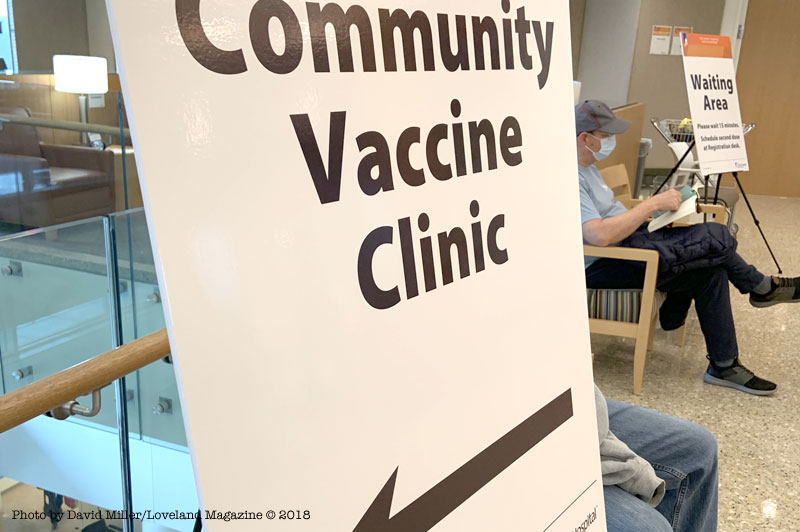
    Walmart and Sam’s Club today announced a new COVID-19 vaccine milestone: Immunizations are now available to customers and associates in all of their more than 5,100 pharmacy locations nationwide, across 49 states, Puerto Rico and Washington, D.C. This includes the 171 Walmart and Sam’s Club pharmacies in Ohio.

    Vaccines are being administered via both walk-up and scheduled appointments, providing convenient options for customers and members to get protected against COVID-19 where they already shop for groceries and health care essentials. Additionally, the company is rolling out new programs to both encourage people to get a vaccine and continue efforts to increase access across the country.

    “Now that supply and eligibility have expanded, it’s even more important for us to reach underserved and vulnerable populations to ensure equitable distribution of the COVID-19 vaccine,” said Dr. Cheryl Pegus, executive vice president, Health & Wellness. “Widespread vaccination is the only way we will eventually end the pandemic and help our country reopen, and we don’t want anyone to get left behind as we enter this new chapter in our fight against COVID-19.”

    Providing Education on Vaccine Effectiveness: Get Out The Vaccine campaign (GOTV)

    The company launched a nationwide Get Out The Vaccine (GOTV) campaign to encourage more people to get vaccinated. The GOTV campaign, an extension of the retailer’s role in the Federal Retail Pharmacy Program and the existing vaccination program, provides education materials in their stores and clubs about the effectiveness and safety of COVID-19 vaccine

    As part of the GOTV effort, Walmart is utilizing mobile clinics to bring vaccines directly into select communities via events and gatherings. Most recently, Walmart partnered with the National Hot Rod Association at their Southern Nationals Event in Commerce, Georgia, to offer walk-up vaccinations for race fans, educational resources with background on the safety and efficacy of the vaccines and an official Walmart branded dragster with information on how to schedule a vaccine.

    Reaching Into Communities

    Walmart and Sam’s Club continue emphasizing vaccine access in locations that reach customers in vulnerable communities. With the expansion of vaccine supply nationwide, there are now nearly 4,000 Walmart and Sam’s Club locations administering the vaccine in locations designated as Medically Underserved Areas by the Health Resources and Services Location (HRSA).

    To encourage vaccination in these communities, Walmart and Sam’s Club will continue partnering with national and local non-profits, community partners and faith-based organizations on community vaccine events.

    Walk-Ins Welcome

    All Walmart and Sam’s Club pharmacy locations across Ohio are now accepting walk-in vaccine appointments, as supply allows, in addition to scheduled appointments. Customers who schedule an appointment can complete pre-vaccination paperwork ahead of time, if interested.

    Appointments can be made at walmart.com/COVIDvaccine and samsclub.com/covid. Walmart Pharmacies are open seven days a week (Sam’s Club pharmacies are closed on Sunday), and are administering the approved J&J, Pfizer and Moderna vaccines. Individuals are not required to be a member to receive the COVID-19 vaccine at Sam’s Club.

    Encouraging Associates to Get Vaccinated

    Walmart and Sam’s Club said they continue to “strongly” encourage, but not mandate, associates to get vaccinated. To help make this process as easy as possible, the retailers are:

    • offering appointments to associates in stores and clubs,
    • providing two hours paid time to get a vaccination, regardless of where associates get their shots,
    • and allowing associates to get the vaccine during their shifts if vaccines are being offered at their location.

    Both Walmart and Sam’s Club have also enhanced their COVID-19 emergency leave policy to include three days of paid leave for any vaccine side effects for associates.