Tag: Warren County

  • Lovelanders Pat, Norah Jane, and Becky Hill connect with their trees amid COVID-19 Pandenic

    Lovelanders Pat, Norah Jane, and Becky Hill connect with their trees amid COVID-19 Pandenic

    By Joe Timmerman

    “When we try to pick out anything by itself, we find it hitched to everything else in the Universe,” John Muir, a transcendentalist, wrote of nature’s connectedness in his 1911 book, My First Summer in the Sierra.

    In 1997, Nature journal published ecologist Suzanne Simard’s Ph.D. theses, describing newfound proof of how plants within communities can be interconnected through an underground system, called a mycorrhizal network, to interact with each other.

    This is Part 1 of a series Loveland resident and Ohio University student, Joe Timmerman wrote for The Post in Athens, Ohio. The Post is an award-winning, student-run media outlet that publishes online daily and also prints a weekly tabloid. They cover local and Ohio University news, sports, Athens life, entertainment and everything in between. The series is re-published here in Loveland Magazine with permission of The Post and Loveland High School graduate, Joe Timmerman a frequent contributor to Loveland Magazine.

    “All trees all over the world, including paper birch and Douglas fir, form a symbiotic association with below-ground fungi … They compete with each other, but our work shows that they also cooperate with each other by sending nutrients and carbon back and forth through mycorrhizal networks,” Simard said in an interview with Yale Environment 360.

    In this sense, trees communicate with one another on a deeper level than what is seen in the overstory and the understory of a forest.

    From mothers and fathers sharing memories of trees they have grown to love with their kids to a lifelong woodworker who discovered a new relationship with wood as time went by, people are connecting with nature in new and old ways, as COVID-19 has brought a global feeling of social disconnection. People and their trees alike have a story to be told.


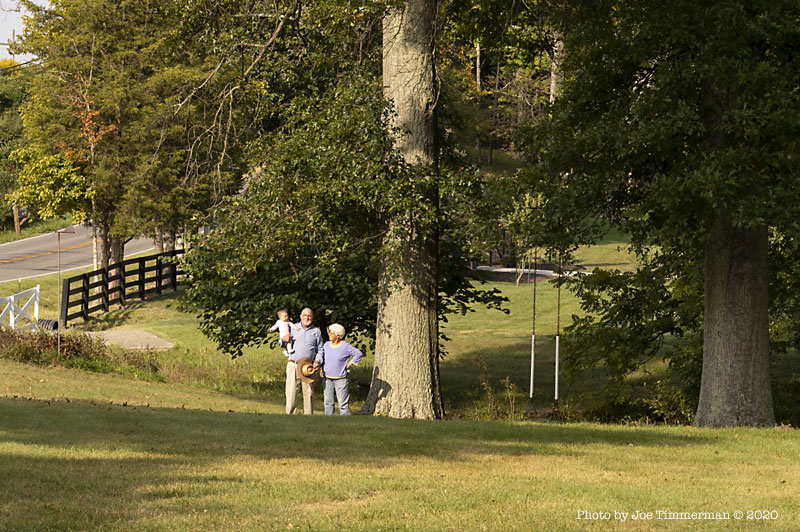
    Pat Hill, 66, Norah Jane Hill, 9 months, and Becky Hill, 69, of Loveland, Ohio, with their Oak Trees on Wednesday, Sept. 23, 2020.

    Pat, Norah Jane and Becky Hill of Loveland, Ohio, with their oak trees. Pat Hill grew up in the house next door and used to farm the land across the street.

    “I’ve always wanted to name this property ‘Twin Oaks,’ one for her and one for me,” Hill said. “As a kid, I always liked a good swing, so I had that swing put up by a tree company. The cable goes from one oak to the other. I’ve always thought that the swing hung from the two parents, and it was a symbol of the family that we created. Our boys all thrived and spent a lot of time on that swing. I bought excellent chains and a high-quality steel cable to create that swing because I want it to last for a long, long time. I think the trees are about 60 years old.”


    Part 2 will introduce you to Phil Ping and his dog, Bandit, of Loveland and their logs and boards of maple, oak, walnut and pine.


  • Newspapers are your best investment

    Newspapers are your best investment

    Let’s face it. No one has had it easy during this pandemic.

    Your newspaper is reporting from the front lines the local stories of COVID-19 and its painful shutdown. We thank our talented journalists.

    But we’ve lost business, too. Like us, you’re probably saying enough is enough.

    Let’s work together as businesses reopen. We’ve got the engaged audience to share your advertising messages. Our ad staff stands ready to help.

    Contact our Ad Executive Cassie Mattia to learn more.

  • Tips for smart shopping during Black Friday sales – other consumer tips

    Tips for smart shopping during Black Friday sales – other consumer tips

    Ohio Attorney General Dave Yost offers these consumer protection tips.

    It’s already October and before you know it, the holiday shopping season will begin. As like many things this year, in-person shopping on Black Friday, Cyber Monday and other holiday promotions may be different than in years past.

    This holiday shopping season, consumers should keep these tips in mind:

    Check store hours: Stores that have previously been open may have reduced hours or may have limits on the number of customers in the store. Be sure to call or check the store’s website to confirm their hours and regulations.

    Research products and sellers carefully: Search for complaints filed with the Ohio Attorney General’s Office and the Better Business Bureau. Also, look up customer reviews online and find out what previous customers have said about the product or seller especially if it’s your first time shopping with a particular seller.

    Beware of scams: Watch out for phony Black Friday coupons, such as those offering hundreds of dollars to spend at a store and other claims that sound too good to be true. Be wary if someone asks you to pay using high-amount gift cards, which are commonly requested by scam artists.

    Know stores’ return policies: Under Ohio’s consumer protection laws, sellers can choose to set their own return policies, including policies of no returns, but they must clearly tell you their policies before you complete the purchase. Also, ask if a return policy is different due to COVID or around the holiday season, as some stores increase their return periods during this time.

    Important exclusions and limitations should be disclosed: Ads should clearly disclose important exclusions and limitations of an offer, so check to see if limited quantities are available, if a sale is valid only during certain hours or if other terms and conditions apply.

    Rain checks apply only in certain situations: If a seller advertises a product at a certain price but sells out of that product by the time you respond to the ad, you may have the right to a rain check. However, sellers are not required to provide rain checks if they clearly disclose the number of goods available at that price or if they clearly state that no rain checks will be given.

    Understand differences between gift cards: Gift cards are the most requested type of gift, according to the National Retail Federation, but not all gift cards carry the same protections. A gift card that is branded by a credit card company and can be used almost anywhere may reduce in value faster than a single-store gift card. Also, promotional cards, such as those that come free with a purchase, may not carry the same protections as other cards and may last only a short period of time. If you receive a gift card, it’s generally best to use it as quickly as possible to reduce the chance it will be lost, stolen or diminish in value. Be aware that if a business stops operating, you may not be able to use the gift card or receive a refund.

    Keep cybersecurity in mind: When shopping for deals online, don’t use free public Wi-Fi when entering sensitive information like your credit card number. Keep apps, software and operating systems up to date and use secure websites when you need to enter personal information.

    Paying with a credit card usually offers greater protection: In general, with a credit card, your responsibility for unauthorized charges is limited to $50, and you have certain rights to dispute charges that you may not have with a debit card or other forms of payment.

    If you suspect a scam or an unfair business practice, contact the Ohio Attorney General’s Office at www.OhioProtects.org or 800-282-0515.


    October is National Cybersecurity Awareness Month: Online Tips for Parents

    With the global pandemic, many parents and their children are turning more often to online resources using devices such as tablets, smartphones and laptop computers. Read on to apply cybersmart tips to help keep you and your children safe while online.

    Consumers Bombarded with Credit Card Interest Rate Phone Calls

    Whether they want them or not, many consumers are receiving robocalls telling them they are eligible for a lower interest rate on their credit card. Most likely, these calls are more than annoying – they’re also part of a scam. Read about these calls and what to do if you are really interested in a lower rate.

    Watch Out for Energy Scams and Learn Where to Get Assistance

    Ohioans should be on the alert for scammers posing as utility company representatives, and threatening to discontinue service to the customer unless the consumer provides personal information or immediate payment for utility service. Read on to learn more about these utility scams as well as where to turn if you need payment assistance.

  • Report: Rate of uninsured Ohio children rises significantly

    Report: Rate of uninsured Ohio children rises significantly

    After hitting a historically low rate in 2016, the number of uninsured children has gradually grown to eliminate progress made in the country. Ohio, alone, had a double-digit jump in the three-year study.

    Susan TebbenSusan Tebben is an award-winning journalist with a decade of experience covering Ohio news, including courts and crime, Appalachian social issues, government, education, diversity and culture. She has worked for The Newark Advocate, The Glasgow Daily Times, The Athens Messenger, and WOUB Public Media. She has also had work featured on National Public Radio.

    Nationally, the rate of children not covered by medical insurance was down to 4.7% in 2016, but started to increase again the year after, according to a new study by Georgetown University Health Policy Institute’s Center for Children and Families.

    In 2019, the rate had jumped to 5.7%, an increase of 726,000 more children since the Trump Administration took office in 2016, the study showed.

    “Much of the gain in coverage that children made as a consequence of the Affordable Care Act’s major coverage expansions implemented in 2014 has now been eliminated,” the study noted in its key findings.

    The data was collected from single-year estimates by the U.S. Census Bureau’s American Community Survey from the three years.

    Ohio was one of several states that saw an increase of more than 20,000 uninsured children from 2016 to 2019.

    Ohio’s uninsured rate went up 26% from 2016 to 2019. Data from 2019 show 131,000 Ohio children without insurance, up from 104,000 in 2016.

    Ohio child health advocates say a lack of health insurance contributes to worse life outcomes, which extend to education and societal shortcomings.

    “This damaging trend will have long-term consequences for children and communities across Ohio because without health coverage, children cannot access the care they need to grow and thrive,” said Tracy Najera, executive director of the Children’s Defense Fund Ohio, in response to the study.

    The study attributed declines in Medicaid enrollment as the start of the decrease in insured children. Public coverage for children includes Medicaid and the Children’s Health Insurance Program (CHIP).

    The largest national increase in uninsured children, 320,000, came between 2018 and 2019, and represents the largest annual jump in more than a decade, the authors of the study said.

    “Moreover, since this data was collected prior to the pandemic, the number of uninsured children is likely considerably higher in 2020, as families have lost their jobs and employer-sponsored insurance, though it is impossible to know yet by precisely how much,” the study stated.

    The study comes as some K-12 schools see spikes in COVID-19 rates, and cases in ages 0-19 represent the fifth highest age group in the state, according to state data.

    Texas and Florida had the highest rates, representing 41% of the overall increase in child non-coverage, with about 1 million children in Texas lacking health insurance in 2019, and an estimated 343,000 uninsured children in Florida.

  • Loveland Finance Director submits letter of resignation

    Loveland Finance Director submits letter of resignation

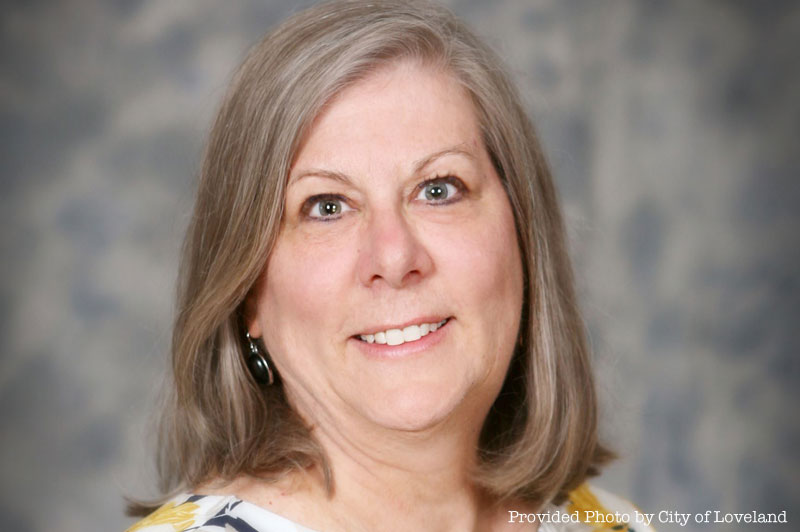
    Loveland, Ohio – “I’ve reached a point where I want to re-shift my focus to my family and the next stage of our life,” Michelle Byrde told Loveland Magazine. “I will miss my team and co-workers and wish everyone the best.”

    Loveland’s Director of Finance, Michelle Byrde, has submitted her letter of resignation. Her resignation is effective no later than December 30 according to City Manager Dave Kennedy in his weekly up-date to Council on October 2.

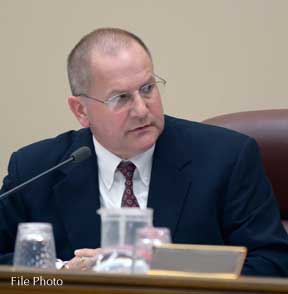
    Loveland City Manager Dave Kennedy

    Kennedy said in the memo, “Michelle has worked tirelessly during her time with the city which began in October of 2012, and that effort continued following her appointment as the city’s Director of Finance in September of 2018.”

    Byrde also told Loveland Magazine, “In my eight years with the City, I have had the opportunity to learn about government operations and am lucky enough to have met and worked with a number of very good people.”

    Kennedy added, “I have always been impressed that no job was too great or too small for Michelle to tackle, and for always being receptive to my constant interruptions to ask questions about an invoice, budgeting, or the myriad of other items we worked on together.”

    Byrde expressed appreciation to all those who mentored her in her three different roles at City Hall.

    “On behalf of all of us with the city, we want to thank Michelle for her service to the Loveland community. I only wish that her beloved Reds could have scored at least one run for her in the play-offs,” said Kennedy.

    The process for filling the Director of Finance position was to have begun last week.


  • Regal Theater in Deerfield Town Center is temporarily closed

    Regal Theater in Deerfield Town Center is temporarily closed

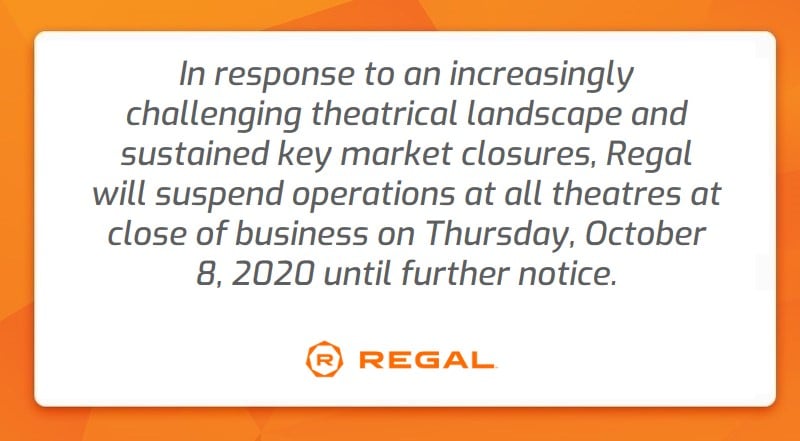
    Deerfield Township, OhioRegal theatres across the US, including the one in the Deerfield Town Center have temporarily closed until further notice.

    The statement from the Corporate office:

    This is not a decision we made lightly. We did everything in our power to support safe and sustainable re-openings of our theatres and we are so very grateful for our employees who implemented the new protocols, which resulted in lots of positive feedback from customers who visited our theatres and felt safe. We were very proud of the fact that theatres were open for 2 months and there was not one COVID case resulting from visiting the theatre. We cannot underscore enough how difficult this decision was.

    As we have done to date, we will do everything we can to save livelihoods and the company – this is an extremely delicate and tricky balance. We continue to work with the National Association of Theatre Owners (NATO), to ensure we are lobbying state and local governments to support our employees and the industry which has so much cultural significance.

    We will continue to monitor the situation closely and will communicate our future plans to resume operations once film studios are able to bring their pipeline of major movie releases back to the big screen. We can assure you that once a line-up of movie releases is confirmed, we will be ready to re-open our theatres, as we did in August, with the same safety levels you have already seen while at the same time keeping the great experience that you are used to getting from us.

    A big thank you goes to you, our movie-loving customers; your health and wellbeing has always been our priority during this difficult time and we look forward to welcoming you back as soon as possible to enjoy a full slate of films.

    If you have any questions, please take a look at our Frequently Asked Questions below.

    If you are a Regal Crown Club member or Regal Unlimited subscriber, visit the Regal mobile app and online at regmovies.com. If you do not already have a Regal Crown Club account and would like to receive email updates, you are able to create a free account in one step here.

    We sincerely wish good health for you and your families during these uncertain times. 

    -The Regal Team

  • Judy Leever Owned a Thousand Pairs of Shoes

    Judy Leever Owned a Thousand Pairs of Shoes

    At least one pair belonged to you

    She always slipped back into her own

    by David Miller

    A reoccurring theme rang at the visitation, funeral, and two nights of Shiva for Loveland resident Judy Leever.

    This is a reprint of an Editorial Published in Loveland Magazine on October 17, 2012. October 12 is the anniversary of Judy Leever’s passing

    Judy always made us see things from the perspective of others, and we all tried to plant in our subconscious, the lessons of her life and vowed to attempt to spend our remaining days living a life wearing HER shoes.

    Judy owned a thousand pairs of shoes, nearly all belonging to other people. She possessed an uncanny ability to make these shoes fit our own feet  as well.

    We wore each other’s shoes three weeks ago, during our mourning time. We listened to one another’s other’s sadness at her too early passing at age 59 on September 29, 2012 after battling breast cancer and its drugs – because we were sure she had more to teach us. Truth be told however was that if we were listening and watching – her life was one lived, always… with certitude and steadfastness. She had nothing more to teach, because Judy wasn’t going to change and suddenly teach a more profound lesson. She had already lived her quite profound life. She saw life’s complexities and confusion, it’s conundrums, its needs filled, from the perspective of others.

    About 400 family and friends, standing room for the late arrivers, attended the service, at midweek, a mid-morning service at Congregation Beth Adam, just outside of Loveland. A hundred or more helped bury her humble poplar coffin; waiting in silence until a entire mound of earth was put back in place by family and friends shoveling, not departing until finished by a backhoe at the United Jewish Cemetery in Montgomery.

    Later, hundreds gathered in the side yard at her downtown home in Loveland for two nights of Shiva. Prayers, and songs on the bank of a popular stream. Lovers holding hands. On one side O’Bannon Creek. On one side the “Loveland Bike Trail”. A fitting setting now decorated for Judy with homegrown flower bouquets, brought by mourners and adorers in simple household jars scattered about and placed on any available ledge, garden rock, or garden table. Loud crashing walnuts thumped to the earth on this late summer evening looking to get to the earth and begin a new life – punctured the sometimes silence like drumbeats. From the not to distant Nisbet Park, children sounds of late summer evening play. Muffled chinwag from couples walking nearby. Runners, joggers, and bicyclists along the Little Miami Scenic Trail, most unaware of the contributions Judy made to preserve its natural beauty and oblivious to the sadness nearby.

    During prayer, “It’s a dangerous thing to love what death will take away.”

    Six stacked canoes on top of one another nearby. A bicycle leaning against a tree. A clothes line with faded brownish grey pins. Sparks from the fire pit near the creek aided conversation. Wooden garden cart. A weeping willow. A hammock tied to Maples starting to turn. A sitting bench also. All of it spoke to the family lifestyle. Absent her home was a TV. Inside the home was now packed almost beyond capacity as mourners filled plates of potluck. Two by two faces, memories shared until they had to again go outside to make room for others. Outside again… resumed these intimate, quiet, two on two conversations. The downtown chimes on top of the nearby, old water works plant wept sentiment. Newborns clenched to mother’s breasts.

    Judy’s mate was her husband Bruce. They shared a real estate business. They lived in a passive solar home they crafted in Maineville before moving to Loveland in 1994. The Leever family once spent the entire summer living in a modest tent in their back yard in Maineville, to “teach their children well.” They were married for 32 years. Three tall proud successful sons, Glen, Will, and Michael. A brother Robert from Silver Spring Maryland. And, a cast of thousands of close friends and acquaintances; recipients of her generosity of devoted personal time, a gentler community because of her console, a cleaner river, cleaner drinking water, green space that condo projects and “progress” once threatened, food on the food bank shelves.

    She welcomed teens into her home. She loved and nurtured her close religious community, helped organize concerts in the park and celebrations of Martin luther King Day in Loveland. She sang in the Martin Luther King Chorus in Cincinnati’s celebration.

    We were recipients of her grace as she lost the fight with her disease.

    Was Judy the community weaver? Didn’t she straighten our fibers? Did she stretch our seams?

    The town cobbler?

    All that aside, even though more than enough public service for ten long lifetimes, Judy left behind shoes to fill. What was it about Judy? How did she so often see that you would fit into the shoes of others if only given some of her wise second thoughts? No one quite had the answer to “How” but, non-the-less it was the subject of most of the conversation, because most knew it was her most inspiring legacy – that should be imitated in a fair, just, town… for raising children and growing old in.

    Judy genuinely loved the outdoors… loved walking errands, walking on the grounds of Grailville several times a week. Walked 400 miles of the Appalachian Trail. It felt as if she belonged on the ground some how or another. Rode her bike to the library and Kroger.

    Judy made you feel at home in her own house as if you belonged. “Yes. Yes.” She was well grounded.

    Judy hosted meet the candidate nights for presidential campaigns, locals, and judges – and grant writing workshops for non-profits.

    She was active in fermenting plans for “Heartland Eco Village” at Grailville. She wrote the first prospectus for what may some day be a worldwide example of self sustainable community living. She volunteered in the organic Grailville Gardens.

    She wrote the 501-C-3 the application for the Loveland Farmers Market and often volunteered on market day.

    She and family were early members of Leaves of Learning, a cooperative home school network. Her sons were home schooled, or “unschooled” until they entered high school. Each son has since graduated with honors from prestigious liberal arts colleges. Judy earned a teaching degree in Special Education from the University of Maryland, and a Masters Degree from the University of Cincinnati in Special Education. She taught middle school in Maryland for three years, and at Mason Middle School for four years. She was born in Hyattsville, Maryland, near D.C.

    When Loveland’s annual Martin Luther King Day celebration seemed faltering, Judy dove head long. When efforts to save the Simpson Farm from a condo project seemed faltering, Judy put on muck boots and got muddy. She was that kind of person. She would change shoes – jump in anywhere she was needed. A doer.

    Judy was a faithful volunteer with the Shalom Initiative (now the Loveland Initiative) opening her house to their Teen Group for meetings, games, and just relaxing. She served them a Passover meal one year, teaching them her Jewish traditions. One of those young teens, Judy placed under her wings as she graduated high school; helping her apply for college and financial aid, continuing to mentor into young adulthood. Sobbing uncontrollably now with the reality of moving on without Judy. She said, “Judy was like a mother to me. I always wanted to live here with her family. I will miss her so much.”

    Years ago Judy taught GED classes for adults at the Shalom Initiative. She recently jumped in again when the Initiative was going through a difficult transition.

    She served as a Trustee for Little Miami Inc., for twenty-years. The Little Miami is 125 miles long. A lot of property owners, swimmers, canoers, kayackers, fishers and hunters benefit from the work of Judy Leever. A lot of birds, critters, and fish as well. We drink cleaner water along those 125 miles because of Judy. She participated in annual river cleanup programs adopting the river banks nearest her home. In the early 90’s, she brought regional attention to areas around the Peters Cartridge site along the Little Miami Scenic Trail and adjacent to Kings Island, that was contaminated with hazardous waste. It was her first foray fighting city halls, township commissions, county commissioners, the EPA, and the Army Corps of Engineers. The men who scoffed, eventually crowded before TV cameras to be aside the truth teller because they were now wearing Judy’s shoes. A few weeks before her death, the site was at last placed on the USEPA’s Super Fund Priorities List for cleanup.

    Judy was active in the Loveland Greenbelt Community Council’s establishment of the East Loveland Nature Preserve.

    Her house was opened for a week to “Open House” an international Jewish, Arab, and American teen exchange program.

    Judith Barbara Leever, nee Ginsberg often spoke about community issues at city council meetings, and was on city committees that directed downtown development. She was passionate about keeping downtown comfortable for existing residents. She wanted more housing downtown not overshadowed by boutiques and bars. Leaders listened to her because she wore all of our shoes in these roles, seeing each perspective through the eyes of a diverse community and its needs.

    When people went to Judy seeking personal advice about a community problem, she always made the person see the problem through the eyes of the perceived problem maker. She said in her insightful way, “Try to put the other fella’s shoes on for a moment.” When leaving, your own shoes felt more comfortable, because she stretched them a bit for you.

    Late after Shiva, the basketball court in the Cul-de-Sac again filled with young people.

    Judy could put a businessman’s shoes on a housewife. Put the renter’s shoes on the landlord. Put the water drinker’s shoes on the polluter. Because she did these things, she lived a life of extreme optimism.


  • Local author offers a holiday recipe collection

    Local author offers a holiday recipe collection

    Cincinnati, Ohio – Loveland native and debut author Laurie Stroup Smith has compiled a collection of holiday recipes from some of your favorite Amish authors.

    Image may contain: text that says 'LAURIESTROUPSMITH.COM Join the List Subscribe to my newsletter and receive a FREE digital collection of holiday recipes from some of your favorite Amish authors!'By subscribing to her newsletter, readers will receive this exclusive digital content for free. In addition to exciting updates about reader events, giveaways, and upcoming book releases, Smith also includes access to the first chapter of Pockets of Promise, Book #1 in The Pocket Quilt Series. Your privacy is protected. She will never give your information to anyone. Visit lauriestroupsmith.com and sign up today.

    Kelly Irvin, award-winning author of Mountains of Grace and a Long Bridge Home, says, “With her debut novel, Pockets of Promise, Laurie Stroup Smith has elevated a lovely Amish romance to a universal coming-of-age story.”

    Smith was named a Finalist in the 2017 ACFW First Impressions Contest for this story and a Semi-Finalist in the 2018 and 2019 ACFW Genesis Contests for additional writing.

    Released by Vinspire Publishing on April 30, 2020, Pockets of Promise is about a young Amish woman—torn between two worlds and two men—who travels to the Amish snowbird community of Pinecraft, Florida, where she receives wisdom and guidance through secret letters tucked into the pockets of a special quilt.

    Kelly Irvin, award-winning author of Mountains of Grace and a Long Bridge Home, says, “With her debut novel, Pockets of Promise, Laurie Stroup Smith has elevated a lovely Amish romance to a universal coming-of-age story.” 

    Vannetta Chapman, award-winning author of Agatha’s Amish B&B Series, agrees, saying, “A fresh new voice in Amish fiction…Smith pulls us straight into the confusion of an Amish rumspringa…touching, authentic, and sweet.” 

    Purchase digital and paperback copies are available. Amazon, Barnes and Noble, BAM, Smashwords, and Kobo.

    Visit lauriestroupsmith.com for more information. Smith looks forward to connecting with readers on Facebook and Instagram.


    Title:    Pockets of Promise, Book #1 in The Pocket Quilt Series
    Author:   Laurie Stroup Smith
    Pub Date:   April 30, 2020
    Paperback and ebook available at:    Amazon
    Barnes and Noble
    Smashwords
    Kobo
    ISBN:    978-1734150742
    Price:   $14.99
    Pages:   200
    Genre:   Amish

  • Residents urge BOE to form a Diversity Advisory Board

    Residents urge BOE to form a Diversity Advisory Board

    This statement was delivered by Leah Marcus at the Loveland Board of Education Meeting on 9/22/2020 on behalf of John Coburn, Julie Gebhart, Leah Marcus, Jennifer Shaftel, and Molly Simons, representing the Loveland Diversity Advisory Board (DAB) and the voices of their supporters in the Loveland Community.

    by Leah Marcus

    At the Loveland Board of Education Meeting on 9/22/2020 a group of community members, identifying as the Loveland Diversity Advisory Board made initial requests regarding the need to implement a Diversity, Equity, and Inclusion initiative within the School District. The statements delivered by community members are below:

    “As a part of the Diversity Advisory Board, I want to thank the Loveland Board of Education for hearing me today. This is a new group that started in the Loveland Area recently and our request is that there be an Advisory Board that looks at Diversity, Equity, and Inclusion concerns in our community, and more so, in our Loveland City School District. This effort would consist of school administrators working with the Advisory Board to talk and try to resolve some of these issues.

    I want to take a little bit of time to talk about my experiences in Loveland. I have lived here for six years and I want to talk about some things that have happened to me.

    One thing, when my wife and I first moved in, a neighbor asked my wife if we were the new neighbors.

    “Yes, we are the new neighbors.”

    “Oh, I will come by and ​see​ you.”

    I can’t tell you who that neighbor is.

    I have another neighbor. We just don’t talk. He doesn’t talk to me. I have said “Hi” to him, but we just don’t talk. He talks to the other neighbors-just not, to me.

    I have been at a stoplight here recently and I was called a “Nigger” when someone rolled their window down and felt like that was appropriate to do.

    There was another time that I was at a meeting, here in a Loveland school building, and I walked out with a couple of parents. We got lost in the building and we ended up going down a dark hallway. A community person walked up and said, “Oh, you’re used to being in dark places.”

    I think about that, and I think about the community where I grew up.

    I grew up in a community called Webster Groves, Missouri. I don’t know if anyone is familiar with that place, but it has similar demographics to what we have here, but we had a sense of belonging. Which I don’t necessarily feel here.

    This was in the 1970s, so Whites and Blacks got along. We talked to each other. We went to each other’s homes. We ate dinner together. We got to know each other, our parents got to know each other, and I don’t feel that sense of community here.

    Now don’t get me wrong, there are some wonderful things here in Loveland. There are wonderful things to do. I have met some wonderful people, but I am just saying that I don’t feel that.

    So when I think about my experiences I realize that I live in Loveland, but I work outside of Loveland. My church is outside of Loveland and my friends are outside of Loveland. I think about the kids that are in this environment every single day and I am wondering what data we are using to talk to the kids about their experiences that are here in the schools every single day.

    And again, I am just starting to become engaged in this environment. So let’s think about the long term ramifications of not having a Diversity, Equity, and Inclusion initiative.

    I am big on just reading my bible, and I pulled out a verse that says, “Whoever does not love their brother and sister, whom they have seen, cannot love G-d, whom they have not seen” (1 John 4:20). So what are those long-term ramifications and what are we teaching our kids? What kind of legacy are we leaving them? What if we don’t teach them that it is okay to engage with people who don’t look like them, whether it be someone who has special needs, or someone who identifies as LGBTQ, or someone who is Black or Brown?

    What kind of legacy are we leaving our children if we don’t say it is okay to engage with others that don’t look like you?​

    We are here tonight representing a diverse group of LCSD parents and community stakeholders to respectfully request the district’s action on two proposed initiatives:

    First

    We respectfully request that the District support a resolution to form a Diversity Advisory Board.

    Second

    We ask that the Board of Education facilitate a relationship between this group and school building administrators, so that a formal plan to address issues related to diversity, equity, and inclusion, that is, DEI, can be established, with parent input, and implemented, in the schools.

    We acknowledge that conversations regarding inclusion and diversity are already happening in the community with great frequency, whether that be on social media, our local written media, in our private homes, or  public forums such as this summer’s organized Peace Walk.

    Beyond these events, parents in our district, including many here tonight, have been meeting informally to educate ourselves and to understand how we can better leverage community resources to support our schools when it comes to creating an inclusive learning environment that prepares all students to succeed in an increasingly diverse workforce and world.

    Although our district’s values indirectly point to a shared commitment for inclusive education, informal and indirect commitment is not enough to make inclusion a reality in our schools. Achieving inclusion requires intention, including formal structures for engaging parents, students, and staff in conversations about what is needed to achieve this reality.

    Educational institutions have long acknowledged DEI initiatives as essential components of Social-Emotional Curriculum. Loveland, however, has yet to implement a permanent and intentional diversity statement or initiative. In fact, Loveland is one of only a handful of local districts with absolutely no DEI initiatives to speak of. The following districts have long-established comprehensive DEI plans: Sycamore, Indian Hill, Lebanon, Wyoming, Mason, Madeira, Kings, Cincinnati Public, Mariemont, Northwest, Fairfield, Forest Hills, Princeton, and Lakota.

    Compared to our neighboring districts, Loveland seems to be falling behind in this regard. It is time for Loveland to formally commit to addressing these issues.

    Institutional support for Inclusion and Diversity efforts have been shown to have positive outcomes for all students, including benefiting students’ critical thinking, decision making and cognitive skills, student success and engagement, as well as fostering a sense of belonging. On the flip-side, lack of DEI plans has been shown to result in hostile school and community environments, a lack of cohesion and consistency in dealing with district DEI issues, and, in some cases, costly lawsuits.

    Our Loveland Tigers do not want to be defined by a negative community incident, when we could be defined by the innovative, diverse leaders we educate in our district.

    Here, we present to you our proposal, along with letters from parents and community stakeholders who would like to see these initiatives come to fruition.”

    John Coburn, Julie Gebhart, Leah Marcus, Jennifer Shaftel, and Molly Simons, representing the Loveland Diversity Advisory Board (DAB) and the voices of our supporters in the Loveland Community.

  • Land formerly set aside for a Loveland park to “pave” way for HOMEARAMA

    Land formerly set aside for a Loveland park to “pave” way for HOMEARAMA

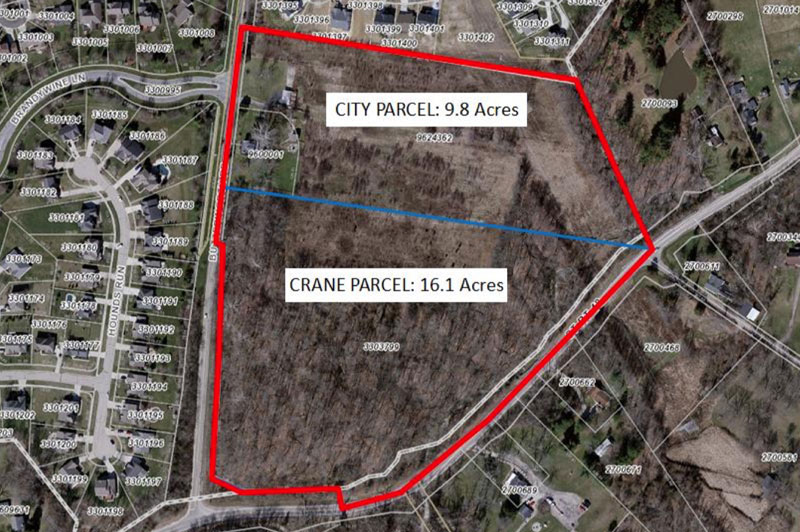
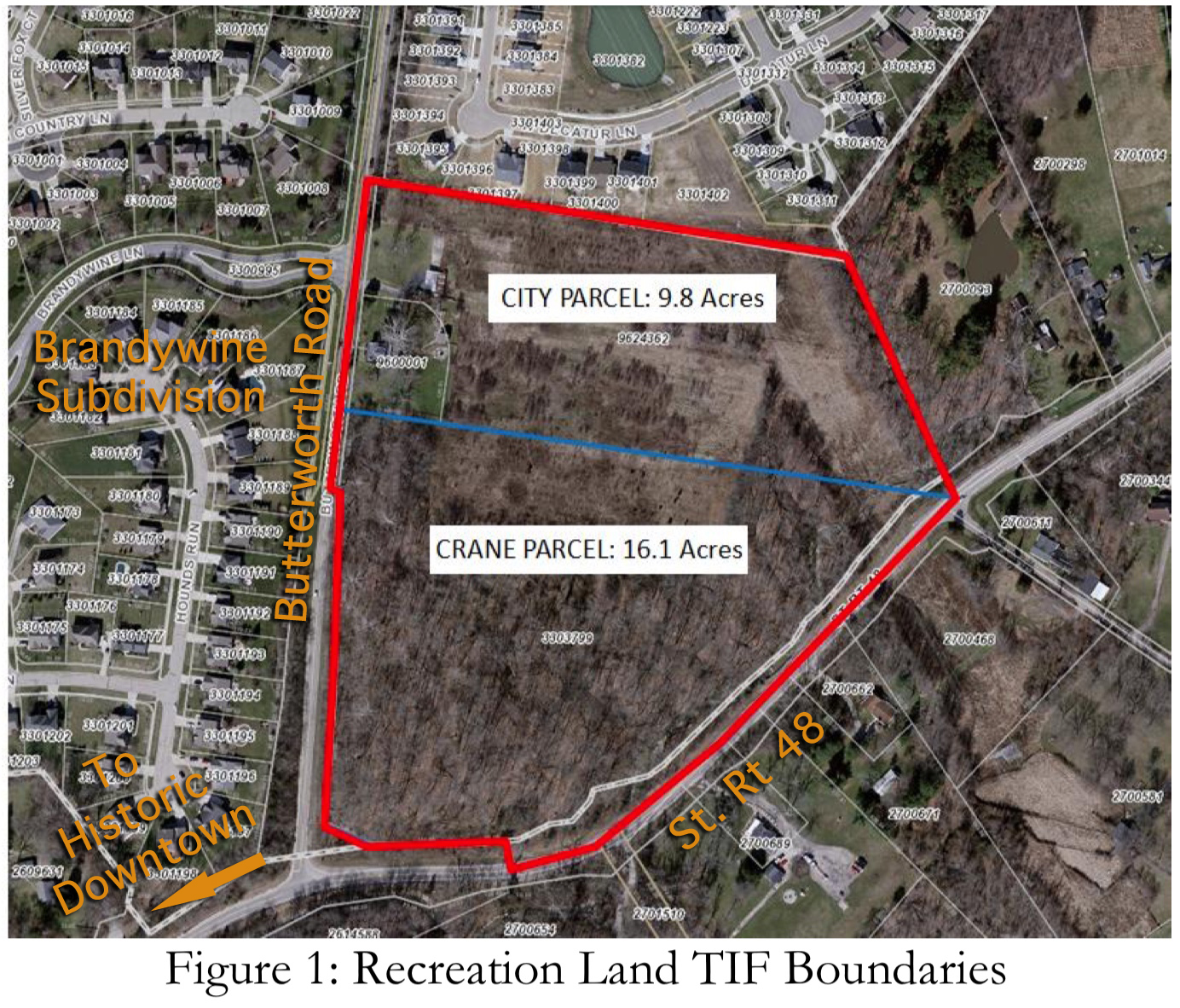
    Loveland, Ohio – City Council has scheduled a public hearing for October 13, at 7 PM to hear from the community on a proposed sale of city-owned property on Butterworth Road, in Warren County. Council voted in a special session on September 29 and voted unanimously to set the public hearing date after a motion by Tim Butler. The meeting lasted 141 seconds and there was no discussion about the sale.

    The property consists of 9.8389 acres. The purchaser of the property would be the Campbell Berling Development Company. The proposed use of the property is to accommodate a single-family residential development of no more than 35 single-family homes. The company address is 333 Madison Pike, Suite C in Ft. Write Kentucky.

    (Right-Click to open these images in a new tab or window to see a larger view.)

    Taxpayers originally bought a total of 10.737 acres. The justification given at the time for the $900,000 expenditure was that it would be the last chance for Loveland to have recreation space in fast-developing southern Warren County. In 2010, 0.8981 acres of the property, which included a home, was portioned off and sold to Judith Lund for $102,000.

    A Recreation Tax Increment Financing District (TIF) was created by Ordinance 2008-38 to pay off financing of the $900.000. The TIF consists of approximately 27 acres and includes the property known generally as the Christman Farm as well as the Crane property.

    The TIF provides financing for the property purchase that the City recoups through increased property tax revenues generated from future development within its boundaries.

    Tom Carroll, the City Manager at the time said, “The City will continue to slowly retire the debt on this property and the remaining ten acres of the Christman Farm will be land-banked until the Crane property is developed and a municipal park can be constructed. Continued patience is therefore necessary before Loveland can build its first park in Warren County.”

    Taxpayers have been paying close to $48,000 annually in debt service for the Christman Farm purchase.

    In their offer letter, Campbell Berling says the development will have a buildout value of $25,250,00 with an assessed valuation of $6,860,000.

    Campbell Berling will be paying $350,000.00 for the land.

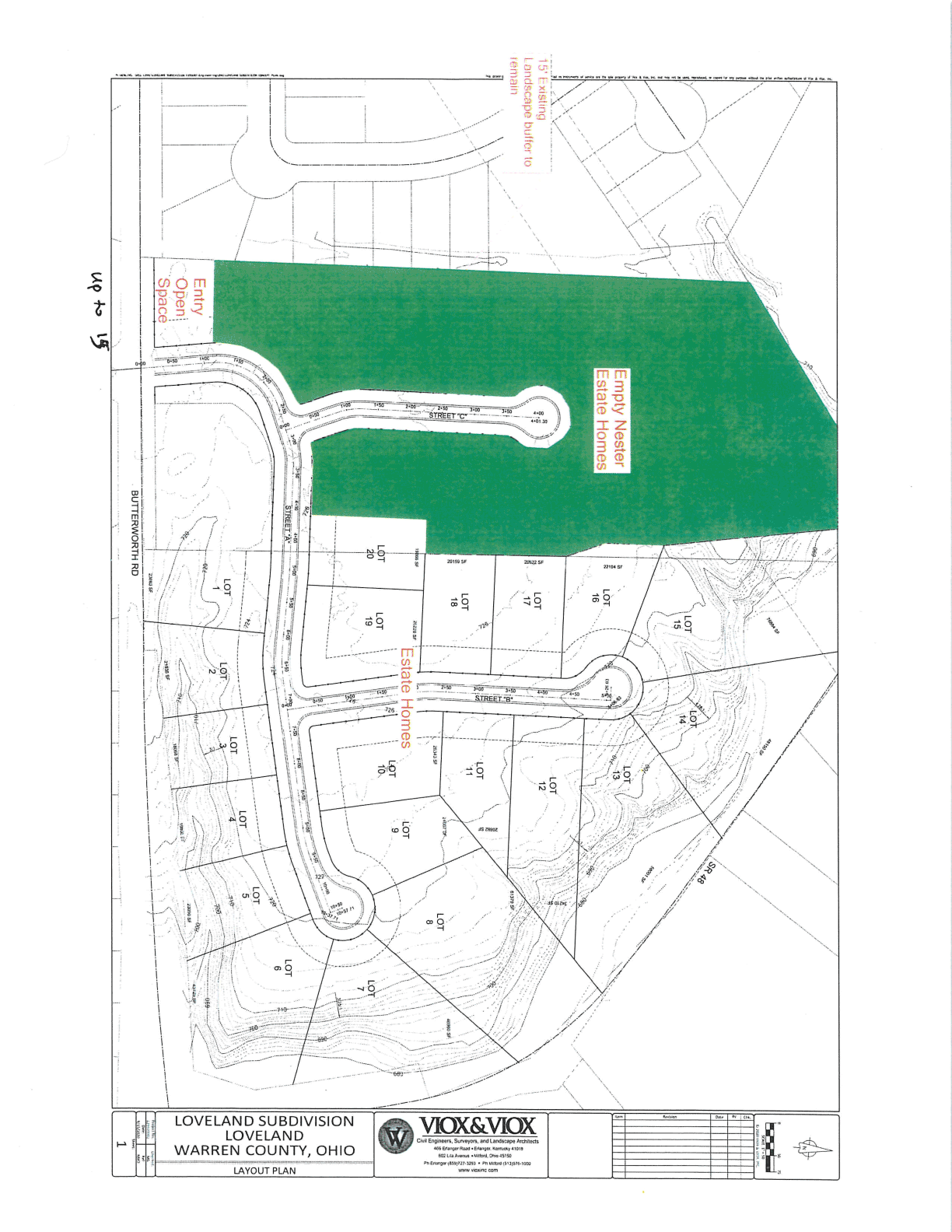
    Their plan is to build fifteen $550,000 and up “empty nester” homes on the parcel they would like to buy from Loveland taxpayers. The lots would be between 11,000 and 18,000 sq ft.

    The Crane property would have 20 homes and two styles of “Estate Homes” valued at $850,000 and up on lots that would average 32,000 sq ft.


    Campbell Berling is proposing that future homeowners be allowed to pay the cost of sewer line extensions over 20-years.
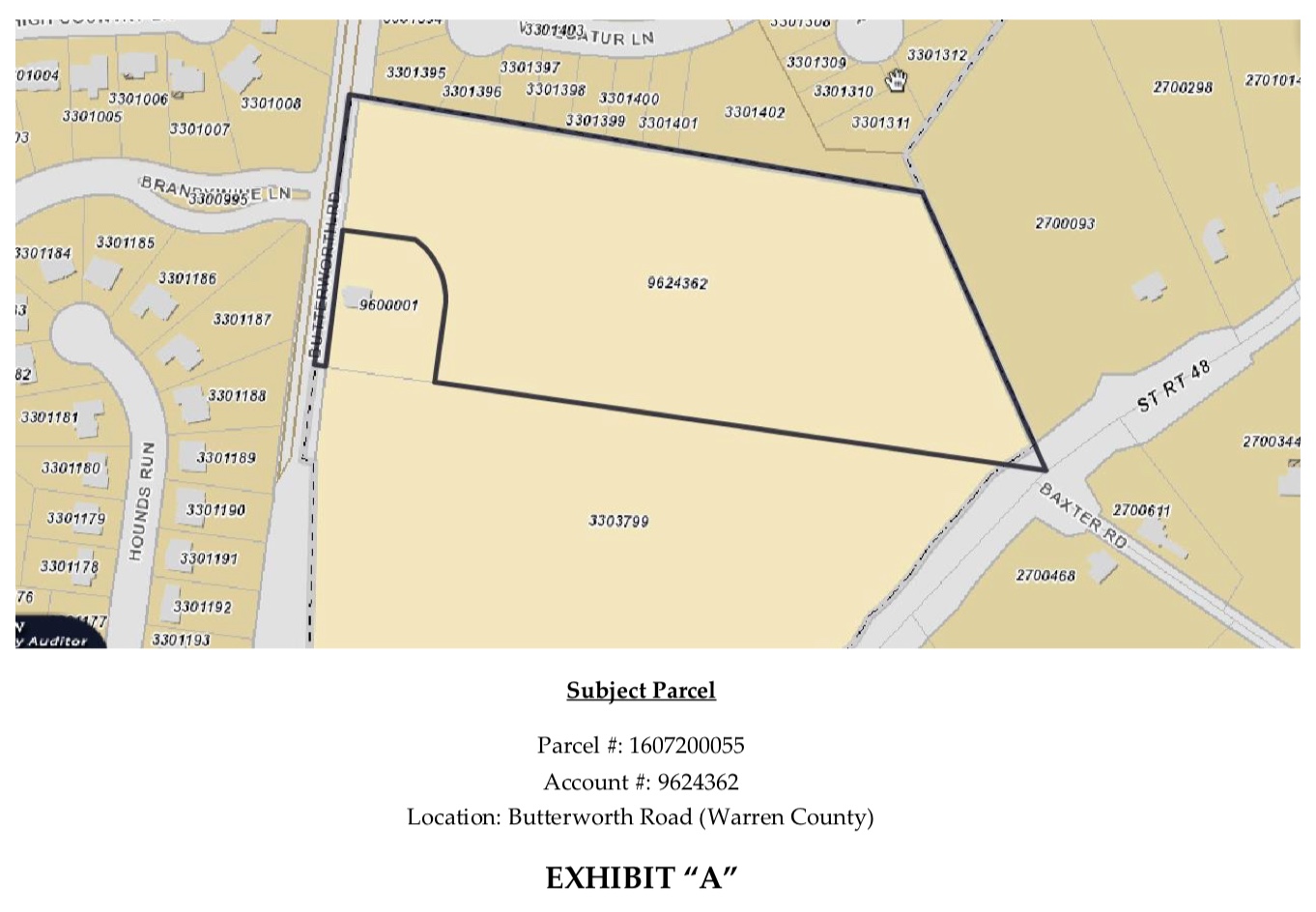
    Access to the development would be from Butterworth Road across from the Brandywine subdivision. The developer already has a “Crane family property”, parcel number 16074000240 under a purchase contract.

    There have been 57 previous HOMEARAMA showcases

    The 28th was in 1989 at The Glen of Claiborne (Loveland)

    The 29th was in 1990 at Chatham Woods (Symmes Township)

    There will be a request for a zone change to a Special Planning District and the “Estate” homes built on the Crane property will be a future HOMEARAMA site.

    HOMEARAMA is an annual event that is billed as the “latest and greatest” in home and landscape design.

    HOMEARAMA® offers you the opportunity to not only see the latest trends in home design and decorating, but also learn why buying a new home continues to represent an excellent value. Today’s new homes offer the latest trends in technology and more energy-saving features than ever before.

    City Manager Dave Kennedy proposes a transfer of the 9.8 acres to the Loveland Community Improvement Corporation (CIC) for purchase by CB Butterworth, LLC and has prepared legislation and it will be presented to City Council as an emergency measure. Emergency legislation cannot be overturned at the ballot box as they become effective immediately.

    Section 4 of the emergency legislation states:

    That this Ordinance is hereby declared to be an emergency measure necessary for the immediate preservation of the public peace, health, safety and general welfare and shall be effective immediately upon its passage. The reason for said declaration of emergency is to allow for the property to be transferred and sold as soon as possible so that infrastructure can be installed to allow for its development for the benefit of the City.

    The CIC is a quasi-government arm of the City. Once they take possession of the land their actions are not subject to Council approval and their actions cannot be overruled by a vote at the ballot box.

    A 2007 proposed development, Summit Pointe, was for 70 attached units, and later reduced to 58 units, however it never came to fruition.

    Kennedy in a memo to City Council today said, “Proposals also included multiple high-density townhome type projects which would be rental occupied. These proposals were never accepted, due to the fact that City Council and staff did not see high density, much less rental type projects, as a good fit for the surrounding neighborhoods of Brandywine on the Little Miami and Butterworth Glen.”

    Kennedy says in the memo that he and staff met with numerous Cincinnati area home builders in the hopes of creating a low density project, and that one message from the developers that continued to surface was that the cost of  bringing utilities to the properties was expensive. Therefore, most developers saw a higher density project as a way to recoup those expenses.

    “With that consistent message from developers, and a low-density project clearly being the choice of City Council and staff, a possible option was created,” said Kennedy. The option is to include the City extending the sanitary sewer collection main up State Route 48 to the properties and placing an assessment on the parcels within the residential development so that the City would be reimbursed for the project costs.

    An assessment on each parcel, for a period of 20 years would allow for Loveland taxpayers to recoup their subsidy of the sanitary sewer main extension and to the Campbell Berling Development Company. Kennedy has not said what what the sewer extension will cost nor said how the initial sewer construction will be financed. It remains unclear if Loveland taxpayers can recoup the cost of borrowing money for the sewer construction.

    After the taxpayers bought the land to be used as recreation and formal proposals for how it would be developed as ballfields and passive recreation came forward, opposition from many in the Brandywine subdivision doomed its development. Traffic concerns and “strangers” coming to a public park in their neighborhood distressed many homeowners. Many said they did not want to come across strangers as they were on walking trails and said they would not let their children play where strangers would be using the public park as well. Currently anyone wishing to use city or school recreational fields, tennis and basketball courts, etc., in the immediate neighborhood must drive through Historic Downtown to facilities in Clermont or Hamilton County.

    Kennedy told Council, “The proposed legislation, (was) being requested as an emergency to allow infrastructure work and planning to begin immediately.” Normally passed ordinances must be read at two separate council meetings and don’t become law until 30-days after the vote at the second meeting.

    The developer wants to rezone all of the property as a Special Planing District which would require Planing and Zoning Commission and City Council approval.

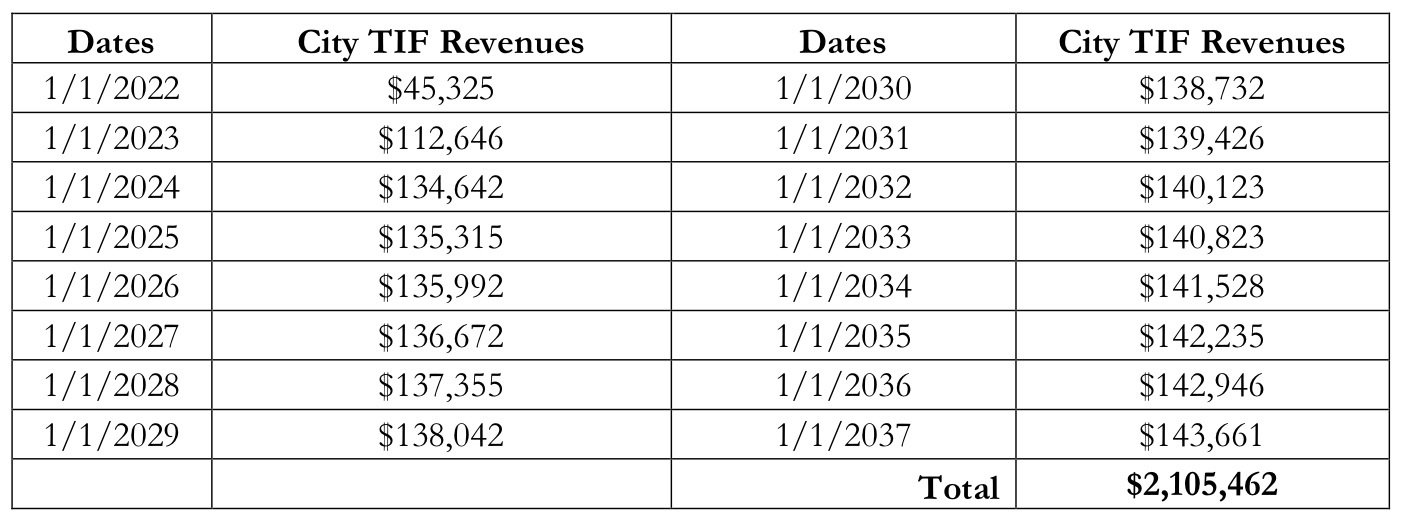
    Kennedy presented this “Fiscal Impact” study in the package of information he presented to City Council:

    The agreed purchase price for the property is $350,000. As the project begins to develop it will begin to produce TIF revenues until such time as the TIF expires in 2037. TIF revenue is calculated based upon an increasing scale as the development is completed and placed on the tax rolls. After the development is completed, TIF calculations includes a 0.5% to 1% appreciation over the life of the TIF. Based on these calculations, the TIF at buildout, will produce revenue for the City in the range of $135,000 to $143,000 annually. If the project goes as scheduled, it will produce a total revenue over $2,000,000 to the City over the life of the TIF. A summary of projected TIF revenues to the City is shown below.

    The Public Hearing is this Tuesday, October 13, at 7 PM at City Hall.


    Ordinance 2020-_____

    Ordinance transferring the real property on Butterworth Road located in the City of Loveland, Warren County, Ohio to the Community Improvement Corporation of Loveland and declaring an emergency

    WHEREAS, the City of Loveland (the “City”) desires to see certain undevelopedreal property owned by the City located on Butterworth Road known as Parcel No. 16072000550 used for a combination of residential and recreational purposes; and

    WHEREAS, the City has determined that the Property is no longer needed for municipal purposes; and

    WHEREAS, the Property should be transferred to the Community Improvement Corporation of Loveland without competitive bidding pursuant to Codified Ordinance Section 107.01(f) to dispose of as that organization shall best determine; and

    WHEREAS, City Council conducted a public hearing on October 13, 2020 as to the disposition of the Property.

    Now, Therefore, Be It Ordained by the Council of the City of Loveland, Hamilton, Clermont and Warren Counties, Ohio.

    Section 1. Council of the City of Loveland (“City Council”) hereby determinesthat the undeveloped real property located on Butterworth Road known as Parcel1607200055 and further described in Exhibit A attached hereto (the “Property”) is no longerneeded for municipal purposes.

    Section 2. City Council hereby authorizes the Property be transferred to the Community Improvement Corporation of Loveland to be used to promote the welfare of the people of the City, stabilize the economy, provide employment, assist in the development of industrial, commercial, distribution, and research activities to the benefit of the people of the City, provide additional opportunities for their gainful employment or will promote the reclamation, rehabilitation, and reutilization of vacant, abandoned, tax- foreclosed, or other real property in the City. The City Manager is authorized to execute any and all documents on behalf of the City consistent with this transfer.

    Section 3. Council hereby finds and determines that all formal actions relative to the passage of this legislation were taken in an open meeting of this Council, and that all deliberations of this Council and of its committees, if any, which resulted in formal action, were taken in meetings open to the public, in full compliance with applicable legal requirements, including Section 121.22 of the Ohio Revised Code.

    Section 4. That this Ordinance is hereby declared to be an emergency measure necessary for the immediate preservation of the public peace, health, safety and general welfare and shall be effective immediately upon its passage. The reason for said declaration of emergency is to allow for the property to be transferred and sold as soon as possible so that infrastructure can be installed to allow for its development for the benefit of the City.