Tag: WASHINGTON

  • Historic Black church given ‘Proud Boys’ trademark: Calls for stand against hate

    Historic Black church given ‘Proud Boys’ trademark: Calls for stand against hate

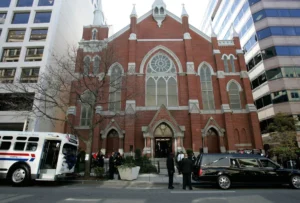
    A hearse carrying the casket of Rosa Parks and a 1950s era bus sit in front of the Metropolitan AME Church where a memorial service for the civil rights icon was being held on Oct. 31, 2005, in Washington, D.C. A judge has ordered the naming rights of the extremist group the Proud Boys be given to the church.

    Mark Wilson/Getty Images

    “For the first time in our nation’s history, a Black institution owns property of a white supremacist group.”

    Washington, D.C. – A historic Black church in Washington, D.C., that has been awarded control of the name of an extremist group that vandalized its property is calling for people to take a stand against hate.

    On Monday, D.C. Superior Court Judge Tanya Jones Bosier ordered that all interests in Proud Boys International’s trademarked name, “Proud Boys,” be given to Metropolitan African Methodist Episcopal Church. And no one can sell, transfer, license or dispose of the Proud Boys’ trademarked name without permission from the church or the court, according to the judgment.

    The order is a victory for the church, after it asked the court to enforce a default judgment of $2.8 million in damages and said it was “entitled to all of PBI’s interests in the Proud Boys Trademark and a lien on the Trademark.”

    Read the full Black History making story…

    ________________

    Learn more about the Metropolitan African Methodist Episcopal Church

    We Stand Up For Justice and Stand Against Hate

    In December 2020, the Proud Boys desecrated and vandalized Metropolitan African Methodist Episcopal Church (and by extension, everyone who stands against hate) when the Proud Boys “leaped over Metropolitan AME Church’s fence, entered the church’s property, and went directly to the Black Lives Matter sign. They then broke the zip ties that held the sign in place, tore down the sign, threw it to the ground, and stomped on it while loudly celebrating. Many others then jumped over the fence onto the church’s property and joined in the celebration of the sign’s destruction.” Read the order from Judge Neal E. Kravitz. 

    Metropolitan AME Church did not back down. The church stands drawing strength from the legacies of Elizabeth Freeman and Ida B. Wells-Barnett, against the Proud Boys, a white supremacist group, and vowed to fight because following Jesus in these times and circumstances demands nothing less.  As a result of these efforts, Metropolitan was able to secure $2.8 million in damages based on the hateful conduct of the Proud Boys burning our Black Lives Matter banner.  

    However, this resounding victory was incomplete as just a judgment on paper with no actual exchange of monies to compensate Metropolitan.  As a result, Metropolitan went to court to enforce the judgment and Judge Tanya M. Jones Bosier ruled in the church’s favor.  For the first time in our nation’s history, a Black institution owns property of a white supremacist group. Metropolitan African Methodist Episcopal Church now owns the exclusive rights to the Proud Boys trademark, stripping them of the very name they rallied under. This also means that any money the Proud Boys makes from using the trademark must be paid to Metropolitan to help satisfy the multi-million-dollar default judgment.

    Metropolitan African Methodist Episcopal Church was founded in 1838.  From its founding, Metropolitan AME Church, has and continues to do what other churches will not. We are known locally, nationally, and internationally, to be deeply spiritual and deeply engaged in the world. From anti-slavery leadership in the mid-19th century, in the harboring of runaway slaves, to organizing power, people and money toward the flourishing of all people in the District of Columbia today. Metropolitan has been not just a significant center of worship, but also an institution in the forefront of the civic, cultural, and intellectual life among African Americans and others. Today, Metropolitan is focused on theologically sound teaching and preaching in worship; combatting food insecurity through our Food Bank; addressing ecological devastation by addressing heat islands in metropolitan cities with Smart Surfaces Coalition; equipping parents and families with culturally responsive and biblically grounded teaching through the Sankofa project; and building Black Equity and Wealth through Homeownership, prioritizing community safety and holding political leaders accountable with Washington Interfaith Network. 

    We appreciate you taking the time to visit us and we hope you can stand with us by investing in the Community Justice Fund. In these unprecedented times, we are called to continue doing the work of Jesus in the church, the community, and the world. Every contribution will make a difference as we counter the radical ideology and rhetoric that is flowing from the leaders of our Nation while eroding and eliminating civil rights and societal strides that have been made by the sacrifices of our elders and ancestors.

    Stand with us and against hate by investing in the Community Justice Fund today.

    Joy and justice, 

    William H. Lamar IV
  • D.C. nears Jan. 6 anniversary with warnings about extremism, awards for courage

    D.C. nears Jan. 6 anniversary with warnings about extremism, awards for courage

    BY: ARIANA FIGUEROA Ohio Capital Journal – JANUARY 5, 2023 2:58 PM

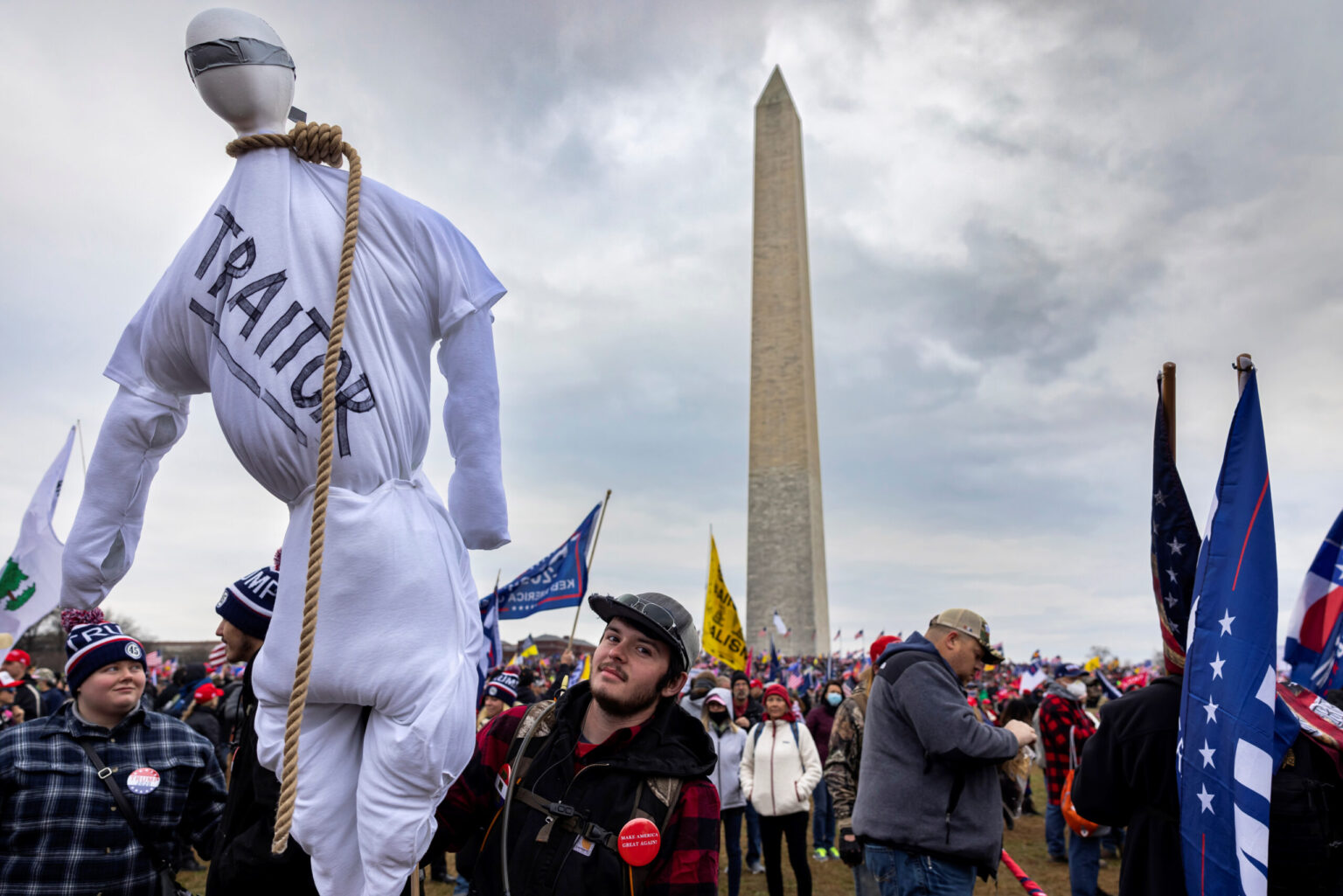
    WASHINGTON – On the eve of the second anniversary of the U.S. Capitol insurrection, congressional Democrats and dozens of veterans on Thursday in a press conference called on incoming House Republican leaders to condemn political violence and hold their members who supported the attack accountable for their actions.

    Meanwhile, President Joe Biden is scheduled on Friday to host a ceremony where he will speak about the Jan. 6 attack, and award medals to a dozen people who “demonstrated courage and selflessness during a moment of peril for our nation,” according to a White House official.

    They will include:

    • Election workers Shaye Moss and Ruby Freeman of Fulton County, Georgia, who were targeted by Trump administration officials and falsely accused of voter fraud.
    • Rusty Bowers, the former speaker of the Arizona House who resisted pressures to overturn 2020 election results.
    • Jocelyn Benson, the Michigan secretary of state who faced armed protesters outside her home when she resisted pressure over election results.
    • Al Schmidt, a former GOP commissioner in Philadelphia and member of the Philadelphia County Board of Elections who during the 2020 election faced threats for defending the integrity of the election.

    At the veterans’ press event near the Capitol Reflecting Pool, House members Jason Crow of Colorado, Chrissy Houlahan of Pennsylvania and Mikie Sherrill of New Jersey talked about how their values to uphold democracy started with their military service when they took an oath to protect the Constitution.

    They voiced their concerns about how many veterans were part of the Jan. 6 mob.

    “When you raise your right hand, and you take that oath to give everything to your country, that is a lifetime commitment,” Crow said. “A lifetime commitment and uniform, but continuing to fight for and preserve our democracy, and never has that been more important than the era that we live in right now.”

    Extremism worries

     U.S. Rep. Chrissy Houlahan, D-Penn., with military veterans at the U.S. Capitol on Thursday, Jan. 5, 2023. Houlahan spoke at a press conference about the second anniversary of the Jan. 6, 2021 attack on the Capitol calling on the House Republican majority to denounce political violence. Photo by Ariana Figueroa/States Newsroom.

    House Democrats have held hearings and issued reports that have shown the growing worries about extremism among veterans and have recommended the U.S. Department of Veteran Affairs protect veterans from those groups. Separately, an analysis by NPR found that 1 in 5 of the defendants charged for their involvement in the riot were veterans.

    “While the individuals who descended upon and disrespected these storied halls represent a very small fringe faction of the population, it is no secret that they were inspired by some of the most senior officials in our government who failed to accept the results of the 2020 election,” said Houlahan.

    She, Crow and Sherrill were in the House chamber during the insurrection, when hundreds of pro-Trump supporters stormed the Capitol in an attempt to prevent members of Congress from certifying the results of the 2020 presidential election.

    President Donald Trump was impeached for a second time for his role in the insurrection, and a special committee investigating the attack unanimously voted to refer him and others to the Justice Department for potential criminal charges, including inciting or aiding an insurrection.

    The special House panel investigating Jan. 6 found that Trump was directly involved in efforts to pressure state officials in Georgia, Arizona and elsewhere to overturn the 2020 election results in their states.

    White House awards

    Michael Fanone, who served as a Metropolitan Police Department Officer and defended the Capitol on Jan. 6, 2021, suffering injuries, spoke at a press conference on the second anniversary of the attack on the Capitol, calling on the House Republican majority to denounce political violence. Photo by Ariana Figueroa/States Newsroom.
     Michael Fanone, who served as a Metropolitan Police Department Officer and defended the Capitol on Jan. 6, 2021, suffering injuries, spoke at a press conference on the second anniversary of the attack on the Capitol, calling on the House Republican majority to denounce political violence. Photo by Ariana Figueroa/States Newsroom.

    This will be the first time Biden will give out the Presidential Citizens Medal, which is awarded to individuals who have done an extraordinary act of service for the United States or fellow Americans.

    Among the recipients will be Eugene Goodman, the U.S. Capitol Police officer who is credited with diverting rioters from the Senate floor, allowing senators and staff to evacuate.

    The president will also posthumously award a medal to the late Brian Sicknick, a  Capitol Police officer who was injured while responding to the Jan. 6 attack and later died.

    Michael Fanone, a Metropolitan Police Department Officer who responded to the Jan. 6 attack and was injured, will also receive a medal. Fanone later resigned, and has continued to put pressure on congressional Republicans to acknowledge their role in spreading the false narrative that the 2020 presidential election was stolen.

    He most recently sent a letter signed by more than 1,000 veterans to top Republican leaders on Wednesday, calling on them to denounce political violence and the Jan. 6 attack.

    Fanone, who was at the press event, said he wants MAGA Republicans to know “that myself and thousands, tens of thousands of veterans and members of the law enforcement community are paying very close attention to the things that they’ve said.”

    He singled out Reps. Marjorie Taylor Greene of Georgia and Kevin McCarthy of California, who is struggling to garner enough votes to secure the position of speaker of the House.

    “This type of chaos will happen every single day in the House as some of the most extreme politicians our country has ever seen hold our democracy hostage,” Fanone said about the speaker race that has continued for three days.

    Without a speaker, no members of Congress can be sworn in and the chamber cannot conduct government business such as committee meetings or constituent services.

    (McCarthy elected House speaker in rowdy post-midnight vote.)

    The veterans’ press conference was hosted by Courage for America, an initiative organized by progressives to speak out against extremism and counter the GOP House, and Common Defense, a grassroots organization that works to promote progressive ideas in the veteran community.

    A ‘new sense of hope’

    Sherrill, who served in the Navy for nine years, said she remembers being crouched in the House gallery, a cell phone in one hand, calling her loved ones, and a gas mask in the other.

    “I had this great sense of sorrow that it had come to this,” she said about veterans who attacked the Capitol. “The other side of my brain had really a sense of rage. How dare they?”

    “And yet as I sit here today … I think about how far we’ve come with the January 6 hearings,” she said, adding that many people who ran as election deniers lost their campaigns.

    “I feel a new sense of hope,” Sherrill said. “Our democracy is stronger and more resilient than ever, and so it’s with almost a sense of joy, that I start this new term in Congress, because I know the American people have our back.”

  • [VIDEO] Brown condemns GOP-led Justice Act as ‘CHECK IN THE BOX’

    [VIDEO] Brown condemns GOP-led Justice Act as ‘CHECK IN THE BOX’

    Washington, D.C. – Wednesday, U.S. Sen. Sherrod Brown (D-OH) continued pushing for what he calls “meaningful police reform” as he voted against proceeding to debate the GOP-led Justice Act, legislation that he called a “check in the box” and would do very little to reform policing.

    Brown took to the Senate floor to call for passage instead the Justice in Policing Act, what he says is a “Comprehensive package.” He helped introduced the bill earlier this month, “To put important policing reforms into place, help end racial profiling in the criminal justice system and work to improve police-community relations.”

    “I’m not willing to stand here and participate in a political charade – to vote on something that won’t lead to real change, just to check a box and provide politicians with a talking point. It’s an insult to Black families who have been fed empty promise after empty promise for generations,” said Brown. “The Justice in Policing Act would create real change in our justice system, and communities across the country can’t afford us to not act on this meaningful legislation. We need to listen to the Black voices leading these calls for justice, and take real action.”

    Democrats on Wednesday denied Republicans the votes needed to pass the Senate GOP’s policing reform bill and send it to the House. Sixty votes were needed. The vote was 55-45.

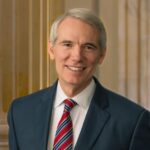
    Ohio Senator Rob Portman (Provided by Portman office)

    Senator Rob Portman (R-OH), a co-sponsor of the Justice act released a statement saying, “The fact that Senate Democrats voted to block debate and an open amendment process on meaningful police reforms is outrageous and unacceptable. Over the last month we’ve continued to see egregious examples of injustice and violence against people of color. Americans want to see progress on meaningful police reform.”

    Brown says the Justice in Policing Act which he supports would:

    • Ban chokeholds, carotid holds, and no-knock warrants at the federal level and limits the transfer of military-grade equipment to state and local law enforcement.
    • Establish a National Police Misconduct Registry to prevent problematic officers who are fired or leave an agency from moving to another jurisdiction without any accountability.
    • Mandate the use of dashboard cameras and body cameras for federal officers and requires state and local law enforcement to use existing federal funds to ensure the use of police body cameras.
    • Create law enforcement development and training programs to develop best practices and requires the creation of law enforcement accreditation standard recommendations based on President Obama’s Task force on 21st Century policing.
    • Make important legal reforms to increase police accountability and transparency.

    The package also includes Brown’s End Racial and Religious Profiling Act, which hs said would better enforce equal protection laws and work to end racial profiling in the criminal justice system.

    Brown took to the Senate floor earlier this month, condemning what he characterized as President Trump’s “violent response” to protests of the murders of Breonna Taylor, George Floyd, Ahmaud Arbery, and countless other victims of racist police brutality and systemic injustice. Brown pointed out that Black and Brown communities have been and remain marginalized and targeted and that protests sweeping Ohio and the nation are calling for an end to systemic racism.

    Portman’s statement also said, “The JUSTICE Act takes responsible steps toward improving the collection of data on violence by and against law enforcement, providing funding to increase the use of body cameras, and increasing transparency and accountability while strengthening and reforming police training methods and hiring practices.  I hope my Democratic colleagues will reconsider their decision and join us in working towards real reform on this issue.”

    Brown’s remarks on the Senate Floor, as prepared for delivery, are below:

    Thousands of Americans are peacefully protesting in communities all across the country, demanding our country do better.

    The protests are an expression of grief, for Breonna Taylor and George Floyd and Ahmaud Arbery and Rayshard Brooks and so many other Black Americans murdered by the people who were supposed to protect them.

    They’re an expression of frustration and anger, that it’s 2020 – a century and a half after the official end of slavery, 55 years after the passage of the Civil Rights Act – and still Black people are fighting the same fight.

    And they’re also an expression of hope and patriotism. Demanding our country do better, demanding we live up to our founding ideals is one of the most patriotic things anyone can do.

    We need to listen to the Black voices leading these calls for justice, and take real action.

    That’s what Democrats want to do. My colleagues Senator Harris and Senator Booker in the Senate, and the CBC in the House, have led our bicameral efforts, and have a serious plan: the Justice in Policing Act.

    It would implement real, meaningful reforms and actually hold police accountable. It makes it clear:

    No more chokeholds. No more unchecked police misconduct. No more militarization of police misconduct.

    Of course we know this isn’t the only thing we need to do – policing didn’t create institutional racism, it’s a product of it and often reinforces it, and we have a lot of work to do beyond this. But these reforms are an important start to making policing in our country more just.

    The Justice in Policing Act would create real change in our justice system, and communities across the country can’t afford us to not act on this meaningful legislation.

    What we cannot do, is pass something called “Police Reform” that does very little to actually reform policing – and then turn around and tell Black mothers and fathers whose children have been slain, “we solved it, our work here is done.”

    I respect Senator Scott and I appreciate him coming to the table, and taking on this issue. I know he is fighting an uphill battle within his own caucus.

    I want to work with him, and with anyone of either party on real solutions.

    But I’m not willing to stand here and participate in a political charade – to vote on something that won’t lead to real change, just to check a box and provide politicians with a talking point.

    It’s an insult to Black families  who have been fed empty promise after empty promise for generations.

    We need to listen to the communities that suffer the most at the hands of police violence, and they all agree: the Senate Republican bill is simply not serious.

    It won’t fix the problems, and we’ll be right back here, sooner rather than later.

    Major civil rights groups all oppose this bill – the NAACP Legal Defense Fund, the Urban Leagues, the Leadership Conference on Civil and Human Rights.

    It doesn’t ban no-knock warrants. The Justice in Policing Act does.

    It doesn’t stop the militarization of police departments. The Justice in Policing Act does.

    It doesn’t create a national misconduct registry. The Justice in Policing Act does.

    It doesn’t ban chokeholds. The Justice in Policing Act does.

    These are all steps that civil rights groups have said are critical to any reform effort. This is the bare minimum we should be doing.

    Really all this bill offers is more studies of questions we already know the answers to.

    We don’t need more studies, more task forces, more delaying tactics.

    We need real accountability.

    The Justice Act could even put us in danger of moving in the opposite direction, by providing more funding for policing without adequate strings attached and without a similar investment in community supports.

    The NAACP says this bill, quote, “ignores the public demands to reimagine public safety by shrinking the purview of law enforcement and providing better funding to agencies equipped to address the critical needs of communities such as social services, mental health services, and education.”

    The Urban League says this bill, “dances around the edges in a show of political posturing.”

    We refuse to engage in that political posturing.

    We refuse to act like this is just a box we can check, so we can move on.

    We refuse to insult Black Americans by pretending this is a serious effort.

    People have suffered too long for that.

    We have been here before. This isn’t the first wave of protests, or the second.

    In 2014, after the murders of Tamir Rice in my city, in Cleveland, and Michael Brown in Ferguson, President Obama and his administration laid important groundwork for reform.

    They studied what reforms would be most effective, they instituted consent decrees with cities to hold departments accountable, and they created a roadmap we could follow.

    But President Trump undid much of the progress the Obama Administration made.

    The Urban League put out a plan for reform in 2014, after Michael Brown’s murder.

    Since then, nearly 1,300 Black men and women have been fatally shot by police.

    This bill does nothing to stop the practices that killed them.

    Black Americans know their lives are put in danger by policing every day. Let’s listen to them. People all around the country – Black and white and brown, in small towns and big cities, young and old – are all listening, waking up, and joining the calls for change.

    Let’s follow their lead. Let’s actually hear the voices that have been silenced for too long.

    I urge my colleagues to vote “no,” and instead work with us on real, meaningful reform to transform our public safety system into one that actually keeps people safe.

  • The Unending Night of Auschwitz

    The Unending Night of Auschwitz

    Hints that tiny shafts of light can pierce the seemingly unending night

    D.-miller-mem.-day-b-wby David Miller

    I took the photo above in 1994 at the United States Holocaust Memorial Museum in Washington, D.C. To get from floor to floor, I and my family had to walk through this cattle wagon.

    As World War II erupted, the Nazis deported millions of victims to ghettos, concentration and extermination camps, and gas chambers in railroad cars like these – beginning their state-sponsored program of the genocide of Jews, Roma (Gypsies), gay men, Soviet prisoners of war, the disabled, and religious opponents. Nearly the whole Jewish population of Poland was forced into these cattle cars and later died in these camps.

    Elie Wiesel, in his book Night, described his experience when he was liberated from Buchenwald as a sixteen-year-old. His mother and his youngest sister had already been sent to the gas chambers, and Wiesel became his father’s caregiver at the concentration camp and watched him die, just weeks before the Allies liberated the camp.

    The cattle car was so crowded there was no room to sit or lie down, room was made for the living by throwing the dead onto the tracks. Out of 100 Jews in Wiesel’s cattle car, only twelve survived

    In his book, Wiesel wrote about the cattle car:

    The doors were closed. We were caught in a trap, right up to our necks. The doors were nailed up; the way back was finally cut off. The world was a cattle wagon hermetically sealed. With every groan of the wheels on the rail, we felt that an abyss was about to open beneath our bodies.

    Elie-Wiesel-quoteWhen liberated from the concentration camp, he said, “I wanted to see myself in a mirror, a corpse gazed back at me. The look in his eyes, as they stared into mine, has never left me.”

    Robert AcAfee Brown writing in the preface to Night, talks about breathing life into that corpse. “Most will want to continue with Wiesel on his painful journey through the darkness, through false days, until there are hints that tiny shafts of light can pierce the seemingly unending night that Auschwitz has imposed upon the earth.”

    My family and I were able to exit the cattle car, but the emotion of walking where others like Elie Wiesel had been, was burned into my subconscious by that blinding shaft of light that day.

    And now, as still more families are on the painful journey through a hateful darkness… might we see that we are all on this cattle car together. And, even though we must squint to see even the tiniest shaft of light – can we show each other where it is at?

     – David Miller is Publisher of Loveland Magazine

  • Detective DelRio served 30 years on Dayton Police Department

    Detective DelRio served 30 years on Dayton Police Department

    Washington, D.C. –Today, U.S. Sen. Sherrod Brown (D-OH) took to the Senate floor to honor the memory of Dayton Detective Jorge DelRio. Detective DelRio was killed in the line of duty while serving a drug-related search warrant in Dayton.


  • [Veterans Day News] Brown urges Senate to take action on Agent Orange bill

    [Veterans Day News] Brown urges Senate to take action on Agent Orange bill

    Washington, D.C. – On the Senate floor yesterday, U.S. Sen. Sherrod Brown (D-OH), a member of the Senate Veterans’ Affairs Committee, led his colleagues in urging the President to take action on behalf of thousands of Vietnam veterans across the country living with chronic health conditions, by expanding the Department of Veterans’ Affairs’ list of medical conditions associated with exposure to Agent Orange to include Parkinsonism, Bladder Cancer, Hypertension, and Hypothyroidism. Republicans rejected Brown’s measure.


    Thousands of veterans – many of whom are aging and in urgent need of critical health care and other benefits – have waited far too long for a final decision that should have been made by the VA in 2016.

    “Thousands of veterans – many of whom are aging and in urgent need of critical health care and other benefits – have waited far too long for a final decision that should have been made by the VA in 2016. I urge my colleagues to add Parkinsonism, Bladder Cancer, Hypertension and Hypothyroidism to the list of presumptive health outcomes for service-connected exposure to Agent Orange without further delay,” said Brown.

    Currently, VA provides presumptions for seven of the fourteen health outcomes for which the National Academy of Medicine (NAM) has found a suggestive association between herbicide exposure and a particular medical condition. However, the four aforementioned conditions have yet to be recognized by VA, making it difficult for veterans to receive care and benefits for these illnesses. In fact, hypertension is now recognized by NAM as having sufficient association, or an even stronger link, with herbicide exposure. A presumption of exposure means that if a veteran served in a specific area during a defined time frame, VA will presume that they were exposed to certain harmful chemicals or environmental hazards.

    According to internal documents obtained by a veteran through the Freedom of Information Act, Office of Management and Budget Director Mick Mulvaney and other White House officials objected to then VA Secretary David Shulkin’s recommendation to add three health conditions — Bladder Cancer, Parkinsonism, and Hypothyroidism — to the list of conditions eligible for Agent Orange benefits in October 2017, denying approximately 83,000 veterans faster access to disability compensation and health benefits.


  • Sen. Brown takes steps to protect seniors from unexpected, out-of-pocket costs following preventive colonoscopies

    Sen. Brown takes steps to protect seniors from unexpected, out-of-pocket costs following preventive colonoscopies

    Proposed Rule Falls Short of Necessary Measures to Protect Seniors from Unexpected Bills after Colonoscopies

    WASHINGTON, D.C. – Today, Senator Sherrod Brown (D-OH) urged the Centers for Medicare and Medicaid Services (CMS) to take the necessary steps to protect seniors from unexpected, out-of-pocket costs following preventive colonoscopies as the Agency considers its annual rule changes. Currently, Medicare charges seniors a twenty percent

    Private insurers cannot impose cost-sharing for a screening that leads to polyp removal, but Medicare can charge fees if a polyp is removed.

    coinsurance for colonoscopies when a polyp is removed during the procedure even though colorectal cancer screenings are promoted as a free service under Medicare. In December 2018, Brown led 51 of his Senate colleagues in writing to CMS, urging the Agency to act to protect older Americans from out-of-pocket costs for preventive colonoscopies as part of the 2019 updates to the Medicare program.

    Each year, CMS makes updates to the Medicare program through notice and comment rulemaking, in which CMS proposes updates to the program, solicits comments from stakeholders, and then finalizes policy changes in a final rule to take effect the following year. CMS released its proposed updates to the program earlier this week, part of which relates to colorectal cancer screenings. In its proposed rule, CMS agreed with Brown’s assertion that these unexpected out-of-pocket costs after a preventive colonoscopy can be “surprise bills” for beneficiaries and solicited comment on ways to improve notice for beneficiaries. However, the proposed rule fell short of taking the necessary steps to protect seniors from these costs. Today, Brown again urged the agency to address this issue in its final rule.

    “The most effective preventive action against colorectal cancer is a screening colonoscopy,”Brown said. “Unfortunately, many seniors choose not to undergo this lifesaving procedure because they don’t know if the procedure will be covered by their insurance. I’m urging CMS to update their final rule and ensure all Medicare beneficiaries are protected from unexpected bills after these screenings.”

    Brown has also introduced bipartisan legislation to protect seniors from these unexpected costs. In March, Brown, along with Sens. Roger Wicker (R-MS), Ben Cardin (D-MD), and Susan Collins (R-ME), reintroduced bipartisan legislation to protect seniors from out-of-pocket costs for preventive colonoscopies. The Removing Barriers to Colorectal Cancer Screening Act make a long-overdue fix to Medicare to ensure seniors aren’t charged for a colonoscopy – regardless of whether or not a polyp or tissue is removed. Removing harmful tissue during these procedures is key to preventing cancer, yet the fear of having to pay unexpectedly could prevent Medicare recipients from getting these important screenings.

    Colonoscopies allow for the detection and removal of polyps that could become cancerous, as well as for the early detection of colorectal cancer when treatment can be most effective. Under current law, seniors covered by Medicare are eligible for colorectal cancer screenings without out-of-pocket costs. However, if a physician takes a further preventive action – like removing a polyp – during the screening while the patient is under anesthesia, the patient is billed as if the procedure was treatment rather than prevention.

    Because there is no way of knowing whether a polyp will be removed during a screening colonoscopy in advance, Medicare beneficiaries do not know whether or not their screening colonoscopy will be fully covered until after the procedure is over. This potential cost could lead to Medicare beneficiaries electing to forgo this important preventive screening, even though colorectal cancer screening is promoted as a service without cost-sharing under Medicare. Private insurers cannot impose cost-sharing for a screening that leads to polyp removal, but Medicare can charge fees if a polyp is removed. The Removing Barriers to Colorectal Cancer Screening Act would correct this discrepancy by waiving cost-sharing under Medicare for preventive colonoscopies, even if a polyp or tissue is removed.

    Colorectal cancer is the second leading cause of cancer death in the United States for both men and women combined. However, when caught early, it is curable and can even be prevented.


  • Portman troubled by President Trump’s remarks at Helsinki Summit

    Portman troubled by President Trump’s remarks at Helsinki Summit

    WASHINGTON, D.C. – U.S. Senator Rob Portman (R-OH) issued the following statement regarding the joint news conference today by President Donald Trump and Russian President Vladimir Putin at the Helsinki Summit:

    The president’s comments in today’s press conference were troubling. He failed to stand up to Vladimir Putin on some of the most critical security issues facing our country and our allies. There is a consensus in the intelligence community that Russia meddled in our elections and continues to try to destabilize democracies around the world. Both the House and Senate Intelligence Committees have concluded that Russia interfered in the 2016 elections. When given the opportunity, President Trump did not hold President Putin to task for election meddling, for the illegal annexation of Crimea, or for the continued aggression in Eastern Ukraine. 

    “I believe the United States must be matter of fact and transparent. We all want to see a better relationship between our two countries, but we must make clear directly to President Putin and to the world that Russia’s actions on the world stage are unacceptable and a change in their behavior is necessary in order to improve relations. I will continue to work with my colleagues in Congress and with this administration to do so.” 


    Accounting Plus LLC

      Accounting Plus–Bingaman Accounting and Tax Service, LLC is a tax preparation, payroll and bookkeeping company locally based in Loveland, OH.