

Tag: West Nile virus

  • Mosquito pool in Delhi Township tests positive for West Nile Virus

    Mosquito pool in Delhi Township tests positive for West Nile Virus

    Hamilton County, Ohio – Hamilton County Public Health is reminding residents to continue to take summertime precautions against mosquito bites after mosquitoes that were recently trapped on Foley Road in Delhi Township tested positive for West Nile virus (WNV). West Nile Virus is a viral disease that can be passed from mosquitoes to humans. Hamilton County Public Health (HCPH) maintains traps throughout the County during the summer to test for the presence of disease. While this is the first positive identification in HCPH’s jurisdiction, other positive pools have been identified elsewhere in the County.

    HCPH says their staff will be conducting surveillance activities in the neighborhoods and commercial areas around where the mosquitoes were collected. They will be looking for areas of standing water, applying larvicide, making sure swimming pools are operating properly and advising residents on precautions they can take to avoid mosquito bites.

    “We can all take action to eliminate mosquito breeding sites and take precautions to avoid mosquito bites,” Greg Kesterman, Hamilton County Health Commissioner says. “West Nile was first identified in Ohio in 2001, so it’s not new to our area, but we like to take the opportunity to remind everyone to take precautions.”

    Hamilton County Public Health advises all Hamilton County residents to DRAIN, DUNK and PROTECT to reduce the mosquito population and prevent West Nile Virus:

    DRAIN

    • Look for and drain sources of standing water on your property – litter, tires, buckets, flowerpots, wading pools and similar items that could create standing water and become mosquito breeding sites.
    • Frequently change water in bird baths and pet bowls.
    • Drain small puddles after heavy rainstorms.

    DUNK

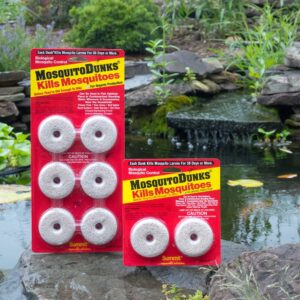
    • Apply mosquito larvicide, sometimes called mosquito “dunks,” to areas of standing water that cannot be drained.  The “dunks” are environmentally safe and won’t harm pets. Purchase them at your local hardware store.

    PROTECT

    • Cut your grass and trim shrubbery.
    • Make sure screens in windows and doors are tight-fitting and free from defect.
    • Wear long sleeves and pants during peak mosquito hours – dawn and dusk.
    • Use an EPA-registered insect repellent such as those containing DEET, picaridin or oil of lemon or eucalyptus. Always follow the directions on the package.

    In a news release, HCPH said, “The West Nile virusis a viral disease affecting the central nervous system that can be transmitted to humans by mosquitoes. It is important to note that most people who are bitten by an infected mosquito will never become sick. Everyone, however, should be aware of the symptoms of WNV. Symptoms may develop two to 14 days after someone is bitten by an infected mosquito.”

    No Symptoms in Most People. Approximately 70-80 percent of people who are infected with WNV will not show any symptoms at all.

    Milder Symptoms in Some People. Up to 20 percent of the people who become infected will display symptoms which can include fever, headache, and body aches, nausea, vomiting, and sometimes swollen lymph glands or a skin rash on the chest, stomach and back. Symptoms can last for as short as a few days, though even healthy people have been sick for several weeks.

    Serious Symptoms in a Few People.  Less than one percent of people infected with WNV will develop severe illness. The severe symptoms can include high fever, headache, neck stiffness, stupor, disorientation, coma, tremors, convulsions, muscle weakness, vision loss, numbness and paralysis. These symptoms may last several weeks, and neurological effects may be permanent.

    While all residents of areas where virus activity has been identified are at risk, people over age 50 have the highest risk of developing severe WNV infections. Anyone experiencing any of these symptoms should contact their healthcare provider for evaluation.

    For more information on West Nile Virus, contact Hamilton County Public Health at (513) 946-7800 or visit them online at www.hamiltoncountyhealth.org.

    [pdf-embedder url=”https://lovelandmagazine.com/wp-content/uploads/2024/08/2016_mosquito.pdf”]

    Download the Homeowner’s Guide to Mosquito Control on the HCPH Website: https://www.hamiltoncountyhealth.org/wp-content/uploads/2016_mosquito.pdf
  • With the Arrival of Warm Weather in Ohio, Be Sure  to Prevent Tick, Mosquito Bites and the Diseases They Carry

    With the Arrival of Warm Weather in Ohio, Be Sure to Prevent Tick, Mosquito Bites and the Diseases They Carry

    Diseases spread by ticks and mosquitos include Lyme disease and West Nile virus

    As Ohioans spend more time outdoors with the arrival of warm weather, the Ohio Department of Health (ODH) is urging people to take precautions to prevent bites from ticks and mosquitos and the diseases they may carry.

    There were 270 Lyme disease cases and 34 Rocky Mountain spotted fever cases reported in Ohio last year.

    Most diseases in Ohio that are caused by the bite of infected ticks and mosquitos happen between spring and fall when they are most active during warmer months. The most common diseases caused by tick bites in Ohio include Lyme disease and Rocky Mountain spotted fever. There were 270 Lyme disease cases and 34 Rocky Mountain spotted fever cases reported in Ohio last year. The most common diseases caused by mosquito bites in Ohio include West Nile virus and La Crosse virus. There were 34 West Nile virus cases including five deaths, and 13 La Crosse virus cases reported in Ohio last year.

    “You can take some simple precautions at home and when traveling to prevent potentially serious diseases caused by the bite of infected ticks and mosquitos,” said ODH Medical Director Dr. Clint Koenig. He recommends that people who get sick after being bitten by a tick or mosquito contact their healthcare provider, particularly if they have symptoms like a fever, headache, nausea, vomiting, joint pain, muscle aches, fatigue or a rash.

    Here are some tips to avoid tick bites: 

    • Walk in the middle of trails. Avoid tall grass, brush and leaf litter.
    • Use EPA-registered repellents labelled for use against ticks on skin. Always follow the label instructions. EPA-registered repellents are safe and effective, even for pregnant and breastfeeding women. 
    • Treat clothing and gear such as pants, boots, socks and tents with a product containing permethrin, or buy permethrin-treated clothing and gear. Do not apply permethrin directly to skin.
    • Wear long pants, long sleeves and long socks. Tuck pant legs into socks.
    • Wear light colors to make it easier to see ticks.

    Check yourself, your children and pets thoroughly for ticks after spending time in areas that may contain ticks.  If you find a tick attached to the body, here are some tips for safely removing them:Tick removal diagram

    • Use fine-tipped tweezers to grasp the tick as close to the skin’s surface as possible.
    • Pull it away from your skin with steady, even pressure.
    • Do not twist or jerk the tick which can cause the mouth-parts to break off and remain in the skin.  If this happens, remove the mouth-parts with tweezers.  If you are unable to remove the mouth-parts easily with clean tweezers, leave it alone and let the skin heal.
    • Do not use petroleum jelly, a hot match, nail polish or any other “folk” remedies to remove a tick as these methods do not work.
    • Dispose of a live tick by putting it in alcohol, placing it in a sealed bag/container, wrapping it tightly in tape or flushing it down the toilet.  Never crush a tick with your fingers.
    • Wash your hands and the bite area with soap and water.

    Mosquitoes can live indoors and outdoors, and some types bite during the day while others bite at dusk and dawn. Here are some tips to avoid mosquito bites:

    • Use EPA-registered repellents according to label instructions.  
    • Wear long sleeves, long pants and long socks when outdoors.
    • Mosquitoes may bite through thin clothing, so spraying clothes with an EPA-registered repellent will give extra protection. 
    • Treat clothing and gear such as pants, boots, socks and tents with a product containing permethrin, or buy permethrin-treated clothing or gear. Do not apply permethrin directly to skin.
    • Mosquito-proof your home:
      • Install or repair screens on windows and doors to keep mosquitoes outside.
      • Help reduce the number of mosquitoes around your home by emptying standing water on a regular basis from flowerpots, gutters, buckets, pool covers, pet water dishes, discarded tires and birdbaths.

    Additional information and resources are available on the ODH website at “Ohio.gov/ticks” and “Ohio.gov/mosquitos.”


    StartTalking

    Did You Know: Children of parents who talk to their teens about drugs are up to 50% less likely to use. Start the conversation:StartTalking.Ohio.Gov