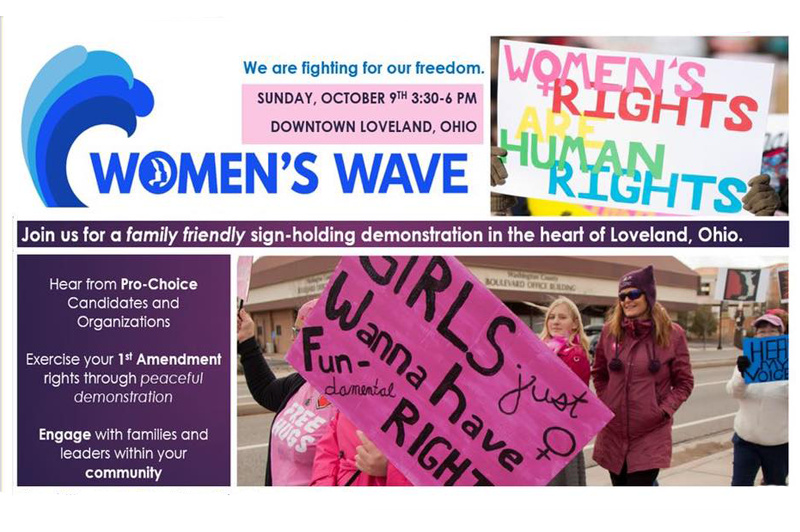
The event is in partnership with the Women’s marches being held across the country the weekend of October 8-9th.
by David Miller
Loveland, Ohio – Bailey Moak asks you to join her on Sunday, October 9th for a day of action to help her and others send the message: “Women demand our rights and families demand reproductive freedom.”
Moak said, “Women all around the country are uniting for a fall of reckoning. We will not sit back and accept the attacks on our families, future, and our freedom.”
This event is being held in Loveland because Jean Schmidt is the State Representative for the 65th Ohio house district, which includes northwestern Clermont County, specifically parts of Loveland. Schmidt is currently running for a seat in the 62nd District under the new Ohio maps. Moak says that Schmidt is the primary sponsor of HB 598, Ohio’s total abortion ban with no exceptions. “Women in the surrounding communities and across the state are more fired up than ever to elect more women and pro-choice candidates around the country. We’re ready for the Women’s Wave,” said Moak.
If you attend this “family friendly demonstration” in support of women’s rights and reproductive freedom you will hear from an array of Pro-Choice speakers. Moak encourages you to create signs before demonstrating along the sidewalks of downtown Loveland.
Confirmed speakers include Brian Flick an Ohio State House candidate, and representatives from Ohio Physicians for Reproductive Rights, Ohio Red Wine & Blue, and Ohio ACLU, with several more commitments in progress.
“The organizers have been in communication with the City of Loveland Parks Department and Police Department to ensure a safe and successful event this community can be proud of,” said Moak.
Further inquiries can be made to event organizer Bailey Moak at 513-532-7860 or Baileymoak@gmail.com.
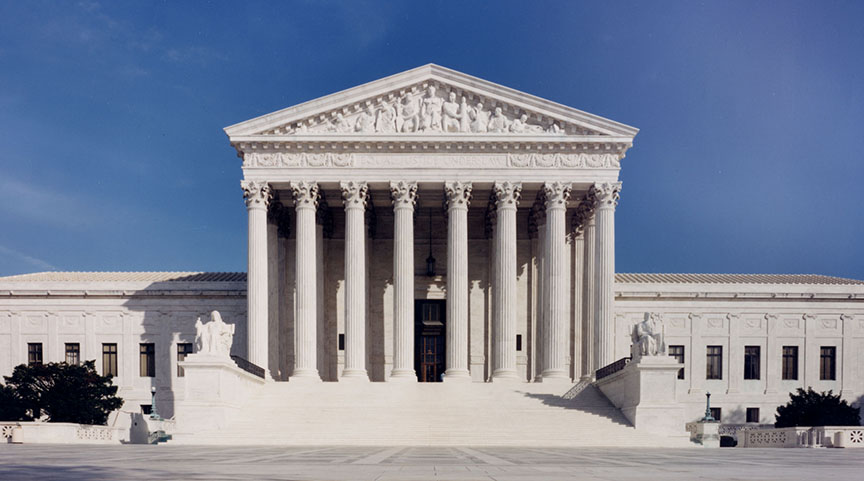
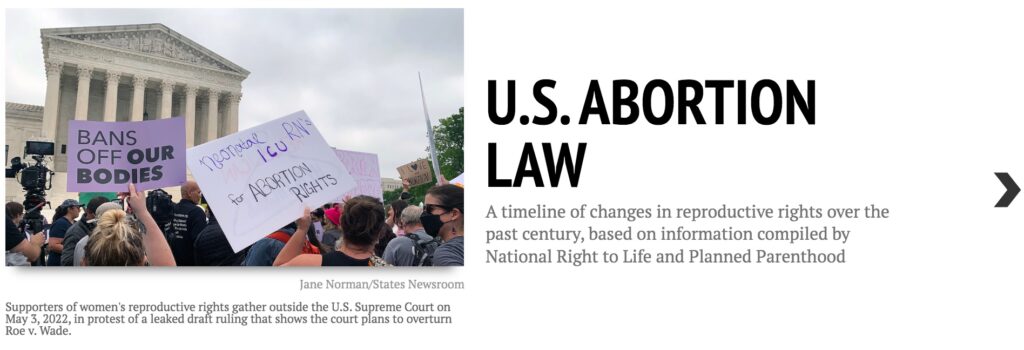
WASHINGTON — The U.S. Supreme Court on Friday overturned the 1973 Roe v. Wade ruling that established abortion as a constitutional right.
The decision by five of the Court’s nine justices will allow each state to set its own abortion laws, leading to a patchwork of access throughout the country. The result is expected to be an uptick in the number of women traveling out of state for abortions, as well as unsafe abortions in states where the medical procedure will now be banned or heavily restricted.
“We hold that Roe and Casey must be overruled,” Justice Samuel Alito wrote in his opinion, joined by Justices Clarence Thomas, Neil Gorsuch, Brett Kavanaugh and Amy Coney Barrett.
Chief Justice John Roberts filed a separate opinion concurring in the judgment about the Mississippi law at the center of the case, making that a 6-3 ruling, but not about overturning the constitutional right to an abortion, making that a 5-4 ruling.
“The Constitution makes no reference to abortion, and no such right is implicitly protected by any constitutional provision, including the one on which the defenders of Roe and Casey now chiefly rely — the Due Process Clause of the Fourteenth Amendment,” Alito continued.
“That provision has been held to guarantee some rights that are not mentioned in the Constitution, but any such right must be ‘deeply rooted in this Nation’s history and tradition’ and ‘implicit in the concept of ordered liberty.’”
Justice Stephen Breyer wrote the dissent in the case for himself, Elena Kagan and Sonia Sotomayor.
“With sorrow — for this Court, but more, for the many millions of American women who have today lost a fundamental constitutional protection — we dissent,” he wrote.
The new status of abortion access on a state-by-state basis, Breyer wrote , “says that from the very moment of fertilization, a woman has no rights to speak of. A State can force her to bring a pregnancy to term, even at the steepest personal and familial costs.”
Breyer later added, “Whatever the exact scope of the coming laws, one result of today’s decision is certain: the curtailment of women’s rights, and of their status as free and equal citizens.”
Twenty-two states have laws that would restrict when and how a patient can terminate a pregnancy, according to the Guttmacher Institute, a reproductive health and rights organization.
Arizona, Michigan and Wisconsin are among the 10 states that have pre-Roe abortion bans that are now expected to take effect. Thirteen states — including Idaho, Louisiana, Missouri and Tennessee — have laws enacted since Roe that will be “triggered” by the court’s decision.
A dozen states, including Maine, Maryland, Nevada and Washington, have laws that would protect abortion access up to the point of viability, usually 22 to 24 weeks into a pregnancy.
Colorado, the District of Columbia, New Jersey, Oregon and Vermont have laws that protect abortion access throughout a pregnancy, according to the Guttmacher Institute.
Thomas targets birth control, same-sex marriage
Justice Thomas wrote his own concurring opinion, arguing that since the court has overturned the constitutional right to an abortion, which was grounded in the 14th Amendment and the due process clause, other cases that have been rooted in the same right to privacy could all be reconsidered.
Those include:
The Griswold v. Connecticut case from 1965 that said states couldn’t bar married couples from making private decisions about birth control use.
The Lawrence v. Texas case from 2003 that said states couldn’t criminalize consensual sexual relations between same-sex partners.
The Obergefell v. Hodges case from 2015 that legalized same-sex marriage.
“For that reason, in future cases, we should reconsider all of this Court’s substantive due process precedents, including Griswold, Lawrence, and Obergefell,” Thomas wrote.
Thomas also wrote of the Dobbs case that “The resolution of this case is thus straightforward. Because the Due Process Clause does not secure any substantive rights, it does not secure a right to abortion.”
Reaction pours in
The Center for Reproductive Rights, which brought the case to the Supreme Court, rebuked the Republican-nominated justices for ending the right to an abortion.
“The Court’s opinion delivers a wrecking ball to the constitutional right to abortion, destroying the protections of Roe v. Wade, and utterly disregarding the one in four women in America who make the decision to end a pregnancy,” said Nancy Northup, president and CEO of the Center for Reproductive Rights.
“Utter chaos lies ahead, as some states race to the bottom with criminal abortion bans, forcing people to travel across multiple state lines and, for those without means to travel, carry their pregnancies to term — dictating their health, lives, and futures. Today’s decision will ignite a public health emergency,” Northup continued.
Susan B. Anthony Pro-Life America, an anti-abortion group, celebrated the decision, while its president called for “an entirely new pro-life movement” to begin.
“Today’s outcome raises the stakes of the midterm elections. Voters will debate and decide this issue and they deserve to know where every candidate in America stands,” Marjorie Dannenfelser said in a statement. “Federal as well as state lawmakers must commit to being consensus builders who advocate for the most ambitious protections possible.”
Mississippi ban
The court heard two hours of arguments in December in Dobbs v. Jackson Women’s Health Organization, which arose after Mississippi enacted a law that banned the vast majority of abortions after 15 weeks of pregnancy.
U.S. Solicitor General Elizabeth B. Prelogar, who argued on behalf of the federal government as a “friend of the Court,” said that the “real-world effects of overruling Roe” and the 1992 Planned Parenthood v. Casey decision that affirmed the right to an abortion “would be severe and swift.”
“Nearly half of the states already have or are expected to enact bans on abortion at all stages of pregnancy, many without exceptions for rape or incest,” Prelogar said. “Women who are unable to travel hundreds of miles to gain access to legal abortion will be required to continue with their pregnancies and give birth, with profound effects on their bodies, their health and the course of their lives.”
Mississippi Solicitor General Scott G. Stewart argued the nine justices should not only uphold Mississippi’s 2018 law, which had yet to go into effect, but overturn the two cases that have kept abortion access legal for nearly 50 years.
“Roe versus Wade and Planned Parenthood versus Casey haunt our country,” he said. “They’ve poisoned the law.”
Abortion rights history
The Supreme Court first ruled that a pregnant person has a constitutional right to abortion in the 1973 Roe v. Wade case that stemmed from a Texas woman being unable to access an abortion in her home state. The decision was 7-2.
Justice Harry Blackmun wrote that the right to an abortion stemmed from the right to privacy under the 14th Amendment. But the court ruled that a person’s fundamental right to terminate their pregnancy must be weighed against the government’s interest in protecting the person’s health and potential life.
The court established a trimester framework that determined when and how governments could impose regulations on abortion access.
In the 1992 Planned Parenthood v. Casey case, a 5-4 ruling, the court upheld a constitutional right to an abortion. But the decision overturned the trimester framework, instead setting viability, about 22 to 24 weeks into a pregnancy, as the line for government regulation.
The court said a person had a right to an abortion before viability without undue interference from the government. After reaching a point of viability, states can regulate abortion as long as it doesn’t affect a person’s health or life.
In the plurality opinion, Justice Sandra Day O’Connor wrote that “Some of us as individuals find abortion offensive to our most basic principles of morality, but that cannot control our decision. Our obligation is to define the liberty of all, not to mandate our own moral code.”
In a dissenting opinion, Justice Thomas wrote for himself, Antonin Scalia and two others that they would have overturned Roe v. Wade, saying the issue in the case was “not whether the power of a woman to abort her unborn child is a ‘liberty’ in the absolute sense; or even whether it is a liberty of great importance to many women. Of course it is both.”
“The issue is whether it is a liberty protected by the Constitution of the United States. I am sure it is not,” he wrote.
Will court survive a ‘stench’?
During oral arguments in December in the Mississippi case the justices ruled on Friday, Justice Sotomayor expressed concern over how the court overturning cases that established abortion access as a constitutional right would impact its reputation.
“Now, the sponsors of this bill, the House bill in Mississippi, said we’re doing it because we have new justices. The newest ban that Mississippi has put in place, the six-week ban, the Senate sponsor said we’re doing it because we have new justices on the Supreme Court,” Sotomayor said.
“Will this institution survive the stench that this creates in the public perception that the Constitution and its reading are just political acts?”
Justice Kagan questioned whether the court overruling Roe and Casey would lead Americans to view the court as “a political institution that will go back and forth, depending on what part of the public yells the loudest or changes to the court’s membership.”
And Justice Breyer read from a decision the entire Supreme Court issued in Casey about when and how justices should overturn watershed cases to avoid a situation that “would subvert the Court’s legitimacy.”
“They say overruling unnecessarily and under pressure would lead to condemnation, the Court’s loss of confidence in the judiciary, the ability of the Court to exercise the judicial power and to function as the Supreme Court of a nation dedicated to the rule of law,” Breyer read.
The Mississippi law at the center of the argument allowed abortions after 15 weeks in cases of “severe fetal abnormality” or medical emergency, but it did not include exceptions for rape or incest.
At the time Mississippi Gov. Phil Bryant signed the bill in March 2018, the 15-week threshold was the earliest abortion ban in the nation.
That has since changed, with several states enacting laws restricting abortion below that benchmark, including an Oklahoma law that makes abortion a felony punishable by up to 10 years in state prison, a maximum fine of $10,000, or both.
Abortion rights organizations have filed lawsuits to stop many of those new laws from going into effect on the basis that they violated the constitutional right to an abortion that the court undid this week.
Politico leak
The Supreme Court majority opinion released Friday is similar to a draft version, led by Justice Alito, that was leaked to Politico in early May.
The leak was broadly criticized by Republicans, who at the time didn’t want to talk about the implications of the court overturning Roe, while Democrats rebuked the conservative justices for the expected decision.
Senate Majority Leader Chuck Schumer, a New York Democrat, held a floor vote in May on a bill that would have codified a nationwide right to an abortion.
That legislation couldn’t get past the chamber’s 60-vote legislative filibuster.
Maine Sen. Susan Collins and Alaska Sen. Lisa Murkowski, both Republicans who expressed frustration with how the Trump-nominated justices portrayed their view of Roe as a settled precedent during their confirmation processes, voted against the bill.
West Virginia Democratic Sen. Joe Manchin did as well.
Manchin said in a statement Friday that he was “deeply disappointed that the Supreme Court has voted to overturn Roe v. Wade.”
“I trusted Justice Gorsuch and Justice Kavanaugh when they testified under oath that they also believed Roe v. Wade was settled legal precedent and I am alarmed they chose to reject the stability the ruling has provided for two generations of Americans,” Manchin continued.
The first in a continuing search for Loveland’s kindest, sweetest people and what they’re made of. What is our DNA match?
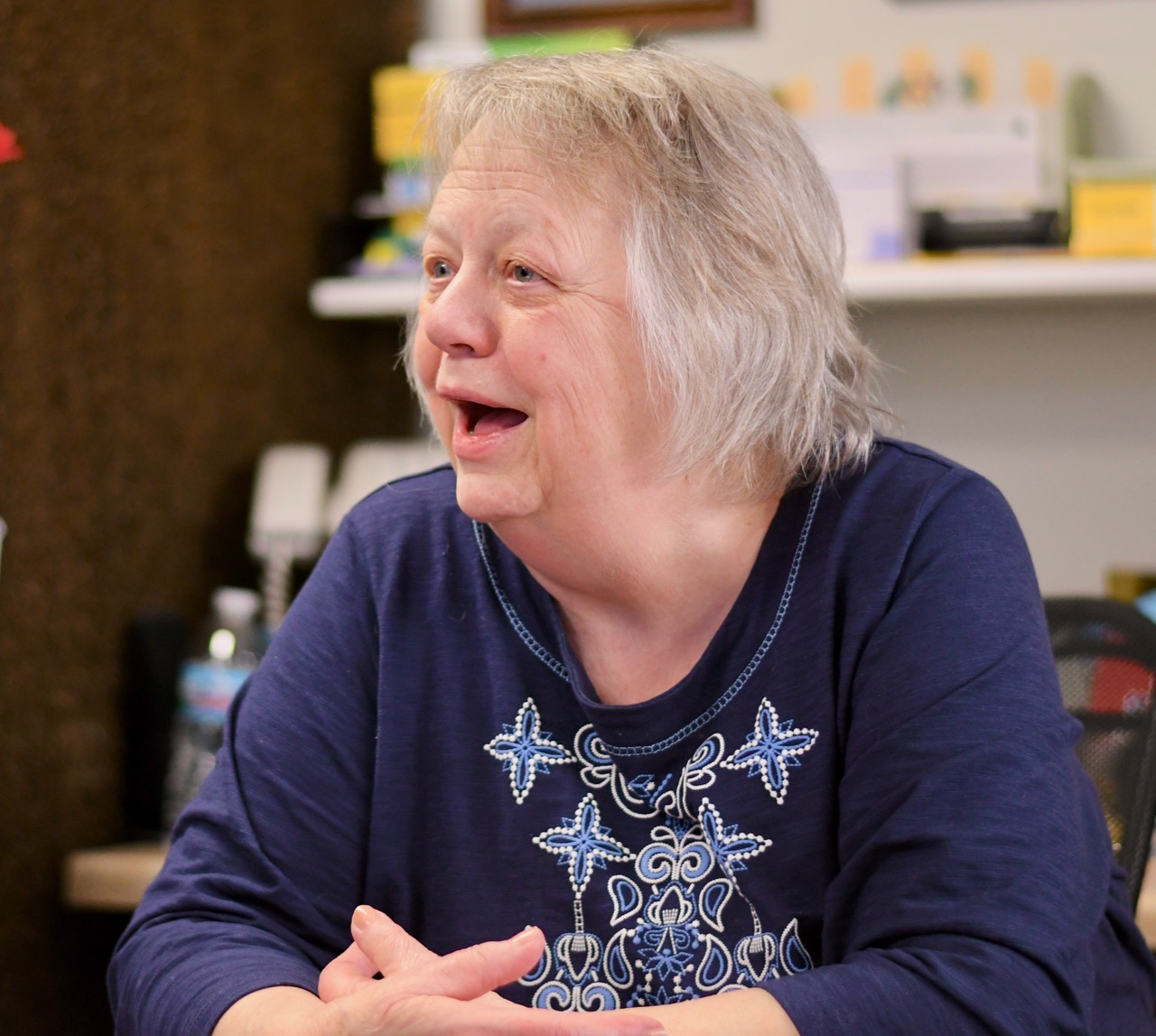
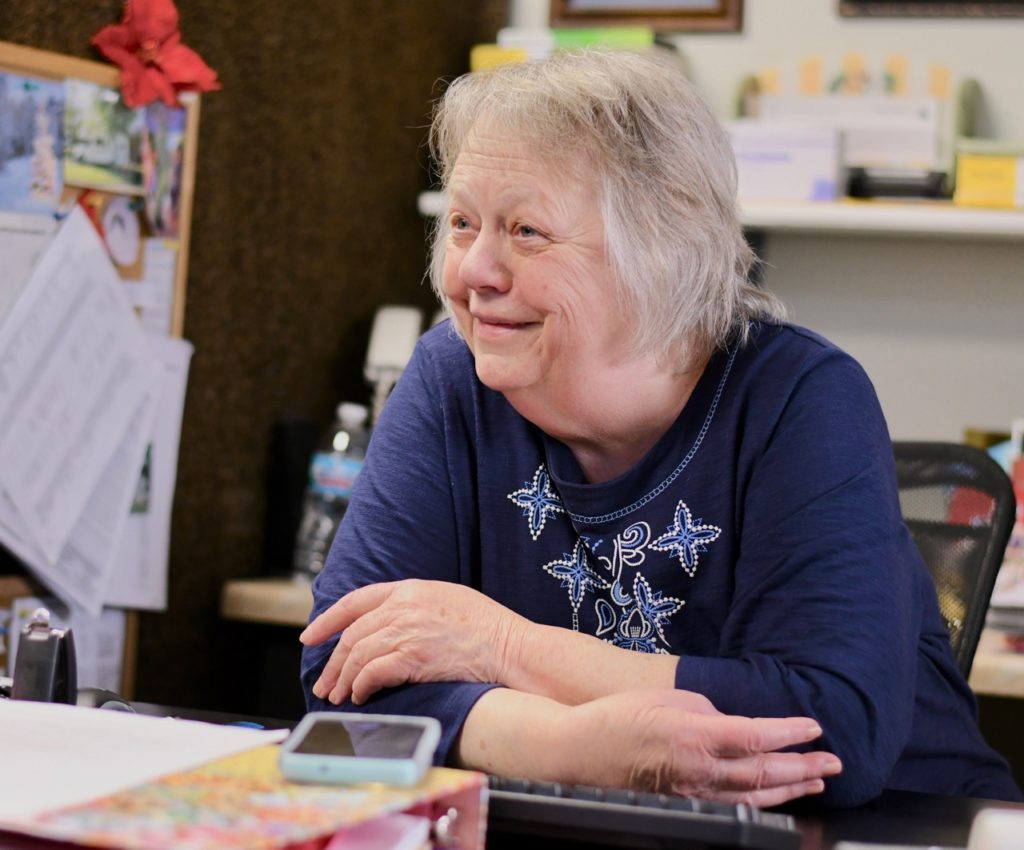
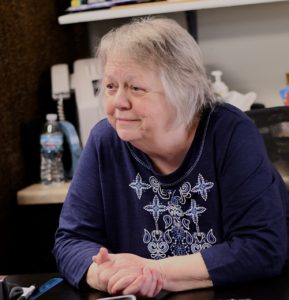
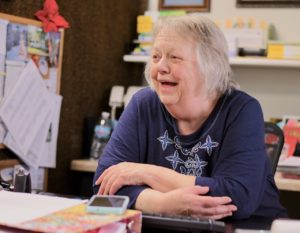
Carolyn Bingaman at her desk at Accounting Plus
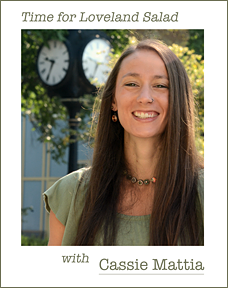
Cassie Mattia is a resident of Historic Downtown Loveland
Loveland, Ohio – Every city is known for something. Some cities are known for their restaurants, some are known for their national parks and trails and some are known for their shopping. The city of Loveland, of course, does not fall short when it comes to having some of the best restaurants, parks, trails, and shopping, but where Loveland really leaves its mark is through its people. So just what’s in Loveland’s DNA?
The area of Loveland was first settled in 1795 by Colonial Thomas Paxton and was later incorporated as a chartered city in 1961. History runs deep within Loveland’s roots giving the city a very long line of DNA. Many Loveland residents have not only lived in the “sweetheart” city for years but have also created a long line of DNA themselves within the city with their children now building a life in Loveland too. One could say that families build long lines of DNA in places across the United States all the time, so why is it unique that it happens in Loveland too? To that, I would say yes families do this all the time, but what is unique about families doing this in Loveland is that these same families dedicate their lives to making Loveland the absolute best place to live, work and go to school. That just doesn’t happen in every place.
Carolyn Bingaman has been a part of Loveland’s DNA since the age of 19 years old when she and her husband moved to Loveland. Fred “Allen”, an Air Force veteran, died in 2010. He and Carolyn were married for 53-years and Allen’s obituary said his motto was, “Try every day to be a blessing to someone”.
“We bought a house up in one of the only subdivisions in Loveland. We were going to move to Milford, but they didn’t have any openings in any subdivisions, so we came to Loveland. At first, I was thinking oh gosh Loveland…but then I fell in love. There has been a lot of changes since then. We have lived in the same house for 53 years,” Bingaman said.
Shortly after moving to Loveland, Bingaman began not only building a DNA strand of her own with her husband and 5 children but also began leaving her mark on the community through sports.
“Loveland had a great women’s and children’s softball teams. My husband and I played every Thursday night and I also had a women’s team that I coached,” Bingaman said, “We had so much fun! We played where the bus garage is now, at the Loveland Elementary School. There were bleachers there and lights and a concession stand,” Bingaman added.
To Loveland residents who know Carolyn, she could be described as very kind and modest about all the good she does for Loveland’s community, but what many don’t know is that she is also a strong advocate for women’s rights. What inspired Carolyn to fight for equal rights? Well, it all began on a Thursday night right before her women’s softball team was about to play a game.
“I was told by the men (Dave Hirsh and Roger Muething) in charge of the softball fields that I needed to be self-reliant and that I needed to stop asking them to get me bats and other supplies for the softball games. So, one night we had a game and we didn’t have a home plate. I knew there were some plates in the cupboard in the front building so I went up and borrowed a home plate with prongs on it. I went back and pounded it into the ground and started the game. Later, I saw people up by the building running around and yelling wondering where something was and one of the men came up and said, ‘Is that my home plate?’ I said ‘Yup!’ From then on, we always had our equipment and never had to go find our own,” Bingaman said.
Carolyn was very motivated starting at a young age. She knew most women during the ’60s and ’70s were expected to stay at home, take care of the children and make dinner for their husbands, but that just wasn’t what she saw for herself.
“I was not the best at math in school, but I did get A’s and B’s. When my husband and I came here I got a job with the Browns who at the time owned half of Loveland. Bob Lonagrover was their accountant,” Bingaman explained, “I began working at their supermarket. I worked the registers counting money and making deposits. Bob was instrumental in saying you must learn how to type, and Barkley Gest said why don’t you learn how to do something else so you can advance your skills. I took their advice and I just kept growing and growing my skills and eventually, I got the opportunity to work at Totes on Kemper Road. Totes was famous all over the country for their “stretch-on” footwear. I worked in the accounting department and ended up becoming the secretary to the vice-president of manufacturing,” Bingaman said.
Bingaman working her way up in a “man’s world” was something that inspired women all over Loveland. Unfortunately, after working for Tote’s for 9 and a half years, Carolyn made the decision to leave the company.
“I filed an EEOC suit in 1974 against Tote’s because they wouldn’t let me have a job I deserved. Paul Hackmen had lost his sight and had to retire. I did his job and mine for 4 or 5 months, but then they wouldn’t give it to me formally,” Bingaman explained, “Tote’s ended up hiring a man to take Paul’s place and wanted me to train him for the position I had been doing. I asked if they were going to give me the title. I didn’t even care about the money. I told them I would be quitting if they didn’t give me the job title because I worked hard for it and deserved it. There were a lot of women that worked there that did a lot of work and didn’t get credit for it,” Bingaman stated, “I ended up winning with the EOC and the right to sue, but I had to find another person for class action. My lawyer wanted to get another woman to speak out against Tote’s so that we could get more money, but I told him he would never get another lady to speak out against Tote’s because they would be gone in a second as I was,” Bingaman said.
I asked Carolyn if Totes didn’t give her the job title because she was a woman and she answered without hesitation, “Yes, that was why.” Carolyn now has a law in the books named after her.
After Carolyn gained the knowledge and confidence she needed to be successful in the business world she decided to open her own accounting firm called “Accounting Plus,” which has now been open for over 40 years. Carolyn believes that her biggest impact on Loveland has come through her business.
“People know if they have a question they know they can come here (Accounting Plus) and ask a question and I won’t charge them for just a question that I have an answer for. I have the same clients that I had 40 years ago. They wouldn’t dare leave me because I care so much for them that I would go get them,” Bingaman said.
Carolyn says that ever since she came to Loveland she has been in love with it. She loves the people more than anything and whether she knows it or not the people love her too. Pat Furterer, a longtime friend of Carolyn’s, couldn’t say enough about Carolyn and her impact on the Loveland community.
“Carolyn is a very unassuming, kind, gracious and generous donor to many organizations in Loveland. She has supported the Loveland Stage Company for years,” Pat Furterer said, “She supports the Loveland Historical Society as well. I feel she would make a great Valentine Lady representing the city!”
Loveland Magazine’s very own David Miller also had a few things to say on the impact Carolyn has had on him and the community.
“I used to work with Carolyn at Totes before and after I went to Vietnam. She, before, during and after treated me like she was my slightly, older sister taking care of me. She does an awful lot for Loveland and is very modest about it. She is very kind,” Miller said. “Not many, outside of my own family really cared that I was in Vietnam, but Carolyn did, and she worried about my safety. Hers was a deep personal concern for all who were serving during the war, and when I got home she wasn’t one to shy away from asking me about my experience. She wasn’t afraid to hear my answers.”
Carolyn is also responsible for the beautiful scenery Loveland residents and visitors enjoy during the spring and summer, “I love the flowers! I have planted flowers for I don’t know how many years in Loveland. Many women help,” Bingaman said.
Although Carolyn Bingaman is very humble there is not a question in anyone’s mind in the Loveland community that she is a huge part of, and matches Loveland’s DNA.
If you think you know someone in the community that has made a huge impact on Loveland and would be a great candidate for our Loveland’s DNA segment feel free to contact us.



 Carolyn Bingaman has been a part of Loveland’s DNA since the age of 19 years old when she and her husband moved to Loveland.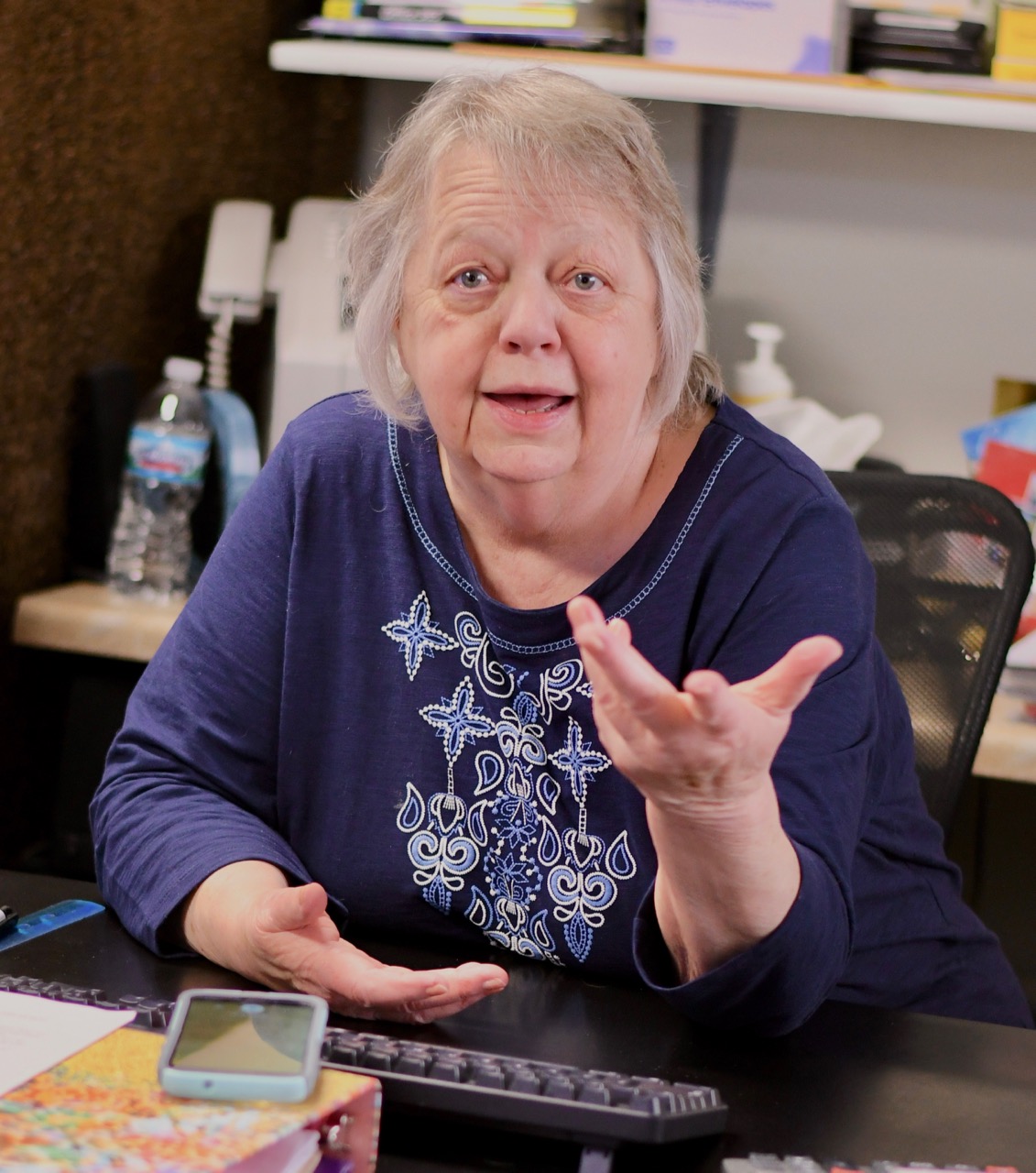
 “I filed an EEOC suit in 1974 against Tote’s because they wouldn’t let me have a job I deserved. Paul Hackmen had lost his sight and had to retire. I did his job and mine for 4 or 5 months, but then they wouldn’t give it to me formally,” Bingaman explained, “Tote’s ended up hiring a man to take Paul’s place and wanted me to train him for the position I had been doing. I asked if they were going to give me the title. I didn’t even care about the money. I told them I would be quitting if they didn’t give me the job title because I worked hard for it and deserved it. There were a lot of women that worked there that did a lot of work and didn’t get credit for it,” Bingaman stated, “I ended up winning with the EOC and the right to sue, but I had to find another person for class action. My lawyer wanted to get another woman to speak out against Tote’s so that we could get more money, but I told him he would never get another lady to speak out against Tote’s because they would be gone in a second as I was,” Bingaman said.
 “People know if they have a question they know they can come here (Accounting Plus) and ask a question and I won’t charge them for just a question that I have an answer for. I have the same clients that I had 40 years ago. They wouldn’t dare leave me because I care so much for them that I would go get them,” Bingaman said.