Tag: women’s sports

  • “An attack on all trans people,” transgender youth speak out against Ohio legislation

    “An attack on all trans people,” transgender youth speak out against Ohio legislation

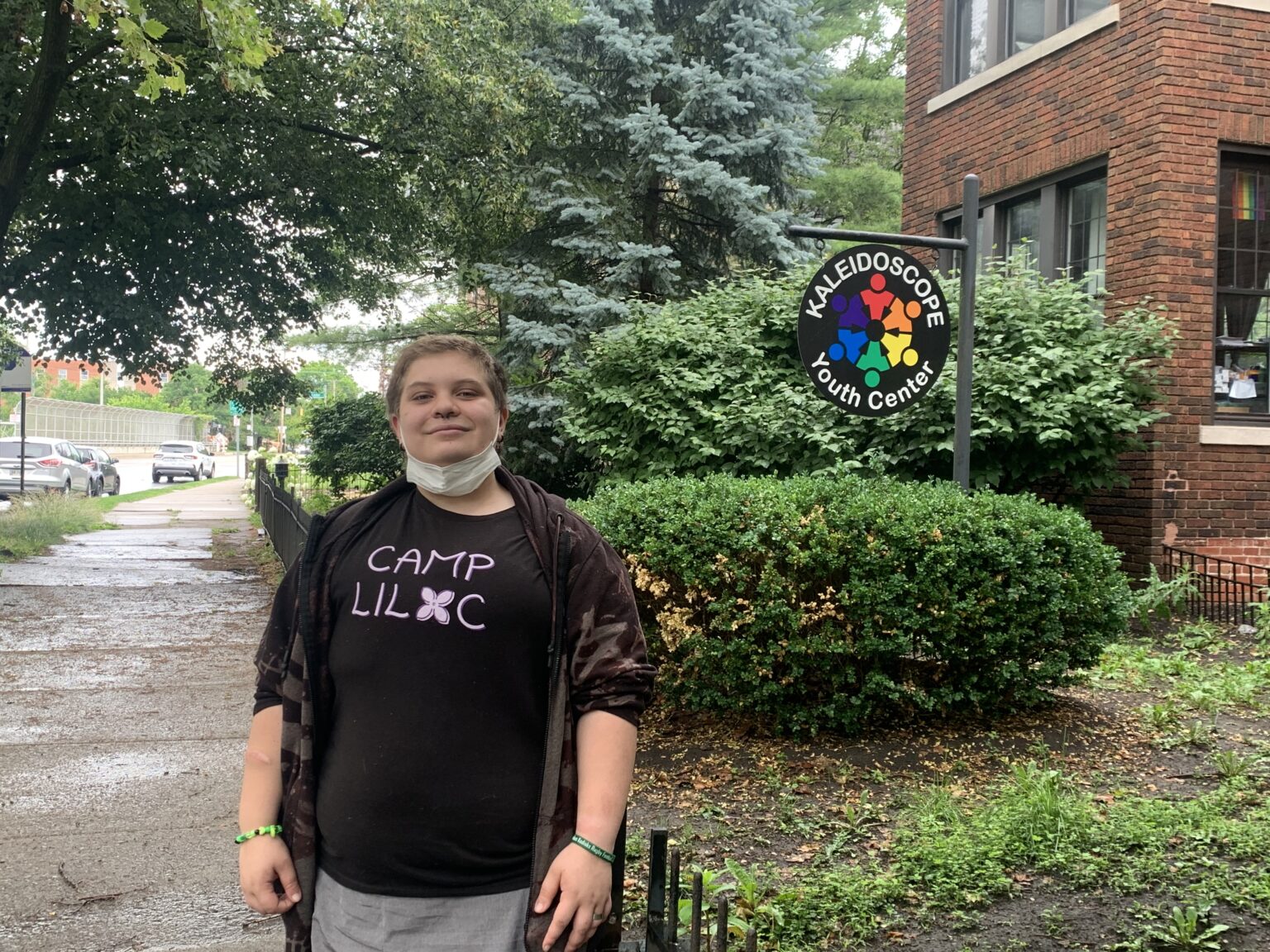
    Nathan Alvarez, 15, stands outside Kaleidoscope Youth Center on June 23. He is worried about a bill that would require K-12 schools and colleges to mandate that students could only use the bathroom or locker room that matches their sex assigned at birth. (Photo by Megan Henry, Ohio Capital Journal) Ohio Capital Journal talked to three transgender youths who are concerned about these bills and their potential implications.

    BY:  – Ohio Capital Journal

    Nathan Alvarez is used to people laughing or snickering at him when he uses the men’s bathroom.

    Despite that, the 15-year-old says his high school is one place he doesn’t have to worry about that happening because they have a couple of gender neutral bathrooms and anyone can use the men and women’s restroom.

    But a bill banning transgender students from being able to use the bathroom and locker room that aligns with their gender identity would change all that.

    State Reps. Beth Lear, R-Galena, and Adam Bird, R-New Richmond, recently introduced House Bill 183 which would require K-12 schools and colleges to mandate that students could only use the bathroom or locker room that matches their sex assigned at birth. HB 183 is still in House committee, awaiting sponsor testimony.

    “It would be hell (if the bill were to pass),” Alvarez said, who uses he/him pronouns. “Hearing about it disgusted me. Like it violently disgusted me.”

    HB 183 is one of a handful of anti-trans bills that have been introduced so far in the Ohio General Assembly.

    Doctors wouldn’t be able to give puberty blockers and hormone therapy to trans youth, trans athletes wouldn’t be able to participate in women’s sports, educators would be forced to out students to their parents and require public schools to give parental notification before teaching “sexuality content” if these various anti-trans bills pass through the Republican-controlled Ohio Statehouse.

    OCJ talked to three transgender youths who are concerned about these bills and their potential implications.

    “It’s an attack on all trans people,” said Ko Rupert, who uses she/it pronouns. “They are all uniquely bad, but their uniqueness is important.”

    And it’s not just happening in Ohio.

    There have been more than 220 bills introduced nationwide specifically targeting transgender and non-binary people, according to the Human Rights Campaign year-to-date snapshot from May 23.

    Fifteen laws have been enacted banning gender affirming care for transgender youth and four additional laws have been passed that censor school curriculum like books, according to HRC.

    “It’s very hard to see what’s been already happening in other states and how the bills that they are trying to pass here in Ohio are not even that different,” Jaylah Hollins, 19 said. “I feel like it’s not really in the interest of Ohioans, but only in the interest of anti-trans lobbyists from out of state.”

    House Bill 8

    Hollins is going to start attending Columbus State Community College this fall for social work and hopes to one day work for an organization that helps transgender people.

    “Hopefully if these bills don’t pass, we can try and make Ohio a place where it can be a refuge for trans kids and trans adults,” Hollins, said, who uses she/her pronouns. “Ensuring that trans kids have access to medical care and that adults have access to the facilities that align with their gender identity shouldn’t be politicized in the first place.”

     An advocate for the rights of trans children and their parents holds up a sign. Photo by Morgan Trau, WEWS. 

    While she said all the anti-trans bills are harmful, House Bill 8 stands out to her as the most damning.

    State Reps. D.J. Swearingen, R-Huron, and Sara Carruthers, R-Hamilton, introduced HB 8 which would require public schools to give parents a heads up before teaching “sexuality content” and school staff would have to out students to their parents. HB 8 recently passed the Ohio House.

    “I feel like they don’t see it as putting children in harm’s way when it most likely is because you can’t expect a parent to be able to deal with knowing that their child is within an LGBT umbrella and not have to try and resort to what they may not see at the time as harmful approaches to their child’s identity,” Hollins said.

    She said these bills would prevent children from learning more about themselves and make them feel as though they deserved to be punished because of how they identify.

    “It won’t allow children to be able to understand others who are maybe different from them,” Hollins said. “It will encourage isolation and I think the most devastating would be suicidal ideation, especially with trans and non-binaries who already know that they are coming from families who are unaccepting of those identities.”

    She’s said she’s still debating if she’ll stay in Ohio after college.

    “It’s still hard for me to think about, but for me, I think I would want to stay in Ohio and fight for trans youth,” Hollins said.

    Rupert, a 20-year-old Ohio State University graduate student, is also worried about HB 8 and the stripping away of youth rights.

    “Young people can make decisions, can know their bodies and understand and have a deep relationship with their gender and sexuality and romantic orientations,” Rupert said.

    Alvarez tries to speak out against the anti-trans bills when he gets the chance and even recently appeared on Good Morning America. But he’s not old enough to vote.

    “It’s upsetting to know that there are adults making choices for people to make choices about me. And I don’t have a choice,” Alvarez, of Reynoldsburg, said. “It’s scary.”

    He hopes to move out of Ohio one day and relocate to Washington.

    Anti-trans and anti-LGBTQ bills

    House Bill 68, also known as the  Save Adolescents from Experimentation Act (SAFE Act), would prevent doctors from giving puberty blockers and hormone therapy to trans youth. It would also ban physicians from performing gender reassignment surgery on a minor.

    Many opponents, however, have testified that no Ohio children’s hospital currently performs gender-affirming surgery on those under 18.

    House Bill 6 would prevent trans athletes from participating in Ohio women’s sports and was woven into HB 68, which recently passed the House and now awaits Senate committee consideration.

    Follow OCJ Reporter Megan Henry on Twitter.

    ______________________

    Megan Henry
    MEGAN HENRY

    Megan Henry is a reporter for the Ohio Capital Journal and has spent the past five years reporting in Ohio on various topics including education, healthcare, business and crime. She previously worked at The Columbus Dispatch, part of the USA Today Network.

    MORE FROM AUTHOR

  • Transgender athlete bills don’t solve any pressing issue. They’re just bullying

    Transgender athlete bills don’t solve any pressing issue. They’re just bullying

    Getty Image

    Commentary by David C. DeWitt and Ohio Capital Journal

    Two bills are working their way through the Ohio General Assembly that do not solve any pressing issues in high school athletics; they simply target and needlessly victimize five Ohio children in a cynical attempt to score cheap political points.

    I’m referring to Ohio House Bill 61 and Senate Bill 132, which would ban transgender girls from joining female teams in high school and college athletics. They are sponsored by state Rep. Jena Powell, R-Arcanum, and state Sen. Kristina Roegner, R-Hudson.

    As OCJ has reported, out of about 400,000 Ohio high school athletes competing this year, five transgender girls opted to follow their gender identity and compete in women’s sports. Four transgender girls obtained approval in 2019-2020, two in 2018-2019, and none were approved between 2015 and 2017, according to the Ohio High School Athletic Association (OSHAA).

    OSHAA Director of Compliance Kristin Ronai (LinkedIn photo)

    OSHAA already has a policy regarding transgender athlete eligibility, and it seems to be working fine as OSHAA Director of Compliance Kristin Ronai told OCJ, “I personally, and the rest of our office, have not received one complaint about transgender athlete participation in the state of Ohio.”

    There’s no evidence of transgender girls taking scholarship opportunities away from anyone, she added, saying OSHAA’s policy for this exceedingly small population was crafted by experts, and no real problem exists for the legislation to solve.

    In North Carolina, Republican House Speaker Tim Moore killed a similar bill, telling the Associated Press it simply isn’t needed as there has been no verifiable problem with transgender women playing sports.

    Meanwhile, an expert who helped the NCAA establish its policy for transgender participation in 2011 and also advised the International Olympic Committee on the issue told NPR recently these bills are discriminatory when school sports are supposed to be about inclusivity, team-building and personal well-being, and they have no basis in science.

    “We know that men have, on average, an advantage in performance in athletics of about 10% to 12% over women, which the sports authorities have attributed to differences in levels of a male hormone called testosterone. But the question is whether there is in real life, during actual competitions, an advantage of performance linked to this male hormone and whether trans athletes are systematically winning all competitions. The answer to this latter question, are trans athletes winning everything, is simple — that’s not the case. And higher levels of the male hormone testosterone are associated with better performance only in a very small number of athletic disciplines: 400 meters, 800 meters, hammer throw, pole vault — and it certainly does not explain the whole 10% difference,” said Dr. Eric Vilain.

    “And lastly, I would say that every sport requires different talents and anatomies for success. So I think we should focus on celebrating this diversity, rather than focusing on relative notions of fairness. For example, the body of a marathon runner is extremely different from the body of a shot put champion, and a trans woman athlete may have some advantage on the basketball field because of her height, but would be at a disadvantage in gymnastics. So it’s complicated.”

    So why are Ohio Republicans and their colleagues in roughly 35 state legislatures around the country pursuing these bills?

    Well, it’s about the only LGBTQ+ issue remaining that polls well for them — and by “well” I mean it still polls in favor of the discrimination that they support. Complicated issues require thoughtfulness. Cultural hate-baiting does not.

    Back in 2004, Republicans were cynically wedging voters by using public opposition back then to same-sex marriage, driving voter turnout and banning it that year in 11 states including Ohio. The public in 2004 was opposed to same-sex marriage with 55% supporting changing the U.S. Constitution to ban it. Now support for same-sex marriage is at an all-time-high 70%.

    So if it’s no longer politically popular to promote discrimination against the LGBTQ+ community at-large, what is? Targeting transgender athletes and, really, targeting transgender people in general.

    The saddest thing about this to me is that transgender people — especially transgender people of color — have been leading the activist charge toward equality for the entire community since the beginning, literally throwing the first bricks at the Stonewall riots. And since the beginning, they’ve been the most victimized. Now they remain the most targeted and victimized, and they deserve allyship and support as much or more than ever.

    Given the polls and their own words, I have no doubt many of these Republican politicians are earnest in their support for discriminating against transgender people, but they also know it’s good politics for them. Perhaps they believe this is an actual issue that needs addressed. Perhaps. But the facts do not bear that out, and if they did an honest evaluation of the situation based on facts, expert testimony and science instead of political calculations and polling they would know that.

    So it remains that our Republican supermajority state legislature is spending its days crafting legislation to needlessly attack five children.

    These proposals victimize and attempt to villainize in the public mind an already vulnerable minority not to solve any real issue but for cynical political point-scoring. In essence, these politicians are saying that exploiting outrage politics is more important than acknowledging transgender people’s basic humanity and the harmful consequences of needlessly promoting discrimination against them.

    Driving public policy with this intentional wedge issue at the expense of children is at the least highly unethical and at worst horribly immoral. It’s bullying, and it encourages more bullying.