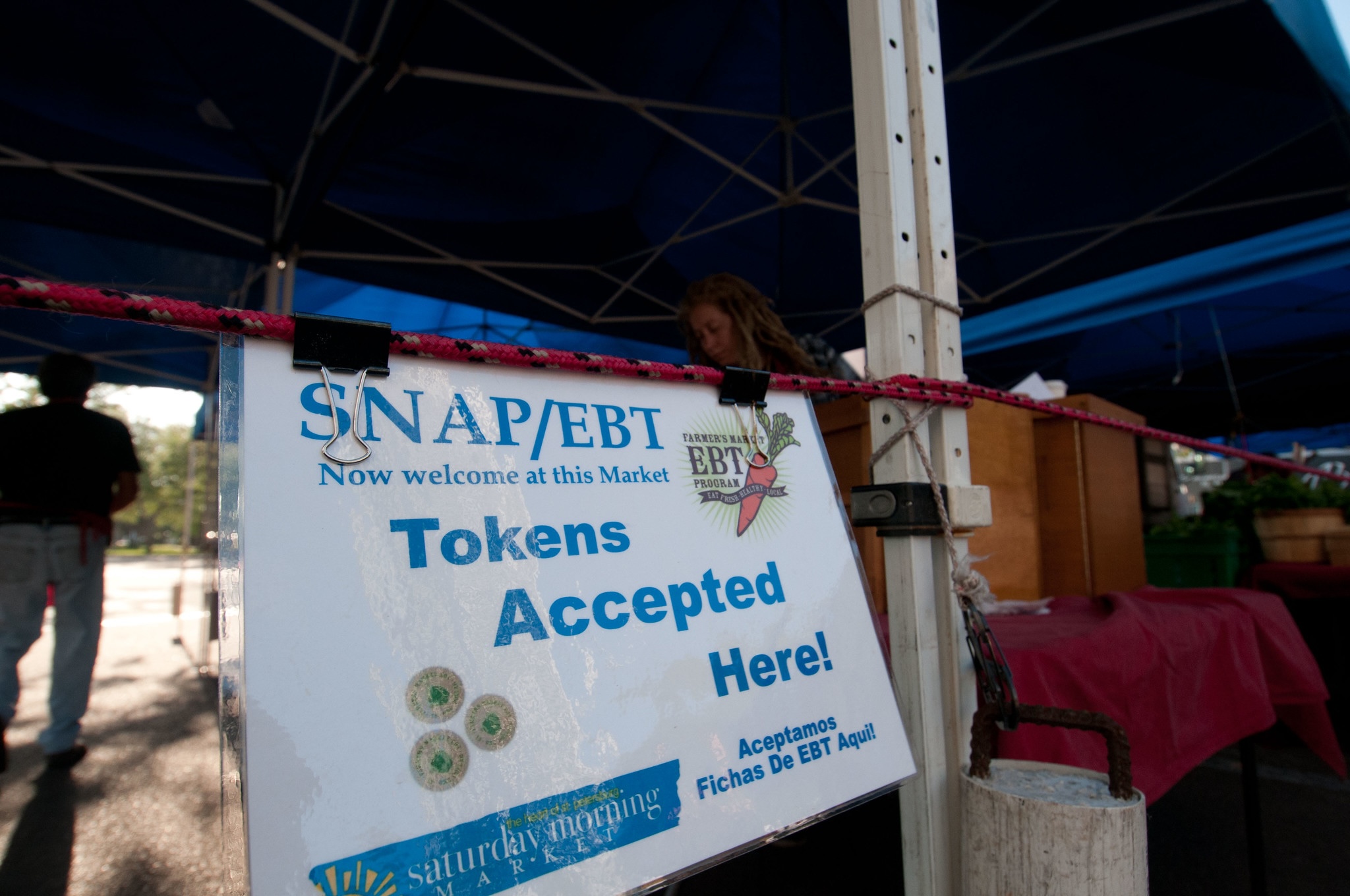
At a farm market in St. Petersburg, Florida, SNAP recipients were able to use their Electronic Benefits Transfer cards for food. (Photo by Lance Cheung/USDA).
The massive tax and spending bill passed by U.S. House Republicans would likely result in 3.2 million people losing food assistance benefits, and saddle states with around $14 billion a year in costs, according to a new analysis from the nonpartisan Congressional Budget Office.
Democrats have argued the bill, which the House passed, 215-214 early Thursday without any Democrats in support, would cut programs for the needy to fund tax breaks for high earners.
The CBO document, issued late Thursday, responded to a request to the office from the top Democrats on the Senate and House Agriculture committees, Sen. Amy Klobuchar and Rep. Angie Craig, both of Minnesota, and somewhat bolsters that claim. The panels oversee federal food aid programs.
“This report is truly devastating,” Craig said in a Friday statement to States Newsroom. “As a mother and someone who at times relied on food assistance as a child, these numbers are heartbreaking. It is infuriating that Republicans in Congress are willing to make our children go hungry so they can give tax breaks to the already rich.”
A provision in the bill to tighten work requirements, including by excluding single parents of children older than 6 and by raising the age of adults to whom the work requirements apply, of the Supplemental Nutrition Assistance Program, or SNAP, would result in 3.2 million people losing access to the program in an average month, the CBO report said.
Of those, 1.4 million would be people who currently have a state waiver from work requirements that would be disallowed under the bill and 800,000 would be adults who live with children 7 or older, the report said.
In a Friday statement, Ben Nichols, a spokesman for the House Agriculture Committee led by Pennsylvania Republican Glenn ‘GT’ Thompson, said the proposed change would be more fair to the people SNAP is supposed to help and noted the program is the only state-administered entitlement program that is paid fully by the federal government.
“No one who is able-bodied and working, volunteering, or training for 20 hours a week will lose benefits,” Nichols wrote.
Republicans want to use the legislative package to extend the 2017 tax law and its cuts, increase spending on border security and defense by hundreds of billions of dollars, overhaul American energy production, restructure higher education aid and cut spending.
Toll on states
The cost-share changes, which would require states for the first time to pay for a portion of SNAP benefits, would also limit participation and add a massive line item to state budgets, according to the CBO.
Starting in 2028, states would be responsible for paying 5% to 25% of SNAP benefits, with a state’s share rising with its payment error rate. The federal government currently pays for all SNAP benefits.
Under the House bill, which will likely undergo substantial changes as the Senate considers it in the coming weeks, states collectively would be responsible for just less than $100 billion from 2028 to 2034, about $14 billion per year.
States would respond in a variety of ways, CBO Director Phillip Swagel wrote, including potentially dropping out of the program.
“CBO expects that some states would maintain current benefits and eligibility and others would modify benefits or eligibility or possibly leave the program altogether because of the increased costs,” he wrote.
The office took a “probabilistic approach to account for a range of possible outcomes” to determine what the effect on households would be and estimated that 1.3 million people would lose benefits because of state responses to the new cost-share.
Nichols, with the House Agriculture Committee, disputed the CBO’s estimate regarding the cost share change. The lowest state cost-share of 5% would be available for states with error rates below 6%. Every state has hit that mark at some point in the last decade, he said.
With that favorable of a cost-share, the Republican committee members did not believe states would drop out of the program, he added.
“We reject the hypothetical assumption that some states may not chip into 5 percent of a supplemental nutrition program,” Nichols wrote. “Every state is capable of paying for a portion SNAP… Federal policy should encourage states to administer the SNAP program more efficiently and effectively, and this bill does just that.”
CBO’s forecasters determined the impacts of the work requirements and cost-share provisions separately, meaning some people potentially losing benefits could have been counted in both categories.
Move to the Senate
The House vote Thursday sent the measure to the Senate, where the debate over SNAP benefits may fall along similar party lines.
Republicans who hold control in that chamber are planning to employ the budget reconciliation process, which allows them to skirt the Senate’s usual 60-vote requirement for legislation.
During the House Agriculture Committee’s debate over its portion of the legislation, Republicans on the panel said the work requirement and state cost-share measures were needed reforms to SNAP that would protect the program for those it was meant to serve, while limiting the costs associated with benefits to adults who were able and unwilling to work or in the country illegally.
In a Friday statement, Sara Lasure, a spokeswoman for Senate Agriculture Committee Chair John Boozman, an Arkansas Republican, also said the panel would seek reforms to the program but did not offer specifics.
“The Senate Agriculture Committee is in the process of crafting its budget reconciliation package and will work as good stewards of taxpayer dollars to make commonsense reforms to SNAP that encourage employment,” she wrote in an email.
Klobuchar, in a statement after House passage Thursday, blasted the House bill and indicated she would oppose efforts to cut SNAP benefits.
“House Republicans are pulling the rug out from under millions of families by taking away federal assistance to put food on the table,” she said. “They’re doing that even as President Trump’s tariff taxes raise food prices by more than $200 for the average family, all to fund more tax breaks for the wealthy. That’s so very wrong —and we will fight against it in the Senate.”
Jacob Fischler
Jacob covers federal policy and helps direct national coverage as deputy Washington bureau chief for States Newsroom. Based in Oregon, he focuses on Western issues. His coverage areas include climate, energy development, public lands and infrastructure.
Ohio Capital Journal is part of States Newsroom, the nation’s largest state-focused nonprofit news organization.
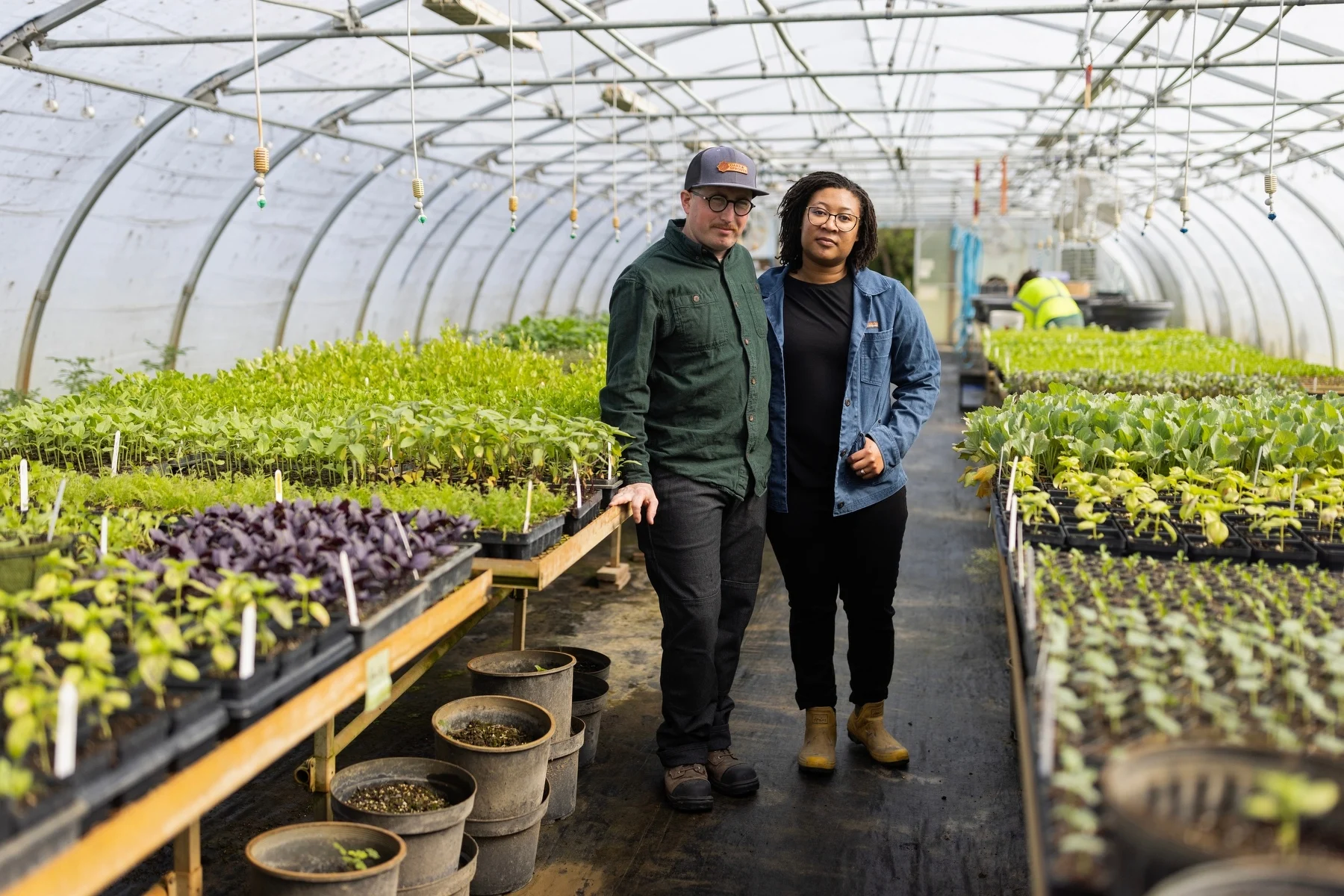
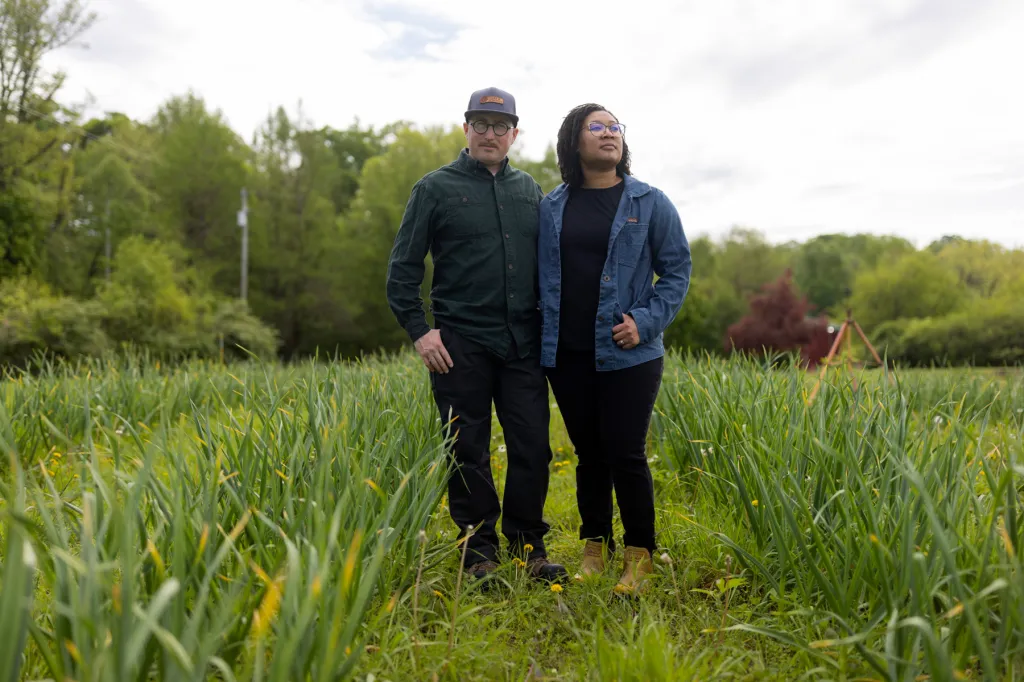
Graham and Tonni Oberly say the goal of their Ohio farm Oak and Sprouts is to grow food in a way that is good for the land, their employees and their customers. (Maddie McGarvey for The 19th)
by Amanda Becker
Read Amanda Becker’s Loveland, Ohio connection in her Bio below.
The Trump administration is ending a USDA assistance initiative as the country’s food pantries are “stretched to the breaking point” and a hunger crisis looms.
URBANA, OHIO — Oaks and Sprouts, Tonni and Graham Oberly’s family farm, got the email from the Ohio Association of Foodbanks just after five o’clock on the first Friday in March.
The U.S. Department of Agriculture, or USDA, had notified the Ohio Department of Job and Family Services that it was ending a program that gave state, tribal and territorial governments federal dollars to stock food pantries from farms within a 400-mile radius. The Ohio Association of Foodbanks, in turn, shared the notice with the more than 150 farms that supplied the state’s food pantries with fresh produce, meat and dairy. One of them was Oaks and Sprouts, whose younger and diverse owners are just the type of growers the USDA’s Local Food Purchase Assistance program aimed to connect to food-insecure Americans.
Last growing season, Oaks and Sprouts had a contract worth up to $25,000 with the program, a significant amount for the small farm. The produce made its way to food pantries in nearby Springfield and Dayton and, from there, to the Ohioans who rely on them to feed themselves and their families. For Tonni Oberly, a trained doula with a background in public health, joining that distribution chain connected her work at the farm to the focus of the city and urban planning doctorate she had recently completed: how place impacts the health of Black mothers and children.
“Food is such an important part of that — access to food in your neighborhood, access to healthy food, the affordability of food — how food impacts our maternal and child health outcomes is really crucial,” Tonni explained on a crisp April day as she and Graham walked through the hoop house where they were germinating seeds for spring planting.
The federal program had also allowed the Oberlys to diversify their farm’s revenue stream beyond the traditional sales to restaurants and at farmer’s markets. It had given them a measure of predictability as they built a regenerative farm on land previously cultivated by Graham’s aunt and uncle and, before that, his grandparents.
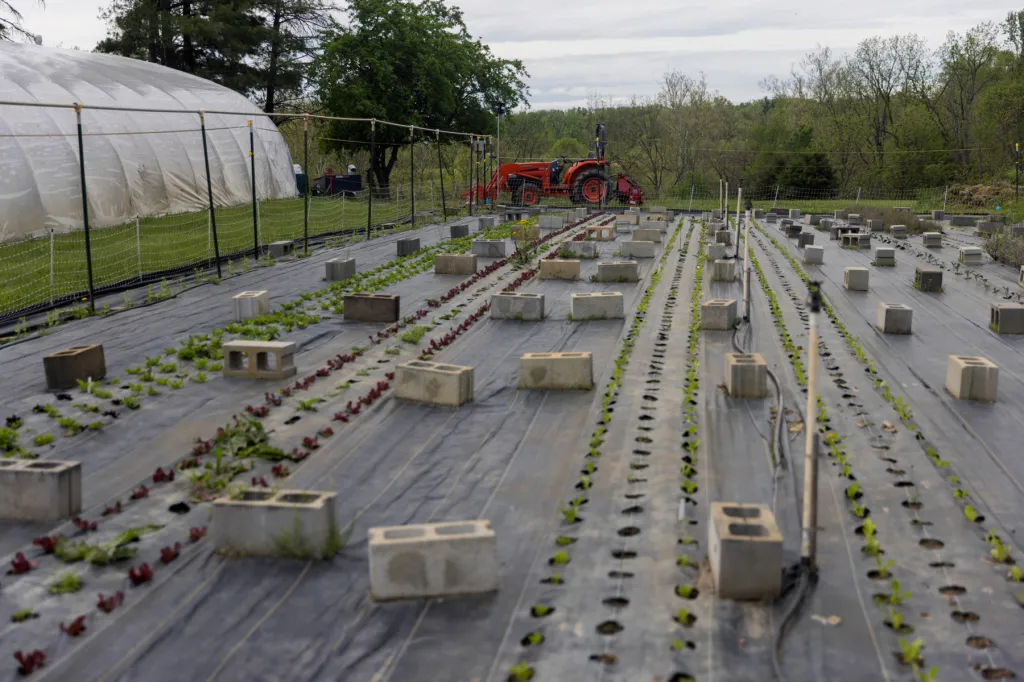
“We can plant seeds and know that they’re sold, versus with the farmer’s markets, you plant and you hope people buy it — or even selling to restaurants, they don’t preorder months ahead of time,” Graham explained as he and Tonni stood on the acre of land where they grow garlic, tomatoes, patty pan squash and lettuce varietals that include romaine, butterhead and salanova.
The Oberlys estimate that they were able to hire two of their four seasonal employees last year because of their contract with the Local Food Purchase Assistance program, known as LFPA. They try to pay a good wage for the work — $17 an hour. That’s a decent amount for a place like rural Champaign County, where the median household income is about $20,000 less than nationally and the poverty rate is just over 10 percent. The farm’s goal, they explained, was to grow food in a way that is good for the land, their employees and their customers. Tonni named Oaks and Sprouts for a passage of scripture in Isaiah: “They will be called oaks of righteousness, a planting of the Lord for the display of his splendor.” It is a metaphor for living a righteous life.
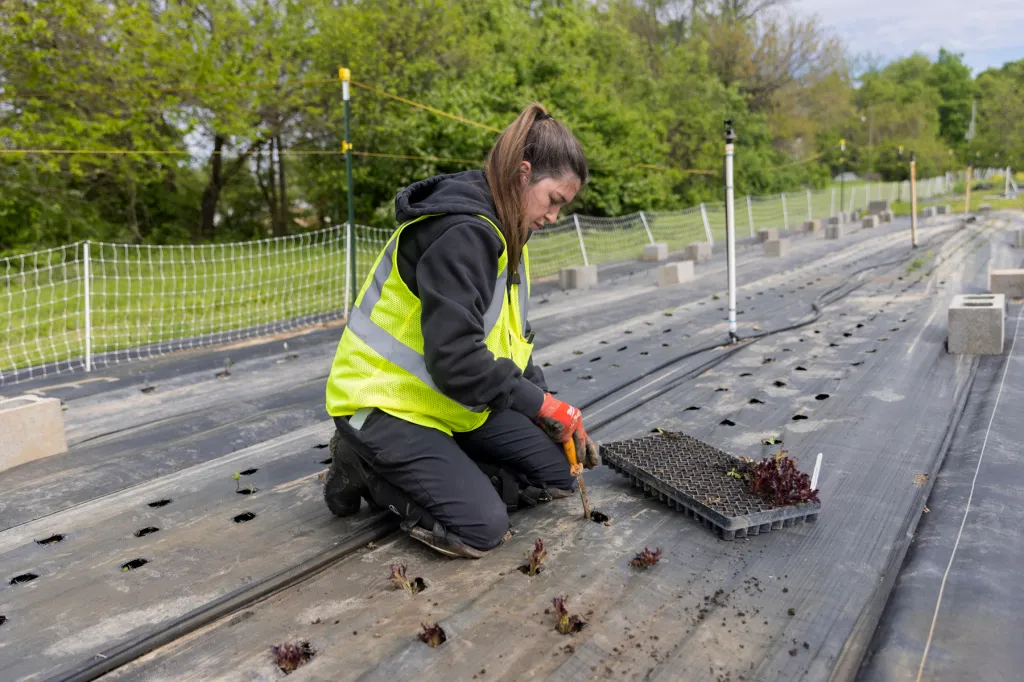
The Oberlys estimate that they have been able to hire some of their seasonal employees because of their contract with the Local Food Purchase Assistance program.
(Maddie McGarvey for The 19th)
The email from the Ohio Association of Foodbanks landed as Oaks and Sprouts was in the thick of planning for its fifth growing season — the third in which the Oberlys planned on participating in the LFPA program. It attached a USDA notice saying that the Trump administration had “determined this agreement no longer effectuates agency priorities and that termination of the award is appropriate.” After the current contract year closes on June 30, the LFPA program, which authorized $900 million worth of locally raised healthy foods for anti-hunger organizations, would end.
Created by the Biden administration in 2021, the Local Food Purchase Assistance program was at once an attempt to support small local farms and an acknowledgement that one of the most direct ways to bring healthy food to hunger-vulnerable populations is to buy it from underserved farmers nearby.
But a USDA press release announcing its creation featured words like “equity” and “climate,” targets of President Donald Trump and his Department of Government Efficiency in their efforts to root out so-called “woke” federal programs. Even before Trump took office, the Oberlys’ program coordinator with Ohio CAN (Community + Agriculture + Nutrition), as LFPA is branded in this midwestern state, had warned them that its renewal could be in jeopardy.
Still, Oaks and Sprouts, like the vast majority of the farms participating in Ohio CAN, began planning for the 2025 growing season. There were reasons to be hopeful. For starters, while the Local Food Purchase Assistance program was part of the Biden administration’s broader COVID-19 relief effort, its funding stream was first used for direct food purchases during Trump’s first term. Ohio CAN, like many state-level local food purchase programs, is also widely popular. Independent experts who analyzed its first year in the Republican-led state concluded that it was a “success by any measure.”
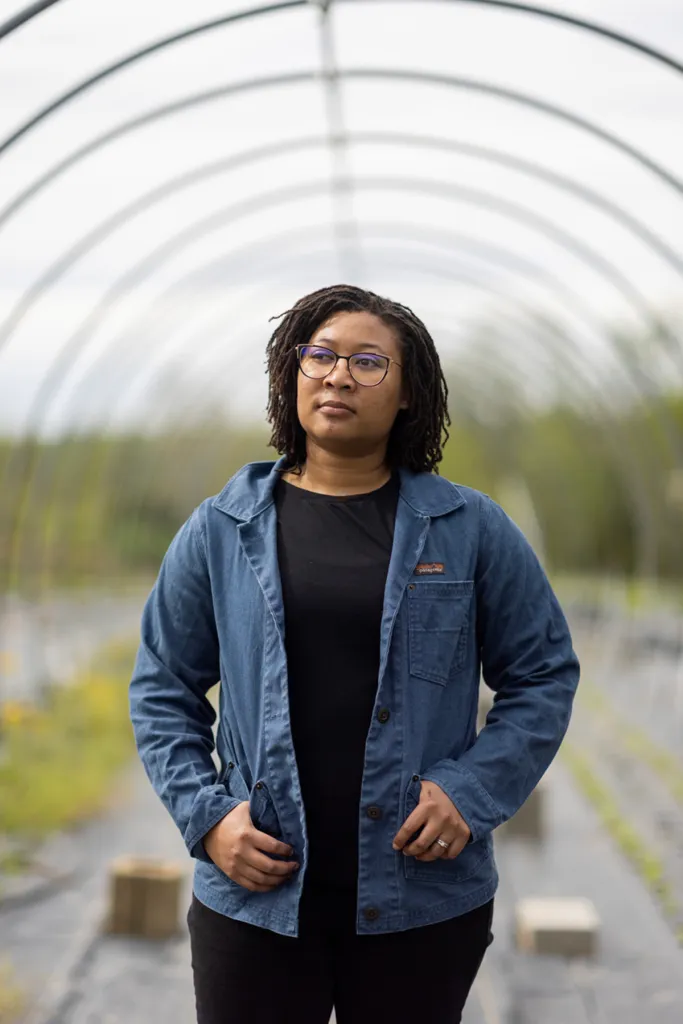
Tonni Oberly sees her farm as a way to expand her work caring for Black mothers and children. Indigenous and Black Americans experience the highest rates of food insecurity, with Black children twice as likely as White children to face hunger.
(Maddie McGarvey for The 19th)
Trump’s picks to lead key federal agencies in his current term also seemed to be working in the program’s favor. Take Agriculture Secretary Brooke Rollins. One of the first things she did upon confirmation was to send state, local and tribal governments a letter that outlined her “vision for the Department’s 16 nutrition programs,” including a commitment to “create new opportunities to connect America’s farmers to nutrition assistance programs.”
Then there’s Department of Health and Human Services Secretary Robert F. Kennedy Jr., a former environmental lawyer, the figurehead of the “Make America Healthy Again” movement and an outspoken critic of processed foods. One of his top priorities is encouraging states to prohibit the more than 40 million low-income Americans participating in the USDA’s Supplemental Nutrition Assistance Program, or SNAP, from using benefits to purchase soda and candy; so far this year, more than a dozen states have been considering such legislation. Many experts say a more effective way to encourage healthier eating is to improve access to fresh foods, exactly the type that LFPA farms were producing and selling to food pantries.
More than 1.3 million Ohioans participated in SNAP during fiscal year 2024, or about 12 percent of the state’s population, according to a Center of Budget and Policy Priorities analysis of USDA data. While the majority of SNAP recipients are White, Black Ohioans are overrepresented when compared to the overall state population. An anonymous survey by the Ohio Association of Foodbanks showed that more than 40 percent of people who visited emergency food distribution centers in 2023 had at least one household member under the age of 18 and nearly as many reported living in a household with someone who is disabled.
The country’s safety net to prevent hunger is a complicated web of federal programs. Most are housed within the USDA and many are jointly administered by federal and state governments. These include SNAP, previously known as food stamps; the Supplemental Nutrition Program for Women, Infants and Children, known as WIC; school meal programs; Meals on Wheels, focused on seniors; commodities purchases for food banks; and the Local Food Purchase Assistance program that Tonni and Graham Oberly’s farm participated in.
Pulling on the thread of one program puts tension on the others. For example, once a family exhausts their SNAP benefits for the month, they may rely on one of the country’s more than 60,000 food pantries and emergency meal centers to feed themselves. As the USDA is ending programs like the LFPA, Congress is looking at other food assistance programs to find the $1.7 trillion in savings over the next decade needed to renew Trump’s 2017 tax package, which primarily benefited corporations and the wealthy.
The confluence of cuts and changes, coming as more Americans than ever rely on government help for food, has hunger-relief advocates worried the safety net will unravel.
Congress has proposed changes to SNAP that include recalibrating the formula used to calculate benefits, adding work requirements for some parents and forcing states to take on a larger portion of the funding. Rollins, for her part, sent a letter to states in April reminding them that it is ultimately the USDA that has the authority to grant their requests to waive the time limit on able-bodied adults receiving SNAP benefits unless they meet work requirements.
Earlier this month, the Trump administration also ordered states to hand over SNAP recipients’ personal data, including their Social Security numbers, addresses and, in at least one state, citizenship status, National Public Radio reported. The directive came amid the administration’s broader push to amass Americans’ personal data and target immigrants.
Though people in the country illegally are not eligible for SNAP benefits, their U.S. citizen children might be. Last month, USDA directed states to enhance identity and immigration status verification as part of Trump’s broader immigration crackdown, even though there is no evidence that immigrants are improperly participating in the program at significant levels. Advocates worry that in the current climate, using the SNAP program to collect participants’ data could have a chilling effect on seeking food assistance.
The USDA also recently paused $500 million from a separate program that buys large quantities of food from farmers for food pantries, with food banks in Ohio, Wisconsin, Massachusetts and elsewhere losing millions of dollars worth of shipments as a result. When the administration ended the LFPA, it also terminated a $660 million program that linked local farms to schools and child care centers.
The changes and uncertainty are coming at what Vince Hall, the head of government relations for Feeding America, the nationwide foodbank network, called an already “very precarious moment for food banks because there’s no resiliency left in the system.”
“They’re stretched to the breaking point. They are serving unprecedented high demand, the highest in over a decade. They are dealing with a decline in donation revenue from the pandemic highs that has been quite steep. The decline of financial donations from the pandemic highs, combined with some of the highest — in fact, record — levels of demand at food distributions has just stretched them to the breaking point,” Hall said.
“If we have policy adjustments that disqualify people from the SNAP program, or if we have a recession and unemployment goes up, or if we have a series of natural disasters, there are any number of things that can work to increase demand, and the food banks just aren’t ready,” he added.
In an emailed statement, a USDA spokesperson noted that as of mid-May, states still had $246 million in unspent LFPA funds. “The secretary encourages states to utilize these dollars for schools, charitable feeding organizations, and other programs that serve those in need,” the statement said.
Alabama has exhausted its funds; Ohio had about $435,000 left from $26.6 million allocated; just $1,500 remained in Tennessee’s coffers, according to an official tally.
The spokesperson added: “On any given day, the Department issues more than $405 million worth of nutrition benefits across its 16 nutrition programs. There is no need for new programs, but perhaps more efficient and effective use of current.” These are not reassuring words to many of the program’s participating farmers and food pantry operators, whose best-case-scenario path forward is for the program to be revived under the administration’s own branding.
Graham and Tonni Oberly had to pivot quickly.
After they received the email from the Ohio Association of Foodbanks, they secured a spot for this season in a farmer’s market in Dayton that is larger than the one where they used to sell their produce nearby. They are adding cut flowers to their lineup and growing Chinese Cabbage for the first time, while also trying to expand the number of local restaurants to which they sell what they grow.
But the modicum of predictability that the Local Food Purchase Assistance program gave this new farm for the past two seasons — the USDA considers farmers and ranchers “beginning” for their first decade and eligible for special assistance — will be gone this year. As will the direct line for Oaks and Sprouts to help address food insecurity in their own community.
Graham Oberly grew up on the Ohio-West Virginia border in a family that fought mountaintop removal mining in Appalachia, earned a degree in natural resources management and worked as a sustainability coordinator for The Ohio State University before moving into farming.
Oaks and Sprouts is a marriage of the Oberlys’ passions. The regenerative farm is a way for Graham to tend the land of his ancestors and preserve it for future generations. With the Local Food Purchase Assistance program, the farm was also a way that Tonni could expand her work caring for Black mothers and children.
Graham and Tonni Oberly’s Ohio farm Oaks and Sprouts serves a state where the rate of food insecurity is slightly higher than the national average.
(Maddie McGarvey for The 19th)
More than 47 million Americans — including one in five children — are considered food insecure, meaning they do not have enough food to eat or access to healthy foods. Rural Americans are more likely to face hunger due to lack of transportation, lower wages and racial discrimination. The highest rates of food insecurity are among Indigenous and Black Americans, according to a Feeding America analysis, with Black children twice as likely as White children to face hunger. USDA research also shows that households with children headed by a single mother are more likely to be food insecure. And food-insecure women are more likely to be obese than food-insecure men or children, with all of the related health issues, in part because they prioritize providing healthy foods for their children instead of themselves, according to the Food Research & Action Center.
In Ohio, the food insecurity rate is slightly higher than the national average. In 2023, Ohioans visited the state’s food banks 14.7 million times, up more than a third over the year before. Ohioans are eligible for food bank use if their household is at or below 200 percent of the federal poverty level — and more than a quarter in the state qualify, or about 3.4 million people. Of the 43 percent who were also receiving SNAP benefits, nearly all of them — 93.4 percent — reported exhausting those benefits within the first three weeks of the month, according to the Ohio Association of Foodbanks.
Biden’s $1.9 trillion COVID-era stimulus package provided direct assistance to taxpayers, $350 billion for state and local governments, and $130 billion to help safely reopen schools, among other provisions. The plan also earmarked $1 billion for USDA programs to build capacity in the country’s food-banking system amid unprecedented need and global supply chain disruptions.
Half of that money went to additional purchases via The Emergency Food Assistance Program — and that is the $500 million canceled by Trump’s USDA in March. Another $400 million was slated for what became the Local Food Purchase Assistance program. Biden’s USDA renewed both pandemic-era programs due to their popularity.
While more than 90 percent of all U.S. farms qualify as “small,” with gross cash annual farm incomes of $250,000 or less, they account for just 17 percent of the total value of food produced in the country, according to USDA statistics. Still, they play a critical role in diversifying the overall food ecosystem by supplying produce, dairy and meat that are not available from large-scale agribusiness. Many grow a variety of crops instead of focusing on one or two. Since they are often serving their own communities, they are less vulnerable to disruptions to complex global supply chains.
In 1973, as global demand for U.S. farm exports exploded, Earl Butz, the agriculture secretary under Republican President Richard Nixon, told American farmers to “get big or get out.” Farmers mostly listened. In the years since, while the number of farm acres has remained roughly constant, the number of farms has continued to decline. When Tom Vilsack, the agriculture secretary under Biden, released data from the 2022 Census of Agriculture, he noted that in over five years, the country had lost 142,000 farms — a roughly 7 percent decline. “As a country, are we okay with losing that many farms? … Or is there a better way?” Vilsack asked.
The Local Food Purchase Assistance program was an acknowledgement that one of the most direct ways to bring healthy food to hunger-vulnerable populations was to buy it from underserved farmers nearby. More than 95 percent of American farmers are White. They are also older — the average age of a U.S. farmer is just over 58, according to USDA statistics — and predominantly male; women make up only 36 percent of farm operators. Under Vilsack, who also served for the entirety of Democratic President Barack Obama’s two terms, agriculture policy aimed to address the decline in small farms by extending credit and other types of support to people historically less likely to farm — namely women and people of color.
White men’s dominance over U.S. farming is not happenstance. It’s the result of more than 200 years of official government policy that reflects the fraught relationships the country has with race and land.
In the 1830s, the U.S. government forcibly relocated thousands of Indigenous Americans from their ancestral lands in the east, where they had cultivated for generations, to a different climate in the west. Thousands of them died from disease, starvation, exhaustion and exposure to the elements during a brutal journey that came to be known as the Trail of Tears. In the 1860s, in the waning months of the U.S. Civil War, General William Sherman pledged that when the Union won, formerly enslaved Black people, who had farmed for White enslavers, would be eligible to receive 40 acres and a mule to farm their own land. President Andrew Johnson reversed course after he took office, returning the land to White people.
Two centuries of discriminatory lending practices and American federal policies that privileged white men has made owning a farm often inaccessible to women and people of color. The Local Food Purchase Assistance program addressed that issue and worked to bring healthy food to hunger-vulnerable populations by buying it from underserved farmers nearby.
(Maddie McGarvey for The 19th)
People of color — and women — struggled to access credit, including via the USDA, to buy the land and equipment needed to start even a small farm in the decades of Reconstruction that followed the Civil War, throughout the Civil Rights and feminist movements, and into the 1990s. Between 1999 and 2010, the USDA paid settlements in three class actions brought on behalf of Black, Latinx and Indigenous peoples — Pigford v. Glickman, Garcia v. Vilsack and Keepseagle v. Vilsack — arguing that the agency had discriminated against them when they sought loans and other assistance. In 2022, Biden’s Inflation Reduction Act created a $2.2 billion fund to compensate farmers and ranchers who experienced past discrimination, including women.
The federal judge in the Pigford case, Paul L. Friedman, noted that “[a]s the Department of Agriculture has grown, the number of African American farmers has declined dramatically,” and the USDA and “the county commissioners to whom it has delegated so much power bear much of the responsibility for this dramatic decline.”
“The Department itself has recognized that there has always been a disconnect between what President Lincoln envisioned as ‘the people’s department,’ serving all of the people, and the widespread belief that the Department is ‘the last plantation,’ a department ‘perceived as playing a key role in what some see as a conspiracy to force minority and disadvantaged farmers off their land through discriminatory loan practices,’” Friedman wrote.
This history — and a tacit recognition of the role USDA played via its discriminatory practices — underpinned the ethos of the Local Food Purchase Assistance program.
In its first year in Ohio, the program bought from 164 growers. A majority of them were classified as “socially disadvantaged,” which for the LFPA, the USDA defined as women; Black, Indigenous and other people of color; LGBTQ+ people; veterans; and small, emerging and disabled farmers. That year, nearly 12,000 pounds of grains, 223,000 pounds of dairy and milk, 39,000 pounds of eggs and more than 2.5 million pounds of produce that these farmers produced went into the state’s food pantries. The more than $9 million worth of food was distributed via five hubs and 12 regional food banks, according to a report independent researchers produced for the Ohio Association of Foodbanks.
The researchers noted: “Overall, producers were drawn to participate in the Ohio CAN program because sharing high quality products with communities in need was often central to their core mission and personal values.” A farmer called the program a “godsend” and said they felt like they were on the “front lines of food insecurity and food instability.” One foodbank representative in a historically redlined area, where banks discriminated against residents of certain neighborhoods because of their race and ethnicity, said it was the first time a farmer had offered them okra and they hoped “we’ll be able to work more closely with her to get larger, larger quantities in next year.”
The USDA’s decisions to end the Local Food Purchase Assistance program and to cancel planned commodities purchases for food banks have not been popular. The Iowa Farmers Union helped small farms facing lost contracts send press releases about the impact. Singer-songwriter Willie Nelson, a founder of the annual Farm Aid concert, penned an open letter to farmers encouraging them to protest the cuts. Food bank administrators from Oregon to Maryland to Florida have warned it will stress their ability to meet still-historic demand that has not diminished since the pandemic.
There have also been public spats between Trump’s USDA and Democratic governors like Pennsylvania’s Josh Shapiro, who accused the agency of reneging on a three-year deal; Rollins said he didn’t have his facts right and was “trying to make this a political issue.”
For the Oberlys in Ohio, the politics are personal. Their five-year-old farm was just starting to be woven into the constellation of state and federal programs that fed food-insecure neighbors while giving Oaks and Sprouts a toehold in a precarious industry that employs one in eight Ohioans, either directly or indirectly, and generates billions in the state each year.
The end of the Local Food Purchase Assistance program severed the Oberlys’ direct path to care for the people in their community, along with their land. Or as Tonni Oberly put it: “Supporting the local food system is one of the best ways to support the local economy, it supports farmers and community members — it’s a win-win.”





 The researchers noted: “Overall, producers were drawn to participate in the Ohio CAN program because sharing high quality products with communities in need was often central to their core mission and personal values.” A farmer called the program a “godsend” and said they felt like they were on the “front lines of food insecurity and food instability.” One foodbank representative in a historically redlined area, where banks discriminated against residents of certain neighborhoods because of their race and ethnicity, said it was the first time a farmer had offered them okra and they hoped “we’ll be able to work more closely with her to get larger, larger quantities in next year.”