Tag: Yellow Springs

  • Ohio cities revive mask mandates as new state law stops health departments

    Ohio cities revive mask mandates as new state law stops health departments

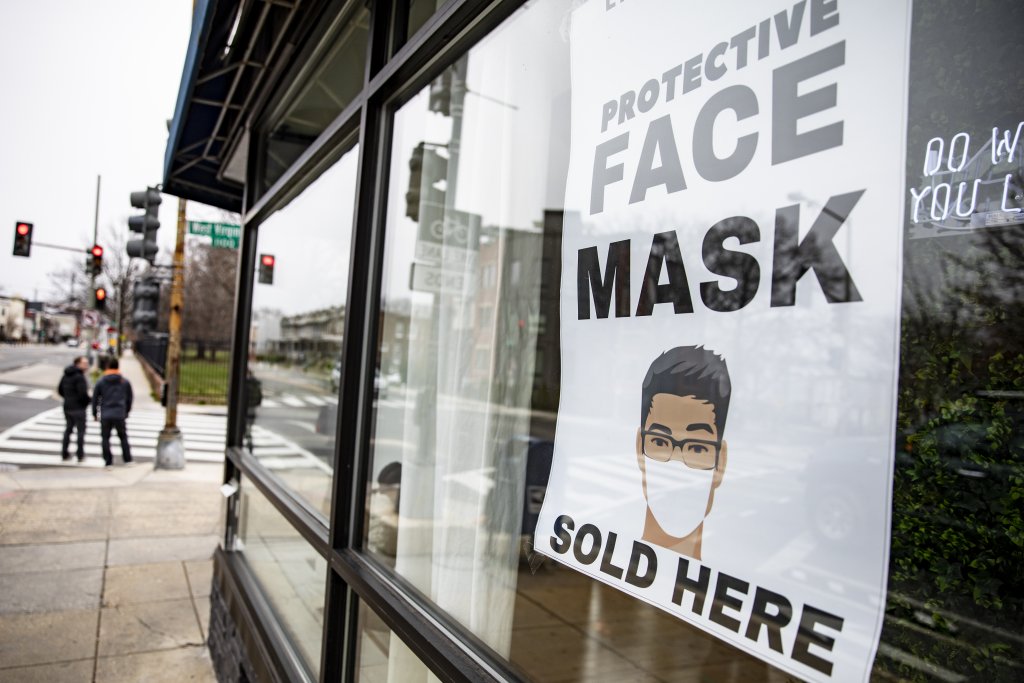
    A sign advertising protective face masks is taped in the window of a coronavirus pop-up store. Photo by Samuel Corum | Getty Images.

    BY: JAKE ZUCKERMAN and Ohio Capital Journal – AUGUST 19, 2021 1:00 AM


    First the Mount Vernon City School District opted against requiring masks for students.

    Then Gambier, a small village of 2,400, mandated masks indoors in town — where one of the district’s elementary schools happens to exist.

    Finally, the sheriff said neither he nor his deputies would enforce the law.

    It’s August 2021 and the mask wars are back — if they ever left.

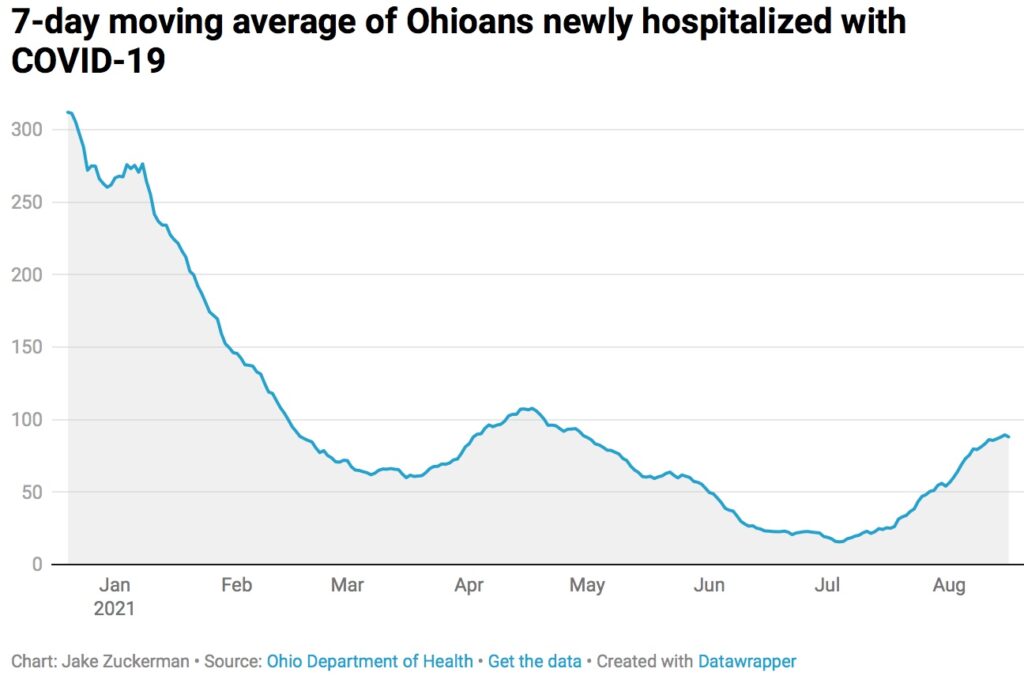
    Hospital rolls are once again swelling, a trend attributed to the hyper-transmissible delta variant of COVID-19 running amok through unvaccinated communities. Less than 51% of Ohioans are vaccinated, and doses are not yet authorized for use on those 11 and younger — most of whom are returning for a new school year in the coming weeks.
    As such, a handful of Ohio city councils — not health departments — are reinstituting mask mandates. State lawmakers passed legislation this past spring that guts the powers of state and local public health departments to issue orders like mask mandates, but city officials believe they still maintain the power to do so.

    The legislation, Senate Bill 22, says that any health order from a county board of health that applies to a “class of persons” is “invalid and has no legal effect.” It offers more restrictions on county board of health orders, but makes no mention of local governments.

    “From our perspective, we would not have gone forward with this if we thought it was not defensible in court,” said Gambier Mayor Leeman Kessler.

    Gambier is in Knox County, where the vaccination rate (less than 38%) sags far behind the state level. It’s a dot of liberal politics in a deep red county. If Kessler is correct on the legality of the ordinance, the politics are another question entirely.

    The Knox County Sheriff’s Office, which Kessler said is solely responsible for police work in Gambier, wrote on Facebook it would not enforce the ordinance and will “not put deputies in this situation.” Sheriff David Shaffer did not return a phone call.

    “If this mandate keeps our village safe, keeps our schools safer than they would have been without, then yes,” Kessler said when asked if the ordinance would be worth the blowback. “If we’ve gone through all of this for nothing, it’s hard to say. But based on the science and recommendations from all the professional health organizations … this is the course of action that is most recommended.”

    Mount Vernon City School District Superintendent William Seder Jr. sent a letter to parents Wednesday night stating Wiggin Street Elementary would follow the ordinance and calling for patience from those opposed to it.

    “While there is a time and a place to continue these conversations, we simply request that this not take place at the schoolhouse steps,” he said. “We respectfully ask that we not put our students in the middle of adult conversations and differences.”

    In Athens, another blue city in a generally red area of the state, the city council passed an indoor mask mandate of its own, as The Athens NEWS first reported. City law director Lisa Eliason, in an interview with the Ohio Capital Journal, said the city built its policy around the recommendation of its local health department.

    She said she carefully read Senate Bill 22 — which basically allows lawmakers to veto orders from the state health department, and blocks blanket orders from local health departments — and doesn’t believe it precludes Athens from its ordinance.

    The ordinance is legal, she said, and makes sense from a public health perspective given the number of unvaccinated students (only 44% of 20-29 year-olds are vaccinated) soon to flood Athens and its crowded bar district.

    “You still have Home Rule authority from the Ohio Constitution in matters of health and safety,” she said. “That’s what Athens is relying on.”

    Other cities have joined in. Yellow Springs, a small village near Dayton, imposed a mask mandate at an Aug. 9 council meeting. The city fire chief and police chief both backed the proposal at a council meeting.

    Oxford considered a mask mandate at its city council meeting Tuesday evening, but could not pass it at the time due to absent members. One absent member, Chantel Raghu, was out tending to his parents, both of whom were hospitalized with COVID-19, according to a letter read on his behalf at the meeting.

    “If my parents were not both struggling with COVID, I would be at home, in the meeting, making the commonsense vote yes to keep our community safe by indoor masking,” he wrote.

    The towns are correct in that Senate Bill 22 still allows them to pass mask mandates through their city legislative bodies — the law only applies to their departments of health, according to Micah Berman, a professor of public health law at Ohio State University.

    “Extending that limitation to city councils, depending on how it was written, might well violate the Home Rule amendment of the Ohio Constitution,” he said.

    “But health departments are creations of state law, so their authority can be more easily limited by the legislature.”

    Last summer, Ohio cities started to impose a patchwork of mandates around the state, eventually mounting enough political pressure on (or political cover over) Gov. Mike DeWine to impose a statewide mask mandate.

    It’s too early to tell if the cities are trendsetting once again, or if the mandates remain confined to the modest list seen thus far, according to Keary McCarthy, executive director of the Ohio Mayor’s Alliance. He offered a more lukewarm take on whether cities can impose mandates.

    “I think that is certainly something that is open to interpretation,” he said. “What was prescribed in [SB] 22 wasn’t exactly crystal clear.”

    Cities harbor dense populations of people — ideal conditions for a communicable disease. Similarly, they stand to lose huge dollars in tax revenue if COVID-19 spread forces businesses to keep their workers remote and out of reach from taxation of the former site of work, he said.

    “Obviously, the delta variant is concerning, and the transmissible nature of it is concerning, and local leaders are going to do what they think is right to protect the health and well-being of their communities,” he said.
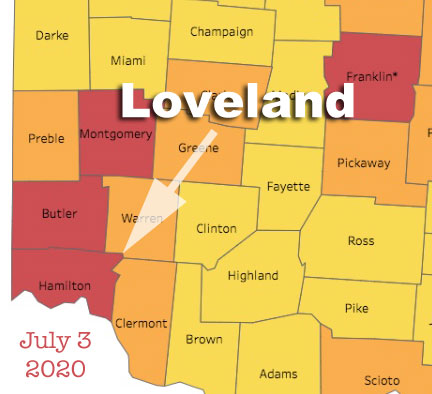
  • Take our Poll: Should Loveland Area Governments Require Face Mask?

    Take our Poll: Should Loveland Area Governments Require Face Mask?

    Today Cincinnati City Council passed a resolution requiring the public to wear face masks.

    Already, the Springfield City Commission requires a face mask. Dayton became the first major city in Ohio to require masks by law. Similarly, Yellow Springs passed a resolution and Bexley passed a local ordinance requiring masks.

    [poll id=”4″]

  • Dewine: “We’re in a crisis S/state in Ohio”

    Dewine: “We’re in a crisis S/state in Ohio”

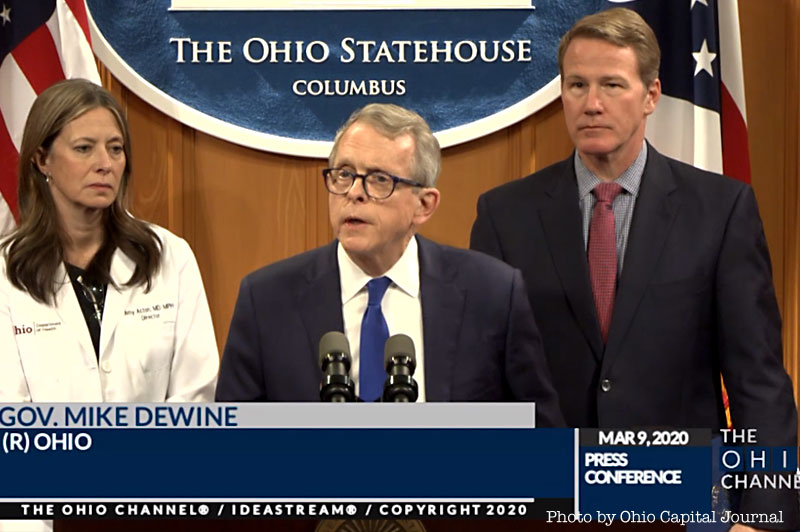
    Columbus, Ohio – Governor Mike DeWine Thursday declared that “We’re in a crisis S/state in Ohio.” He was speaking at a COVID 10 news briefing in Columbus.

    The Ohio Capital Journal reported yesterday:

    Ohio Capital Journal

    A resident waits in line to vote at a polling place. Photo by Scott Olson | Getty Images.

    The state said no to masks. Now, Ohio cities are saying yes


    The governor dithered. The state legislature said no way.

    So on Tuesday, the Springfield City Commission took it upon itself to pass a resolution (which lacks the force of law) calling for all residents to cover their faces while indoors, a practice research says will slow the spread of COVID-19 through Ohio.

    By Wednesday, Dayton became the first major city in Ohio to require masks by law. Similarly, Yellow Springs passed a resolution and Bexley passed a local ordinance requiring masks.

    “The mask is a symbol of freedom,” said David Estrop, a Springfield city commissioner, at a hearing, echoing comments from the governor. “It allows us to continue to reopen this state, yet do so in a way that’s safe.”

    By Wednesday, Dayton became the first major city in Ohio to require masks by law. Similarly, Yellow Springs passed a resolution and Bexley passed a local ordinance requiring masks.

    On Wednesday, the Ohio Department of Health reported more than 1,000 new cases, the first time that stat has reached quadruple digits since officials mass-tested inmates in three state prisons in late April. Wednesday marks 16 days of the coronavirus accelerating its spread, as measured by the 10-day average new caseload.

    Despite the worsening coronavirus outlook in Ohio and nationwide, state lawmakers continue to whip up anti-mask fervor. While Gov. Mike DeWine encourages everyone to wear masks, he has refrained from issuing any statewide mandate as the national epidemic worsens and states pause their economic re-openings.

    DeWine demurs

    In April, Gov. Mike DeWine took a hardline stance on masks, saying they’d be the only way business can reopen after he lifted the stay-at-home order.

    Facing pressure from fellow Republican officeholders, he reversed after he realized how “offended” people were by the concept.  

    Last week, referencing worsening outbreaks in Montgomery and Hamilton counties, DeWine floated the idea of implementing a mask mandate on a county-by-county basis.

    However, he has yet to issue any such order. A spokesman declined to say whether DeWine will announce any mask requirement at his next briefing.

    In a statement Wednesday, DeWine applauded Dayton Mayor Nan Whaley, a Democrat, for requiring the use of face coverings.

    “Wearing a mask will allow us to help keep businesses open and help prevent further spikes,” he said. “I encourage other communities to consider following Dayton’s lead.”

    Voted down

    Where masks have found friends in the public health community and Ohio cities, they found enemies in the GOP-controlled state General Assembly.

    Where masks have found friends in the public health community and Ohio cities, they found enemies in the GOP-controlled state General Assembly.

    Both the Speaker of the House and the Senate President have refused to wear masks at legislative functions.

    House leadership voted down a requirement in May that lawmakers and staff wear masks at the Capitol. With exceptions, masks have fallen along party lines — Democrats wear them and Republicans do not.

    In a Facebook post last week, Rep. Jon Cross, R-Kenton, campaigned on refusing to wear masks, let alone supporting legislation requiring them.

    “It’s my RIGHT not to wear a mask, and I do NOT support a government that tries to quarantine the healthy,” he wrote.

    Rep. Nino Vitale, R-Urbana, takes to social media regularly to promote baseless conspiracy theories about masks limiting blood oxygen or how they “force virus into the brain.”

    Rep. Candice Keller, R-Middletown criticizes Bureau of Workers’ Compensation for distributing masks to Ohio businesses.

    Rep. Candice Keller, R-Middletown, produced a Facebook video June 25 criticizing Ohio’s Bureau of Workers’ Compensation for distributing masks to Ohio businesses.

    Despite the lawmakers’ claims, research suggests masks are an effective, inexpensive and non-invasive way to slow the spread of COVID-19.

    An early June study published in The Lancet, a premier medical journal, analyzed 172 observational studies to gauge the efficacy of mitigation strategies. Researchers found wearing face masks results in a “large reduction” in the risk of infection.

  • Yellow Springs breaks ground for medical marijuana facility

    Yellow Springs breaks ground for medical marijuana facility

    Yellow Springs, Ohio – With Ohio licenses announced just two weeks ago, Cresco Labs was the first to break ground and start construction on their Yellow Springs medical marijuana cultivation facility. Cresco said they will develop a 50,000-square foot “environmentally-sound” (nearly 85% renewable energy) greenhouse that will grow and harvest condition-specific strains of medical marijuana and produce non-invasive medical products for qualified patients.

    With over 100 applications submitted to earn one of the 12 coveted Marijuana Cultivation licenses in Ohio, Cresco Labs was awarded one by the Ohio Department of Commerce. Cresco’s successful application outlined an operational and regulatory compliance plan as well as a community support program offering scholarships and local financial incentives. Cresco Labs has successfully secured merit-based licenses in Illinois and Pennsylvania.

    “We are thrilled to be selected as a provider in this program and look forward to providing medical relief to patients across Ohio,” said Charlie Bachtell, Cresco’s CEO. “We plan to be the state leader in this industry by manufacturing the highest quality product, providing caring service to the patients and giving back to our home community,” he added.

    Karen Wintrow

    “After visiting their facilities in Illinois and meeting their team members, we knew that Cresco would mesh well with the values of the community,” said Yellow Springs Village President Karen Wintrow. “We look forward to working with Cresco as they build and staff their new facility and know they will be a valued contributor to the quality of life in Yellow Springs with jobs, tax revenues and community support.”

    Cresco Labs has also applied for a dispensary license and will apply for a processing license which, through extraction methods, will produce pharmaceutical-grade oral sprays, sublingual digestible tablets, transdermal patches and other forms of cannabis (CBD) oil available for sale to provide users with a consistent, controlled dosage. Cresco’s brand name products will be available at dispensaries across Ohio to patients that have been physician-certified with any of the 22 approved medical conditions.

    “Medical cannabis is a great fit for Yellow Springs as it combines our local strengths and values of agriculture, wellness and a progressive approach to medicine,” said Wintrow.

    Construction on Cresco’s 50,000+ square foot cultivation facility in Yellow Springs will begin immediately as their site plans and zoning have been pre-approved.