Year: 2024

  • The Table of Discussions Celebrates Developmental Disabilities Awareness Month

    The Table of Discussions Celebrates Developmental Disabilities Awareness Month

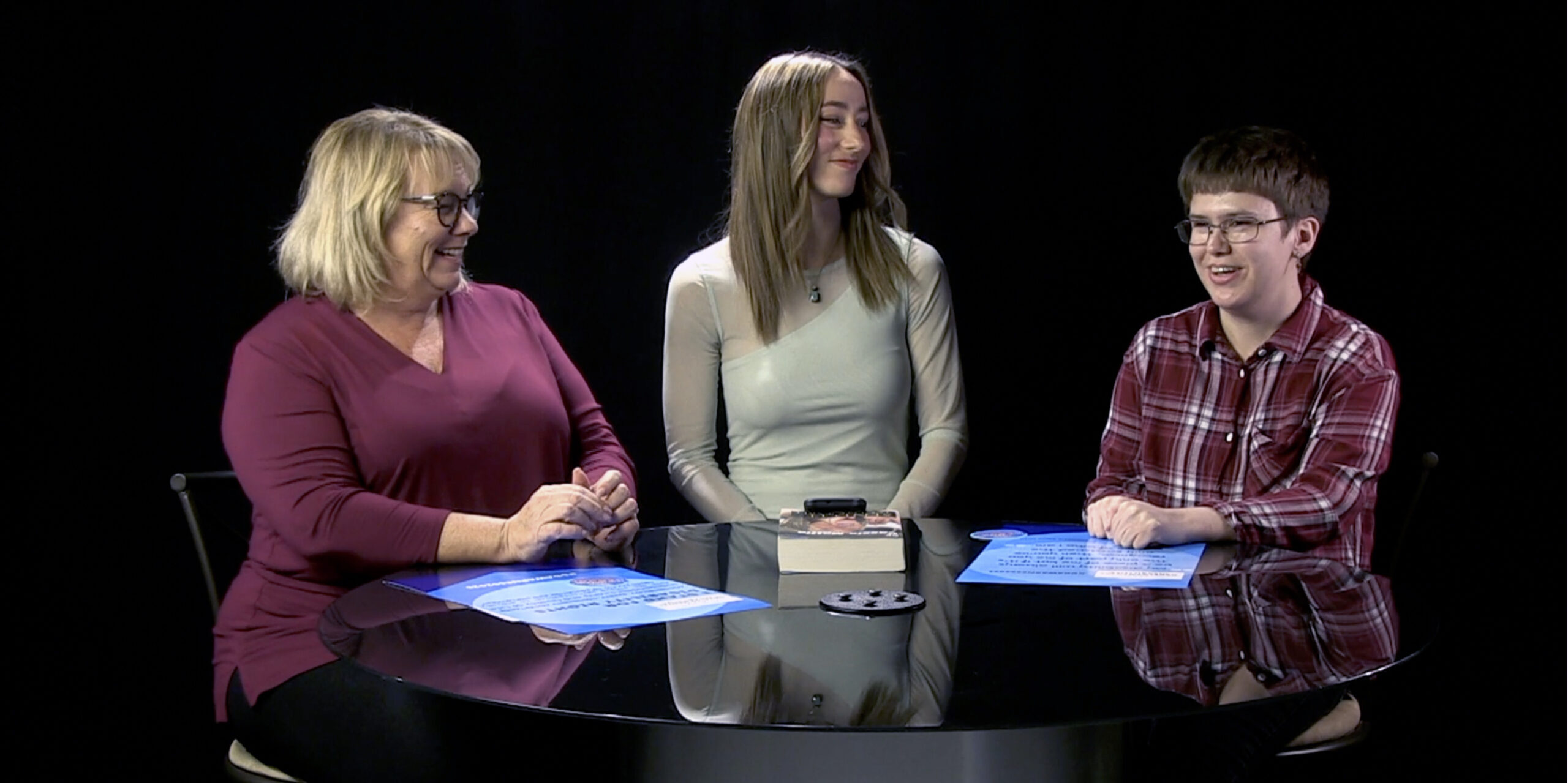
    Connie Mehlman • Cassie Mattia • Courtney Hineman
    by Cassie Mattia

    Loveland, Ohio – Did you know more than 6 million Americans have one or more developmental disabilities (DD)? That means about 15 percent of the United States population is living with DD. Over the few past decades, individuals with DD and DD advocates have been fighting for inclusion and equal opportunities within their communities and the workforce. Without help from leaders and social reformers like Dorothy Dix, Helen Keller, Eleanor Roosevelt, Martin Luther King Jr., Ronald Reagan, and George Bush, to name a few, both National Developmental Disabilities Month and the Americans with Disabilities Act wouldn’t exist.

    “It’s just basic human needs not special needs.”Courtney Hineman

    In 1987, President Ronald Reagan made a public announcement asking Americans to provide individuals with DD “the encouragement and opportunities they need to lead productive lives and to achieve their full potential.” Reagan’s powerful message not only established the month of March as National DD Awareness Month, but his advocacy also led to the Americans with Disabilities Act (ADA) being passed in 1990 by George Bush. The ADA officially made it illegal to discriminate against individuals with disabilities.

    Once the ADA passed, DD advocates across the world began to take a stand, using their own experiences and success stories to promote equal rights. Although progress has been made in the DD community there are still many obstacles’ individuals with DD face every day. This is why National DD Awareness Month is a time to celebrate the achievements of those with DD and take the time to educate yourself and those surrounding you on the importance of including individuals with DD in all aspects of community life!

    In light of this very special March celebration, I decided to again share an interview that I conducted in March of 2023 on my Loveland Magazine TV Table of Discussions with two of the most respected DD advocates in Ohio, Connie Mehlman now a Consultant with Best Buddies International and Courtney Hineman, the Community Outreach Advocate for Butler County Board of Developmental Disabilities! Connie and Courtney have paved the way for inclusion and equality within the DD community giving them both a plethora of knowledge when it comes to educating others about how they too can advocate for individuals with DD. Connie has since retired from her job with Butler County.

    I am pleased to rebroadcast my Table of Discussions episode featuring Connie Mehlman and Courtney Hineman! Happy DD Awareness Month!

    This year’s Greater Cincinnati Best Buddies Friendship Walk is on Saturday, April 13 at Marcum Park, 116 Dayton Street in Hamilton.

    REGISTER

    ________________________


    In celebration of National Developmental Disabilities Month, Courtney wrote an Opinion Editorial in 2023 about what it’s like to live with developmental disabilities and how the community created equal opportunities for her.

    Click here to read Courtney’s Op Ed, “I want others with disabilities to have opportunities like I had!”

    The gallery of photos below was provided by the Butler County Board of DD and Cassie Mattia.

     
    What is the Americans with Disabilities Act (ADA)?

    ___________________________________

    Courtney Hineman is a disability rights advocate. She is the Community Outreach Advocate at the Butler County Board of Developmental Disabilities and was appointed by Governor DeWine to the Ohio Developmental Disabilities Council for the second term. She is a member of Butler County’s self-advocacy group, and has enjoyed participating in Best Buddies.


    Connie Mehlman is the Community Connections Coordinator for the Butler County Board of Developmental Disabilities. She has more than 35 years of experience both working and volunteering in the field of intellectual and developmental disabilities. She is currently serving as the Chairperson for Best Buddies Ohio and is very active in the Miami University Best Buddies Chapter.”


    ______________________

    Cassie Mattia is the President and Publisher of Loveland Magazine, Cassie Mattia is a resident of Historic Downtown Loveland and the Public Relations Coordinator at Butler County Board of DD. Cassie was awarded the Little Miami River Chamber Alliance 2021 Young Business Professional of the Year.

  • How and when to file Loveland income tax

    How and when to file Loveland income tax

    Loveland, Ohio – The City of Loveland income tax is a 1% earnings tax on persons who live or work in the City. A credit is given to residents who pay taxes to other municipalities. According to City Hall, “residents who work in areas imposing less than a 1% earnings tax must pay the difference to Loveland.” All residents must file a return by April 15 even if no tax is owed.

    Info Provided by City Hall

    Not sure if you live in Loveland? View the street listing Street Listing (PDF) to view all streets that are in Loveland.

    Filing Your Local Income Tax Returns

    The City of Loveland uses the Regional Income Tax Agency (RITA) to collect local income taxes. Residents and businesses can file their local income tax returns with RITA using the following methods:

    • RITA eFile: Click “My Account” to securely file your return through RITA’s website.
    • Individual Paper Forms: Click to download and print the appropriate return form and mail to RITA at the address listed on the form.
    • Business Paper Forms: Click to download and print the appropriate return form and mail to RITA at the address listed on the form.
    Interest Rate 

    Ohio House Bill 5 (ORC 718.27) requires municipalities to publish the interest rate for tax underpayments by October 31st, for the next calendar year. The Regional Income Tax Agency has addressed this requirement on the City of Loveland’s behalf by posting this information to the RITA website. Based on the calculations required by House Bill 5, the annual interest rate will be as follows:

    • 2016: 5%
    • 2017: 6%
    • 2018: 6%
    • 2019: 7%
    • 2020: 7%
    • 2021: 5%
    • 2022: 5%
    • 2023: 7%
    • 2024: 10%
    Estimated Taxes

    For tax years 2015 and prior, the Loveland Income Tax Code (Chapter 183, Section .07) requires individual taxpayers having estimated taxes due in excess of $100.00 to pay on a quarterly billing schedule. Noncompliance results in a penalty equal to 10% of the tax remaining due over $100.00 after the estimated payment deadline of January 31. To avoid assessment of such a penalty, the code provides “safe harbor” options:

    1. Owe less than $100 when you file the annual return, and all required payments were made timely.
    2. Pay at least 100% of your previous year’s tax liability.
    3. Pay at least 90% of the current year’s tax liability through the same means as #2.
    4. The taxpayer is an individual who resides in the city but was not domiciled there on the first day of January.

    Starting Tax Year 2016, quarterly payments of estimated tax are required if the total tax liability is $200 or more. The new due dates for estimated payments are April 15, June 15, September 15, and January 15. Noncompliance results in a penalty equal to 15% of the tax remaining due after the estimated payment deadline of December 15. To avoid assessment of such a penalty, the code provides three “safe harbor” options:

    1. The taxpayer is an individual who resides in the city but was not domiciled there on the first day of January,
    2. Pay at least 100% of your previous year’s tax liability, or,
    3. Pay at least 90% of the current year’s tax liability.
    Extension Requests

    For taxpayers on a federal extension, a separate request for a municipal extension is not required. Submit a copy of the federal extension with the filing of the extended municipal return.

    For taxpayers not on a federal extension, an extension request must be submitted on or before the date of the municipal income tax return is due. Visit the RITA website for the extension request form.

    Please remember that an extension only extends the time allowed to file an annual return, not the time allowed for payment.

  • Early vote looks sluggish two weeks from Ohio’s primary election

    Early vote looks sluggish two weeks from Ohio’s primary election

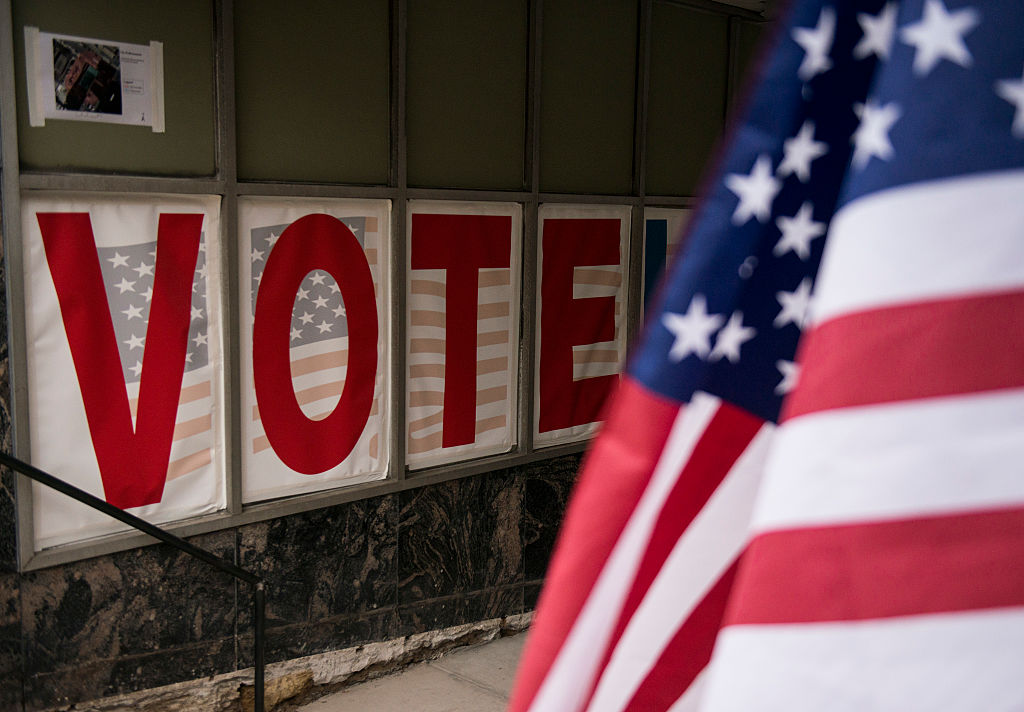
    (Photo by Stephen Maturen/Getty Images)

    Hamilton County’s early in-person voting traffic has been no lines, walk in-walk out.

    BY:  Ohio Capital Journal

    Two weeks ago early voting began in Ohio’s primary election. In two weeks more, the election will be decided. So far, county officials report turnout has been steady, but the figures have been far from overwhelming. By the end of last week, just shy of 60,000 voters had cast a ballot in-person and another 37,000 returned absentee ballots by mail or at their county board.

    Compared to the 2022 primary, early in-person voting is on track to finish slightly higher while mail-in votes are lagging. The thing is, 2022 didn’t have a presidential race at the top of the ticket.

    The presidential contest has yet to make a serious impression in Ohio. Without a serious rival to the Democratic incumbent, and a challenger well on his way to clinching the Republican nomination, it’s as if they’re skipping over the primary to focus on an increasingly likely rematch of the 2020 general election.

    That leaves the Ohio’s U.S. Senate race as the biggest game in town. But again, the Democratic incumbent isn’t facing a challenge, and for all the sharp elbows on the Republican side of the race, many voters remain undecided.

    This week, early voting runs 8:00 am-5:00 pm through Friday, and 8:00 am-4:00 pm Saturday. Next week, county boards will offer extended hours running from 7:30 am-7:30 pm, and they’ll offer limited hours on that Saturday and Sunday. The Secretary of State’s office has the full voting schedule posted on its website.

    The view from county boards

    Aaron Ockerman, who heads up the Ohio Association of Election officials, said so far the primary isn’t far off from expectations. “It’s not super crazy like it will be in November,” he said, noting he hasn’t heard stories about long lines, “but it’s not as slow as a typical primary.”

    In Franklin County, board of elections spokesman Aaron Sellers described early vote traffic as steady, “but it’s certainly on the lower end of turnout models.” He chalked up the sluggish turnout to a less than competitive presidential race.

    “People have an understanding of who is going to be running in November, so it feels like there’s not much for them to vote on,” he suggested.

    Sellers added it feels like a lull after enormous turnout in 2023. Those elections, led by high profile ballot measures, drove enormous early voting turnout around the state. In August, almost half a million Ohioans voted early in person. In November, they cleared that mark, finishing at more than 570,000 ballots cast.

    For comparison, on an average day about 7,400 Ohioans are voting early in-person in the current election. Last August, an average day saw more than three times that many voters.

    Licking County Board of Elections director Brian Mead described current turnout as “lower than what I expected.” He said early in-person voting will likely pick up, but he doubts mail-in ballots will match his expectations. Like Seller’s he pointed to a presidential race that seems all but decided.

    “The Senate (race) is going to push some,” he said, “but it’s a heavy lift.”

    In Hamilton County, board director Sherry Poland said, “primaries are hard to gauge.”

    She described her current turnout as roughly on par with the 2016 presidential primary and said part of the explanation is the lack of a county wide issue on the ballot. So far, Poland said, Hamilton County’s early in-person voting traffic has been no lines, walk in-walk out.

    Tonya Wichman, who heads up the Defiance County board, said they’ve had a “steady flow” of voters but acknowledged it’s “not the normal turnout we’d have in a presidential year at this point.”

    Like Poland she pointed to the lack of local ballot issues.

    Follow OCJ Reporter Nick Evans on Twitter.


    Nick Evans
    NICK EVANS

    Nick Evans has spent the past seven years reporting for NPR member stations in Florida and Ohio. He got his start in Tallahassee, covering issues like redistricting, same sex marriage and medical marijuana. Since arriving in Columbus in 2018, he has covered everything from city council to football. His work on Ohio politics and local policing have been featured numerous times on NPR.

    MORE FROM AUTHOR

  • Ohio legislative leaders brush off concerns over Alabama IVF ruling’s impacts

    Ohio legislative leaders brush off concerns over Alabama IVF ruling’s impacts

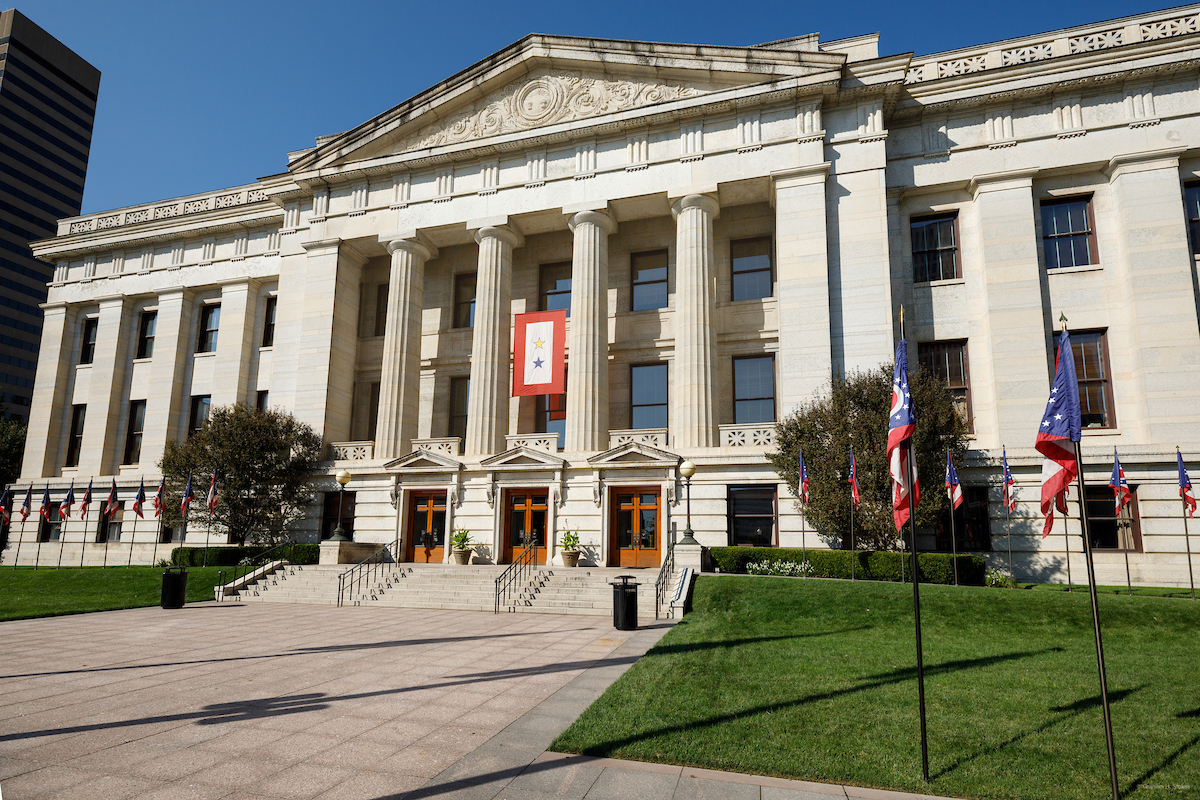
    The Ohio Statehouse, Columbus, Ohio. (Photo by Graham Stokes for the Ohio Capital Journal. Republish photo only with original story.)

    BY:  Ohio Capital Journal

    After an Alabama Supreme Court decision that ruled frozen embryos housed outside of a human body were still considered children, states across the country are debating the implications of such a decision.

    Ohio legislative leaders are saying bills that would ban IVF are not being considered, but one lawmaker who has introduced a “personhood” bill in the past says it’s still “great policy” that’s being blocked by politics.

    National groups have said the Alabama decision will have impacts on the work that embryologists do, with the Society of Reproductive Biologists and Technologists saying the state’s supreme court ruling “stands in stark contrast to scientific understanding and the experiences of individuals navigating fertility treatments.”

    The concept of “fetal personhood” is not a new one for Ohio. Long before the Alabama decision threw into question the concept of in-vitro fertilization treatments in that state, legislators in the Buckeye state were considering a bill that would consider life’s beginning at conception, a theory conservatives and pro-life politicians have long pushed.

    Ohio House Bill 704 was introduced in 2022 by state Rep. Gary Click, R-Vickery, who claimed “one class of people has erroneously been denied their constitutional rights: the unborn.”

    “From the moment of fertilization, that zygote, embryo or whichever depersonalizing term you choose to use is not merely a potential human but rather (a) human with potential,” Click said in a statement announcing the legislation.

    The bill died as the General Assembly’s two-year session ended, but the fact that the idea was broached is still being brought up by Democrats and pro-choice groups around the state.

    Click himself didn’t rule out the idea of reintroducing his personhood legislation, saying in a Feb. 23 tweet that reintroducing it has “not been my plan at the moment.”

    “But plans do change,” the tweet went on.


    The legislator — who was also the creator of a successful bill that bans gender-affirming care for transgender minors, a controversial bill that succeeded with a veto-override in January — also told the Statehouse News Bureau in February that while he supported IVF if all embryos are used, he considered his personhood bill “great policy” blocked by politics.

    Since Click’s bill was introduced (and subsequently foiled by time limits), however, 57% of Ohio voters passed November’s Issue 1, which not only enshrined abortion rights into the Ohio Constitution, but also listed “fertility treatment” as one of the rights Ohio individuals have to “make and carry out one’s own reproductive decisions,” according to the amendment.

    IVF patients represented a group of people who spoke out in favor of Issue 1 as a protection against unnecessary regulation and uncertainty in the IVF process.

    But Republican legislators in particular have not seen this development as the roadblock to reproductive rights legislation one might expect, as policymakers at the Statehouse have continued to push anti-abortion legislation and bills that target the rights now protected under the state constitution.

    The state’s legal representatives are also still pushing against a lawsuit that seeks to eliminate a six-week abortion ban that became law in 2019 (and has been tied up in court ever since).

    Still, Ohio’s legislative leaders have said the Alabama decision has yet to spur any policy in the state at this point.

     Left, Ohio House Speaker Jason Stephens. Right, Ohio Senate President Matt Huffman. (Photos by Graham Stokes for the Ohio Capital Journal. Republish only with original article.) 

    House Speaker Jason Stephens, R-Kitts Hill, said the chamber is “monitoring any potential ramifications the Alabama decision may have in Ohio,” but also said, from his perspective, “IVF provides hope and is 100% pro-family.”

    “We look forward to advancing our values and continuing our pro-life legislative agenda,” Stephens told the OCJ in a statement.

    Senate President Matt Huffman said he has not heard of any legislation and there hasn’t been “any discussion by any member of my caucus or anybody else as far as in the state of Ohio as far as I know.”

    “We seem to be in this national culture that if some court in Alabama or some other state says something that we all should be reacting to it,” Huffman said.

    The senate leader acknowledged that “we have a constitutional amendment that affects some of this.”

    “But you know, with other things going on right now, it’s just not a discussion that’s taking place,” he said.

    A spokesperson for Gov. Mike DeWine said his office would “continue to monitor any bills in this policy area,” but they were not aware of any at the moment.

    DeWine’s office did not respond to questions as to whether or not the governor supported the consideration of frozen embryos as children.

    Megan Henry contributed to this story.

    _____________

    Susan Tebben
    SUSAN TEBBEN

    Susan Tebben is an award-winning journalist with a decade of experience covering Ohio news, including courts and crime, Appalachian social issues, government, education, diversity and culture. She has worked for The Newark Advocate, The Glasgow (KY) Daily Times, The Athens Messenger, and WOUB Public Media. She has also had work featured on National Public Radio.

    MORE FROM AUTHOR

  • At least seven Ohio universities are reviewing race-based scholarships after Supreme Court ruling

    At least seven Ohio universities are reviewing race-based scholarships after Supreme Court ruling

    College students walk on campus. (Klaus Vedfelt/Getty Images)

    The University of Akron, the University of Toledo, Cleveland State University, Kent State University, Ohio University, Ohio State University and Youngstown State University all said they are in the process of reviewing their scholarships.

    BY:  – Ohio Capital Journal

    At least seven Ohio public universities are reviewing scholarships in the wake of comments Ohio Attorney General Dave Yost made about race-based scholarships after the U.S. Supreme Court ruled against race-conscious admissions.

    Cleveland State University, Kent State University, the University of Akron, the University of Toledo and Youngstown State University all said they are in the process of reviewing their scholarships. This is in addition to Ohio University and Ohio State University, as previously reported by the Capital Journal.

    “The University of Toledo has paused the distribution of scholarships that consider race as a part of their award criteria following the U.S. Supreme Court ruling on the use of affirmative action in higher education admissions,” university spokesperson Tyrel Linkhorn said in email.

    This affects 6% of Toledo’s nearly 1,200 donor-supported scholarships, which is worth $500,000, he said in an email.

    “The University and The University of Toledo Foundation are actively working with donors to explore potential revisions to scholarship agreements so we can continue to support our donors’ goals in a way that fully complies with the Supreme Court decision,” Linkhorn said in an email.

    Kent State and Youngstown State mentioned the Supreme Court case and “guidance from the state of Ohio” as reasons for their review. Cleveland State just mentioned the Supreme Court case and Akron didn’t give a specific reason.

    The Capital Journal previously reported that Ohio University is “temporarily pausing” awarding race-based diversity scholarships and that Ohio State University is in the “process of updating scholarship criteria to ensure compliance with the law,” according to the university’s website.

    Ohio University has 130 gift agreements that are currently under review that represent $450,000 in potential scholarship awards, university spokesperson Dan Pittman said in an email.

    “The review is to ensure language in the gift agreements remains lawful,” Pittman said. “If deemed necessary, the University will work with donors to make revisions to language in the agreements.”

    Ohio State University expects to give away approximately $448 million dollars in financial aid this fiscal year, university spokesperson Ben Johnson said in an email.

    Bowling Green State University, Miami University, Northeast Ohio Medical Center, Shawnee State University, the University of Cincinnati and Wright State University did not answer questions about the status of their race-based scholarships.

    A university spokesperson for Central State University, Ohio’s only public historically Black university, said in email they don’t have race based scholarships.

    Supreme Court decision

    The U.S. Supreme Court. (Al Drago/Getty Images)
     The U.S. Supreme Court. (Al Drago/Getty Images) 

    Last summer, the U.S. Supreme Court ruled Harvard and the University of North Carolina violated the equal protections clause of the 14th Amendment by using race as a factor in applications.

    The next day, Yost sent a letter to Ohio colleges and universities saying “employees must immediately cease considering race when making admissions decisions,” according to the letter. It also said his office won’t legally protect someone at a college or university who uses race as a factor.

    The topic of race-based scholarships came up on a Jan. 26 call with universities, said Yost’s spokesperson Bethany McCorkle.

    “What was said in response to a question was after the recent Supreme Court decision, scholarships will need to be looked at to ensure compliance with the law,” McCorkle said in an email. “Although the Court did not expressly prohibit race-based scholarships, it indicated that ‘eliminating racial discrimination means eliminating all of it.’ Race-based scholarships discriminate on the basis of race in awarding benefits. Therefore, it would follow that such programs are unconstitutional.”

    The Harvard Supreme Court decision is being “weaponized to intimidate and create fear,” said Sara Kilpatrick, executive director of the Ohio Conference of the American Association of University Professors.

    “We obviously disagree with the Harvard decision, and we also disagree with how the Attorney General is trying to extrapolate it to apply to virtually anything that touches race,” she said. “We hope that institutions are not being pushed into a direction that ultimately will harm students.”

    If race-based scholarships are removed from universities, Kilpatrick said it could prevent Ohio students from earning degrees.

    “This is a dangerous slippery slope, and they should be cautious about how far they’re trying to push this,” she said. “This will undoubtedly dry up desperately needed revenue streams for institutions.”

    Follow OCJ Reporter Megan Henry on X.


    Megan Henry
    MEGAN HENRY

    Megan Henry is a reporter for the Ohio Capital Journal and has spent the past five years reporting in Ohio on various topics including education, healthcare, business and crime. She previously worked at The Columbus Dispatch, part of the USA Today Network.

    MORE FROM AUTHOR

  • Downtown Loveland is now the home of a BREW Tour!

    Downtown Loveland is now the home of a BREW Tour!

    Loveland, Ohio – Downtown Loveland is now the home of a BREW Tour! The Little Miami River Chamber Alliance along with several downtown Loveland, Ohio businesses have launched a unique, fun,and complimentary BREW tour to encourage the community to patronize area businesses during the chillier and slower months of business.

    Residents and guests can pick up a punch card at any participating downtown Loveland restaurant, bar, or coffee shop to participate in this fun event.

    CeeCee Collins, President of the Little Miami River Chamber Alliance, said that “All folks need to do is ask for their punch card and then visit all the establishments for a beverage of their choice. Once they have visited all of the establishments and have a full punch cared, they can pick up their “prize,” at the chamber. They get to choose from either a commemorative pint glass or a coffee mug.”

    We’re having a lot of fun with the event and the establishments are excited to be a part of this unique BREW Tour. We encourage beer, wine, coffee, soda drinkers all to be a part of the fun!”

    The participating establishments are:

    Narrow Path Brewing
    Ramsey’s Trailside
    RODI Italian
    Tano Bistro
    Mile 42 Coffee
    Hometown Café
    Paxton’s Grill
    The Works
    Bishop’s Quarter
    Hops and Berry
    Rose Boutique Wine Bar
    Cappy’s Wine & Spirits


    The event goes from February 19 to April 19 in downtown Loveland, Ohio only.

    CONTACT:

    ​​CEECEE COLLINS

    ​​513-683-1544

    ​​CEECEE@LMRCHAMBERALLIANCE.ORG

  • Bring your full self to work

    Bring your full self to work

    by CeeCee Collins,

    This article addresses strategies to bring your full self to work including your mental health. I understand that some people may be willing to share more of themselves and their lives than others. Perhaps sharing some of who you are will allow your supervisor and coworkers to understand you better. This will provide you with a greater opportunity to reach your full potential.

    We have some excellent mental self-care businesses in our area. Hope Restored and Self Care Counseling are right in the Loveland area. The chamber has information on how to reach out to these businesses if you are interested.

    A few pointers when addressing mental health in the workplace whether it is your mental health or a co workers:

    • be professional
    • be clear and concise
    • be sensitive

    In addition to the professional business resources I mentioned above. Our area has a plethora of non-profits that share mental health resources in our schools, community and businesses.

    Please consider sharing (professionally) with your place or work if you are going through a difficult time, chances are you aren’t the only one.

    Enjoy your Spring!

    __________

    CeeCee Collins is President of the Little Miami River Chamber Alliance.

    She was born and raised in Beavercreek, Ohio, CeeCee Collins attended Carroll High School and has been a swimmer her entire life. She received her undergraduate degree at Xavier University where she also participated on the swim team for four years. She graduated from college in 1989 and began working at USA Today Newspaper as a Regional Marketing Manager. After marrying James Collins IV, they moved to Tampa, FL where she worked for the Tampa Metropolitan Area YMCA for 6 years as an Executive Director.

    CeeCee and her family moved back to the tri-state area after her second child’s birth. She continued to work for the Greater Cincinnati YMCA for 10 years part-time. CeeCee then pursued full-time work and became the Development Director at Ohio Valley Voices for 6 years. Throughout her years at the YMCA and Ohio Valley Voices she was active in the Little Miami River Chamber Alliance (formerly the Loveland Area Chamber of Commerce). She became the President of the Chamber in 2013.

    CeeCee continues to enjoy working at the chamber and keeping up with her three children.  She and Jim live in Miami Township.

  • Mobile Mammography Screening

    Mobile Mammography Screening

    photo by pexels-cottonbro-studio

    Miami Township, Ohio – Mercy Health Mobile Mammography offers women screening mammograms in 15 minutes. This screening is covered by most health plans. For the best coverage, verify that Mercy Health and The Jewish Hospital are in-network providers with your insurance carrier. You may be eligible for financial assistance.

    Wedednesday March 13, 8:30 AM.

    Make your appointment by calling 513-686-3300 or 855-PINK123 (855-746-5123).

    Branch Hill Kroger
    6388 Branch Hill Guinea Pike
    Loveland, Ohio 45140
  • Loveland Presbyterian Church yard sale on March 9

    Loveland Presbyterian Church yard sale on March 9

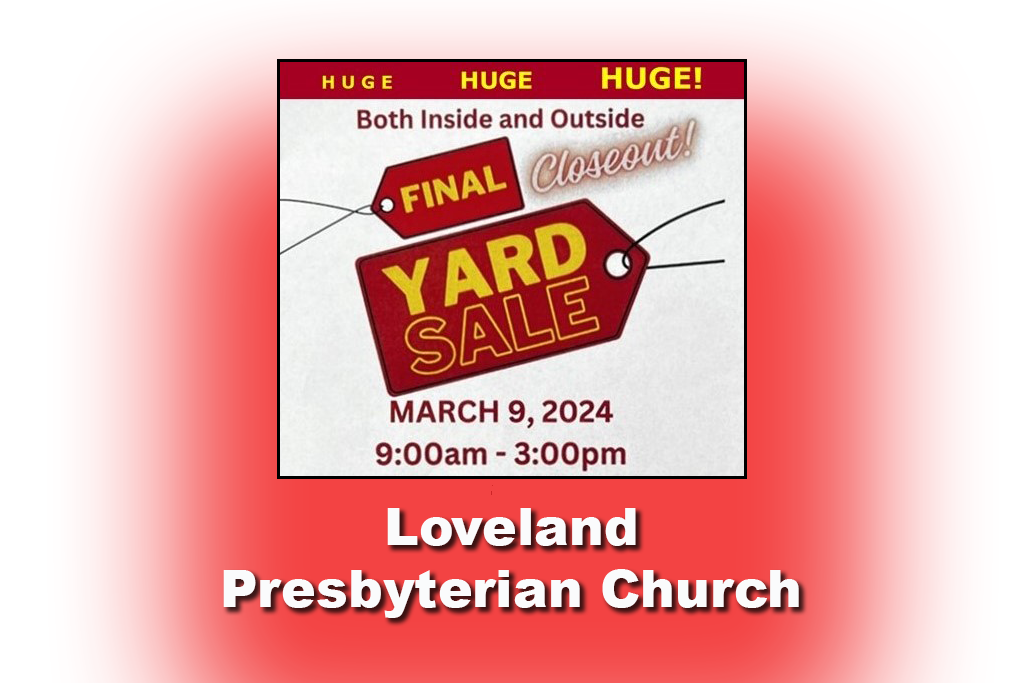
    Loveland, Ohio – The Loveland Presbyterian Church is having a yard sale on March 9 from 9 Am until 3 PM. The church is located at 6796 Loveland Miamiville Road. (See map below.)

    Advertisement


  • Photo Essay: Loveland Bike Trail Bridge construction update

    Photo Essay: Loveland Bike Trail Bridge construction update

    Loveland, Ohio – Word on the site yesterday as bridge parts were being bolted in place is that construction is on schedule for a May reopening of the Loveland Bike Trail bridge in Historic Downtown Loveland. The old railroad bridge that had been used for decades to carry bikers, runners, bladders, and walkers over O’Bannon Creek is being replaced with a new span.

    All photos are © David Miller/Loveland Magazine 2024.