Month: May 2025

  • Ohio near the top in April unemployment

    Ohio near the top in April unemployment

    Stock photo from Getty Images.

    State spends billions on job incentives that mostly benefit the wealthy

     Ohio Capital Journal

    Ohio had the sixth-highest unemployment of any state in April. The news comes after years of state officials spending billions on economic growth programs tilted heavily toward the wealthy.

    It might seem ironic, but Ohio’s economy added jobs in April even as unemployment continued to grow. That’s because job growth isn’t keeping up with the numbers joining the workforce. And there are reasons to believe that things will get worse, according to the think tank Policy Matters Ohio.

    Data released last week by the Ohio Department of Job and Family Services estimated that the state added 22,200 jobs in April. But statewide unemployment rose for the fifth consecutive month, to 4.9%. That’s the sixth-highest of any state, according to the U.S. Bureau of Labor Statistics.

    Heather Smith, a researcher at Policy Matters Ohio, said the new state data raise some questions.

    “The civilian labor force has increased at about the same rate as the number of unemployed workers, suggesting that while more Ohioans are entering the job market, they are not all securing employment,” she said in a written statement. “This raises questions around the reported increases in jobs across service-providing industries – why aren’t Ohioans getting hired?”

    The Department of Job and Family Services conducts a monthly survey, releases its estimate of the number of new jobs, and then often revises it downward. For example, it initially estimated that 7,500 jobs were created in March, and then cut that number to 5,200.

    Of the jobs thought to be created in April, the great majority were in the service sector, 18,800. More than 6,500 of those were in hospitality as those businesses staff up for summer.

    Construction and manufacturing added 1,200 and 1,100 jobs, respectively, while the number of government jobs increased by 1,300.

    A separate household survey indicated that 15,000 joined the Ohio job market in April. But only 6,000 found jobs while the rest were unemployed.

    “Legislators ought to pay attention to the growing unemployment rate, given its steady increase over the last five months,” Smith said. “The last time we saw the unemployment rate in Ohio decrease was between September and October – prior to the November election.”

    Ohio’s economy has lagged for more than a decade after the creation of billion-dollar programs mostly benefitting the well off on the promise that they would create jobs for average Ohioans.

    Created in 2013 under the auspices of then-Gov. John Kasich, the LLC tax loophole costs about $1 billion a year.

    It was sold as a way to boost small business. But an analysis showed that hiring in that sector has fallen relative to other states, while the wealthiest 7% are claiming nearly 40% of the benefit.

    Started around the same time, JobsOhio is funded through a state liquor franchise that used to flow into state coffers. Its well-paid staff has grown rapidly as it has doled out more than $1 billion in incentives to businesses. But it hasn’t proven that those incentives have created any jobs.

    Even so, the Ohio Controlling Board in February extended JobsOhio’s control of the state liquor franchise to 2053. The “private” corporation paid the state $1.41 billion for its initial lease of the franchise. But the state didn’t require an additional penny to extend it another 15 years.

    Meanwhile, Smith of Policy Matters Ohio warned that several developments at the federal level could further drag down the Ohio job market.

    “A recent survey of Fourth District businesses by the Federal Reserve of Cleveland found that 22% of respondents anticipated the tariffs would force them to decrease their staff,” she wrote. “This is already underway: Several large employers across the state have submitted mass layoff notices, including 744 manufacturing jobs in Fremont. A Chillicothe paper plant, which was set to layoff 826 union workers by the end of June, agreed to remain open until December. While this buys impacted Ohioans a bit more time, the plant closing will be a devastating hit to workers in the area.”

    In addition to potential harm from tariffs, the Trump administration is trying to cut hundreds of thousands of federal jobs and to slash services as it tries to fund further tax cuts.

    “Ohio policymakers need to hold their federal counterparts accountable for the impact of funding cuts on the state and stop preemptively cutting critical public services with trigger language in the state budget,” Smith said. “If federal budget hawks get their way and force the state to pick up a greater share of the Medicaid budget, proposed trigger language could cut off the health insurance of 770,000 Ohioans.”

    Marty Schladen
    Marty Schladen

    Marty Schladen has been a reporter for decades, working in Indiana, Texas and other places before returning to his native Ohio to work at The Columbus Dispatch in 2017. He’s won state and national journalism awards for investigations into utility regulation, public corruption, the environment, prescription drug spending and other matters.

    Ohio Capital Journal is part of States Newsroom, the nation’s largest state-focused nonprofit news organization.

    MORE FROM AUTHOR

  • 2025 Ohio Sales Tax Holiday

    2025 Ohio Sales Tax Holiday

    Loveland, Ohio – The 2025 Sales Tax Holiday will run for two full weeks, beginning at 12:00 AM on Friday, August 1, and ending at 11:59 PM on Thursday, August 14.

    In 2024, the holiday from sales tax was expanded to include more items and run for a longer period. Instead of the usual three days, it lasted ten days and was expanded to include a wide range of items up to $500, rather than limited to school supplies.

    During the holiday, shoppers will be able to make qualifying purchases both in-store and online without paying state sales tax. The tax exemption does not apply to services or to purchases motor vehicles, watercraft, outboard motors, alcohol, tobacco, vapor products, or any item containing marijuana.

    For full details, including eligible items and frequently asked questions, visit the Ohio Department of Taxation’s Sales Tax Holiday page. You can also contact the Department by email or by calling 1-888-405-4039. For those using text telephones (TTY) or adaptive equipment, call 1-800-750-0750 to speak with a representative.

    Examples of Tax-Exempt Items

    • Electronics: Computers, televisions, and other gadgets
    • Clothing: Any apparel items
    • Books: All types, including novels and textbooks
    • Home Goods: Furniture, kitchenware, and home décor
    • Plants: Indoor and outdoor plants
    • Sporting Goods: Equipment and apparel for sports
    • Food and Beverages: Dine-in food, dietary supplements, and soft drinks

    Note: These are just examples. Many other items will also be exempt from sales tax during this period.

    FAQs

  • Celebrate Disability Pride and the 35th ADA Anniversary

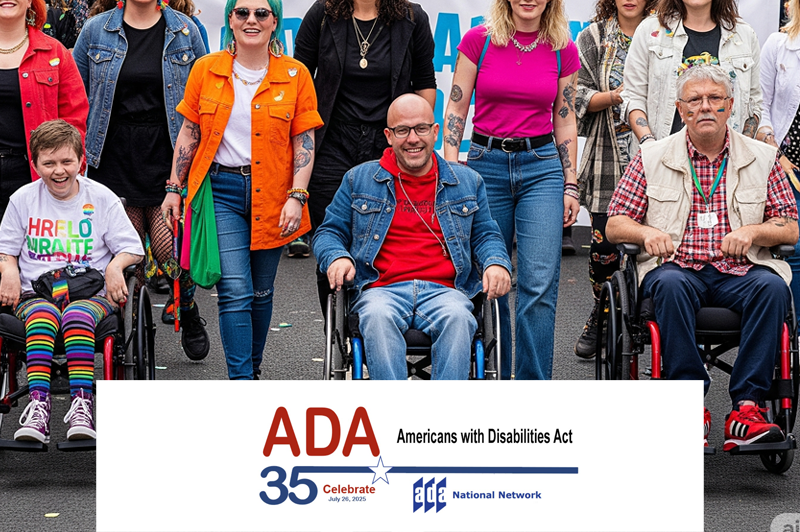
    Celebrate Disability Pride and the 35th ADA Anniversary

    Cincinnati, Ohio – You can join the Independence Alliance, Hamilton County Developmental Disabilities Services, and the Human Services Chamber on Saturday, July 26, to celebrate Disability Pride and the 35th anniversary of the Americans with Disabilities Act (ADA).

    From 3-8 p.m. at the OTR Stillhouse, they will have: Entertainment from The Screamers (KAA) and DJ Brody Flynn; Panel discussion featuring local disability rights advocates talking about the past, present, and future of accessibility.

    There will be interactive exhibits, local resources and giveaways; Food trucks, drinks, and snacks; And open-mic opportunity for anyone to share their thoughts or experiences.

    Event Accessibility CART captioning services and ASL interpretation will be provided. They will also have a space for sensory breaks. OTR Stillhouse has accessible restrooms, and Momentum Refresh, a universally designed and fully accessible mobile restroom, will be on-site. Refresh has a wheelchair lift, customizable grab bars, an overhead ceiling hoist, a height-adjustable sink, and adult changing tables. HCDDS is funding Momentum Refresh at a limited number of events in 2025.

    If you have other accessibility accommodation requests? Contact Dee Henry, Disability Rights and Advocacy Specialist for Independence Alliance, at dee@independencealliance.org or 513-241-8046.

    Event Date/Time:

    Saturday, July 26th, 2025
    3:00 PM EDT – 8:00 PM EDT

    Location of Event (Web or City, State):

    OTR Stillhouse, 2017 Branch Street, Cincinnati, Ohio 45214

    Cost of Event:

    Free

    Registration Requirement:

    Not Required

    Sponsoring Organization(s) of Event:

    Hamilton County Developmental Disabilities Services, Independence Alliance, Human Services Chamber

    Audience(s):

    • Architects/Contractors
    • Business
    • Employer
    • People with Disabilities
    • State and Local Government

    Topic:

    • ADA Anniversary
  • Save the Date for annual Loveland Art Gallery Crawl

    Save the Date for annual Loveland Art Gallery Crawl

    Advertisement

    Loveland, Ohio – The annual Loveland Art Gallery Crawl is on June 28.


  • Farmers pivot after USDA ends Local Food Purchase Assistance program

    Farmers pivot after USDA ends Local Food Purchase Assistance program

    In March, The Ohio Association of Foodbanks notified more than 150 farms that supplied Ohio’s food pantries with fresh produce, meat, and dairy that the USDA’s Local Food Purchase Assistance program was ending. The pandemic-era assistance initiative gave local governments federal aid to connect food banks with farms in a 400-mile radius.

    Amanda Becker

    Cincinnati Edition, continued a conversation on how Ohio farmers are handling USDA cuts with Amanda Becker, who has reported on the issue for The 19th.

    The program connected food pantries with local producers until it was ended earlier this year.


    Cincinnati Edition airs every weekday during the noon hour, bringing you all the new and noteworthy reporting from NPR’s Cincinnati affiliate, with a focus on the entire Tri-State metro area in Ohio, Indiana and Northern Kentucky. Covering topics ranging from local and regional government to business and economics, science and technology, the arts, education and health, Cincinnati Edition is a grab bag of the interesting and important things going on around town, with context and analysis from experts, insiders and the investigative reporters from NPR Cincinnati station WVXU’s local beats as well as NPR News.

    Share your thoughts with producers by emailing talk@wvxu.org or calling 513-419-7100

  • Fair Housing Fact Sheets on Religion & National Origin housing rights

    Fair Housing Fact Sheets on Religion & National Origin housing rights

    Gemini generated image

    Housing Opportunities Made Equal (HOME) has released its newly updated Religion & National Origin Fact Sheets, designed to help individuals better understand their rights under the Fair Housing Act. These resources outline how each protected class is safeguarded against housing discrimination and what discrimination can look like in practice.

    HOME’s mission is to eliminate unlawful discrimination in housing in the Greater Cincinnati area. HOME advocates and enforces housing regulations for all protected classes and promotes stable, integrated communities.

    HOME works with tenants, homeowners, home seekers, and a diverse range of housing-related professionals, companies, and social service agencies, including landlords, realtors, lending institutions, insurance agents, and more.

    Serving communities in Butler County, Hamilton County, Warren County and Clermont County.

    [pdf-embedder url=”https://lovelandmagazine.com/wp-content/uploads/2025/05/religion-fact-sheet.pdf” title=”religion fact sheet”]

    [pdf-embedder url=”https://lovelandmagazine.com/wp-content/uploads/2025/05/National-Origin-fact-sheet.pdf” title=”National Origin fact sheet”]

  • 2025 Memorial Day Speech by Judge Gary A. Loxley

    2025 Memorial Day Speech by Judge Gary A. Loxley

    Loveland, Ohio – On Monday, May 26, the guest speaker at the Loveland Memorial Day ceremony was Judge Gary A. Loxley, a member of the 2021 class of the Ohio Veterans Hall of Fame. He was introduced by John Arnold, a member of the Loveland Veterans Committee.

    Read more about Judge Loxley…

  • How Trump’s ‘one, big, beautiful’ tax bill could impact programs for women and children

    How Trump’s ‘one, big, beautiful’ tax bill could impact programs for women and children

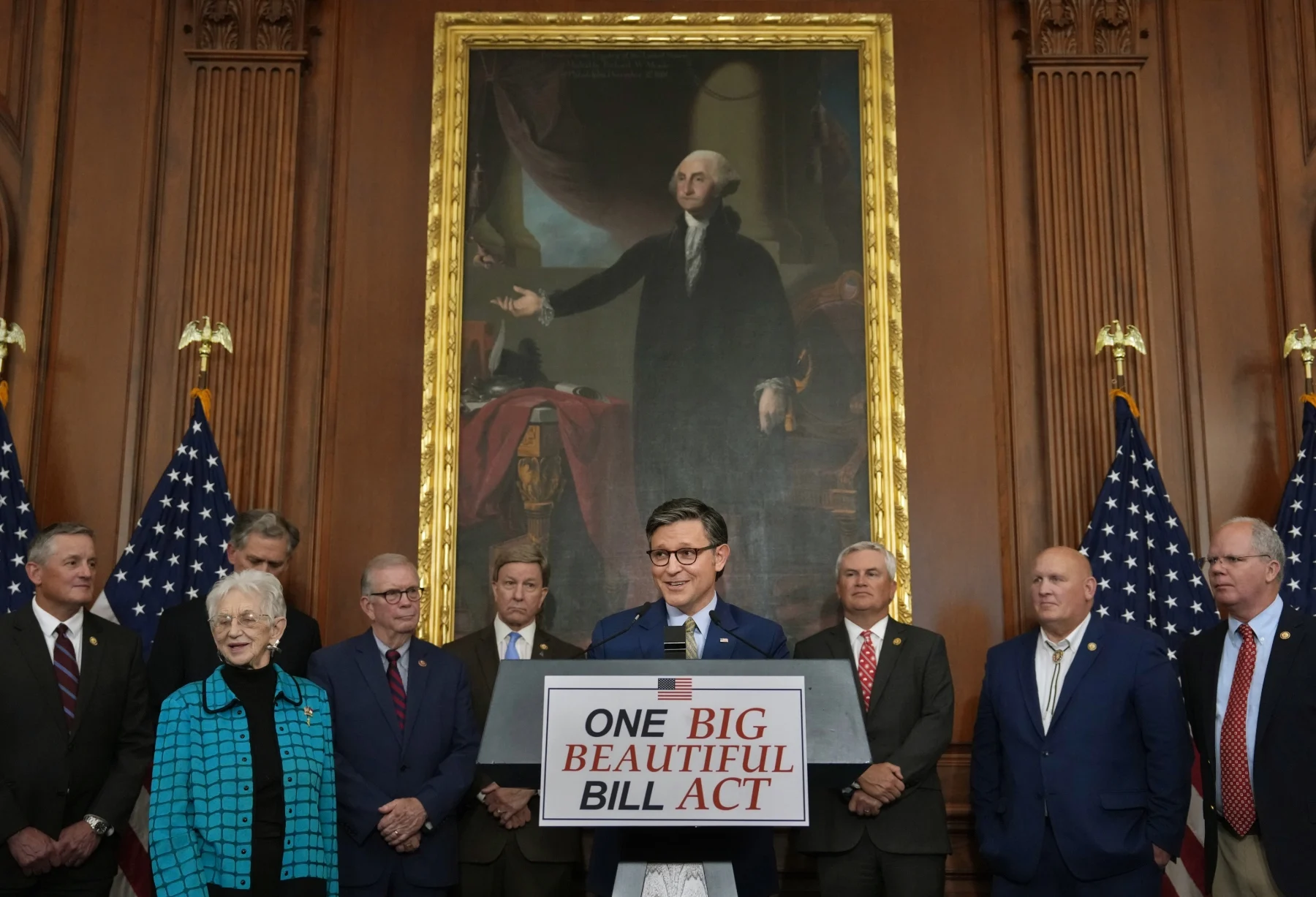
    U.S. Speaker of the House Mike Johnson (R-LA) speaks to the media after the House narrowly passed a bill forwarding President Donald Trump’s agenda at the U.S. Capitol on May 22, 2025 in Washington, DC. The tax and spending legislation, called the “One, Big, Beautiful Bill” Act, redirects money to the military and border security and includes cuts to Medicaid, education and other domestic programs. (Kevin Dietsch/Getty Images)

    House Republicans approved a sweeping package early Thursday morning that contained deep cuts to programs assisting low-income Americans, including Medicaid and SNAP food stamp eligibility.

    by Amanda Becker Washington Correspondent

    Read Amanda Becker’s Loveland, Ohio connection in her Bio below.

    Republicans in the U.S. House of Representatives approved a sweeping package early Thursday morning that contains what advocates call “historic” cuts to government health insurance and nutrition programs that serve lower-income Americans.

    President Donald Trump wanted “one, big, beautiful bill” and GOP Speaker Mike Johnson pushed to get the package through the House before the Memorial Day recess. The bill now moves to the Senate, where it is expected to undergo significant changes.

    The proposal approved in the House would slash $1.7 trillion in government spending to pay for the renewal of the tax cuts from Trump’s first term, which largely benefited corporations and the wealthy. Some of the largest cuts would come from Medicaid, the popular government health insurance program that covers more than 70 million lower-income Americans. House Republicans also agreed on significant changes in eligibility to the Supplemental Nutrition Assistance Program (SNAP), commonly known as food stamps, which helps more than 40 million Americans buy groceries every month. Both programs are disproportionately used by women and children.

    Defend Federal Agencies 970x250 - ROS

    Democrats have been largely on the sidelines because Republicans in the Senate will use a process called reconciliation, which allows the majority party to bypass the 60-vote filibuster requirement and approve legislation by a simple majority vote. There are 53 Republicans in the 100-seat Senate.

    It has become common for both parties to take advantage of reconciliation when they control the White House and both chambers of Congress. Republicans used reconciliation to enact the 2017 Trump tax cuts that they are now attempting to renew. Democrats used it to enact President Joe Biden’s COVID-19 stimulus bill and the Inflation Reduction Act.

    Here are the programs serving women and children that House Republicans’ bill would change:

    Medicaid

    House Republicans’ proposal aims to slash $625 billion from Medicaid over the next decade, leading to an enrollment drop of more than 10 million people, according to KFF, a nonpartisan health organization.

    The federal-state health insurance program covers more than 40 percent of all births in the country, and about 37 percent of those enrolled are children. Three million Americans enrolled in Medicaid report that they are unable to work due to caregiving responsibilities, according to an AARP analysis.

    The legislation approved by the House would cut Medicaid spending in part by imposing a strict 80-hours-a-month work requirement for adults without children or disabilities. The 19th has reported on how these stepped-up work requirements would disproportionately impact middle-aged and older women.

    The bill also would make it easier for states to cancel Medicaid coverage if recipients do not provide additional paperwork to show they meet eligibility requirements; force states to require co-payments for some types of care for Medicaid enrollees who live above the federal poverty threshold; and reduce the reimbursement rate for states that use their own funds to cover immigrants not lawfully in the country, according to a detailed analysis by KFF.

    The version of the bill passed by the House would prohibit Medicaid from covering care for non-abortion services provided by Planned Parenthood clinics, which are already banned from using federal funds to pay for abortions. It also would limit coverage of gender-affirming care as an essential benefit under Affordable Care Act plans and prohibits Medicaid and the Children’s Health Insurance Program (CHIP) from covering the treatment. Earlier drafts limited this prohibition to care for minors; the approved bill extends it to care for all ages.

    SNAP

    The package passed by House Republicans would require more SNAP recipients in their 50s and 60s to work and provide fewer exemptions for parents.

    The proposal would lower the age at which work requirements end by a decade, to 54. Right now, parents with dependent children under 18 are exempt from working; the bill lowers that age to 7.

    Additionally, the Republican-approved legislation would require states to take on more of the costs of administering SNAP and limit the ability of future administrations to raise benefit amounts.

    Changes to SNAP could affect school nutrition programs, as many students qualify for free meals based on whether they and their families are eligible for food stamps.

    The Congressional Budget Office has not yet evaluated the SNAP provisions in the reconciliation bill. Their analysis of past similar legislation adding new work requirements showed that it could result in more than 3 million fewer people participating in the federal nutrition program.

    Child tax credit

    The House Republicans’ tax bill would increase the amount of the child tax credit to $2,500 from $2,000 through 2028, the last year of Trump’s term. The tax credit would then drop back down and be indexed to inflation.

    Another provision in the approved House version would require a child’s parents to have a Social Security Number to access the credit, even if the child also has a Social Security Number.

    The intent is to block immigrant parents in the country illegally and without work authorization from claiming the benefit; these parents are already typically excluded from accessing the credit. In mixed immigration status households, where one parent has a Social Security Number and the other does not, the child would still be ineligible for the credit.

    The House version of the tax bill also caps the refundable portion of the child tax credit at $1,400 per qualifying child, down from $1,700. This change would limit the ability of the country’s lowest-income parents to access the credit.

  • More than 3 million people would lose SNAP benefits under GOP bill, nonpartisan report says

    More than 3 million people would lose SNAP benefits under GOP bill, nonpartisan report says

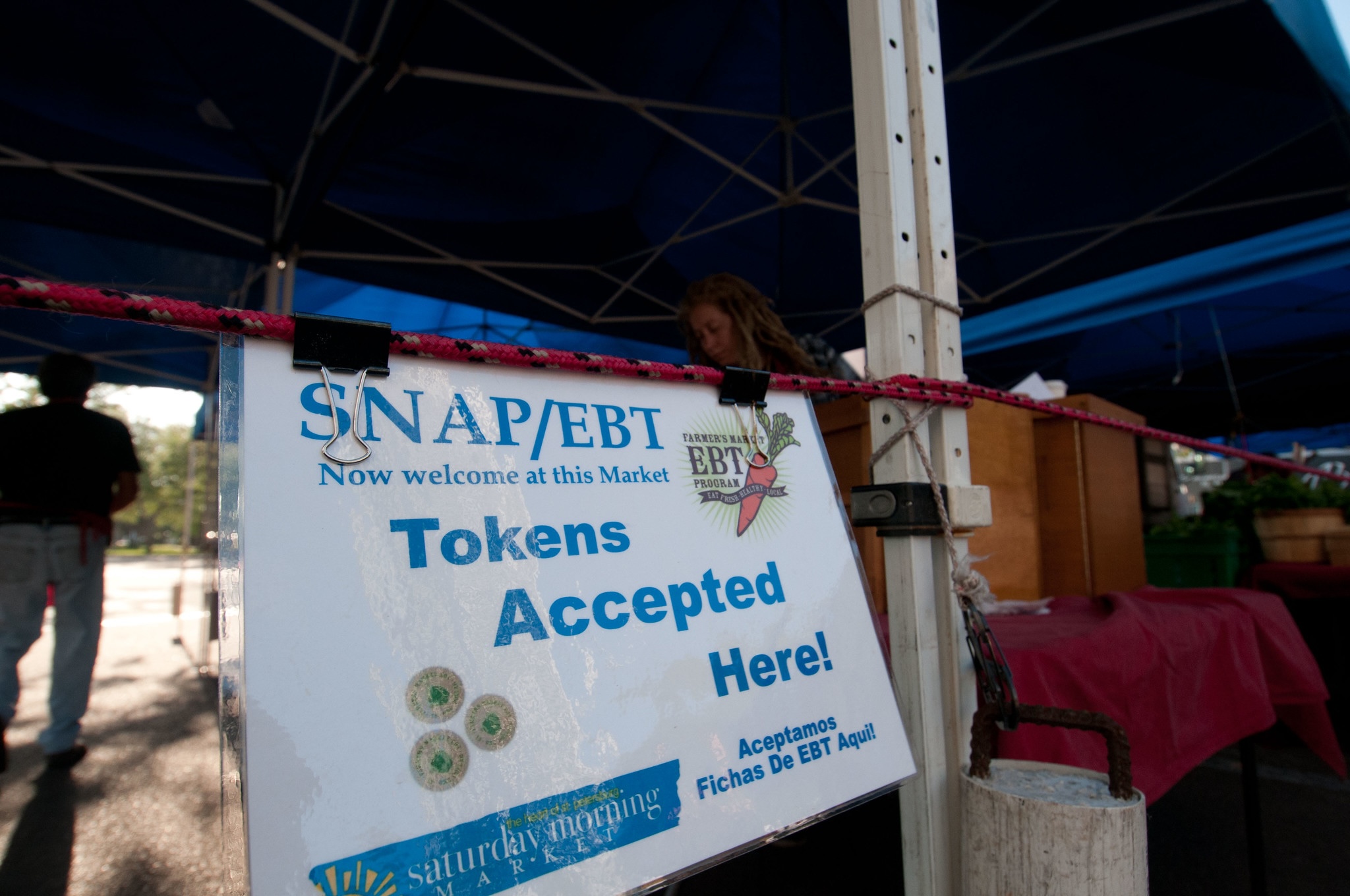
    At a farm market in St. Petersburg, Florida, SNAP recipients were able to use their Electronic Benefits Transfer cards for food. (Photo by Lance Cheung/USDA).

    By:  Ohio Capital Journal

    The massive tax and spending bill passed by U.S. House Republicans would likely result in 3.2 million people losing food assistance benefits, and saddle states with around $14 billion a year in costs, according to a new analysis from the nonpartisan Congressional Budget Office.

    Democrats have argued the bill, which the House passed215-214 early Thursday without any Democrats in support, would cut programs for the needy to fund tax breaks for high earners.

    The CBO document, issued late Thursday, responded to a request to the office from the top Democrats on the Senate and House Agriculture committees, Sen. Amy Klobuchar and Rep. Angie Craig, both of Minnesota, and somewhat bolsters that claim. The panels oversee federal food aid programs.

    “This report is truly devastating,” Craig said in a Friday statement to States Newsroom. “As a mother and someone who at times relied on food assistance as a child, these numbers are heartbreaking. It is infuriating that Republicans in Congress are willing to make our children go hungry so they can give tax breaks to the already rich.”

    A provision in the bill to tighten work requirements, including by excluding single parents of children older than 6 and by raising the age of adults to whom the work requirements apply, of the Supplemental Nutrition Assistance Program, or SNAP, would result in 3.2 million people losing access to the program in an average month, the CBO report said.

    Of those, 1.4 million would be people who currently have a state waiver from work requirements that would be disallowed under the bill and 800,000 would be adults who live with children 7 or older, the report said.

    In a Friday statement, Ben Nichols, a spokesman for the House Agriculture Committee led by Pennsylvania Republican Glenn ‘GT’ Thompson, said the proposed change would be more fair to the people SNAP is supposed to help and noted the program is the only state-administered entitlement program that is paid fully by the federal government.

    “No one who is able-bodied and working, volunteering, or training for 20 hours a week will lose benefits,” Nichols wrote.

    Republicans want to use the legislative package to extend the 2017 tax law and its cuts, increase spending on border security and defense by hundreds of billions of dollars, overhaul American energy production, restructure higher education aid and cut spending.

    Toll on states

    The cost-share changes, which would require states for the first time to pay for a portion of SNAP benefits, would also limit participation and add a massive line item to state budgets, according to the CBO.

    Starting in 2028, states would be responsible for paying 5% to 25% of SNAP benefits, with a state’s share rising with its payment error rate. The federal government currently pays for all SNAP benefits.

    Under the House bill, which will likely undergo substantial changes as the Senate considers it in the coming weeks, states collectively would be responsible for just less than $100 billion from 2028 to 2034, about $14 billion per year.

    States would respond in a variety of ways, CBO Director Phillip Swagel wrote, including potentially dropping out of the program.

    “CBO expects that some states would maintain current benefits and eligibility and others would modify benefits or eligibility or possibly leave the program altogether because of the increased costs,” he wrote.

    The office took a “probabilistic approach to account for a range of possible outcomes” to determine what the effect on households would be and estimated that 1.3 million people would lose benefits because of state responses to the new cost-share.

    Nichols, with the House Agriculture Committee, disputed the CBO’s estimate regarding the cost share change. The lowest state cost-share of 5% would be available for states with error rates below 6%. Every state has hit that mark at some point in the last decade, he said.

    With that favorable of a cost-share, the Republican committee members did not believe states would drop out of the program, he added.

    “We reject the hypothetical assumption that some states may not chip into 5 percent of a supplemental nutrition program,” Nichols wrote. “Every state is capable of paying for a portion SNAP… Federal policy should encourage states to administer the SNAP program more efficiently and effectively, and this bill does just that.”

    CBO’s forecasters determined the impacts of the work requirements and cost-share provisions separately, meaning some people potentially losing benefits could have been counted in both categories.

    Move to the Senate

    The House vote Thursday sent the measure to the Senate, where the debate over SNAP benefits may fall along similar party lines.

    Republicans who hold control in that chamber are planning to employ the budget reconciliation process, which allows them to skirt the Senate’s usual 60-vote requirement for legislation.

    During the House Agriculture Committee’s debate over its portion of the legislation, Republicans on the panel said the work requirement and state cost-share measures were needed reforms to SNAP that would protect the program for those it was meant to serve, while limiting the costs associated with benefits to adults who were able and unwilling to work or in the country illegally.

    In a Friday statement, Sara Lasure, a spokeswoman for Senate Agriculture Committee Chair John Boozman, an Arkansas Republican, also said the panel would seek reforms to the program but did not offer specifics.

    “The Senate Agriculture Committee is in the process of crafting its budget reconciliation package and will work as good stewards of taxpayer dollars to make commonsense reforms to SNAP that encourage employment,” she wrote in an email.

    Klobuchar, in a statement after House passage Thursday, blasted the House bill and indicated she would oppose efforts to cut SNAP benefits.

    “House Republicans are pulling the rug out from under millions of families by taking away federal assistance to put food on the table,” she said. “They’re doing that even as President Trump’s tariff taxes raise food prices by more than $200 for the average family, all to fund more tax breaks for the wealthy. That’s so very wrong —and we will fight against it in the Senate.”

    Jacob Fischler
    Jacob Fischler

    Jacob covers federal policy and helps direct national coverage as deputy Washington bureau chief for States Newsroom. Based in Oregon, he focuses on Western issues. His coverage areas include climate, energy development, public lands and infrastructure.

    Ohio Capital Journal is part of States Newsroom, the nation’s largest state-focused nonprofit news organization.

    MORE FROM AUTHOR

  • U.S. House Republican cuts to Medicaid, food assistance would impact hundreds of thousands in Ohio

    U.S. House Republican cuts to Medicaid, food assistance would impact hundreds of thousands in Ohio

    U.S. Speaker of the House Mike Johnson, R-La., speaks to reporters as he leaves a news conference following a House Republican Conference meeting at the U.S. Capitol on April 8, 2025, in Washington, D.C. (Photo by Andrew Harnik/Getty Images)

    By:  Ohio Capital Journal

    The U.S. House Republican budget bill could spell significant losses for low-income families in Ohio, specifically those in need of food assistance and those on Medicaid.

    Advocates for Medicaid and anti-hunger leaders have said reductions and eliminations connected to the two programs would negatively affect Ohioans as a whole, as well as the state’s economy and spending power.

    Only one Republican U.S. representative from Ohio voted against the congressional budget bill, passed early Thursday with a vote of 215-214. U.S. Rep. Warren Davidson, posted on X, formerly Twitter, Thursday morning that he supported “many things in the bill,” but that “deficits do matter and this bill grows them now.”

    “The only Congress we can control is the one we’re in,” he wrote, alongside a bar graph showing the Congressional Budget Office’s analysis of the bill’s deficit effect. “Consequently, I cannot support this big deficit plan.”

    U.S. Rep. Joyce Beatty, D-Ohio, stood with all other Democrats in voting against the bill, saying in a statement after the vote that the bill is “a cruel and catastrophic budget that rips health care, food and opportunity from Ohioans and millions of other Americans just to bankroll bigger and better tax breaks for billionaires.”

    Medicaid

    Beatty’s statement said the bill, which now moves to the U.S. Senate, includes “the largest cut to Medicaid in American history,” at $698 billion, and $267 billion from the Supplemental Nutrition Assistance Program (SNAP) over the next decade.

    “In Ohio, that means potentially substantial new costs shifted onto our state, and fewer hospitals, fewer nursing homes, fewer services for our most vulnerable neighbors,” according to Beatty. “It’s not just bad math – it’s moral failure.”
    Ohio would see direct impact from the bill in its own state operating budget, currently being drafted by the General Assembly.

    The Ohio House’s version of the bill kept a provision proposed by Republican Gov. Mike DeWine in his executive budget to eliminate the state’s Medicaid expansion group if the federal government reduced the contribution it makes to the program.

    Currently, the federal government pays 90% of the Medicaid funding in Ohio, with the state covering the other 10%.

    In the Ohio House’s version of the budget bill, Ohio would eliminate Group VIII — another name for the Medicaid expansion group that covers more than 700,000 Ohioans who live above the income requirements for traditional Medicaid but are still in need of assistance — if the federal government’s share of the funding dips below 90%.

    GET THE MORNING HEADLINES.


    Medicaid advocates and experts have said losing this expansion group would cause Ohio’s uninsured rate to go up, and those dropped from the program to seek self-pay medical options, or skip care all together, causing the health of the state to suffer.

    According to Ohio child advocacy group Groundwork Ohio, nearly 48% of Ohio children younger than six rely on Medicaid for health coverage, and the program covers about 50% of all births in the state.

    The Center for Community Solutions found in a recent study that Medicaid covers 2 in 5 children in the state, as well as 1 in 5 working-age adults, and 1 in 10 adults aged 65 and older. The largest group covered in Ohio’s Medicaid program, 53.2% of cases, is families and children.

    SNAP funding

    The national Food Research & Action Center said the cuts would represent a nearly 30% reduction in SNAP funding, and would increase each state’s share of spending for the food assistance.

    “The bottom line is this bill would end up costing America,” wrote Crystal FitzSimons, president of FRAC, in a statement. “Rural communities would be disproportionately impacted. We would see higher rates of hunger and poverty, increased health care costs, reduced academic outcomes, less productivity and an economy that will be hit hard.”

    The Congressional Budget Office said the cuts, particularly to Medicaid and SNAP, would create a 2% decrease in household income nationwide in 2027 for the 10% of Americans in the lowest income brackets, going to 4% by 2033. Households in the highest income brackets, however, could see raises.

    The loss of SNAP funding, along with Medicaid, would reduce access to services that “are vital for everyday Ohioans in every Congressional district,” according to Joree Novotny, executive director of the Ohio Association of Foodbanks.

    Novotny said the current proposal would shift nearly $500 million in SNAP costs per year onto the state of Ohio.

    “That’s about the same as all the state general revenue spent to operate the entire Ohio Department of Job and Family Services each year,” Novotny said.

    The food banks and other anti-hunger advocates are already asking the state to support bipartisan legislation that would create supplemental benefits for SNAP participants in Ohio.

    Ohio House Bill 178, which has received two hearings in the House Community Revitalization Committee, would require the Ohio Department of Job and Family Services to provide “supplemental benefits to households receiving (SNAP) benefits if the household includes a member who is 60 years of age or older and receives a monthly SNAP benefit that is less than $50.”

    The supplements would cost the state $12.5 million in fiscal year 2026, and $21.4 million in 2027, according to a fiscal analysis of the bill.

    In supporting the bill, Hope Lane-Gavin, director of nutrition policy and programs for the state association of food banks said the average SNAP benefit in Ohio is $171 per month per person, or less than $6 per person per day.

    The federal minimum SNAP benefit is $23 per month, according to Lane-Gavin. There are about 70,000 households with adults 60 or older as the head of them in which the household receives less than $50 per month.

    “Access to SNAP benefits can reduce food insecurity, increase medication adherence and contribute to health care savings,” she told the committee.

    If SNAP funding changes drastically, food banks will not be able to fill the gap, even as they served more than 230 million meals in 2024, according to Novotny. The language in the budget would force state governments including Ohio’s to “make impossible choices.”

    “This cost shift wouldn’t just hurt families, it would impact local grocery stores, farmers and food suppliers, threatening jobs and access to fresh food in communities across Ohio,” Novotny said.

    Susan Tebben
    Susan Tebben

    Susan Tebben is an award-winning journalist with a decade of experience covering Ohio news, including courts and crime, Appalachian social issues, government, education, diversity and culture. She has worked for The Newark Advocate, The Glasgow (KY) Daily Times, The Athens Messenger, and WOUB Public Media. She has also had work featured on National Public Radio.

    Ohio Capital Journal is part of States Newsroom, the nation’s largest state-focused nonprofit news organization.

    MORE FROM AUTHOR