Author: Loveland Magazine

  • Current Loveland schools mask requirement

    Current Loveland schools mask requirement

    EDITOR’S NOTE: This story was updated 6:55 AM 7-29 to reflect that Loveland Schools will return to full in-person learning in August.

    Loveland, Ohio – Below is the face covering and mask requirements for the current school year in Loveland schools. This policy was adopted by the Board of Education on June 3, 2021.

    There will be no remote learning opportunities for teachers or students as all school buildings will return to full capacity in-person classes in August. The District announced on May 7 that, “Due to a lack of interest from our families, Loveland City School District will not be offering the Remote Academy for the 2021-2022 school year. We look forward to welcoming back all of our students for five-day per week in-person learning in the fall!”


    Revised June 3, 2021 

    8450.01 – USE OF FACE COVERINGS/MASKS 

    The Loveland Board of Education is committed to providing students, staff, and visitors with a safe and healthy environment. 

    On May 12, 2021, Ohio Governor Mike DeWine lifted the State’s COVID – 19 mask requirements, including the requirement of face coverings inside public buildings, effective June 2, 2021 Furthermore, he declared that local school districts will make their own determinations on Covid-19 mitigation efforts, including the wearing of masks and/or face shields. 

    As of the adoption date, June 3, 2021, of this updated policy, unless required by additional mandates, the decision to wear face coverings/masks on school buses, in school buildings, or at other school events, will be left to adult individuals and parents/guardians of K-12 students. The Loveland City Schools will continue to follow COVID-19 mitigation protocols to maintain a healthy environment for students, staff, and visitors and will continue to provide recommendations for personal protection from the spread of infectious diseases.¶ 

    In order to maintain a healthy environment, the Board will follow any mandates set forth by the Ohio Governor, Ohio State Health Department, Hamilton County Health Department, and Ohio Department of Education, (“Directing Entities”) as it relates to protecting the health of students, staff and visitors. When any of these Directing Entities requires staff, students, and visitors to wear face coverings/masks while attending school, reporting to work at a school, or visiting a school, the District’s Administration will follow and enforce such directives. 


    Ohio Department of Health Releases Updated K-12 School Guidance

    Loveland Magazine –  Jul 28, 2021

    Centers for Disease Control issues new guidance for return to school

    Centers for Disease Control issues new guidance for return to school

    Loveland Magazine –  Jul 28, 2021

    COVID-19 Guidance for Safe Schools from American Academy of Pediatrics

    Loveland Magazine –  Jul 21, 2021

  • Dangerous Ozone level continues into Wednesday

    Dangerous Ozone level continues into Wednesday

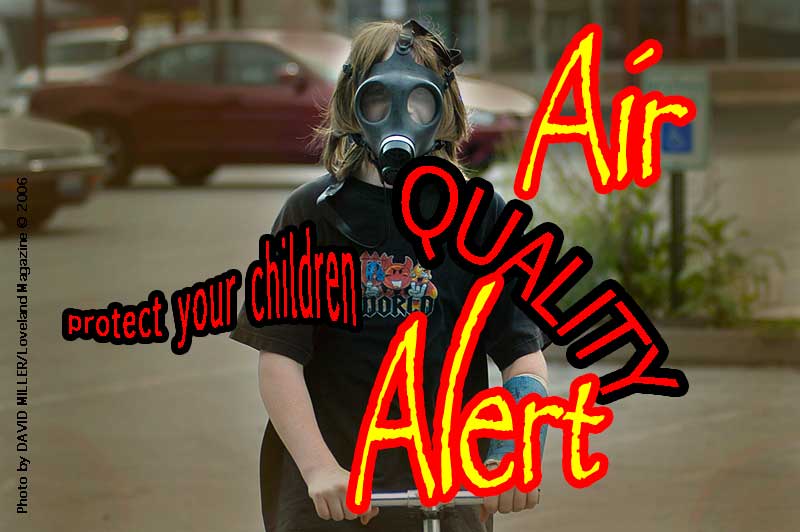
    Loveland, Ohio – The Southwest Ohio Air Quality Agency has issued an Air Quality Alert for Wednesday, July 28 for the Loveland, Ohio Area.

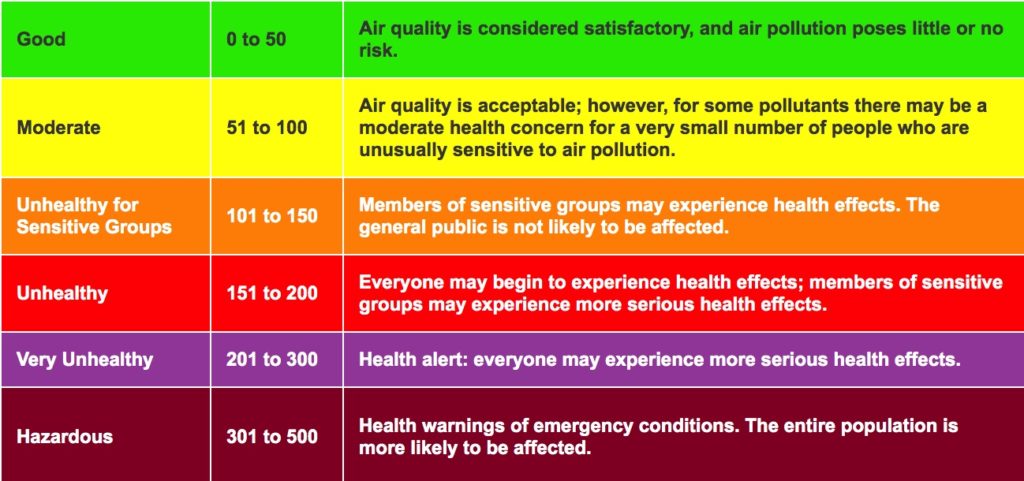
    The Agency expects to see levels of ozone in the “unhealthy for sensitive groups” range on the Air Quality Index.

    Active children and adults, and people with respiratory diseases, such as asthma, should be avoiding all outdoor exertion; everyone else, especially children, should limit outdoor exertion.

    Activities for children, who can be especially harmed by high levels of ozone because of their developing lungs and that some activities such as sports result in them breathing in quite a large amount of the chemical irritants should be suspended.

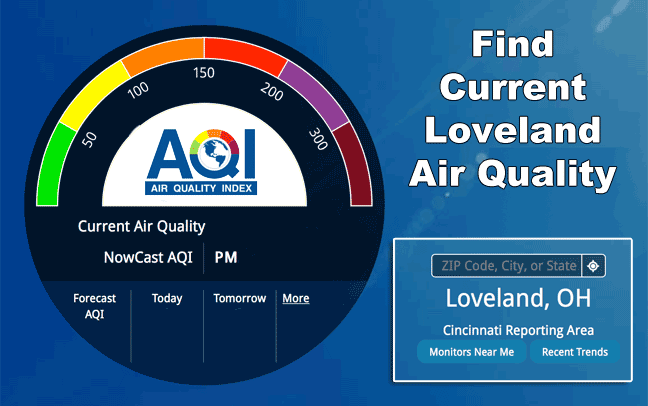
    To keep informed about Loveland’s hour-by-hour air quality you can always look for this image on our Home Page or use this LINK.

    On Air Quality Alert days, everyone can help reduce ozone formation by taking the following actions:

    • Take the bus, carpool, bike, or walk instead of drive.

    • Refuel your vehicle after 8 p.m.; do not top off when refueling and tighten the gas cap.

    • Do not idle your vehicle; exhaust contributes considerably to ozone formation.

    • Combine trips or eliminating unnecessary vehicle trips.

    • Keep your vehicle maintained with properly inflated tires and timely oil changes.

    • Avoid use of gasoline-powered lawn equipment on Air Quality Alert days.

    • Avoid use of oil-based paints and stains on Air Quality Alert days.

    • Never burn leaves or other yard trimmings.

    • Suspend use of fire pits, campfires and charcoal grills on Air Quality Alert days.

    • Conserve electricity by turning out lights and unplugging unused appliances and electronics.

  • Dangerous air quality returns for Tuesday

    Dangerous air quality returns for Tuesday

    Loveland, Ohio – The Southwest Ohio Air Quality Agency has issued an Air Quality Alert for Tuesday, July 26 for the Loveland, Ohio Area.

    The Agency expects to see levels of ozone in the “unhealthy for sensitive groups” range on the Air Quality Index.

    Active children and adults, and people with respiratory diseases, such as asthma, should be avoiding all outdoor exertion; everyone else, especially children, should limit outdoor exertion.

    Activities for children, who can be especially harmed by high levels of ozone because of their developing lungs and that some activities such as sports result in them breathing in quite a large amount of the chemical irritants should be suspended.

    To keep informed about Loveland’s hour-by-hour air quality you can always look for this image on our Home Page or use this LINK.

    On Air Quality Alert days, everyone can help reduce ozone formation by taking the following actions:

    • Take the bus, carpool, bike, or walk instead of drive.

    • Refuel your vehicle after 8 p.m.; do not top off when refueling and tighten the gas cap.

    • Do not idle your vehicle; exhaust contributes considerably to ozone formation.

    • Combine trips or eliminating unnecessary vehicle trips.

    • Keep your vehicle maintained with properly inflated tires and timely oil changes.

    • Avoid use of gasoline-powered lawn equipment on Air Quality Alert days.

    • Avoid use of oil-based paints and stains on Air Quality Alert days.

    • Never burn leaves or other yard trimmings.

    • Suspend use of fire pits, campfires and charcoal grills on Air Quality Alert days.

    • Conserve electricity by turning out lights and unplugging unused appliances and electronics.

  • Cuyahoga County man’s death sentence reversed due to court error

    Cuyahoga County man’s death sentence reversed due to court error

    BY: SUSAN TEBBEN and Ohio Capital Journal

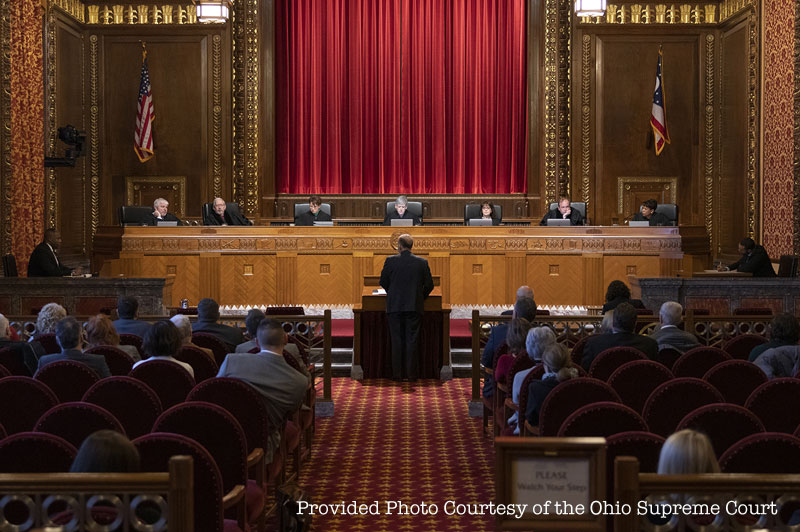
    A death sentence was vacated by the Ohio Supreme Court because a trial court lacked “diligence” in reading the defendant his constitutional rights.

    George Brinkman pleaded guilty in Cuyahoga County Common Pleas Court to aggravated murder, aggravated burglary, kidnapping and abuse of a corpse in the death of a woman and her two daughters. He was sentenced to death by a three-judge panel after his guilty plea.

    But the Ohio Supreme Court deemed that guilt plea invalid because the trial court didn’t comply with state rules of criminal procedure.

    Specifically, the supreme court said, the lower court didn’t apply a rule in which a court may refuse to accept a guilty plea if a defendant isn’t informed and understands that he is waiving the right to a jury trial, to confronting witnesses against him in court, the ability to compel witnesses on his behalf, and the state’s requirement to prove the defendant’s guilt beyond a reasonable doubt at trial.

    In the November 2018 court proceedings leading to the acceptance of Brinkman’s guilty plea, the supreme court found that the judge had not advised Brinkman that he would be giving up the right to confront witnesses, despite going through other elements he would be giving up with his guilty plea.

    Two days later, the trial court noticed ‘there were some omissions that were not thoroughly covered’ in the plea, and asked Brinkman if he understood his rights again, adding in the missing elements.

    Because Brinkman’s waiver of rights wasn’t fully specified, the plea shouldn’t have been accepted in the first place, according to Chief Justice Maureen O’Connor in the supreme court ruling. The trial court was obligated to give Brinkman all the information needed “so that he can make a voluntary and intelligent decision whether to plead guilty.”

    “Informing the defendant of his constitutional rights after he has already pleaded guilty does not support that interest,” O’Connor wrote.

    The court stressed that this isn’t the first time they’ve had to negate a sentence because of a lax use of the criminal rules, but that in every decision, the error was “easily avoidable” by allowing defendants to know all of their constitutional rights.

    “Here, the trial court, as well as counsel for the state and the defense, failed to adhere to the level of diligence expected in, and essential to, our criminal justice system,” the court wrote in their ruling. “…This inattention is impermissible, especially in a case such as this in which a death sentence is on the line.”

    With Brinkman’s convictions and sentences vacated as part of the supreme court decision, the trial court will now have to hold new hearings in the case.

  • Dangerous trend among youth: “dry scooping” protein powder or other pre-workout supplements

    Dangerous trend among youth: “dry scooping” protein powder or other pre-workout supplements

    Cincinnati Children’s Hospital Medical Center is reporting, “TikTok trends come and go, but being aware of them can help keep kids safe.” Below is a Facebook post they published on Tuesday.

    We encourage you to talk to your children about the dangers of this trend. Ask them if they are taking supplements, read the labels, and make sure they are following the product instructions, instead of what they might have seen on TikTok.

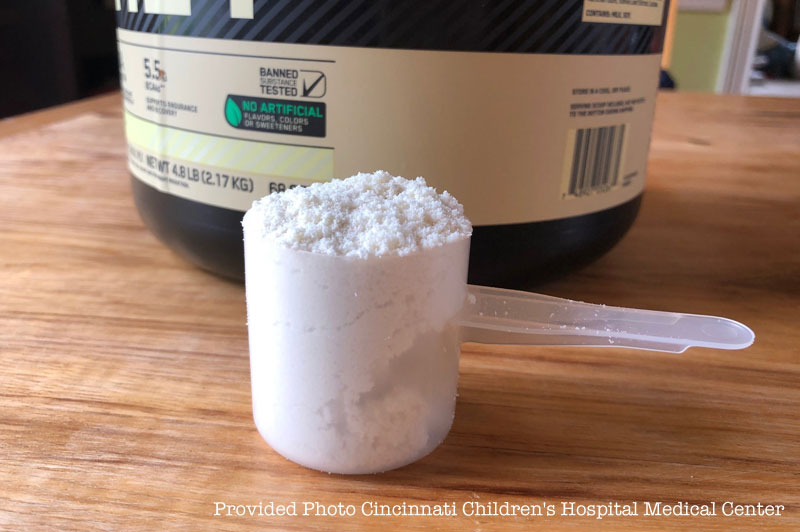
    One circulating potentially dangerous trend that our Drug & Poison Information Center wants you to know about is called dry scooping. It involves eating protein powder or another pre-workout supplement directly from its container, without mixing it with water.

    This trend presents a choking risk with trying to ingest powder without liquids, and some of these supplements also contain a high amount of caffeine. When consumed in excess or too rapidly, caffeine can cause jitters, upset stomach, sleep problems, and increased heart rate.

    There have even been reports of heart attacks related to dry scooping.


    Contact the Drug and Poison Information Center

    Contact the Drug and Poison Information Center to speak with our call center.

    When calling 1-800-222-1222, you will be automatically connected to the appropriate poison control center for your region. This way you won’t have to learn a new 800 number if you move.

    The Cincinnati Drug and Poison Information Center can be reached through a local telephone number at 513-636-5111.

    The Cincinnati Drug and Poison Information Center (DPIC) at Cincinnati Children’s Hospital Medical Center is a 24-hour emergency and information telephone service for anyone with concerns about poison or drugs. 

    The center’s specially trained staff of pharmacists, pharmacologists and nurses and drug / poison information assistants answer questions about poisonings, drug abuse, product contents, substance identification, interactions and adverse reactions.

    The Drug and Poison Information Center also works to provide you with important prevention information, educational materials, first-aid information, common household hazards and references to national helpline organizations and agencies. 

    The phone number for the Cincinnati Drug and Poison Information Center is 513-636-5111. You may also call a national hotline, 1-800-222-1222, and you will be connected to the center that serves your area.

    The center also offers contract services to businesses looking for pharmacovigilance and safety surveillance for post-marketing and clinical trials.

  • Foster’s Viaduct bridge to reopen late-afternoon on Tuesday

    Foster’s Viaduct bridge to reopen late-afternoon on Tuesday

    Warren County, Ohio The Ohio Department of Transportation (ODOT) has reported that the U.S. Route 22 bridge rehabilitation in Warren County is “right on schedule”, is nearing completion, and the route is set to be reopened next week.

    ODOT says, “Contractors for the Ohio Department of Transportation closed the bridge on U.S. 22 over the Little Miami River on June 7, and following 50 days of construction, crews will be on schedule to reopen the route late afternoon Tuesday, July 27.”

    With U.S. 22 reopening to traffic Tuesday afternoon, restrictions will also be lifted on Old 3C Highway, as well as Socialville-Fosters Road, which will be reopened to eastbound motorists.

    However, Fosters-Maineville Road will remain closed through early August for crews to install pier protection on the columns along the roadway under U.S. 22. A full, seven-day closure will be imparted in both the west and eastbound directions between Old 3C and Butterworth Road on Monday, July 26.

    The Great Lakes Construction Company was awarded a contract for approximately $7.3 million to rehabilitate the U.S. 22 bridge, which consisted of replacing the expansion joints, overlaying the bridge, patching the substructure, and upgrading the guardrail.

    According to ODOT, crews have minor finishing work to complete on U.S. 22, “there should be little to no impact” to motorists during the remainder of the project, and once the route reopens, traffic will be maintained through the work zone as needed when crews are at work.

    ODOT has not reported on the re-opening of the Little Miami Scenic Trail that has been closed due to the construction project.

  • FirstEnergy paid $4.3 mil to top energy regulator and reaped the benefits, court docs state

    FirstEnergy paid $4.3 mil to top energy regulator and reaped the benefits, court docs state

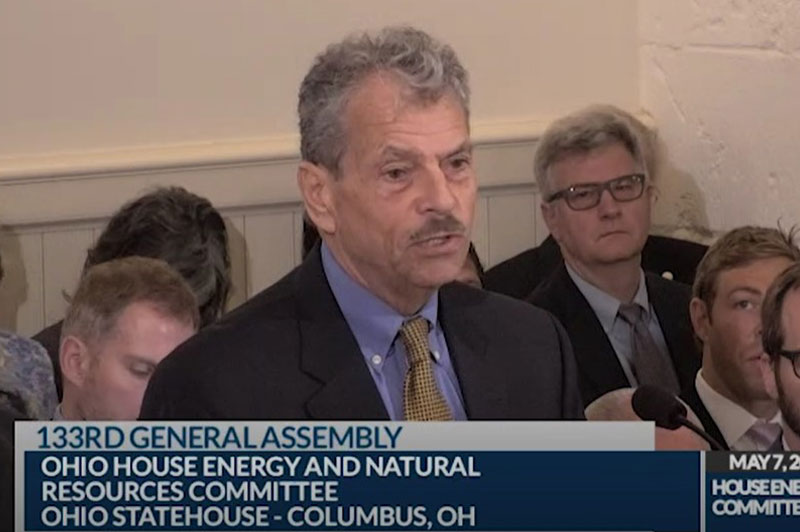
    Then-PUCO Chair Sam Randazzo testifies as an interested party regarding House Bill 6 on May 7, 2019.

    Source: Ohio Channel.

    “HB 6 F(***) ANYBODY WHO AINT US,” the executive wrote.

    BY: JAKE ZUCKERMAN and Ohio Capital Journal

    An energy lobbyist who Gov. Mike DeWine appointed as the state’s top regulator of public utilities received $22 million from FirstEnergy Corp. in the decade before his appointment — including $4.3 million paid just before assuming the post and specifically to execute official duties to benefit the Akron-based utility — court documents revealed Thursday.

    Sam Randazzo, who resigned as chairman of the Public Utilities Commission of Ohio after federal agents raided his Columbus home, used his PUCO chairmanship to scuttle a requirement that FirstEnergy undergo a rate review set for 2024, which company executives believed would hurt its bottom line, the documents state.

    FirstEnergy entered into a deferred prosecution agreement — in which the U.S. Department of Justice could drop the charge if the company meets certain conditions including a $230 million criminal penalty — on one count of wire fraud.

    It also agreed to a stipulation of facts detailing its nearly $61 million in payments to an account the former speaker of the Ohio House allegedly controlled and spent to pass House Bill 6, legislation worth an estimated $1.3 billion to the company.

    Thursday’s filing, however, is flush with new details about FirstEnergy’s long relationship with Randazzo, dating back to a contract in 2010 and a consulting deal inked in 2013.

    The agreement states one FirstEnergy executive texted another on Nov. 15, 2019 that Randazzo is “going to make the requirement [for a rate review] to file go away, but I do not know specifically how he plans to do it.” The document doesn’t directly identify the executives.

    On Nov. 21, 2019, PUCO issued an order finding it is “no longer necessary or appropriate” that three utilities owned by FirstEnergy file a new case when its current rate structure expires in 2024.

    Executive 1 thanked Randazzo via text the next day, according to prosecutors, attaching an image showing the company’s stock price increasing.

    An email for Randazzo on file with the Supreme Court is no longer in operation. In a statement obtained by the Cincinnati Enquirer, he said he executed his duties as chairman lawfully and denied performing any action to advance FirstEnergy’s interests. He said all payments to him were made under his consulting agreement with the utility.

    “In the fall of 2020, it became clear that issues surrounding House Bill 6 and a public attack on my background and character had escalated to a point that made it impossible for me to effectively perform my duties at the PUCO,” he said, explaining his choice to step down.

    According to prosecutors, Executive 1 and Executive 2 met Randazzo at his condo in late December 2018 to discuss remaining $4.3 million on his consulting agreement and a job posting for a PUCO seat. FirstEnergy had no legal requirement to make the payment but did so anyways.

    When a related court filing divulged Randazzo’s company accepted payments from FirstEnergy, executives worried the disclosure would torpedo the appointment. However, it only “grazed the temple,” they said, and forced “State Official 1” and “State Official 2” to perform “battlefield triage.”

    The governor nominates PUCO commissioners off a shortlist from a nomination council. A DeWine spokesman did not answer specific inquiries, including whether the governor is one of the unmentioned state officials.

    “As I have consistently said, we understood that Sam Randazzo had worked for manufacturing companies, energy companies, and consumers, and that he had done work for First Energy. Sam Randazzo was a well-known subject-matter expert in energy issues,” the governor said in a statement. “If, as stated in the court documents, Sam Randazzo committed acts to improperly benefit First Energy, his motives were not known by me or my staff.”

    Haley Carducci, a spokeswoman for Lt. Gov. Jon Husted, didn’t specifically answer whether Husted is one of the two state officials.

    “The Lt. Governor has not been contacted by any federal law enforcement officials regarding this case, so we have no reason to believe that he is mentioned in this document,” said Husted spokeswoman Haley Carducci.

    Along with Randazzo’s help on the regulatory side, the agreement states that he helped craft and review language of House Bill 6 including a “decoupling” provision, which created a ratepayer backed guarantee of FirstEnergy’s revenues at 2018 levels, a good year for the company. The bill also bailed out two nuclear plants owned by a former FirstEnergy subsidiary; bailed out two coal plants owned by a spread of different utility companies; and gutted the state’s renewable energy and efficiency standards.

    Randazzo has deep ties to the fossil fuel energy industry. He worked as a lobbyist and lawyer for the Industrial Energy users Ohio, which represents interests of energy-intensive manufacturing and commercial business before the PUCO.

    Lobbying records show he represented Greenwich Neighbors United, which fought off a potential wind farm development in Huron County; the Ohio Gas Company; and Vectren Corp., a natural gas company.

    As a donor, he contributed more than $282,000 to state candidates over 23 years, according to an analysis from the National Institute on Money and Politics. More than $194,000 went to Republicans, $36,000 to Democrats, and $48,000 to candidates of unspecified parties.

    When his name appeared on a short list of potential candidates for DeWine to choose, a spread of environmental groups wrote a letter outlining “serious concern” for Randazzo’s “extreme bias” against clean energy.

    “Mr. Sam Randazzo has worked earnestly to dismantle Ohio’s energy efficiency resource standard and renewable portfolio standard (RPS) since 2012 via multiple pieces of legislation,” they wrote. “He was supportive of the legislation that froze Ohio’s standards for two years, worked behind the scenes with the study committee that issued a faulty report allegedly assessing the costs and benefits of the RPS and EERS, and even continued to push the repeal and weakening of these standards after Governor Kasich’s veto of a bill that would have essentially eliminated the standards.”

    The Ohio Consumers Counsel, a state agency that represents residential ratepayers before PUCO, issued a statement after news broke of the filing.

    “The public got some justice today regarding the Ohio House Bill 6 scandal and FirstEnergy,” said agency director Bruce Weston. “But justice is also a longer road that requires state reforms to curb the utilities’ political influence that is costing Ohioans money on their utility bills.”

    Rep. David Leland, D-Columbus, said the information about Randazzo places the scandal right on DeWine’s doorstep.

    “This, combined with the significant money FirstEnergy gave to his campaign makes it clear that Governor DeWine needs to come clean to the people of Ohio about his role in this historic scandal,” he said.

    Catherine Turcer, director of Common Cause Ohio, which frequently advocates for anti-corruption and campaign finance reform legislation, said the entire episode highlights that current law allows some political entities to spend enormous sums of money without ever disclosing the source.

    “Clearly, Ohio legislators also need to create greater transparency so that voters can ‘follow the money’ and determine who is funding political spending by all entities including nonprofits. It’s not yet too late for us to pass new laws that will shine a light on ‘dark money,’” she said. “However, our state legislative leaders need to act with urgency and make transparency and accountability a top priority — or Ohioans will undoubtedly face yet another embarrassing scandal.”

    Shortly after HB 6 passed, a FirstEnergy executive texted Randazzo, according to prosecutors. Attached was an edited image of Randazzo’s face atop Mount Rushmore, with FirstEnergy executives and lobbyists alongside him on the iconic monument.

    “HB 6 F(***) ANYBODY WHO AINT US,” the executive wrote.

  • FirstEnergy admits it controlled dark money group started by DeWine aide

    FirstEnergy admits it controlled dark money group started by DeWine aide

    BY: MARTY SCHLADEN and Ohio Capital Journal

    Columbus, Ohio – The mammoth scandal surrounding a 2019 energy bailout appeared to creep closer on Thursday to the administration of Ohio Gov. Mike DeWine.

    FirstEnergy said in a deferred prosecution agreement that the man DeWine appointed to lead the Public Utility Commission of Ohio took a $4.3 million payment and then acted on behalf of the Akron-based power company instead of as the state’s top regulator. 

    That man, Sam Randazzo, has resigned. 

    But FirstEnergy also helped control a 501(c)(4) “dark-money” group started by a senior DeWine aide while he was still a FirstEnergy lobbyist, the agreement showed. The company passed a torrent of money through the secretive group as part of a successful $61 million effort to buy a $1.3 billion, ratepayer-funded bailout, the document FirstEnergy signed off on said.

    While Acting U.S. Attorney Vipal J. Patel slammed the dark money group, DeWine and the aide, Legislative Affairs Director Dan McCarthy, didn’t respond to requests for comment. DeWine has staunchly defended McCarthy since the scandal broke almost exactly a year ago.

    Patel held a press conference in Cincinnati on Thursday to announce that his office had entered into a deferred prosecution agreement with FirstEnergy. The company will pay $230 million and, if it lives up to the terms of the agreement, will have a charge of conspiracy dismissed.

    Former Ohio House Speaker Larry Householder, R-Glenford, has been charged in the case. He was stripped last year of his speakership and he was ejected from the House earlier this year.

    Two of Householder’s associates charged in the case have pleaded guilty and a third, Neil Clark, took his own life in March.

    For its part, FirstEnergy fired CEO Chuck Jones and two other executives and is conducting an investigation of its own.

    In Cincinnati Wednesday, Patel stressed that the investigation is continuing. But he wouldn’t comment on matters other than the agreement with FirstEnergy. 

    DeWine aide McCarthy hasn’t been charged and last summer, he denied wrongdoing. But Partners for Progress, the dark-money group he founded, was a topic of the prosecution agreement.

    Then still a FirstEnergy lobbyist, McCarthy founded it, “weeks after certain FirstEnergy Corp. senior executives traveled with (Householder) on the FirstEnergy Corp. jet to the presidential inauguration (of Donald Trump)  in January 2017,” the agreement said.

    The prosecution agreement added, “Although Partners for Progress appeared to be an independent 501(c)(4) on paper, in reality, it was controlled in part by certain former FirstEnergy Corp. executives, who funded it and directed its payments to entities associated with public officials. 

    “For example, FirstEnergy Corp. executives directed the formation of Partners for Progress and decided to incorporate the entity in Delaware, rather than Ohio, because Delaware law made it more difficult for third parties to learn background information about the entity. Certain FirstEnergy Corp. executives were also involved in choosing the three directors of Partners for Progress, two of whom were FirstEnergy Corp. lobbyists.”

    Millions would flow through Partners for Progress while McCarthy was its president and tens of millions more would later run through it and into the furious effort to pass the bailout after McCarthy resigned to become DeWine’s legislative affairs director in early 2019.

    The prosecution agreement also appears to refer to McCarthy as “Official Aide 1”  as he worked on DeWine’s behalf to help pass the bailout that DeWine would sign later that year.

    It cites emails among energy executives saying that Official Aide 1 and others were “fighting” to extend the term of a bailout of two failing nuclear reactors in Northern Ohio.  It also cites a text-message discussion between a FirstEnergy executive and the aide about language that would make the bailout harder to challenge in a referendum.

    And in the press conference, Patel said the scandal would never have happened if not for the dark-money group of which McCarthy was president and another, Generation Now, which has pleaded guilty.

    “This effort would not have been possible — both in the nature and the amount of the money provided — without the use of 501(c)(4)s,” Patel said.

    The acting U.S. attorney called the scheme, and even the name of McCarthy’s former dark-money group, dishonest.

    “These are supposed to be, according to the (tax) code, social welfare organizations. You all see a lot of social welfare going on? I don’t,” Patel said, adding, “What about these names? Partners for Progress? What are the partners here? The conspirators? What’s the progress? Passage of (the energy bailout) through bribery?”

    While DeWine’s office didn’t respond to questions on Thursday, the governor in February defended his legislative affairs director.

    “As far as I know, Dan McCarthy has been well-respected for many, many years, long before he started working for me as our legislative director and I have faith in his integrity,” DeWine said.

    For Dayton Mayor Nan Whaley, a Democrat challenging DeWine in the 2022 election, that’s not good enough.

    “Today’s charges make clear that this corruption case reaches the highest levels of government in Ohio,” she said in a statement. “Enough is enough. It’s time for Gov. DeWine to come clean about his knowledge and involvement in this scandal.”

  • Are you a veteran interested in “Serving Those Who Served”?

    Are you a veteran interested in “Serving Those Who Served”?

    With the help of a grant, the Ohio Department of Mental Health & Addiction Services (ODMHAS) is partnering with the Ohio Department of Veterans Services (ODVS) to create a new role to support veterans, titled Certified Peer Recovery Supporter (PRS).

    This is a certified position that has certain requirements. Those who apply should be properly trained or already certified. To see more on PRS prerequisites as administered by ODMHAS, go to https://mha.ohio.gov/Health-Professionals/About-Mental-Health-and-Addiction-Treatment/Peer-Support/Peer-Supporter-Training-and-Professional-Development.

    ODVS’s mission is to provide opportunities and resources for our veteran community through advocacy, collaboration, and partnerships. This new position, which will be based out of our Ohio Veterans Home in Sandusky, enables the department to offer guidance and help to former service members who are recovering from drug or alcohol addiction, with special emphasis on opioid abuse recovery.

    This new position will be full-time with State of Ohio benefits.

    The PRS will …
    (1) support veterans with a history of opioid or other addictions
    (2) mentor veterans through the recovery process — either one-on-one or in a group setting — to encourage long-term sustainability of sobriety
    (3) assist veterans in daily management, social and emotional support, linkages to clinical care and/or community resources by using a variety of techniques

    An application and additional information about this opportunity may be obtained from careers.ohio.gov website.

    If you have a LinkedIn account, you can view the job posting on our ODVS page.

    For more information on this vital new position, please contact Connie Fulling at connie.fulling@dvs.ohio.gov.