This photo was taken by Scott Carney at Landen Lake last Saturday evening… “in between all the pop-up storms.”
Author: Loveland Magazine
-

With school vaccine mandates banned, lawmaker wants mask requirements outlawed, too
State Sen. Andrew Brenner, R-Powell. (Photo from Ohio Senate website)
By Tyler Buchanan and Ohio Capital Journal
State Sen. Andrew Brenner, R-Powell. Photo from Ohio Senate website.
Ohio schools will soon be barred from mandating that students be vaccinated against COVID-19. A Republican state lawmaker wants to also prohibit schools from mandating students and others wear face masks.
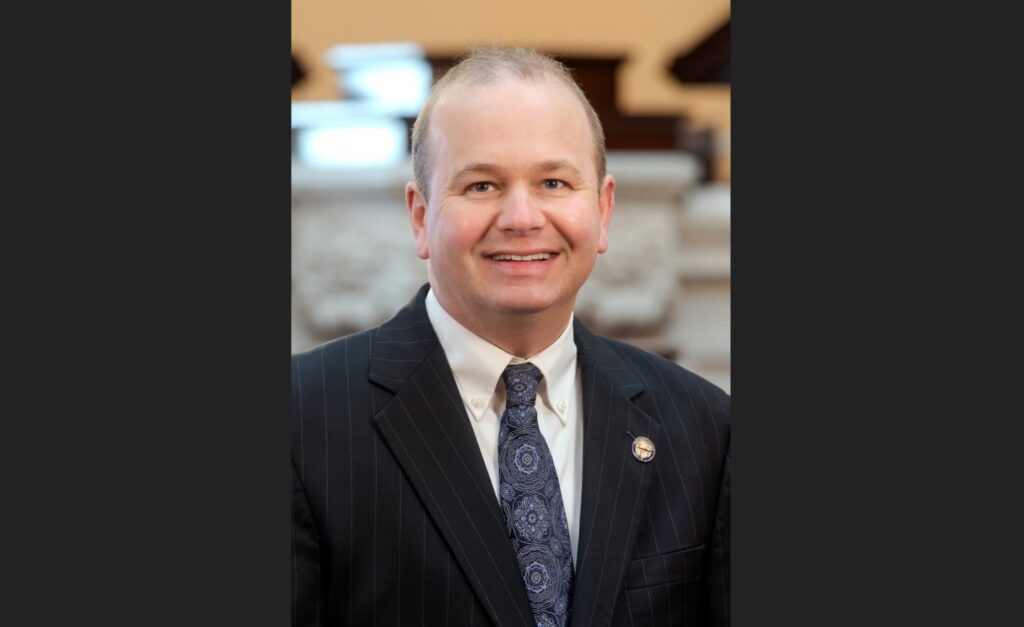
State Sen. Andrew Brenner, R-Powell. (Photo from Ohio Senate website) Senate Bill 209, introduced by state Sen. Andrew Brenner, R-Powell, is unlikely to impact school districts’ decisions for the fall, as lawmakers are on break until after most schools return to class. But the bill reflects continued attempts from those in the Ohio General Assembly to block public mitigation efforts of a virus that has killed more than 20,000 Ohioans to date.
SB 209 would prohibit the state school board, the Ohio Department of Education or individual school districts’ boards of education from requiring anyone to wear facial coverings in a public education setting.
K-12 schools and universities would not be able to require masks for students, teachers, staff members or visitors. Masks would not be required for in-class learning, any school athletic event or other school function.
“An individual may choose to wear a facial covering but shall not be required to do so,” the bill states.
Such mandates could still come from outside the education system, as SB 209 notes that health departments retain the authority to take “action to prevent the spread of a communicable or contagious disease.”
A separate provision in SB 209 deals with mask mandates imposed by private businesses. The businesses would be able to require masks, but “shall post notice of the requirement in a conspicuous place.” The notice must “state that an exemption to the requirement exists for individuals that have a documented medical condition that contraindicates the wearing of a facial covering.”
Brenner helped to enact the recent law barring public schools from issuing vaccine mandates — a law that does not go into effect until mid-October.
Shortly before lawmakers recessed for the summer, Brenner added the amendment to an unrelated bill involving education for children with parents in the military.
The Republican supermajorities, which have been critical of public mandates throughout the duration of the pandemic, swiftly approved that bill.
Gov. Mike DeWine had pledged to veto any bill that would “discourage vaccination,” but nevertheless quietly signed it into law last week.

Ohio Gov. Mike DeWine is seen at a coronavirus press conference in 2020. He had pledged to veto bills that discouraged vaccination. Photo courtesy The Ohio Channel. A year ago, when Ohio districts weighed a return to in-person instruction for the 2020-2021 school year, Brenner argued such decisions should be made at a local level, not by the state government.
“Why would you not trust your local school boards and superintendents who know their schools districts the best, taking information from state and local health departments to be able to determine whether or not their local school districts should be open?” Brenner asked in June 2020.
The legislature has since taken away local decision-making regarding school vaccine mandates, and under Brenner’s SB 209, the same would be true for mask requirements.
-
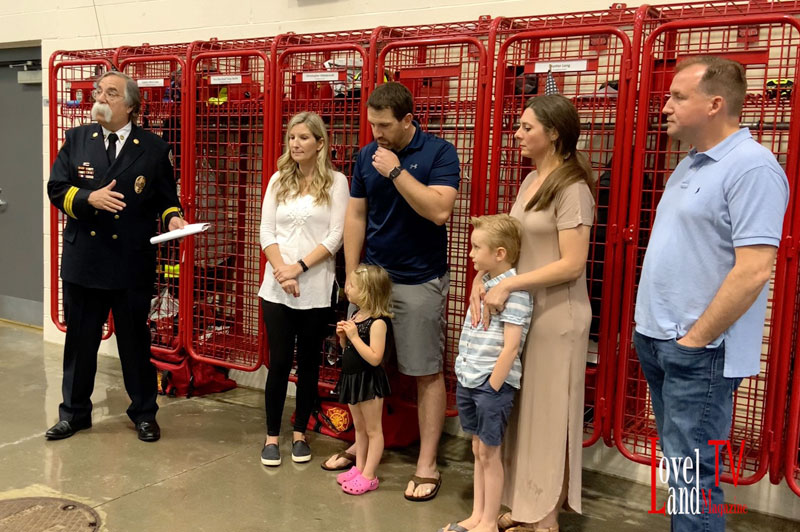
Important message from Deputy Fire Chief Billy Goldfeder about summer pool safety
Loveland, Ohio – As the water fun season is upon us, we are taking this opportunity to aggressively remind our Loveland-Symmes community, along with the greater Cincinnati area of the critical importance of water safety awareness and children.
Watch this important message from Deputy Fire Chief Billy Goldfeder of the Loveland-Symmes Fire Department.
Goldfeder delivered this message immediately after Six-year-old Holden Patrick Smith receives honor and becomes the youngest Loveland-Symmes firefighter for saving the life of his cousin. Read that story HERE.
-

Living with COVID-19 among us
Warren County Health District (WCHD) is administering free vaccines Monday through Friday from 8 AM until 3:30 PM at 416 S. East Street Lebanon OH 45036 Walk-in basis or you can call 513-695-SHOT for an appointment.
Release from the Warren County Health District
COVID-19 Variants, including the Delta Variant first seen in India, may play a part in our daily lives going forward. There have been cases of COVID-19 Delta variant in Warren County, in Ohio and now 50% of samples tested for variants in the US are Delta. We must learn to live with COVID in our communities. Please see the following list of things to do to protect yourself, your family, and your friends.
Stay home if you are sick
• Stay home except to get medical care
• Take care of yourself. Get rest and stay hydrated. Take over-the-counter medicines, such as acetaminophen, to help you feel better.
• Stay in touch with your doctor. Call before you get medical care. Be sure to get care if you have trouble breathing, or have any other emergency warning signs, or if you think it is an emergency.
• Separate yourself from other people
• Monitor your symptoms
• Get Tested
• If you are sick, wear a mask over your nose and mouth
• Cover your coughs and sneezes
• Clean your hands often
• Avoid sharing personal household items
• Clean all “high-touch” surfaces everyday
Stay home if you might have been exposed to COVID-19 if you have NOT been vaccinated
• Stay home for 14 days after your last contact with a person who has COVID-19.
• Watch for fever (100.4◦F), cough, shortness of breath, or other symptoms of COVID-19
• Stay away from others, especially people who are at higher risk for getting very sick from COVID-19Options to reduce quarantine
– After day 10 without testing
– After day 7 after receiving a negative test result (test must occur on day 5 or later)
Stand back from others when out and about
• When you are at the grocery, at an event, or somewhere with others, stand back a bit. Stand back a few feet when in line at the grocery. Take a different aisle at a store if the aisle is crowded. When meeting someone on the street, stand back a few feet while having a conversation. You can still interact with people, just be aware of spacing and hand washing.
• Consider wearing a mask when you cannot avoid being within 6 feet of others, especially in crowded indoor spaces (vaccinated or not vaccinated).
If you are not vaccinated, consider wearing a maskWe are all sick of the masks, but if you have not been vaccinated, you can be at high risk of getting COVID from a variant that is in the community. Protect yourself. The masks do not “filter” every virus, but we have seen over the last year that the masks DO stop droplets from entering your nose or mouth. The virus rides in on these droplets. Just like children on Chemotherapy wear masks when their immune system is down, we can protect ourselves the same way.
Warren County Health District (WCHD) is administering free vaccines Monday through Friday from 8 AM until 3:30 PM at 416 S. East Street Lebanon OH 45036 Walk-in basis or you can call 513-695-SHOT for an appointment. -
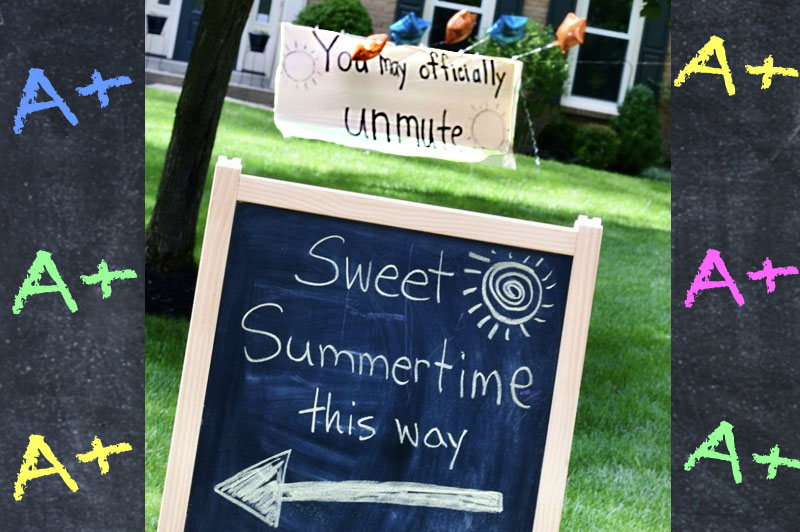
1st grade teacher to her ‘Stay at Homies’ Thank you for believing in me
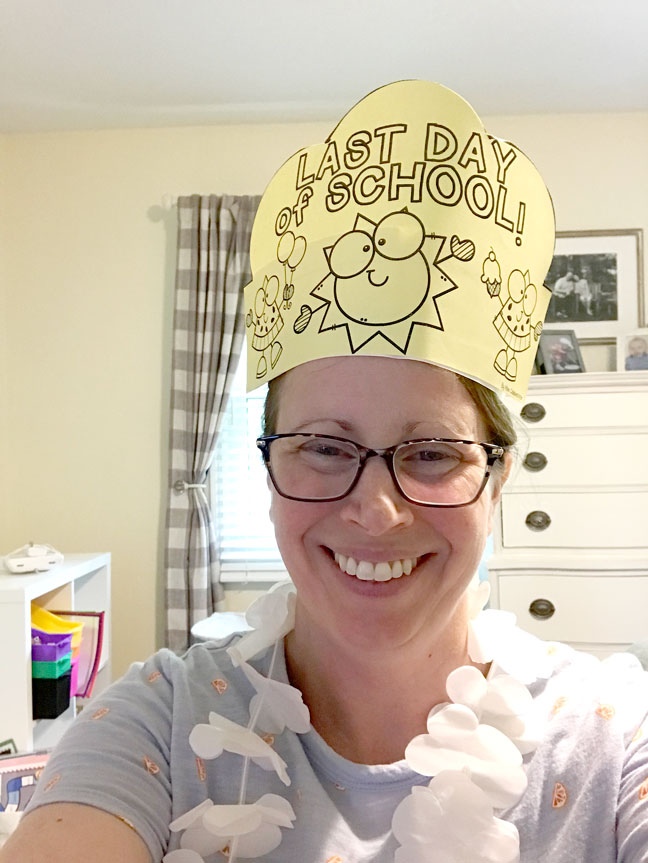
by Jennifer Miller
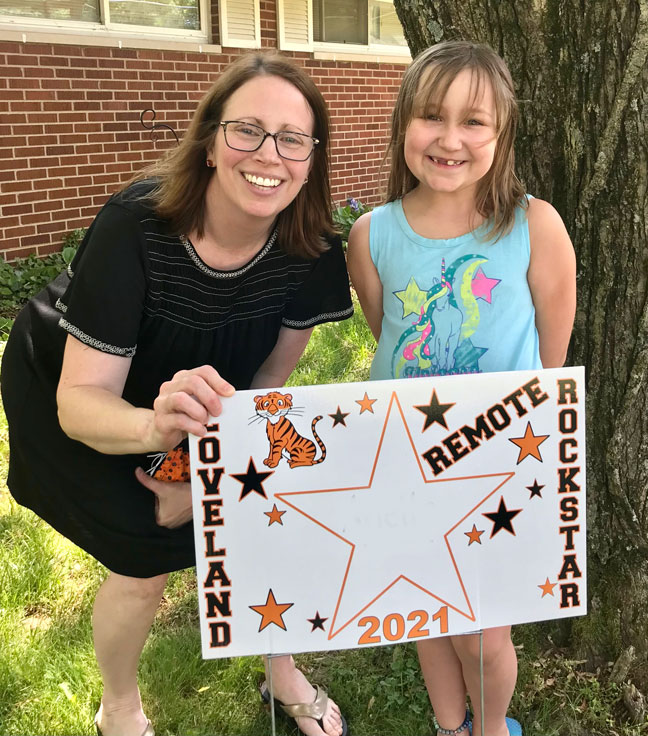
During this past year, I took on the challenge of teaching a remote section of first grade for Loveland Schools. To date, this has been the most difficult work situation that I have faced as a teacher during my twenty-three-year career. I started the school year with 38 first graders. Just that hurdle alone made this an imposing task from the start. I remember thinking to myself, “How will I ever be able to deliver meaningful instruction to that many six and seven-year-olds? How will I establish a relationship with each one of them? What if I let my students down?”
My remote teaching team and I immediately had to dig in and make this work for our students. I quickly figured out how to manage thirty-plus students on Zoom calls during the day and created a daily schedule. I did my best to find helpful answers to parent questions and concerns, even though I often didn’t have the answers because so much of what we were doing was new to us all. As the first few weeks turned into the first month of remote learning, I found my way and admitted to my parents that I may not have all the answers about all the new challenges of this unique school year, but what I do know about is the development of six and seven-year-olds. So I asked for their trust. And the rest, as they say, is history.
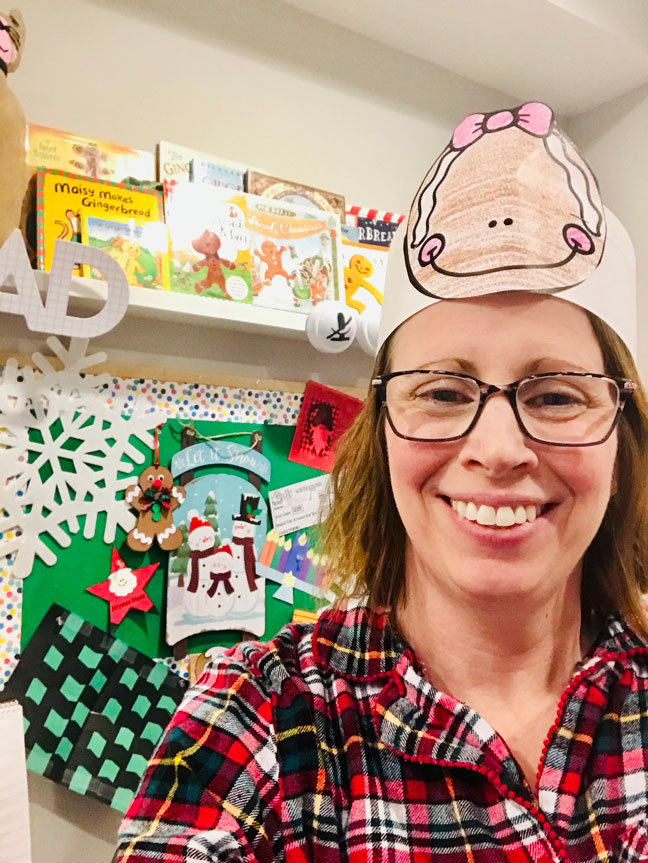
After many afternoons and nights of stress and reinventing my practices to meet the needs of the situation, I pulled up my bootstraps and really dug into the school year. I had a job to do and my students deserved and needed my very best. I became the technology and wifi expert at my home, I figured out routines such as bi-weekly supply pick-ups; monthly drive-ups at my home for treats, crafts, and encouragement; and I came up with a working schedule that would not overwhelm our district’s young remote learners – or their parents or caretakers, with whom I recognized the need to partner with more than ever. As the year progressed, I had many students transition back to in-person school and from late winter to the end of the school year, I had eighteen students.
I can say with confidence that my students had a wonderful and meaningful learning experience this school year. My parents, students and I worked hard to create a caring and respectful online learning environment. On any given day on any given zoom call, my students and I could be found laughing and learning and being silly. We knew the names of each other’s pets, siblings, and other family members. We even knew what everyone had for lunch. Simply put, we were a learning community and, by extension, a family.
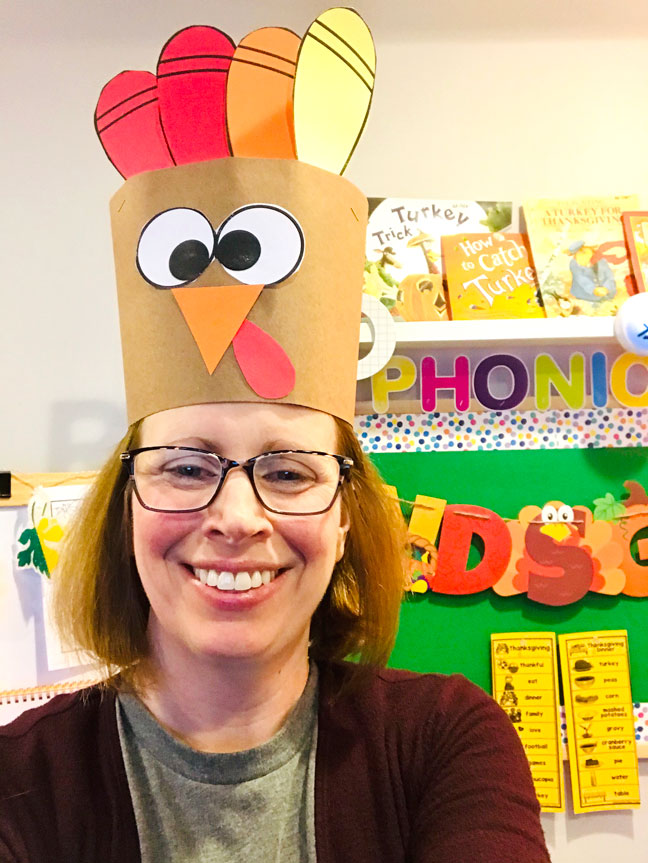
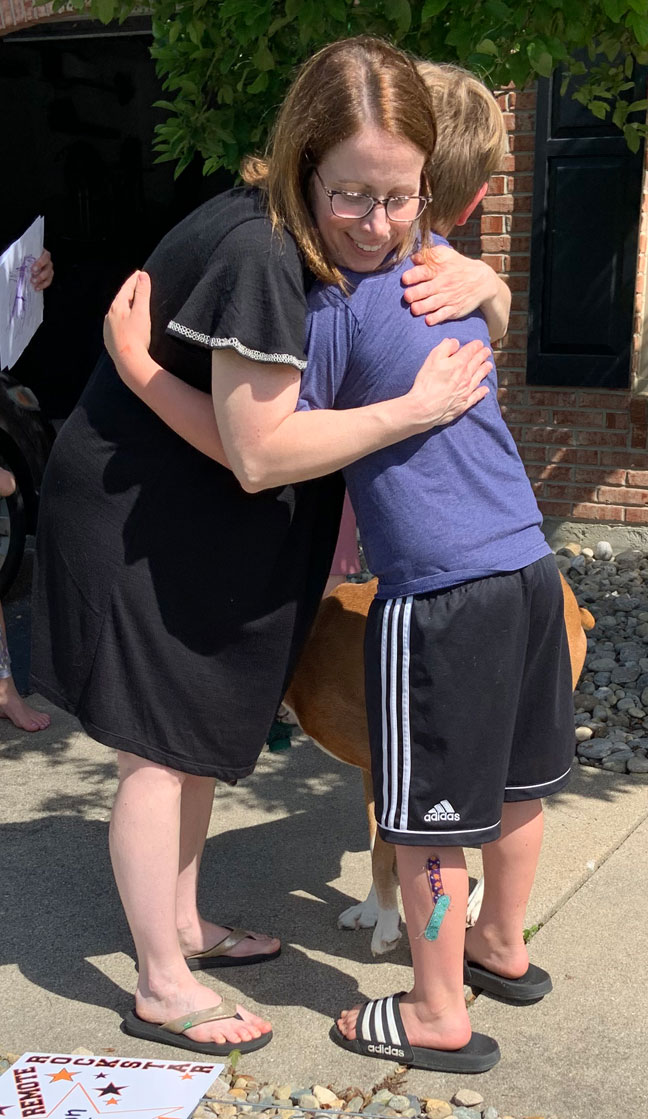
I invited my families to drive by my home in Loveland every month of this past school year so that we could say “hi” in person. I usually had a small treat for them, and I collected a lot of notes, cards, and flowers through the windows of their cars. Those drive-thrus proved to be one of the highlights of our school year together. A few even left me in tears afterward as I realized how awesome we all had made a difficult situation. To be honest, it was a great relief and extra rewarding to find that we could still have such a strong, supportive, and caring learning community in the midst of a pandemic while doing remote school from home. We celebrated birthdays, holidays, and milestones together such as the 50th and 100th days of school. During the Spring we celebrated being reunited with family members and friends as vaccines became available. And on a daily basis, we celebrated each other’s reading, writing, and goals scored over the weekend at soccer. And of course, lost teeth and new haircuts.
As I look back on our school year, I can safely say that we all had a wonderful school experience. Somewhere in between bad wifi connections and reminding them to “unmute,” all of our wrinkles and rough spots were smoothed over. My hope for my remote students is that when they look back on being a kid many years from now, that some of our memories will be there for them and spark joy. Maybe they will remember our renditions of the Gingerbread Man through reader’s theater. Or maybe the puppet shows put on with their siblings as they retold a story via video. Or maybe it was the simple joy of buddy-reading with a friend in a Zoom breakout room. I know for me, when I look back on this school year, I will remember the faces that greeted me each day with a smile during this pandemic and the trust they had in me all along.
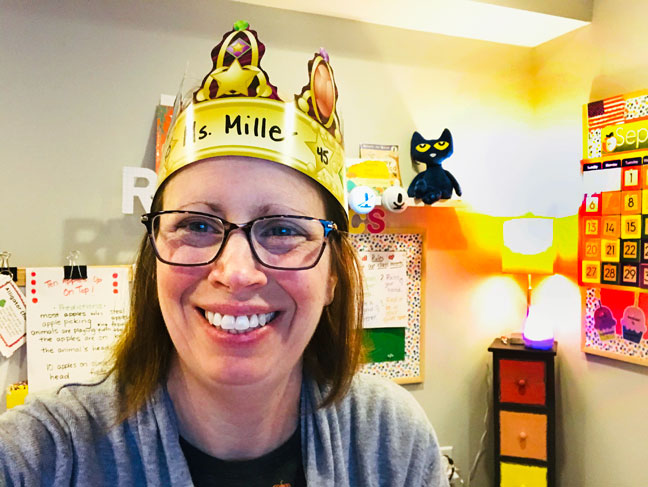
To My Stay at Homies: Thank you for believing in me. Thank you for believing in yourselves. Thank you for always having a smile on your face even when you didn’t want to be on a Zoom Call. Thank you for letting me into your home each day. Thank you for sharing your funny stories and jokes with me. Thank you for finding humor in something each and every day. Thank you for laughing at how silly Frog and Toad were with me. Thank you for always asking how I was doing. Thank you for being my anchor during a tough and sometimes sad time. Thank you for being you.
I love all of you and I can’t wait for more hugs and to see you at LPS in August.
Love,
Ms. Miller









-

Fishing Tournaments at Lake Isabella
All tournaments are two-person team events, but individuals are permitted to fish alone. A maximum of two rods are permitted per angler in all events except the Bass Series tournaments, where only one rod may be used. Live bait is permitted at all events, except the Bass Series tournaments, where only artificial lures are permitted. Stringers are prohibited in all tournaments. Teams must have their team ID bobber on the tournament board before the end of the event in order to weigh their fish. Kids’ Derbys and Mystery Fish Challenges are not tournaments, and prizes will be awarded to every kid who fishes. Anglers can register for tournaments on-site the day of the event or in advance online.
Great Parks 2021 fishing events were made possible by a grant from the Bass Pro Shops and Cabela’s Outdoor Fund and a donation from Wanglers.
Registration
2021 Events Schedule & Entry Form

Kids’ Mystery Fish Challenge – Lake Isabella
09-06-2021 09:00 AM
Location: Lake Isabella Boathouse
Cost: Free/family (up to five people maximum per family, advanced registration is required)
Date: September 6, 2021, 9–11 a.m. ***Please note registration opens for this activity on August 9, 2021.These events are intended for children under 16 years of age, accompanied by an assisting adult. Live bait is permitted. Prizes will be awarded in three age groups to the kid who weighs in a fish closest to the mystery fish weight. Any species of fish can be weighed. Trophies will be awarded to every kid who catches a fish.Great Parks is following protocols from the Centers for Disease Control and Prevention and the Ohio Department of Health. Physical distancing and sanitation recommendations will be followed during all fishing tournaments. All anglers are required to wear a face mask that covers both the nose and mouth when inside and outside if physical distancing is not possible.

Rod Busting Series Lake Isabella
08-20-2021 09:00 PMLocation: Lake Isabella Boathouse
Cost: $50/team, includes boat rentalDate: August 20, 2021, 9 p.m.–3 a.m.
During this tournament, two-person teams fish for a six-fish limit of catfish and carp. The two teams with the heaviest weight at the end of the tournament will win prizes. Grand prizes will be awarded to the series champions and angler with the largest catch after the seventh event of the season. Sign in begins one hour before the tournament.
Great Parks is following protocols from the Centers for Disease Control and Prevention and the Ohio Department of Health. Physical distancing and sanitation recommendations will be followed during all fishing tournaments. All anglers are required to wear a face mask that covers both the nose and mouth when inside and outside if physical distancing is not possible.
- 10-23-2021 08:00 AMLocation: Lake Isabella Boathouse
Cost: $50/team, includes boat rental
Date: October 23, 2021, 8 a.m.–2 p.m.
During this tournament, two-person teams fish for a six-fish limit of catfish and carp. The two teams with the heaviest weight at the end of the tournament will win prizes. Grand prizes will be awarded to the series champions and angler with the largest catch after the seventh event of the season. Sign in begins one hour before the tournament.
Great Parks is following protocols from the Centers for Disease Control and Prevention and the Ohio Department of Health. Physical distancing and sanitation recommendations will be followed during all fishing tournaments. All anglers are required to wear a face mask that covers both the nose and mouth when inside and outside if physical distancing is not possible.
REGISTER
- 10-23-2021 08:00 AMLocation: Lake Isabella Boathouse
-
She says vaccines make you magnetized. This lawmaker invited her testimony
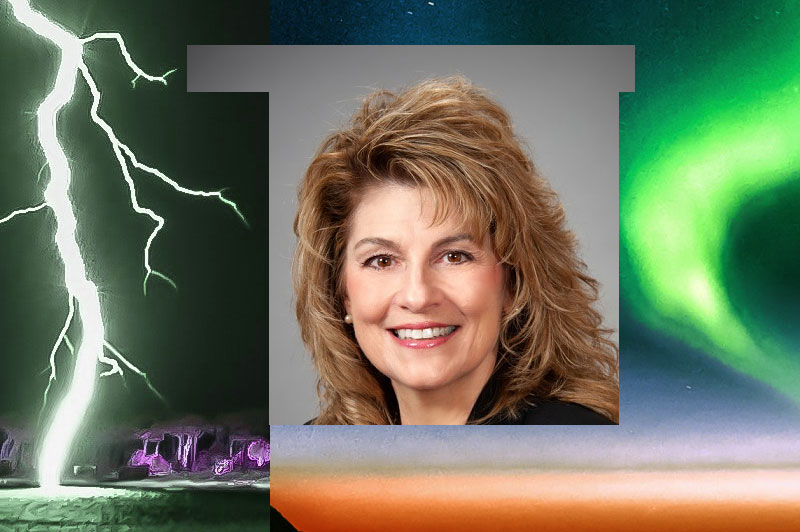
Republican Rep. Jennifer Gross of West Chester
By Jake Zuckerman and Ohio Capital Journal
Columbus, Ohio – After a discredited doctor’s conspiracy theories involving COVID-19 vaccines, magnetics and 5G towers made a mockery of the Ohio House of Representatives, the Health chairman blamed the sponsor of anti-vaccination legislation for inviting the doctor to testify before the committee.
House Health Committee Chairman Scott Lipps, R-Franklin, said in an interview that fellow Republican Rep. Jennifer Gross of West Chester personally requested that Cleveland area physician Dr. Sherri Tenpenny testify in support of Gross’ bill, the “Vaccine Choice and Anti-Discrimination Act.”
Lipps said he warned against Tenpenny, but Gross “vehemently” overrode his objections.
Tenpenny is a prominent anti-vaccination advocate who was deemed “unreliable” by a special master in federal court, who forbade her testimony as an expert witness in an alleged vaccine injury case.
Gross also personally invited Fremont attorney Tom Renz to testify at the hearing. A federal judge similarly blasted as “incomprehensible” a federal lawsuit Renz filed alleging “tyranny” from Ohio’s government regarding the pandemic.
Lipps said Gross and Stephanie Stock, president of anti-vaccination advocacy group Ohio Advocates for Medical Freedom, were adamant.
“We did not include Tom Renz or Sherri Tenpenny on our agenda,” he said. “They protested, called me personally, and said they wanted Renz and Tenpenny.”
Renz and Tenpenny both testified in support of Gross’ House Bill 248, which would prohibit colleges, insurers, hospitals, nursing homes, employers and others from requiring, incentivizing or asking about vaccination — all vaccines, not just for COVID-19. Public health experts have said in previous interviews the legislation would suppress Ohio’s vaccination rates against a number of diseases and increase the likelihood of outbreaks of infectious disease.
The bill drew huge public interest, prompting the committee to allow only certain, invited witnesses to testify.
Tenpenny, one of the few invited witnesses, unleashed a torrent of inaccurate and bizarre claims about purported dangers of the vaccine. She alleged that vaccinated people become “magnetized,” as evidenced by pictures on the internet of them with forks and spoons sticking to their persons.
“There has been people who have long suspected there was some sort of an interface, yet to be defined, an interface between what’s being injected in these shots, and all of the 5G towers,” Tenpenny said.
See footage of Tenpenny’s comments to the committee here.
The comments, which are not accurate, would soon drag the Ohio House through lampooning national media coverage and ridicule from late night comics like John Oliver and Stephen Colbert.
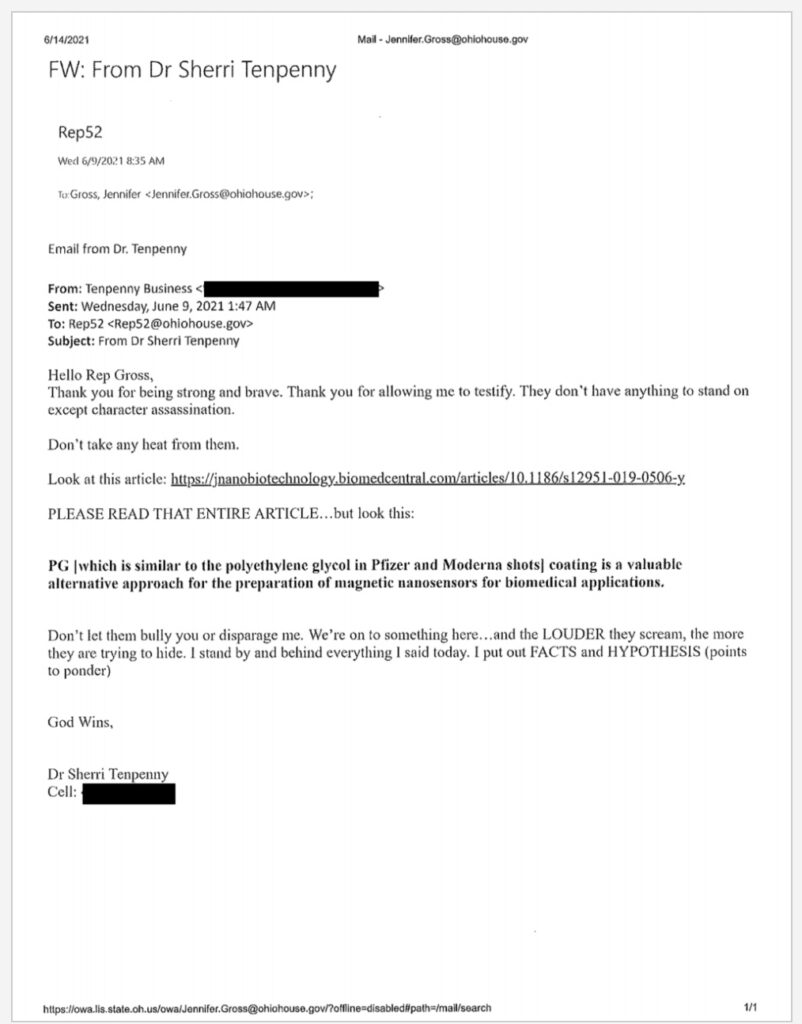
At 1:47 a.m. the day after Tenpenny’s comments, the doctor emailed Gross to thank the lawmaker for being “strong and brave” and allowing her to testify, according to an email obtained in a public records request.
In the email, Tenpenny sent a largely unrelated article from the Journal of Nanobiotechnology examining the biochemical functionality of magnetic particles as nanosensors, which are used in cancer diagnosis and treatment. Tenpenny seemed to claim it as proof of her comments regarding COVID-19 vaccines.
“Don’t let them bully you or disparage me,” she wrote. “We’re on to something here… and the LOUDER they scream, the more they are trying to hide. I stand by everything I said today. I put out FACTS and HYPOTHESIS (points to ponder).
God Wins,
Dr. Sherri Tenpenny.”
The day after the testimony, with the comments going viral online, Gross came to Lipps’ office and said she needed help with “damage control,” according to Lipps’ remarks in an interview.
Gross declined to confirm or deny Lipps’ account or answer emailed questions. She said she’s busy and considers the questions “old news.” However, she claimed Lipps praised Renz’s testimony and alleged he thought Tenpenny “sounds great.”

Ohio House Health Chairman Scott Lipps. Source: Ohio General Assembly. Lipps denied saying this.
“I would expect nothing different from Rep. Gross,” he said in a text message to the Capital Journal. “I have quickly learned she [accepts] no responsibility for her actions or decisions and is quick to blame anyone and everyone. Also, the first agenda we [put] out for proponent testimony had NO Renz and NO Tenpenny. Rep. Gross vehemently objected.”
When the House Health Committee met a week after the comments went viral, Lipps defended the practice of bringing in witnesses like Tenpenny, even if doing so made people “uncomfortable.” He emphasized the importance of hearing from those one disagrees with.
“Please step outside your own little world and understand that people are not all the same, and they don’t all believe the same,” he said. “You are not always right.”
Ohio Advocates for Medical Freedom helped draft Gross’ HB 248 legislation and has paid for a spread of radio ads to gin up support for the bill, according to disclosures with the Federal Communications Commission.
Stock — president of the group, which researchers found to be the fourth-largest purchaser nationwide of anti-vaccination ads on Facebook — declined to answer questions for this report.
So who is Sherri Tenpenny?
Most Ohioans had probably never heard of Tenpenny before video of her June 8 testimony went viral.
In anti-vaccination corners of the internet, however, she’s something of a celebrity doctor.
She is close with Alex Jones, a conspiracy theorist and media figure who is facing libel lawsuits after claiming the Sandy Hook school shooting that left 20 young children and six adults dead at a Connecticut school was a “giant hoax.” The two have been friends for 20 years, they both said in a recent interview on Jones’ show.
On a recent episode of her podcast, Tenpenny interviewed pillow magnate Mike Lindell, who is among the loudest backers of former President Donald Trump’s lie that the 2020 election was rigged. Lindell and his company are also facing libel suits related to these claims.
While Tenpenny has repeated similar claims of election fraud, her primary focus is vaccines and wrongfully depicting them as dangerous.
“Vaccines are now, and people, listen to this closely, always have been a method of mass destruction, a method of depopulation,” she claimed earlier in 2021.
Tenpenny’s anti-vaccine activism has generated multiple related revenue streams for her. She hosted a “boot camp” this year for $623, training people to convince others to refrain from vaccination. In May, she hosted a live streaming training event to explain the “20 mechanisms of injury from the shots” — platinum package tickets went for $199. Her 2008 book, “Saying No to Vaccines: A Resource Guide for all Ages,” isavailable on Amazon for $877.95, one of several similar titles she has authored.
Despite this work, Tenpenny does not follow acceptable scientific methodology, her testimony is “unreliable” and she is “unqualified” to address vaccine injury, according to Special Master Richard Abell, appointed by the U.S. Court of Federal Claims.
Abell made these remarks in a 2010 ruling that blocked Tenpenny’s testimony on behalf of a man who alleged a hepatitis B vaccination gave him Guillain-Barre syndrome, a rare side effect of vaccination.
The legal standard, he wrote, calls on judges to presume admissibility of testimony of an expert witness. However, he found her methodology “so divergent from the scientific method as to be nonsensical and confusing,” prompting his ruling.
“Her ideas on vaccine injury have not been exposed to any critical analysis of those in the relevant field, let alone peer-reviewed medical journals,” he said. “There is no way to ascertain whether Dr. Tenpenny’s opinion is credibly accepted by those who would know; there are only the patent defects in her report that militate for the opposite.”
Tenpenny did not respond to repeated phone calls.

Tom Renz speaks to the House State and Local government Committee Feb. 17. Source: Ohio Channel. Who is Tom Renz?
After Tenpenny wrapped up her testimony on June 8, Fremont attorney Tom Renz addressed the committee.
Renz obtained his law license shortly before the pandemic began and his legal career has since wrapped around it. (He says he previously clerked for an Indian Supreme Court justice but doesn’t remember when.)
He is currently representing clients in COVID-19 related lawsuits against:
- Maine Gov. Janet Mills and related health officials
- Kentucky Governor Andy Beshear and related health officials
- New Mexico Gov. Michelle Lujan Grisham and related health officials
- The U.S. Department of Health and Human Services
- Health and Human Services Secretary Xavier Becerra
- Ohio Gov. Mike DeWine and related health officials (for the second time).
The lawsuits are sprawling, some stretching over 100 pages, and are rife with claims that the COVID-19 death count is “inflated,” that asymptomatic spread of disease is a “fallacy,” that masks don’t work and a deluge of other inaccurate and often debunked claims.
No cases have yet received any significant rulings. U.S. District Judge James Carr described the first lawsuit against DeWine as “a jumble of alleged facts, conclusory and speculative assertions, personal and third-party allegations, opinions, and articles of dubious provenance and admissibility.”
Renz withdrew the lawsuit and has since filed a similar case that awaits a ruling. Ohio Stands Up, a citizens group that acts as plaintiffs in the cases, created a crowdsourced legal fund to pay Renz and his partner, Robert Gargasz. The fund has raised nearly $140,000 since it launched around September 2020.
Earlier this year, Renz testified before a separate committee regarding a pandemic-related bill. YouTube ultimately removed footage of the hearing from its site for violating its COVID-19 misinformation policy.
Renz didn’t respond to an email.
Ohio Stands Up recently posted on Facebook a flier for an August fundraiser: “An Evening With Dr. Sherri Tenpenny and Attorney Thomas Renz.” Tickets cost $75.
-
DeWine signs bill to temporarily ban school COVID-19 vaccine mandates
By Jake Zuckerman and Ohio Capital Journal
His signature on the bill seems to violate his pledge to veto any legislation that would “discourage vaccination.”
Columbus, Ohio – Ohio Gov. Mike DeWine signed legislation Wednesday that could block schools from mandating vaccination against COVID-19 for the fall.
In the dying moments of the final legislative session before a summer recess, lawmakers tacked the vaccine provision as an amendment onto an unrelated bill regarding educational opportunities for military children. The amendment:
- Forbids public K-12 schools and colleges from requiring any vaccine that has not yet received “full approval” from the U.S. Food and Drug Administration.
- Forbids the schools from “discriminating” against anyone who has not been vaccinated, which includes infection control provisions like masks and social distancing.
- Does not apply to hospitals or health care facilities operated by or affiliated with universities.
It passed on party lines in both chambers, with Republicans in support and Democrats in opposition.
All three vaccines available for use against COVID-19 are approved under an “emergency use authorization.” The FDA uses this streamlined regulatory process for drugs and vaccines that can be used against an ongoing emergency such as the pandemic, which has killed more than 608,000 Americans to date. The regulators issued the temporary authorization after reviewing clinical trial data on tens of thousands of recipients. The FDA, along with the Centers for Disease Control and Prevention (CDC), continues to monitor safety and efficacy profiles of all three vaccines.
DeWine announced his approval of the bill without any public comment or fanfare. His signature on the bill seems to violate his pledge to veto any legislation that would “discourage vaccination.”
Dan Tierney, a spokesman for the governor, played up the bill’s original aims in an email and said DeWine expects looming regulatory approval to nix the issue.
“The primary purpose of the bill was to enhance educational opportunities for children in military families — a worthy goal,” he said. “The provision you are referring to is limited to vaccines that do not have full FDA approval. We are confident that these vaccines, proven repeatedly to be very safe and very effective, will be approved by the FDA, thus rendering this issue moot.”
Passage comes amid an ongoing clash between DeWine and fellow Republicans in the legislature regarding public health policy. Earlier this year, lawmakers overrode DeWine’s veto on a broad weakening of state public health laws.
Meanwhile, Republicans in the House Health Committee are considering legislation that would weaken state vaccination laws and prevent employers, nursing homes, hospitals, colleges and more from requiring vaccination of students and employees. DeWine has said he would veto the bill if it made it to his desk.
During a hearing on that bill, lawmakers — many of whom have announced their refusal to seek vaccination against COVID-19 and aligned themselves with anti-vaccination activists — invited testimony from a discredited doctor who has claimed vaccines are a “depopulation” and “mass destruction” tool.
DeWine’s signature furthers an emerging anti-vaccination push from Republican-controlled state legislatures. For instance, the Tennessee Department of Health halted all adolescent vaccine outreach and forced out its top vaccine official this monthunder pressure from Republican lawmakers, according to recent reporting from The Tennessean. Florida Gov. Ron DeSantis recently signed legislation to ban “vaccine passports,”which do not exist in most areas of the country but would theoretically be used by institutions to validate people’s vaccination status.
Under the new Ohio law signed by DeWine on Wednesday, schools can still technically require immunization against COVID-19 once the federal regulators issue a full-blown authorization. However, Ohio is one of about a dozen states that allows exemptions to school immunization requirements for “reasons of conscience” — something of a catchall term.
The new law’s sponsors, state Reps. Andrea White, R-Kettering, and Brian Lampton, R-Beavercreek, issued a lengthy statement regarding the help the bill will deliver for military children. They briefly addressed the vaccination issue.
“By prohibiting our educational institutions from requiring vaccines that are not fully approved by the FDA, we are ensuring that safety is at the forefront of our priorities,” they said.
The sponsors did not answer whether this means they consider the vaccines to be unsafe.
Two Democrats on the House Health Committee issued a statement Wednesday evening criticizing the new law, saying it puts “political self-interests” ahead of good health policy.
“With the arrival of the delta variant, this country is still in the midst of a dangerous pandemic and unvaccinated individuals are at highest risk,” said Rep. Allison Russo, D-Columbus.
“Public schools and universities deserve to have the flexibility to either require COVID-19 vaccines or establish mitigation procedures they deem appropriate for the circumstances in their communities. Instead, this bill further undermines trust in science and a vaccine that has saved the lives of thousands of Ohioans.”
This article was updated to reflect the legislation only applies to public schools and universities.
-

Mailbag: What’s the cost of sending Highway Patrol to the Texas border?
By Tyler Buchanan and Ohio Capital Journal
Welcome back to another installment of the Ohio Capital Journal Mailbag, which rank choice voting has shown is the most-read political column in the state. (Or at least is readers’ third pick.) Let’s get to it:
Got a question about Ohio politics/government? Send them by email to tbuchanan@ohiocapitaljournal.com or tweet them to @tylerjoelb.
Any new state symbols (cookies, dogs, insects, etc) up for a vote any time soon?
– @winzigpedia
Answer: You bet your sweet bippy!
Actually, lawmakers are on summer break right now. But hopefully they get to these crucial bills upon returning to Columbus.
In the previous legislative term, state Reps. Jessica Miranda, D-Forest Park, and Brigid Kelly, D-Cincinnati, sponsored a bill to designate the sugar cookie as Ohio’s official state cookie.

State Reps. Brigid Kelly, D-Cincinnati, and Jessica Miranda, D-Forest Park. Their bill received favorable committee testimony from schoolchildren as well as one very enthusiastic resident of Miami County, whose first page of written remarks just included the words “sugar cookie” over and over 14 times.
The committee advanced the bill but it wasn’t taken up for a floor vote. (You wouldn’t believe the clout the snickerdoodle lobby has in this town.)
Undeterred, Miranda and Kelly are back again this year with House Bill 366. The new sugar cookie bill hasn’t received the same bipartisan support in 2021 as it did in 2019. Such is politics.
The full text of HB 366 is short and sweet: “The cookie with the main ingredients of sugar, flour, butter, eggs, and vanilla, commonly known as the sugar cookie, is adopted as the official cookie of the state.”
Besides sugar cookies, there has been a dearth of what I call “designation legislation.” There were plenty of bills like this during the last term, such as attempts to make the monarch butterfly the state butterfly; apple cider as the official state beverage; the All-American Soap Box Derby race as the official gravity racing program; and of course, everyone’s favorite, the dunkleosteus terrelli as the state fossil fish. Well, maybe not everyone’s favorite.
This term, though, it’s been pretty quiet. Maybe with the budget bill done we can move on to more important things. I propose the pothole should be Ohio’s official state driving hazard. Who’s with me?
Why is the Branch Rickey Memorial Highway in Delaware rather than Scioto County? Aren’t memorial highways usually near a person’s hometown?
– @nzchwest
Answer: Actually, there are stretches of highway in central andsouthern Ohio dedicated to the baseball legend. The story of Branch Rickey (and how he’s been memorialized) is a fascinating one. I think you’ve given me an idea for the next History Thursday column…
What are the big/important/meaningful changes in the OH budget that just passed?
– @RobotDevil83

Ohio Senator Matt Dolan, R-Chagrin Falls, introduces the Senate’s version of the budget.
Photo courtesy of the Ohio SenateAnswer: I assume you mean besides alcoholic bingo and a geology-themed license plate.
If I had to boil down the massive two-year, $74 billion state budget to some of its most important pieces, I think the main highlights would be:
- The school funding overhaul and other education policies;
- A major investment into broadband internet expansion;
- The income tax cut.
I’m curious to know how much it’s going to cost to send OSHP to Texas and who’s paying.
– @JackShelley5
Answer: One of those things we know, the other we don’t … yet.
First, some context. Gov. Mike DeWine recently announced a total of 14 troopers and supervisors with the Ohio State Highway Patrol will soon be heading to the southern border.
DeWine said this mission came at the request of Texas Gov. Greg Abbott. The Patrol officials will be there for two weeks, helping local law enforcement with border surveillance (though they will not be making any arrests).
As for who is paying: You and I are.
The mission is being paid for using state funds from the Ohio Department of Public Safety, which oversees the Patrol. Our tax dollars are going toward sending them to the border.
This differs from the larger deployment of 185 Ohio National Guard troops to the border; this mission is paid for by federal dollars.
How much will the Patrol mission cost?

Ohio Gov. Mike DeWine announced plans to send 14 members of the State Highway Patrol to the Texas border. Photo a screenshot from the Ohio Channel. “The Patrol will not know the exact cost until after the detail is complete,” an agency spokesperson told me.
This is a bit curious, as the department already knows exactly how many people are going and exactly how long they’ll be there. Us taxpayers footing the bill won’t know the cost until they return, it seems.
Got a question about Ohio politics/government? Send them by email to tbuchanan@ohiocapitaljournal.com or tweet them to @tylerjoelb.
Here are some important and interesting Ohio Capital Journal articles you may have missed:
Misinformation thrives at Spanish-speaking vaccination site; health workers are fighting back – Reporter Jake Zuckerman traveled to a vaccine distribution clinic in Lorain County to learn how health workers there are battling the spread of vaccine misinformation.
Wealthy state lawmakers to gain from income tax cuts in budget – The average Ohioan will save about $75 per year from the new income tax cut in the state budget, while rich lawmakers who approved the tax cut will save thousands, reporters Nolan Simmons and Jake Zuckerman write.
Attempts to reform drug middlemen surge in nearly every state– Ohio is among the many states trying to change the way pharmacy benefit managers do business, Marty Schladen reports.
Ohio ballots will list party affiliations for top judicial candidates– My story notes a change that may have big implications on the leaning of the Ohio Supreme Court for years to come.
Collin’s law signed to prevent hazing tragedies – Ohio is looking to crack down on college hazing, reporter Susan Tebben writes.
Education reforms in state budget could narrow achievement gap – Columnist Rob Moore highlights the potential impact of the Ohio budget’s school funding overhaul.