Author: Loveland Magazine

  • Loveland Area Firework Shows and activities

    Loveland Area Firework Shows and activities

    National Voice of America Museum of Broadcasting

    Taps Tastes and Tunes Festival

    8070 Tylersville Rd.  (GPS use Cox Road Entrance)   West Chester, OH 45069

    ​The Voice of America Museum will host the Taps, Tastes & Tunes over the 4th of July weekend.  From 1943 thru the mid 1990’s, Bethany Station, which is now the Museum, broadcast worldwide information about how democracy is the bedrock of the USA.  As we celebrate the birthday of our nation it is fitting that the celebration will happen in in the shadow of an iconic instrument of USA foreign communication.

    Friday, July 2nd, 5 pm-11 pm

    Saturday, July 3rd, 12 pm-11 pm

    Sunday, July 4th, 12 pm-10 pm

    Symmes Township & City of Loveland

    Symmes Township will be holding a joint Fourth of July fireworks display with the City of Loveland on Sunday, July 4th at dark. The fireworks will be set off at Symmes Park and Boike Park in Loveland.  Resident will be able to view the fireworks at Home of the Brave Park, the Meade Historical Preserve, Phillips Park or Loveland High School.

    Read about Loveland events…

    Lebanon

    Independence Day Parade – July 3rd, 4:00 PM – 06:00 PM

    Celebrate our nation’s independence at the Independence Day Celebration! This free family-friendly event starts at 6 pm at Colonial Park West.

    Kids activities include a petting zoo, games and balloon animals. There will be live music from TIMESTAMP starting at 7 pm. Food and snow cones will be available for purchase.

    Fireworks, by Rozzi’s Famous Fireworks, start at 10 pm.

    Parking is available at the Warren County Fairgrounds. Handicap accessible parking is available at Colonial Park West.

    Milford Sparks in the Park

    Friday, July 2 from 8 pm to 10 pm
    at Riverside Ballfield

    Friday, July 2 from 8 pm to 10 pm
    at Riverside Ballfield

    Read more…

    Montgomery

    BAMSO Symphony Concert

    Friday, July 2

    Independence Day Parade & Festival

    Saturday, July 3

    INDEPENDENCE DAY CELEBRATION!

    Madeira

    July 3, 2021 – McDonald Commons
    Madeira Mile – 5:30 PM
    Parade – 6:00 PM
    Party – 7:00 PM
    Fireworks – 10:00 PM

    Red, White & Blue Ash

    Events start at 10:00 p.m. Sunday, July 4, at Summit Park, 4335 Glendale Milford Road, Blue Ash. Read on…

    Mason

    July 3 Downtown Block Party Read about it HERE

    Kings Island

    4th of July Fireworks

    July 3 – July 4 (Sat, Sun) 11:00 PM – 10:00 PM Read more…

  • House passes bill creating new criminal charges for protesters

    House passes bill creating new criminal charges for protesters

    Photo by Sam Smith for Loveland Magazine of racial justice rally in Inwood Park, Cincinnati – Sunday, March 31st, 2020

    By Jake Zuckerman and Ohio Capital Journal

    Ohio House Republicans passed legislation Friday that would expand the definition of “obstruction of justice” broadly enough to capture protest activity, according to social justice activists and civil rights advocates who testified against the bill. 

    The legislation would qualify failing to follow a “lawful order from a law enforcement officer” as the obstruction of justice.

    It also prohibits a person from interfering with or obstructing a police officer at work with “reckless disregard” as to whether the action diverts or obstructs the officer’s attention. This includes entering or placing an object somewhere that’s large enough that the officer cannot reach a person outside the area.

    Republicans said the legislation establishes basic protections for officers after a year of increasing violence and tumultuous social justice protests.

    Democrats said the legislation is unhelpful and divisive. Rep. Jeff Crossman, D-Parma, said it “fans the flame of culture wars and is yet another dog whistle about race.”

    Crossman offered an amendment to exempt anyone from charges who uses or threatens to use force against an officer if they’re “acting in good faith” to prevent death or serious bodily injury. The amendment failed on party lines. 

    Additionally, the legislation would prohibit a person from throwing any object or substance at an officer “with intent to distract.”

    The bill largely addresses conduct that’s already illegal under Ohio law, according to analysis from the Legislative Service Commission. It provides prosecutors more charges they can impose on alleged violators.

    The expanded obstruction of justice charges would be second-degree misdemeanors, or fifth-degree felonies if they cause physical harm to a person. Second-degree misdemeanorconvictions can yield sentences up to 90 days. Fifth-degreefelonies yield sentences between six and 12 months.

    After a Minneapolis police officer murdered George Floyd, an unarmed black man suspected of using a fake $20 bill, on camera last summer, massive racial justice protests formed around the country. Activists criticized racial profiling and the excessive use of force from officers unto people of color.

    Some of the initial protests descended into violence and looting. However, researchers reviewed 2,400 demonstrations nationwide between May and August 2020 and found fewer than 220 (about 7%) turned violent.  

    Regardless, Republican-controlled legislatures around the U.S. have introduced and passed different proposals to expand on or build new charges that can be filed against protesters. A more extreme proposal in Ohio sought to expand citizens’ rights to shoot in perceived self-defense during a “riot” — a loosely defined term in Ohio law.

    “This bill is not an anti-peaceful protest bill,” said Rep. Shane Wilkin, R-Lynchburg, one of the lead sponsors. “The key word is peaceful.”

    The version of the bill advanced by the House Criminal Justice Committee on Thursday is significantly narrower than what was introduced. “Taunt[ing]”an officer would have qualified as the obstruction of justice under the original bill draft.

    Republican Reps. Jeff LaRe of Violet Twp. and Wilkin sponsored the proposal. In their written testimony to the committee, they denied any intent to infringe upon individuals’ rights to free speech and assembly. They said it’s about protecting law enforcement officers.

    “Peaceful protests have turned violent when bad actors who are not involved in a police matter begin to taunt, harass, and overall interfere with law enforcement officers performing their duties,” they wrote.

    Racial justice groups, public defenders, the ACLU, religious organizations focused on social justice and the libertarian Americans for Prosperity spoke out against the bill.

    “The language in this bill will prevent innocent bystanders from exercising their Sixth Amendment rights per the U.S. Constitution,” said Tom Roberts, president of the NAACP Ohio Conference.

    “With the excessive force issues among our law enforcement here in Ohio and across the country, the timing of this bill is inappropriate and insensitive to many communities of color.”

    Advocacy groups representing police and prosecutors testified in support of the bill. Preble County Sheriff Mike Simpson, representing the Buckeye State Sheriffs’ Association, claimed some people seized on the unrest last summer as “an avenue to promote violence.”

    House Bill 22, he said, would outlaw “diversionary tactics” from those seeking to distract, disrupt and impede law enforcement.

    Analysts with the Legislative Service Commission, which conducts policy research for lawmakers, found the legislation will increase the number of offenders being sentenced to prison and may lengthen some terms. This could increase annual prison costs by between $3,000 and $4,000 per offender.

    Thomas Quinlan — who formerly served as Columbus chief of police, including during the protests last summer — testified in support of the bill on similar lines.  

    In May, U.S. District Judge Algenon Marbley issued a blistering, 88-page opinion prohibiting Columbus police from using tear gas, pepper spray, batons and rubber bullets against nonviolent protesters. He found officers used force “indiscriminately” and without provocation.

    “This case is the sad tale of police officers, clothed with the awesome power of the state, run amok,” he wrote.

    Just seven proponents testified in support of the bill, compared to more than 100 who opposed it, as noted by Ohio Legislative Black Caucus President Rep. Thomas West, D-Canton, in a statement after the vote.

    He said the bill “further sows the seeds of fear” by attempting to criminalize the right to protest.

    “This bill, not to mention similar legislation pending before this body, takes Ohio in the opposite direction of progress,” he said. “HB 22 will not promote the safety and security of our officers and of individuals exercising their First Amendment rights. It will only create more tension and potential for conflict.”

    The bill now goes to the Senate for consideration.

  • Ohio judge adds COVID-19 vaccination as terms of probation

    Ohio judge adds COVID-19 vaccination as terms of probation

    By Jake Zuckerman and Ohio Capital Journal

    A Franklin County judge recently began including vaccination against COVID-19 as a condition of defendants’ terms of probation.

    Common Pleas Judge Richard Frye said Thursday he added the vaccine as a condition on three cases this week of the roughly 20 sentences he imposed.

    He said he discussed the matter in open court with the defendants, and they attributed their unvaccinated status to procrastination. None raised any philosophical, medical or religious objection.

    Judge Richard Frye

    “It occurred to me that at least some of these folks need to be encouraged not to procrastinate,” Frye said in an interview. “I think it’s a reasonable condition when we’re telling people to get employed and be out in the community.”

    He declined to “speculate” what would happen if a defendant raised a medical, religious or philosophical exemption to vaccination, but said this is a different situation entirely than people who have simply put the matter off.

    An example: a man named Cameron Stringer entered a guilty plea for one charge of improperly handling firearms in a motor vehicle, for which he was sentenced to two years of probation (“community control,” as it’s known in Ohio).

    Stringer must submit to random drug screening; avoid further legal trouble; return a firearm in question to its rightful owner; and obtain a COVID-19 vaccine within 30 days and provide proof to the Probation Department, court documents show.

    It’s unclear how widespread this judicial practice is. Frye said he didn’t know if any other judges were doing anything similar. A spokesman for the Supreme Court, which oversees lower courts, said he didn’t know of any judges doing anything similar. However, he sent a link to a media report about a judge offering to shorten probation stretches for those who obtain a vaccine. 

    Gary Daniels, a lobbyist with the ACLU, expressed concern about the practice Thursday, comparing it to Ohio judges who have ordered defendants convicted of crimes not to procreate. 

    “It doesn’t have any real relationship to community control,” Daniels said of Frye’s practice, in a brief interview. 

    “At a minimum, it appears to be problematic.”

    Frye’s practice comes in a period of stagnation in a vaccination campaign against a disease that has killed more than 600,000 Americans. Despite a skyscraping death and morbidity toll; five $1 million lottery drawings for people who get vaccinated; and more than 6 months of availability, fewer than 48% of Ohioanshave started the vaccination process against COVID-19.

    “I just wanted them to be safe in the community,” Frye said.

  • Clermont Solid Waste District offers discounted compost bins

    Clermont Solid Waste District offers discounted compost bins

    When most people hear the word ‘compost’, they automatically think of a smelly pile of moldy food.

    However, when done correctly, composting does not smell bad and is a sanitary way to dispose of organic waste.

    There are many excellent reasons to compost and the greater Cincinnati area has numerous resources available to assist you on your composting journey. Composting yard, garden, and food waste at home saves transportation and disposal cost, and provides an environmentally sound way to manage waste, since yard waste makes up to 30 percent of the municipal solid waste stream. In addition, composting can provide excellent fertilizer for gardens, yards, and other plants. Adding compost to your garden will increase drainage and provide a continuous source of nutrients required for plant health.

    There are many different ways to start composting and no matter what your restrictions may be, there is a composting method that will work for you. At the most basic level, composting can happen when materials are placed in a mound and left alone. If you want a faster or more contained system, you can consider building or purchasing a composting bin. It is not necessary to have a bin, however, it can make it easier to turn the pile, keep the pile manageable, and remove finished compost. You can make your own bin out of wood or fencing and posts. You can also purchase a compost bin that is an enclosed system that will produce usable compost typically in less than a month. These types of bins include rolling bins, tumblers, enclosed bins, and worm bins.

    If you are interested in purchasing a composting bin, the Clermont County Solid Waste District has a limited amount of Earth Machine compost bins available for purchase for $50. Contact Hannah Lubbers at hlubbers@clermontcountyohio.gov for more details. Limited to one per person/household and first come, first served!

    Composting can be an easy and cost-effective way to improve the soil quality in your gardens and help your landscaping thrive. No matter how you choose to compost your organic waste, know that you are doing your part to help reduce the amount of waste that goes to our landfills.

  • Second interceptor well will protect county-owned drinking water from contamination at Beckjord

    Second interceptor well will protect county-owned drinking water from contamination at Beckjord

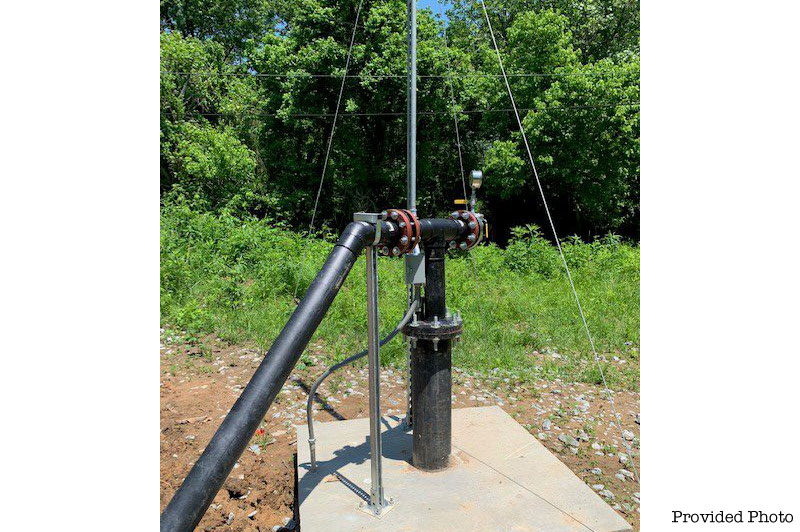
    Clermont County, Ohio – A second interceptor well is being constructed at the Beckjord Power Station site in New Richmond. The well will serve as a backup in case the original interceptor well fails. Operation of the well, which helps protect county-owned drinking water wells from contamination, is expected soon.

    In the early to mid-1990’s, Cincinnati Gas & Electric (aka Duke Energy) performed an investigation of the groundwater near the Beckjord Power Station.  As a result of the investigation, an elevated-sulfate groundwater plume was identified.  This plume originates from the power station’s ash ponds and extends towards the County-owned drinking water well fields that provide the raw water for the County’s P.U.B. Water Treatment Plant.  In order to help protect the County’s drinking water wells, Duke Energy installed an interceptor well to capture the sulfate plume.  The interceptor well initiated pumping on Feb. 4, 1994 and continuously removes groundwater with elevated sulfate concentrations and discharges it to the Ohio River under an NPDES Permit issued by the Ohio Environmental Protection Agency (OEPA).

    Since the installation of the interceptor well in 1994, quarterly groundwater monitoring reports have been submitted to OEPA, with copies sent to Clermont County.  These reports present and summarize analytical results from about 30 monitoring wells and piezometers located across the Beckjord property.  Within the reports, sulfate concentrations are used to monitor the movement and location of the contaminated groundwater plume.

    In 2014, Duke Energy shut down the Beckjord Power Station.  Then, in early 2018, ownership of the Beckjord Power Station property was transferred from Duke Energy to New Richmond Development Corporation (NRDC).  Since then, NRDC has been working to decommission the former power station in accordance with Ohio EPA requirements.  NRDC continues to operate and maintain the interceptor well and submit quarterly groundwater monitoring reports to Ohio EPA and Clermont County.

    Ohio EPA is the regulatory authority for all decommissioning work and environmental protection efforts at the former Beckjord Power Station site.  In an effort to help protect the citizens of Clermont County and our water resources, Clermont County regularly reviews groundwater monitoring reports and other information prepared by NRDC.  Following these reviews, Clermont County often provides comments, concerns and recommendations to Ohio EPA.  In 2019, Clermont County provided recommendations to Ohio EPA which included the installation of a second interceptor well to provide redundancy in the event the original interceptor well experiences failure.  Ultimately, Ohio EPA supported this recommendation, and on October 20, 2020, approved the Permit to Install for the second interceptor well.  NRDC has initiated construction of the second interceptor well and has indicated it will be operational in the very near future.

  • OhioMeansJobs.com links job seekers with potential employment

    OhioMeansJobs.com links job seekers with potential employment

    Columbus, Ohio – On Tuesday, Governor DeWine and Lt. Governor Husted announced the launch of a new, innovative resource on OhioMeansJobs.com that links Ohio job seekers with potential employment opportunities through the information provided on their resume. The announcement was made during a meeting of the Governor’s Executive Workforce Board at Columbus State Community College.

    “SkillsMatch” fulfills a promise made by the DeWine-Husted Administration to design a match-making application that connects people seeking work to businesses that are hiring. Supported by detailed data on the newly redesigned OhioMeansJobs website, this resource extracts job seekers’ skills from their resumes and links them to a job-match recommendation based on those skills.

    “The SkillsMatch tool reinforces our commitment to better connecting job seekers with in-demand positions,” said DeWine.  “As our economy continues to bounce back, I know that this new tool will help serve both Ohioans and Ohio employers.”

    “For job seekers and employers, we aim to be better at matchmaking than a dating app,” said Husted, Director of the Governor’s Office of Workforce Transformation. “This fulfills the promise Governor DeWine and I made to use technology to improve customer service, and there’s no better service than finding someone a great job that they enjoy, that pays them well, and that allows them to live their version of the American dream.”

    The resource allows job seekers to directly upload their resume to OhioMeansJobs.com, select the skills on their resume that they’d like matched with potential job opportunities, and watch in real-time as the tool displays which skills line up with a particular job posting. Additionally, SkillsMatch will show job seekers which skills are missing from their resume based on keywords in job postings on the site, giving them the opportunity to improve and update their resume so they can have a better chance of matching with the kind of position they are seeking.

    The SkillsMatch tool was developed through the Governor’s Office of Workforce Transformation, InnovateOhio and the Ohio Department of Job and Family Services.

    OhioMeansJobs.com currently has 189,681 jobs posted with 103,025 that pay more than $50,000 per year.

  • Clermont Commissioners end State of Emergency

    Clermont Commissioners end State of Emergency

    Batavia, Ohio – The Board of County Commissioners voted on Tuesday to end a State of Emergency that had been declared on March 18, 2020, due to the COVID-19 pandemic. The action was taken in concert with State of Ohio, which ended its State of Emergency on June 18.

    The emergency declaration, along with a previous resolution delegating disaster functions in event of an absence of a quorum of the board, spelled out a succession of leadership and the authority of the county administrator in an emergency. It also exempted from the competitive bidding process purchases related to the emergency that were greater than $50,000 but less than $100,000, so long as no fewer than three informal estimates were obtained. The declaration also allowed the county to obtain state and federal funds.

    Pam Haverkos, director of the Clermont County Emergency Management Agency, thanked the commissioners for their support throughout the pandemic.

    “Clermont County has definitely proved that we are a really resilient community – and that’s a result of the relationships we have built, the collaborations amongst our public safety partners, public health department, healthcare providers, local government agencies, social service agencies, schools, non-profit organizations, faith-based organizations and residents,” Haverkos said.

    “Response and recovery to a pandemic truly requires the ingenuity of the whole community,” she added.

    Haverkos thanked Health Commissioner Julianne Nesbit and Clermont County Public Health for their tireless work, often done behind the scenes.

    “They are the backbone of our response and recovery operations,” Haverkos said.

    Clermont County held its first preparedness meeting on Jan. 31, 2020. The county officially opened its emergency operations center on March 16, 2020. Initially, the emergency operations team met daily and it gradually transitioned into weekly COVID Defense Team meetings.

    In January, an emergency hotline number (732-8500) was activated to facilitate access to vaccines. The number has received almost 17,000 calls. It remains in service.

    Public Health has administered 36,632 vaccinations. Combined with vaccinations from other providers, about 45 percent of the county’s residents have received at least one dose and 41 percent have completed their vaccines.

    Vaccinations continue for those ages 12 and older.

    “We can’t thank your staff enough and the whole health department for coordination from the very beginning all of the way through – daily updates and keeping everyone posted, most of all taking care of the citizens of Clermont County,” said Claire Corcoran, President, Board of County Commissioners. “What a tremendous, tremendous job all of you did.”

    “Every communication meeting there for a while seemed like there was always new information, a new change of direction,” Commissioner David Painter said. “It really was a changing environment where you had to adapt. We realize how stressful that was.”

    Commissioner Bonnie Batchler added: “You and your staff are always there in every emergency in Clermont County. From my heart, I thank you for what you have always done.”

  • Ohio House approves transgender sports ban for women’s athletics

    Ohio House approves transgender sports ban for women’s athletics

    By Tyler Buchanan and Ohio Capital Journal

    Ohio lawmakers approved a bill Thursday to allow college athletes to profit off their name, image and likeness, with Republicans adding an unrelated provision to ban transgender girls from competing in women’s high school and college sports.

    The last-minute addition of a provision dealing with the transgender sports ban set off a chaotic debate on the Ohio House of Representatives floor. Republican lawmakers defended the amendment as necessary to preserve the integrity and fairness of women’s athletics. Democrats condemned the effort as anti-LGBTQ+ and as being rushed through without a full legislative process.

    Gov. Mike DeWine too criticized the proposal.

    “This issue is best addressed outside of government, through individual sports leagues and athletic associations, including the Ohio High School Athletic Association, who can tailor policies to meet the needs of their member athletes and member institutions,” the governor said in a statement.

    The House provision was added to an otherwise bipartisan bill about college athletics which recently passed the Ohio Senate in a unanimous vote. 

    The House vote was 57-36, with one Republican joining the full Democratic caucus in voting against.

    Within hours, the Senate rejected the changes and worked to again pass legislation dealing with athletes benefiting from their personal “name, image and likeness” — without the transgender athletes amendment. Senators added this “NIL” language to an unrelated bill and included in a section dealing with the legalization of sports gambling. 

    The ball, so to speak, is back in the House’s court.

    Legislation to let college athletes benefit from their personal “name, image and likeness” — without losing their sports eligibility — has gained momentum in states throughout the country.

    Under the Ohio Statehouse proposals, college athletes would be able to sign endorsement deals with brands so long as the sponsorships do not conflict with deals already in place at their collegiate programs.

    “The example I would give is, if the school is a Nike school and the student gets an Adidas contract, they should be able to have that,” state Sen. Niraj Antani, R-Miamisburg, who first introduced the legislation, explained last week. “But they’re not going to be able to wear Adidas during a practice or during a media session that is an official team activity on or off campus.”

    With some states having already passed NIL bills, figures such as Ohio State University athletic director Gene Smith and head football coach Ryan Day have urged lawmakers to act quicklyso that programs like the Buckeyes would not face a competitive disadvantage with recruiting.

    As lawmakers consider the issue on a state-by-state basis, the National Collegiate Athletic Association is considering its own sweeping changes at the national level.

    The House amendment was introduced by state Rep. Jena Powell, R-Arcanum, who has repeatedly argued for the need to ban transgender girls from playing women’s  sports. She and fellow Rep. Reggie Stoltzfus, R-Paris Twp., are sponsors of the “Save Women’s Sports Act” which calls for the same ban as in Thursday’s amendment.

    Powell earlier criticized President Biden for selecting a Dr. Rachel Levine, who is transgender, to be the nation’s assistant health secretary.

    The Ohio Capital Journal previously reported there were five transgender girls who competed in women’s sports out of around 400,000 high school athletes in Ohio.

    A string of House Democrats spoke out against the amendment, including Minority Leader Emilia Strong Sykes, D-Akron, who called it a “poison pill” added to an otherwise agreeable bill.

    “This awful, terrible, disgusting, vile, worse-than-the-sticky-stuff-on-the-bottom-of-my-shoe amendment is in a bill that could have helped so many,” Sykes complained, noting it comes during Pride Month celebrating LGBTQ+ Ohioans.

    This story has been updated to include a statement from the governor.

  • Free Bicycle Helmet Giveaway for Children and Adults July 10 along bike trail in Morrow

    Free Bicycle Helmet Giveaway for Children and Adults July 10 along bike trail in Morrow

    Morrow, Ohio – Children and adults can get a free bicycle helmet, thanks to a joint effort between the Friends of the Little Miami State Park (FLMSP) and the Comprehensive Children’s Injury Center at Cincinnati Children’s Hospital Medical Center.

    Bike helmets will be handed out from 10 AM to Noon on Saturday, July 10, at the shelter next to the train depot at 240 Main Street in Morrow, Ohio, right along the bike trail. Helmets will be given at no cost to anyone age 3 and older, while supplies last. FLMSP volunteers will help fit the helmets on each person and provide safety tips.

    The supply of helmets is limited. Updates will be posted on the Friends of the Little Miami State Park FLMSP Facebook page, so be sure to check before heading to the park. The helmet giveaway is supported by grants of helmets from the Ohio Chapter of American Academy of Pediatrics and the Brain Alliance of Kentucky/BRIDGES.

    According to SafeKids.org, a properly fitted helmet can reduce the risk of head injuries by 45 percent. That’s why it’s very important for children and adults to wear one on every ride.

    The Friends of the Little Miami State Park is an all-volunteer, 501(c)(3) nonprofit organization working to maintain and improve the 50-mile Little Miami State Park paved trail. FLMSP works closely with the Ohio Department of Natural Resources to preserve the park’s natural river setting while creating a safe, enjoyable experience for all trail users.

  • City to install electric vehicle charging station in the Linda Cox parking area

    City to install electric vehicle charging station in the Linda Cox parking area

    Loveland, Ohio – The City was awarded a $15,000 reimbursement grant from the Ohio Environmental Protection Agency to install a dual port electric vehicle charging station in the Linda Cox Trailside Parking area. The total cost of the project is $16,566 and the City will pay the $1,566 difference. The charging station would belong to the City.

    Donovan Energy will install the charging station and be the site host making them responsible for signage, the network, station commissioning, and a five-year extended warranty.

    The grant requires that the City maintain the charging station for a minimum of five years and submit semiannual usage reports to the EPA during that period.

    It is anticipated that the project would be complete within two to three months. The equipment that is to be installed can accept payments. The City does not plan to charge for the usage of the charging stations at this time but has the choice to implement charges in the future.