Author: Loveland Magazine

  • Financial help for rent and utility payments in Clermont County

    Financial help for rent and utility payments in Clermont County

    The program covers rental payments that are late and overdue including late fees as well as utility payments, including gas, electric, fuel oil, trash removal, internet service, and water and sewer.

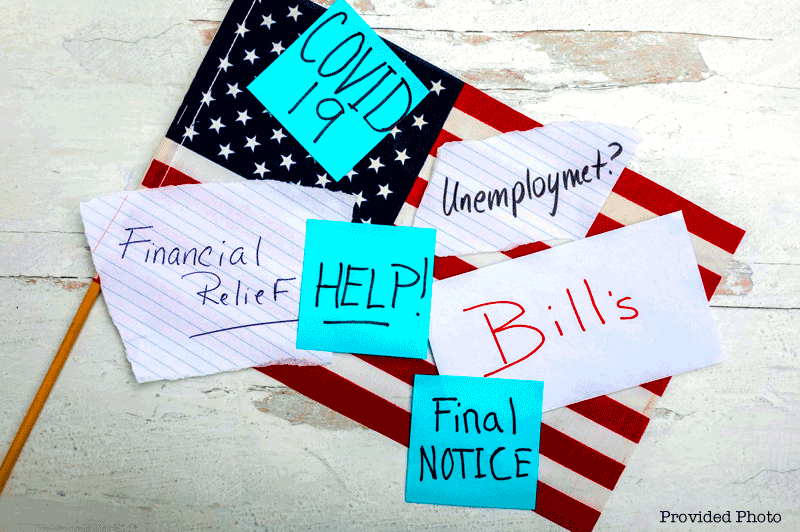
    Clermont County, Ohio – Residents who have fallen behind on rent and utility payments due to the pandemic can get financial help.

    How does the program work?

    The program was designed to assist Clermont County households that are unable to pay rent and utilities due to the COVID-19 pandemic. Eligible renter households may receive up to 12 months of past-due payment assistance and three months of future rental payments with direct payments made to the landlords and utility providers. Landlords may apply on behalf of the renter with their consent.

    Funding expires on Sept. 30, 2022. The program covers rental payments that are late and overdue including late fees as well as utility payments, including gas, electric, fuel oil, trash removal, internet service, and water and sewer.

    How is eligibility determined?

    • Income eligible, under 80% area median income (Area median income for a family of one is $48,350; family of four is $69,050.)

    • Income will be determined through a copy of the 2020 1040 tax form, pay stubs, and/or a self-declaration form.

    • Must be COVID-19 related

    Can landlords apply on behalf of the renter?

    • Yes. If eligible, assistance may be granted for rent and utilities.

    How do I make an application?

    • Email support@cccsi.org for an application

    • Visit: Clermont County Community Services, 3003 Hospital Drive, Batavia, Ohio 45103

    How was this program started?

    • The Board of County Commissioners approved a Clermont County Job and Family Services’ contact with Clermont County Community Services to administer the Emergency Rental Assistance Fund. Clermont County received $6.1 million in federal COVID-19 relief funds for renters through the Consolidated Appropriations Act of 2021.

  • Analysis: Billion-dollar whitewash?

    Analysis: Billion-dollar whitewash?

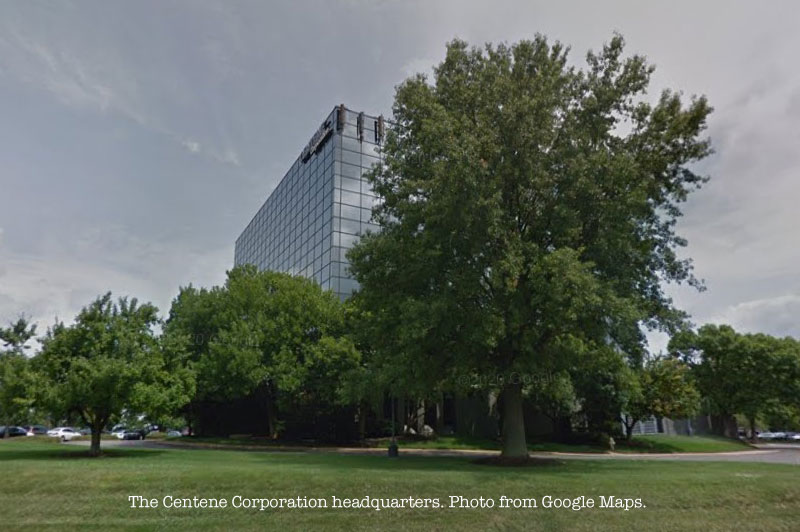
    Centene execs eager to put Medicaid scandal in the rearview without explaining what they did

    By Marty Schladen and Ohio Capital Journal

    In the wake of a blockbuster settlement of fraud claims, the top executive at the nation’s biggest Medicaid contractor was eager Wednesday to put the matter behind the company, which derives most of its revenue from taxpayers.

    But even though executives repeatedly used some form of the word “transparency,” they seem to be trying to get past the scandal without explaining to taxpayers and shareholders what, exactly, they did. 

    That’s kind of a big deal as the company asks states and the federal government to continue to trust it to handle taxpayers’ billions. It’s also a big deal in a health care arena where huge corporations have been accused of exploiting a lack of transparency to overcharge taxpayers vast sums of money.


    Centene agrees to pay a record $88.3 million to settle Ohio…

    David Miller – Jun 14, 2021


    Michael F. Neidorff, chairman, president and CEO of Centene Corp., on Wednesday told investors that the $153 million the company is paying two states and the $1.1 billion it plans to pay 20 others settles a matter that was cleared up years ago. 

    “The agreement addresses a situation from 2017 to 2018,” he said. “The policies and practices that created the situation were changed in 2019, making the matter very much a thing of the past. With this agreement, Centene will be able to put the situation behind us in a timely manner.”

    To make sure none of the investment analysts viewing the presentation missed it, Neidorff hammered the point again.

    “I would like to reiterate that the matter in the agreement is very much a thing of the past and we are looking forward to bringing this to resolution as we move ahead and focus on delivering the highest quality of care to our members,” he said.

    The problem is, many states seem poised to accept settlement money and continue paying billions to Centene with only the vaguest idea of what the company did in 2017 and 2018, and what it might have cost taxpayers.

    On Monday, Ohio Attorney General Dave Yost announced that Centene initiated settlement talks and just four months after Ohio sued the company, Centene had agreed to pay $88.3 million. 

    Because it’s the first — and so far only — state to sue in the matter, Ohio’s getting special treatment. If any state gets more, Centene will have to plus up its settlement with Ohio to match it, Yost said.

    On Wednesday, Neidorff claimed that the state governments on which his company depended for much of its $120 billion in annual business deserved transparency.

    “We have a deep respect for our state partners, and have addressed their concerns expeditiously, increasing the transparency of our pharmacy network,” he said.

    But that transparency has been hard to spot in the company’s recent actions.

    Centene on Monday stressed that it admitted no wrongdoing as it shelled out all that money. The press release announcing the settlement was titled “Centene announces no-fault agreements with Ohio and Mississippi to resolve pharmacy subsidiary claims.”

    Centene’s press operation on Tuesday didn’t respond to a question asking for an explanation of the conduct over which the company was prepared to pay out $1.24 billion. 

    And on Wednesday, Centene’s six top executives answered a multitude of windy, jargon-laden questions from stock analysts. But they ignored another, seemingly simple one: Don’t taxpayers and shareholders deserve to know what Centene did to necessitate such a massive payout?

    The company is presumably anxious to keep other states from suspending their enormous contracts the way the Ohio Department of Medicaid has. And the company clearly wants to stop attorneys general in other states from following Yost’s lead by filing lawsuits alleging that Centene bilked taxpayers out of tens of millions of dollars.

    “Pursuing the matter in court could have involved litigation in 22 jurisdictions over the next three to five years,” Neidorff said. “And we all know what legal reserves and expenses that could have generated.”

    Unless other states do sue, the Ohio suit and earlier investigations there might be the fullest picture the public gets of Centene’s alleged misconduct.

    Yost’s team accused Centene of creating a non-transparent chain of pharmacy middlemen to overbill taxpayers through a few stratagems.

    “One was double billing,” Yost said Monday. “A process by which they used more than one entity to process a claim and added costs to it — overbilling.”

    Yost’s team also accused Centene of pocketing $6.7 million a year in funds that were intended to pay pharmacists to dispense drugs. 

    “They actually claimed they were paying more to the pharmacists than they actually were,” he said.

    The AG also accused the company of marking up drugs by as much as $400,000 in a single week. In court filings, Centene denied the claims.

    Mississippi, the other state with which Centene announced a settlement, was much less specific in its claims of wrongdoing.

    “Following suspicions that PBMs were inflating their bills, in 2019, the auditor’s office launched an investigation to review invoices produced by a Centene-owned company,” a joint press release by Attorney General Lynn Fitch and state Auditor Shad White said. “Contracts required payments be capped by certain industry-standard prices, and the PBM was charging Medicaid more than the allowed price cap.”

    Whether other state attorneys general will go into more detail is unclear. Those in Georgia, Florida, Kansas, New Mexico and Texas didn’t respond when asked whether they’ll seek settlement money from Centene or whether they’ll publicly describe what they believe the Medicaid contractor did wrong.

    They should be more forthcoming as the process moves forward, said Greg Reybold, vice president and association counsel of the Georgia Pharmacy Association — a group that says Centene and other healthcare giants have used non-transparent middlemen to drive drug prices up and community pharmacists out of business.

    “I think folks should know: What were some of the practices that were being investigated?” he said Tuesday.

    Georgia has some distinct similarities to Ohio. For example Centene-owned managed-care organizations in both states saw much higher markups of generic drugs than their peers did.

    An Ohio analysis showed that in 2017 all Medicaid managed-care plans were charging taxpayers far, far more for generic drugs than they were paying pharmacists. But Centene’s Buckeye Health Plan was charging almost double what the others were.

    Buckeye marked up generics an average of $11.60 each for the 4.57 million generic prescriptions it handled, while the average of the other four Medicaid managed-care organizations under contract with Ohio Medicaid was about $5.95. That means middlemen working for Centene marked up generic drugs $26 million more than if they were charging what the others were — and the the analyst hired by the Ohio Department of Medicaid concluded that together, the plans were charging at least triple the going rate. 

    And it turned out that a Centene-owned pharmacy middleman was paid $20 million for services that had an identical description to services that another middleman, CVS Caremark, said it provided. Be that as it may, the companies later said they weren’t double-dipping.

    Altogether, pharmacy middlemen working for Centene’s managed-care organization in Ohio charged $33 million more for the cheapest class of drugs in 2017 than they paid pharmacists. That was the highest rate for any of Ohio’s five managed-care organizations.

    Similarly, an audit of fiscal year 2019 commissioned by the Georgia Department of Community Health determined that the difference between what Centene-owned Peach State Health Plan was charging taxpayers for drugs and what pharmacies were getting was far greater than it was for the state’s other three managed-care organizations.

    A Myers and Stauffer report obtained by the Capital Journal said that at $12.93 per prescription, the Peach State markup in 2019 was almost quadruple the average of the other three plans. 

    Also similar to Ohio was that generic markups under the Centene managed-care organization totaled $30 million that year.

    That’s a lot of coincidences, Reybold said.

    “It begs the question, what isn’t being fleshed out?” he asked. “What don’t we know?”

  • Nearly a year after a racketeering indictment, Ohio House expels Larry Householder

    Nearly a year after a racketeering indictment, Ohio House expels Larry Householder

    By Jake Zuckerman and Ohio Capital Journal

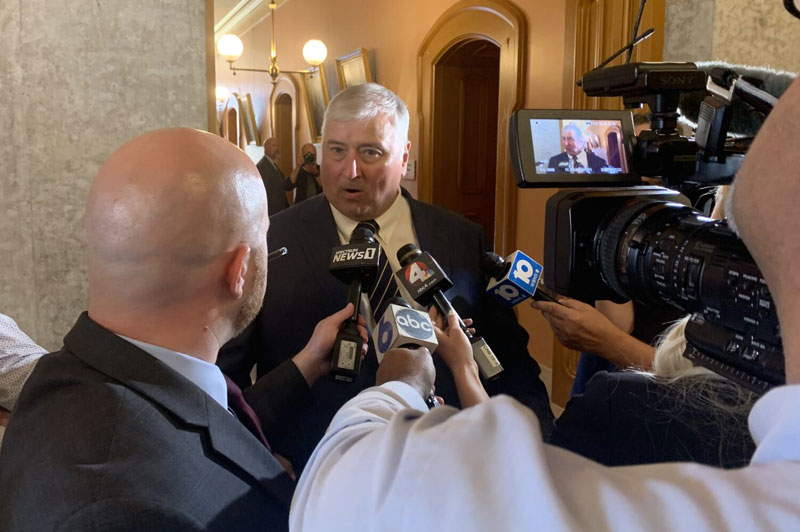
    Larry Householder addresses reporters June 16 after lawmakers voted to expel him from the General Assembly. Photo by Jake Zuckerman.

    Federal prosecutors accused the men of secretly accepting $61 million from FirstEnergy Corp

    The Ohio House voted Wednesday to expel Larry Householder, arrested on charges of public corruption nearly one year ago, from the chamber his Republican — and even some Democratic — colleagues thrice elected him to control.

    The expulsion could mark the end of Householder’s decades-long political career, which has included a previous tenure as speaker of the House in the 2000s that was derailed by a separate FBI investigation. No charges were filed.

    The House voted 75-21 to eject Householder. All but one Democrat voted in support.

    Wednesday’s vote extinguishes Householder’s political flame, but he remains innocent until proven guilty as his criminal trial draws nearer. Both he and former Ohio Republican Party chairman turned lobbyist Matt Borges await trial.

    Jeff Longstreth, Householder’s former political adviser, and Juan Cespedes, a lobbyist, both pleaded guilty to racketeering charges. Neil Clark, a lobbyist and once a towering figure in Ohio politics, was charged as well but pleaded innocent. He died by suicide before trial.

    Federal prosecutors accused the men of secretly accepting $61 million from FirstEnergy Corp via a dark money, pass-through entity. They allegedly used the funds for personal enrichment and to engineer the passage of House Bill 6, a coal and nuclear bailout worth an estimated $1.3 billion to the company.

    After his July 2020 arrest, House lawmakers quickly dethroned Householder as speaker. However, all but a handful of Republicans voted down an effort from Democrats to expel him. Speaking to House leadership on Tuesday, a confident Householder denied the allegations against him. On Wednesday, he listened from the House floor in silence as lawmakers publicly debated his fate.

    Those seeking his ouster emphasized the House is not a courtroom and thus can apply its own professional standards. They said the 43-page indictment and the plea deals entered into by two allies (and one dark money political entity) warrant his ouster from public office.

    “If selling legislation does not count as disorderly conduct, then frankly, nothing does,” said Rep. Brian Stewart, R-Ashville, who sponsored the expulsion resolution along with Rep. Mark Frazier, R-Newark.

    Rep. Kyle Koehler, a Republican who voted against HB 6, dismissed those trying to reduce Householder’s indictment as “allegations.” He identified himself as the anonymous “Representative 6” in the indictment itself, which describes the unnamed lawmaker subjected to political pressure funded by FirstEnergy for his vote.

    “These things occurred,” Koehler, one of few who have publicly demanded Householder’s ouster in recent months. “They’re not accusations. They’re not speculations.”

    Householder’s defenders argued it’s premature to punish Householder before he faces trial. Some argued that the allegations against him don’t qualify as “disorderly conduct,” the undefined Constitutional threshold for expulsion.

    “This is about due process. It’s about the Constitution. It’s not about that man sitting right over there,” said Rep. Al Cutrona, R-Canfield, pointing at Householder.

    What’s more, he won reelection in November, despite the indictment against him.

    “We do not get to choose who represents someone else’s district,” said Rep. Nino Vitale, R-Urbana, who chaired a committee specially created by Householder to review HB 6.

    At around 3 p.m., Householder began what would be his last floor speech of the 134th General Assembly.

    He reiterated a claim of his innocence, said that the allegations against him do not qualify as disorderly conduct, and criticized lawmakers for banishing from a chamber without gathering any evidence of their own.

    “I have not, nor have I ever, took a bribe, or provided a bribe,” he said. “I have not, nor have I ever, solicited a bribe. And I have not, nor have I ever, sold legislation.”

    After the vote, Householder approached the clerk and walked out from the chamber. He reiterated claims of his innocence to reporters gathered outside. There, he left open the possibility of a return to public office, and issued a warning to those who he feels crossed him.

    “Fellow elected officials who didn’t like public citizen Householder, are really not going to like private citizen Householder,” he said.

    This is a developing story and will be updated.

  • Air Quality Alert issued for Thursday

    Air Quality Alert issued for Thursday

    Loveland, Ohio – The Southwest Ohio Air Quality Agency has issued an Air Quality Alert for Thursday, June 17, for the Loveland Area.

    The Agency expects to see levels of ozone in the “unhealthy for sensitive groups” range on the Air Quality Index (AQI).

    Active children and adults, and people with respiratory diseases, such as asthma, should avoid all outdoor exertion; everyone else, especially children, should limit outdoor exertion.

    Clicking the image below will show you the current air quality 24/7 in Loveland. This image is always on our Front Page, so it can also be accessed 24/7.

    Do Your Share! Take these steps:

    • Take the bus, carpool, bike or walk instead of driving
    • Refuel your vehicle after 8 p.m.; do not top off when refueling and tighten the gas cap
    • Avoid idling your vehicle
    • Combine trips or eliminate unnecessary vehicle trips
    • Keep your vehicle maintained with properly inflated tires and timely oil changes
    • Avoid use of gasoline-powered lawn equipment on Air Quality Advisory days
    • Avoid use of oil-based paints and stains on Air Quality Advisory days
    • Never burn leaves or other yard trimmings
    • Always burn clean, seasoned wood in outdoor fire pits, fireplaces and wood stoves
    • Do not use fire pits or fireplaces for non-essential home heating on Air Quality Advisory days
    • Conserve electricity

  • Ohio Makes History: Proponent testimony heard for first time ever on death penalty repeal bill

    Ohio Makes History: Proponent testimony heard for first time ever on death penalty repeal bill

    Columbus, Ohio – On June 16, a proponent hearing for Senate Bill 103 (SB 103) to repeal Ohio’s death penalty will be held, marking the first time a bipartisan bill proposing death penalty abolition has ever been this far in either legislative chamber. SB 103 was introduced on March 2, 2021 with bipartisan support. Senator Nickie Antonio (D-Lakewood) and Senator Stephen Huffman (R-Dayton) are primary sponsors of the bill with 3 Republicans and 6 Democrats serving as co-sponsors.

    The Senate Judiciary Committee will hear testimony from four proponents of the bill:

    • Jonathan Mann, Vice Chair of the board of Ohioans to Stop Executions, who lost his father to murder in 2017
    • Rev. Dr. Jack Sullivan, executive director of the Ohio Council of Churches who lost his sister to murder
    • Rebecca Brown, Director of Policy at the Innocence Project 
    • Tim Young, the Ohio Public Defender, who previously served on the Ohio Supreme Court Joint Task Force on Ohio’s death penalty from 2011-2014
    • Jim Tobin, Associate Director, Department on Social Concerns, Ohio Catholic Conference

    Those testifying will speak to the brokenness of Ohio’s death penalty, including Ohio’s propensity to sentence innocent people to death, the harm it causes the families of murder victims, and its affront to an equal and fair justice system.

    “People have been asking why this bill is different and why the time is right for repeal,” said Hannah Kubbins, executive director of Ohioans to Stop Executions. “This hearing is the proof that Ohio’s leaders on both sides of the aisle wisely recognize that the death penalty isn’t working in Ohio anymore. With so many other priorities in our state, Ohio can save millions of dollars by getting rid of this racist, broken, and inefficient system. We can keep our society safe, protect innocent lives, and do better for the families of victims. I want to thank Chairman Manning and the rest of the Senate Judiciary Committee for holding this historic hearing.”

    For more information contact Jon Crane at joncrane@criticalpr.com or 203-982-4575.

    #NoDeathPenaltyOH is the official campaign to end Ohio’s death penalty. They represent a coalition of groups across Ohio calling for an end to an “expensive, racist, arbitrary” system that convicts innocent people.

  • Ohio budget amendment now includes severe abortion restriction

    Ohio budget amendment now includes severe abortion restriction

    Columbus, Ohio – The Republican leadership in the Ohio Senate has added an amendment (134HB110-SC4502X2/JF) that would restrict the distance for physicians to be able to work with an abortion clinic and restricts physicians’ ability to work with state-funded medical facilities, medical schools, and teaching hospitals if they also sign onto a variance application with an Ambulatory Surgical Facility.

    Kellie Copeland has served as the Executive Director of NARAL Pro-Choice Ohio since 2002. 

    NARAL Pro-Choice Ohio Executive Director Kellie Copeland said: “Republicans in the Ohio Senate have yet again hijacked the budget process to further their anti-abortion agenda by adding an amendment that would add even more medically-unnecessary licensing restrictions on abortion providers. Abortion providers are a critical part of Ohio’s medical community. Across the state trusted medical providers work hand in hand with abortion clinics, medical schools, and hospitals to ensure patients get access to comprehensive reproductive health care they deserve. This amendment is about stigmatizing and isolating abortion providers. Let’s be clear about what this amendment does: closes the doors to doctors in an effort to close the door to patients. No patient has ever been helped by a closed door. A clear majority of Ohioans support access to safe and legal abortion care, and do not support this restriction.”

  • Flag Burning Ceremony with taps on Flag Day

    Flag Burning Ceremony with taps on Flag Day

    Loveland, Ohio – The American Legion Post 256 located at 897 Oakland Road will hold a Flag Burning Ceremony with taps on Flag Day, Monday, June 14. The ceremony will be at 6 PM.

    When the Legion does this they usually  burn between 300-500 flags.

    The public is welcome. There will be food available and their club room will be open.

    Flag Day, June 14th

    Flag Education

    The American Legion played an important role in establishing flag etiquette standards before the passing of the first national codes in 1923 and continues to uphold these historical standards and provide flag education today.

    Q: How are unserviceable flags destroyed?

    A: The American Legion says that the Flag Code suggests that “when a flag has served its useful purpose, it should be destroyed, preferably by burning.” For individual citizens, this should be done discreetly so the act of destruction is not perceived as a protest or desecration. Many American Legion posts conduct Disposal of Unserviceable Flag Ceremonies on June 14, Flag Day. This ceremony creates a particularly dignified and solemn occasion for the retirement of unserviceable flags.

    A Closer Look at Flag Day

    Posted On: Sunday, 10 June 2018

    Guest blog by American Legion Auxiliary 2017-2018 National Americanism Chairman Martha Corriher about Flag Day, June 14 

    Many Americans believe that July 4th, the date we celebrate the birth of America as a nation, is the day the U.S. flag was created. Independence Day was July 4, 1776, while the American flag was first authorized by the U.S. Congress June 14, 1777.

    Inspired by three decades of state and local celebrations, Flag Day, the anniversary of the Flag Resolution of 1777, was officially established by the proclamation of President Woodrow Wilson on May 30, 1916. It wasn’t until Aug. 3, 1949 that President Harry Truman signed an Act of Congress designating June 14th of each year as National Flag Day.

    Do you know who created the flag, which is often referred to as “Old Glory”? If you believe the American legend, it was Betsy Ross, a Philadelphia seamstress. As the legend goes, George Washington commissioned Ross in June 1776 to create a flag for the new nation. Regardless of who is responsible for sewing the first official flag, as Americans, we should always show respect to the flag … always! It is our duty as U.S. citizens to respect the flag, and to exhibit the history and proper handling of the flag.

    So, what can we do to make National Flag Day more meaningful and educational for all? Here are a few fun and easy activities to share with your family, friends, and community:

    1. Create a trivia game about the American flag. Find facts about the flag, make teams, and have a moderato. Choose a prize for the winning team, such as a favorite American treat, ice cream, or sundaes.
    2. Have an edible flag contest. Have contestants cook or prepare food so it resembles the U.S. flag. This could also be used as a fundraiser for your unit. Cakes, pies, cookies, and candy/fudge are delicious options.
    3. For small children, take them on a “count your local flags” outing. Have adults walk with the children around your community and count how many flags they can find. This will also give your adults a project afterward, presenting a certificate of appreciation for flying their American flag.
    4. Host a patriotic mini-concert for your unit and community. Invite children from the local school to participate and share their musical talents.
    5. Visit a local history museum with your children to teach them the history of our flag and of our country.

    Always remember to show the proper respect for the American flag. It’s easy – and important – to do. For example: Say the Pledge of Allegiance at meetings when the flag is displayed. Sing The Star-Spangled Banner, America’s national anthem, before sporting events. By singing the anthem and saying the pledge, each of us is celebrating , honoring – and literally pledging our allegiance – to the United State of America. As ALA members, we have a great opportunity to lead the way in education of the flag. We should all ask ourselves this: Am I doing all I can to advance and encourage proper respect of and education about Old Glory? If not, now is the time to start!

  • ‘5G towers,’ ‘magnetization’, other conspiracies flourish at hearing on vaccine bill

    ‘5G towers,’ ‘magnetization’, other conspiracies flourish at hearing on vaccine bill

    By Jake Zuckerman and Ohio Capital Journal edited by Loveland Magazine

    Columbus – A doctor warned that vaccinated people might be magnetized and pose a health risk to unvaccinated people around them.

    A pastor said vaccines contain ingredients like formaldehyde and fetal cells.

    A nurse sought to prove the truth of “magnetic vaccine crystals.”

    These statements — none of which are true — came during the Ohio House Health Committee’s review Tuesday of House Bill 248, a broad weakening of state vaccination laws. The five-hour hearing, limited to proponent testimony, devolved into a forum of fear-stoking, speculation, and conspiracy theorizing around the COVID-19 vaccines.

    Dr. Sherri Tenpenny, a board-certified physician from the Cleveland area, repeatedly raised unfounded claims of deaths, strokes and other “horrendous side effects” from the vaccine. The Center for Countering Digital Hate identified Tenpenny as one of a dozen of the most prolific anti-vaccination disinformers “who play leading roles in spreading digital misinformation about Covid vaccines.”

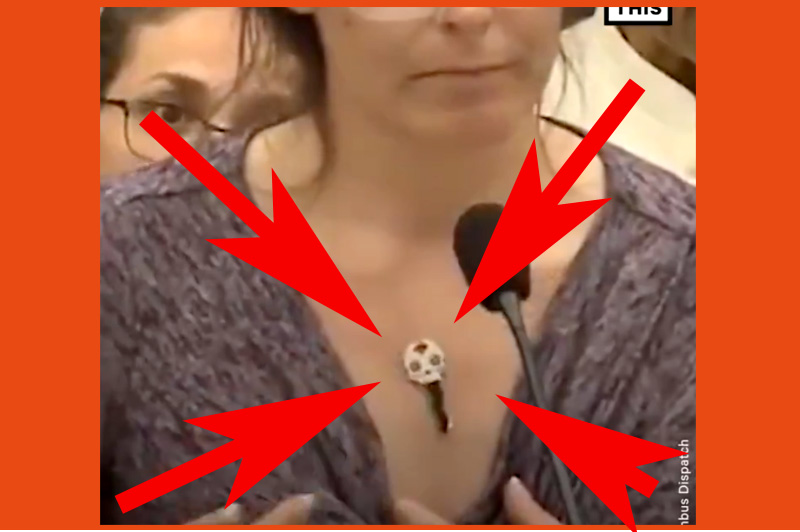
    At one point, Tenpenny made a claim to lawmakers, with no evidence behind it, that vaccinated people are somehow magnetized.

    “They can put a key on their forehead, it sticks. They can put spoons and forks all over them and they can stick, because now we think there’s a metal piece to that,” she said. “There’s been people who have long suspected that there was some sort of an interface, yet to be defined interface, between what’s being injected in these shots and all of the 5G towers.”

    Shortly thereafter, Tom Renz, a lawyer, testified in support of the bill as well. Renz has filed lawsuits in states around the U.S. crying foul of an array of government practices related to COVID-19 and vaccination.

    He filed one such case in Ohio, which he withdrew after U.S. District Judge James Carr called Renz’s arguments nearly “incomprehensible” and his supporting evidence “a jumble of alleged facts, conclusory and speculative assertions, personal and third-party allegations, opinions, and articles of dubious provenance and admissibility.”

    Renz, like several other witnesses, accused health officials of secretly profiting from vaccines while covering up their dangers.

    House Bill 248, co-sponsored by 16 House Republicans, would prohibit any of the following institutions from mandating, incentivizing, or “otherwise requesting” their employees, customers or students get vaccinated: businesses, hospitals, nursing homes, colleges, day-care centers, and insurers.

    It also:

    • Prohibits a person from mandating, requiring, or otherwise requesting that an individual receive a vaccine.
    • Compels public schools, which already accept exemptions for non-medical and medical reasons, to emphasize vaccine exemptions “in the same timing and manner, including text size and font, as it provides notice of the requirements.”
    • Blocks businesses from separating patrons by vaccination status or asking whether they’ve been vaccinated.

    Rep. Jennifer Gross, R-West Chester, the bill’s lead sponsor, has said she isn’t opposed to vaccination, but people should have the right to choose.

    “This is not a scientific bill,” she said last month. “This is a freedom bill.”

    Several public health experts have warned in interviews that the legislation will likely lead to sagging vaccination rates, and in turn, outbreaks of infectious disease.

    In the last two weeks, Gov. Mike DeWine, Ohio Department of Health Director Stephanie McCloud, and ODH Medical Director Dr. Bruce Vanderhoff declined to comment on the legislation.

    At a press call last week, a physician joined Vanderhoff for a largely unrelated press conference encouraging vaccination against COVID-19. When asked by a reporter about the bill, she didn’t share Vanderhoff’s reticence.

    “I’ll be very direct and say this bill threatens how we take care of children, and how we keep them healthy, and how we keep them alive,” said Dr. Patty Manning-Courtney, the chief of staff at Cincinnati Children’s Hospital.

    “To limit and restrict the ability to require vaccinations in schools or to check vaccination status, it’s almost unthinkable in a pediatric community to think that one of the best tools we have at prevention would be limited, restricted, or discussed in a way that is negative.”

    Similarly, a “vaccine coalition” of business groups along with the largest medical groups and associations in the state — including the Ohio Chamber of Commerce, the Ohio Hospital Association, the Ohio Children’s Hospital Association, Anthem, OhioHealth, and others — issued a public letter warning the legislation puts all children at risk.

    “At its core, this proposal would destroy our current public health framework that prevents outbreaks of potentially lethal diseases, threaten the stability of our economy as it recovers from a devastating pandemic, and jeopardize the way we live, learn, work and celebrate life,” the coalition wrote.

    An item that fully escaped the committee’s attention: during the hearing itself, the CDC published an early release of a report analyzing COVID-19 infections by age group and vaccination status.

    The researchers found occurrences of COVID-19 infection, hospitalization and death plummeted among Americans aged 65-and-up (about 82% of whom are vaccinated) compared to those aged 18-49 (about 42% of whom are vaccinated).

    The finding builds on mounting evidence of the COVID-19 vaccines’ safety and efficacy.

    The legislation drew immense support including more than 800 pieces of written testimony. The hearing room was virtually full, requiring two overflow rooms for supporters. At a lunch recess, a man stood outside the statehouse passing out faux vaccination cards with a vulgarity on the flip side.

    “Mandatory vaccines and masks are a joke … much like this card!” it states.

    In an interview after the hearing, House Health Chairman Scott Lipps, R-Franklin, said it’d be tough but possible to see the bill passed out of committee before lawmakers break for summer recess at the end of the month.

    He indicated looming amendments might narrow the bill, possibly restricting its focus solely to the flu or COVID-19 vaccine as opposed to its current form of all vaccinations.

    “If you could trim this bill down, you could pass it,” he said.

    During the hearing, Lipps tried to steer witness testimony and lawmakers’ inquiries toward the philosophical questions about the role of government in public health as opposed to litigating the safety and efficacy of vaccines. The attempts were largely unsuccessful with both proponents and opponents.

    He distanced himself from Tenpenny’s remarks.

    “I do believe Representative Gross requested Dr. Tenpenny to speak, and she got a little off balance, I think she got a little outside the lines of what we were intending or hoping to keep her in,” he said. “I hope that didn’t harm her credibility, but I think some committee members walked away with big questions.”

  • [Video] Do you know this man?

    [Video] Do you know this man?

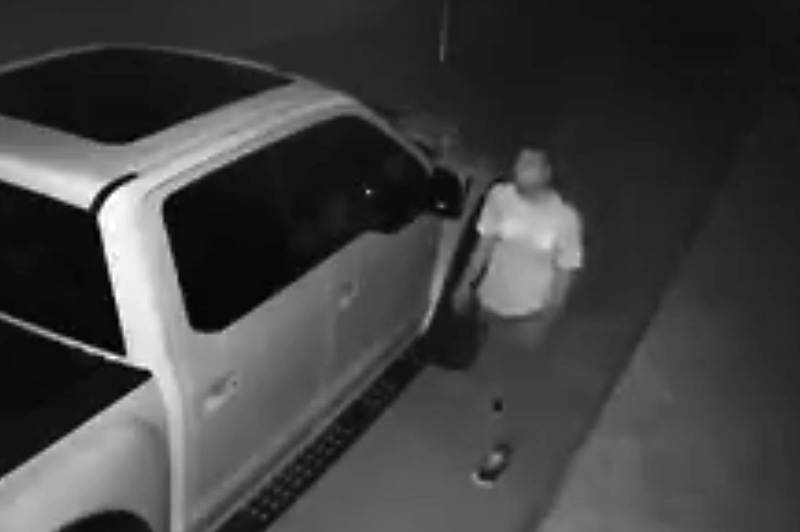
    Miami Township, Ohio – The Miami Township Police are asking, “Do you know who this is?” They say he likes to take long walks in the “Buckwheat corridor” of the Township to steal things.

    The department said on FaceBook that residents have experienced an unusual amount of theft from vehicles and are asking the public to call Detective Higgins at 513-965-6873 if you know who this man is.

  • Fridays Float-In Movies at Lake Isabella

    Fridays Float-In Movies at Lake Isabella

    Symmes Township, Ohio – Whether you’re in the mood for an action adventure, a family comedy or a classic coming-of-age story, paddle over to Lake Isabella for an evening of fun! Grab you favorite snack and enjoy a film from the comfort of a boat during the inaugural Float-In Movies event.

    Guests will enjoy watching movies in a Great Parks’ rowboat on the water at Lake Isabella. Up to four individuals total are permitted per boat. At least one adult 18 years or older must be in each boat. Lifejackets will be available for guest use.

    The boathouse at Lake Isabella just outside of Loveland at the I-275 interchange

    Food and beverages will be available for purchase each evening.

    Great Parks is following protocols from the Centers for Disease Control and Prevention and the Ohio Department of Health. Physical distancing and sanitation recommendations will be followed.

    Where 

    Lake Isabella | Boathouse
    10174 Loveland-Madeira Road
    Loveland, OH 45140

    When

    Fridays, June–August | 9:30 p.m.
    Movies start at 9:30 p.m.

    Friday, June 25

    Superhero action-adventure, “Wonder Woman 1984”

    REGISTER

    Friday, July 9

    Animated family feature, “Moana”

    REGISTER

    Friday, August 13

    Classic coming-of-age adventure, “The Goonies”

    REGISTER

    Cost

    $40 per boat rental, up to four people per boat.
    Registration required; register by one day in advance.