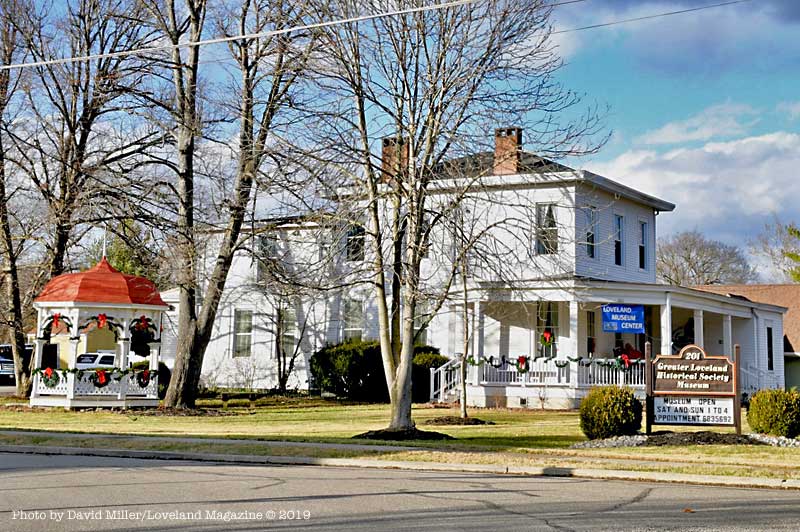
Loveland, Ohio – If you are curious about the history of your home and property you can attend this free event at the Loveland Museum Center’s JoAnn Richardson History House to learn about how to research your home’s background. Susan Daniel from the Norwood Historical Society will be leading the discussion. She will provide guidance real-time demonstrations.
Jenny Shives, the Curator of the Loveland Museum said, “With all of the discussion surrounding the property at 200 Railroad Avenue, I thought you might like to post this on your website.”
The Cincinnati Reds released a tribute video honoring Pete Rose on Tuesday night. The Hit King died on September 30. He was 83 years old.
Rose finished his career with 4,256 hits, three World Series Championships, 17 All-Star appearances and one MVP. He was inducted into the Reds Hall of Fame in 2016. There’s a statue of Rose outside of Great American Ballpark.
October 31, 2024 – Farah Siddiqi, Public News Service (OH)
In Ohio, the debate over Issue One has stirred strong emotions among residents and community leaders.
For many, the proposal to establish a citizens’ redistricting commission transcends politics. It represents a push for fair representation.
Marian Stewart, a retired pastor from Greene County, is a vocal supporter of the measure and frames the issue as a moral imperative.
“Rigging the maps is not fair; it’s cheating,” Stewart asserted. “Disenfranchising voters and limiting accountability does not value or respect all of our voices. It’s just wrong. That’s why I joined with faith leaders across Ohio in voting yes on Issue One.”
Stewart’s words echoed the concerns of many Ohioans who believe gerrymandered districts limit the political voice of everyday citizens. Proponents argued Issue One will ensure a fairer process by empowering a bipartisan citizens’ commission to draw electoral maps.
Critics of the measure, including some conservative groups, countered it could introduce new forms of political bias into redistricting. The opposing group had the language of the ballot issue changed to include the word “gerrymander.”
For advocates of Ohio’s labor community, the proposal is about ensuring working people’s interests are not drowned out by political manipulation.
Ted Linscott, president of the Southeast Ohio Central Labor Council, described how unfair districts can sideline Ohio’s working-class voices.
“Working people need fair voting districts so their voices can be heard,” Linscott contended. “Workers don’t need extreme right or left. We need fairness.”
The League of Women Voters of Ohio has been advocating for anti-gerrymandering reforms since 1981, underscoring the need for a responsive government.
Jen Miller, the group’s executive director, views Issue One as an important step toward accountability, noting the first initiative had support from the Ohio Republican Party but was opposed by Democrats, who held power at the time.
“The first thing that mappers did was look at the addresses of their favorite candidates and incumbents and draw lines around them, rather than drawing districts that keep communities together and make sure that Ohioans have meaningful elections,” Miller pointed out.
Ohio’s Issue One has drawn support from a diverse coalition, including labor unions, faith leaders and civic organizations, all advocating for a more representative government. As voters head to the polls, they are faced with a question beyond party lines: Should Ohio’s electoral districts be shaped by politicians or by the people they serve?
Published in 1972 and winning the Chistopher Award for the most inspirational book of the year, Trina Paulus’s Hope For The Flowers has been one of the most powerful books published in our time. The story of two caterpillars following the crowd to the top of the caterpillar pillar is a versatile metaphor that can apply to all of our lives, and at any age.
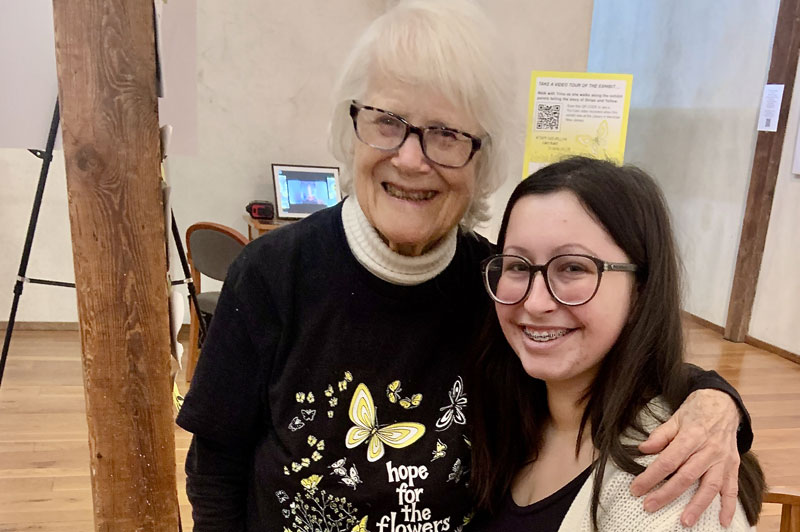
I had the opportunity to visit the HOPE Celebration at The Grail in Loveland. Upon walking into the oratory, I was stunned by the gorgeous setup. Illustrations of Hope For The Flowers were spun across all four walls, in the order of the story. Right at the front of the oratory was an adorable set of yellow flowers and sketches of butterflies.
Photo provided by Grailville
At the celebration, I was able to converse with Trina. Needless to say, Trina is an amazingly successful woman, and it seems to me like she was destined for the greatness she has achieved. As a child, Trina would, “draw pictures of a caterpillar, a cocoon, and a butterfly” when someone would pass away. She has always loved the idea that once a caterpillar is brave enough to complete the stages of metamorphosis, they come out the other side a dazzling new creature.
A while back, before the publication of Hope For The Flowers, Trina embarked on a journey in Egypt, doing what she does best: helping and inspiring others. Her work in Egypt is still alive today, helping women and young girls in Upper Egypt learn to embroider and weave, among other things.
On this visit, Trina revisited her “second home” in Loveland, she went straight to work, doing art projects and readings with children and adults. Trina visited Loveland Primary School and Loveland Elementary School, helping the young students with Hope For The Flowers-inspired art projects, only using the colors yellow and black. As an artist, Trina taught me that there are different kinds of black: some that are more red and some that are more blue. Trina taught the young students to make the green that is in Hope For The Flowers only using black and yellow. Greatness can be achieved, even with a scant amount of resources.
Trina Paulus is one of the kindest people I have ever come across. Her cordial demeanor and positivity make for the most pleasant of interactions. Trina’s inspiring and commendable background of working at The Grail, creating Hope For The Flowers, activism, and sculpting is something many people never even dream of. What can’t she do?
In this LOVELAND MAGAZINE TV video Paulus talks about the current public exhibition of her Abraham and Isaac statue which was once hidden from the public and stored in a garage at Grailville.
Below you can watch the interview with Trina Paulus by Alana Johnson conducted on December 09, 2011.
The Trina Paulus Abraham and Isaac statue is a poignant and significant piece of art. It is wretched, distressing, tragic – and beautiful. It was stored temporarily for several years just outside of Loveland. Loveland Magazine Reporter Alana Johnson went with Paulus to an unlit garage at the Grailville Conference and Retreat Center to see it for the first time. Paulus hadn’t seen her statue for several years.
Paulus said at the time, “Over here you will see a hand with the knife in it… and over here… you’ll see the hand with his son. I’ve done a lot of thinking about this over the years – the great Christian mystery of the crucifixion and the resurrection and… The very unpleasant thing that God can ask everything of us sometimes… The whole mystery of why we die, and why we die so miserably sometimes… In our time it’s a very unpopular story.”
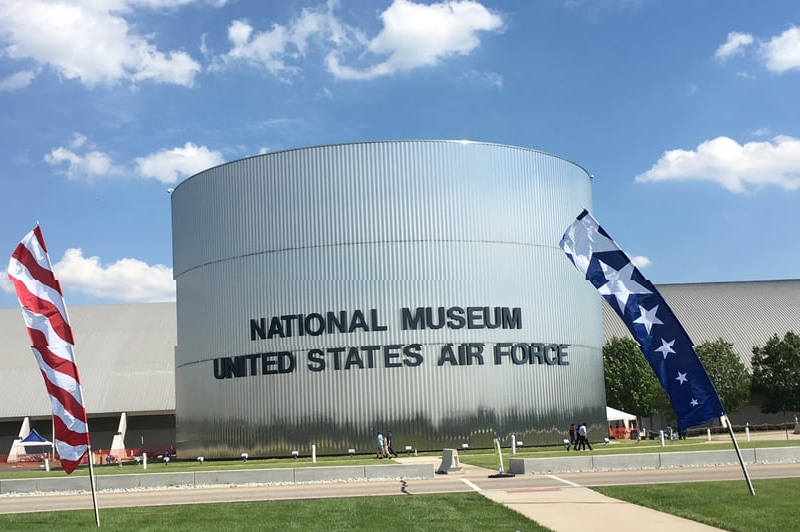
Loveland, Ohio – Mark your calendars for October 26, when Loveland High School’s Robotics teams visit the Dayton Air Force Museum. The two FTC Robotics teams will be there, ready to answer all of your questions regarding Robotics. Stop by anytime, from 10 AM – 3 PM, the team members will be happy to see you.
Alongside having any Robotics questions answered, there will be opportunities to learn about specific Vex robots and the processes to create them. As we are on the brink of Halloween and candy will also be given out.
If you are unable to attend on October 26th, don’t fret. There will be many more opportunities to have irreplaceable encounters with Loveland High School’s Robotics teams this year.
Paige Messmer gave this inspirational testimonial about Jack Quehl and tells why his parents Stephanie and Tom are on a mission to inform about the danger of Fentanal. This video is from the recent Do it for Jack Art Night.
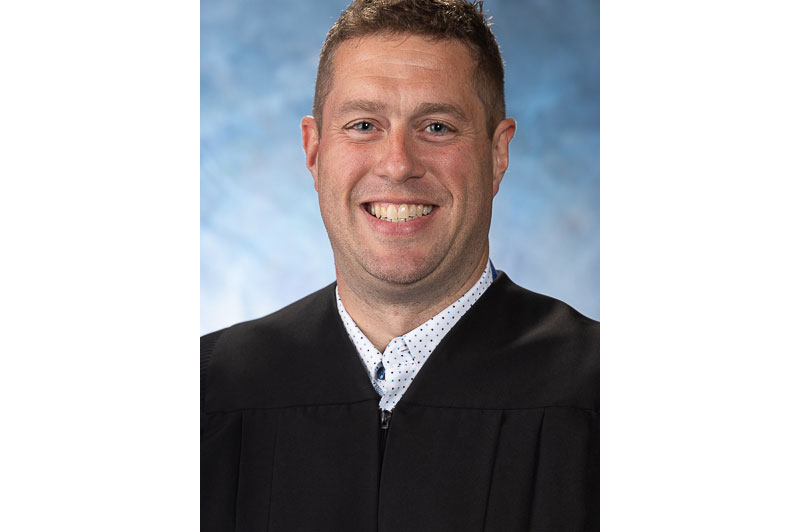
Clermont County, Ohio – Ohio Governor Mike DeWine has announced the appointment of Nathan M. Little to the Clermont County Municipal Court.
Little, of Cincinnati, will assume office on November 11, 2024, and will be taking the seat formerly held by Judge Jesse Kramig, who resigned. He will serve the remainder of the unfinished term and will need to run for election in November 2025 to retain the seat.
Little began his law career in 2008 as a law clerk for the Law Offices of Attorney Vincent A. Salinas in Cincinnati, a position he held until 2009. He is now co-owner of Middletown Title Agency, a partner at the Law Firm of Combs, Schaefer, Ball & Little in Middletown, and serves as a magistrate for the Clermont County Court of Common Pleas, Domestic Relations Division.
In 2004, Little received a bachelor’s degree from the University of Cincinnati. He earned his juris doctorate from the University of Dayton School of Law in 2009.
In his community, Little serves on the executive board of the Clermont County Court Special Advocate (CASA) program. He is also a volunteer with the Inter Parish Ministry (IPM) Food Pantry and the Ronald McDonald House Charities of Greater Cincinnati. Additionally, he is a member of the Ohio Association of Magistrates and the Federalist Society at the University of Dayton School of Law. Little also serves as a deacon at Felicity Christian Church.
COLUMBUS, Ohio – When Ohioans go to cast their vote on Nov. 5, they may see more than political contests on the ballot. Voters in various Ohio communities may also see items related to local option election laws. These issues can determine a number of alcohol-related items, including whether a particular business is able to sell a certain type of alcohol at a specific location, whether they can engage in regular (Monday – Saturday) sales, or whether they can sell alcohol on Sundays.
“We realize that alcohol-related issues on the ballot can sometimes catch individuals off guard,” said Paul Kulwinski, DOLC Director of Licensing. “We developed this guide to help inform and prepare voters in the event they see these particular issues on their ballot so they can make an informed decision on Nov. 5.”
For certain types of liquor permits, the location where alcohol sales will occur must be “wet” for the specific types of sales (i.e., beer, wine, spirits, etc.). Those permits dictate how those items can be sold, such as via carryout or on-premises consumption. When the precinct in that area is not wet (commonly known as “dry”), a business can put a question to the voters within that precinct that can ask to either make the entire precinct wet or just the specific location.
Following the repeal of Prohibition in 1933, a new regulatory system was enacted to ensure the safe consumption of alcoholic beverages and an orderly, competitive marketplace. Some parts of the regulatory system include permit quotas, objection rights by local governments, a three-tier system consisting of manufacturers, distributors, and retail outlets, and local option (wet/dry) laws. Local option elections give the voters within their precincts a voice as to what types of alcohol get sold, including where, when, and how.
Due to the complexity of local option elections, an experienced liquor attorney is always recommended for businesses or localities when navigating this process.