Author: Loveland Magazine

  • [Photo Album] Tiger women vie for District title on Saturday vs #3 team in nation

    [Photo Album] Tiger women vie for District title on Saturday vs #3 team in nation

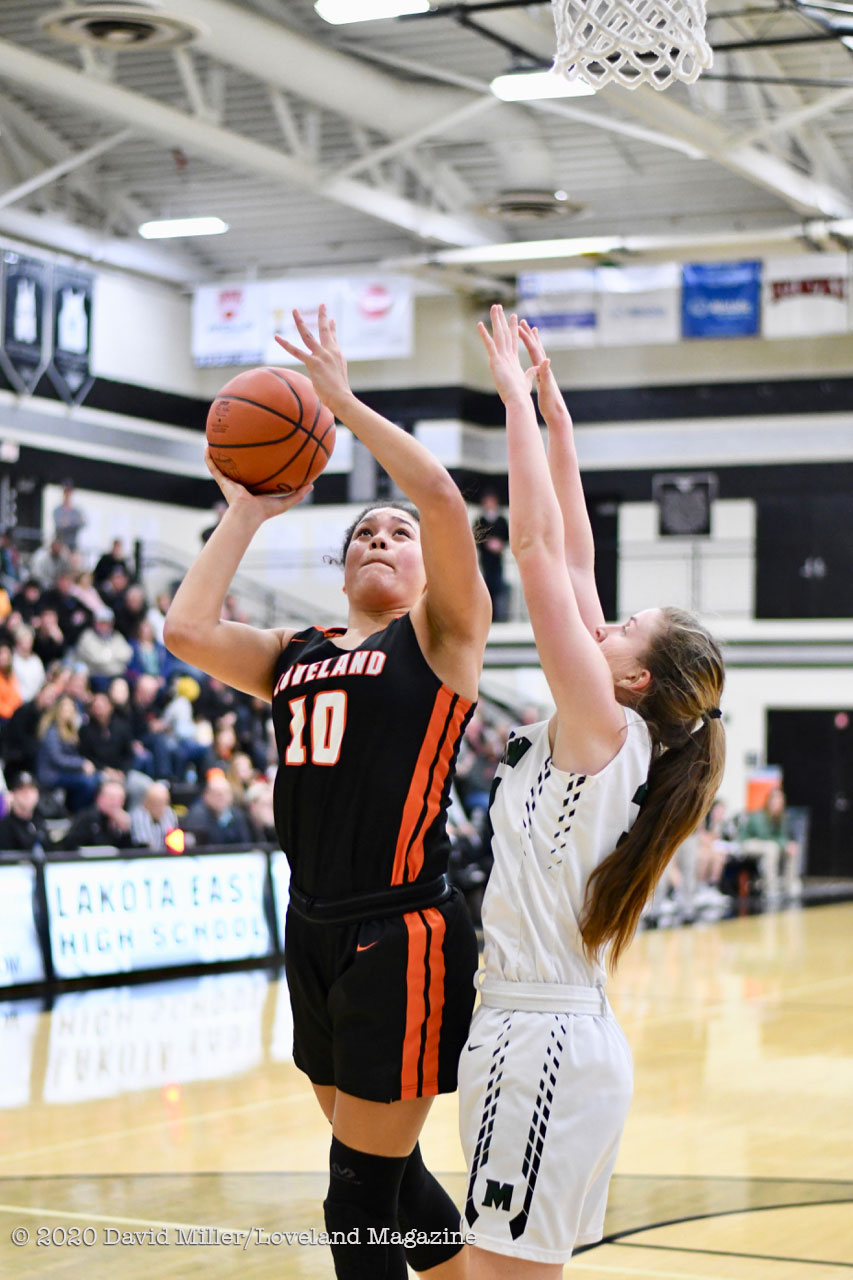
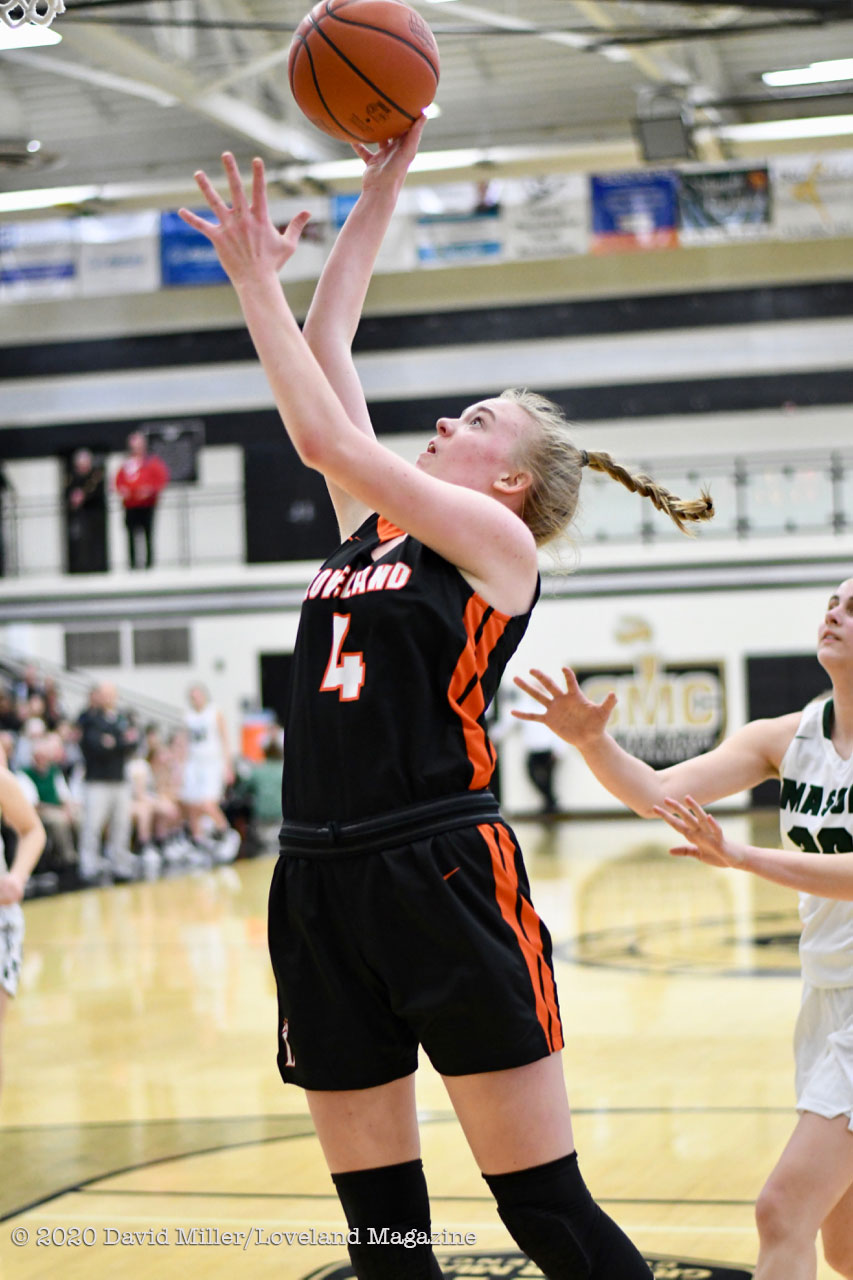
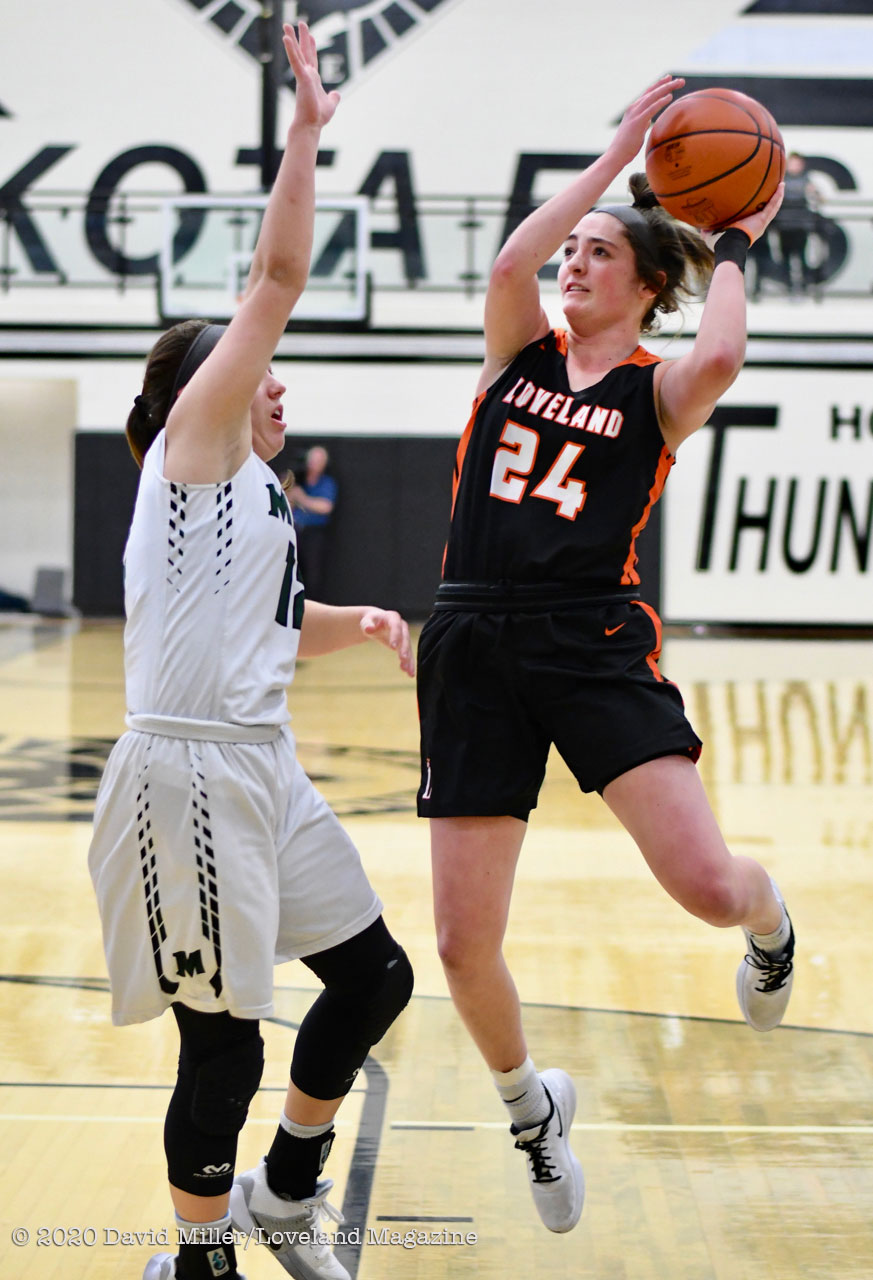
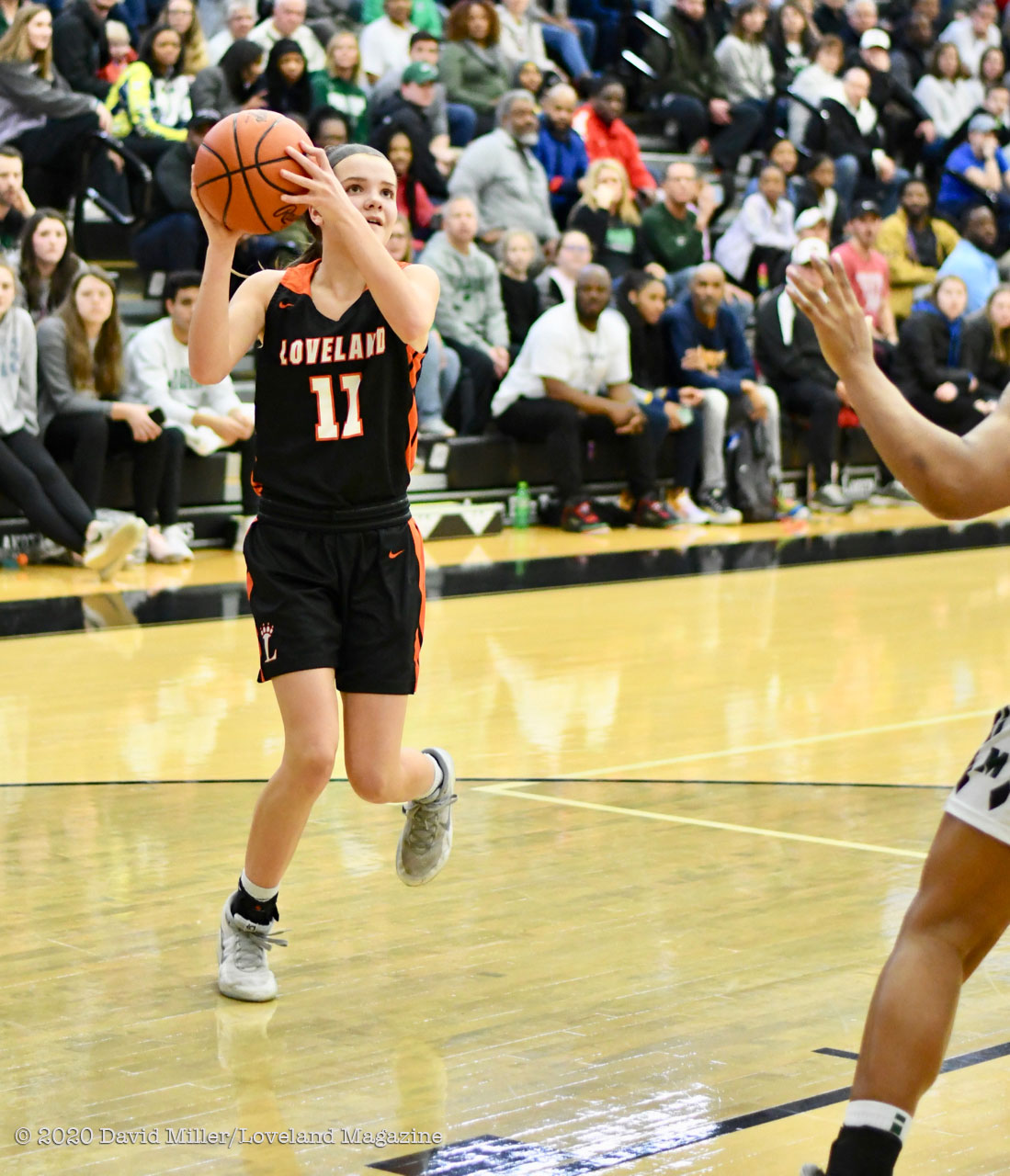
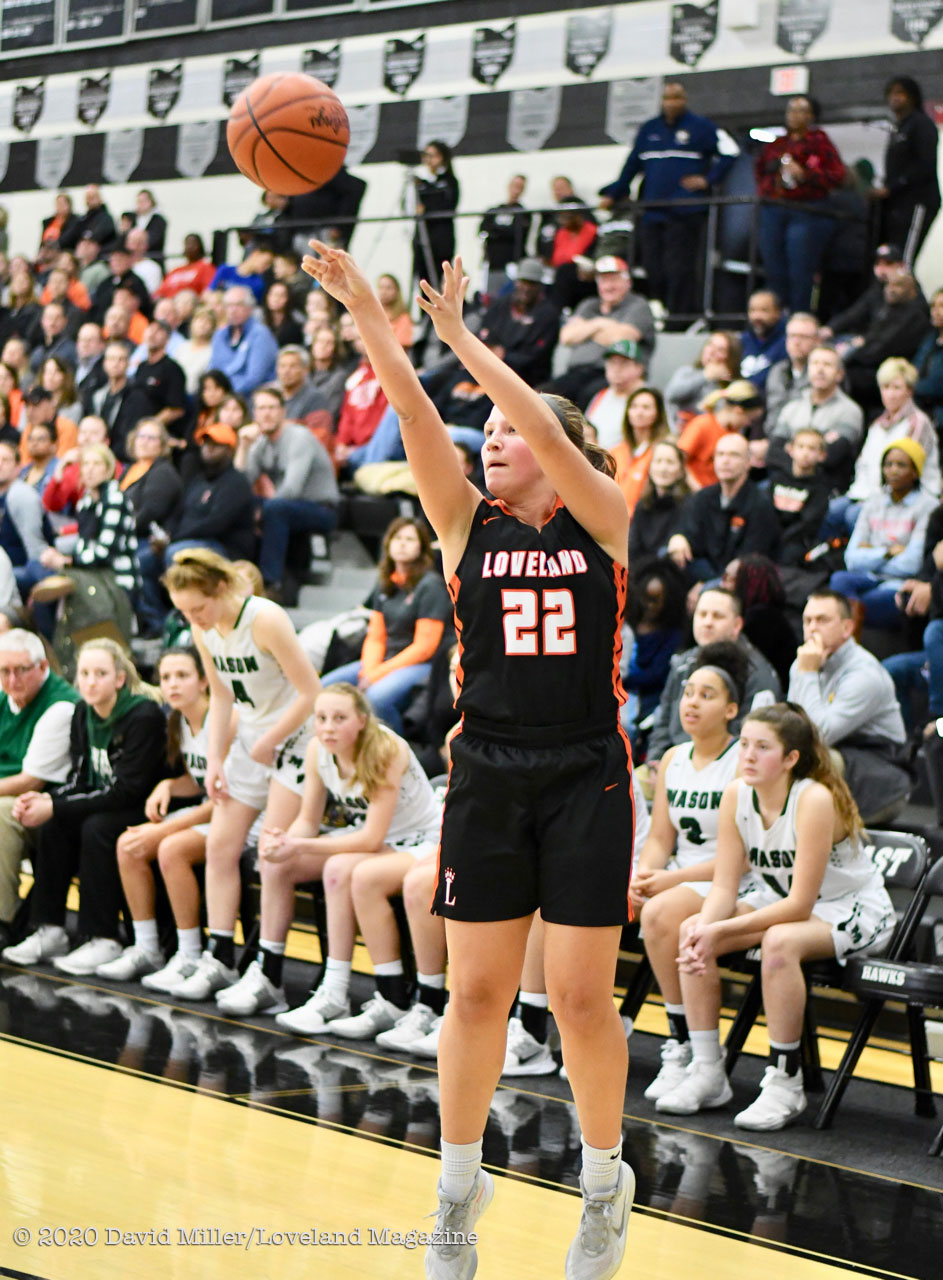
    Junior Jenna Batsch (above) scored 17 on 7-9 shooting from the field. She had 5 rebounds, 3 assists. and blocked 2.

    Loveland, Ohio – It will be the Loveland Tigers vs. #1 seed Mount Notre Dame Saturday, February 29 at 3 PM (at Princeton H.S.).

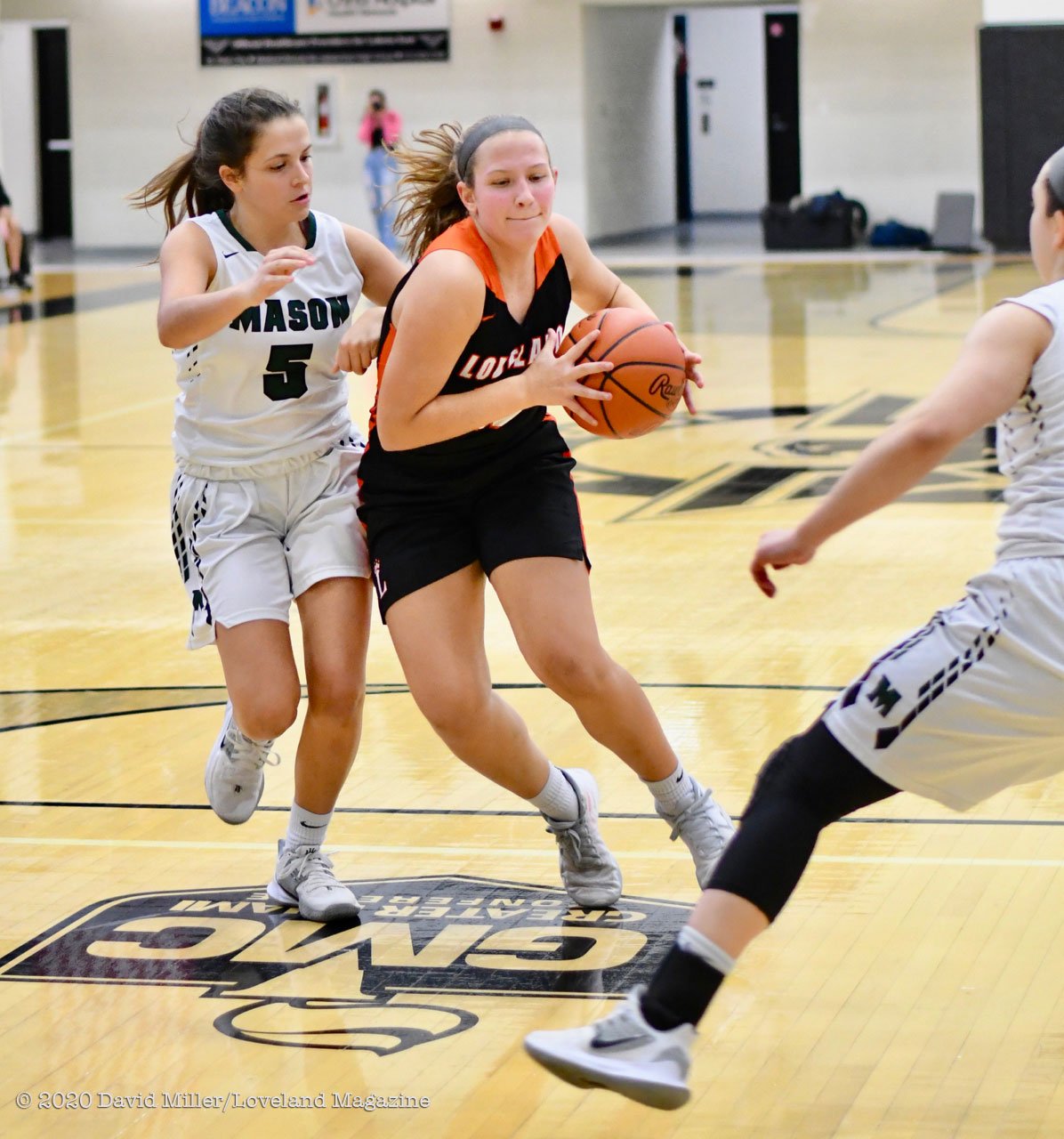
    Mount Notre Dame defeated Edgewood 85-25 Monday night to get to the finals. MND is undefeated, ranked #1 in Ohio by MaxPreps, and has a #3 national ranking. The Tigers are the #6 seed and defeated Mason Monday night 55-41 to reach the District Finals. Loveland Tigers now 22-3 and Walnut Hills both from the ECC advanced Monday night.

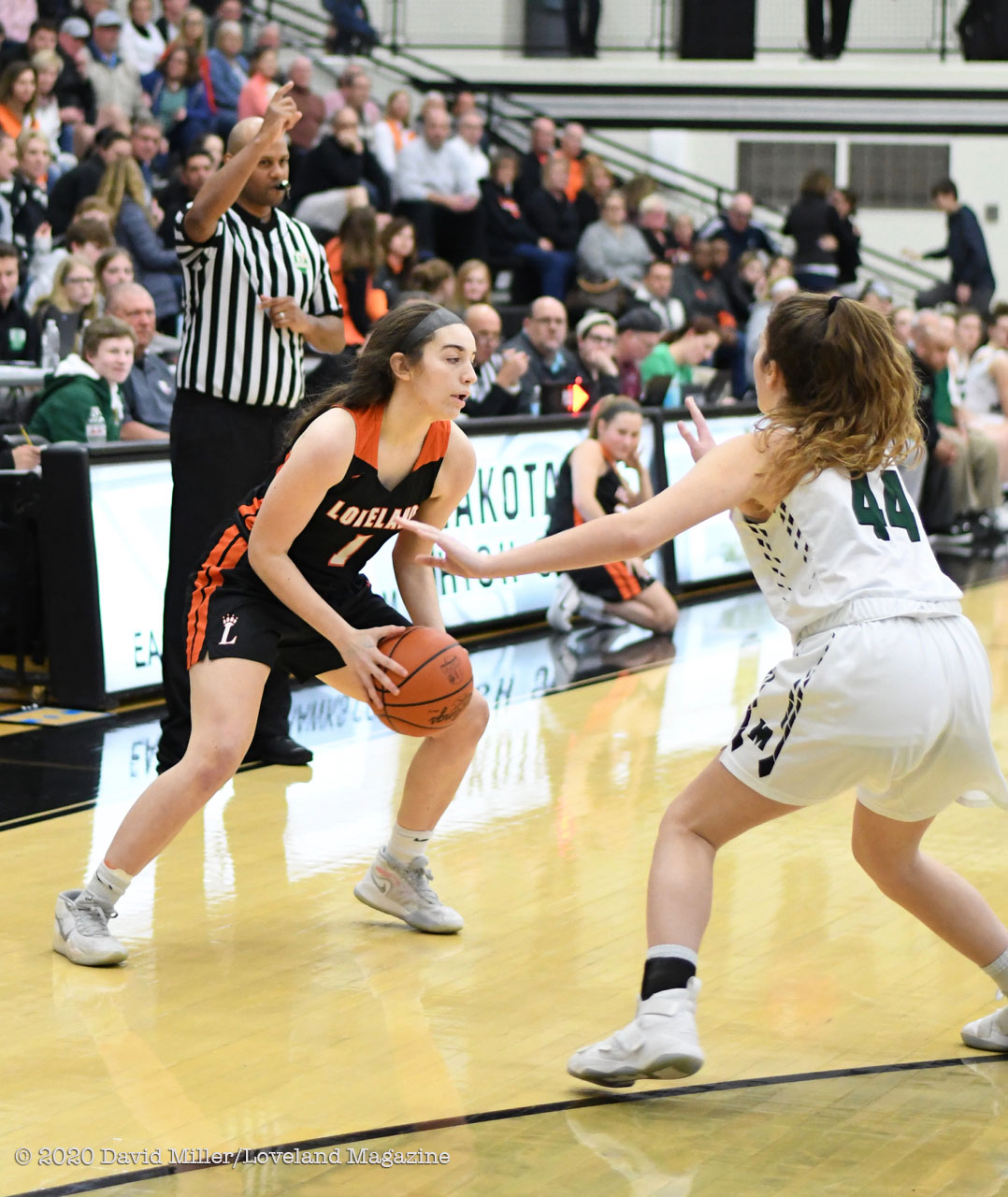
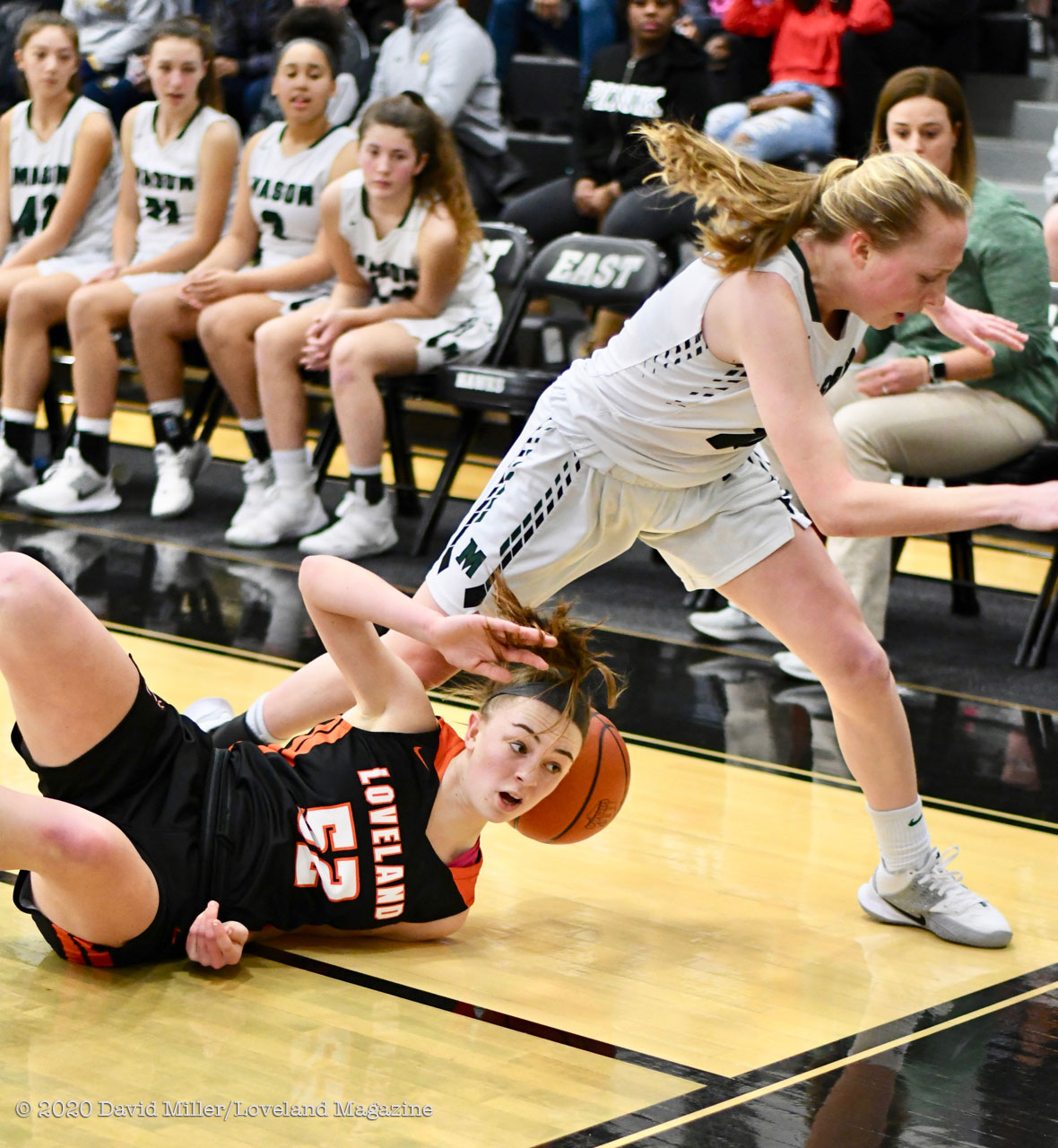
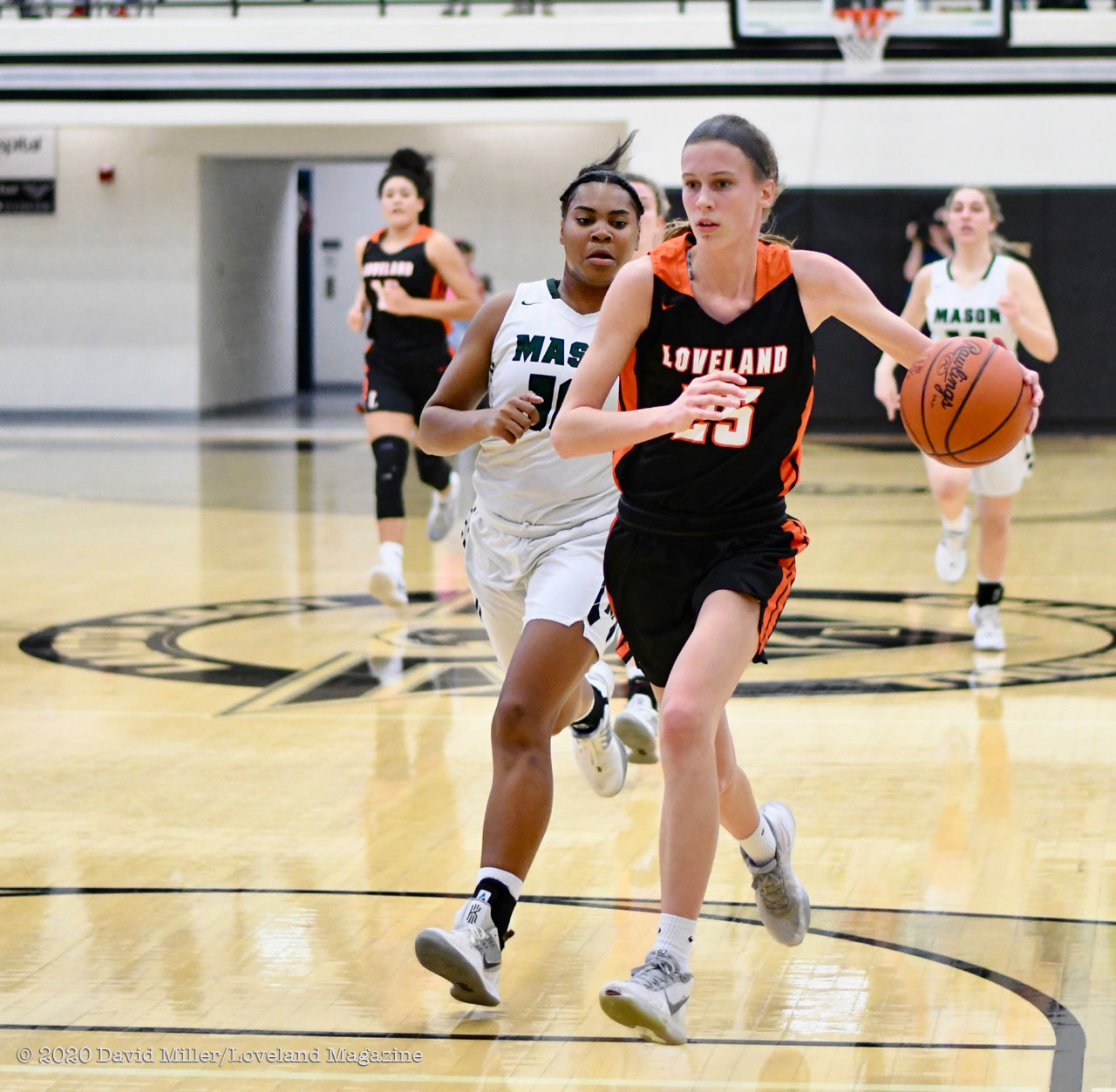
    A strong 22-7 1st quarter with shots coming from every part of the court was too much for Mason to overcome.


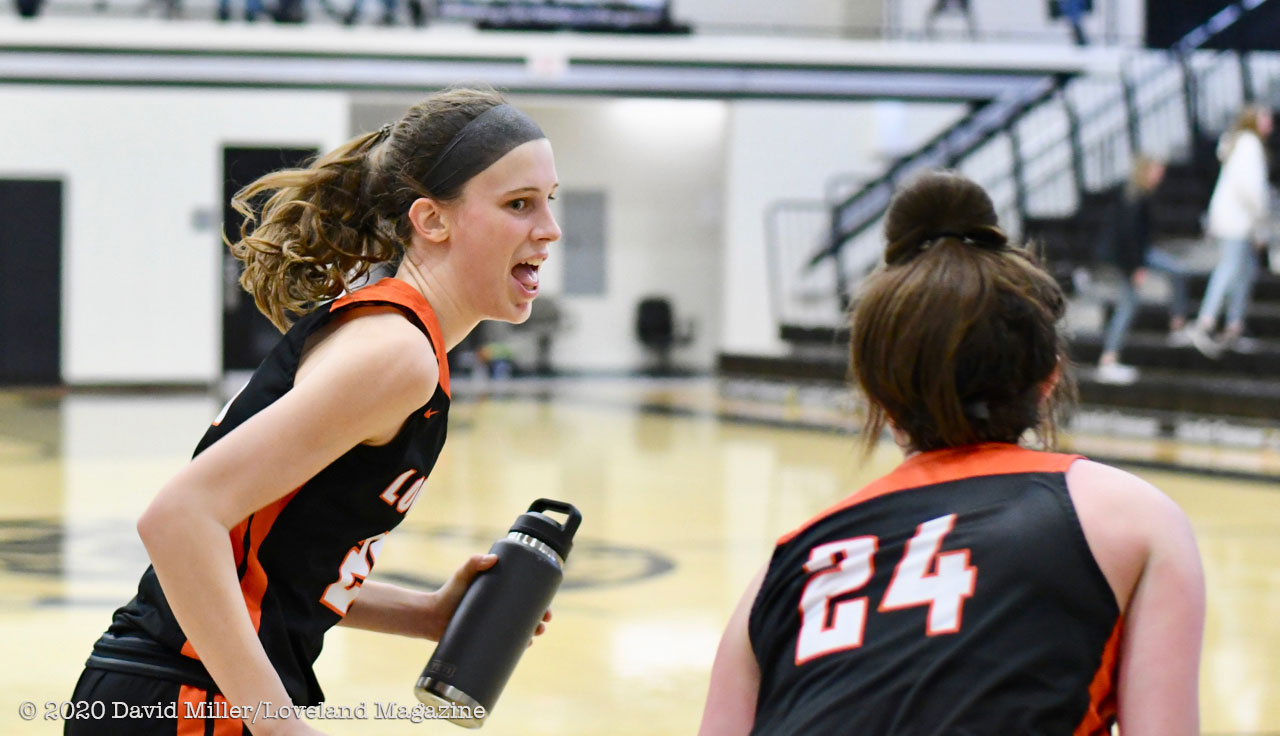
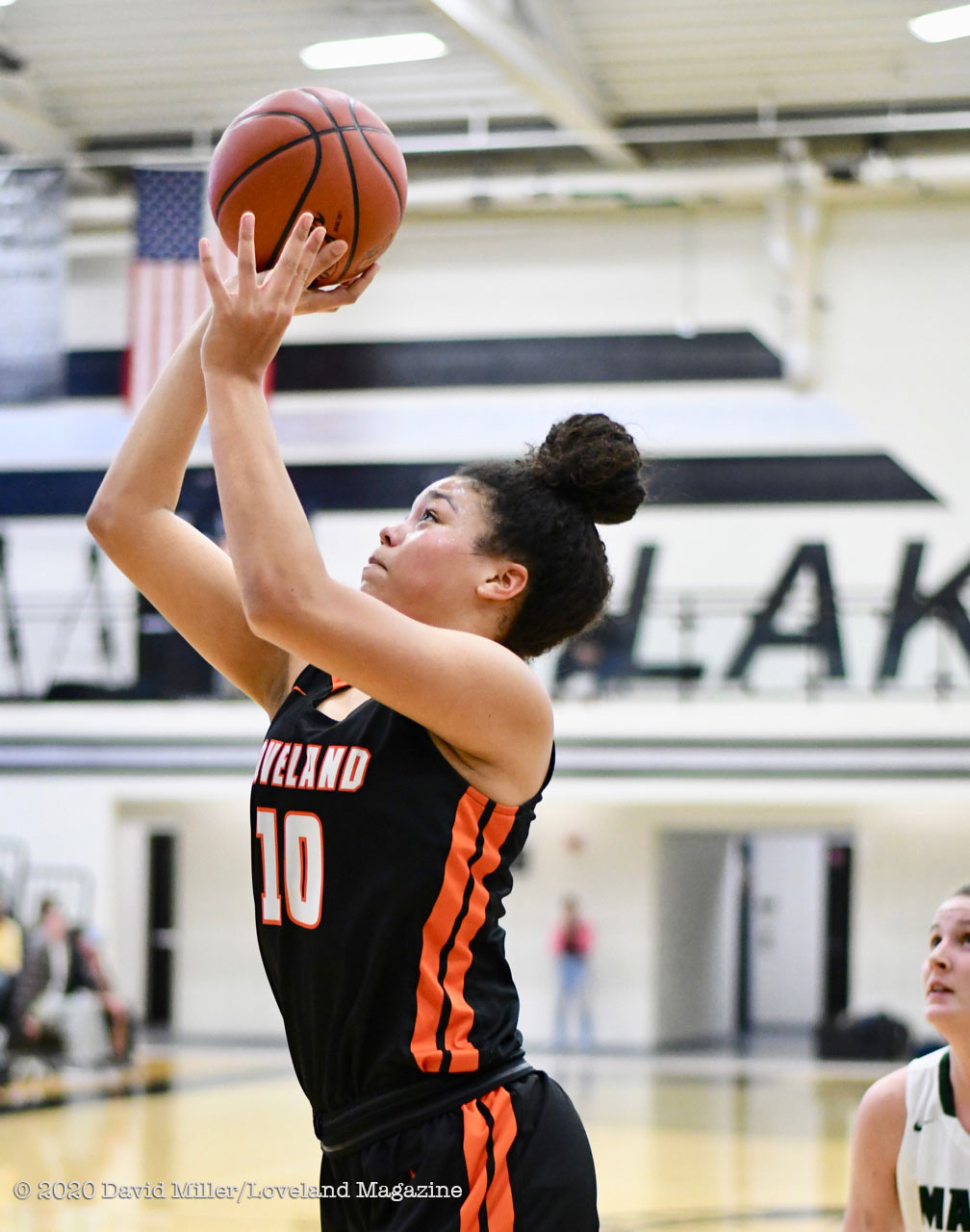
    Senior Jillian Hayes led the Tigers with a game-high 20 points shooting 50% from the field. and 4-5 from the foul line. She had 7 rebounds, 2 assists and 3 blocked shots.

    Junior Jenna Batsch scored 17 on 7-9 shooting from the field. She had 5 rebounds, 3 assists. and blocked 2.

    Senior Kate Garry finished with 10 points, 6 coming from behind the 3-pt line, 4 rebounds, and 2 assists.

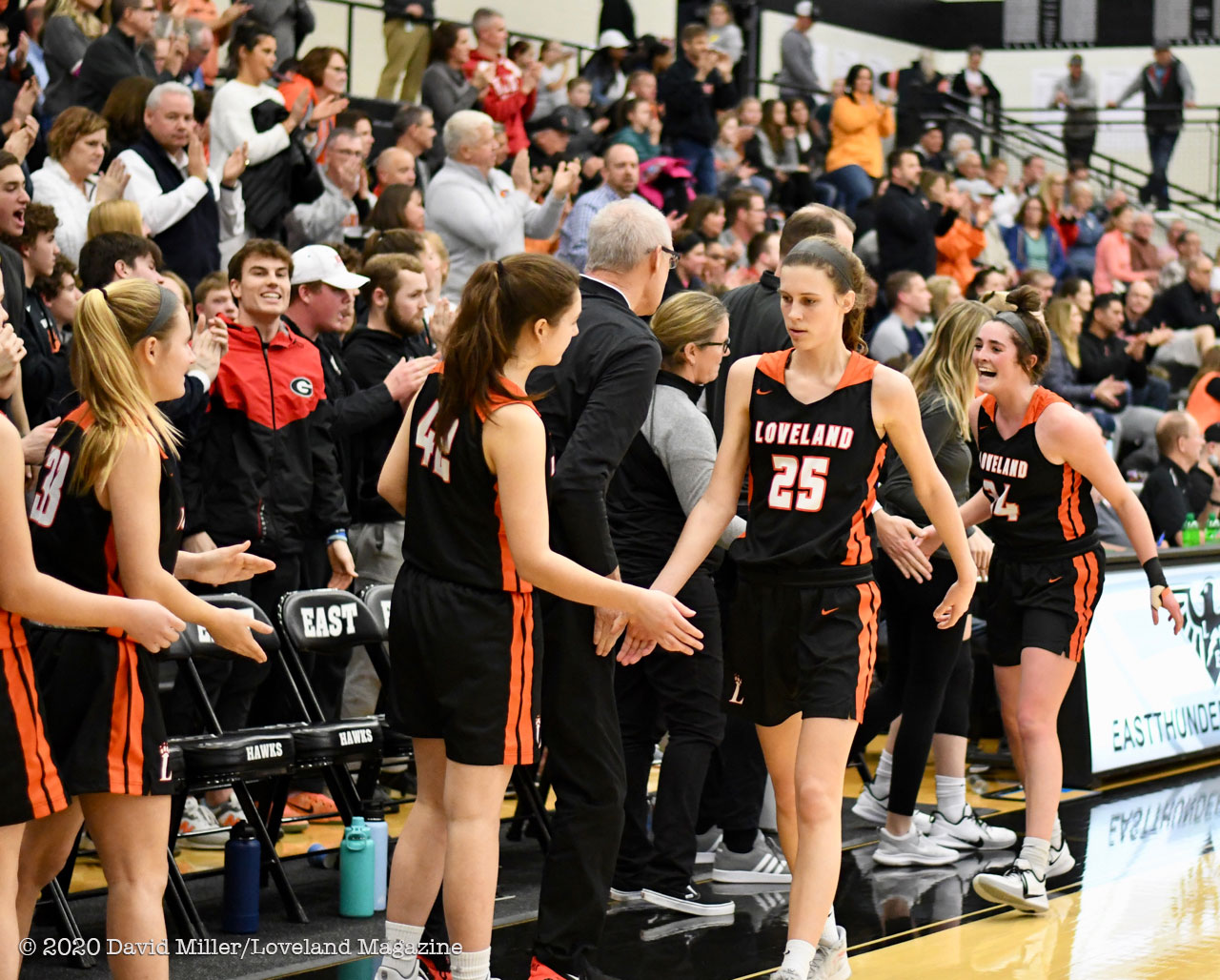
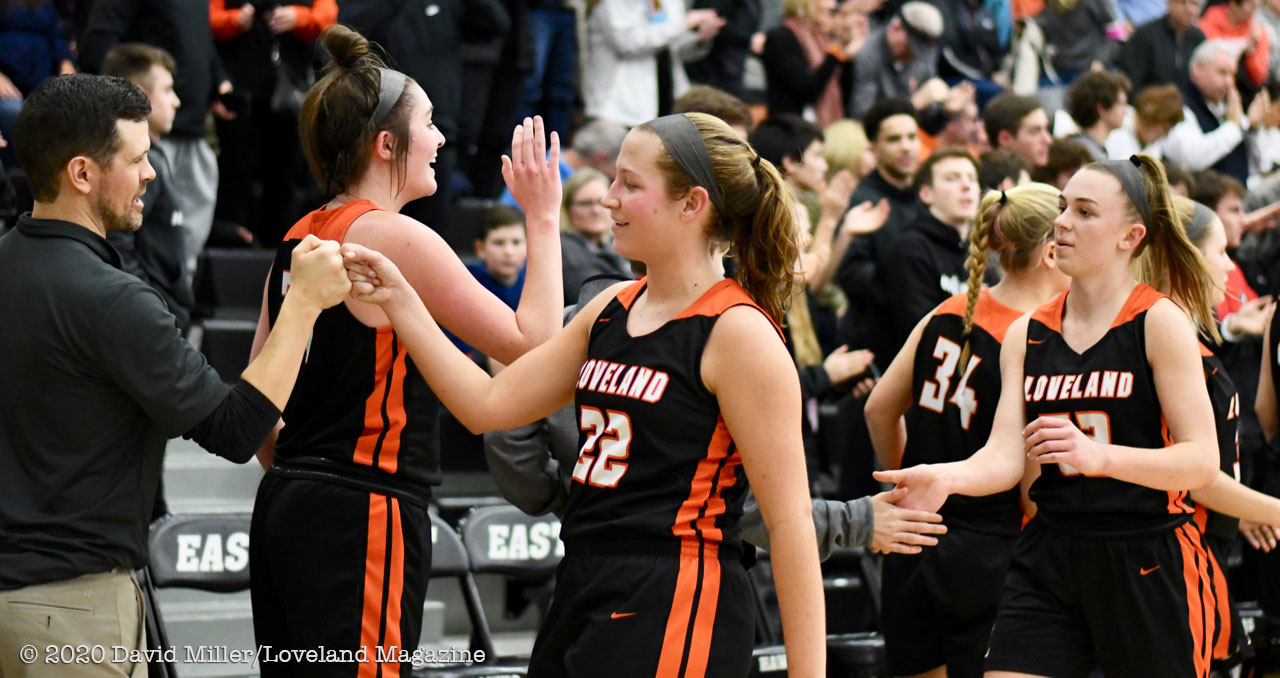
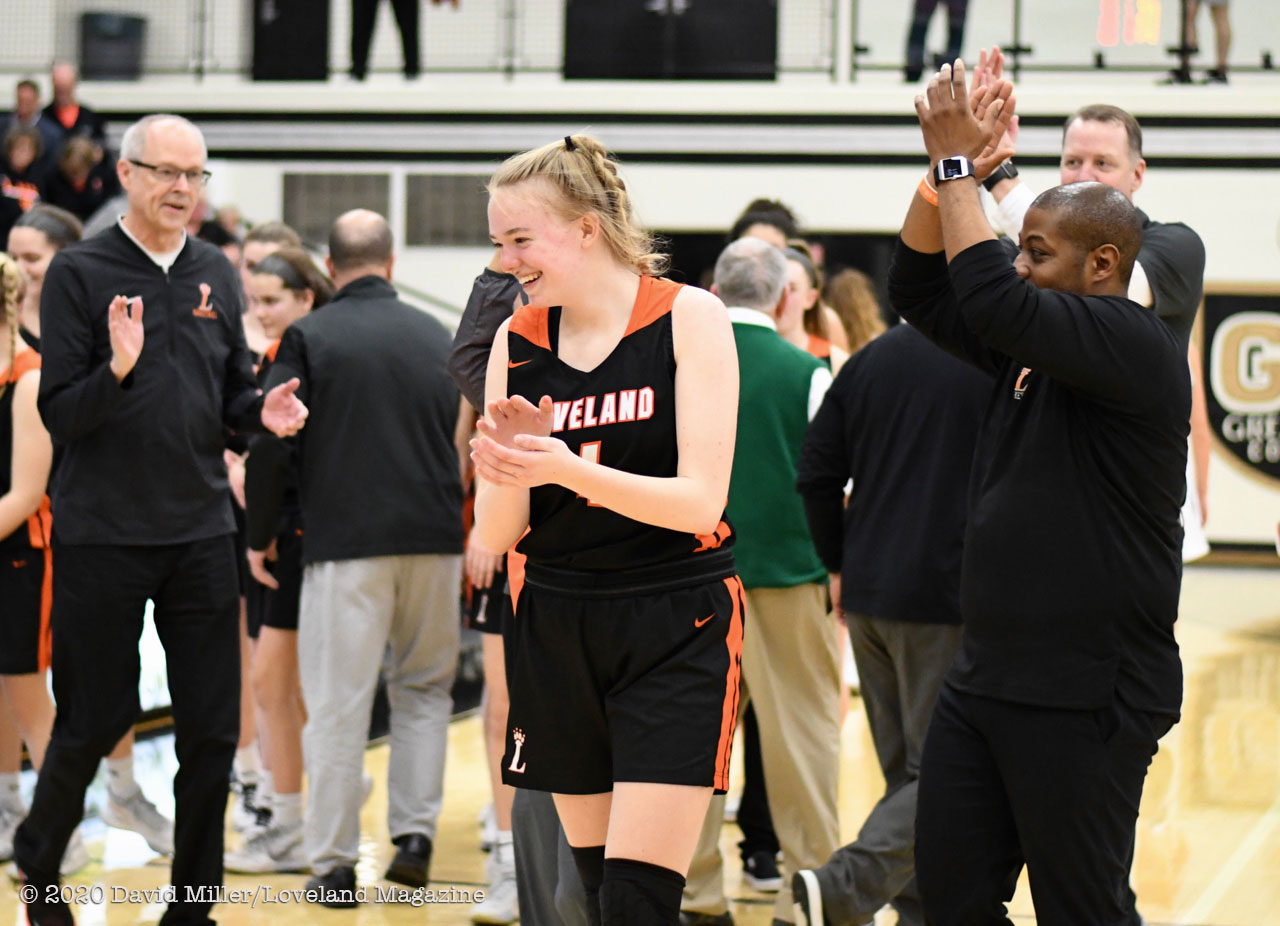
    A young Tiger high-5’s Jillian Hayes before she heads into the locker room after the win.

    MND is led by Sophomore 5’9″ forward K.K. Bransford who averages 20.2 points per game and scored 40 on the road against Lincoln Gahanna in October. Senior 5’6″ guard Makira Cook averages 17.6. and scored 27 against Huntington St. Joseph Academy on February 1.

    Loveland’s Hayes scored 27 in a December win over Walnut Hills.

    See Tiger vs Comets game stats below the photos…

    Monday, February 24, 2020

    55

    Loveland
    1 2 3 4 T
    LVL 22 9 15 9 55
    MAS 7 8 15 11 41

    41

    Mason

    Loveland
    PLAYERS FGM-A 3PM-A FTM-A OREB DREB REB AST STL BLK TO PF PTS
    Tess Broermann 1-3 0-1 1-2 0 1 1 3 1 0 1 3 3
    Jenna Batsch 7-9 1-1 2-4 1 4 5 3 2 2 3 1 17
    Brooke Hatfield 0-0 0-0 0-0 0 0 0 0 0 0 0 0 0
    Kate Garry 3-8 2-6 2-2 2 2 4 2 1 0 1 1 10
    Jillian Hayes 8-16 0-0 4-5 4 3 7 2 2 3 2 3 20
    Paige Broermann 0-0 0-0 0-0 0 0 0 0 0 0 0 0 0
    Ella Nagel 0-0 0-0 0-0 0 0 0 0 0 0 1 1 0
    Sophia Kapszukiewicz 0-0 0-0 0-0 0 2 2 0 0 0 0 0 0
    Averee Martin 0-0 0-0 0-0 0 0 0 0 0 0 0 1 0
    Josie Early 0-1 0-0 1-2 0 1 1 1 0 0 0 1 1
    Sophia Raby 1-2 0-0 0-0 0 4 4 2 4 0 1 4 2
    Olivia Raby 1-2 0-0 0-0 0 0 0 0 0 0 0 3 2
    Rachel Yeager 0-0 0-0 0-0 0 1 1 0 0 0 0 0 0
    TOTALS FGM-A 3PM-A FTM-A OREB DREB REB AST STL BLK TO PF PTS
    21-41 3-8 10-15 7 18 25 13 10 5 9 18 55
    51.2% 37.5% 66.7%
    Mason
    PLAYERS FGM-A 3PM-A FTM-A OREB DREB REB AST STL BLK TO PF PTS
    Carlin, Hannah 0-0 0-0 1-2 1 0 1 0 0 0 1 1 1
    Wagner, Megan 2-9 1-4 2-3 0 0 0 1 0 0 1 3 7
    Legault, Avery 0-0 0-0 2-2 0 0 0 0 0 0 0 0 2
    Cosimi, Riley 3-6 2-4 0-0 1 1 2 0 0 0 2 2 8
    Carter, Alanna 2-11 0-6 1-2 2 1 3 3 1 0 4 0 5
    Black, Payton 0-0 0-0 1-2 0 0 0 0 0 0 0 0 1
    Ehlers, Lillian 0-0 0-0 0-0 0 1 1 0 0 0 0 0 0
    Cary, Catherine 0-0 0-0 0-0 0 0 0 0 0 0 1 1 0
    Baird, Maddy 1-2 0-0 0-0 2 2 4 2 0 0 1 0 2
    Razzano, Gabby 2-3 0-0 0-0 0 2 2 0 1 0 2 0 4
    Popplewell, Marilyn 3-7 1-3 3-5 1 7 8 1 0 0 3 3 10
    Johnson, Bradyn 0-2 0-0 1-2 1 0 1 0 0 0 0 0 1
    Barnes, Amanda 0-1 0-0 0-0 0 0 0 0 0 0 0 2 0
    TOTALS FGM-A 3PM-A FTM-A OREB DREB REB AST STL BLK TO PF PTS
    13-41 4-17 11-18 8 14 22 7 2 0 15 12 41
    31.7% 23.5% 61.1%


  • What is PUCO and where’d it come from?

    What is PUCO and where’d it come from?

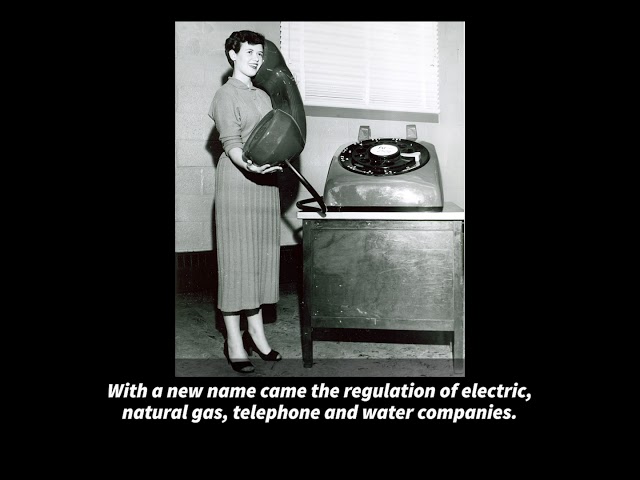
    How did a clerk from Mansfield end up becoming the first commissioner of the PUCO? And why are there five commissioners in 2020?

    How does PUCO impact every citizen in the Loveland, Ohio Area?

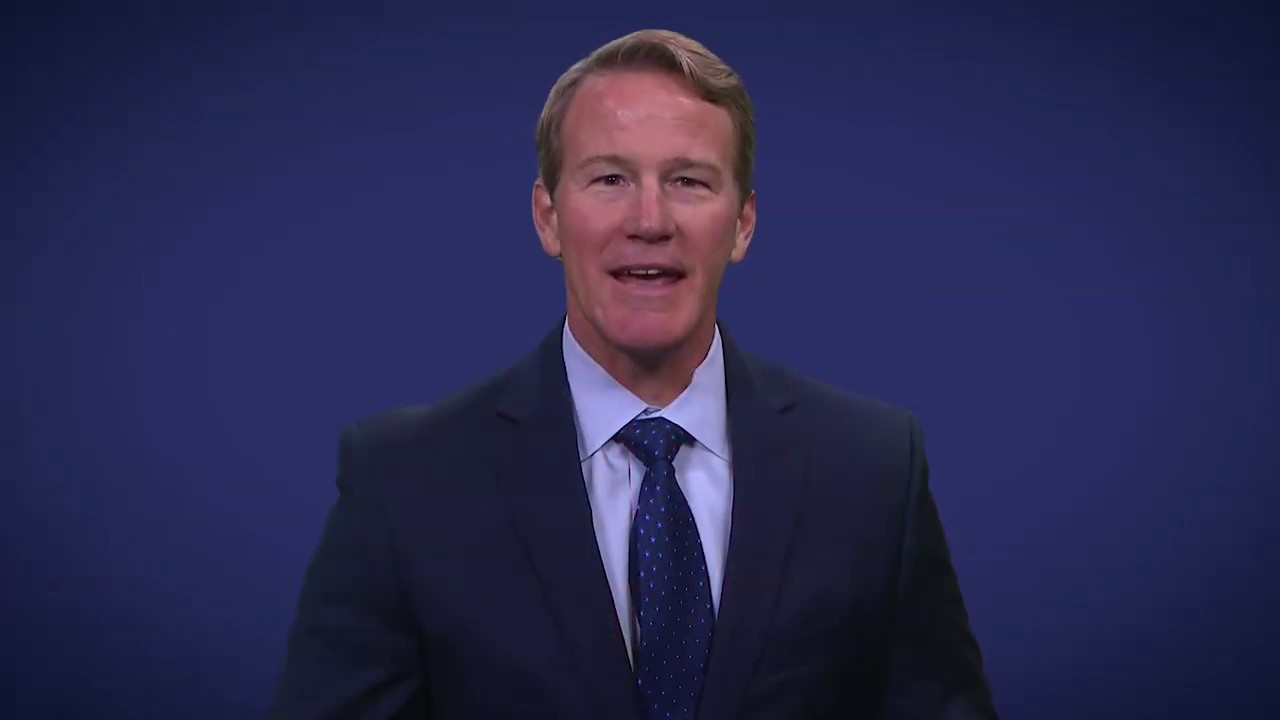
    Find the answers to those questions and more in the history of PUCO video!

  • [Video] Auditor Faber: Public entities may not use public resources to influence Levies or Bonds

    [Video] Auditor Faber: Public entities may not use public resources to influence Levies or Bonds

    Columbus, Ohio – Auditor of State Keith Faber yesterday released a video to remind public officials that most local governments and public school districts may not use tax dollars to support or oppose levy or bond issues on the ballot.

    “You cannot campaign or influence the outcome of a levy or bond issue using tax dollars,” said Faber. “This time of year, my office receives lots of questions regarding the use of tax dollars and resources on these issues, so here are some direct answers.”

    Though this is not comprehensive it addresses many concerns that have been expressed to the Auditor of State’s office.

      • Public money should not be used to support or oppose the passage of a levy or bond issue. This includes compensating employees for time spent on influencing the outcome of a bond or levy.
      • Information that supports or opposes the outcome of a levy should not be published by the entity or posting on official social media accounts.
      • The entity cannot spend money to create and send home political subdivision sponsored levy-related communications that support or oppose the passage of a levy.
      • Employees cannot speak at levy committee meetings during regularly-paid work hours if they are advocating for a preferred outcome.
      • A levy committee is not allowed to use their subdivision’s resources such as equipment and supplies free-of-charge. The committee must pay for the usage and the committee with the opposite position shall have the same opportunity.
      • Public funds should not be used to support or oppose the nomination or election of a candidate for public office.
      • Public funds should not be used to support a particular campaign committee or fund, political action committee, political party, or candidate.

    If you suspect any government entity of engaging in fraudulent practices, report it at ohioauditor.gov/fraud.


  • Yost provides training, grants to prevent school violence

    Yost provides training, grants to prevent school violence

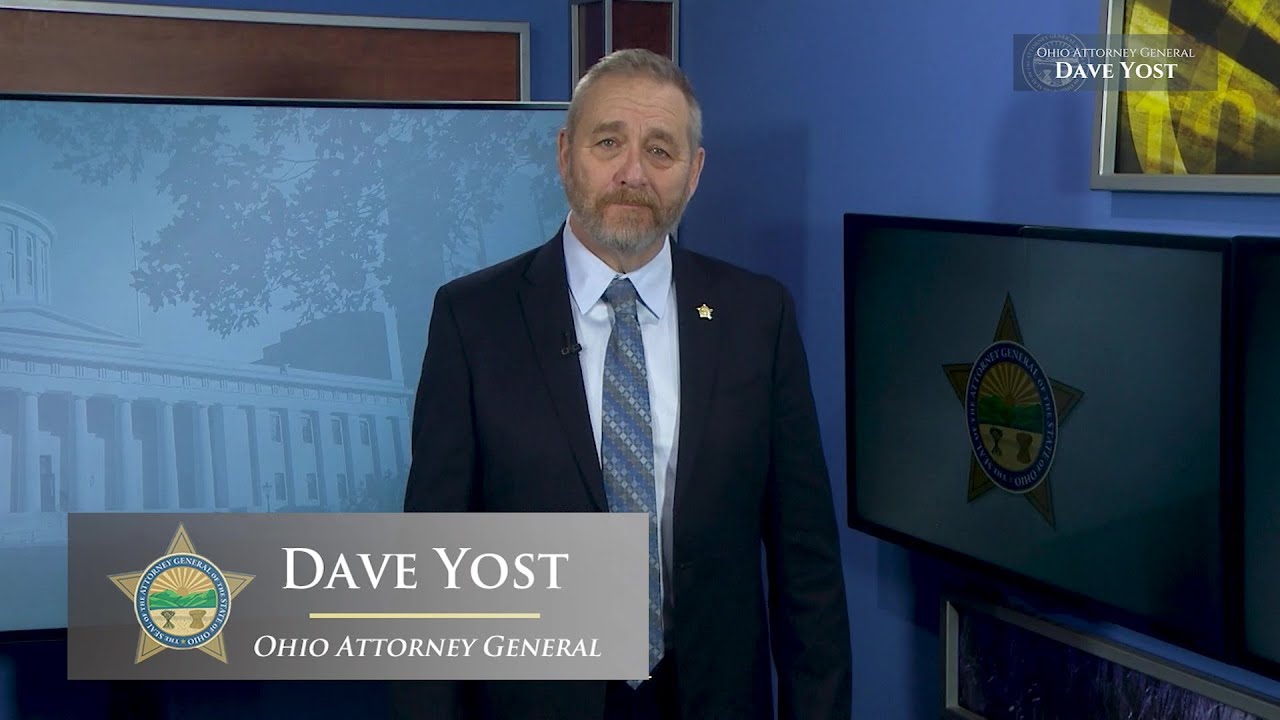
    Columbus, Ohio – Ohio Attorney General Dave Yost today announced the development of new resources to address gaps in preventing targeted violence in schools. Training curriculum now available free for local school administrators, local law enforcement and others focuses on stopping violence before it starts.

    “When a shooter attacks a school we often learn afterward, there were people who knew this person posed a threat. But nothing was done,” said Yost. “We aim to prevent school violence using national proven best practices. This is not a top-down approach. Instead, we’re providing guidance to local law enforcement and school districts to fill this critical need.”

    The new training materials provide guidance on the use of threat assessment protocols, recognized by education and safety experts as effective means to enhance proactive targeted violence prevention efforts. The goal of a threat assessment is to identify persons of concern, assess their risk for engaging in violence or other harmful activities, and identify intervention strategies to manage that risk. The training is provided in a series of 10 video installments and a printed reference guide. These Ohio materials are also under review to be offered as an included resource on the new Federal School Safety Clearinghouse website, SchoolSafety.gov, launched earlier this month.

    “This is more than training for cops or school principals,” said Yost. “The local, state and national experts in our videos make it clear that prevention only happens when parents are involved, the local school board is involved, counselors are involved. The material we’re posting today is for everyone. It gives us all a direct connection into the effort.”

    Print and save Loveland Dairy Whip Opening Day Coupon

    “Many people in the education field are aware of the preventative value of threat assessment,” said Professor Dewey Cornell of the University of Virginia. A noted national expert on school safety and the prevention of school violence, Cornell is among the key experts whose insights are included in the new Ohio training materials. “This Ohio effort is unique in bringing together guidance from both law enforcement and educators, both inside and outside the state, and putting that information all in one location, giving schools a great jump-start on implementing it.”

    “We train school administrators, school resource officers and others about using a threat assessment model, and this is an excellent compilation of national, state and local input,” said U.S. Secret Service National Threat Assessment Center Chief Dr. Lina Alathari. “It’s being provided in a manner that can easily and immediately reach any local school building and any local law enforcement agency. We’re pleased to be involved.”

    As part of the program, grants are being made available to help local schools build their own threat assessment teams. School resource officers or other law enforcement personnel with primary responsibilities that include school safety may receive a $500 Ohio School Threat Assessment Training Grant when they complete the training and agree to help form or participate on a school-based threat assessment team.

    In addition to the 10-part video training series focused on threat assessments of concerning persons, an additional companion video available only to law enforcement personnel focuses on identifying vulnerabilities in the physical school building and grounds. Law enforcement personnel must complete all 11 portions of the training to qualify for the grant.

    “There’s no question, threat assessments and vulnerability assessments – when they’re done properly – can stop a lot of these incidents before they happen,” said Max Schachter, who founded the nonprofit Safe Schools For Alex after his 14-year-old son was killed in his English class during the Marjory Stoneman Douglas High School massacre in Parkland, Florida in 2018. Schachter shares his thoughts within the training materials. “I feel that if a threat assessment had been done correctly, my little boy and 16 others might still be alive today. I want to thank Ohio for pushing this information to schools, law enforcement and families across the state.”

    Ohio School Threat Assessment Training materials can be found online at www.ohioattorneygeneral.gov/threatassessment.


  • Local business owners recognized at LCSD board meeting

    Local business owners recognized at LCSD board meeting

    David Miller (Loveland Magazine), Bonnie McNett (Whistle Stop Clay Works), Amy Van Strein (NEST), CeeCee Collins (Little Miami River Chamber Alliance), and Matt Van Sant (Clermont County Chamber of Commerce) were recognized by the Loveland Business Advisory Council and received “Certificates of Thanks”.


    Claire Beseler is a Loveland High School Junior and Intern at Loveland Magazine. She is an award winning film maker and photographer.

    by Claire Beseler

    Loveland, Ohio – On Tuesday, February 18, the Loveland City School District (LCSD) Board of Education held its monthly business meeting at the Loveland Middle/Intermediate School Media Center.

    During a report to the Board,  and representing the Loveland Business Advisory Council (LCSD), Career and College Counselor Drews Mitchell, presented a “Certificate of Thanks” to several local businesses.

    LCSD Business Advisory Council’s (BAC) established goal for is to “find ways to bring opportunities to our students to address the needs presented by our speakers from industry and higher education last year.” They complete this goal by offering special experiences to high school students such as accounting career day, Junior Achievement panel discussions, and internship and career shadowing.

    For the past year, internship opportunities have been available for high school seniors to shadow professional, local, businesses. A wide variety of subject area is offered, such as health science, interior design, advising, advanced manufacturing, business management, music and video production, marketing for events, journalism, public service, nonprofit management, real estate, and creative tactical arts, which gives students many opportunities to pursue their preferred job path or to just gain experience from professionals.

    Local businesses were recognized with a certificate for being part of the program last year and this upcoming year. Recognized organizations included Beacon Orthopedics, Bond Furniture, Clermont County Chamber of Commerce, FESTO, First Star Logistics, Lifeboat Digital Media, Little Miami River Chamber Alliance, Loveland Magazine, Miami Township Fire & EMS, NEST, Real Link, and Whistle Stop Clayworks.

    Publisher David Miller accepted the certificate on behalf of Loveland Magazine. The local newspaper first brought interns onboard in 2009 when Ricky Mulvey began reporting sports as an eighth-grader. Mulvey worked for the newspaper for 5 years and altogether there have been eight Loveland students with roles within the newspaper.

    Miller recently signed up for the Loveland Business Advisory Council program so the students could receive more benefits such as high school credit for their internship experiences and provide the students with a more formal way to add to their college and career resume. Loveland Magazine provides internship and career shadowing.

    Miller said that he thanks the District for the recognition and LHS Principal Peggy Johnson who signed the certificate. “Our interns have always provided invaluable content for the newspaper with their writing or video production but I have also learned to value their judgment about fairness and the ethics of reporting news.” He added that the young men and women have lowered the demographics of Loveland Magazine’s readership by decades. “The best thing though is the reward I receive when they proudly announce to me the college and programs they got into or when they come to me and pitch a new topic they want to report on or investigate. I believe most in the community don’t realize how eager high school students are to tell a larger audience about their passions, dreams, and the things they believe will make the country and world a better place. I suspected it so, but to experience it first hand is unbelievably fortunate for me.”

    For more information about the Loveland Business Advisory Council and how you or your business might become involved in their programs, contact Drews Mitchel at Loveland High School.


  • To inquire about advertising…

    To inquire about advertising…

    To inquire about advertising in Loveland Magazine please contact our Account Executive Cassie Mattia.

  • Classes and events at the Library this week in Loveland and Symmes

    Classes and events at the Library this week in Loveland and Symmes

    You and your child will shake it together! Sing, dance and enjoy music, movement and fun. Recommended for ages 1 – 4. No registration required.
    Loveland Branch Meeting Room
    Monday, February 24, 2020 10:30 AM – 11:00 AM

    Fun for you and your baby with songs, rhymes, stories and movement. Recommended for ages birth – 18 months. No registration required.
    Symmes Township Branch Meeting Room
    Monday, February 24, 2020 11:00 AM – 11:30 AM

    Fun for you and your baby with songs, rhymes, stories and movement. Recommended for ages birth-18 months. No registration required.
    Symmes Township Branch Meeting Room
    Monday, February 24, 2020 1:30 PM – 02:30 PM

    Learn a new skill using the Library’s Makerspace, then take home a finished product!
    Loveland Branch Meeting Room
    Monday, February 24, 2020 6:00 PM – 07:30 PM

    Meets the last Monday of every month. Books for the next month will be passed out at the meeting. Please call or ask at the desk for this month’s selection.

    No registration required.
    Symmes Township Branch Meeting Room
    Monday, February 24, 2020 7:00 PM – 08:00 PM

    Enjoy books, songs, activities, and more while learning early literacy skills. For preschoolers and their caregivers. Ages 3-6. No registration required.
    Symmes Township Branch Meeting Room
    Tuesday, February 25, 2020 10:30 AM – 11:30 AM

    Join us for a night of dramatic play as our meeting room becomes a doctor’s office. Dramatic play is an excellent way for kids to build social and literacy skills–and grown-ups are encouraged to play along! Intended for ages 4-8, but siblings are welcome. No registration required.

    Symmes Township Branch
    Tuesday, February 25, 2020 6:30 PM – 07:30 PM

    Encourage emerging language skills with books, rhymes, music and fun. Recommended for ages 18 months – 36 months. No registration required.
    Symmes Township Branch Meeting Room
    Wednesday, February 26, 2020 10:30 AM – 11:00 AM

    Enjoy books, songs, activities and more, while building early literacy skills. For preschoolers and their caregivers.

    No Registration Required
    Loveland Branch Meeting Room
    Wednesday, February 26, 2020 10:30 AM – 11:30 AM

    Encourage emerging language skills with books, rhymes, music and fun. Recommended for ages 18 months – 36 months. No registration required.
    Symmes Township Branch Meeting Room
    Wednesday, February 26, 2020 11:30 AM – 12:00 PM

    Learn to speak and read Spanish!

    Introduction to Speaking and Writing Spanish (for beginners) @ 1PM
    Reading Spanish Literature (for intermediate to advance) @ 2PM
    Brush Up Your Spanish: Refresh Your Proficiency (for intermediate to advance) @ 3PM
    No registration is required.
    Symmes Township Branch Meeting Room
    Wednesday, February 26, 2020 1:00 PM – 04:00 PM

    Got the winter weather blues? Need a change of scenery? Bring the little kids and come play at the library! Our meeting room will have toys for kids to play with while grownups have coffee and chat with other adults! The meeting room is opened from 10 – Noon for younger children.

    No registration required.
    Symmes Township Branch Meeting Room
    Friday, February 28, 2020 10:00 AM – 12:00 PM

    Join Sensei Tim Cisco to learn self-defense techniques and strategies.  Ages 7+ and families. Registration Required.
    Loveland Branch Meeting Room
    Saturday, February 29, 2020 12:00 PM – 02:00 PM


  • Print and save Loveland Dairy Whip Opening Day Coupon

    Print and save Loveland Dairy Whip Opening Day Coupon

    “Right Click” on the coupon to open in a new window and print.

    The Loveland Dairy Whip is at 611 W Loveland Avenue in the West Loveland Historic District.

    A family-owned business offering a wide variety of
    soft-serve specialty desserts. After enjoying a day out, stop
    by and relax with your favorite desert in our picnic area.

    The Dairy Whip uses a high quality soft serve mix from
    Dairymen’s
    .  Soft serve desserts are made fresh before your
    eyes.

    While offering the usual vanilla, chocolate and twist cones
    (with eyes for kids) which can be topped with sprinkles or
    chocolate/cherry/cake batter dip top, as well as banana boats
    and sundaes.

    Our specialties are Parfay’s and Cyclones with a variety of
    candy toppings.  The Chocolate Mountain, Reese Tulip and
    Hot Fudge Brownie are only a few of the favorites.  We also
    have special “Kid Sundaes”

  • Upskill your workforce today with TechCred

    Upskill your workforce today with TechCred

    TechCred helps Ohioans learn new skills and helps employers build a stronger workforce with the skills needed in a technology-infused economy.

    These technology-focused credentials take a year or less to complete and prepare current and future employees for the technology jobs Ohio employers need.

    How do businesses get started?
    Here’s how TechCred works:
    1. Identify skills needs and employees
    2. Partner with a credential provider
    3. Apply online
    4. Enroll employees in the program
    5. Upload proof of credential completion
    6. Receive reimbursement

    Learn more about TechCred

  • Making the 2020 elections a climate-emergency story

    Making the 2020 elections a climate-emergency story

    Loveland Magazine is one of the hundreds of news outlets worldwide, with a combined audience of over 1 billion people “Covering Climate Now”, a global journalism initiative committed to bringing more and better coverage to the defining story of our time.
    The initiative, was co-founded by The Nation and Columbia Journalism Review
    Read the curtain-raiser, co-published in The Nation and Columbia Journalism Review, here. And follow the coverage on social media, with the hashtag #coveringclimatenow.


     

    As the climate crisis quickens with each passing day—temperatures reached a stunning 69 degrees Fahrenheit in Antarctica last week—how much climate news will most Americans be hearing as they prepare for the November elections?

    Four years ago, ahead of the 2016 elections, there was climate silence. Only one of the hundreds of questions journalists asked during Democratic and Republican presidential debates addressed climate change—and that was one more than in 2012, 2008, or any of the preceding presidential elections—even as scientists, activists, and governments around the world implored Washington to help contain the gathering crisis. The nation’s major news organizations treated climate change as a virtual non-issue, and voters acted accordingly, electing an unabashed climate denier who as president has seemingly delighted in boosting fossil fuels and trashing environmental protections, including the Paris Agreement signed by virtually all of the world’s governments, which pledged to “significantly reduce the risks and impacts of climate change.”

    America’s journalists must do much better in 2020.

    There are promising signs so far. Network television—which continues to attract the largest audiences in media, in an era with no shortage of options—is showing new interest in the climate story. The press as a whole seems increasingly aware of climate change and its dangers, even if most outlets still refrain from echoing the thousands of scientists who now call it an “emergency.” Opinion-leading outlets, including The Washington Post, The New York Times, and National Public Radio, continue to improve their coverage, while outlets that emphasize climate coverage as part of their brand, such as The Guardian, PBS NewsHour, and Bloomberg, which recently launched Bloomberg Green, continue to light a path for the media writ large. Overall, however, the climate story remains marginal on the American news agenda.

    It’s not too late for climate change to become a central part of the 2020 election narrative. Opinion polls indicate that most Americans see climate change as a top concern; this is especially so for people under age 40, including self-identified Republicans. So shouldn’t news organizations give climate change the same attention they devote to health care and the economy? They might start by ending their practice of siloing climate change as solely a science or weather story and instead include it in their broader electoral coverage. And they must inform voters about what all candidates—presidential, congressional, state, or local—think about the climate crisis; what compromising campaign contributions they may have received; what climate policies they have supported in the past; and, above all, what they advocate doing now.

    In particular, will the media finally do justice to the Green New Deal—the policy, introduced by Rep. Alexandria Ocasio-Cortez and Sen. Edward Markey, that strives to match the scale and speed of the climate crisis? Fox News, which has given the Green New Deal far more attention than any other network, has demonically caricatured it as eco-socialism run amok; without fair-minded coverage from more credible outlets, this narrative risks taking hold. Some coverage has even echoed Fox’s framing by focusing on whether a Green New Deal is politically risky for Democrats. What voters actually need is help understanding and evaluating the substance of a Green New Deal: how it would attempt to tackle the climate crisis through massive investments in green technologies and jobs; what this would cost; where the money would come from; and, most crucially, what the costs of inaction would be.

    Tonight’s Democratic presidential debate, hosted by NBC News, holds great potential for jumpstarting more climate-centric coverage ahead of November. The candidates will include Michael Bloomberg, who made aggressive climate action a hallmark of his three terms as the former mayor of New York City. And one of the moderators will be Vanessa Hauc, a correspondent for NBC’s Spanish-language partner, Telemundo, who has reported on climate change for years, enabling her to ask informed, probing questions. (The Latinx community, which stands to be disproportionately affected by climate change, tends to care more about the issue than any other US demographic group, polls indicate.)

    Including a climate specialist such as Hauc on debate panels should be standard practice for news outlets; among other things, it could help avoid missteps like the one that marred climate discussion during the January 14 debate hosted by CNN. That night, when asked about his opposition to president Donald Trump’s then-pending US-Canada-Mexico trade deal, Senator Bernie Sanders said it overlooked “the greatest threat facing this planet into consideration.” A CNN moderator interrupted to say, “We’re going to get to climate, but we need to stay on trade.” Sanders shot back, accurately, “They’re the same.” (CNN does deserve credit for devoting seven hours of programming in September to discussing climate policy with Democratic candidates, even if those discussions were scheduled during the low-rated Saturday evening hours.)

    Whatever else the 2020 election is, there can be no doubt that it is a climate election. Scientists have long identified 2020 as a cardinal date in the history of the climate crisis. By 2020, they said, it would be clear whether greenhouse gas emissions were being sufficiently curbed to forestall grave, perhaps irreversible damage to civilization. The approaches of America’s two major political parties to this challenge could hardly be more different. To President Trump and many Republicans, there is no such thing as a climate crisis; their party has long rejected climate science and insisted that producing more oil, gas, and coal can only be good for America. Democrats, meanwhile, accept the scientific consensus and see the climate crisis as an urgent priority, and most of their presidential candidates support one version or another of a Green New Deal (though they still differ on issues including fracking and fossil-fuel exports). On November 3, America’s voters will choose one approach or the other. It is journalists’ job to give them the facts and analysis they need to make up their minds.

    Some additional climate news and coverage of note:

    • On Monday, Jeff Bezos, Amazon’s founder and chief executive and the world’s richest man, committed $10 billion to combatting the climate crisis. Much coverage noted, correctly, that Amazon’s own carbon footprint is enormous—and that, in January, the company threatened to fire employees who spoke out about its role in the climate crisis. As Matt Reynolds, Wired’s science editor in the UK, argues: “While Bezos has—belatedly—stepped up to the plate with big gestures of climate support, this shouldn’t distract from the more mundane ways that Amazon continues to avoid its climate responsibility.”

    • In a short and touching feature, The Guardian profiles the young people in small communities and rural areas around the world who are following the lead of climate strikers like Greta Thunberg but having to go it alone. It can be isolating work, the young people explain, but social media, including the Twitter page Solo But Not Alone, has helped broaden their reach. “We really want to make sure that even if only one person is striking, their voice is heard and it is loud,” one striker tells The Guardian. (This piece is available for republication by CCNow partners, consistent with the instructions found below.)

    • A new study shows that nearly one-fifth of the Amazon rainforest is now emitting more carbon than it absorbs, according to the BBC—meaning that one of the earth’s essential tools for slowing climate change may instead be turning into a carbon source. With deforestation on the rise in Brazil and a government in the country that is hostile towards conservation efforts, experts warn the forest may reach a “tipping point.”

    • The New York Times has a deeply reported and visually rich tale of sea level rise in two metropolitan areas: the San Francisco Bay Area and Manila, Philippines. In both places, “climate change has magnified years of short-sighted decisions,” the Times writes. Now, with more water inevitably on its way over the course of this century, people are left only to cope. How they do so will depend “mostly on the accident of your birth: Whether you were born rich or poor, in a wealthy country or a struggling one, whether you have insurance or not, whether your property is worth millions or is little more than a tin roof.”

    • For Yale Environment 360, veteran climate writer David Victor proposes a framework for climate-change mitigation based on rapid technological innovation across industries. Traditional diplomacy is unlikely on its own to move fast enough to face the crisis, Victor argues, given its imperative for consensus among a multitude of actors; revolutions in various economic sectors, instead, may create the system of incentives that is needed for government leaders to finally embrace climate action. (This piece is available for republication by CCNow partners, consistent with the instructions found below.)

    * When republishing any of the individual stories identified above as available, CCNow outlets are asked to append the CCNow logo, which you can download here, and the following tagline: “This story originally appeared in [insert name of original news outlet, with a link to the outlet’s homepage] and is republished here as part of Covering Climate Now, a global journalistic collaboration to strengthen coverage of the climate story.” (To republish the Guardian story, partners must also agree to a simple licensing agreement, which is here.)

    ** The Climate Beat newsletter may also be republished by CCNow partners, as the top-half column, which is written by CCNow’s Executive Director Mark Hertsgaard, or in its entirety. Partners must append the following verbiage at the top or bottom of the post: “This article is adapted from The Climate Beat, the weekly newsletter of Covering Climate Now, a global journalism initiative committed to more and better climate coverage.” Partners may use whatever art or images they want, though CCNow’s “Windmill” logo and a horizontal banner are available free of charge.

    Thanks for reading, and see you soon!