Author: Loveland Magazine

  • Seaman Seth Moore becomes member of elite Navy Honor Guard

    Seaman Seth Moore becomes member of elite Navy Honor Guard

    Members of the Navy Ceremonial Guard participate in some of our nation’s most prestigious ceremonies, including Presidential inaugurations and arrival ceremonies for foreign officials.
    A Press Release from the Navy Office of Community Outreach
    Milford, Ohio – Seaman Seth Moore recently completed an intensive 10-week training program to become a member of the elite U.S. Navy Ceremonial Guard.


    Seaman Seth Moore, a 2017 Milford High School graduate, joined the Navy six months ago. Today, Moore serves as a U.S. Navy Ceremonial Guardsman.

    “I joined the Navy to better my future and to travel,” said Moore.
    .
    Established in 1931, the U.S. Navy Ceremonial Guard is the official honor guard of the U.S. Navy and is based at Naval District Washington Anacostia Annex in Washington, D.C.

    According to Navy officials, the U.S. Navy Ceremonial Guard’s primary mission is to represent the service in Presidential, Joint Armed Forces, Navy, and public ceremonies in and around the nation’s capital. Members of the Navy Ceremonial Guard participate in some of our nation’s most prestigious ceremonies, including Presidential inaugurations and arrival ceremonies for foreign officials.

    “I have learned discipline and getting out of my comfort zone,” said Moore.

    Sailors of the Ceremonial Guard are hand-selected while they are attending boot camp at Recruit Training Command in Great Lakes, Illinois. Strict military order and discipline, combined with teamwork, allow the Ceremonial Guard to fulfill their responsibilities with pride and determination. They are experts in the art of close order drill, coordination, and timing.

    The Ceremonial Guard is comprised of the drill team, color guard, casket bearers, and firing party.

    “I like that I will gain new experiences here,” said Moore.

    There are many opportunities for sailors to earn recognition in their command, community, and careers.

    “I am most proud of completing ceremonial guard training,” said Moore.

    As a member of the U.S. Navy, Moore, as well as other sailors, know they are a part of a service tradition providing unforgettable experiences through leadership development, world affairs and humanitarian assistance. Their efforts will have a lasting effect around the globe and for generations of sailors who will follow.

    “Serving in the Navy means to me that I get a sense of pride in what I do,” added Moore.

  • Join in celebration of Dr. Kathryn Lorenz Board of Education service

    Join in celebration of Dr. Kathryn Lorenz Board of Education service

    Loveland Magazine file photo of Dr. Kathryn Lorenz in this year’s Homecoming Parade.

    Loveland, Ohio – Join your friends and neighbors in honoring Dr. Kathryn Lorenz and her 32 years of service to the Loveland City School District Board of Education. Dr. Lorenz will retire from Board service at the end of 2023, and the community is invited to join together to honor her.

    “For more than three decades, Dr. Lorenz has been a vital part of leading and growing our district. As she steps away from the Board, she will leave behind an amazing legacy of commitment to public education and public service. I am so happy to see our community honoring her in this way,” Loveland City School District Superintendent Mike Broadwater said.

    Friends of Dr. Lorenz have organized a Board Retirement Celebration to be held on Sunday, December 10, at 1 PM at the Oasis Conference Center. The event will be an opportunity to reminisce, share stories, and show appreciation for Dr. Lorenz’s many years of service and leadership.

    Tickets start at $20 per person. Purchase tickets, sponsor a table, or sponsor the event by following this LINK.

    All proceeds above the cost of the event will fund a scholarship in Dr. Lorenz’s honor through the Loveland Schools Foundation. If you can’t make it or if you’d like to donate, please click HERE and select the Donations option.

    For additional information, please contact Board Member Elect Lynn Mangan at lynnmmangan@gmail.com

  • Pertussis (whooping cough) “Advisory” from Warren County Health District

    Pertussis (whooping cough) “Advisory” from Warren County Health District

    Loveland, Ohio – The Warren County Health District (WCHD) is urging the public to stay up to date with immunizations, especially for pertussis (whooping cough). WCHD has identified an increase in pertussis cases in the county. In 2023, there have been 15 cases, including 14 that have been in the last month. By comparison, there was one case in 2022.

    The Advisory

    Whooping cough is highly contagious and is usually spread by coughing or sneezing while in close contact with others, who then breathe in the pertussis bacteria. It can cause serious illness in people of all ages but is most dangerous for babies.

    Symptoms of whooping cough usually develop within 5 to 10 days after you come into contact with the bacteria that cause it. Sometimes symptoms do not develop for as long as 3 weeks.   

    Whooping Cough symptoms can be classified into three stages: Stages 1,2, and 3.

    Stage 1, or early symptoms can last 1-2 weeks and include:

    • Runny or stuffed up nose

    • Low-grade fever (less than 100.4F)

    • Mild, Occasional cough (babies do not do this)

    • Apnea (life threatening pauses in breathing) and cyanosis (turning blue or purple) in babies and young children

    Many times, in the early stages of whooping cough, it is very easy to think it is just a common cold. Early testing is important since the antibiotics used to treat the illness is most effective in the first stage of pertussis. Antibiotics are not effective once the “whooping” starts.

    Stage 2 symptoms can begin one to two weeks after symptom onset, and can last anywhere from 1-10 weeks. During this time, someone affected by whooping cough will develop rapid, violent, and uncontrolled coughing fits. As the illness continues, these coughing fits will increase in frequency and intensity.

    Stage 3 is recovery, which can be slow, as the cough becomes milder and less common as someone gets better, but they can return if someone develops another respiratory infection.

    Whooping cough can cause serious and sometimes life-threatening complications in babies. This is especially true within the first 6 months of life. It is important to know that some babies with whooping cough don’t cough at all. Instead, it causes them to stop breathing and turn blue.

    If their mothers are vaccinated in the third trimester (27-36 weeks), newborns are offered some protection.

    The best way to prevent whooping cough is to get vaccinated. Two vaccines in the United States help prevent whooping cough: DTaP and Tdap. These vaccines also provide protection against tetanus and diphtheria. These vaccines cannot give you whooping cough, tetanus, or diphtheria.

    WCHD offers both of these vaccinations. If you are unsure of if you need the Tdap vaccination or have not received one in the last 10 years, and need to get scheduled, call 513-695-1229.

    For people exposed to whooping cough, the Centers for Disease Control and Prevention (CDC) recommends preventive antibiotics only if they:

    • Live with the person who has been diagnosed with whooping cough.

    • Are at increased risk for serious disease (e.g., babies, people with certain medical conditions) or will have close contact with someone who is at increased risk for serious disease (e.g., women in their third trimester of pregnancy, people who work with or care for high risk individuals).

    If you’ve been exposed to the bacteria that causes whooping cough, talk to your doctor about whether you need preventive antibiotics. This is especially important if there is a baby or pregnant woman in your household or you plan to have contact with a baby or pregnant woman.

  • Loveland Elementary School, Loveland Intermediate School, and Loveland Middle School recognized as among the nation’s best

    Loveland Elementary School, Loveland Intermediate School, and Loveland Middle School recognized as among the nation’s best

    Loveland, Ohio – The Loveland City School District has announced that more Loveland schools have been named to the “Best Schools” list by US News and World Report. Loveland Elementary School, Loveland Intermediate School, and Loveland Middle School have all been recognized as among the nation’s best schools.

    “This recognition results from hard work and dedication from everyone involved with LES, LIS, and LMS. Students, families, staff, and building leaders all work together to make students successful and share in this honor. Way to go, Loveland.” Superintendent Mike Broadwater said in making the announcement.

    These schools join Loveland High School on the US News and World Report “Best Schools” list. Every building in the Loveland City School District eligible for the “Best Schools” designation has achieved it according to the announcement.

    “Great public schools only exist with the support and encouragement of a great community. This recognition that our schools are among the ‘best’ is also a statement that our Loveland community is among the best. Loveland City School District is thankful for the ongoing support,” Superintendent Mike Broadwater said.

    The LES profile can be found by following this link.

    The LIS profile can be found by following this link.

    The LMS profile can be found by following this link.

    Follow this link to learn more about the US News and World Report rankings.

  • Veterans’ health care coverage expanded by Biden administration

    Veterans’ health care coverage expanded by Biden administration

    BY:  Ohio Capital Journal

    Biden administration officials said Friday the Department of Veterans Affairs will expand health care coverage for certain groups of veterans and their families and create new programs meant to make care more accessible. Veterans Day fell on Saturday.

    The VA will make coverage of certain toxic burn pit-related conditions available sooner than anticipated. Family members of veterans who served at North Carolina’s Marine Corps Base Camp Lejeune from 1953-1987 will be eligible to have the costs of treating Parkinson’s disease. And all World War II veterans will be eligible for no-cost health care, including at nursing homes, the department said in a series of news releases.

    The administration will also create a new graduate medical education program to help expand health care availability for veterans in rural, tribal and other underserved communities, the department said. And the VA will spend $5 million on an advertising campaign aimed at having more veterans sign up for services.

    “As we head into Veterans Day, we’re reminded of the fundamental promise that our country makes to anyone who signs up to serve in the military: If you fight for us, we’ll fight for you,” Veterans Affairs Deputy Secretary Tanya Bradsher told reporters on a Thursday call in advance of the announcements.

    The administration announced five changes meant to expand veterans’ benefits.

    The VA will speed up coverage for burn pit exposure that was part of a bipartisan law passed last year.

    The law, which provides health care benefits to veterans exposed to toxic chemicals from burn pits in Iraq and Afghanistan and certain other veterans, was written to be phased in over no more than 10 years.

    But President Joe Biden is directing the VA to make all affected veterans eligible for expanded benefits by early next year, according to a White House fact sheet.

    The Camp Lejeune Family Member Program will be expanded to cover Parkinson’s disease. The program, which covers a host of conditions related to the contaminated drinking water at the base, did not previously include Parkinson’s.

    Veterans of World War II who served anytime from Dec. 7, 1941, to the end of 1946, are entitled to no-cost VA health care, meaning no co-pays or monthly premiums, the department said. That includes care at nursing homes.

    To expand availability, the department is also creating a pilot program to reimburse residents and residency programs, including those outside of VA facilities, that serve veteran patients. The program would fund 100 physicians in rural, tribal and underserved communities, according to a VA news release.

    And to encourage veterans to take advantage of their benefits, the department is planning a national advertising campaign focused on “some of the most tangible, cost-saving benefits” veterans are entitled to, according to the VA.

    The multimedia campaign will tout the low-cost or no-cost health care, education, home loan and memorial service programs, the VA said.


    Jacob Fischler
    JACOB FISCHLER

    Jacob covers federal policy as a senior reporter for States Newsroom. Based in Oregon, he focuses on Western issues. His coverage areas include climate, energy development, public lands and infrastructure.

    MORE FROM AUTHOR

  • Apex Sportswear & Promotional Specialties in Loveland, Ohio

    Apex Sportswear & Promotional Specialties in Loveland, Ohio

    Promoted Post

    Loveland, OhioApex Sportswear & Promotional Specialties is in the heart of the West Loveland Historic District with its own free parking. In business there since 1992 as a full-service promotional specialty company. They provide assistance with theme creativity, layout and design, and the finest imprinted and embroidered items. They have access to over 600,000 promotional products, and are dedicated to finding the ideal product for your promotional need.


  • Gov. DeWine calls on legislators to modify recreational marijuana law before it goes into effect

    Gov. DeWine calls on legislators to modify recreational marijuana law before it goes into effect

    BY:  Ohio Capital Journal

    Ohio Gov. Mike DeWine says he accepts that Ohioans have voted to legalize recreational marijuana, but is calling on legislators to make changes to the law before it goes into effect on Dec. 7.

    “My recommendation to the General Assembly is that they take action to make sure that both rights are protected,” DeWine said Thursday morning to a group of reporters during his first remarks about Tuesday’s election.

    “People have a right to smoke it. People have a right to consume it. But also that everybody else’s who doesn’t choose to do so is also protected with their rights as well.”

    Leading up to the election, DeWine was a vocal critic of Issue 2, which legalizes and regulates the cultivation, manufacturing, testing and the sale of marijuana to Ohioans 21 and up.

    “We respect what the people have done,” DeWine said. “What the people have clearly told us is they want legal marijuana in Ohio. We are going to see that they have that. We’re also going to live up to our responsibility to all the people in the state of Ohio, whether they voted for it or voted against it.”

    In doing so, he wants to make sure various protections are in place, starting with Ohio’s children.

    “One goal will be to make sure that they are protected from advertising in regard to marijuana,” DeWine said. “We want to do everything within our power to reduce the number of inadvertent consumption of gummy bears, cookies and other products that have marijuana.”

    Last year, a 10-year-old Upper Arlington elementary student mistakenly brought her dad’s edible marijuana gummies to school and shared with them other students during lunch, thinking they were leftover Easter candy. After eating the gummies, the students became nauseous, experienced hallucinations and had elevated heart rates, so they were all taken to a local hospital for treatment.

    “We have every responsibility to do everything we can to keep those (emergency room visits) numbers down as much as we can,” DeWine said.

    BUCKEYE LAKE, Ohio — AUGUST 17: A worker holds a tray of green apple marijuana edibles that will be packaged for medical sale, August 17, 2023, at the PharmaCann, Inc.’s cultivation and processing facility in Buckeye Lake, Ohio. (Photo by Graham Stokes for Ohio Capital Journal)
     BUCKEYE LAKE, Ohio — AUGUST 17: A worker holds a tray of green apple marijuana edibles that will be packaged for medical sale, August 17, 2023, at the PharmaCann, Inc.’s cultivation and processing facility in Buckeye Lake, Ohio. (Photo by Graham Stokes for Ohio Capital Journal. Republish photo only with original story.) 

    He said he also feels obligated to protect adults who don’t want to inhale or smell marijuana when they are walking around.

    “They make a choice not to use marijuana, they should be protected from being in a place where they have to deal with that,” he said.

    DeWine also wants to reduce the number of drivers under the influence of marijuana. This was an issue the opposition group Protect Ohio Workers and Families harped on throughout election season — predicting Ohio would see an additional 48 fatal vehicle crashes and 2,298 more injury crashes if Issue 2 passed.

    Issue 2 is a citizen initiative, meaning Ohio lawmakers can make changes to the law — something DeWine hopes can happen by Dec. 7.

    “I would hope … that when Dec. 7 comes and goes that we will be able to inform the people of the state exactly how this program will roll out,” he said. “I think it would be good if that was all done by the 7th so that we’re not in a situation of taking something away from people.”

    DeWine said he has a Monday morning meeting scheduled with Ohio House Speaker Jason Stephens, R-Kitts Hill, and Ohio Senate President Matt Huffman — two republicans who were quick to hint at making changes to Issue 2 after the race was called.

    “Now is the time for the legislature to lead on how best to allocate tax revenues while responsibly regulating the industry,” Stephens said in a statement.

    Huffman said lawmakers may clarify language “regarding  limits for THC and tax rates as well as other parts of the statute.”

    Follow OCJ Reporter Megan Henry on Twitter.

    Reporter Nick Evans contributed to this story. 


    Megan Henry
    MEGAN HENRY

    Megan Henry is a reporter for the Ohio Capital Journal and has spent the past five years reporting in Ohio on various topics including education, healthcare, business and crime. She previously worked at The Columbus Dispatch, part of the USA Today Network.

    MORE FROM AUTHOR


  • Gov. DeWine taps Steve Dackin as head of Ohio K-12 education, despite previous ethics investigation

    Gov. DeWine taps Steve Dackin as head of Ohio K-12 education, despite previous ethics investigation

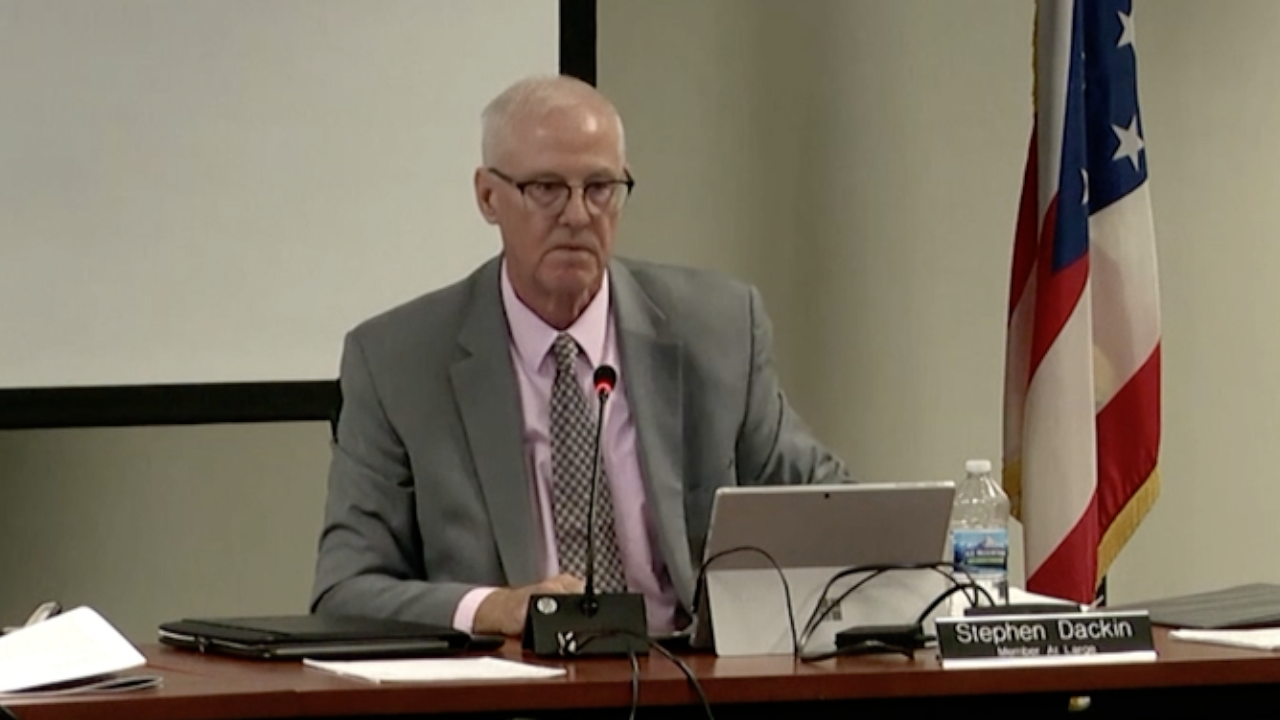
    Steve Dackin. Photo from The Ohio Channel.

    BY:  Ohio Capital Journal

    Ohio Gov. Mike DeWine nominated Steve Dackin to lead the new Department of Education and Workforce — despite Dackin’s previous ethics investigation during his less than two-week stint as state superintendent.

    Dackin previously served as the vice president of the Ohio State Board of Education and had access to the job applications for the state superintendent position in 2022 after Paolo DeMaria retired in 2021.

    In February 2022, Dackin resigned from the Ohio State Board of Education days before the application deadline and applied for the state superintendent position.

    The State Board of Education voted Dackin for state superintendent on May 10, 2022, and he assumed office on May 23, 2022. In between those 13 days, the Ohio Ethics Commission opened an investigation into Dackin.

    He resigned 11 days later on June 3, 2022, and signed a settlement with the Ohio Ethics Commission to avoid criminal prosecution in October 2022. Dackin did not take any compensation for the 11 days he was in charge of the Ohio Department of Education.

    “Dackin has a broad base of experience that will benefit Ohio’s continued efforts to create a transformative education system that provides the resources and support for students and serves as a pipeline of talented young people to Ohio employers, colleges, universities, and career and technical education centers, helping every Ohioan live up to their God-given potential,” DeWine said in a statement Thursday afternoon announcing his pick.

    The Director of the Department of Education and Workforce must be confirmed by the Ohio Senate.

    DeWine’s appointment comes weeks after a Franklin County Common Pleas Court Judge denied a preliminary injunction request to stop the transfer of power of K-12 education from the state school board to the governor’s office, which allowed the Ohio Department of Education to became the Ohio Department of Education and Workforce.

    This created a cabinet-level director position and puts the department under the governor’s office.

    The conservative think tank Fordham Institute’s Vice President for Ohio Policy and Advocacy Chad Aldis praised DeWine’s appointment of Dackin.

    “Steve Dackin is a widely respected leader and educator who has served Ohio students for decades in a wide variety of roles including as a teacher, principal, and superintendent,” Aldis said in a statement.

    The business coaltion Ohio Excels also celebrated DeWine’s appointment.

    “We were proud to support him before and praise the governor for picking this talented, committed education leader to guide this new department at this critical time,” Lisa Gray, president of Ohio Excels, said in a statment.

    Dackin was superintendent of Reynoldsburg City Schools from 2007-2014 and then worked as the superintendent of school and community partnerships for Columbus State Community College until December 2021.

    He earned his undergraduate degree in history from Ohio Northern University and his master’s in educational administration from the University of Dayton.

    Follow OCJ Reporter Megan Henry on Twitter.


    Megan Henry
    MEGAN HENRY

    Megan Henry is a reporter for the Ohio Capital Journal and has spent the past five years reporting in Ohio on various topics including education, healthcare, business and crime. She previously worked at The Columbus Dispatch, part of the USA Today Network.

    MORE FROM AUTHOR

  • Local Election Results November 7, 2023

    Local Election Results November 7, 2023

    Loveland, Ohio – Here are the un-official results from the General Election held on November 7, 2023. Loveland School Board and Loveland City Council results are a tabulation from Clermont, Hamilton, and Warren Counties. The School District and the City are within all three counties.

    Most recent update: Wednesday, November 8, 2023 at 5:15 PM

    (100% Precincts Reporting)

    ________________

    Loveland City Council

    (3 to be elected) Vote tally from all counties.

    Kathy Bailey – 2843

    √ Andy Bateman – 2468

    √ Brian Goodyear – 2224

    Deidre Hazelbaker – 1741


    Loveland School Board

    (2 to be elected) Vote tally from all counties.

       Linda J. Cecil – 3776

    √  Christina Jeranek – 6047

    √  Lynn M. Mangan – 6684

    Robert Vanover – 2421

    Ohio ISSUE 1

    A Self-Executing Amendment Relating to Abortion and Other Reproductive Decisions Proposed Constitutional Amendment

    √  YES – 2,186,962 (56.62%)

    NO – 1,675,728 (43.38%)

    Ohio ISSUE 2

    To Commercialize, Regulate, Legalize, and Tax the Adult Use of Cannabis Proposed Law

    √  YES – 2,183,734 (56.97%)

    NO – 1,649,339 (43.03%)

    Statewide results are unofficial until the Secretary of State certifies the results of the election. The official canvass is completed approximately three weeks after the conclusion of the election, and results will be released following the office’s review of the county boards of elections’ official canvass reports.

    Hamilton County Issue 19

    PROPOSED TAX LEVY (RENEWAL) (zoological park services)

    √  For – 190,508 (68.50%)

    Against- 87,600 (31.50%)

    Hamilton County Issue 20

    PROPOSED TAX LEVY (RENEWAL AND INCREASE) HAMILTON COUNTY (Cincinnati and Hamilton County Public Library)

    √  For – 156,797 (56.53%)

    Against – 120,590 (43.47%)

    Warren County Career Center

    √  For – 31,628 (51.68%)

    Against – 29,571 (48.32%)

    Milford Exempted Village School District Tax Levy

    For – 7,955 (42.73 %)

    √  Against – 10,663 (57.27%)

    Clermont County Board of Developmental Disabilities Tax Levy

    √  For – 40,840 (56.48)

    Against – 31,475 (43.52%)

  • FirstEnergy seeks $1.4 billion more from Ohio ratepayers. Watchdog objects

    FirstEnergy seeks $1.4 billion more from Ohio ratepayers. Watchdog objects

    Getty Images

    BY:  Ohio Capital Journal

    Even as its former top executives await possible criminal charges for gouging ratepayers, Akron-based FirstEnergy is seeking a $1.4 billion rate increase. The state’s consumer watchdog objects, saying the company’s profits are higher than normal and that it should use a more thorough process to prove that it really needs the money.

    The electric utility is seeking the increase as part of its “electric security plan” — a package of investments aimed at improving reliability and efficiency.

    “Our plan will build on the significant enhancements we’ve made to reinforce the grid against progressively stronger storms,” a statement on the FirstEnergy website quotes Patricia Mullin, acting president of FirstEnergy’s Ohio operations, as saying. “We’re committed to making the right investments to ensure a modern, more reliable grid while also keeping electric bills affordable, and we will continue working with interested stakeholders to ensure an open and thorough review of our proposal.”

    However, the state’s consumer watchdog, the Ohio Consumers’ Counsel, is objecting to the proposal on several grounds. For example, OCC contends that FirstEnergy is already highly profitable and shouldn’t need more of the ratepayers money.

    That’s not true, FirstEnergy spokeswoman Lauren Siburkis said in an email.

    “Our most recently disclosed return on equity in Ohio (shared during the third quarter earnings call) shows that to be 6.2%, which is much lower than the recently authorized returns in Ohio of 9.5% to 10%,” she said.

    However, the company, which operates in several states, appears to be doing quite well overall. In its third-quarter financial disclosure, the company reported that so far this year its per share earnings are up 17% over last year.

    OCC, the consumer watchdog, also objects to the mechanism through which FirstEnergy is seeking the rate hike. It’s asking the Public Utilities Commission of Ohio to approve “riders” in a process that isn’t as rigorous as a full “rate case.” That’s when regulators and others scrutinize many aspects of a utility’s operations and its books to ensure they’re not unfairly profiting from the monopolies that regulators grant them.

    FirstEnergy has abused the rider process in the past. As part of a huge bribery and money-laundering scandal, the company in 2019 received a “decoupling rider” that allowed the company to bill customers tens of millions to cover shortfalls in revenue.

    Chuck Jones, then the company’s CEO, boasted to investors that the rider made the company “somewhat recession-proof.” The rider was repealed after FirstEnergy admitted wrongdoing in a deferred prosecution agreement.

    OCC is arguing that going through a full rate case is the best way to prevent mischief and inefficiency.

    “Reliance on an excessive number of trackers, riders and other special regulatory mechanisms decreases a utility’s incentive to manage all aspects of its business in a cost-effective manner,” regulatory auditing expert Greg Meyer said in testimony to the regulatory commission that OCC sent to reporters last week. “FirstEnergy seems to ignore the fact that under its proposed (electric security plan), FirstEnergy’s consumers will be required to pay for energy-efficiency programs, demand-response programs and the multiple riders, in between base rate cases. These charges will add costs to the bills of FirstEnergy’s consumers without a review of all the relevant factors of FirstEnergy’s operations.”

    Asked why FirstEnergy didn’t seek the rate hike as part of a full rate case, Siburkis seemed to say FirstEnergy couldn’t wait six months, when one is scheduled.

    “The settlement we reached in 2021, which received the PUCO’s approval and delivered $306 million in customer benefits, explicitly requires us to submit the rate case in May 2024, no sooner and no later,” she said.

    That settlement was a deferred prosecution agreement in which FirstEnergy ponied up $230 million in fines and said that in addition to other bad acts, Jones and former Vice President Michael Dowling bribed Sam Randazzo — Gov. Mike DeWine’s first appointment to chair the PUCO — $4.3 million in exchange for regulatory and other favors.

    Jones and Dowling were fired and Randazzo resigned. All three men deny wrongdoing, but in court filings, they have acknowledged that federal law enforcement is investigating their conduct.

    Four already have been convicted over their participation in the scandal. Former Ohio House Speaker Larry Householder in June was sentenced to 20 years in federal prison for shepherding the corrupt utility bailout through the legislature. Former state GOP Chairman Matt Borges was sentenced to five years for playing a lesser role, and two others have pleaded guilty and await sentencing.

    For six weeks early this year, federal prosecutors put on a mountain of evidence in a Cincinnati courtroom about how FirstEnergy spent more than $60 million helping Householder bribe and bully through a $1.3 billion utility bailout that benefitted that company far more than any other utility.

    Now it’s asking for almost the same amount without going through the most rigorous regulatory scrutiny. Asked why ratepayers should trust FirstEnergy’s claims, Siburkis said the company has turned the page on its ugly recent past.

    “FirstEnergy has accepted responsibility for its actions related to House Bill 6 and has taken significant steps to put past issues behind us,” she said. “Today, we are a different, stronger company with a sound strategy and focused on a bright future.”


    Marty Schladen
    MARTY SCHLADEN

    Marty Schladen has been a reporter for decades, working in Indiana, Texas and other places before returning to his native Ohio to work at The Columbus Dispatch in 2017. He’s won state and national journalism awards for investigations into utility regulation, public corruption, the environment, prescription drug spending and other matters.

    MORE FROM AUTHOR