Author: Mihaela Manova

  • Heathrow third runway ruled illegal over climate change / Covering Climate Now

    Heathrow third runway ruled illegal over climate change / Covering Climate Now

    Loveland Magazine is one of the 400 news outlets worldwide, with a combined audience of over 2 billion people “Covering Climate Now”, a global journalism initiative committed to bringing more and better coverage to the defining story of our time.
    The initiative, was co-founded by The Nation and Columbia Journalism Review

    Mihaela Manova is “Covering Climate Now” in Loveland, Ohio as an editor for Loveland Magazine



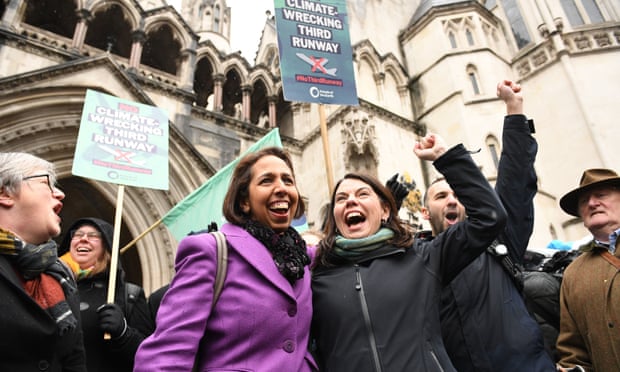
    plans for a third runway at Heathrow airport have been ruled illegal by the court of appeal because ministers did not adequately take into account the government’s commitments to tackle the climate crisis.

    The ruling is a major blow to the project at a time when public concern about the climate emergency is rising fast and the government has set a target in law of net zero emissions by 2050. The prime minister, Boris Johnson, could use the ruling to abandon the project, or the government could draw up a new policy document to approve the runway.

    The government is considering its next steps but will not appeal against the verdict. The transport secretary, Grant Shapps, said: “Our manifesto makes clear any Heathrow expansion will be industry-led. Airport expansion is core to boosting global connectivity and levelling up across the UK. We also take seriously our commitment to the environment.”

    Johnson has opposed the runway, saying in 2015 that he would “lie down in front of those bulldozers and stop the construction”. Heathrow is already one the busiest airports in the world, with 80 million passengers a year. The £14bn third runway could be built by 2028 and would bring 700 more planes per day and a big rise in carbon emissions.

    Johnson is thought to have been looking for a pretext to withdraw support for the extra runway and could make the argument for Birmingham to provide increased airport capacity for London given that train journey times will be reduced by HS2.

    The court’s ruling is the first major ruling in the world to be based on the Paris climate agreement and may have an impact both in the UK and around the globe by inspiring challenges against other high-carbon projects.

    Lord Justice Lindblom said: “The Paris agreement ought to have been taken into account by the secretary of state. The national planning statement was not produced as the law requires.”

    “It’s now clear that our governments can’t keep claiming commitment to the Paris agreement, while simultaneously taking actions that blatantly contradict it” said Tim Crosland, at legal charity Plan B, which brought the challenge. “The bell is tolling on the carbon economy loud and clear.”

    Plan B’s intervention was one of a number of legal challenges against the government’s national policy statement, which gave the go-ahead for the new runway in 2018 after MPs backed it by a large majority. Others were brought by local residents, councils, the mayor of London, and environmental groups including Friends of the Earth and Greenpeace.

    The challenges were dismissed in the high court in May 2019 but the complainants took their cases to the court of appeal, which delivered its verdicts on Thursday.

    Plan B argued that the Paris agreement target, which the government had ratified, was an essential part of government climate policy and that ministers had failed to assess how a third runway could be consistent with the Paris target of keeping global temperature rise as close to 1.5C as possible.

    “This is an opportunity for Boris Johnson to put Heathrow expansion to bed and focus on the most important diplomatic event of his premiership, the UN climate summit in Glasgow in November,” said Lord Randall, a former Conservative MP and climate adviser to the former prime minister Theresa May. “It’s his chance to shine on the world stage.”

    The court of appeal did not overturn the high court’s dismissal of the other challenges, which related to air and noise pollution, traffic, and the multibillion pound cost of the runway.

    But the Paris agreement ruling is far-reaching, according to Margaretha Wewerinke-Singh, an international public law expert at Leiden University, in the Netherlands. “Its implications are global,” she said.

    “For the first time, a court has confirmed that the Paris agreement temperature goal has binding effect. This goal was based on overwhelming evidence about the catastrophic risk of exceeding 1.5C of warming. Yet some have argued that the goal is aspirational only, leaving governments free to ignore it in practice.”

    Prof Corinne Le Quéré, at the University of East Anglia, said: “Government needs to put climate targets at the heart all big decisions, or risk missing their own net zero objectives with devastating consequences for climate and stability. I am relieved this is finally recognised in law.”

    Climate campaigner Greta Thunberg said: “Imagine when we all start taking the Paris agreement into account.”

    Heathrow and proponents of the third runway say it would provide an economic boost and is important for international business, particularly after Brexit. “The court of appeal dismissed all appeals against the government – including on ‘noise’ and ‘air quality’ – apart from one, [i.e. climate change] which is eminently fixable,” said a spokeswoman for Heathrow.

    “We will appeal [as an interested party] to the supreme court on this one issue and are confident that we will be successful. Expanding Heathrow, Britain’s biggest port and only hub, is essential to achieving the prime minister’s vision of global Britain. We will get it done the right way.”

    Mike Cherry, at the Federation of Small Businesses, said: “The verdict is a blow to small firms who need greater regional and global connectivity, as well as more opportunities to export.”

    However, most flights are taken for pleasure and just 20% of the UK population take more than two-thirds of international flights. Critics say the economic benefits are illusory given, for example, the estimated £10bn of taxpayers’ money needed to alter road and rail links to the airport, and would draw investment towards the south-east.

    “No amount of spin from Heathrow’s PR machine can obscure the carbon logic of a new runway,” said John Sauven, at Greenpeace UK. “Their plans would pollute as much as a small country.”

    Geraldine Nicholson, from local campaign group Stop Heathrow Expansion, said: “This is the final nail in the coffin for Heathrow expansion. We now need to make sure the threat of a third runway does not come back.”

    At a separate event on Thursday, Alok Sharma, the business secretary and president of November’s UN COP26 climate summit, said: “The only economy which can avoid the worst effects of climate change, and thus continue to deliver growth, is a decarbonised economy. Our choices will make or break the zero-carbon economy.”

     This article was amended on February 28 2020. An earlier version had mistakenly called the business secretary Ashok Sharma, rather than Alok Sharma. This has been corrected.


  • Want people to care about climate change? Skip the jargon. / Covering Climate Now

    Want people to care about climate change? Skip the jargon. / Covering Climate Now

    Loveland Magazine is one of the 400 news outlets worldwide, with a combined audience of over 2 billion people “Covering Climate Now”, a global journalism initiative committed to bringing more and better coverage to the defining story of our time.
    The initiative, was co-founded by The Nation and Columbia Journalism Review

    Mihaela Manova is “Covering Climate Now” in Loveland, Ohio as an editor for Loveland Magazine


    If you’re confused what the “circular economy” is, or what it means for a company to go “net-zero,” you’re far from alone. There’s a big mismatch between what scientists, journalists, and activists are saying and what the public understands. This is hardly a new problem, but it’s yet another obstacle to getting people to care about climate change: Obscure words in articles about rising sea levels and supercharged weather could discourage people from wanting to learn more about a planetary crisis.

    The solution is to put jargon and buzzwords into simple language that anyone can understand. It takes some effort, of course. A good example is “Up Goer Five,” a diagram by Randall Monroe, the cartoonist behind the website xkcd. It explains how a rocket works using only the 1,000 most common words in the English language. Simplifying lingo related to climate change requires a similar process. Take a cold, clinical word like “biodiversity” and turn it into the more evocative “wildlife.” A real head-scratcher like “climate mitigation” becomes “reducing emissions.”

    Forget “dumbing down.” Using more common language is “smartening up,” said Susan Joy Hassol, director of the nonprofit science outreach group Climate Communication in North Carolina, who coaches scientists and journalists to write and speak more conversationally. “The only thing that’s dumb,” Hassol said, “is speaking to people in language that they don’t understand.”

    Jargon is good way to kill someone’s interest in a particular topic, according to research published this month in PLOS ONE, a science and medicine journal. Readers take it as a sign that the material isn’t for them. For the study at Ohio State University, 650 people read paragraphs about self-driving cars, surgical robots, and 3D bioprinting online. Half of them read paragraphs filled with cringe-worthy phrases (like “AI integration”), while the other half read phrases translated into plain English (make that “programming”). After they were finished, those subjected to obscure words said they felt less interested in science — even when those words were defined.

    When something is easy to read, people find they want to learn more about the subject, said Hillary Shulman, lead author of the study and an assistant professor of communication at Ohio State. Her research has shown that people are more receptive to information written in plain old print instead of cursive, just because it’s easier to process. Avoiding jargon matters, she said, for anyone who wants to get their message to a broad audience.

    “If you limit your work to the people who really work hard to read it, you’re probably missing out on the audience you actually need to be reading the work,” Shulman said. “You don’t need the people who are already bought in.”

    Jargon doesn’t just leave people feeling disengaged — it can also fuel a head-in-the-sand response, according to one of Shulman’s previous studies. Encountering new things often feels difficult and risky, she said, and many people naturally respond by coming up with counterarguments.

    Research shows that the best way to communicate about science might just be … to talk like a normal human being. One study published last week found that when scientists showed their human side and told personal stories, their audience was more receptive to what they were saying. Linguistics has shown something similar: You were probably taught to cut all filler words like uh, um, and like, but they can serve an important role in communication, helping listeners process complex information. And despite common wisdom that baby-talk is useless — just talk to them like adults, am I right? — recent studies suggest that over-enunciating words and using a sing-song voice actually helps babies acquire language. Good communication isn’t necessarily about sounding smart.

    So how could scientists and journalists talk more like the average person? Hassol has assembled a list of about 150 terms that mean one thing to scientists and another to the general public. To most people, “positive feedback” means praise, but when scientists say the same phrase, they’re talking about a vicious cycle. Similarly, “aerosols” are not just cans of hair spray and sunscreen, but also tiny particles in the atmosphere.

    Scientists use all this specialized terminology because for them, it’s efficient — one word gets across a complex concept. But then scientists pass these same esoteric words on to journalists, who then turn them on an unsuspecting public. And it’s not just academics complicating the climate lexicon: Politicians, companies, and activists use buzzwords that most people don’t understand, too.

    I begged people on Twitter to tell me what words tripped them up the most while reading climate change articles, then asked Hassol to help me break down some of the most insidious terms. Here’s a short list of the jargon and buzzwords that came up, along with some plain-English translations to help make sense of them.

    • Carbon footprint: How much carbon-dioxide emissions can you attribute to a country, company, or maybe your neighbor? The answer is their carbon footprint.
    • Circular economy: A system where nothing really gets thrown away. In other words, your old smartphone gets broken up into its different parts and recycled — or more likely, you’re repairing it.
    • Climate adaptationImproving our ability to cope with climate change. Think building sea walls, breeding crops that can tolerate droughts, and restoring the natural course of rivers. (See “resilience” below.)
    • Environmental justice: A phrase underscoring the broad idea that the people who did the least to cause climate change and pollution are the often the most at risk from the consequences.
    • Just transition: Shifting to an economy that runs on solar and wind energy without killing jobs.
    • Geoengineering: Using technology to try to counteract some of the warming caused by burning coal, oil, and gas. Like spraying tiny particles in the air to reflect the sunlight back into space so it doesn’t heat up the planet.
    • Net-zero: Canceling out the carbon dioxide we emit by making sure that the same amount gets sucked up by trees, plants, machines, or other things. (See: Offset.)
    • Offset: Something you buy that promises to cancel some or all of the carbon dioxide produced by, say, your next cross-country flight.
    • Resilience: Our ability to deal with climate change’s effects. Simply put, a more resilient New York City will be better able to withstand another Superstorm Sandy.
    • Sustainable: Using a resource in a way that won’t deplete it. Example: Making sure a forest has a bunch of new trees growing before you cut down an old one.

    As they get picked up by companies and politicians, slippery buzzwords like “sustainability” and “resilience” are starting to lose their meaning. Deploying them now might even backfire. During testimony in the Senate last year, Frank Luntz — a messaging strategist who advises Republicans and advocates for climate action — said that “sustainability” rings of the “status quo.” He explained: “What American people really want is something that is cleaner, safer, healthier. What they’re asking for is improvement, not the status quo.”

    Acronyms also get in the way of making sense. A recent study in the Proceedings of the National Academies of Sciences considered how to transform society to take action on climate change. In the paper, scientists coined the phrase “social tipping interventions,” which they went on to call STIs. That means something, uh, totally different to the rest of the population.

    Hassol, who was the senior science writer on three U.S. National Climate Assessments, remembers one instance in which some scientists wanted to abbreviate the spruce bark beetle that’s destroying forests across the American West as “SBB.” Hassol thought that was nuts. Why not just use its full name once, she suggested, and then refer to it as “the beetle” after that? She also thinks it’s better to call the Arctic National Wildlife Refuge in Alaska, where oil companies have been angling to drill for decades, by its full name — not ANWR, pronounced an-whar. The acronym doesn’t exactly make caribou or indigenous culture spring to mind.

    “When you put an acronym on something, it loses its power,” Hassol said.


  • A Basketball Blue-out for Unicef raises funds for 215 polio vaccines

    A Basketball Blue-out for Unicef raises funds for 215 polio vaccines

    Mihalea Manova is a staff writer for Loveland Magazine

    by Mihalea Manova

    Loveland, Ohio – On February 16, 2020, Loveland’s Unicef Club hosted a collaborative event with the Loveland’s Men’s Basketball team. The “Blue-Out” happened during the game with Withrow, with many being there to support and advocate for Unicef’s cause. To bring attention to children’s rights and fundraise for polio vaccines, attendees raised awareness by wearing blue while members sold chocolate-covered pretzels.

    “We are very excited to partner with our boys’ basketball team and connect with our community by blending a love for sport and a love for helping children,” says Loveland Unicef vice-president Mia Forte. “Our goal is not only to fundraise but to advocate for the eradication of polio in countries where it affects children today.”

    Specifically, Unicef stands for the United Nations International Children’s Emergency Fund. With this in mind, Loveland High School is host to its first-ever club with around 15-20 active members. During the night, a booth was set up with an arrangement of various chocolate covered pretzels: milk, white, and even marbled blue and white chocolate. On the sides of the booth were two tri-fold posters that told facts about the club and the main cause of the night: the eradication of polio.

    Polio is an epidemic that affects primarily children under the age of 5 years old. The effects from the disease include flu-like symptoms to total paralysis within a few hours. In most countries, this disease is on its way to becoming eradicated due to Unicef’s constant contributions with polio vaccinations (also administered by doctors within the organization). “Unicef manages the procurement and distribution of 1 billion doses of polio vaccines each year.” says the official website.

    With the selling of pretzels and collaborative work between attendees, the Loveland Unicef club achieved fundraising enough money for 215 polio vaccines as well as spreading awareness of their goal.

    Loveland Unicef commenced in the start of 2019 and is a club that is dedicated to helping children on a local and global level. Its main goals are to advocate, fundraise, and partake in building our community to become aware of the disadvantages that children may have. With this club, they have managed to raise around $500 with various in-school fundraisers including their hot chocolate sale, ice coffee sale, and Trick-or-Treat with Unicef. Alongside building a collective of passionate individuals, Loveland Unicef operates a website and Instagram sharing their triumphs and continuing advocacy.
     Unicef helps children in 160 countries to help with their supply of basic needs and in the preservation of their health. To donate, visit unicefusa.org.


  • The Many Faces of Madeline Killion

    The Many Faces of Madeline Killion

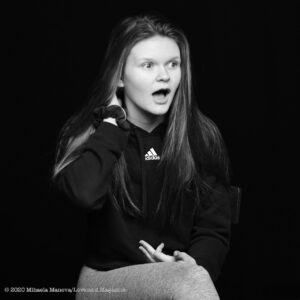
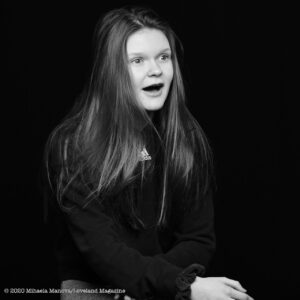
    Each citizen in Loveland makes up an important piece of the community, but in saying that it’s up to the citizen as to what they do with their role as an important piece of that community. This is what makes up a community’s “D.N.A.”

    Over the past two years, Loveland Magazine has been in search of community members that truly play an important role in Loveland’s D.N.A.
     

    by Mihaela Manova

    Mihaela Manova is a staff writer for Loveland Magazine

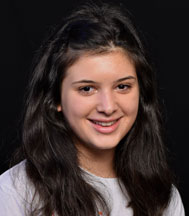
    What happens when you put together an aspiring journalist and a promising future doctor-extraordinaire? It all began during lunch. Sitting at a table with a couple of people that I knew and most of which I didn’t, I got to know Madeline Killion, a junior at Loveland High School. From our connection with similar tv shows like Rick and Morty and our talk about the world, we got to discuss ranges of topics in just 35 mins each day. 

    From Madeline, I got to listen to many of her stories about what she has read or seen, from discussions about the Chernobyl disaster in 1986 to her studies and observations of her various science classes and her ambitions to become a doctor, while also wanting to advocate for various causes. Through talking with many students throughout my four years of high school, it is rarely seen the amount of passion one has to talk about “grown-up topics” in our free time. At just sixteen, Madeline’s dreams include wanting to study at MIT and becoming certified in her profession, achieving the American Dream and going beyond her own limits. On a day off from high school, we sat down to discuss her current interests and motivations. 


    Q:  What are your current interests at school, what kind of variety of classes/ clubs do you participate in?

    Madeline: Currently, I’m hoping to broaden my horizons in the science area of both classes and extracurriculars. This is my first year on both the Academic Team and Science Olympiad, both of which I thoroughly enjoy. Science is something that is both challenging yet incredibly rewarding to me.


    Q:  Can you name one teacher and their lasting influence on you?

    Madeline: Mrs. Partridge has definitely had a lasting impact on me.  She taught both my Honors Chemistry and Honors Anatomy/Physiology class that I’m currently in.  Anatomy is my favorite class out of my seven bell schedule, she’s just an incredibly fun and inspiring person to be around.


    Q:  Can you tell us your plans for the future? What will you imagine life to be like in 10 years?

    Madeline: In 10 years I hope to be in medical school continuing to work on my path toward becoming a doctor.


    Q:  Can you describe a moment in your life where you knew that science was what you wanted to do?

    Madeline: In 6th grade when I went on a STEM field trip at Ohio State University and got to hold a pig’s heart in my hand; that was when I knew I wanted to become a doctor.


    Q:  As a member of the marching band, does the band feel underappreciated compared to athletics?

    Madeline: Certainly, the band’s success over the years has often gone overlooked, we went to Grand Nationals this year at Lucas Oil Stadium and hardly anyone outside the band knew about it but so often we’re bombarded with announcements at lunch about basketball, football, etc.


    Q:  What is one of the things that are happening in the world right now that frustrates you and want to change?

    Madeline: Something that frustrates me to no end is the steady increase in online predators and sexual abuse cases since the influx of social media use with younger generations. Often these cases are overlooked strictly because they happen online and most people don’t realize how damaging online abuse can be to young girls and boys.


    Q:  What should people turn their attention to to make the world a better place?

    Madeline: I want people to turn attention to their loved ones in their life and take time to educate themselves on the signs if your child is victim to online sexual abuse. Most often the way that these cases fall through the cracks is not enough education at home and improper handling of the situation if something like this does come to light.


    In a world of opportunity and ambition, we need to make light of the ones who have dreams to become great, even in our own community. As many young women are stereotyped day by day to different labels, showcasing what they enjoy and others making them feel ashamed for their interests, women like Madeline are evidence to being able to enjoy a variety of things and not be put under a narrow scope. It’s time to encourage more young people to go after their dreams and find their passions early on – to want to change the world.


    Read more of our, What’s in Loveland’s DNA” stories…

  • [Videos and Photos] Citizens successfully organize to preserve their neighborhood

    [Videos and Photos] Citizens successfully organize to preserve their neighborhood

    Mihaela Manova

    by Mihaela Manova

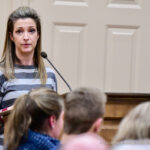
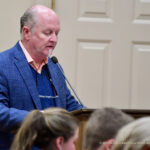
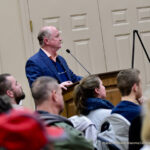
    Loveland, Ohio – On February 4, the Loveland City Hall was filled with a crowd to witness and hopefully influence a vote for or against the building of an apartment complex at Loveland’s 102 Oak Street. As the meeting commenced, the public heard Rodney Sabo of Sabo Design Associates, describe the plans for the complex, budget, and method of parking and traffic.

    The proposal the Planning and Zoning Commission was considering during the public hearing was to build four 16 unit apartment buildings on Oak Street in the Clermont County side of the City. “Oak Apartments” would have been four levels each with parking garages below each building. The proposal was for 106 total parking spaces with 1.6 parking spaces per unit. The lot is 1.033 acres.

    Sabo Design submitted the application on behalf of their client, Hunt and Whitacre. To build the project the City would need to create a Special Planning District (SPD) which if approved would have erased the existing zoning restrictions and protections for the immediate neighborhood and create a separate zoning district with distinct restrictions, permissions, and guidelines.

    The current zoning of the immediate neighborhood is Residential-Medium Density (R-MD). The existing R-MD zone does not permit high-density multiple-family uses.

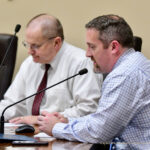
    Commission Chairman Al Kressler, Mark Redmond, Michael Kady, Brian O’Neill, and Tim Butler posed questions for the plan such as the possible rewards and pitfalls from the building of this complex before they each voted, “No”.

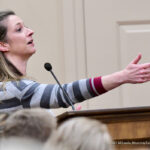
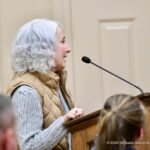
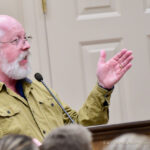
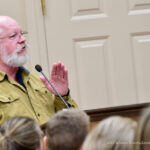
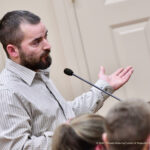
    In opposition to the plan, the public bound together to declare and stand for the preservation of the land and current zoning, as each speaker presented individual points to support their cause. Many of the points included environmental damage, blockage of people’s home views, out-of-place aesthetics, lowering of the water pressure, and the promotion of in-and-out rental, not community bound estates.

    The Commission heard both sides and decided with a 5-0 vote to not develop the land into an apartment complex.

    The filled room disbanded in agreement around 9:10 PM.

    Scroll down through this story to see a photo slideshow and watch post meeting interviews. You can watch the speeches during the open-forum, the proponent explaining the proposal, the staff report, and the questions P&Z had for the applicant.

    Oak Street Apartments Interviews

    Connie Crawford on Oak Street Apartment Proposal

    Julie Fuson comments of Oak Street Apt. proposal

    Neil Kluender wants his neighborhood protected


    Becky Hasselbeck speaking about preventing more apartments


    Steve DeFosset explains potential water supply problems if Apartments are built


    Todd Osborne talks about proper use of SPD Zoning


    Rocky Carpenter speaks up to preserve sanctity of his neighborhood


    Mary Ann Bird discusses Oak Apartment proposal


    Scott Lindgren talks about traffic conditions if Oak Street Apartments are built


    Mark Krum talks about tearing down a home built in 1870s to built apartments


    Cati O’Keefe lives immediately downhill from Oak Apartment and talked about how unstable the hillside is


    Real Estate Agent Keli Williams’s take on Oak Apartment proposal


    Tom Smith introduces staff report


    Rodney Sabo with Sabo Design Associates explains his proposal for Oak Apartments


    Oak Apartment designer answers P&Z questions


  • Sitting down with Loveland’s newest council member, Andy Bateman

    Sitting down with Loveland’s newest council member, Andy Bateman

    In the video above, council member Andy Bateman sits down to talk about his new experience at the job, the future of Loveland, and how he sees our city.

    Mihaela Manova

    by Mihaela Manova

    Loveland, OhioFresh from getting newly elected, Andy Bateman has grown in popularity with his youthful presence and warm demeanor. Ever since the Loveland community has witnessed his election and presence in the city’s governing body, the locals expect the best to come from his ambition.

    We met for the first time back in December when he was inducted in the city’s governing body and we were excited to see what could come next for our city. You can see our coverage and our first quick interview with him HERE (begin at 0.54).

    In our interview with Andy (his name preference contrast to Mr. Bateman or Andrew), we learn more about his origin of ambitions, his outlook on Loveland, and what he could change if given the chance. 


  • Headlines the media has forgotten in 2019

    Headlines the media has forgotten in 2019

    Mihaela Manova

    By: Mihaela Manova

    To begin the year of 2020 with a fresh mindset, we cannot let ourselves fall into the trap of forgetting the world’s most groundbreaking stories in 2019.Throughout last year,  many headlines have come and gone, but the ones that have made people feel have been drastically forgotten by the media and by us, the viewers. So, what has happened to the most important headlines of 2019?


    What happened to the Amazon Rainforest? 

    By googling the question “Is the Amazon Rainforest still on fire?” many posts mentioning the 2019 mass deforestation appear. The last post of any in-depth news article on behalf of the Amazon Rainforest was made October 18, 2019 by USA Today. The article provided a summary of the entire tragedy, when it began and the actions toward stopping it, but no updates on how the rainforest is doing now. The silence surrounding all of the media outlets makes people infer many different outcomes to the tragedy. But is that the best way to know if a tragedy has been helped? 

    “A labourer stares at a fire that spread to the farm he work on next to a highway in Nova Santa Helena municipality in northern Mato Grosso State, south in the Amazon basin in Brazil, on August 23, 2019. – Official figures show 78,383 forest fires have been recorded in Brazil this year, the highest number of any year since 2013. Experts say the clearing of land during the months-long dry season to make way for crops or grazing has aggravated the problem. More than half of the fires are in the Amazon.” – The Atlantic 2019 (Photo by Joao LAET / AFP) (Photo credit should read JOAO LAET/AFP/Getty Images)

    The Rainforest Alliance is an organization that redirected 100% of their donations to helping out the rainforest. From their websites “impact dashboard” they have collected over $190,000,000 through their initiatives. Others like G7 (world’s seven largest economies) have come up with $22 million while global warming activists like Leonardo DiCaprio has pledged $5 million in restoration. The Warner Music Group and One Tree Planted collaboration ended up with 100,000 trees planted in help for the salvation of the Amazon Rainforest. More likely, in 2020 the rainforest will be starting to get rebuilt, and even though it will take time for the trees to grow in that region, this region won’t be left to be forgotten by the many organizations that have dedicated their time for this cause.  

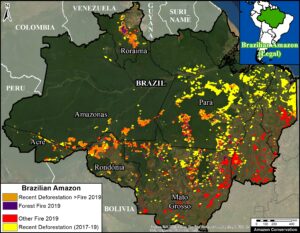
    The Brazilian wildfires in a more geographical perspective. Source: MAAP

    What about the crisis in Sudan? 

    The crisis in Sudan was one of the most talked about movements on social media during the summer in 2019. With over thousands of posts with the hashtag #Sudan or #HelpSudan, many people were witnesses to a war driven country and the aftermath to all of the fleeing families. One of the most reposted images reads, “There is a massacre happening in Sudan right now and the world is silent. The world is silent and this breaks my heart.” According to Refinery21 in June, “People in the Western world are finally sitting up and taking note of the political chaos in Sudan, which reached new levels of severity this week.”

    Following that statement, Refinery21 reports that there were more than 100 killings and 70 rapes during a single attack in the countries capital Khartoum as well as “bloated bodies” being dragged from the Nile river. 

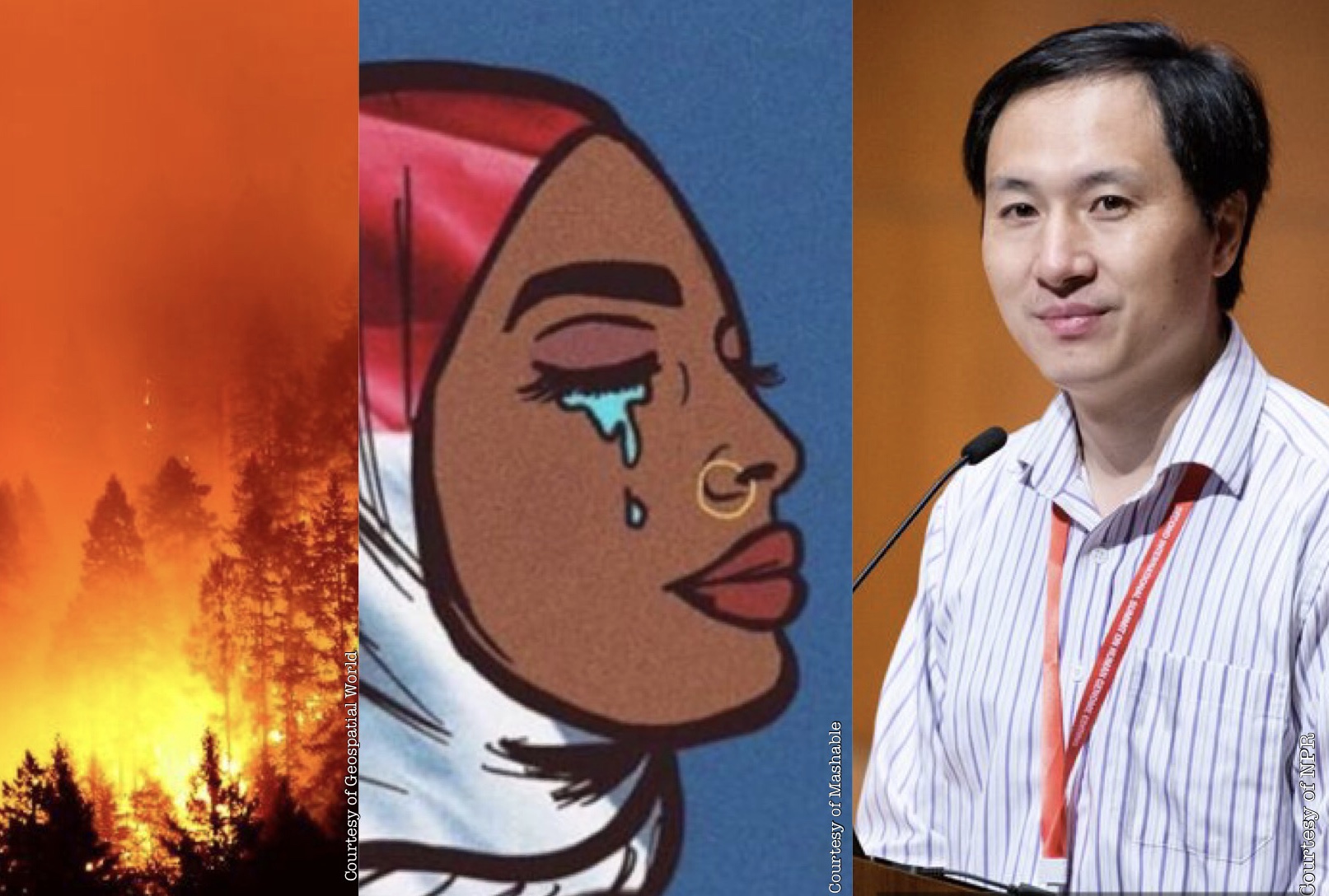
    (Source: Instagram) Images from artists across Instagram were spread to advocate for solidarity and awareness for Sudan due to some media outlets being silent.

    The root of the problem was a conflict “between pro-democracy civilians and the country’s security forces.” On December 28, 2019, VOA News reports that the Sudanese government and the nine rebel groups signed an agreement on beginning to end the bloody conflict in the Darfur region. They are looking forward to making a lasting peace in the region and as well as that there is “fresh hope for peace after Sudan’s transitional government, led by Prime Minister Abdalla Hamdok, (who) made peace in these areas a priority.”

    A look into how Instagram looked like in June 2019. Many users were supporting the cause by setting their profile photos to this signature blue color. (Source: The Atlantic)

    Organizations like Unicef were devoted and led campaigns to receive money for aiding the country’s children in vaccinations, clothes, food, and shelter. While the crisis was going on, Instagram users put their profile picture images in dark blue to advocate for the crisis in Sudan and to give attention to others who may browse and question the high numbers of dark blue profiles until they saw the movement for themselves.  


    What happened to the CRISPR scientists?

    Back in late 2018, new information was revealed about genetically modified baby embryos in resisting infection from the AIDS virus. Around sixteen scientists pioneered the research and one of them claimed to help make the first genetically modified babies. His name was He Jiankui. In 2019, his disappearance has sparked many questions into what has happened to this particular scientist. According to Science Alert’s article, they said that “He has not been seen publicly since January, his work has not been published and nothing is known about the health of the babies.” 


    In Science Alert’s article, they stated about all that is known in this situation. They began with his last appearance which was on the balcony of an apartment at his university. (The university that he worked in actually fired him after his work was known). Armed guards supposedly took He away and was no longer seen, but a lot of mystery surrounds this case because of the quietness of his family, coworkers, and even media relations person. Science Alert also mentions that the Chinese investigation confirmed the existence of the twin girls whose DNA He altered. 

    News outlets are continuing with their talk about CRISPR but no other updates have been made on He Jiankui. (Source: REUTERS)

    The twins and the other people involved in the second pregnancy were monitored by the Chinese government’s health departments. From the second pregnancy there was a third child, who is also monitored but no information has been given out about it. One of the reasons why the case was seriously broken down was that CRISPR gene alterations are actually made to be passed down in generations contrary to other genetic modifications.


    As 2019 showed us many different headlines that made us feel, think, and observe, we need to take a step back from the constant overflow of new information. As the media’s job is to provide relevant topics and not to dwell on things that have already passed, the problem is that the tragedies get discarded in the back of the viewers’ brains until the next one comes along. In the end, the media and the viewers need to work together to update and resolve these issues, because when we hear about new calamities every single day it only makes us portray the world as 100% worse than the reality.

  • [Videos/Interviews/Photos] What does the new City Hall leadership look like?

    [Videos/Interviews/Photos] What does the new City Hall leadership look like?

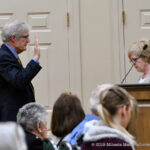
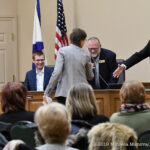
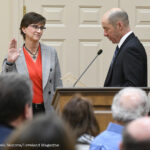
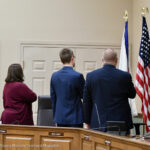
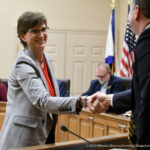
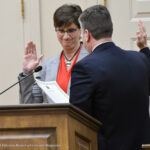
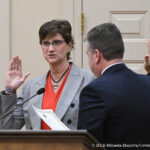
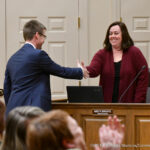
    In the photo above, newly elected Councilwoman Kathy Baliey takes the oath of office administered by Solicitor Joe Braun. Bailey will serve as Loveland’s Mayor for the next two years.

    Mihaela Manova

    by Mihaela Manova

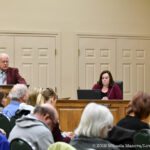
    Loveland, Ohio – As 2019 ends, and 2020 resolutions arise, the Loveland City Hall renews its politicians. On a cold night on December 2nd, residents entered Loveland City Hall to witness the introduction and induction of their council members, and in turn, filled the hall to capacity. Rows of chairs were perfectly lined up and filled with family and active residents, time was passing and excitement fueled the room.

    The room was spacious enough to fill a crowd of a hundred, and it soon did.

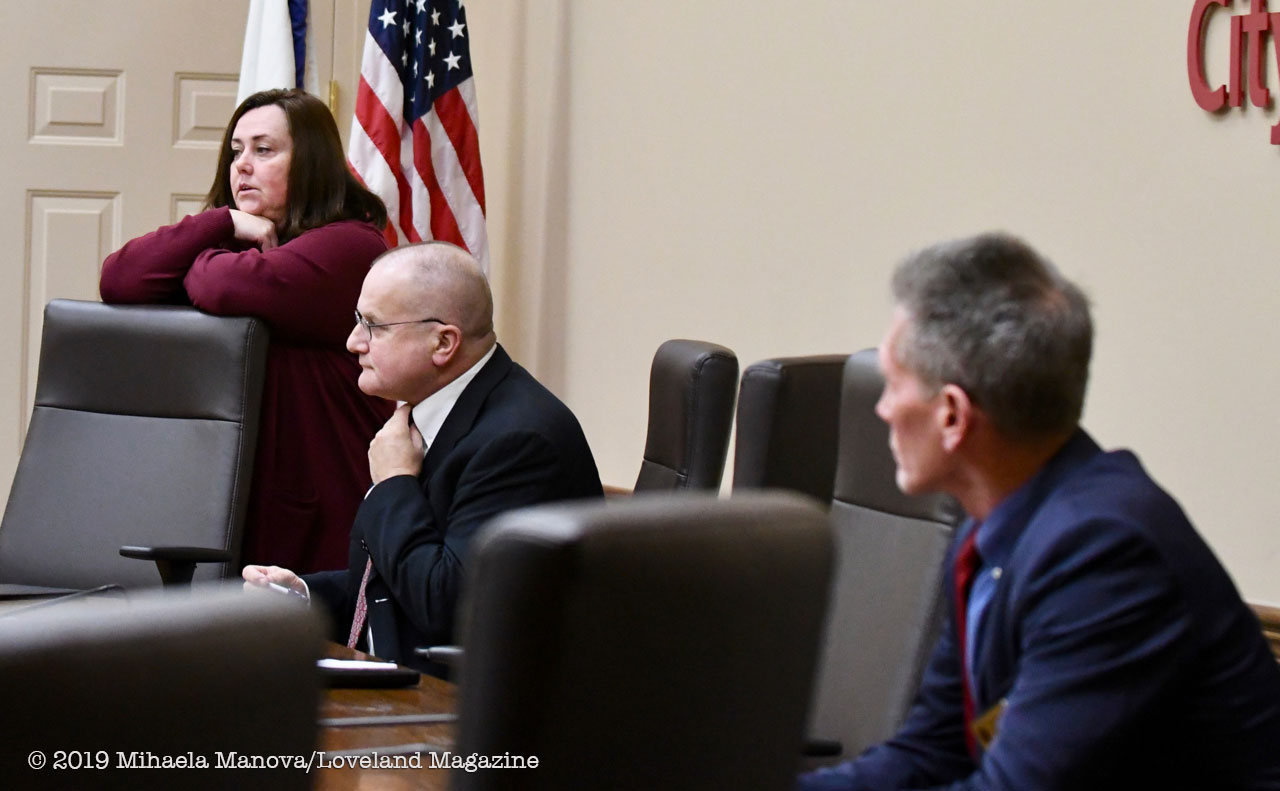
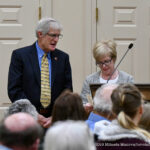
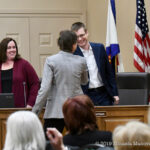
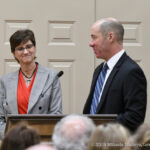
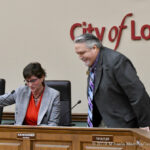
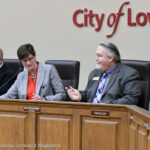
    Clerk of Council Misty Brents (on far left) chaired the start of the meeting. Brents, City Manager Dave Kennedy, and Councilmember Tim Butler waiting for the meeting to begin.

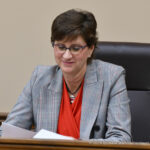
    Mixed feelings of anxiety and happiness permeated the room as council members lined up in their respective seats. On the far left side sat the Clerk of Council Misty Brents, followed by an empty seat that in moments would be occupied by Andrew Bateman. Councilmembers Neal Oury, City Manager David Kennedy, a re-elected Kathy Bailey, Rob Weisgerber, Tim Butler, a re-elected Kent Blair, Ted Phelps, and Solicitor, Joseph Braun filled the remainder of the high-backed, upholstered chairs.

    Throughout the audience, one can see campaign supporters and family members awaiting their loved ones to be inaugurated as others were standing quietly in the back admiring the process. As 7 PM passed and people sat in their seats, the room became quiet and then erupted in applause as the anticipated new council member, Andrew Bateman came through the doors with a smile. The clerk called the roll and meeting to order and led everyone in the Pledge of Allegiance. 

    Loveland Police and Loveland/Symmes Fire Department Chaplin, Pastor Bill Hounshell followed with an Invocation as the council inductions soon followed.

    Kathy Bailey was sworn into office by Hamilton County Judge Brad Greenberg, a former Loveland Mayor.

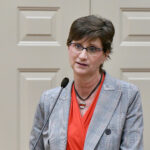
    Kathy Bailey was first to hit the podium with support as her family sat in the front row. Judge Brad Greenberg swore in Bailey as a council member for which she presented a speech in front of the audience. Bailey has been Loveland’s Mayor for the past four years and was re-elected to serve on Council on November 5 for another four-year term.

    “Four years ago, I didn’t necessarily know what I was getting into, or why, but I certainly know now. I ran again because I have come to love this city, the entire community, our residence, our community partners, (and) our business owners of this city,” Bailey said after taking her oath.

    Watch the LOVELAND MAGAZINE VIDEO below for the newly elected members’ speeches.

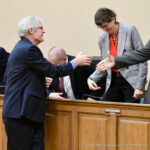
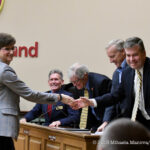
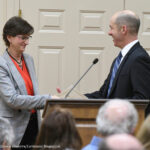
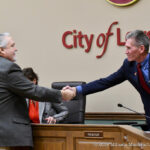
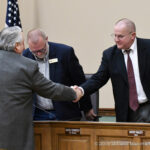
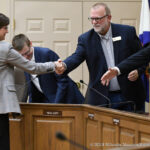
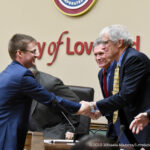
    Kent Blair received a congratulatory handshake from Police Chief Sean Rahe after taking his oath of office.

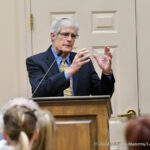
    Up next, Kent Blair was sworn in by Patricia Melson and Andrew Bateman was sworn in by Marla Simiele. Blair said, “The city of Loveland is a lot more than just a collection of buildings and a bunch of people who live in a certain place and work and go to the school in town, it’s an idea. And, I love the idea that is Loveland.”

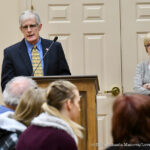
    After taking the oath, Bateman expressed what he stands for and what he sees in Loveland’s future. “The City is really a special place and it’s because of the people that care about it. So, ‘us’ in government need to care about them no matter where they’re from, what they do, why they’re here. We’re all neighbors and nothing can be more needed in our society today than a return to neighborliness.” 

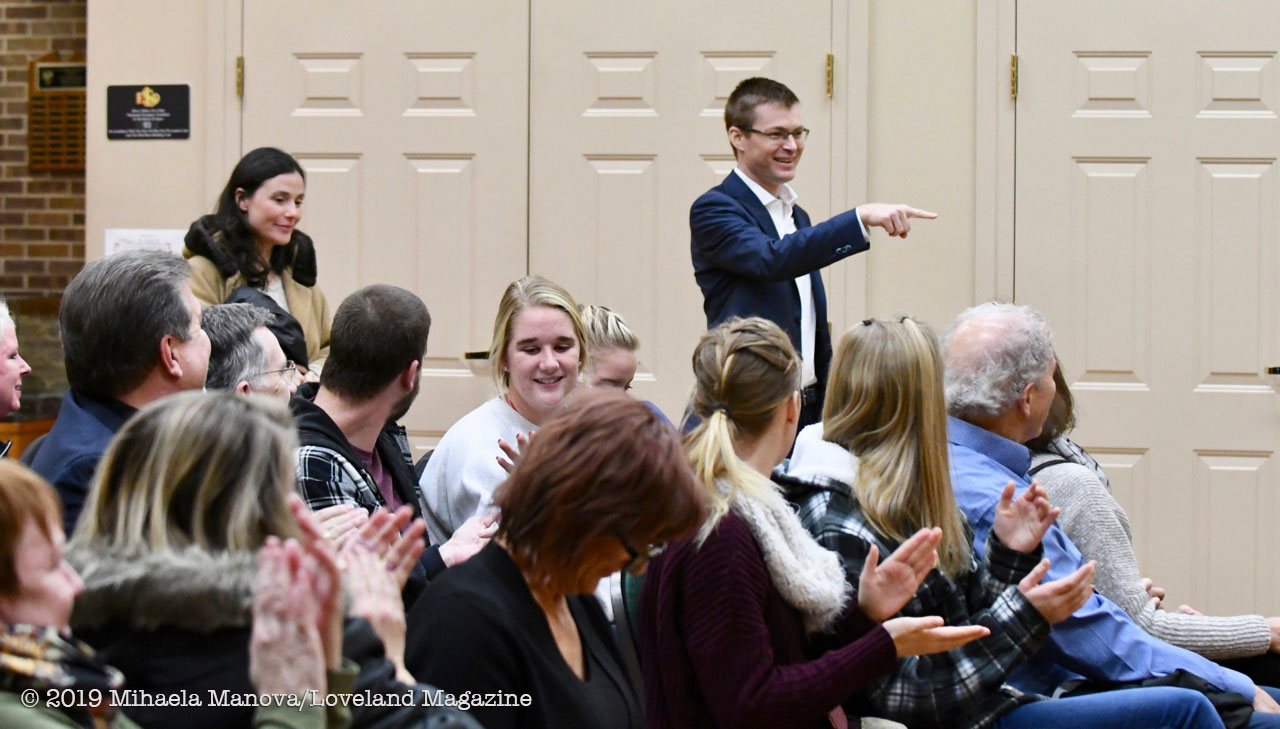
    First-time Councilmember Andy Bateman received an ovation when he entered the Council Chamber a few minutes late. He then laughed lightheartedly and pointed to the empty seat on the dais he was directed to occupy. As if saying, “For me?”

    After Bateman’s speech, the anticipated nominations for Mayor for the next two years were opened by Clerk Misty Brents. Blair nominated Bailey and no other nominations were made. After she received all seven votes, a round of applause proceeded her to the podium to take the oath as Mayor administered by Solicitor Braun.

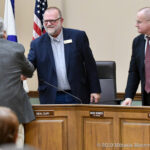
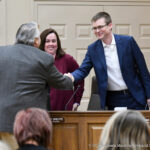
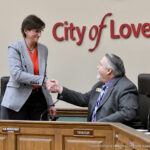
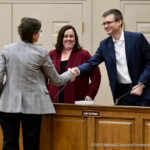
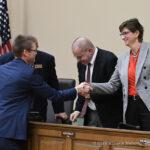
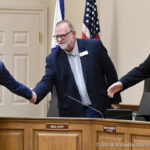
    After a round of handshakes with each council member, Bailey returned to the center seat at the dais to run the remainder of the meeting.

    Bailey then asked for nominations for Vice Mayor.

    Former City Solicitor Susan Allspach (nee Gertz) administered the oath of office to Rob Weisger after he was chosen to continue as Vice-Mayor for another two years.

    Rob Weisgerber was nominated by Neal Oury and Tim Butler nominated himself. The roll was called and with five votes against two, Rob Weisgerber became reelected as Vice Mayor. In his speech, he said, “The commitment to the community at large has been a passion of mine. I have no interest in being at other levels, it’s near and dear to my heart to be with the residents in a community that I share.”

    The evening ended as Pastor Bill closed the ceremony with another prayer and the council meeting was adjourned. The once anxious room became one of congratulations and handshakes, as we will now witness the changes that the council has in store.

    [youtube https://www.youtube.com/watch?v=MrH_cj1H7ds]

    After the meeting came to a close I interviewed Mayor Bailey and Council members Blair and Bateman.

    [youtube https://www.youtube.com/watch?v=x91vhoUGmjc]

    The photos in this slide show are © Mihaela Manova 2019/Loveland Magazine


  • [Video] What are Loveland High School students grateful for?

    [Video] What are Loveland High School students grateful for?

    Loveland Magazine Columnist, Mihaela Manova

    by Mihaela Manova

    Loveland, Ohio – It’s that time of year where we sit down with our families, consume too much turkey, and curate a mental list for what we are thankful for. It begins with your mom, your dad, even your grandma who lives in Florida, and the list goes on…

    While some bask in this holiday’s traditions, others cannot wait for the Christmas preparations that will soon follow. In Loveland High school, students are “wrapping” up their studies to finally enjoy their long-awaited five-day break. To celebrate I went through the hallways to ask them the season’s most popular question “What are you grateful for?” but there was a catch; they cannot say, family or friends. Despite this difficulty, it opened up the hearts and minds of seventeen students, who shared with us what they appreciated around them in their lives.

    With answers from Megan Atkins, Dahlia Kressler, Livia McClellan, Eli Metzger, Noelle Cotter, Kathleen Tepe, Courtney Kunysz, Madeline Killon, Samantha James, Erin Dickman, Ethan Libby, Marisa Kelley, Ryan Smith, and Mitchell McMannis, we began the time for expressing our gratitude and sentiments to each other.


  • Julie Powers, not just a teacher

    Julie Powers, not just a teacher

    Loveland teacher motivated by former student and war hero

    Mihaela Manova

    by Mihaela Manova

    Loveland, Ohio – Students, may not know what goes on in their teacher’s lives, but the impact that they give is indisputable. Good or bad in behavior or teaching, the students not only take new knowledge from them every day but a mindset. Julie Powers, or Mrs. Powers, as her math classes call her, is not just a regular teacher who comes in, educates, and goes home to only complete the same cycle every day. 

    Her drive to teach is not motivated by a sum of a paycheck, but the kids themselves that come in every day. The evidence? Ask any student that has sat in her class, any person who has talked to her about their day and of course her close bond with the local and national hero, Seth Mitchell.

    Teaching at Loveland High School, Julie Powers has encountered many students in her career and has had a close relationship with the Loveland High School Senior class of ‘97. One of the students she met was hero Seth Mitchell, a student with not only a good heart but a genuine soul towards the people around him. After high school, he joined the U.S Marine Corps and fought for our country in the Iraq-Afghanistan War where he was killed in action.

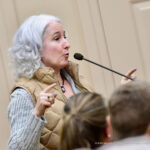
    Loveland High School Math Teacher Julie Powers

    Since his passing in 2009, his family and friends have organized the Captain Seth Mitchell Hero 5K every Fall in memory of his life. The proceeds collected during the race are given for scholarships for 12th-grade students at Loveland High School and are helping other people out, just like Seth.

    I recently sat down with Mrs. Powers and asked her about herself, the teaching profession, and Capt. David Seth Mitchell.

    I know that the Seth Mitchell Race happened a couple of weeks ago, what kind of thoughts did you experience during it?
    I had surgery before the race this year, so I didn’t walk, and I’m a walker. I didn’t even get on the trail. Instead, I stayed back with some of the other people that graduated with Seth, who are now adults and who have kids and families. They graduated in the 90s and seeing them 20 years into the future is really kind of cool.
    If you look at Seth and how he lived his life and what he wanted to do with his life, he didn’t miss a beat. He went after his goals and he worked hard to achieve them.
    It was really neat to just talk to them and at the same time it makes me a little bit sad because you can’t do that with Seth. He’s gone, and he can’t live that part of his life. But I think the hardest part of losing someone so young is feeling like they’re never going to get to this accomplished or have this experience, have a significant other, have children if they wanted to or travel the world. 
    If you look at Seth and how he lived his life and what he wanted to do with his life, he didn’t miss a beat. He went after his goals and he worked hard to achieve them.


    Can you tell me about the class of 97’?
    They were amazing people when they were in high school and are even more amazing now as adults. They are some of the most giving, selfless individuals that I met back when they were sophomores. Some of them I taught in 8th grade in Algebra 1 Honors and Algebra 2 Honors and then Calculus, so I knew the group pretty well and being their advisor for Student Council, I got to work with a core of them for almost four years. 
    It’s hard for me to explain to you the personality or the feeling of the class. 
    I have never done another student council class after them because that class just meant so much to me and I knew so many of them so well, not even just the student council kids. It’s hard for me to explain to you the personality or the feeling of the class. 
    Those kids had blurred boundaries, (for example) just because you were in Show Choir didn’t mean that was your only identity. It was the class that I’ve never seen before, it didn’t matter what their ‘thing’ was, many of them had many ‘things’ going on with their lives. 
    You don’t normally have the kids that are on the big athletic teams, doing Student Council and then going out and saying “Let’s go build floats out of chicken wire, tissue paper, and glue!” So when the last day came for them in May 1997, it wasn’t like the last few years. Oh are they going to do anything crazy!? It wasn’t like that at all. 
    The bell rang and they all kind of just strolled out of their classes, not running, screaming, and yelling; they were in the hallway being happy and sad at the same time, because it was their last time together as a class. 
    And you don’t see that type of reaction often, and it wasn’t that Seth was the only person; he was in the group that was just that special. I could name so many names in that class that could just go out of their way to be amazingly nice. There weren’t any little cliques and it just wasn’t like that.


    Can you tell me about being an educator and the politics that surround this role?
    I never thought about politics until I was in my 30s. I was like, “My vote won’t count.” and I didn’t think it did, as an educator, there were more things that affected me. That’s what pulled me into it. Seeing the current Secretary of Education, Betsy DeVos, we should not put somebody in this department who has never worked in a public school, ever, and who sends all their children to private schools while being a millionaire. Someone who is in charge of education needs to be a former educator, not a business person.
    That’s just beyond what I can stand. I would look at the people running for office and I literally would just look at their platform on education and what they thought about it. My take on education has been pretty consistent but it has also changed a bit. 
    Especially after last year, I volunteered to teach a lower Algebra class and I did it on purpose. I learned a lot about the amount of poverty that is in Loveland. I had drawers full of food for these kids. I now see that as a society we need to take care of the family unit in families that are impoverished because we’re missing the boat.
    What are their lives like when they go home after school?
    Not only supporting them through schools, not only getting them free and reduced lunches, but if we don’t support them from preschool to kindergarten, it’s all gone. What are their lives like when they go home after school? And the kids in grade school, is there no one there to watch them? What kind of problems do they have? Do they have one parent, two parents?
    If we don’t look at that part of it and spend money trying to support the people that don’t have anything, I don’t think we’re going to get anywhere with education. I think there are more critical issues that happen that can even affect the classroom.
    If I can show these students by my actions that there is another adult in this building who cares about them as people, I will have succeeded. Now whether or not we get math done is a separate issue, because the first thing that had happened was, they had to learn that they could trust another adult. Some of them have very few, if any, adults that they can trust because they’ve been taught by all kinds of experiences that they can’t and so that was my goal for the class. 
    We teach students not subjects.


    Do you think social media influences people in our society right now?
    If you look at our society we are a little bit like a microcosm. Look how polarized our society is  now with just politics. I’m not taking sides but I’m just saying, they can’t find a middle ground no matter which side you are on.
    Like you just talked about social media, Instagram promotes stuff for fundraising and that’s good, that’s necessary. That’s what social media’s for, to use it in a good way but I also think that it pushes people into boxes more. 
    I’m sorry I don’t post on social media because my life is boring, I don’t want people to know everything, I’m not interesting, I don’t want people following me. I even told my husband, “You will not post my picture on Facebook!”
    Books vs Video Games
    Think about when you read books (depends on what kind of books you’re reading ) but the more books you read the more it makes you think. Then okay, so playing video games or reading some books? Which one is going to open your mind which one is going to have you thinking?
    And even if you’re not thinking about the book when you read it, sometimes you might be driving  and be like ‘Huh, that’s interesting what that one person did…’ and it makes you process stuff again and again, but when playing a video game, your game is done when your battery finishes.


    What embodies Seth?
    I mean he definitely was someone who would always be very “other” sensitive, like in a classroom. If he saw somebody that was down even if it wasn’t one of his best friends, he would still reach out, quietly, and not make a big deal out of it. He would be like, “How are you doing? Are you ok?” The picture of him in the main lobby with a smile on his face and the gun on his back is the same smile I saw him with everyday.
    Captain David Seth Mitchell was killed on October 26th, 2009 at age 30 while on a mission he volunteered for when two helicopters collided while supporting combat operations in Afghanistan’s Helmand province. He was a 1997 Loveland High School graduate and President of his Senior Class. (Learn more: Keep Captain Seth Mitchell’s memory alive)
    I know that he struggled a little bit, there were some times in high school for Seth that were a bit  dark and challenging and he had to go through some stuff, but his faith was very important to him, so that made a big difference. Even with that, the time I remember during the years that he was here, he just was someone who worked so hard. 
    It didn’t matter if math did not come easily to him and it didn’t, in fact, the day after his parents found out (of his passing) his mom immediately said to me, “Oh Julie, Seth was never very good at math.”
    I told her, “It made no difference at all because it was what kind of a worker he was. It was that work ethic that made Seth who he was, he wouldn’t give up, and that he would just keep on trying.”


    By the end of our long talk, I got to know Mrs. Powers more than I could ever imagine, making me think that some teachers are not just here to educate you, but also to support you throughout the years. Educators like Mrs. Powers need to be praised not only for the work that they do but for their dedication to their students. Students will see and appreciate any teacher who stimulates, encourages and reaches out to them.

    I would like to say thank you to Mrs. Powers for her support in her student’s lives.