Category: Covering Climate Now

  • Network news’s climate disappearing act—will 2020 be different?/ Covering Climate Now

    Network news’s climate disappearing act—will 2020 be different?/ Covering Climate Now

    Loveland Magazine is one of the 400 news outlets worldwide, with a combined audience of over 2 billion people “Covering Climate Now”, a global journalism initiative committed to bringing more and better coverage to the defining story of our time.
    The initiative, was co-founded by The Nation and Columbia Journalism Review

    Mihaela Manova is “Covering Climate Now” in Loveland, Ohio as an editor for Loveland Magazine


    The Climate Beat

    A

  • How to not be a “Parasite” in our society

    How to not be a “Parasite” in our society

    “Art should comfort the disturbed and disturb the comfortable.” –  Cesar A. Cruz


    W

  • When climate change drove all the men away / Covering Climate Now

    When climate change drove all the men away / Covering Climate Now

    Loveland Magazine is one of the 400 news outlets worldwide, with a combined audience of over 2 billion people “Covering Climate Now”, a global journalism initiative committed to bringing more and better coverage to the defining story of our time.
    The initiative, was co-founded by The Nation and Columbia Journalism Review

    Mihaela Manova is “Covering Climate Now” in Loveland, Ohio as an editor for Loveland Magazine


    K

  • Australia’s Devastating Wildfires Were Not Inevitable / Covering Climate Now

    Australia’s Devastating Wildfires Were Not Inevitable / Covering Climate Now

    Loveland Magazine is one of the 400 news outlets worldwide, with a combined audience of over 2 billion people “Covering Climate Now”, a global journalism initiative committed to bringing more and better coverage to the defining story of our time.
    The initiative, was co-founded by The Nation and Columbia Journalism Review

    Mihaela Manova is “Covering Climate Now” in Loveland, Ohio as an editor for Loveland Magazine


    B

  • ‘I’ve lost friends’: the young climate strikers forced to go it alone / Covering Climate Now

    ‘I’ve lost friends’: the young climate strikers forced to go it alone / Covering Climate Now

    Loveland Magazine is one of the 400 news outlets worldwide, with a combined audience of over 2 billion people “Covering Climate Now”, a global journalism initiative committed to bringing more and better coverage to the defining story of our time.
    The initiative, was co-founded by The Nation and Columbia Journalism Review

    Mihaela Manova is “Covering Climate Now” in Loveland, Ohio as an editor for Loveland Magazine


    I

  • Is It Really Possible To Go ‘Plastic Free’? This Town Is Showing The World How. / Covering Climate Now

    Is It Really Possible To Go ‘Plastic Free’? This Town Is Showing The World How. / Covering Climate Now

    Loveland Magazine is one of the 400 news outlets worldwide, with a combined audience of over 2 billion people “Covering Climate Now”, a global journalism initiative committed to bringing more and better coverage to the defining story of our time.
    The initiative, was co-founded by The Nation and Columbia Journalism Review

    Mihaela Manova is “Covering Climate Now” in Loveland, Ohio as an editor for Loveland Magazine


    P

  • Coronavirus Shutdown Leads to ‘Dramatic’ Decline in Chinese Pollution Levels / Covering Climate Now

    Coronavirus Shutdown Leads to ‘Dramatic’ Decline in Chinese Pollution Levels / Covering Climate Now

    Loveland Magazine is one of the 400 news outlets worldwide, with a combined audience of over 2 billion people “Covering Climate Now”, a global journalism initiative committed to bringing more and better coverage to the defining story of our time.
    The initiative, was co-founded by The Nation and Columbia Journalism Review

    Mihaela Manova is “Covering Climate Now” in Loveland, Ohio as an editor for Loveland Magazine


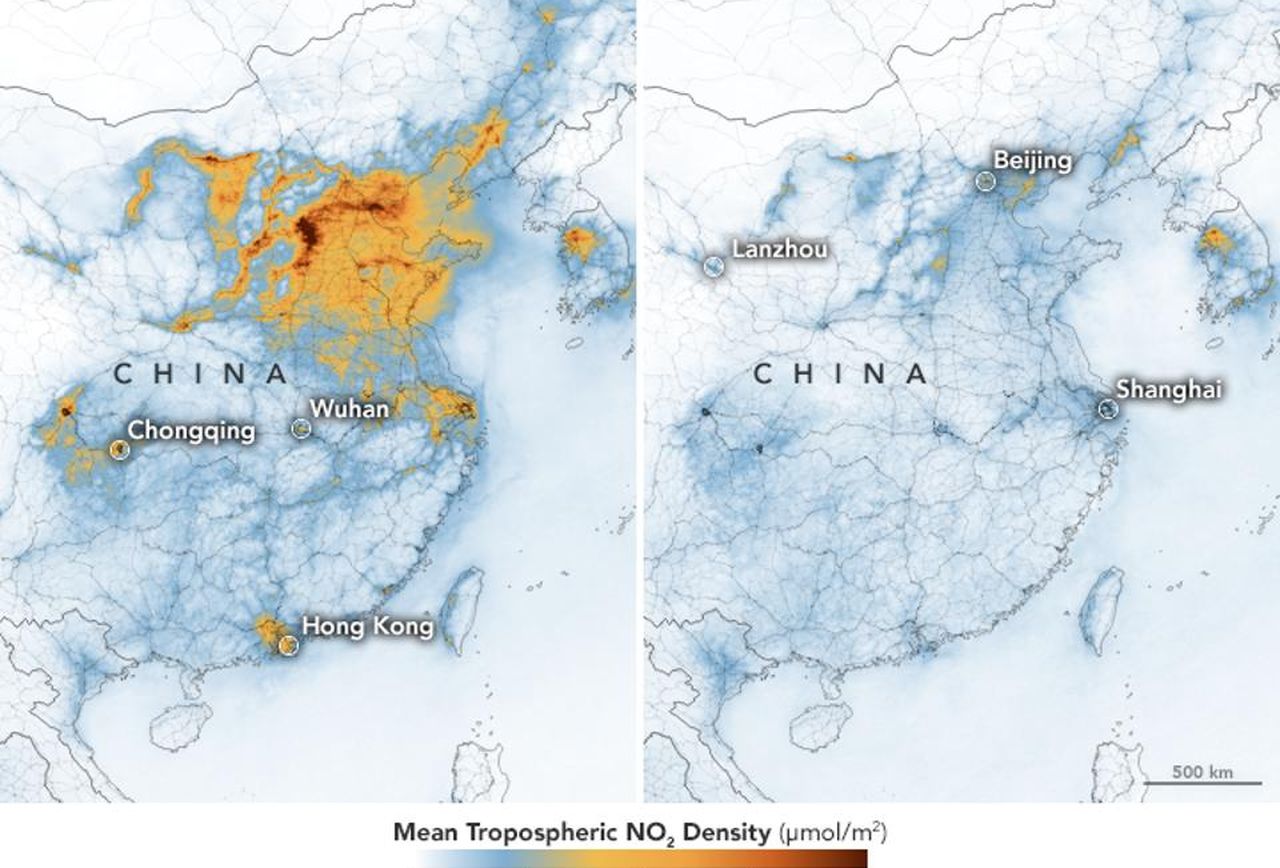
    Toxic pollution levels fell significantly in China between January and February, and scientists think the new coronavirus is a large part of the reason why.


  • Heathrow third runway ruled illegal over climate change / Covering Climate Now

    Heathrow third runway ruled illegal over climate change / Covering Climate Now

    Loveland Magazine is one of the 400 news outlets worldwide, with a combined audience of over 2 billion people “Covering Climate Now”, a global journalism initiative committed to bringing more and better coverage to the defining story of our time.
    The initiative, was co-founded by The Nation and Columbia Journalism Review

    Mihaela Manova is “Covering Climate Now” in Loveland, Ohio as an editor for Loveland Magazine


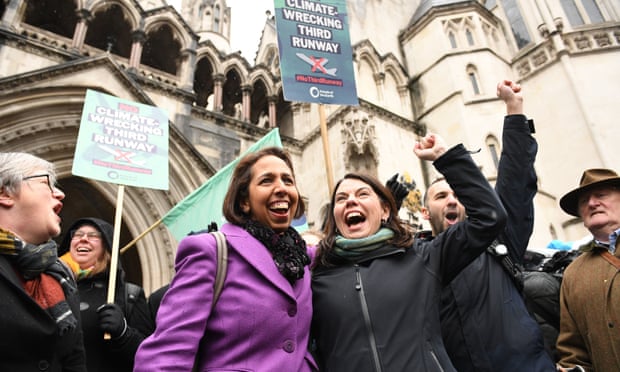
    plans for a third runway at Heathrow airport have been ruled illegal by the court of appeal because ministers did not adequately take into account the government’s commitments to tackle the climate crisis.

    The ruling is a major blow to the project at a time when public concern about the climate emergency is rising fast and the government has set a target in law of net zero emissions by 2050. The prime minister, Boris Johnson, could use the ruling to abandon the project, or the government could draw up a new policy document to approve the runway.

    The government is considering its next steps but will not appeal against the verdict. The transport secretary, Grant Shapps, said: “Our manifesto makes clear any Heathrow expansion will be industry-led. Airport expansion is core to boosting global connectivity and levelling up across the UK. We also take seriously our commitment to the environment.”

    Johnson has opposed the runway, saying in 2015 that he would “lie down in front of those bulldozers and stop the construction”. Heathrow is already one the busiest airports in the world, with 80 million passengers a year. The £14bn third runway could be built by 2028 and would bring 700 more planes per day and a big rise in carbon emissions.

    Johnson is thought to have been looking for a pretext to withdraw support for the extra runway and could make the argument for Birmingham to provide increased airport capacity for London given that train journey times will be reduced by HS2.

    The court’s ruling is the first major ruling in the world to be based on the Paris climate agreement and may have an impact both in the UK and around the globe by inspiring challenges against other high-carbon projects.

    Lord Justice Lindblom said: “The Paris agreement ought to have been taken into account by the secretary of state. The national planning statement was not produced as the law requires.”

    “It’s now clear that our governments can’t keep claiming commitment to the Paris agreement, while simultaneously taking actions that blatantly contradict it” said Tim Crosland, at legal charity Plan B, which brought the challenge. “The bell is tolling on the carbon economy loud and clear.”

    Plan B’s intervention was one of a number of legal challenges against the government’s national policy statement, which gave the go-ahead for the new runway in 2018 after MPs backed it by a large majority. Others were brought by local residents, councils, the mayor of London, and environmental groups including Friends of the Earth and Greenpeace.

    The challenges were dismissed in the high court in May 2019 but the complainants took their cases to the court of appeal, which delivered its verdicts on Thursday.

    Plan B argued that the Paris agreement target, which the government had ratified, was an essential part of government climate policy and that ministers had failed to assess how a third runway could be consistent with the Paris target of keeping global temperature rise as close to 1.5C as possible.

    “This is an opportunity for Boris Johnson to put Heathrow expansion to bed and focus on the most important diplomatic event of his premiership, the UN climate summit in Glasgow in November,” said Lord Randall, a former Conservative MP and climate adviser to the former prime minister Theresa May. “It’s his chance to shine on the world stage.”

    The court of appeal did not overturn the high court’s dismissal of the other challenges, which related to air and noise pollution, traffic, and the multibillion pound cost of the runway.

    But the Paris agreement ruling is far-reaching, according to Margaretha Wewerinke-Singh, an international public law expert at Leiden University, in the Netherlands. “Its implications are global,” she said.

    “For the first time, a court has confirmed that the Paris agreement temperature goal has binding effect. This goal was based on overwhelming evidence about the catastrophic risk of exceeding 1.5C of warming. Yet some have argued that the goal is aspirational only, leaving governments free to ignore it in practice.”

    Prof Corinne Le Quéré, at the University of East Anglia, said: “Government needs to put climate targets at the heart all big decisions, or risk missing their own net zero objectives with devastating consequences for climate and stability. I am relieved this is finally recognised in law.”

    Climate campaigner Greta Thunberg said: “Imagine when we all start taking the Paris agreement into account.”

    Heathrow and proponents of the third runway say it would provide an economic boost and is important for international business, particularly after Brexit. “The court of appeal dismissed all appeals against the government – including on ‘noise’ and ‘air quality’ – apart from one, [i.e. climate change] which is eminently fixable,” said a spokeswoman for Heathrow.

    “We will appeal [as an interested party] to the supreme court on this one issue and are confident that we will be successful. Expanding Heathrow, Britain’s biggest port and only hub, is essential to achieving the prime minister’s vision of global Britain. We will get it done the right way.”

    Mike Cherry, at the Federation of Small Businesses, said: “The verdict is a blow to small firms who need greater regional and global connectivity, as well as more opportunities to export.”

    However, most flights are taken for pleasure and just 20% of the UK population take more than two-thirds of international flights. Critics say the economic benefits are illusory given, for example, the estimated £10bn of taxpayers’ money needed to alter road and rail links to the airport, and would draw investment towards the south-east.

    “No amount of spin from Heathrow’s PR machine can obscure the carbon logic of a new runway,” said John Sauven, at Greenpeace UK. “Their plans would pollute as much as a small country.”

    Geraldine Nicholson, from local campaign group Stop Heathrow Expansion, said: “This is the final nail in the coffin for Heathrow expansion. We now need to make sure the threat of a third runway does not come back.”

    At a separate event on Thursday, Alok Sharma, the business secretary and president of November’s UN COP26 climate summit, said: “The only economy which can avoid the worst effects of climate change, and thus continue to deliver growth, is a decarbonised economy. Our choices will make or break the zero-carbon economy.”

     This article was amended on February 28 2020. An earlier version had mistakenly called the business secretary Ashok Sharma, rather than Alok Sharma. This has been corrected.


  • Want people to care about climate change? Skip the jargon. / Covering Climate Now

    Want people to care about climate change? Skip the jargon. / Covering Climate Now

    Loveland Magazine is one of the 400 news outlets worldwide, with a combined audience of over 2 billion people “Covering Climate Now”, a global journalism initiative committed to bringing more and better coverage to the defining story of our time.
    The initiative, was co-founded by The Nation and Columbia Journalism Review

    Mihaela Manova is “Covering Climate Now” in Loveland, Ohio as an editor for Loveland Magazine


    If you’re confused what the “circular economy” is, or what it means for a company to go “net-zero,” you’re far from alone. There’s a big mismatch between what scientists, journalists, and activists are saying and what the public understands. This is hardly a new problem, but it’s yet another obstacle to getting people to care about climate change: Obscure words in articles about rising sea levels and supercharged weather could discourage people from wanting to learn more about a planetary crisis.

    The solution is to put jargon and buzzwords into simple language that anyone can understand. It takes some effort, of course. A good example is “Up Goer Five,” a diagram by Randall Monroe, the cartoonist behind the website xkcd. It explains how a rocket works using only the 1,000 most common words in the English language. Simplifying lingo related to climate change requires a similar process. Take a cold, clinical word like “biodiversity” and turn it into the more evocative “wildlife.” A real head-scratcher like “climate mitigation” becomes “reducing emissions.”

    Forget “dumbing down.” Using more common language is “smartening up,” said Susan Joy Hassol, director of the nonprofit science outreach group Climate Communication in North Carolina, who coaches scientists and journalists to write and speak more conversationally. “The only thing that’s dumb,” Hassol said, “is speaking to people in language that they don’t understand.”

    Jargon is good way to kill someone’s interest in a particular topic, according to research published this month in PLOS ONE, a science and medicine journal. Readers take it as a sign that the material isn’t for them. For the study at Ohio State University, 650 people read paragraphs about self-driving cars, surgical robots, and 3D bioprinting online. Half of them read paragraphs filled with cringe-worthy phrases (like “AI integration”), while the other half read phrases translated into plain English (make that “programming”). After they were finished, those subjected to obscure words said they felt less interested in science — even when those words were defined.

    When something is easy to read, people find they want to learn more about the subject, said Hillary Shulman, lead author of the study and an assistant professor of communication at Ohio State. Her research has shown that people are more receptive to information written in plain old print instead of cursive, just because it’s easier to process. Avoiding jargon matters, she said, for anyone who wants to get their message to a broad audience.

    “If you limit your work to the people who really work hard to read it, you’re probably missing out on the audience you actually need to be reading the work,” Shulman said. “You don’t need the people who are already bought in.”

    Jargon doesn’t just leave people feeling disengaged — it can also fuel a head-in-the-sand response, according to one of Shulman’s previous studies. Encountering new things often feels difficult and risky, she said, and many people naturally respond by coming up with counterarguments.

    Research shows that the best way to communicate about science might just be … to talk like a normal human being. One study published last week found that when scientists showed their human side and told personal stories, their audience was more receptive to what they were saying. Linguistics has shown something similar: You were probably taught to cut all filler words like uh, um, and like, but they can serve an important role in communication, helping listeners process complex information. And despite common wisdom that baby-talk is useless — just talk to them like adults, am I right? — recent studies suggest that over-enunciating words and using a sing-song voice actually helps babies acquire language. Good communication isn’t necessarily about sounding smart.

    So how could scientists and journalists talk more like the average person? Hassol has assembled a list of about 150 terms that mean one thing to scientists and another to the general public. To most people, “positive feedback” means praise, but when scientists say the same phrase, they’re talking about a vicious cycle. Similarly, “aerosols” are not just cans of hair spray and sunscreen, but also tiny particles in the atmosphere.

    Scientists use all this specialized terminology because for them, it’s efficient — one word gets across a complex concept. But then scientists pass these same esoteric words on to journalists, who then turn them on an unsuspecting public. And it’s not just academics complicating the climate lexicon: Politicians, companies, and activists use buzzwords that most people don’t understand, too.

    I begged people on Twitter to tell me what words tripped them up the most while reading climate change articles, then asked Hassol to help me break down some of the most insidious terms. Here’s a short list of the jargon and buzzwords that came up, along with some plain-English translations to help make sense of them.

    • Carbon footprint: How much carbon-dioxide emissions can you attribute to a country, company, or maybe your neighbor? The answer is their carbon footprint.
    • Circular economy: A system where nothing really gets thrown away. In other words, your old smartphone gets broken up into its different parts and recycled — or more likely, you’re repairing it.
    • Climate adaptationImproving our ability to cope with climate change. Think building sea walls, breeding crops that can tolerate droughts, and restoring the natural course of rivers. (See “resilience” below.)
    • Environmental justice: A phrase underscoring the broad idea that the people who did the least to cause climate change and pollution are the often the most at risk from the consequences.
    • Just transition: Shifting to an economy that runs on solar and wind energy without killing jobs.
    • Geoengineering: Using technology to try to counteract some of the warming caused by burning coal, oil, and gas. Like spraying tiny particles in the air to reflect the sunlight back into space so it doesn’t heat up the planet.
    • Net-zero: Canceling out the carbon dioxide we emit by making sure that the same amount gets sucked up by trees, plants, machines, or other things. (See: Offset.)
    • Offset: Something you buy that promises to cancel some or all of the carbon dioxide produced by, say, your next cross-country flight.
    • Resilience: Our ability to deal with climate change’s effects. Simply put, a more resilient New York City will be better able to withstand another Superstorm Sandy.
    • Sustainable: Using a resource in a way that won’t deplete it. Example: Making sure a forest has a bunch of new trees growing before you cut down an old one.

    As they get picked up by companies and politicians, slippery buzzwords like “sustainability” and “resilience” are starting to lose their meaning. Deploying them now might even backfire. During testimony in the Senate last year, Frank Luntz — a messaging strategist who advises Republicans and advocates for climate action — said that “sustainability” rings of the “status quo.” He explained: “What American people really want is something that is cleaner, safer, healthier. What they’re asking for is improvement, not the status quo.”

    Acronyms also get in the way of making sense. A recent study in the Proceedings of the National Academies of Sciences considered how to transform society to take action on climate change. In the paper, scientists coined the phrase “social tipping interventions,” which they went on to call STIs. That means something, uh, totally different to the rest of the population.

    Hassol, who was the senior science writer on three U.S. National Climate Assessments, remembers one instance in which some scientists wanted to abbreviate the spruce bark beetle that’s destroying forests across the American West as “SBB.” Hassol thought that was nuts. Why not just use its full name once, she suggested, and then refer to it as “the beetle” after that? She also thinks it’s better to call the Arctic National Wildlife Refuge in Alaska, where oil companies have been angling to drill for decades, by its full name — not ANWR, pronounced an-whar. The acronym doesn’t exactly make caribou or indigenous culture spring to mind.

    “When you put an acronym on something, it loses its power,” Hassol said.


  • Making the 2020 elections a climate-emergency story

    Making the 2020 elections a climate-emergency story

    Loveland Magazine is one of the hundreds of news outlets worldwide, with a combined audience of over 1 billion people “Covering Climate Now”, a global journalism initiative committed to bringing more and better coverage to the defining story of our time.

    The initiative, was co-founded by The Nation and Columbia Journalism Review
    Read the curtain-raiser, co-published in The Nation and Columbia Journalism Review, here. And follow the coverage on social media, with the hashtag #coveringclimatenow.


    As the climate crisis quickens with each passing day—temperatures reached a stunning 69 degrees Fahrenheit in Antarctica last week—how much climate news will most Americans be hearing as they prepare for the November elections?

    Four years ago, ahead of the 2016 elections, there was climate silence. Only one of the hundreds of questions journalists asked during Democratic and Republican presidential debates addressed climate change—and that was one more than in 2012, 2008, or any of the preceding presidential elections—even as scientists, activists, and governments around the world implored Washington to help contain the gathering crisis. The nation’s major news organizations treated climate change as a virtual non-issue, and voters acted accordingly, electing an unabashed climate denier who as president has seemingly delighted in boosting fossil fuels and trashing environmental protections, including the Paris Agreement signed by virtually all of the world’s governments, which pledged to “significantly reduce the risks and impacts of climate change.”

    America’s journalists must do much better in 2020.

    There are promising signs so far. Network television—which continues to attract the largest audiences in media, in an era with no shortage of options—is showing new interest in the climate story. The press as a whole seems increasingly aware of climate change and its dangers, even if most outlets still refrain from echoing the thousands of scientists who now call it an “emergency.” Opinion-leading outlets, including The Washington PostThe New York Times, and National Public Radio, continue to improve their coverage, while outlets that emphasize climate coverage as part of their brand, such as The Guardian, PBS NewsHour, and Bloomberg, which recently launched Bloomberg Green, continue to light a path for the media writ large. Overall, however, the climate story remains marginal on the American news agenda.

    It’s not too late for climate change to become a central part of the 2020 election narrative. Opinion polls indicate that most Americans see climate change as a top concern; this is especially so for people under age 40, including self-identified Republicans. So shouldn’t news organizations give climate change the same attention they devote to health care and the economy? They might start by ending their practice of siloing climate change as solely a science or weather story and instead include it in their broader electoral coverage. And they must inform voters about what all candidates—presidential, congressional, state, or local—think about the climate crisis; what compromising campaign contributions they may have received; what climate policies they have supported in the past; and, above all, what they advocate doing now.

    In particular, will the media finally do justice to the Green New Deal—the policy, introduced by Rep. Alexandria Ocasio-Cortez and Sen. Edward Markey, that strives to match the scale and speed of the climate crisis? Fox News, which has given the Green New Deal far more attention than any other network, has demonically caricatured it as eco-socialism run amok; without fair-minded coverage from more credible outlets, this narrative risks taking hold. Some coverage has even echoed Fox’s framing by focusing on whether a Green New Deal is politically risky for Democrats. What voters actually need is help understanding and evaluating the substance of a Green New Deal: how it would attempt to tackle the climate crisis through massive investments in green technologies and jobs; what this would cost; where the money would come from; and, most crucially, what the costs of inaction would be.

    Tonight’s Democratic presidential debate, hosted by NBC News, holds great potential for jumpstarting more climate-centric coverage ahead of November. The candidates will include Michael Bloomberg, who made aggressive climate action a hallmark of his three terms as the former mayor of New York City. And one of the moderators will be Vanessa Hauc, a correspondent for NBC’s Spanish-language partner, Telemundo, who has reported on climate change for years, enabling her to ask informed, probing questions. (The Latinx community, which stands to be disproportionately affected by climate change, tends to care more about the issue than any other US demographic group, polls indicate.)

    Including a climate specialist such as Hauc on debate panels should be standard practice for news outlets; among other things, it could help avoid missteps like the one that marred climate discussion during the January 14 debate hosted by CNN. That night, when asked about his opposition to president Donald Trump’s then-pending US-Canada-Mexico trade deal, Senator Bernie Sanders said it overlooked “the greatest threat facing this planet into consideration.” A CNN moderator interrupted to say, “We’re going to get to climate, but we need to stay on trade.” Sanders shot back, accurately, “They’re the same.” (CNN does deserve credit for devoting seven hours of programming in September to discussing climate policy with Democratic candidates, even if those discussions were scheduled during the low-rated Saturday evening hours.)

    Whatever else the 2020 election is, there can be no doubt that it is a climate election. Scientists have long identified 2020 as a cardinal date in the history of the climate crisis. By 2020, they said, it would be clear whether greenhouse gas emissions were being sufficiently curbed to forestall grave, perhaps irreversible damage to civilization. The approaches of America’s two major political parties to this challenge could hardly be more different. To President Trump and many Republicans, there is no such thing as a climate crisis; their party has long rejected climate science and insisted that producing more oil, gas, and coal can only be good for America. Democrats, meanwhile, accept the scientific consensus and see the climate crisis as an urgent priority, and most of their presidential candidates support one version or another of a Green New Deal (though they still differ on issues including fracking and fossil-fuel exports). On November 3, America’s voters will choose one approach or the other. It is journalists’ job to give them the facts and analysis they need to make up their minds.

    Some additional climate news and coverage of note:

    • On Monday, Jeff Bezos, Amazon’s founder and chief executive and the world’s richest man, committed $10 billion to combatting the climate crisis. Much coverage noted, correctly, that Amazon’s own carbon footprint is enormous—and that, in January, the company threatened to fire employees who spoke out about its role in the climate crisis. As Matt Reynolds, Wired’s science editor in the UK, argues: “While Bezos has—belatedly—stepped up to the plate with big gestures of climate support, this shouldn’t distract from the more mundane ways that Amazon continues to avoid its climate responsibility.”

    • In a short and touching feature, The Guardian profiles the young people in small communities and rural areas around the world who are following the lead of climate strikers like Greta Thunberg but having to go it alone. It can be isolating work, the young people explain, but social media, including the Twitter page Solo But Not Alone, has helped broaden their reach. “We really want to make sure that even if only one person is striking, their voice is heard and it is loud,” one striker tells The Guardian. (This piece is available for republication by CCNow partners, consistent with the instructions found below.)

    • A new study shows that nearly one-fifth of the Amazon rainforest is now emitting more carbon than it absorbs, according to the BBC—meaning that one of the earth’s essential tools for slowing climate change may instead be turning into a carbon source. With deforestation on the rise in Brazil and a government in the country that is hostile towards conservation efforts, experts warn the forest may reach a “tipping point.”

    • The New York Times has a deeply reported and visually rich tale of sea level rise in two metropolitan areas: the San Francisco Bay Area and Manila, Philippines. In both places, “climate change has magnified years of short-sighted decisions,” the Times writes. Now, with more water inevitably on its way over the course of this century, people are left only to cope. How they do so will depend “mostly on the accident of your birth: Whether you were born rich or poor, in a wealthy country or a struggling one, whether you have insurance or not, whether your property is worth millions or is little more than a tin roof.”

    • For Yale Environment 360, veteran climate writer David Victor proposes a framework for climate-change mitigation based on rapid technological innovation across industries. Traditional diplomacy is unlikely on its own to move fast enough to face the crisis, Victor argues, given its imperative for consensus among a multitude of actors; revolutions in various economic sectors, instead, may create the system of incentives that is needed for government leaders to finally embrace climate action. (This piece is available for republication by CCNow partners, consistent with the instructions found below.)

    * When republishing any of the individual stories identified above as available, CCNow outlets are asked to append the CCNow logo, which you can download here, and the following tagline: “This story originally appeared in [insert name of original news outlet, with a link to the outlet’s homepage] and is republished here as part of Covering Climate Now, a global journalistic collaboration to strengthen coverage of the climate story.” (To republish the Guardian story, partners must also agree to a simple licensing agreement, which is here.)

    ** The Climate Beat newsletter may also be republished by CCNow partners, as the top-half column, which is written by CCNow’s Executive Director Mark Hertsgaard, or in its entirety. Partners must append the following verbiage at the top or bottom of the post: “This article is adapted from The Climate Beat, the weekly newsletter of Covering Climate Now, a global journalism initiative committed to more and better climate coverage.” Partners may use whatever art or images they want, though CCNow’s “Windmill” logo and a horizontal banner are available free of charge.

    Thanks for reading, and see you soon!