Category: Covering Climate Now

  • Scientists launch ambitious conservation project to save the Amazon/ Covering Climate Now

    Scientists launch ambitious conservation project to save the Amazon/ Covering Climate Now

    Loveland Magazine is one of the 400 news outlets worldwide, with a combined audience of over 2 billion people “Covering Climate Now”, a global journalism initiative committed to bringing more and better coverage to the defining story of our time.
    The initiative, was co-founded by The Nation and Columbia Journalism Review

    Mihaela Manova is “Covering Climate Now” in Loveland, Ohio as an editor for Loveland Magazine


    Butterflies burst into the sky above an Amazonian river. Image © Fernando Lessa / The Nature Conservancy.

    With the Amazon rainforest predicted to be at, or very close to, its disastrous rainforest-to-savanna tipping point, deforestation escalating at a frightening pace, and governments often worsening the problem, the need for action to secure the future of the rainforest has never been more urgent.

    Now, a group of 150 leading scientific and economic experts on the Amazon basin have taken it upon themselves to launch an ambitious conservation project. The newly founded Science Panel for the Amazon (SPA) aims to consolidate scientific research on the Amazon and propose solutions that will secure the region’s future — including the social and economic well-being of its thirty-five-million inhabitants.

    “Never before has there been such a rigorous scientific evaluation on the Amazon,” said Carlos Nobre, the leading Amazon climatologist and one of the chairs of the Scientific Panel. The newly organized SPA, he adds, will model its work on the style of the authoritative reports produced by the UN Intergovernmental Panel on Climate Change (IPCC) in terms of academic diligence and the depth and breadth of analysis and recommendations.

    The Amazon Panel, is funded by the United Nation’s Sustainable Development Solutions Network and supported by prominent political leaders, such as former Colombian President, Juan Manuel Santos and the elected leader of the Coordinator of Indigenous Organizations of the Amazon River Basin, José Gregorio Díaz Mirabal. The SPA plans to publish its first report by April 2021.

    Timber illegally logged within an indigenous reserve seized by IBAMA, Brazil’s environmental agency, before the election of Jair Bolsonaro. Under the Bolsonaro administration, IBAMA has been largely defunded. Image courtesy of IBAMA.

    Reversing the Amazon Tipping Point

    Over the last five decades, the Amazon rainforest lost almost a fifth of its forest cover, putting the biome on the edge of a dangerous cliff. Studies show that if 3 to 8% more forest cover is lost, then deforestation combined with escalating climate change is likely to cause the Amazon ecosystem to collapse.

    After this point is reached, the lush, biodiverse rainforest will receive too little precipitation to maintain itself and quickly shift from forest into a degraded savanna, causing enormous economic damage across the South American continent, and releasing vast amounts of forest-stored carbon to the atmosphere, further destabilizing the global climate.

    Amazon researchers are now taking a proactive stance to prevent the Amazon Tipping Point: “Our message to political leaders is that there is no time to waste,” Nobre wrote in the SPA’s press release.

    Amid escalating forest loss in the Amazon, propelled by the anti-environmentalist agenda of Brazilian President Jair Bolsonaro, experts fear that this year’s burning season, already underway, may exceed the August 2019 wildfires that shocked the world. Most Amazon basin fires are not natural in cause, but intentionally set, often by land grabbers invading indigenous territories and other conserved lands, and causing massive deforestation.

    “We are burning our own money, resources and biodiversity — it makes no sense,” Sandra Hacon told Mongabay; she is a prominent biologist at the Brazilian biomedical Oswaldo Cruz Foundation and has studied the effects of Amazon forest fires on health. It is expected that air pollution caused by this year’s wildfire’s, when combined with COVID-19 symptoms, will cause severe respiratory impacts across the region.

    Bolivian ecologist Marielos Penã-Claros, notes the far-reaching economic importance of the rainforest: “The deforestation of the Amazon also has a negative effect on the agricultural production of Uruguay or Paraguay, thousands of kilometers away.”

    The climate tipping point, should it be passed, would negatively effect every major stakeholder in the Amazon, likely wrecking the agribusiness and energy production sectors — ironically, the sectors responsible for much of the devastation today.

    “I hope to show evidence to the world of what is happening with land use in the Amazon and alert other governments, as well as state and municipal-level leadership. We have a big challenge ahead, but it’s completely necessary,” said Hacon.

    Cattle ranching is the leading cause of deforestation in the Brazilian Amazon, but researchers say there is enough already degraded land there to support significant cattle expansion without causing further deforestation. The SPA may in its report suggest viable policies for curbing cattle-caused deforestation. Image ©Henrique Manreza / The Nature Conservancy.

    Scientists offer evidence, and also solutions

    Creating a workable blueprint for the sustainable future of the Amazon rainforest is no simple task. The solutions mapped out, according to the Amazon Panel’s scientists, will seek to not only prevent deforestation and curb global climate change, but to generate a new vision and action plan for the Amazon region and its residents — especially, fulfilling development goals via a sustainable standing-forest economy.

    The SPA, Nobre says, will make a critical break with the purely technical approach of the United Nation’s IPCC, which banned policy prescriptions entirely from its reports. In practice, this has meant that while contributing scientists can show the impacts of fossil fuels on the atmosphere, they cannot recommend ending oil subsidies, for example. “We inverted this logic, and the third part of the [SPA] report will be entirely dedicated to searching for policy suggestions,” Nobre says. “We need the forest on its feet, the empowerment of the traditional peoples and solutions on how to reach development goals.”

    Researchers across many academic fields (ranging from climate science and economics to history and meteorology) are collaborating on the SPA Panel, raising hopes that scientific consensus on the Amazon rainforest can be reached, and that conditions for research cooperation will greatly improve.

    Indigenous Munduruku dancers in the Brazilian Amazon. The SPA intends to gather Amazon science and formulate socio-economic solutions in order to make sound recommendations to policymakers. Image by Mauricio Torres / Mongabay.

    SPA participants hope that a thorough scientific analysis of the rainforest’s past, present and future will aid in the formulation of viable public policies designed to preserve the Amazon biome — hopefully leading to scientifically and economically informed political decisions by the governments of Amazonian nations.

    “We are analyzing not only climate but biodiversity, human aspects and preservation beyond the climate issues,” Paulo Artaxo, an atmospheric physicist at the University of São Paulo, told Mongabay.

    Due to the urgency of the COVID-19 pandemic, the initiative’s initial dates for a final report were pushed forward by several months, and a conference in China cancelled entirely. But the 150-strong team is vigorously pushing forward, and the first phase of the project — not publicly available — is expected to be completed by the end of the year.

    The hope on the horizon is that a unified voice from the scientific community will trigger long-lasting positive changes in the Amazon rainforest. “More than ever, we need to hear the voices of the scientists to enable us to understand how to save the Amazon from wanton and unthinking destruction,” said Jeffrey Sachs, the director of the UN Sustainable Development Solutions Network, on the official launch website called The Amazon We Want.

    Banner image: Aerial photo of an Amazon tributary surrounded by rainforest. Image by Rhett A. Butler / Mongabay.

  • Why a ‘feverish’ Arctic will affect everyone on the globe/Covering Climate Now

    Why a ‘feverish’ Arctic will affect everyone on the globe/Covering Climate Now

    Loveland Magazine is one of the 400 news outlets worldwide, with a combined audience of over 2 billion people “Covering Climate Now”, a global journalism initiative committed to bringing more and better coverage to the defining story of our time.
    The initiative, was co-founded by The Nation and Columbia Journalism Review

    Mihaela Manova is “Covering Climate Now” in Loveland, Ohio as an editor for Loveland Magazine


    A

  • Solutions to the Climate Crisis Must Be Rooted in Justice and Equity/Covering Climate Now

    Solutions to the Climate Crisis Must Be Rooted in Justice and Equity/Covering Climate Now

    Loveland Magazine is one of the 400 news outlets worldwide, with a combined audience of over 2 billion people “Covering Climate Now”, a global journalism initiative committed to bringing more and better coverage to the defining story of our time.
    The initiative, was co-founded by The Nation and Columbia Journalism Review

    Mihaela Manova is “Covering Climate Now” in Loveland, Ohio as an editor for Loveland Magazine


    S

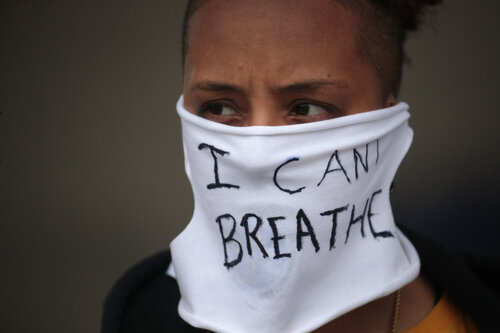
    Equity and justice have to be the lens through which we solve [the climate] problem,” Prakash has said. “If it does not work for and benefit the most disadvantaged among us … it will not fix the problem.” The climate problem, in the eyes of this new generation of activists, is systemic and rooted in privilege. The poor, people of color, and women suffer first and worst from the heat waves, droughts, and storms unleashed by global warming, though they did little to cause that warming. The rich, the white, and the comfortable whose investments and lifestyles drive global warming are often shielded from its impacts. The same social systems that drive the climate crisis also perpetuate the racism that killed George Floyd and countless other people of color, and it is those systems that need replacing.

    Days after the Democrats gained control of the US House of Representatives in the 2018 midterm elections, Prakash and dozens of Sunrise members occupied the office of incoming House Speaker Nancy Pelosi, demanding that Democrats back policies that matched the scale and urgency of the climate emergency. After rising Democratic star Representative-elect Alexandria Ocasio-Cortez joined the protesters and applauded their efforts, a handful of articles appeared in Politico and other Washington-focused news outlets. Three months later, after extensive consultations with the Sunrise Movement and others, Ocasio-Cortez and Senator Ed Markey introduced a congressional resolution calling for a Green New Deal. Suddenly, the Green New Deal was national news, with stories running in leading newspapers, magazines, and even network TV news programs.

    Now, Prakash and Ocasio-Corte, along with Vermont Senator Bernie Sanders, are attempting to make a Green New Deal part of the official platform of the Democratic party in the 2020 campaign. Prakash is serving on a task force established by Sanders and former Vice President Joe Biden, the Democrats’ presumptive nominee, to try to devise a climate policy all Democrats can support in November. Biden and Sanders each nominated  members to the task force, including one co-chair: Ocasio-Cortez for Sanders, and John Kerry—who, as Secretary of State under president Barack Obama, helped negotiate the Paris Climate Agreement—for Biden.

    Media coverage of the Green New Deal has been scanty since Ocasio-Cortez and Markey introduced their resolution in February 2019, even as Sanders and most other Democratic candidates endorsed various versions of a Green New Deal during the primaries. Now, as Democrats debate whether to make a Green New Deal part of their argument for defeating Trump, newsrooms have an opportunity to catch up with the story. Americans deserve to know before they vote in November what a Green New Deal is, how it would work, what it would cost, what position the contending political parties and candidates take on it, and what difference it could make in the effort to preserve a livable planet.

    The work of the Biden-Sanders task force is a good place to start. Like most climate activists during the primaries, the Sunrise Movement blasted candidate Biden’s climate proposals as much too weak. Yet after the task force completed its second meeting, Prakash tweeted a video message saying she was “cautiously optimistic” that she and her new colleagues would agree to “a national mobilization this decade that creates tens of millions of good paying jobs with access to a union.” She added that at a time “when we have 30 million unemployed in this country, we can take this opportunity to rebuild from the horrific impacts of COVID-19 stronger, more resilient and more sustainable than before.” And she made a point of praising the contributions of two Biden appointees, including Gina McCarthy, Obama’s former Environmental Protection Agency chief, who reportedly told the task force that the benefits of any climate policy “need to get to people today and tomorrow, not by 2050.”

    The debate around the Green New Deal offers an abundance of news angles. Whether Biden and the Democrats go all in on a Green New Deal is unquestionably a big political story. It’s also a major business story: Which sectors of the economy stand to benefit from a Green New Deal? Which will resist, and why? Local coverage can ask what the mayors, governor, and other key public and private officials in a given region think a Green New Deal would mean for jobs and investment within their jurisdiction. International stories can explore how a justice-centered Green New Deal compares to the green stimulus programs the European Union, the International Monetary Fund, and other pillars of the global establishment have urged to revive coronavirus-battered economies. And looming over everything is a final question: how would a Green New Deal affect our civilization’s chances of surviving what remains, even amid this pandemic, the gravest threat of our time?

    **Covering Climate Now is looking for stories about the intersection of climate and racial and economic justice. If you have recent or evergreen stories on the subject of climate justice that you are willing to share with the CCNow collaboration for republication, please send the links to sharing@coveringclimatenow.org. We will distribute a package of stories in a later email.**

    Important Notice: Covering Climate Now’s interview with the UN Secretary General, like the G7 summit, is being rescheduled. Therefore, CCNow’s planned coverage of green stimulus spending June 5 to 12 will also be delayed. But both items remain on our agenda, and we’ll be in touch soon with more information.

    Now, here’s your weekly sampling of the latest in climate news, from across the Covering Climate Now collaboration.

    • As America grapples with systemic racism, environmental groups are foregrounding climate justice and also confronting their own racist pasts. Many green groups remain overwhelmingly white and focused on such affluent issues as land conservation rather than ensuring clean drinking water for communities of color—but things are beginning to change, Grist reports.

    • On a similar note, ICYMI, in April HuffPost reported on the solar industry’s persistent diversity problem—and the companies fighting to change it.

    • Vox details how Joe Biden’s campaign and the climate movement are finding an unlikely but hopeful union, after candidates who were viewed as stronger on climate failed to win the primary. On the one hand, an appeal to climate voters can help deliver Biden the left, activists say; on the other, Biden’s Main Street appeal, coupled with his focus on jobs and investment, may finally shepherd political centrists to the climate cause. In the words of one environmental group leader: “Joe Biden isn’t the climate champion that the movement wanted, but he may be the champion they need.”

    • In 2020, America consumed more renewable energy than coal for the first time since the 1800s, when wood was used to power ships and trains, Bloomberg Green reports. “This shows us the trend toward renewables is clearly well underway,” said one expert. “We see it speeding up.”

    • Per The Guardian: COP26 talks, originally scheduled for November in Glasgow, will be delayed by a year, due to travel concerns associated with coronavirus. Some country’s representatives expressed concern that the delay  could hinder emissions reductions. The UN climate chief, Patricia Espinosa, however, expressed optimism: “If done right, the [economic] recovery from the Covid-19 crisis can steer us to a more inclusive and sustainable path.”

    Thanks for reading, stay safe, and see you next week!

  • Covering Climate Now Presents… Stephen McClanahan “For the Birds”

    Covering Climate Now Presents… Stephen McClanahan “For the Birds”

    Loveland Magazine is one of the 400 news outlets worldwide, with a combined audience of over 2 billion people “Covering Climate Now”, a global journalism initiative committed to bringing more and better coverage to the defining story of our time.
    The initiative, was co-founded by The Nation and Columbia Journalism Review

    Mihaela Manova is “Covering Climate Now” in Loveland, Ohio as an editor for Loveland Magazine


  • [On Earth Day’s 50th Birthday] Why you should watch Plastic Wars / Covering Climate Now

    [On Earth Day’s 50th Birthday] Why you should watch Plastic Wars / Covering Climate Now

    “Do you think the industry uses recycling to sell more plastic? Absolutely.” Plastic Wars, PBS


    Loveland Magazine is one of the 400 news outlets worldwide, with a combined audience of over 2 billion people “Covering Climate Now”, a global journalism initiative committed to bringing more and better coverage to the defining story of our time.
    The initiative was co-founded by The Nation and Columbia Journalism Review

    Mihaela Manova is the Loveland Magazine “Covering Climate Now” Editor


    W

  • Climate crisis: in coronavirus lockdown, nature bounces back – but for how long?/ Covering Climate Now

    Climate crisis: in coronavirus lockdown, nature bounces back – but for how long?/ Covering Climate Now

    Loveland Magazine is one of the 400 news outlets worldwide, with a combined audience of over 2 billion people “Covering Climate Now”, a global journalism initiative committed to bringing more and better coverage to the defining story of our time.
    The initiative, was co-founded by The Nation and Columbia Journalism Review

    Mihaela Manova is “Covering Climate Now” in Loveland, Ohio as an editor for Loveland Magazine


    T

    he environmental changes wrought by the coronavirus were first visible from space. Then, as the disease and the lockdown spread, they could be sensed in the sky above our heads, the air in our lungs and even the ground beneath our feet.

    While the human toll mounted horrendously from a single case in Wuhan to a global pandemic that has so far killed more than 88,000 people, nature, it seemed, was increasingly able to breathe more easily.

    As motorways cleared and factories closed, dirty brown pollution belts shrunk over cities and industrial centres in country after country within days of lockdown. First China, then Italy, now the UK, Germany and dozens of other countries are experiencing temporary falls in carbon dioxide and nitrogen dioxide of as much as 40%, greatly improving air quality and reducing the risks of asthma, heart attacks and lung disease.

    For many experts, it is a glimpse of what the world might look like without fossil fuels. But hopes that humanity could emerge from this horror into a healthier, cleaner world will depend not on the short-term impact of the virus, but on the long-term political decisions made about what follows.

    After decades of relentlessly increasing pressure, the human footprint on the earth has suddenly lightened. Air traffic halved by mid-March compared with the same time last year. Last month, road traffic fell in the UK by more than 70%, to levels last seen when the Beatles were in shorts. With less human movement, the planet has literally calmed: seismologists report lower vibrations from “cultural noise” than before the pandemic.

    Key environmental indices, which have steadily deteriorated for more than half a century, have paused or improved. In China, the world’s biggest source of carbon, emissions were down about 18% between early February and mid-March – a cut of 250m tonnes, equivalent to more than half the UK’s annual output. Europe is forecast to see a reduction of around 390m tonnes. Significant falls can also be expected in the US, where passenger vehicle traffic – its major source of CO2 – has fallen by nearly 40%. Even assuming a bounceback once the lockdown is lifted, the planet is expected to see its first fall in global emissions since the 2008-9 financial crisis.

    Fossil fuels

    There is no doubt that these lockdowns are hitting the fossil fuel industry. With fewer drivers on the roads and planes in the air, the price of oil has slumped almost two-thirds since last year. Car sales fell by 44% in March, with motorway traffic down 83%. So many more people are learning to teleconference from home that the head of the Automobile Association in the UK advised the government to switch infrastructure investment from building new roads to widening internet bandwidth.

    This is potentially good news for the climate because oil is the biggest source of the carbon emissions that are heating the planet and disrupting weather systems. Some analysts believe it could mark the start of a prolonged downward trend in emissions and the beginning of the end for oil. Others strike a more cautious note about the fuel that has dominated our lives and polluted our atmosphere for the past century.

    “The drop in emissions is global and unprecedented,” Rob Jackson, the chair of Global Carbon Project said. “Air pollution has plunged in most areas. The virus provides a glimpse of just how quickly we could clean our air with renewables.” But he warned that the human cost was too high and the environmental gains could prove temporary. “I refuse to celebrate a drop in emissions driven by tens of millions of people losing their jobs. We need systemic change in our energy infrastructure, or emissions will roar back later.”

    Hopes that the pandemic will accelerate the transition to a cleaner world are already running into a political wall: the “shock doctrine” of disaster capitalism outlined by the author and activist Naomi Klein. In her book of the same name, the Canadian writer describes how a powerful global elite exploits national crises to push through unpopular and extreme measures on the environment and labour rights.

    This is what is happening in the United States and elsewhere. Oil company executives have lobbied Donald Trump for a bailout. Under the cover of the crisis, the White House has rolled back fuel-economy standards for the car industry, the Environmental Protection Agency has stopped enforcing environmental laws, three states have criminalised fossil fuel protesters and construction has resumed on the KXL oil pipeline. The US government’s massive economic stimulus bill also included a $50bn bailout for aviation companies. Environmental groups are urging the UK and European Union not to do the same.

    If governments prime the economic pumps with the intention of a return to business as usual, environmental gains are likely to be temporary or reversed. China provides some indication of what can be expected. With no new cases in Wuhan, the lockdown is being eased and energy use and air pollution have been rising since the end of March.

    Wildlife and biodiversity

    Nevertheless, while our species is in temporary retreat during the lockdowns, wildlife has filled the vacuum. This year will almost certainly see a much lower toll for roadkill by cars and trucks, which – in the UK alone – annually takes the lives of about 100,000 hedgehogs, 30,000 deer, 50,000 badgers and 100,000 foxes, as well as barn owls and many other species of bird and insect. Many councils have delayed cutting the grass on roadside verges – one of the last remaining habitats for wildflowers – which should bring a riot of colour to the countryside this summer and provide more pollen for bees.

    Coyotes, normally timid of traffic, have been spotted on the Golden Gate Bridge in San Francisco. Deer are grazing near Washington homes a few miles from the White House. Wild boar are becoming bolder in Barcelona and Bergamo, Italy. In Wales, peacocks have strutted through Bangor, goats through Llandudno and sheep have been filmed on roundabouts in a deserted playground in Monmouthshire.

    This is presented as the comedy in our tragedy. Cartoonists have depicted throngs of tourist animals gawping through city windows at humans under lockdown. Commentators are even talking of the “post-human” era – a mocking rejoinder to the idea that we live in Anthropocene, a period of human domination that is reshaping the planet. Humour does not get much blacker. We are laughing at our own decline – and assuming that nature will be the beneficiary.

    Environmental campaigners say that is a dangerous misconception. The picture is different across our unequal world. Rich, industrialised nations are seeing a temporary recovery of nature because there is so little of it in the first place. Poorer countries, on the other hand, especially in the southern hemisphere, fear an increased threat to wildlife because the pandemic means they have less money and personnel with which to conserve endangered species and habitats.

    In the Amazon rainforest, environmental authorities are reining in monitoring and protection operations. In the Masai Mara and Serengeti, nature reserves are taking less tourist revenue, which means they are struggling to pay rangers. Conservation groups fear this will open the door to more illegal poaching, mining and logging, especially now that local people are losing income and need new ways to feed their families.

    “In the short term it would be dangerous to think that a downturn in economic activity is a benefit to nature,” said Matt Walpole of Fauna and Flora International. “There are significant risks.”

    Potentially offsetting this is reduced demand for many natural resources, but it remains to be seen whether home isolation of half the world’s population affects the appetite for consumer goods.

    A new future?

    The respite for nature will be less important than what follows. That is already being decided in closed meetings while the public is locked down at home. Meanwhile, global conferences intended to find solutions to environmental problems, such as the Cop26 UN climate talks originally scheduled for Glasgow at the end of this year, have been postponed.

    UN leaders, scientists and activists are pushing for an urgent public debate so that recovery can focus on green jobs and clean energy, building efficiency, natural infrastructure and a strengthening of the global commons.

    “This is the big political battle,” said Laurence Tubiana, CEO of the European Climate Foundation and an architect of the Paris agreement. Leading scientists have jointly signed an open appeal for governments to use recovery packages to shift in a greener direction rather than going back to business as usual.

    Ultimately, the most important environmental impact is likely to be on public perceptions. The pandemic has demonstrated the deadly consequences of ignoring expert warnings, of political delay, and of sacrificing human health and natural landscapes for the economy. Of new infectious diseases, 75% come from animals, according to the United Nations Environment Programme. Compared with the past, they pass more rapidly to humans through wildlife trafficking and deforestation and then spread across the globe through air travel and cruise-ship tourism. China – the world’s biggest market for wild animals – appears to have recognised this by banning the farming and consumption of live wildlife. There are growing calls for a global ban on “wet markets”.

    The pandemic has also shown that pollution lowers our resistance to disease. More exposure to traffic fumes means weaker lungs and greater risk of dying from Covid-19, according to scientists at Harvard University. As the UN’s environment chief, Inger Andersen, put it, nature is sending us a message that if we neglect the planet, we put our own wellbeing at risk.

    Since the start of the pandemic, it is not just from space that the world looks different. The unthinkable is now thinkable. Positions are shifting. Libertarian governments are curtailing freedoms more drastically than wartime leaders. Austerity conservatives are approving trillions of dollars for healthcare and emergency spending. Small-state advocates are being forced into massive interventions. Leading business publications are calling for a deep reform of capitalism. Most importantly, the political focus has shifted from individual consumption to collective wellbeing.

    These 100 days have changed the way we think about change. Ultimately, whether this pandemic is good or bad for the environment depends not on the virus, but on humanity. If there is no political pressure on governments, the world will go back to unsustainable business as usual rather than emerge with a healthier sense of what is normal.

    For the French philosopher Bruno Latour, one thing we have learned is that it is possible in a matter of weeks to slow the economy, which until now had been considered inconceivable due to the pressures of globalisation.

    “The incredible discovery is that there was in fact in the world economic system, hidden from all eyes, a bright red alarm signal, next to a large steel lever that each head of state could pull at once to stop ‘the progress train’ with a shrill screech of the brakes,” he writes.

    This makes ecological calls to move off a path of endless resource consumption more realistic, maybe even more desirable. But Latour warns that this unforeseen pause could easily allow powerful interests to seize more control ahead of the bigger battles looming over the climate and biodiversity. “This is where we must act,” he says. “If the opportunity works for them, it works for us too.”

  • To take your mind off the virus: The news sources with only good news

    To take your mind off the virus: The news sources with only good news

    Mihaela Manova

    By: Mihaela Manova

    D

     uring times that we are isolated in quarantine, we tend to focus our attention to the wrong news sources. While most of them give accurate information, we may fall into a trap of overthinking, fear, or both. To distract from the boredom of some and the panic that others may have, we have gathered the most positive news and news sources from the week.
    Here are our top 3 finds to enjoy:

    Good News Network

    When searching for good news on the internet, this is one of the first that will make you smile. The Good News Network has been pushing out positive articles about everything, despite the current coronavirus circumstances.

    Take for example, a new article confirming that TV medical dramas are donating their gowns, gloves, and masks to real hospitals. Shows like Grey’s Anatomy and Station 19 are sending their supplies to the nearest hospitals in an effort to help real doctors and nurses fight this pandemic.

    To read more, here is the article in full: https://www.goodnewsnetwork.org/tv-medical-dramas-donate-supplies-to-hospitals-fighting-corvid19/

    Grist 50

    “Tired of hearing about all the world’s problems? You’ve come to the right place. The people you’ll soon meet are cooking up the boldest, most innovative solutions you haven’t yet heard of to fix the biggest challenges that face our globe. Tracking down these people — everyone from politicians to farmers to inventors to lawyers to artists — has given us new hope for the future. Now, we’re introducing them to you, to give you hope, too.” – Grist 50

    Looking for a website that sheds light on forward thinking people, world-changing actions, and good news about the battle with climate change? Grist 50 is the source for inspiration through the lenses of 50 climate change advocates, who give us hope for the future in our world. 

    To find out more: https://grist.org/grist-50/2019/

    Today.com

    Want to read something heartwarming? Today.com’s Good News segment may be the right way to spend your social distancing time. From “Priest begins offering drive-thru confessions” to “Cheap thrift-store picture turns out to be Salvador Dali’s piece,” Today has articles that could elevate some of your stress. 

    Here are our top 5 pics to make you smile:

    1. Texas couple donates flowers to assisted living homes after postponing wedding 

      https://www.today.com/news/texas-couple-donates-flowers-assisted-living-homes-after-postponing-wedding-t176563 
    2. Priest begins offering drive-thru confession amid coronavirus pandemicFather Scott Holmer, a Catholic priest at a parish in Maryland, has started hearing confessions through penitents' driver's-side windows in his church's parking lot.

    https://www.today.com/news/priest-offering-drive-thru-confession-amid-coronavirus-pandemic-t176354

    3. Meet the veterinarian who gives free medical care to pets of the homeless

    Dr. Kwane Stewart smiles with a dog.

    https://www.today.com/pets/street-vet-offers-free-medical-care-pets-homeless-t174465 

    4. This Hiking ferret had summited 11 of Colorado’s highest peaks

    https://www.today.com/pets/oliver-hiking-ferret-has-summited-11-colorado-s-peaks-t175483 

    5. A $10 thrift store picture turned out to be rare Salvador Dali work worth $1,200

    https://www.today.com/news/10-thrift-store-picture-turned-out-be-rare-salvador-dal-t175823 


  • As coronavirus drives climate protests off streets, activists go online / Covering Climate Now

    As coronavirus drives climate protests off streets, activists go online / Covering Climate Now

    Loveland Magazine is one of the 400 news outlets worldwide, with a combined audience of over 2 billion people “Covering Climate Now”, a global journalism initiative committed to bringing more and better coverage to the defining story of our time.
    The initiative, was co-founded by The Nation and Columbia Journalism Review

    Mihaela Manova is “Covering Climate Now” in Loveland, Ohio as an editor for Loveland Magazine


    L

    Now they have an entirely new worry: a global coronavirus outbreak.

    With lockdowns on public gatherings taking hold around the world, the group’s best-known tactic – staging mass street protests to focus public attention on climate change threats – is no longer wise or possible for now, activists say.

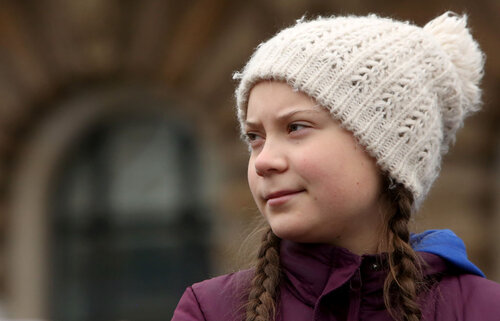
    Instead, Extinction Rebellion (XR) – like the student climate strike movement spearheaded by Swedish teen Greta Thunberg – is looking for new ways to make a mark, from taking its campaigns online to using its networks to battle the virus.

    “We are in XR because we are compassionate individuals who have seen the harm coming to everything we love,” said Vishal Chauhan, 30, a London-based member of Doctors for XR.

    “We act on imminent threats – and that’s what coronavirus is right now,” said the former emergency care doctor, describing how many members of the movement were redirecting their energies to aiding communities and vulnerable neighbors.

    “What this health crisis is doing is making people realize what is important” – and that could help drive action on climate risks in the future, he said.

    Climate protest movements surged worldwide in 2019, with youth climate strikes drawing millions out on the streets.

    In London, the British government declared a climate emergency and later set a 2050 net-zero emissions target weeks after an unprecedented Extinction Rebellion protest in London.

    This month, however, Fridays for Future youth climate protesters have taken their weekly actions digital, using the Twitter hashtag #ClimateStrikeOnline.

    “In a crisis, we change our behavior and adapt to the new circumstances for the greater good of society,” strike founder Thunberg tweeted to her more than 4 million followers last week.

    “We must unite behind experts and science. This of course goes for all crises,” the 17-year-old noted.

    Activists in countries from India to Sierra Leone and Russia have heeded the call, posting images of themselves holding protest signs on social media, with their posts sometimes coordinated to appear at the same hour.

    Those still protesting in person have said they are trying to main the “social distancing” recommended by health officials.

    FRIENDLY MESSAGE

    Kenyan youth activist Makenna Muigai said the virus spread had forced cancellation of an Africa-wide strike planned for April 24.

    “I’m thinking now everything will be digital,” she told the Thomson Reuters Foundation in a telephone interview.

    She said the coronavirus pandemic may be cutting emissions globally, as China’s industries slow and more people stay at home. But “in terms of getting people’s voices heard” on climate issues, it represents a roadblock, she said.

    “Right now everyone’s focused on the virus. Getting people to also remember and understand that climate change is still a problem might get overpowered,” she said.

    Medic Chauhan, however, said the strengthening of social and community ties in response to coronavirus, as people work together to confront the threat, could lay the groundwork for more effective future action on climate threats.

    “We’ve so far urged negative disruption. We hope people see our message and it percolates,” he said.

    But with members now focused on strengthening community ties, “we can start talking to people about the climate crisis as friends”, he said.

    “It’s a much more beautiful way of getting the message across,” he added.

    For now, the British arm of Extinction Rebellion has said mass public gatherings will not be organized “if it is not safe to do so”. That means a planned large-scale London protest in May has been called off.

    But “we will make alternative, creative plans for May and June – watch this space”, the group promised in a tweet.

    Reporting by Laurie Goering @lauriegoering; editing by Megan Rowling. Please credit the Thomson Reuters Foundation, the charitable arm of Thomson Reuters. Visit news.trust.org/climate

  • To take your mind off the virus: local students raised more than $50,000 for the fight against Leukemia Lymphoma

    To take your mind off the virus: local students raised more than $50,000 for the fight against Leukemia Lymphoma

    By: Mihaela Manova

    A

    In recent weeks, three Loveland High School students (Sam Greenberg, Jordan Sovik, and Ben Westley) were nominated for the Student of the Year program to raise funds for the Leukemia & Lymphoma Society. They had seven weeks to accomplish their goal through the help of the Loveland community, while going against other Greater Cincinnati teams.

    Their team, CUREage, was involved in getting the whole community to become a part of the cause, not just be a silent supporter. By volunteering and working together with businesses while making connections to spread the cause, their performance was fueled by passion, not superficial intention.

    In collaboration with Bishop’s Quarter, Chipotle, t-shirt sales, and meetings with Art Jarvis,  team CUREage was on the right path of achieving their goal one step at a time.

    The amount that each team raised was revealed after a silent auction on the fundraising finale. Their collaboration within their team and contributions have brought in precisely $58,571. Adding their profits to the other 18 student teams from the Greater Cincinnati area, the combined total amounted to $361,744.21. 

    An achievement that left many stunned, Loveland Magazine talked to Jordan and Sam about their efforts.

    Image may contain: 3 people, including Pamela Schwartz Greenberg, people smiling, people standing
    Left to right: Sam Greenberg, Jordan Sovik, and Ben Westley

    Q: What is your reaction to the $58,000 that you guys have made?

    Jordan: “Half way through the campaign I thought that we were definitely not going to hit the (goal), just because we were a month in. We only had $22,000, which was still a lot, but I was not expecting to reach $50,000. Once we got towards the last couple weeks of (fundraising), our community really started to pitch in and all of our main events that we had scheduled went really well. So our numbers started really going up and we ended up hitting $50,000, going way over our goal. 

    It was just one of those things that were, in that moment, so surreal. All the people that were there supporting us were around us and seeing everyone’s reaction to the success was definitely what made everything we have done in the past six months so worth it.”

    Q: How was working with Jordan and Ben for the organization?

    Sam: “Working with Jordan and Ben was great. At times, it felt like we had a lot on our plate, but it was nice to be able to rely on each other when we needed it. Overall, the whole experience was very rewarding because all of our hard work went towards a worthy cause.” 

    The Leukemia Lymphoma Society is the largest non-profit organization that is “dedicated to creating a world without blood cancers” as said by their official website. They have invested around $1.3 billion in research while using the most innovative approaches to combat cancer. This society has also helped advance research grants, blood cancer therapies, and co-pay financial assistance. To donate go to https://donate.lls.org/lls/donate.


  • Milankovitch (Orbital) Cycles and Their Role in Earth’s Climate/ Covering Climate Now

    Milankovitch (Orbital) Cycles and Their Role in Earth’s Climate/ Covering Climate Now

    Loveland Magazine is one of the 400 news outlets worldwide, with a combined audience of over 2 billion people “Covering Climate Now”, a global journalism initiative committed to bringing more and better coverage to the defining story of our time.
    The initiative, was co-founded by The Nation and Columbia Journalism Review

    Mihaela Manova is “Covering Climate Now” in Loveland, Ohio as an editor for Loveland Magazine


    O