Tag: abortion

  • Ohio Issue 1’s reproductive rights amendment and protection of access to contraception

    Ohio Issue 1’s reproductive rights amendment and protection of access to contraception

    Getty Image

    BY:  Ohio Capital Journal

    Editor’s Note: This article is part of a series looking at the language of Ohio Issue 1 and the reproductive rights it would impact. The full language of the amendment can be found here.

    In the Nov. 7 general election, Ohioans will decide whether or not to approve Issue 1, a constitutional amendment for reproductive rights.

    While the language of the amendment focuses primarily on abortion, it also lists other rights that would be cemented into the state constitution, including miscarriage care, fertility treatments, contraception, and the right to continue one’s own pregnancy. Today we will look at how and why the proposed amendment seeks to protect access to contraception.

    The use of contraception is not illegal in Ohio, and though it’s commonly called “birth control,” the medications are also used for other conditions, like ovarian cysts, polycystic ovary syndrome and endometriosis symptoms.

    Push to ‘reconsider’ contraception case

    Contraception has long been a target of debate, with fears of further regulations increasing after U.S. Supreme Court Justice Clarence Thomas brought up Griswold v. Connecticut during his concurrence to Dobbs v. Jackson Women’s Health, the 2022 decision that overturned the half-century of abortion legalization given in Roe v. Wade.

    The ruling in Griswold overturned a Connecticut law from the 1800s that banned the use of “any drug, medical device or other instrument in furthering contraception,” particularly in marriages. The question at the heart of the Griswold case: “Does the Constitution protect the right to marital privacy against state restrictions on a couple’s ability to be counseled in the use of contraceptives?”

    The court found that the right to privacy held in the Bill of Rights prohibited states from banning contraception for married couples.

    However, in agreeing with the Dobbs decision, Thomas said the nation’s highest court should also “reconsider” cases such as Griswold, with new reflection on the 14th Amendment.

    “After overruling these demonstrably erroneous decisions, the question would remain whether other constitutional provisions guarantee the myriad rights that our substantive due process cases have generated,” Thomas wrote in his 2022 concurrence.

    A congressional effort that was put forth in July 2022 to codify birth control access passed the U.S. House. The effort had unanimous Democratic support, but only had the support of one Ohio GOP representative, former Rep. Anthony Gonzalez.

    The effort was blocked by the U.S. Senate that same month.

    There is federal law that requires health insurance coverage for prescription female contraceptives, but federal law also allows for a refusal clause “that allows churches, associations of churches, religiously affiliated elementary and secondary schools and, potentially, some religious charities and universities to refuse,” according to an analysis by the Guttmacher Institute.

    The institute’s analysis also showed that, as of September 2023, Ohio’s only state-level regulation is an insurance coverage requirement for extended supplies of contraception.

    “The state’s law allows pharmacists to dispense the full amount of a prescription at one time, including contraception, but there is no requirement that health insurance plans cover the cost of accessing a year’s worth of contraceptives at one time,” the Guttmacher research stated.

    Medicaid recipients are allowed access to “pregnancy prevention services” under the Ohio Administrative Code, including “contraceptive management,” along with “fertility awareness, natural family planning (the use of fertility awareness to track ovulation), and risk factor reduction,” according to the code.

    In an August debate on the previous Issue 1, Secretary of State Frank LaRose joined Ohio Right to Life leader Mike Gonidakis in calling claims that contraception regulations could be on the table in the state “fear-mongering,” saying “no reasonable person is talking about banning the use of contraceptives.”

    Back in 2022, state Rep. Jean Schmidt, R-Loveland, who introduced a bill that, if passed, would have banned all abortions in Ohio without exceptions for rape or incest, said she would “listen to both sides of that debate” over whether to ban contraceptions during a July 2022 radio interview.

    Sex ed

    Researchers and advocacy groups say abstinence-only education and anti-abortion politics have already had their impact in the state, and the need to keep contraception at the forefront continues.

    Even in his analysis of Issue 1, Ohio Attorney General Dave Yost spoke of access to contraception (and other rights listed in the proposed amendment), saying those topics “are harder to assess because Ohio does not have specific statutes addressing minors’ access to these medical treatments or products.”

    When Roe v. Wade — the landmark U.S. Supreme Court case that legalized abortion nationwide — was overturned in 2022, Ohio groups immediately feared the already inconsistent sex education standards in the state would take a hit as well.

    State law requires Ohio schools to emphasize abstinence, but does not require them to include lessons on consent, sexual orientation, or gender identity, according to a review by the Sexuality Information and Education Council of the United States (SIECUS).

    In fact, Ohio House GOP members introduced a bill in 2022 that would ban the use of sexual orientation and gender identity as a topic in Ohio schools. State Rep. Mike Loychik, R-Bazetta, the bill’s co-sponsor, said at the time that the bill would “ensure that sexual orientation and gender ideology are not taught in kindergarten through third grade.”

    But bills like House Bill 616 could also “impact age-appropriate sex education,” according to SEICUS, which said those and other policies pushing abstinence-only or no education at all to certain ages can result in district-by-district decisions on sex education.

    “Local control over sex education presents unique challenges that have resulted in glaring disparities in the quality of sex education that students receive,” SEICUS said in an Ohio analysis.

    The March 2023 research used CDC data from the 2019-2020 school year that showed only 38.3% of Ohio’s schools required a course on methods of contraception other than condoms in grades 6, 7 or 8, whereas 82.5% taught high schoolers about methods other than condoms.

    According to the CDC data, only 37% of Ohio schools grades 6 through 12 require more than one health education course.

    The impact of a lack of standardized sex education could have longterm effects, advocates suggest, particularly in the area of unintended pregnancies.

    The U.S. Department of Health and Human Services encourages the use of contraception in its “Healthy People 2030” objective, to help with pregnancy planning and prevention of unintended pregnancies.

    “Nearly half of pregnancies in the United States are unintended, and unintended pregnancy is linked to many negative outcomes for both women and infants,” the federal agency stated on its Healthy People 2030 website.

    Though they acknowledge that teen pregnancy has gone down in the U.S., they cite data that shows “close to 200,000 babies are born to teen mothers every year in the United States.”

    “Adolescents are at especially high risk for unintended pregnancy,” HHS stated.

    This article clarifies the vote of Ohio’s U.S. Representatives on the federal birth control bill.



    Susan Tebben
    SUSAN TEBBEN

    Susan Tebben is an award-winning journalist with a decade of experience covering Ohio news, including courts and crime, Appalachian social issues, government, education, diversity and culture. She has worked for The Newark Advocate, The Glasgow (KY) Daily Times, The Athens Messenger, and WOUB Public Media. She has also had work featured on National Public Radio.

    MORE FROM AUTHOR

  • Jane Gonzales and Patty Lawrence return and talk about the “new” Issue 1

    Jane Gonzales and Patty Lawrence return and talk about the “new” Issue 1


    “Right to Make Reproductive Decisions Including Abortion”

    by David Miller

    Loveland, Ohio – Jane Gonzales from Loveland and Patty Lawrence from Miami Township returned to the LOVELAND MAGAZINE TV studio last week to talk about current politics and the activities they have been engaged in in recent months in the community.

    They discussed and answered questions about Ohio Issue 1 which will be on the General Election ballot on November 7. Yes, they talked about Issue 1 when they were last in the studio, and that Republican-led measure was soundly defeated.

    This November, Issue 1, which was a citizen-led effort, will ask voters to amend the Ohio Constitution to enshrine a woman’s “Right to Make Reproductive Decisions Including Abortion”.

    In this interview, Gonzales and Lawrence tell viewers what their reaction was when the attempt to make it harder to circulate initiative petitions and would have raised the bar for citizen-led amendments to a 60% threshold failed in the special election in August. Both women campaigned against the change simultaneously while collecting signatures to have the right to make reproductive decisions including abortion on the Fall ballot. They opposed the August Issue 1. They are encouraging a “YES” vote on the citizen-led amendment.

    In this new interview, they discuss what the current Issue 1 will and won’t do and why they are encouraging voters to vote “YES” on the constitutional amendment.

    ____________________

    The amendment as it would be in the Ohio Constitution

    [pdf-embedder url=”https://lovelandmagazine.com/wp-content/uploads/2023/10/The-Right-to-Reproductive-Freedom-with-Protections-for-Health-and-Safety.pdf”]

    ________________

    ISSUE 1 BASICS (Leauge of Women Voters of Ohio)

    WHAT IS ISSUE 1 ABOUT?

    • Issue 1 relates to reproductive health care. Also known as “The Right to Reproductive Freedom with Protections for Health and Safety”, it would amend the Ohio Constitution, if passed by voters in November. 


    WHAT DOES IT MEAN TO VOTE YES ON ISSUE 1?

    • A “yes” vote supports amending the Ohio Constitution to restore the right to an abortion, as well as other reproductive health care such as fertility or miscarriage treatment : 

      • establish a state constitutional right to “make and carry out one’s own reproductive decisions,”including decisions about abortion, contraception, fertility treatment, miscarriage care, and continuing pregnancy; 

      • prohibit the state of Ohio from interfering with this constitutional right, except when the state demonstrates “that it is using the least restrictive means to advance the individual’s health in accordance with widely accepted and evidence-based standards of care;” 

      • allow the state to restrict abortion after fetal viability, defined as “the point in a pregnancy when, in the professional judgment of the pregnant patient’s treating physician, the fetus has a significant likelihood of survival outside the uterus with reasonable measures;” and 

      • prohibit the state of Ohio from banning abortion when, in the professional judgment of a physician, an abortion “is necessary to protect the pregnant patient’s life or health.” 


    WHAT DOES IT MEAN TO VOTE NO ON ISSUE 1? 

    • A “no” vote opposes amending the Ohio Constitution to establish the constitutional right to “make and carry out one’s own reproductive decisions.” This would allow the state to continue to create legislation relating to abortion and other reproductive health actions.


    WHAT HAPPENS IF ISSUE 1 PASSES? 

    • Abortion would go back to being legal up until viability of the fetus — as it had been for nearly half a century since Roe v. Wade.  Access to miscarriage care, to contraception, and to fertility treatments, as well as the right to remain pregnant, would also be protected under this amendment. Under this amendment, the state would be allowed to restrict abortion beyond viability, with exceptions made when a physician deems abortion necessary for the life or health of the pregnant patient.

    ​WHAT HAPPENS IF ISSUE 1 DOES NOT PASS?

    • Laws around abortion and other reproductive health care would continue to be made by state government. 

    • Right now, Ohio has a ban on abortion after the 6th week of pregnancy in place, but this ban has been temporarily blocked by a judge. The judgment blocking the ban has been challenged by the Ohio Attorney General on behalf of the state of Ohio, and is under review with the Ohio Supreme Court. If the Court rules in the state’s favor, the 6 week abortion ban will resume, making abortion after 6 weeks of pregnancy illegal. This includes pregnancies resulting from rape or incest. 


    WHO IS LEADING THE CAMPAIGN TO PASS ISSUE 1? 

    • An organization named OURR – Ohioans United for Reproductive Rights– is heading Issue 1. According to their website, this is a coalition of statewide organizations that includes ACLU of Ohio, Abortion Fund of Ohio, Ohio Physicians for Reproductive Rights, New Voices for Reproductive Justice, Ohio Women’s Alliance, Planned Parenthood Advocates of Ohio, Preterm-Cleveland, Pro-Choice Ohio, and URGE. 


    WHO IS LEADING THE CAMPAIGN OPPOSING ISSUE 1? 

    • An organization named Protect Women Ohio is heading the opposition against Issue 1. According to their website, this is a coalition of people and organizations; no names are identified. 


    WHO ARE SOME SUPPORTERS OF ISSUE 1? 

    • American Association of Obstetricians and Gynecologists (ACOG), Ohio Section

    • National Association of Social Workers 

    • Society for Maternal-Fetal Medicine


    WHO ARE SOME OPPONENTS OF ISSUE 1?

    • Center for Christian Virtue 

    • Ohio Catholic Conference 

    • Ohio Right to Life 

    ABORTION IN OHIO 

    WHAT IS THE CURRENT LEGAL STATUS OF ABORTION IN OHIO? 

    • On June 24, 2023, immediately after the Dobbs ruling, a federal judge lifted an injunction that had been placed on a law that made abortion after 6 weeks illegal in Ohio, including for pregnancies resulting from rape or incest. That law had originally been passed in 2019 but blocked in court because it was unconstitutional according to Roe v. Wade; after Dobbs, the law was no longer unconstitutional. 

    • On September 14, 2023, a different judge blocked the 6 week ban, restoring abortion rights to Ohioans temporarily. Ohio Attorney General Dave Yost, representing the state, has challenged this ruling, and the Ohio Supreme Court is set to hear arguments later this month. If the Court rules in favor of the state, who brought the suit, abortion will again be banned after 6 weeks. 


    WOULD THE AMENDMENT AFFECT ANYTHING OTHER THAN ABORTION?

    • Yes. 

    • In addition to guaranteeing the right to abortion, the amendment would also protect the right to other reproductive health actions such as access to contraception, fertility treatment, and miscarriage care, as well as the right to continue a pregnancy. 

    ISSUE 1: FACTS vs. MISINFORMATION 

    CAN A PREGNANCY BE TERMINATED AT ANY TIME DURING A PREGNANCY? 

    • The amendment maintains the standard set by the 1973 Supreme Court decision Roe v. Wade, which prohibits abortion after viability (which most doctors say is around 24 weeks), except in cases when the patient’s life or physical health would be endangered by maintaining the pregnancy. In those instances, determined by the patient’s physician, abortion would be a protected option.

    • Historically, abortion after viability is very, very rare, with 93.1% of abortions happening before 13 weeks gestation in 2020, and less than 1% over 21 weeks gestation. (CDC). Typically, abortion during this period only happen when there are severe fetal anomalies and/or the patient’s life or physical health is in danger. 


    HOW WOULD THIS AMENDMENT AFFECT PARENTAL RIGHTS? 

    • It wouldn’t. There is nothing in the amendment that changes Ohio laws around parental consent. 

    • Ohio law requires minors under the age of 18 to get consent from at least one parent when seeking an abortion. Minors who believe they are unable to tell a parent must get a court order from a judge through a process called judicial bypass. There is nothing in the amendment that would change this. 

    HOW WOULD THIS AMENDMENT AFFECT GENDER-AFFIRMING CARE? 

    • It doesn’t. There is nothing in the amendment that has anything to do with gender-affirming care.

    ______________________

    Ohio’s county boards of elections have begun distributing ballots to active duty military and overseas voters, officially opening the November 7 general election.


    OCTOBER 31st:  DEADLINE TO REQUEST YOUR MAIL-IN BALLOT


    _______________________


  • Abortion rights groups ask Ohio Supreme Court to order full amendment text for November ballots

    Abortion rights groups ask Ohio Supreme Court to order full amendment text for November ballots

    “Gavel,” a sculpture by Andrew F. Scott, outside the Supreme Court of Ohio. Credit: Sam Howzit/Creative Commons.

    BY:  Ohio Capital Journal

    In the fight against Ohio Ballot Board language that reproductive rights groups say is deceptive, an attorney has asked the Ohio Supreme Court to order the full text of the proposed amendment to be used on November ballots.

    The Ohio Ballot Board approved language last month for voters to see on their ballots that took out specific details of the amendment, such as protections for miscarriage care and contraception.

    The language was ostensibly meant to summarize Issue 1, a proposed amendment that would add abortion and reproductive rights into the state constitution, but those who created the proposed amendment say the summary approved by the ballot board in a 3-2 vote misleads voters and adds biased terms like “unborn child” instead of the medically accurate term “fetus.”

    In a filing this week, attorney Don McTigue asked the Ohio Supreme Court to send the Ohio Ballot Board back to the drawing board, specifically to “prescribe that the amendment’s full text be used as the ballot language.”

    “The Ballot Board’s prescribed language misleads the voters about ‘what they are being asked to vote on’ and engages in improper ‘persuasive argument … against’ the Amendment,” McTigue wrote, citing previous Ohio Supreme Court languages.

    The summary language has various defects, according to the abortion rights groups, including misleading voters about “what right the amendment would create,” what restrictions the amendment would create, “whether and to what degree” the proposal would continue a pregnancy, a physician’s discretion regarding fetal viability, and “how the amendment would limit state regulation.”

    “Each of these defects violates the constitution and laws of the state of Ohio, and cannot survive under this court’s precedents,” McTigue wrote.

    Along with the alleged defects, the brief says the ballot board’s summary changes language enough to alter the meaning of the amendment and give false information to voters.

    The summary language states that the amendment would “always allow an unborn child to be aborted at any stage of pregnancy, regardless of viability if, in the treating physician’s determination, the abortion is necessary to protect the pregnant woman’s life or health.”

    “To the contrary, if the amendment were adopted, such an abortion would not be allowed insofar as the pregnant patient objected to it,” McTigue wrote. “In that case, the pregnant person would have an individual right to decide to continue [their] own pregnancy.”

    He also argued that the majority that voted for the summary language included two people who have been working against the measure. One of which, state Sen. Theresa Gavarone, took time during the board meeting in which the summary language was considered, to call the amendment “dangerous” and commit to campaigning against the measure.

    “Gavarone attacked the substance of the amendment itself as ‘an abomination,’ and asserted that the amendment entailed an ‘assault on parental rights,” the court filing noted.

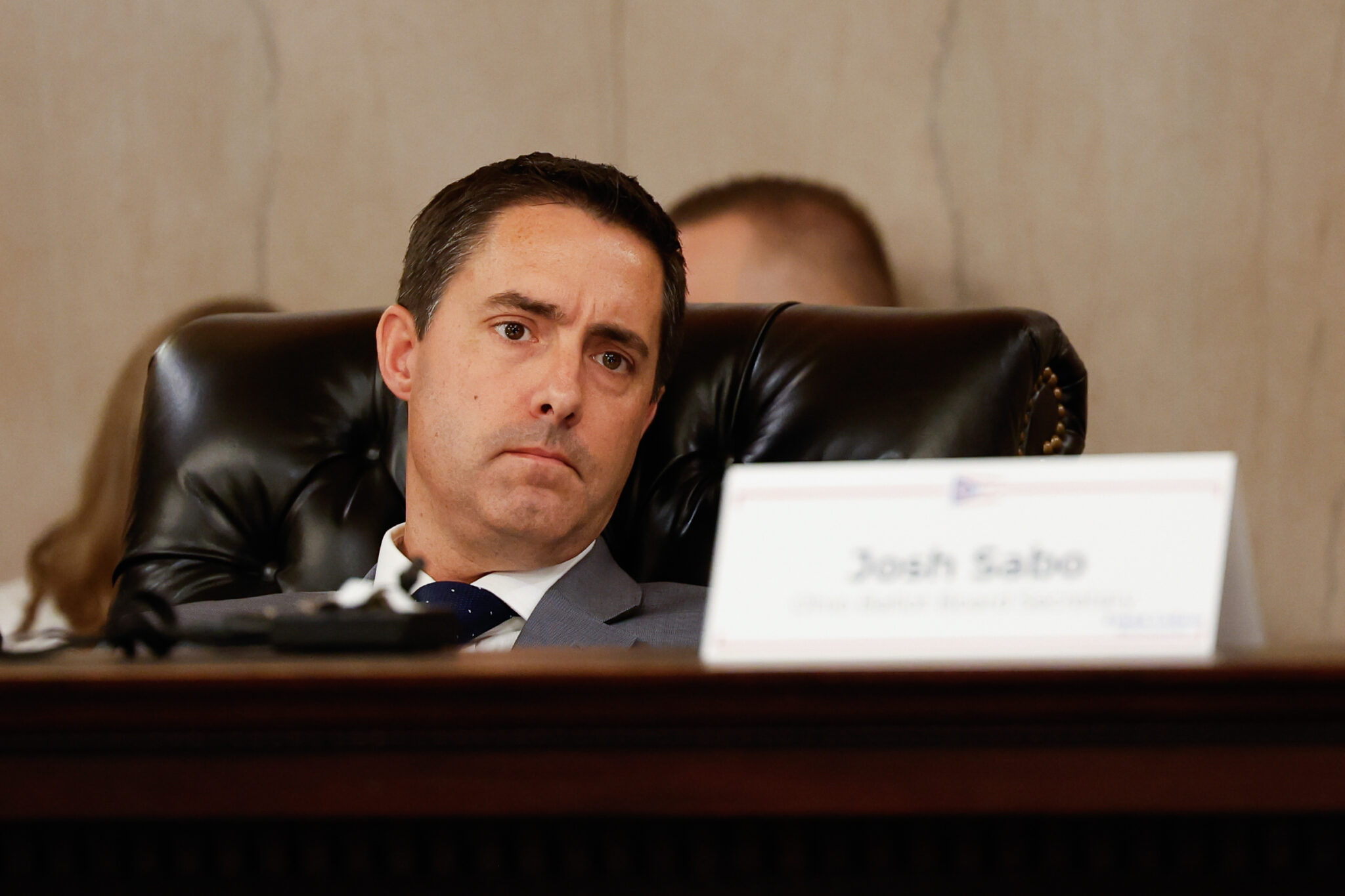
    Ohio Secretary of State Frank LaRose, who leads the ballot board, has also been a vocal opponent of the proposed amendment, posting on social media with anti-abortion groups, and working on a failed constitutional amendment to raise the threshold to approve amendments specifically to block the abortion rights measure.

    “This context, together with the ballot language’s length and many defects, makes clear that the board majority’s personal opposition to the amendment infected the ballot board’s exercise of authority,” McTigue told the court.

    The Ohio Attorney General’s Office, who represents the ballot board in legal proceedings, denied wrongdoing by the board in response to the lawsuit.

    Susan Tebben
    SUSAN TEBBEN

    Susan Tebben is an award-winning journalist with a decade of experience covering Ohio news, including courts and crime, Appalachian social issues, government, education, diversity and culture. She has worked for The Newark Advocate, The Glasgow (KY) Daily Times, The Athens Messenger, and WOUB Public Media. She has also had work featured on National Public Radio.

    MORE FROM AUTHOR

  • LaRose pushes unfair, inaccurate language for voters on November Ohio reproductive rights amendment

    LaRose pushes unfair, inaccurate language for voters on November Ohio reproductive rights amendment

    COMMENTARY

    by Marilou Johanek

    Play fair or play dirty. Issue 1 showed Ohio voters how state Republicans play when they can’t persuade. Extremists know most Ohioans support the right to abortion within limits. The outright ban on abortion gerrymandered pols seek is wildly unpopular. Convincing rational minds otherwise is pointless. So Ohio’s GOP overlords cheat to win.

    Lawmakers rushed a game-changing ballot amendment to an August election (in violation of state law) to sabotage the abortion rights amendment in November. Ohio Secretary of State Frank LaRose spearheaded the shady maneuver to cancel self-governance by majority vote — just to keep a majority of Ohio voters from having their say on abortion access as a constitutional right.

    The state’s elections chief actively campaigned to end the only enduring recourse of ordinary citizens to circumvent a crooked government because he didn’t want an abortion rights amendment to pass. Sit with that for a minute. The guy who administers the electoral system in Ohio tried to undercut the electorate.

    That’s how amoral LaRose has become as he angles for attention as the greatest MAGA candidate in the U.S. Senate race. Burnishing his anti-abortion bona fides with the pro-Issue 1 crowd, in partnership with a leading anti-abortion lobbyist, was more important than upholding majoritarian democracy. Stumping for minority rule on the hollow pretense of “protecting” the constitution was a new low for LaRose.

    But the integrity-is-overrated elections boss and Republican kingpins in the Statehouse badly mistook the masses for rubes. All the misleading, fear-mongering, coming-after-your-children TV ads (out-of-state money could buy) didn’t fool an overriding majority of ticked-off Ohio voters who showed up in record numbers to beat back an egregious political power grab on Aug. 8.

    The beaten cheerleader for Issue 1 refused to concede the people had spoken (a Trumpian reflex?) and last week rolled out another snow job to derail the abortion rights amendment through ballot language subterfuge. LaRose chairs the Republican-dominated Ohio Ballot Board that voted along party lines Thursday to approve the summary language voters will read on their November ballot about the proposed abortion amendment.

    Under state law, LaRose could have used the full text of the amendment as written, and attorneys for Ohioans United for Reproductive Rights urged him to so “there can be no dispute about whether legal standards have been satisfied, or whether the condensed text misleads, deceives, or defrauds voters.” Instead, LaRose recast the amendment to purposely mislead and deceive.

    His draft is slanted with such routinely deployed anti-abortion propaganda it could have been dictated, word for word, by Ohio Right to Life President Mike Gonidakis. LaRose’s specious interpretation of the proposed amendment to enshrine reproductive freedom in the state constitution is deliberately deceptive with provocative wording to unfairly prejudice outcome.

    The revisions he engineered on an amendment he campaigned against are so beyond the pale of “fair and accurate,” as the secretary ludicrously declared, that stunned amendment backers filed suit Monday with the state supreme court for fairness and accuracy. LaRose omitted actual provisions of the original amendment.

    He deleted a description of reproductive choices an individual should have the “right to make and carry out” such as “decisions on contraception, fertility treatment, continuing one’s own pregnancy, miscarriage care, and abortion.” LaRose’s altered the language stipulating an individual right to “one’s own reproductive decisions” to just “a right to one’s own reproductive medical treatment, including but not limited to abortion.”

    Perhaps most blatant was the secretary of state’s pointed replacement of the medical term “fetus” throughout the amendment with “unborn child,” employing the same weighted rhetoric seeded over decades by the anti-abortion movement. He also curiously substituted “the citizens of the State of Ohio” for amendment prohibitions specifically targeting “The State,” defined in the language “as any governmental entity and political subdivision.”

    So what was originally worded “The State shall not, directly or indirectly, burden, penalize, prohibit, interfere with, or otherwise discriminate against” Ohioans exercising their reproductive rights became “the citizens of the State of Ohio” prohibited for doing the same. Different meaning. Why?

    Original language allows that “abortion may be prohibited after fetal viability” or when the fetus can survive outside the womb — a standard restriction for decades under Roe. With a six-week ban on hold by the courts, abortion is currently legal in Ohio up to 22 weeks of pregnancy, a measured limitation widely acceptable.

    LaRose flipped that reasonable allowance upside-down with inflammatory assertions that the amendment would “always allow an unborn child to be aborted at any stage of pregnancy, regardless of viability, if, in the treating physician’s determination” the applicable life and health exceptions are met. The glaring prejudicial language and selective editing of the fall abortion amendment to intentionally distort an initiative petition so it fails should infuriate every Ohioan — regardless of their beliefs about abortion.

    Frank LaRose, the public servant responsible for conducting free and fair elections in Ohio is playing dirty to win. It’s wrong. But it’s only the beginning. Issue 1 was a preview of the depths Ohio Republicans will go to when they can’t persuade. They cheat.

    The devious battle to deny abortion access in Ohio, despite the wishes of a majority of voters, will be epic.


    Marilou Johanek
    MARILOU JOHANEK

    Marilou Johanek is a veteran Ohio print and broadcast journalist who has covered state and national politics as a longtime newspaper editorial writer and columnist.

    MORE FROM AUTHOR

  • Ohio abortion rights supporters submit signatures, gunning for November ballot

    Ohio abortion rights supporters submit signatures, gunning for November ballot

    BY:  Ohio Capital Journal

    Two trucks loaded with more than 400 boxes rolled into the Ohio Secretary of State’s Office Wednesday. In those boxes were 710,000 signatures abortions rights advocates say prove they have the support they need to bring a ballot measure asking voters to put abortion care in the Ohio Constitution.

    “Those (402) boxes are filled with hope, and love, and freedom of bodily autonomy … of being able to say ‘we decide what happens to us,’” said Kellie Copeland, executive director of Pro-Choice Ohio.

    In the last 12 weeks, advocates from groups including Ohioans for Reproductive Freedom and Ohio Physicians for Reproductive Rights have gone to farmer’s markets, held drive-through signing events, and reached across the state to collect the nearly 414,000 signatures required of them to place a measure on an Ohio voting ballot. Signature-gatherers collect far more than that minimum in an attempt to make sure enough signatures are correct and valid to meet the threshold.

     COLUMBUS, Ohio — JULY 05: Field staffer for Ohioans United for Reproductive Rights, Carlos Ortiz unloads the first of 402 boxes of petitions with over 700,000 signatures being delivered to Ohio Secretary of State Frank LaRose, July 5, 2023, at the loading dock of the Office of the Ohio Secretary of State, downtown Columbus, Ohio. (Photo by Graham Stokes for Ohio Capital Journal. Republish photo only with original article.) 

    Bill Wood was one of many collecting signatures, and he said he was overwhelmed by the support he saw the past three months.

    “What amazed me is that even late in this process, there were people who were coming up to us and saying, ‘I have been looking forward to signing this, thank you for being here,’” Wood said. “The number of thank-you’s and compliments and wonderful support that we got from people at every stage was amazing.”

    As part of the Westerville Progressive Alliance, he said he has participated in many signature drives and campaigns over the years.

    “I will tell you when we brought this to our people, we have never seen an outpouring of interest and commitment like we’ve seen this year,” Wood said.

    He said the Westerville group alone collected 9,000 signatures.

    The measure would allow abortion in the state via an amendment to the Ohio Constitution, that states “every individual has a right to make and carry out one’s own reproductive decisions, including but not limited to decisions on contraception, fertility treatment, continuing one’s own pregnancy, miscarriage care and abortion.”

    “Ultimately, this is about giving my patients, our patients, our friends, our families, their power back,” said Dr. Marcela Azevedo, co-founder of OPRR.

    If approved, the amendment would bar the state from doing anything to “directly or indirectly burden, penalize, prohibit, interfere with, or discriminate against either an individual’s voluntary exercise of this right or a person or entity that assists an individual exercising this right, unless the state demonstrates that it is using the least restrictive means to advance the individual’s health in accordance with widely accepted and evidence-based standards of care,” according to the ballot language certified by the Ohio Ballot Board.

    Abortion can, however, be prohibited “after fetal viability,” defined in the proposed amendment as “the point in pregnancy when, in the professional judgment of the pregnant patient’s treating physician, the fetus has a significant likelihood of survival outside the uterus with reasonable measures.”

    Pro-abortion rights groups say signatures were collected in every Ohio county, something that may come in handy with another constitutional amendment, Issue 1, on the ballot in August that would require 60% of Ohio voters to approve of a measure, and require signatures to come from all 88 counties, rather than just the 44 of 88 required in current law.

    Now, the Secretary of State’s Office will have until July 25 to verify the signatures and determine whether the measure has enough valid Ohio voter support to move forward.

    If the number falls short of the required amount, advocates have 10 days to file a supplementary petition with more signatures, which must be from registered Ohio voters who didn’t sign the previous petition.

    The groups working to get the measure on the ballot estimate the campaign to do it may cost approximately $35 million.

    A spokesperson for Secretary of State Frank LaRose did not respond to requests for comment.


    Susan Tebben
    SUSAN TEBBEN

    Susan Tebben is an award-winning journalist with a decade of experience covering Ohio news, including courts and crime, Appalachian social issues, government, education, diversity and culture. She has worked for The Newark Advocate, The Glasgow (KY) Daily Times, The Athens Messenger, and WOUB Public Media. She has also had work featured on National Public Radio.

    MORE FROM AUTHOR

  • COMMENTARY: Change to 88 counties under State Issue 1 would effectively kill Ohio grassroots amendment proposals

    COMMENTARY: Change to 88 counties under State Issue 1 would effectively kill Ohio grassroots amendment proposals

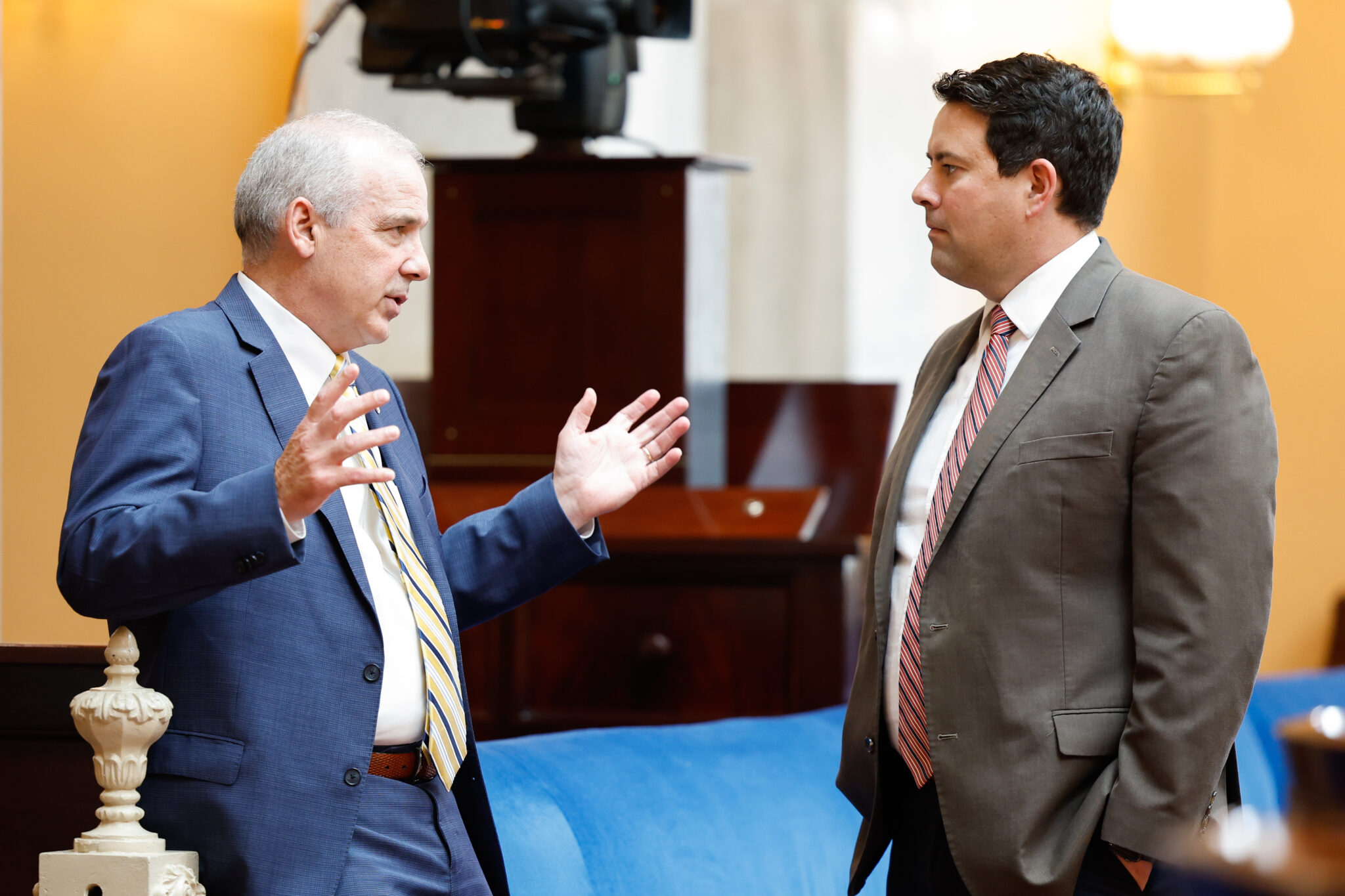
    COLUMBUS, Ohio — MAY 31: Senate President Matt Huffman, R-Lima (left), talks to Senate Majority Floor Leader Rob McColley, R-Napoleon, after the Ohio Senate session, May 31, 2023, at the Statehouse in Columbus, Ohio. (Photo by Graham Stokes for Ohio Capital Journal. Republish photo only with original story.)


    by DAVID DEWITT – Ohio Capital Journal

    By far the most burdensome part of collecting signatures for citizens to amend the Ohio Constitution is the current requirement that they be gathered in 44 out of our state’s 88 counties.

    Organizers typically try to gather double the number of signatures they need to get a proposal on the ballot, because so many things can go wrong and they need that much of a buffer to ensure they have enough valid and accepted signatures to get a proposal through. It’s a slog, requiring a tremendous amount of time, money, resources, volunteers, and dedicated effort for Ohio citizen groups to fulfill. And that’s fair.

    But Ohio Republicans moving the goal posts from 44 counties to 88 counties, as they propose to do with State Issue 1 on the ballot Aug. 8, would effectively destroy the ability of grassroots Ohio citizen groups to succeed in getting proposed amendments on the ballot ever again. The only groups that would have even a remote shot of success would be the most wealthy and powerful special interest groups imaginable.

    Ohio’s unconstitutionally gerrymandered, extremist Republican supermajority in the Ohio Statehouse is the first legislature in Ohio history to try to roll back the constitutional power of Ohio voters, proposing with State Issue 1 to destroy majority voter authority and raise the threshold for passing amendments to 60%.

    Ohio voters have had a majority say over the Ohio Constitution since 1851, and the power to bring citizen ballot initiatives since 1912. Now Ohio Republicans want to eliminate the last possible avenue of accountability for voters against our corrupt, out-of-control legislature.

    Republican leaders have admitted in private and in public that their effort is really aimed to stop an abortion rights amendment slated for the November ballot, and to stop voters from any effort toward further anti-gerrymandering reform.

    After months of denying that the attempt to roll back majority voter authority and enshrine 41% minority rule over our constitution was tied to abortion, Ohio’s two-faced Secretary of State Frank LaRose was recorded telling Seneca County Republicans this is “100% about keeping a radical pro-abortion amendment out of our constitution.”

    LaRose has used his position as our state’s chief elections official to write the most manipulative ballot language possible for the proposal, once again violating the Ohio Constitution as he did when he ignored a bipartisan Ohio Supreme Court, the voters, and the rule of law, to force through unconstitutionally gerrymandered maps.

    Ballot language is constitutionally mandated to be both neutral and accurate. State Issue 1 as written for the ballot by LaRose fails in both regards. In trying to defend the language, which is now the subject of a lawsuit, the state openly admits that it is inaccurate, but claims that’s not a “material defect.”

    The misleading ballot language LaRose and Ohio Republicans are forcing Ohio voters to consider 1.) Fails to state clearly the current process and standards, and how exactly they would change by comparison under the amendment, 2.) Uses weighted language about “elevating” the standards instead of neutral language about raising the threshold for passage from 50% to 60%, and 3.) Inaccurately describes the signature requirement as needing at least 5% of eligible voters in each county, instead of the truthful and accurate 5% of the ballots cast in each county during the most recent election for governor.

    Meanwhile, Ohio Senate President Matt Huffman, also guilty of assaulting the voters, Ohio Constitution, and rule of law with gerrymandering, is now using the state budget process to extort Statehouse lobbyists into supporting this attack on voters.

    Huffman has most recently proposed underfunding the August election by only allocating $15 million for it in the state budget, instead of $20 million as was spent on the August 2022 election. This will stretch county boards of election resources thin and hamper their ability to conduct this election, especially in Oho’s most populous counties, which are the most likely to strongly oppose the amendment.

    Frank LaRose and Matt Huffman are using their elected positions of public trust to deploy every dirty trick in the book against Ohio voters to try to get us to strip ourselves of power and kneel down in subservience to their wanton extremism and corruption.

    But the real kicker is that they plan on spending $6 million in TV ads — with financial backing of an extremist out-of-state billionaire — to try to convince Ohio voters this is about protecting our constitution from out-of-state special interests, when what the amendment would actually do is hand over all keys of power to the most wealthy and extreme special interests.

    This brings us back to the change from 44 counties to 88 for signature gathering and the amendment’s elimination of a “cure period” after signatures have been turned in where organizers can correct things like wrong addresses listed on petitions.

    “Requiring potentially hundreds of thousands of more signatures is bad enough,” the ACLU of Ohio’s Gary Daniels told House lawmakers in testimony against the proposal. “Eliminating the cure period in a state where many often move residences and are unnecessarily purged from voting rolls is even worse. The switch from 44 to 88 counties guarantees that the only campaigns that will qualify for the ballot are the most extremely rich ones.”

    As we’ve seen in scandal after scandal — whether it’s payday lenders, corrupt charter schools, FirstEnergy bribing lawmakers and regulators for a billion-dollar bailout, or an Illinois billionaire trying to rewrite more than 100 years of Ohio Constitutional voter powers — our gerrymandered Statehouse is captured by corrupt, big money special interests.

    By enshrining 41% minority rule, eliminating the signature gathering grace period, and mandating the near-impossible task of gathering thousands of signatures from every single Ohio county, State Issue 1 would guarantee that the only people who have influence on Ohio government are the most wealthy special interests and the corrupt Ohio politicians who keep selling out Ohioans, our state, and our future for pennies on the dollar.


    David DeWitt
    DAVID DEWITT

    OCJ Editor-in-Chief and Columnist David DeWitt has been covering government, politics, and policy in Ohio since 2007, including education, health care, crime and courts, poverty, state and local government, business, labor, energy, environment, and social issues. He has worked for the National Journal, The New York Observer, The Athens NEWS, and Plunderbund.com. He holds a bachelor’s degree from Ohio University’s E.W. Scripps School of Journalism and is a board member of the E.W. Scripps Society of Alumni and Friends. He can be found on Twitter @DC_DeWitt

    MORE FROM AUTHOR

  • Ohio Ballot Board sued over approval of proposed abortion rights constitutional amendment

    Ohio Ballot Board sued over approval of proposed abortion rights constitutional amendment

    Gavel,” a sculpture by Andrew F. Scott, outside the Supreme Court of Ohio. Credit: Sam Howzit / Creative Commons.

    Meanwhile, Ohio Senate president eyes August for proposal to raise threshold for voters to pass constitutional amendments

    BY: SUSAN TEBBEN – Ohio Capital Journal

    A new lawsuit claims the Ohio Ballot Board made the wrong call when they approved the validity of a constitutional amendment proposal on abortion.

    In the lawsuit, filed this week with the Ohio Supreme Court, Cincinnati attorney Curt Hartman asks the court to demand the ballot board vacate their March 13 decision, in which they said the proposed ballot language to cement abortion rights in the Ohio Constitution attempts to make changes to only one constitutional issue.

    The lawsuit also wants the state Ballot Board to “issue a determination that the foregoing initiative petition contains more than one proposed amendment to the Ohio Constitution,” divide the petition into separate initiatives and certify those with the Ohio Attorney General.

    To prove the separate issues, the lawsuit cites the overturned legalization of abortion in Roe v. Wade, in which abortion was described as “inherently different” than other personal rights. Because abortion is “inherently different,” parties in the lawsuit argue it represents a different issue than “one’s own reproductive decisions,” which is part of the ballot initiative, therefore “does not and cannot relate to a single general object or purpose.”

    The lawsuit acknowledges in a footnote that supporters of the ballot initiative “have not, to date, provided any explanation of the distinction between a decision concerning ‘continuing one’s own pregnancy’ versus concerning ‘abortion.’

    Ohio Attorney General Dave Yost saw the initiative before the board, and certified the amendment proposal in a separate process. In his letter confirming that the proposal could then move on to the ballot board, Yost made his own comments on the issue.

    “I cannot base my determination on the wisdom or folly of a proposed amendment as a matter of public policy,” Yost wrote in his letter on the amendment proposal.

    The lawsuit now sets the state, specifically Yost, up to defend the decision of the ballot board, despite any personal feelings he may have on the initiative itself.

    The board made no decisions on the merits of the issue, though state Sen. Theresa Gavarone, R-Bowling Green, made a point to speak out against the issue during the board meeting, saying she was “horrified at the thought of this amendment.”

    Hartman is representing Margaret DeBlase and John Giroux, both members of the Cincinnati Right to Life. Giroux spoke during the Ohio Ballot Board meeting.

    “If this is about one issue, this amendment is about abortion, and that’s plain and simple,” Giroux told the board. “They want to advance abortion in our state constitution.”

    In the lawsuit, Hartman argues there was “absolutely no discussion or debate whatsoever” by the members of the board, other than Gavarone’s comments.

    Parties challenging the decision say the ballot board’s action, or lack thereof, “constitutes an abuse of discretion and/or an act in clear disregard of applicable legal provisions.”

    The Ohio Supreme Court has not decided whether or not they will accept the lawsuit for review.

    Pro-abortion rights groups are facing a July 5 deadline to gather signatures in support of placing the petition on the ballot in November. That deadline might also lie in the shadow of an August special election now, with Senate President Matt Huffman expressing interest in placing a measure on the ballot that month to increase the threshold needed to amend the constitution by changing it to 50% plus one vote to 60%.

  • Ohio abortion rights groups merge and set sights for amendment on November ballot

    Ohio abortion rights groups merge and set sights for amendment on November ballot

    Getty Image

    BY: SUSAN TEBBEN – Ohio Capital Journal

    Two groups who had already committed to separate efforts to get reproductive rights in the hands of Ohio voters have now merged and set an end goal: abortion access on the November ballot.

    Ohioans for Reproductive Freedom and Ohio Physicians for Reproductive Rights announced Thursday that they are joining together to “file language with the Ohio Attorney General to place a citizen-initiated constitutional amendment to restore and protect reproductive rights and abortion access on the November 2023 statewide general election ballot.”

    “This grassroots initiative – by and for the people of Ohio – is foundational to ensuring access to abortion and the right to bodily autonomy, not only for ourselves, but for generations to come,” said Kellie Copeland, executive director of Pro-Choice Ohio and member of Ohioans for Reproductive Freedom, said in the announcement.

    The groups said the constitutional amendment will look similar to a Michigan amendment which voters approved in November 2022.

    After the amendment is drafted and reviewed by the state Attorney General and Ohio Ballot Board, the groups plan to circulate petitions to place the issue on the ballot.

    Rumblings of a constitutional amendment have been floating for months now, spurred on by the Dobbs v. Jackson Women’s Health Organization case, in which the U.S. Supreme Court overturned decades old nationwide rights to abortion nationwide in Roe v. Wade.

    Placing the measure on the 2023 ballot was called a “moral imperative” which “offers the best prospects for success,” according to Dr. Lauren Beene, executive director of the OPRR.

    “The lives and health of Ohioans have been at risk since Roe was overturned,” Beene said in a statement. “That is why we must seize the earliest possible opportunity to ensure that doctors and patients, rather than politicians and the government, are empowered to make decisions about pregnancy, contraception and abortion.”

    The move comes as some abortion rights advocates are ramping up legal efforts to protect patients and physicians seeking abortion care or advice, along with a battle involving Ohio’s Attorney General Dave Yost to keep abortion pills from being distributed through the mail or at national pharmacies, and a new study that showed abortion clinics find it more and more difficult to comply with laws on the subject because of bureaucratic discretion.

    The ballot measure might have another issue if in-fighting within the state’s Republican caucus continues. One side of the caucus is promoting the controversial legislation that would raise the threshold to approve constitutional amendments, while House Speaker Jason Stephens didn’t list it as one of the priority bills he and his faction unveiled on Wednesday.

    Republicans on both sides of the aisle have expressed interest in legislative prohibitions to abortion since the downfall of Roe, and both sides are awaiting the resolution of a court case under which a six-week abortion ban is paused indefinitely as appeals go through.


  • Ohio abortion rights advocates prepare for more legal fights

    Ohio abortion rights advocates prepare for more legal fights

    Getty Image

    BY: SUSAN TEBBEN – Ohio Capital Journal


    With the abortion landscape changing in Ohio and around the country, one abortion rights group is building up its legal effort for those seeking or providing abortion care.

    Abortion Fund of Ohio recently announced the launch its Legal Access Program, through a partnership with law firm Friedman, Nemecek, & Long, L.L.C., that will provide free legal assistance and referrals to attorneys “for Ohioans facing criminal and civil penalties for reproductive health care.”

    “We’re building out a network of lawyers who will take on these cases, so that we have more lawyer power,” said Morgan Mitchell, legal access fellow for AFO.

    Mitchell said cases are popping up in the state where confusion and lack of knowledge of where abortion and procedures that could be connected to abortion (like miscarriage, medically called a “spontaneous abortion”) legally stands.

    In one such case, covered by NPR, a woman wondered if the six-week abortion ban was causing doctors to hesitate in treating her heavy bleeding at a Painesville emergency room, bleeding that had already been confirmed to be caused by a miscarriage.

    Currently, abortion is still legal up to 22 weeks in Ohio after a state court blocked a six-week ban indefinitely, but national fights against receiving medication abortion through the mail and a discussion of abortion bans on the federal level have advocates worried that reproductive healthcare may be fought for in the courts rather than medical clinics and hospitals.

    Ohio’s own Attorney General Dave Yost signed onto a letter with more than a dozen other state attorneys general warning CVS and Walgreens against distributing medication to induce abortions through the mail due to various state laws that prohibit it. Ohio’s law, passed in 2022, forbids abortion medication to be provided to patients without a physician present.

    A recent study published in the Journal of Health Politics, Policy and Law, co-authored by researchers from three Ohio universities, said even the regulations that are in effect involve working with state administration, and the bureaucracy has created an system where regulations “have become exceedingly difficult to comply with” for abortion providers.

    Even medical students in the state are left nervous and confused about what restrictions may mean for their education and future career, should they decide to provide reproductive healthcare.

    One group the legal access program is particularly hoping to help is minors who may want to use a legal method to get around needing the consent of their parents to obtain an abortion, a method called judicial bypass.

    According to the Ohio Supreme Court, a minor seeking consent to have an abortion can petition the juvenile court in their county of residence or in a border county, with the help of a court-appointed attorney if they don’t have one.

    A judge then determines if a minor “is sufficiently mature and well enough informed to decide intelligently whether to consent to an abortion or that the abortion is in the best interests of the (minor).”

    Judicial bypass has been on the books since before the fall of Roe v. Wade, but the legal access program is only including that as part of the legal options so that Ohioans know all their legal rights.

    “We’re just trying to let people know this exists, we’re not telling people to have an abortion, or telling their parents they’re bad parents,” Mitchell said.

    With the six-week ban (and other abortion bans that were attempted but not passed by Ohio legislators in previous years) not including any exceptions for rape or incest, and no standards for sex education present in the state, Mitchell said it’s frustrating that a minor has to go to court to prove maturity and intelligence, when some legislators would force them to bear a child, no matter their age.

    “It’s really an attack on bodily autonomy and it’s scary to see it be separated from health care, because this is a decision you’re making for your body,” Mitchell said. “We want to be able to give anyone regardless of age the opportunity to pursue whatever they want with their bodies.”

    The six-week ban pause is being appealed by the state.

  • HEALTH CARE POLITICS & GOV Proposed Ohio abortion bills would impose new mandates, spread misinformation

    HEALTH CARE POLITICS & GOV Proposed Ohio abortion bills would impose new mandates, spread misinformation

    BY: and Ohio Capital Journal

    Returning from summer break, the Ohio legislature could review two GOP-led pieces of legislation that would place health mandates on patients considering abortions.

    One of the bills, recently introduced by state Rep. Jennifer Gross, would require physicians to dictate the results of a mandated ultrasound and also provide information about a link between breast cancer that has been disproven by multiple medical organizations.

    State Rep. Jennifer Gross, R-West Chester 

    Gross, usually known for and outspoken in her disapproval of health care mandates, introduced the bill this week.

    Patients already have to meet with a physician 24 hours before an abortion, but under this bill, along with hearing about the medical risks of the procedure and the probably gestational age, a patient would be told “the possible increased risk of breast cancer that is associated with women who have undergone an abortion,” along with the “short-term and long-term risk of psychological or emotional harm” from choosing to have an abortion.

    Multiple organizations, including the American Cancer Society, the American College of Gynecologists and the Susan G. Komen Breast Cancer Foundation have denied the link, citing research studies on the relationship between breast cancer and abortion.

    The American Cancer Society said these research studies “have not found a cause-and-effect relationship between abortion and breast cancer.”

    The Gross bill has not been assigned to a committee for consideration, but it has several sponsors, all Republican.

    Meanwhile, a separate bill seeking to notify abortion patients of possible risks was introduced during the legislature’s summer break, and has been assigned to the House Health Committee.

    House Bill 378  was introduced in July by state Reps. Kyle Koehler, R-Springfield, and Sarah Fowler Arthur, R-Ashtabula, and specifically targets medication abortion, which is done through a two-pill regimen, rather than surgery.

    The bill would require medical professionals to explain a controversial and medically unproven method of “reversing” the abortion by not taking the second of the two-pill regimen and giving additional progesterone to counteract the first pill.

    The American College of Obstetricians and Gynecologists said claims about the “reversal” method “are not based in science and do not meet clinical standards.”

    The bill is a reintroduction of a similar one that passed the Senate in 2019, but didn’t make it through the House.

    Abortion is legal in the state of Ohio up to 20 weeks gestation.


    Susan Tebben is an award-winning journalist with a decade of experience covering Ohio news, including courts and crime, Appalachian social issues, government, education, diversity and culture. She has worked for The Newark Advocate, The Glasgow Daily Times, The Athens Messenger, and WOUB Public Media. She has also had work featured on National Public Radio.