Tag: air quality alert

  • Unhealthy air alert issued for Tuesday, July 14 for the Loveland Area

    Unhealthy air alert issued for Tuesday, July 14 for the Loveland Area

    Active children and adults, people with heart and lung disease, including asthma, and older adults should reduce prolonged or heavy outdoor exertion. 

    Air Quality Forecast is 101 AQI for Tuesday, July 14

    The Southwest Ohio Air Quality Agency has issued an Air Quality Alert for Tuesday, July 14 for Butler, Clermont, Hamilton, and Warren counties in Ohio; Boone, Campbell, and Kenton counties in Kentucky; and Dearborn County in Indiana.

    You can help protect those most vulnerable

    You can help the situation locally by not using fire pits, lighting campfires, charcoal grills, or setting off fireworks.

    If you conserve electricity by turning out lights and unplugging unused appliances and electronics during the alert it will reduce the demand for coal-burning power plants in our region.

    • Take the bus, carpool, bike, or walk instead of drive.
    • Refuel your vehicle after 8 p.m.; do not top off when refueling and tighten the gas cap.
    • Do not idle your vehicle; exhaust contributes considerably to ozone formation.
    • Combine trips or eliminating unnecessary vehicle trips.
    • Keep your vehicle maintained with properly inflated tires and timely oil changes.
    • Avoid use of gasoline-powered lawn equipment on Air Quality Alert days.
    • Avoid use of oil-based paints and stains on Air Quality Alert days.
    • Never burn leaves or other yard trimmings.
    • Suspend use of fire pits, campfires and charcoal grills on Air Quality Alert days.
    • Conserve electricity by turning out lights and unplugging unused appliances and electronics.

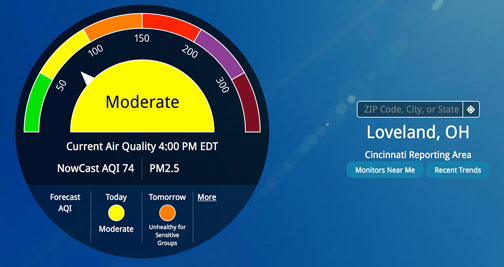
    You can check the current air quality by clicking on this image and entering a ZIP Code.

    If you find that having this type of local news adds value to your quality of life, kindly consider contributing to the cost of producing it.

  • Dirty air alert issued for Friday through Sunday for the Loveland Area

    Dirty air alert issued for Friday through Sunday for the Loveland Area

    Active children and adults, people with heart and lung disease, including asthma, and older adults should reduce prolonged or heavy outdoor exertion. 

    Air Quality Forecast for Friday July 3 until Sunday July 5

    The Southwest Ohio Air Quality Agency has issued an Air Quality Alert for Friday, July 3, 2020 through Sunday, July 5, 2020 for Butler, Clermont, Hamilton, and Warren counties in Ohio; Boone, Campbell, and Kenton counties in Kentucky; and Dearborn County in Indiana.

    You can help protect those most vulnerable

    You can help the situation locally by not using fire pits, lighting campfires, charcoal grills, or setting off fireworks.

    If you conserve electricity by turning out lights and unplugging unused appliances and electronics during the alert it will reduce the demand for coal-burning power plants in our region.


    • Take the bus, carpool, bike, or walk instead of drive.
    • Refuel your vehicle after 8 p.m.; do not top off when refueling and tighten the gas cap.
    • Do not idle your vehicle; exhaust contributes considerably to ozone formation.
    • Combine trips or eliminating unnecessary vehicle trips.
    • Keep your vehicle maintained with properly inflated tires and timely oil changes.
    • Avoid use of gasoline-powered lawn equipment on Air Quality Alert days.
    • Avoid use of oil-based paints and stains on Air Quality Alert days.
    • Never burn leaves or other yard trimmings.
    • Suspend use of fire pits, campfires and charcoal grills on Air Quality Alert days.
    • Conserve electricity by turning out lights and unplugging unused appliances and electronics.


    You can check the current air quality by clicking on this image and entering a ZIP Code.

    If you find that having this type of local news adds value to your quality of life, kindly consider contributing to the cost of producing it.

  • Air quality alert issued for Sunday because of smoke and dust plum from Africa’s Saharan desert

    Air quality alert issued for Sunday because of smoke and dust plum from Africa’s Saharan desert

    Active children and adults, people with heart and lung disease, including asthma, and older adults should reduce prolonged or heavy outdoor exertion. on Sunday. Some particles less than 10 micrometers in diameter can get deep into your lungs and some may even get into your bloodstream.

    Air Quality Forecast for 06/28/20
    Loveland, Ohio – Based on forecasted weather conditions and the impacts of the Saharan dust plume, the Southwest Ohio Air Quality Agency has issued an Air Quality Alert for Sunday, June 28.
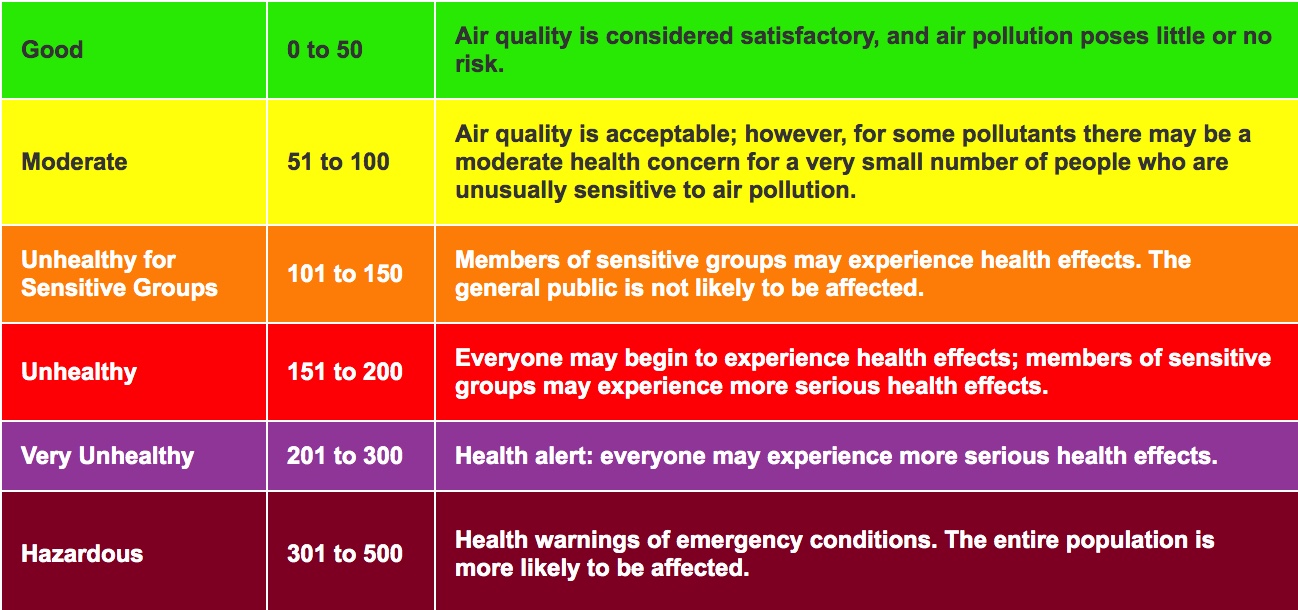
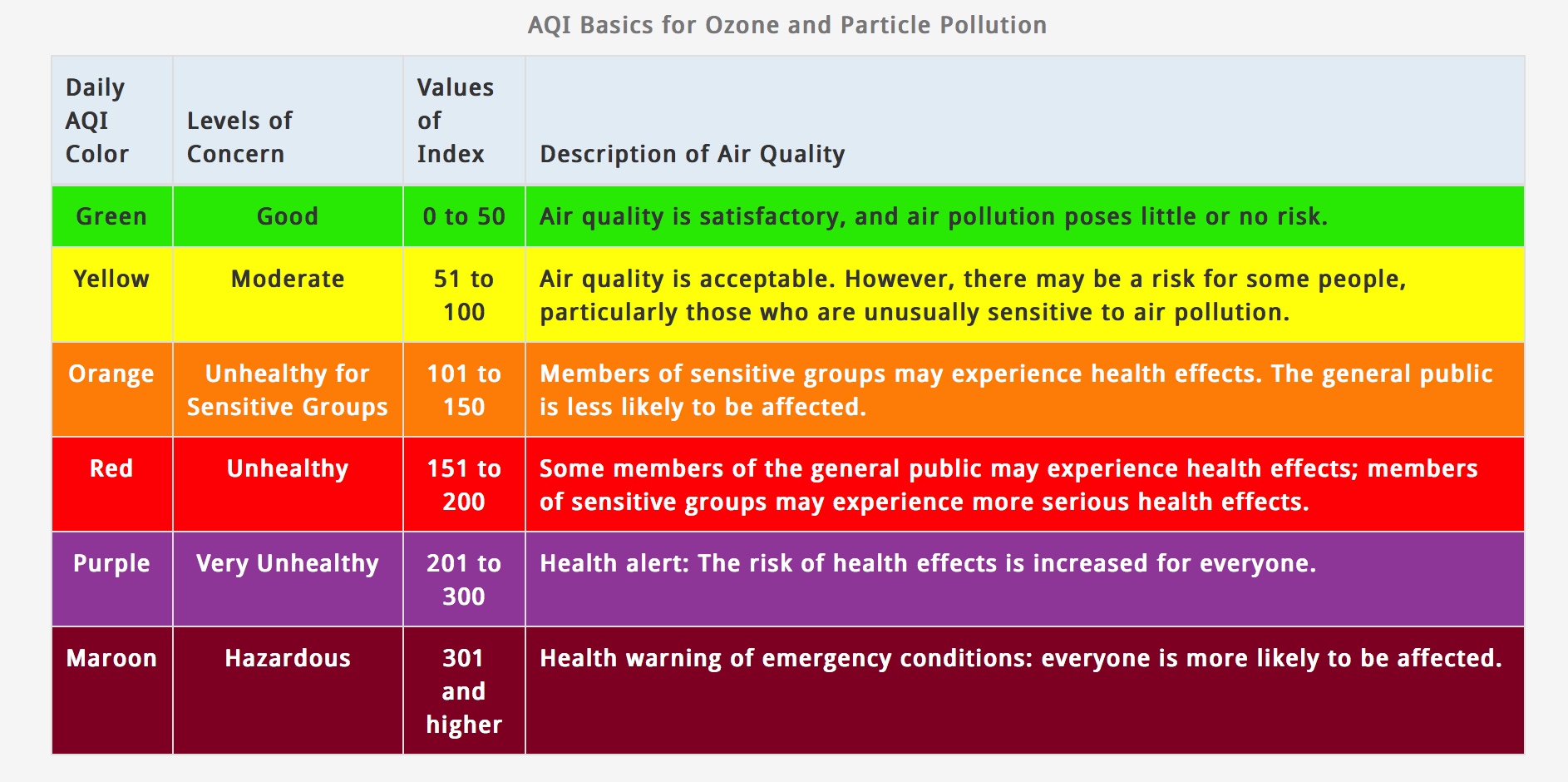
    The Agency expects levels of particulate matter in the “Unhealthy for Sensitive Groups” range.

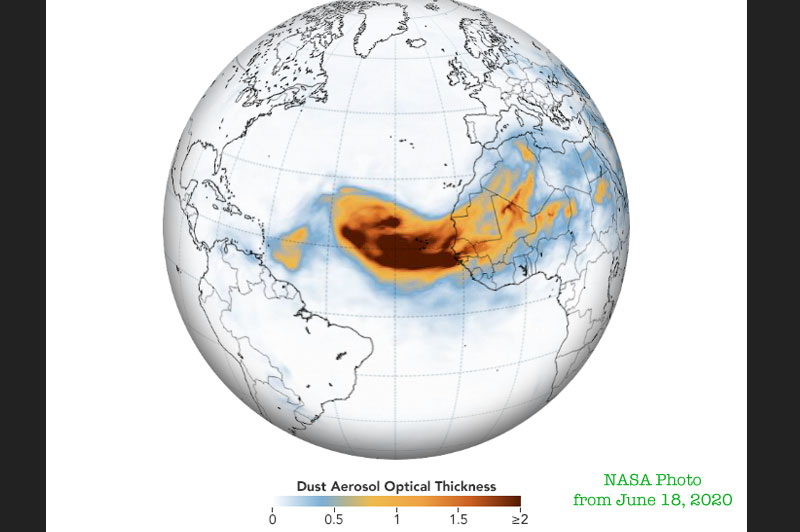
    CBS news reports: What’s been called the most significant dust cloud in 50 years has now shrouded the U.S. Gulf Coast in a thick, dusty haze. The dust layer, which originated in the Sahara desert and drifted across the Atlantic, is forecast to continue moving north and east through the weekend, impacting areas from Texas and Florida all the way up to as far north as the Canadian border.


    Both COVID 19 and the particulate matter from the Sahara attack the respiratory system. Those persons already considered part of the “vulnerable” population during the pandemic are most at risk, as well as infants and toddlers with developing lungs.

    You can help protect those most vulnerable

    You can help the situation locally by not using fire pits, lighting campfires, charcoal grills, or setting off fireworks.

    If you conserve electricity by turning out lights and unplugging unused appliances and electronics tomorrow it will reduce the demand for coal-burning power plants in our region.

    If you must drive a vehicle and have a choice, consider an electric, hybrid, or gasoline-powered – over diesel. Diesel fuel is notorious for emitting dirty particulate emissions.

    Use the vehicle that gets the best mileage and do not idle your vehicle.

    Combine trips or eliminate unnecessary vehicle trips.

    You can check the current air quality by clicking on this image and entering a ZIP Code.
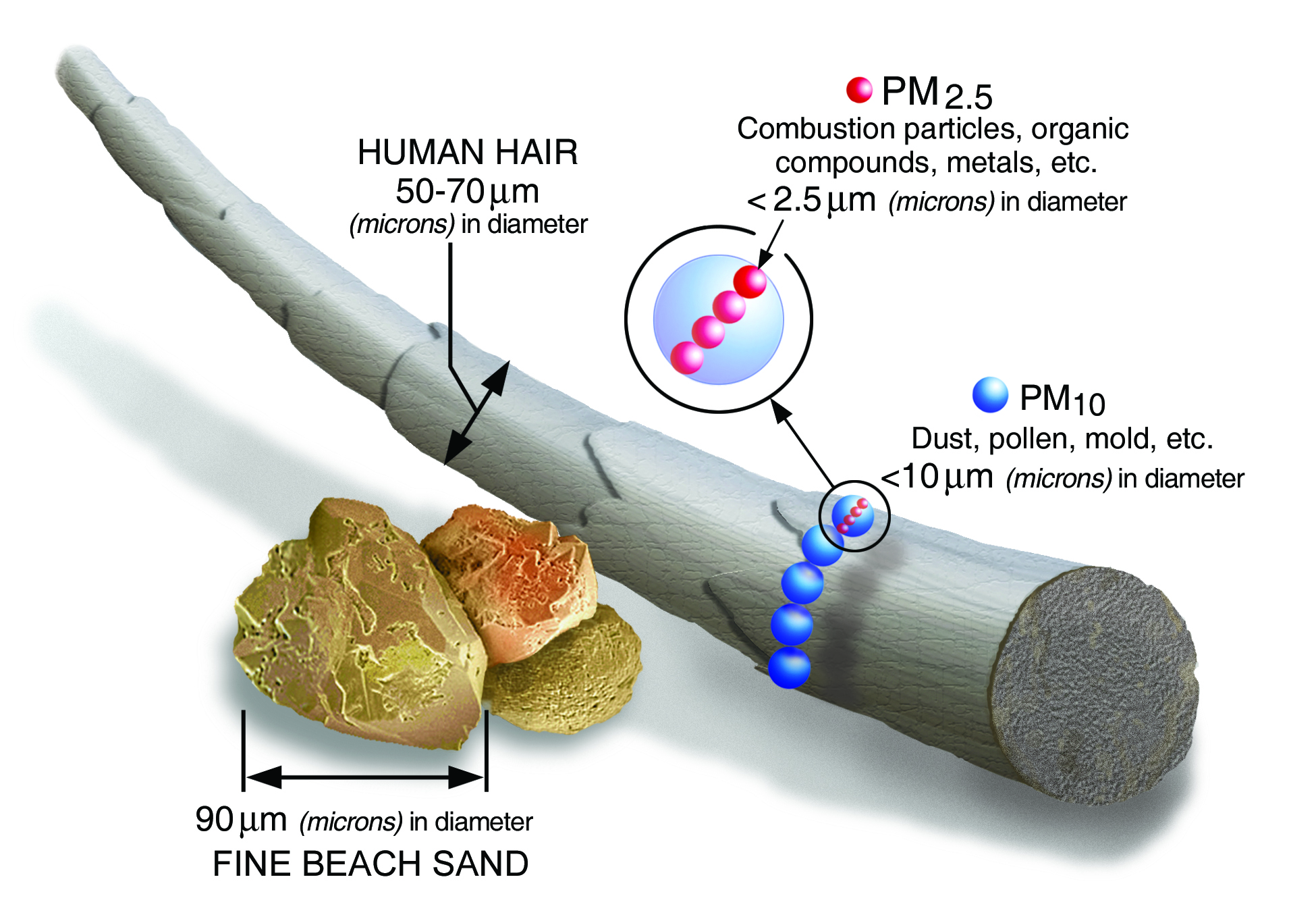
    What is PM, and how does it get into the air?Size comparisons for PM particlesSize comparisons for PM particles

    PM stands for particulate matter (also called particle pollution): the term for a mixture of solid particles and liquid droplets found in the air. Some particles, such as dust, dirt, soot, or smoke, are large or dark enough to be seen with the naked eye. Others are so small they can only be detected using an electron microscope.

    Particle pollution includes:

    • PM10 : inhalable particles, with diameters that are generally 10 micrometers and smaller; and
    • PM2.5 : fine inhalable particles, with diameters that are generally 2.5 micrometers and smaller.
      • How small is 2.5 micrometers? Think about a single hair from your head. The average human hair is about 70 micrometers in diameter – making it 30 times larger than the largest fine particle.

    Sources of PM

    These particles come in many sizes and shapes and can be made up of hundreds of different chemicals.

    Some are emitted directly from a source, such as construction sites, unpaved roads, fields, smokestacks or fires.

    Most particles form in the atmosphere as a result of complex reactions of chemicals such as sulfur dioxide and nitrogen oxides, which are pollutants emitted from power plants, industries and automobiles.

    What are the Harmful Effects of PM?

    Particulate matter contains microscopic solids or liquid droplets that are so small that they can be inhaled and cause serious health problems. Some particles less than 10 micrometers in diameter can get deep into your lungs and some may even get into your bloodstream. Of these, particles less than 2.5 micrometers in diameter, also known as fine particles or PM2.5, pose the greatest risk to health.

    Fine particles are also the main cause of reduced visibility (haze) in parts of the United States, including many of our treasured national parks and wilderness areas.

    Learn more about health and environmental effects

    If you find that having this type of local news adds value to your quality of life, kindly consider contributing to the cost of producing it.


  • Air Quality Alert issued for Saturday and Sunday

    Air Quality Alert issued for Saturday and Sunday

    Air Quality Index (AQI)
    105 on Saturday and 110 on Sunday
    Unhealthy for Sensitive Groups
    Health Message: Active children and adults, and people with lung disease, such as asthma, should reduce prolonged or heavy exertion outdoors.
    Actionday icon ACTION DAY


    Loveland, Ohio – The Southwest Ohio Air Quality Agency (Agency) has issued an Air Quality Advisory for Saturday and Sunday, August 3 and 4th, for Loveland, Butler, Clermont, Hamilton and Warren counties in Ohio; Boone, Campbell, and Kenton counties in Kentucky; and Dearborn County in Indiana. The Agency expects to see levels of ozone in the “unhealthy for sensitive groups” range on the Air Quality Index (AQI).

    On Air Quality Advisory days, everyone can help reduce ozone formation by taking the following actions:

    • Take the bus, carpool, bike, or walk instead of drive.
    • Refuel your vehicle after 8 p.m.; do not top off when refueling and tighten the gas cap.
    • Do not idle your vehicle; exhaust contributes considerably to ozone formation.
    • Combine trips or eliminating unnecessary vehicle trips.
    • Keep your vehicle maintained with properly inflated tires and timely oil changes.
    • Avoid use of gasoline-powered lawn equipment on Air Quality Advisory days.
    • Avoid use of oil-based paints and stains on Air Quality Advisory days.
    • Never burn leaves or other yard trimmings.
    • Suspend use of fire pits, campfires and charcoal grills on Air Quality Advisory days.
    • Conserve electricity by turning out lights and unplugging unused appliances and electronics.

    To learn more, visit:

    Website              SouthwestOhioAir.org
    Facebook            facebook.com/SouthwestOhioAir

    Twitter                twitter.com/swohioair

    Enviroflash       enviroflash.info/signup.cfm

  • Protecting children and the elderly during Air Quality Alert issued for Thursday

    Protecting children and the elderly during Air Quality Alert issued for Thursday

    The Ohio EPA is predicting that the ozone level will be 107 on Friday.

    Predicted Air Quality Index (AQI) for the Loveland Area
    107
    Unhealthy for Sensitive Groups
     

    Health Message: Active children and adults, and people with lung disease, such as asthma, should reduce prolonged or heavy exertion outdoors.


    Steps you should take to protect you or your children’s health

    Reduce prolonged or heavy outdoor exertion. Take more breaks, do less intense activities. Watch for symptoms such as coughing or shortness of breath. Schedule outdoor activities in the morning when ozone is lower.

    People with asthma should follow their asthma action plans and keep quick relief medicine handy.


    Do Your Share!

    • Carpool, bike or walk instead of driving.
    • Use your most fuel efficient vehicle and drive gently.
    • Keep your motorcycle in the garage. They don’t have the pollution controls modern passenger vehicles do.
    • Refuel your vehicle after 8 PM; do not top off when refueling and tighten the gas cap.
    • Avoid idling your vehicle. (Avoid drive-thru windows.)
    • Combine trips and eliminate unnecessary vehicle trips
    • Do not use of gasoline-powered lawn equipment
    • Do not use of oil-based paints and stains
    • Never burn leaves or other yard trimmings.
    • Do not use fire pits.
    • Conserve electricity by turning off unnecessary lights.
    • Turn your air conditioner thermostat up and use room fans for cooling.
    • Save the power boating for another day.
    • Initiate an Air Pollution Alert Day policy where you work; whether that be a company you own, an employee, a local government agency you work for, or a school district.

    Sign up  for Enviroflash and Start Receiving Your Air Quality Forecast


    Children and Air Pollution

    Children face special risks from air pollution because their lungs are growing and because they are so active and breathe in a great deal of air.

    Just like the arms and legs, the largest portion of a child’s lungs will grow long after he or she is born. Eighty percent of their tiny air sacs develop after birth. Those sacs, called the alveoli, are where the life-sustaining transfer of oxygen to the blood takes place. The lungs and their alveoli aren’t fully grown until children become adults. In addition, the body’s defenses that help adults fight off infections are still developing in young bodies. Children have more respiratory infections than adults, which also seems to increase their susceptibility to air pollution.

    Furthermore, children don’t behave like adults, and their behavior also affects their vulnerability. They are outside for longer periods and are usually more active when outdoors. Consequently, they inhale more polluted outdoor air than adults typically do.

    Read on at The American Lung Association…


    Take advantage of special savings on energy efficient lighting and other products offered by Duke Energy

    LEDs use up to 90% less energy than traditional bulbs

    LEDs last at least 15 times longer than traditional bulbs


  • Smog Alert for Friday: Here is how you can help protect children and the elderly

    Smog Alert for Friday: Here is how you can help protect children and the elderly

    The Ohio EPA is predicting that the ozone level will be 130 on Friday.

    Predicted Air Quality Index (AQI) for the Loveland Area
    130
    Unhealthy for Sensitive Groups
     

    Health Message: Active children and adults, and people with lung disease, such as asthma, should reduce prolonged or heavy exertion outdoors.


    Steps you should take to protect you or your children’s health

    Reduce prolonged or heavy outdoor exertion. Take more breaks, do less intense activities. Watch for symptoms such as coughing or shortness of breath. Schedule outdoor activities in the morning when ozone is lower.

    People with asthma should follow their asthma action plans and keep quick relief medicine handy.


    Do Your Share!

    • Carpool, bike or walk instead of driving.
    • Use your most fuel efficient vehicle and drive gently.
    • Keep your motorcycle in the garage. They don’t have the pollution controls modern passenger vehicles do.
    • Refuel your vehicle after 8 PM; do not top off when refueling and tighten the gas cap.
    • Avoid idling your vehicle. (Avoid drive-thru windows.)
    • Combine trips and eliminate unnecessary vehicle trips
    • Do not use of gasoline-powered lawn equipment
    • Do not use of oil-based paints and stains
    • Never burn leaves or other yard trimmings.
    • Do not use fire pits.
    • Conserve electricity by turning off unnecessary lights.
    • Turn your air conditioner thermostat up and use room fans for cooling.
    • Save the power boating for another day.
    • Initiate an Air Pollution Alert Day policy where you work; whether that be a company you own, an employee, a local government agency you work for, or a school district.

    Sign up  for Enviroflash and Start Receiving Your Air Quality Forecast


    Children and Air Pollution

    Children face special risks from air pollution because their lungs are growing and because they are so active and breathe in a great deal of air.

    Just like the arms and legs, the largest portion of a child’s lungs will grow long after he or she is born. Eighty percent of their tiny air sacs develop after birth. Those sacs, called the alveoli, are where the life-sustaining transfer of oxygen to the blood takes place. The lungs and their alveoli aren’t fully grown until children become adults. In addition, the body’s defenses that help adults fight off infections are still developing in young bodies. Children have more respiratory infections than adults, which also seems to increase their susceptibility to air pollution.

    Furthermore, children don’t behave like adults, and their behavior also affects their vulnerability. They are outside for longer periods and are usually more active when outdoors. Consequently, they inhale more polluted outdoor air than adults typically do.

    Read on at The American Lung Association…


    Take advantage of special savings on energy efficient lighting and other products offered by Duke Energy

    LEDs use up to 90% less energy than traditional bulbs

    LEDs last at least 15 times longer than traditional bulbs


  • Air Quality Alert extends into Sunday

    Air Quality Alert extends into Sunday

    The Ohio EPA is predicting that the ozone level will be 102 on Sunday.

    Predicted Air Quality Index (AQI) for the Loveland Area
    102
    Unhealthy for Sensitive Groups on Saturday
     

    Health Message: Active children and adults, and people with lung disease, such as asthma, should reduce prolonged or heavy exertion outdoors.


    Steps you should take to protect you or your children’s health

    Reduce prolonged or heavy outdoor exertion. Take more breaks, do less intense activities. Watch for symptoms such as coughing or shortness of breath. Schedule outdoor activities in the morning when ozone is lower.

    People with asthma should follow their asthma action plans and keep quick relief medicine handy.


    Do Your Share!

    • Carpool, bike or walk instead of driving.
    • Use your most fuel efficient vehicle and drive gently.
    • Keep your motorcycle in the garage. They don’t have the pollution controls modern passenger vehicles do.
    • Refuel your vehicle after 8 PM; do not top off when refueling and tighten the gas cap.
    • Avoid idling your vehicle. (Avoid drive-thru windows.)
    • Combine trips and eliminate unnecessary vehicle trips
    • Do not use of gasoline-powered lawn equipment
    • Do not use of oil-based paints and stains
    • Never burn leaves or other yard trimmings.
    • Do not use fire pits.
    • Conserve electricity by turning off unnecessary lights.
    • Turn your air conditioner thermostat up and use room fans for cooling.
    • Save the power boating for another day.
    • Initiate an Air Pollution Alert Day policy where you work; whether that be a company you own, an employee, a local government agency you work for, or a school district.

    Sign up  for Enviroflash and Start Receiving Your Air Quality Forecast


    Children and Air Pollution

    Children face special risks from air pollution because their lungs are growing and because they are so active and breathe in a great deal of air.

    Just like the arms and legs, the largest portion of a child’s lungs will grow long after he or she is born. Eighty percent of their tiny air sacs develop after birth. Those sacs, called the alveoli, are where the life-sustaining transfer of oxygen to the blood takes place. The lungs and their alveoli aren’t fully grown until children become adults. In addition, the body’s defenses that help adults fight off infections are still developing in young bodies. Children have more respiratory infections than adults, which also seems to increase their susceptibility to air pollution.

    Furthermore, children don’t behave like adults, and their behavior also affects their vulnerability. They are outside for longer periods and are usually more active when outdoors. Consequently, they inhale more polluted outdoor air than adults typically do.

    Read on at The American Lung Association…


    Take advantage of special savings on energy efficient lighting and other products offered by Duke Energy

    LEDs use up to 90% less energy than traditional bulbs

    LEDs last at least 15 times longer than traditional bulbs


  • Air Quality Alert issued for Friday

    Air Quality Alert issued for Friday

    The Southwest Ohio Air Quality Agency (Agency) has issued an Air Quality Advisory for Friday, June 29, for Butler, Clermont, Hamilton and Warren counties in Ohio; Boone, Campbell, and Kenton counties in Kentucky; and Dearborn County in Indiana.

    The Ohio EPA is predicting that the ozone level will be 115 on Friday.

    Predicted Air Quality Index (AQI) for the Loveland Area
    115
    Unhealthy for Sensitive Groups on Saturday
     

    Health Message: Active children and adults, and people with lung disease, such as asthma, should reduce prolonged or heavy exertion outdoors.


    Steps you should take to protect you or your children’s health

    Reduce prolonged or heavy outdoor exertion. Take more breaks, do less intense activities. Watch for symptoms such as coughing or shortness of breath. Schedule outdoor activities in the morning when ozone is lower.

    People with asthma should follow their asthma action plans and keep quick relief medicine handy.


    Do Your Share!

    • Carpool, bike or walk instead of driving.
    • Use your most fuel efficient vehicle and drive gently.
    • Keep your motorcycle in the garage. They don’t have the pollution controls modern passenger vehicles do.
    • Refuel your vehicle after 8 PM; do not top off when refueling and tighten the gas cap.
    • Avoid idling your vehicle. (Avoid drive-thru windows.)
    • Combine trips and eliminate unnecessary vehicle trips
    • Do not use of gasoline-powered lawn equipment
    • Do not use of oil-based paints and stains
    • Never burn leaves or other yard trimmings.
    • Do not use fire pits.
    • Conserve electricity by turning off unnecessary lights.
    • Turn your air conditioner thermostat up and use room fans for cooling.
    • Save the power boating for another day.
    • Initiate an Air Pollution Alert Day policy where you work; whether that be a company you own, an employee, a local government agency you work for, or a school district.

    Sign up  for Enviroflash and Start Receiving Your Air Quality Forecast


    Children and Air Pollution

    Children face special risks from air pollution because their lungs are growing and because they are so active and breathe in a great deal of air.

    Just like the arms and legs, the largest portion of a child’s lungs will grow long after he or she is born. Eighty percent of their tiny air sacs develop after birth. Those sacs, called the alveoli, are where the life-sustaining transfer of oxygen to the blood takes place. The lungs and their alveoli aren’t fully grown until children become adults. In addition, the body’s defenses that help adults fight off infections are still developing in young bodies. Children have more respiratory infections than adults, which also seems to increase their susceptibility to air pollution.

    Furthermore, children don’t behave like adults, and their behavior also affects their vulnerability. They are outside for longer periods and are usually more active when outdoors. Consequently, they inhale more polluted outdoor air than adults typically do.

    Read on at The American Lung Association…


    Take advantage of special savings on energy efficient lighting and other products offered by Duke Energy

    LEDs use up to 90% less energy than traditional bulbs

    LEDs last at least 15 times longer than traditional bulbs


  • Air Quality Alert for Memorial Day

    Air Quality Alert for Memorial Day

    Reduce prolonged or heavy outdoor exertion. Take more breaks, do less intense activities. Watch for symptoms such as coughing or shortness of breath. Schedule outdoor activities in the morning when ozone is lower.

    People with asthma should follow their asthma action plans and keep quick relief medicine handy.


    Air Quality Forecast for Friday, May 25

    (Click the Real-Time Air Quality link and watch in real-time as the pollution rolls across our region.)

    Unhealthy for Sensitive Groups
    Health Message: Active children and adults, and people with lung disease, such as asthma, should reduce prolonged or heavy exertion outdoors.
    ACTION DAY


    Do Your Share!

    • Carpool, bike or walk instead of driving.
    • Use your most fuel efficient vehicle and drive gently.
    • Keep your motorcycle in the garage. They don’t have the pollution controls modern passenger vehicles do.
    • Refuel your vehicle after 8 PM; do not top off when refueling and tighten the gas cap.
    • Avoid idling your vehicle. (Avoid drive-thru windows.)
    • Combine trips and eliminate unnecessary vehicle trips
    • Do not use of gasoline-powered lawn equipment
    • Do not use of oil-based paints and stains
    • Never burn leaves or other yard trimmings.
    • Do not use fire pits.
    • Conserve electricity by turning off unnecessary lights.
    • Turn your air conditioner thermostat up and use room fans for cooling.
    • Save the power boating for another day.
    • Initiate an Air Pollution Alert Day policy where you work; whether that be a company you own, an employee, a local government agency you work for, or a school district.

    Sign up  for Enviroflash and Start Receiving Your Air Quality Forecast


    Children and Air Pollution

    Children face special risks from air pollution because their lungs are growing and because they are so active and breathe in a great deal of air.

    Just like the arms and legs, the largest portion of a child’s lungs will grow long after he or she is born. Eighty percent of their tiny air sacs develop after birth. Those sacs, called the alveoli, are where the life-sustaining transfer of oxygen to the blood takes place. The lungs and their alveoli aren’t fully grown until children become adults. In addition, the body’s defenses that help adults fight off infections are still developing in young bodies. Children have more respiratory infections than adults, which also seems to increase their susceptibility to air pollution.

    Furthermore, children don’t behave like adults, and their behavior also affects their vulnerability. They are outside for longer periods and are usually more active when outdoors. Consequently, they inhale more polluted outdoor air than adults typically do.

    Read on at The American Lung Association…


    Take advantage of special savings on energy efficient lighting and other products offered by Duke Energy

    LEDs use up to 90% less energy than traditional bulbs

    LEDs last at least 15 times longer than traditional bulbs


  • Dirty Air Alert Monday

    Dirty Air Alert Monday

    It will take action by each of us Monday to lower the risk to our children

    Loveland, Ohio – The Southwest Ohio Air Quality Agency has issued an Air Quality Advisory on Monday for Loveland. and the surrounding counties of Butler, Clermont, Hamilton and Warren in Ohio, and Boone, Campbell and Kenton counties in Kentucky. 

    The Agency expects to see levels of ozone in the “unhealthy for sensitive groups” range on the Air Quality Index (AQI).
    Health Message: Active children and adults, and people with lung disease, such as asthma, should reduce prolonged or heavy exertion outdoors.


    Use this Real-Time Air Quality link to see the current air quality and a map of the area that “loops” throughout the day showing smog moving into and out of the Loveland area.
     

    On Air Quality Advisory days, everyone can help reduce ozone formation by taking the following actions:

    • Bike, or walk instead of drive.
    • Refuel your vehicle after 8 p.m.; do not top off when refueling and tighten the gas cap.
    • DON’T RIDE YOUR MOTORCYCLE
    • Do not idle your vehicle; exhaust contributes considerably to ozone formation.
    • Combine trips or eliminating unnecessary vehicle trips.

    • Avoid use of gasoline-powered lawn equipment on Air Quality Advisory days.
    • Avoid use of oil-based paints and stains on Air Quality Advisory days.
    • Never burn leaves or other yard trimmings.
    • Suspend use of fire pits, campfires and grills on Air Quality Advisory days.
    • Conserve electricity by turning out lights and unplugging unused appliances and electronics.


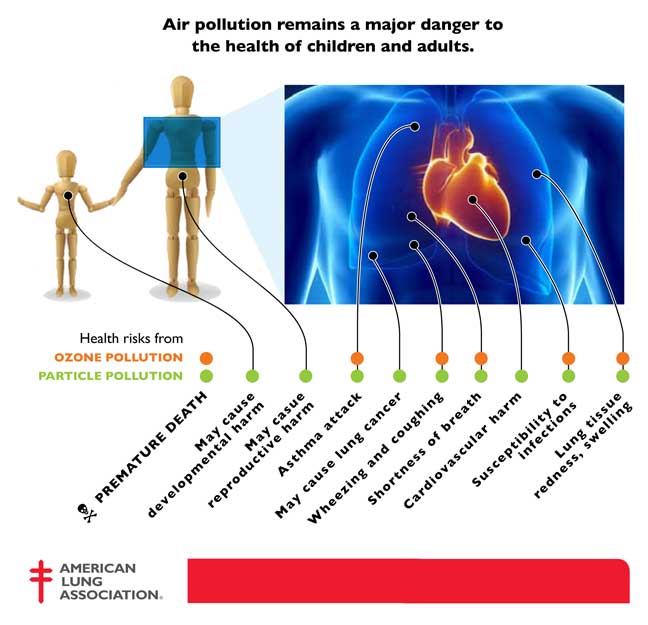
    Children face special risks from air pollution because their lungs are growing and because they are so active Air-pollution-health-dangers

    Just like the arms and legs, the largest portion of a child’s lungs will grow long after he or she is born. Eighty percent of their tiny air sacs develop after birth. Those sacs, called the alveoli, are where the life-sustaining transfer of oxygen to the blood takes place. The lungs and their alveoli aren’t fully grown until children become adults.1 In addition, the body’s defenses that help adults fight off infections are still developing in young bodies.2 Children have more respiratory infections than adults, which also seems to increase their susceptibility to air pollution.

    Furthermore, children don’t behave like adults, and their behavior also affects their vulnerability. They are outside for longer periods and are usually more active when outdoors. Consequently, they inhale more polluted outdoor air than adults typically do.

    Air Pollution Increases Risk of Underdeveloped Lungs

    A Southern California Children’s Health study looked at the long-term effects of particle pollution on teenagers. Tracking 1,759 children who were between ages 10 and 18 from 1993 to 2001, researchers found that those who grew up in more polluted areas face the increased risk of having underdeveloped lungs, which may never recover to their full capacity. The average drop in lung function was 20 percent below what was expected for the child’s age, similar to the impact of growing up in a home with parents who smoked.

    Community health studies are pointing to less obvious, but serious effects from year-round exposure to ozone, especially for children. Scientists followed 500 Yale University students and determined that living just four years in a region with high levels of ozone and related co-pollutants was associated with diminished lung function and frequent reports of respiratory symptoms. 6 A much larger study of 3,300 school children in Southern California found reduced lung function in girls with asthma and boys who spent more time outdoors in areas with high levels of ozone.

    Read more from the American Lung Association

    For 17 years, the American Lung Association has analyzed data from official air quality monitors to compile the State of the Air report. The more you learn about the air you breathe, the more you can protect your health and take steps to make our air cleaner and healthier.

    In American Lung Association’s, Report Card: Ohio, Clermont, Hamilton, and Warren counties all receive an “F”
    Cincinnati Air Quality a Mixed Bag, Finds 2016 ‘State of the Air’ Report


    Step up to Curb Pollution in Our Community.

    • Drive less. Combine trips, walk, bike, carpool or vanpool, and use buses, subways or other alternatives to driving. Vehicle emissions are a major source of air pollution. Support community plans that provide ways to get around that don’t require a car, such as more sidewalks, bike trails and transit systems.
    • Use less electricity.Turn out the lights and use energy-efficient appliances. Generating electricity is one of the biggest sources of pollution, particularly in the eastern United States.
    • Don’t burn wood or trash. Burning firewood and trash is among the largest sources of particle pollution in many parts of the country. If you must use a fireplace or stove for heat, convert your woodstove to natural gas, which has far fewer polluting emissions. Compost and recycle as much as possible and dispose of other waste properly; don’t burn it. Support efforts in your community to ban outdoor burning of construction and yard wastes. Avoid the use of outdoor hydronic heaters, also called outdoor wood boilers, which are frequently much more polluting than woodstoves.
    • Make sure your local school system requires clean school buses, which includes replacing or retrofitting old school buses with filters and other equipment to reduce emissions. Make sure your local schools don’t idle their buses, a step that can immediately reduce emissions.


    Now Enrolling at All About Kids at Wards Corner today!