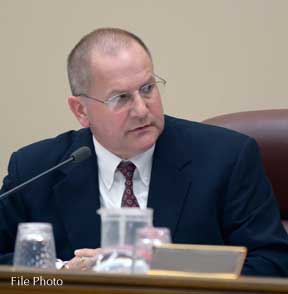
Loveland City Manager Dave Kennedy was given the authority to extend the DORA for 60-days.
Loveland, Ohio – The City of Loveland’s Designated Outdoor Refreshment Area (DORA), which previously allowed for the consumption of alcohol within specific boundaries in Historic Downtown only during specified events was modified in May from being in effect only during specified events to being in effect seven days a week from noon to 11 PM.
The modification that went into effect in May was set to expire today.
The DORA allows for the consumption of alcohol within specific boundaries in Historic Downtown.
As provided within the legislation previously adopted by City Council, the City Manager was given the authority to extend the DORA for an additional 60-days.
Under that authorization, City Manager Dave Kennedy announced yesterday that he has extended the seven-day DORA until September 5.
Q: What is a DORA?
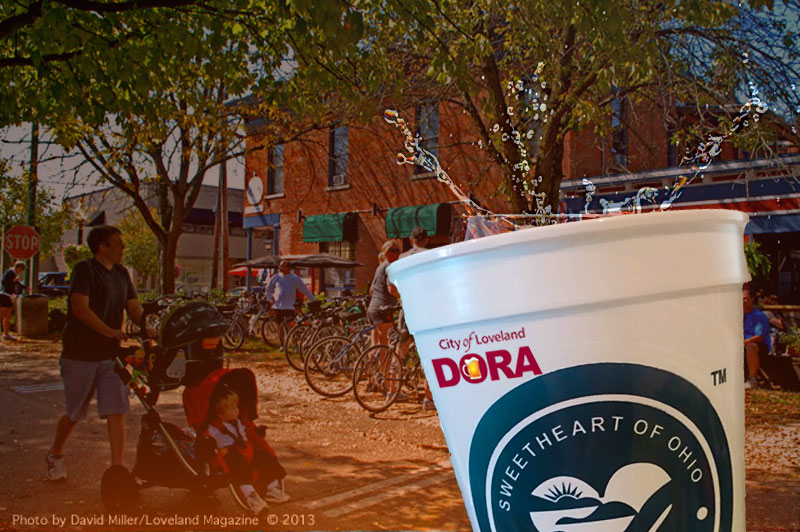
A: A Designated Outdoor Refreshment Area (DORA) is a specially designated area that allows patrons of an establishment serving alcohol to take an open container of alcohol out of the business and walk around the public streets. Drinks must be in special cups designated as DORA cups. These cups can be obtained at all participating alcohol establishments inside the DORA.
Q: May a person bring their own alcohol into a DORA?
A: No. Ohio open container law prohibits a person from having an opened container of alcohol on a permit premises that was not purchased from that permit holder even if the permit premises are within a DORA purchased elsewhere.
Q: Do I have to use special DORA Cups?
A: Yes. Any open alcohol which leaves an establishment must be in designated DORA cups. And, DORA cups must be empty to enter an establishment. Cups can be obtained at any participating establishment.
Q: What types of alcoholic beverage can I have in my DORA cup?
A: Beer, wine and liquor are allowable beverages to be consumed in designated DORA cups.
Q: Can I walk anywhere with my DORA cup?
A: Patrons can enjoy their beverage within the designated DORA Boundaries which are marked by signage.
Businesses serving DORA beverages will have the below sticker decal displayed:
Check out these savings from All American Gutter Protection. All American Gutter Protection offers the best micro mesh gutter guards and gutters at highly competitive pricing.
Loveland, Ohio – Loveland Educating Against Alcohol and Drugs (LEAAD) will host its first community tailgate on Thursday, February 7, before the Loveland varsity men’s basketball game against the Milford Eagles. The event, open to all community members, is supported by many local churches and businesses and offers free food, raffles, informational booths and prizes to the first 50 students who attend. Spearheading the event is Katie Sedziol, who joined Loveland City Schools District as LEAAD program coordinator earlier in the school year.
“The purpose of this event is to offer a healthy alternative activity to drugs and alcohol, and provide an inviting atmosphere to educate about LEAAD and our vision,” said Sedziol. “We hope the tailgate will serve as an educational experience to show just how important it is to have regular events that youth in our community can attend, and that they can be around others while making healthy, safe and drug-free choices.”
The Search Institute – a nonprofit that bridges research and practice to help young people be and become their best selves – has identified 40 building blocks of healthy development that help young people grow up healthy, caring and responsible. Based upon these principles, LEAAD wants to focus on the importance of the “constructive use of time” component, specifically that young people spend three or more hours per week in sports, clubs or organizations at school and/or in the community. (https://www.search-institute.org/, December 2018). The vision of LEAAD is to provide students with direction, education and awareness of healthy choices in a positive environment, and support children and families in prevention and intervention strategies through community and school activities based on best practices research, data and policy.
“Our LEAAD coalition strongly believes this event will be the perfect opportunity to role model healthy behaviors and reinforce positive community norms,” said Sedziol. “It is our goal to showcase Loveland asa strongleader in healthy choices and lifestyles, especially when it comes to ouryouth. A gathering to celebrate and support our youth before a game is a protective factorthat we hope all in the community want to be a part of!Come on out to support your Tigers, have a good time, and learn more about LEAAD.”
RP Diamond is the exclusive retailer of LOVELAND HIGH SCHOOL SPIRIT WEAR Welcome to RP Diamond Printing & Embroidery located at 370 Loveland Madeira Road.
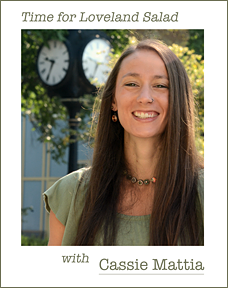
My second feature story in a continuing search for Loveland’s kindest, sweetest people and what they’re made of. What is our DNA match?
Cassie Mattia is a columnist for Loveland Magazine and lives in Historic Downtown.
Loveland, Ohio– The City of Loveland is known for many things such as its beautiful scenery, its historic buildings, and the famous Loveland Bike Trail, but what a lot of people don’t know is Loveland has become one of the top destination spots in Ohio for families. And the Bersani family is dedicated to that family-friendly atmosphere. What could be better than grabbing an ice cream cone from Loveland Sweets after a sunny afternoon canoeing on the Little Miami River? Well, that’s something Loveland Canoe and Kayak Owners Mark and Robyn Bersani couldn’t agree more with!
Mark and Robyn live right above their canoe and kayak shop on Karl Brown Way in Historic Downtown Loveland with their 5 dogs and their daughter Elena and quite frankly couldn’t be happier with where the journey to owning Loveland Canoe and Kayak has taken them.
The Bersanis knew they had some challenges ahead of them, but were committed to making Loveland Canoe and Kayak a family affair and family-friendly.
“We were not canoeists or kayakers we were outdoors people. We loved being outdoors and doing physical things,” Bersani said, “We were training for the Chicago Marathon in 2003 and we were running on the Loveland Bike Trail and Robyn said ‘Hey the Canoe business is for sale we should buy it! Robyn said ‘I’m off in the summer I don’t like to sit still and we will hire some kids and we will do it!’ We went into the process of negotiation. Initially, we were not going to get it because someone else had a better offer than things fell through and they came back to us and we put together an offer and essentially ‘We bought a Zoo,” Bersani explained. The business was formally owned by Bruce Crutchfield who at one time had a caged chimpanzee at the business named Sam who canoeists and locals fed a regular diet of beer and cigarettes.
The Bersanis didn’t always live in Loveland, in fact, they lived in Buffalo where their parents went to school together, which led them to eventually meet each other in high school.
Elena Bersani is not only an incredible hard-worker, an outstanding runner and Loveland’s very own “Sweetheart,” according to her parents, but she also has a soft spot for the Loveland-Symmes Fire Department.
“It took me 7 years to get a date,” Bersani joked, “But it was well worth the wait! We moved to Dallas a year after we got married. I started in Telecom and Robyn started teaching then I got transferred to New Orleans. We moved back up here to Cincinnati not knowing much about it except that we both had driven through it and thought it was beautiful coming from the Kentucky side,” Mark Bersani said, “Robyn started teaching in the Kings district and at that point, I had been in sales for 25 years in Telecommunications.”
After finally closing on the canoe and kayak property right before Memorial Day in 2004, the Bersanis knew they had some challenges ahead of them, but were committed to making Loveland Canoe and Kayak a family affair.
It was a challenge early on because Robyn and I had a vision for the business that was different from what others had seen it as before we took over,” Mark Bersani explained, “We wanted it to be a place where families could come and enjoy nature. At the time people knew the place as a sort of ‘Cabrewing’ venue. It was frustrating at times as we were trying to change the culture and dynamics. It wasn’t always easy but we were committed.”
The Bersani’s daughter Elena admitted at a young age of just 11 years old some of the people that came through Loveland Canoe and Kayak in the beginning quite frankly scared her.
Robyn Bersani was the first to experience what a difference the family-friendly atmosphere they created with Loveland Canoe and Kayak made for many locals and out-of-towners.
“It took 2 or 3 years of education, policy enforcement and talking with the local authorities to see what we could do to achieve our vision of that family-friendly environment,” Mark Bersani said, “People told me if you do away with alcohol your business is going to be gone. I was told if you make the decision to go alcohol free and you stick with it you’re going to have a couple of years that are going to be really difficult and then it’s going to get better because people are going to find out that they can bring their families, sports teams and scout troops because of what the business stands for. People from Loveland started pulling me aside after they saw what we were doing and would tell me thank you for doing this because they used to have to go an hour up the river to do this with their families because they did not want to be around the alcohol and what it brought along with it,” he explained.
Robyn Bersani was the first to experience what a difference the family-friendly atmosphere they created with Loveland Canoe and Kayak made for many locals and out-of-towners.
“Five of the original kids we hired stayed with us for 9 summers because of the atmosphere we created. My principal at Kings called me in the office and I thought she was going to tell me I can’t be a teacher and run the canoe and kayak business and she called me in and said ‘My son needs a job!,” Robyn Bersani said, “It’s the little things like the comments from people saying, ‘Thank you so much this was the best day my son and I have ever had.’ When people get out there on the river they realize how good it makes them feel. Our vision always was to get families out together in nature,” she said.
Robyn Bersani, who has now been a 3rd grade teacher for 28 years at Kings, knows a little something about inspiring our younger generation to not only reach their goals but to not be afraid to try something new even if they don’t succeed at it the first time.
“It took 2 or 3 years of education, policy enforcement and talking with the local authorities to see what we could do to achieve our vision of that family-friendly environment,” Mark Bersani said.
“I always wanted to be a teacher from a young age, but my parents pushed me to do something different, so I got a bachelor’s degree in psychology,” Robyn Bersani explained, “But then I thought to myself what better way to serve the world than to educate children. I want to prove things to the world like there are more important things than how an 8-year-old scores on a standardized test!”
Of course, Robyn Bersani isn’t the only one in the Bersani family making an impact on the Loveland community; both Mark and Elena Bersani do their fair share of helping and encouraging others. Mark is on the board of the Adventure Crew, which is a non-profit where the objective is to get urban kids in outdoor activities.
“We get about 125 kids out into nature and get them to experience things they would never get to experience otherwise,” Mark Bersani said, “This year they have skiing on the curriculum, they ,of course, will have biking on the Loveland Bike Trail and kayaking in the Spring and the Fall. This is all funded through donations and grants.”
“Elena has a place in her heart for firemen so she will make cookies and brownies for them all the time,” Robyn Bersani said.
Mark also takes part in what they call a “River Clean-up,” where they spend the day taking trash out of the State and National Scenic Little Miami River.
“We are big on doing what we can to stop the trash that is thrown into the river. With the River Clean-up, I have found a hot tub, a boat and one time I pulled out 65 tires!”, Marl Bersani said, “People don’t realize that 90 percent of trash and plastic in the oceans comes from rivers and streams. We used to get our dumpster emptied twice a week now it’s once every 4 to 5 weeks, so we have definitely made an improvement.”
Elena Bersani is not only an incredible hard-worker, an outstanding runner and Loveland’s very own “Sweetheart,” according to her parents, but she also has a soft spot for the Loveland-Symmes Fire Department.
“Elena has a place in her heart for firemen so she will make cookies and brownies for them all the time,” Robyn Bersani said, “I think she recognizes how much they have done for our family and our business and of course all they do for the Loveland community. The Fire Department has really looked out for us.”
Elena ran cross country for Kings and made it to State in 2010. She also attended the Art Institute where she focused on her love for baking, which led her to win “Best in Show” for her cannoli’s.
“Both of our girls have worked in the business for a number of years. They have unbelievable work ethics that we tried to instill through our example,” Robyn Bersani said, “It has always been important to us to be good role models and of course get involved in the community. We do a lot of things to somehow give back to the community. We try to donate to the community and local non-profits as much as we can so they can further their causes.”
The Bersani family have also been a part of some very successful fundraisers, such as Paddlefest, where 2,000 people paddle along the Ohio River, in which proceeds go towards the Adventure Crew, and one of Loveland’s most famous events the Frogman 5k. Last year in October the Bersani’s took part in a Film Festival that was held in Loveland’s very own Nisbet Park, where proceeds went towards the Little Miami Conservatory.
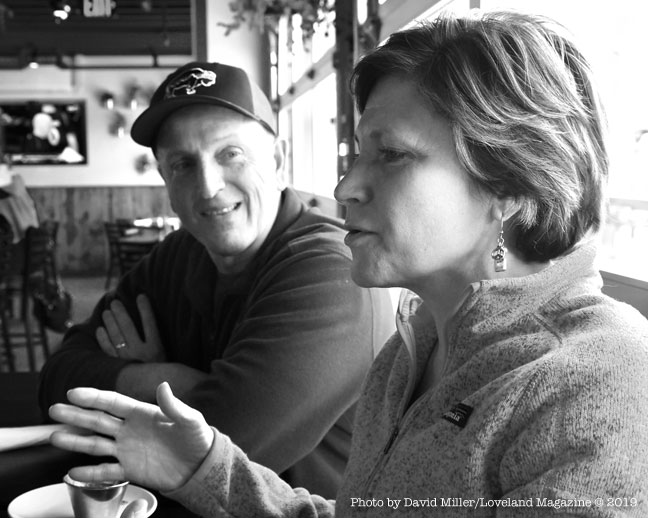
Loveland Magazine columnist Cassie Mattia interviewing the Bersani family. She writes, “Mark and Robyn live right above their canoe and kayak shop on Karl Brown Way in Historic Downtown Loveland with their 5 dogs and their daughter Elena and quite frankly couldn’t be happier with where the journey to owning Loveland Canoe and Kayak has taken them.”
“It’s the big picture. It’s about being involved in the community as a business owner and resident. We want to connect with people and share resources. Everyone in this community really watches out for each other,” Robyn Bersani said, “We love telling the story of Loveland!”
The Bersanis are looking forward to the up and coming canoe and kayaking season and hope to see families from all over Ohio come and experience the beauty of Loveland and the Little Miami River. If you would like to learn more about the Loveland Canoe and Kayak you can visit their Facebook page, their website at lovelandcanoe.com or check out their location at 174 Karl Brown Way.
Read more about the Bersani family adventures…
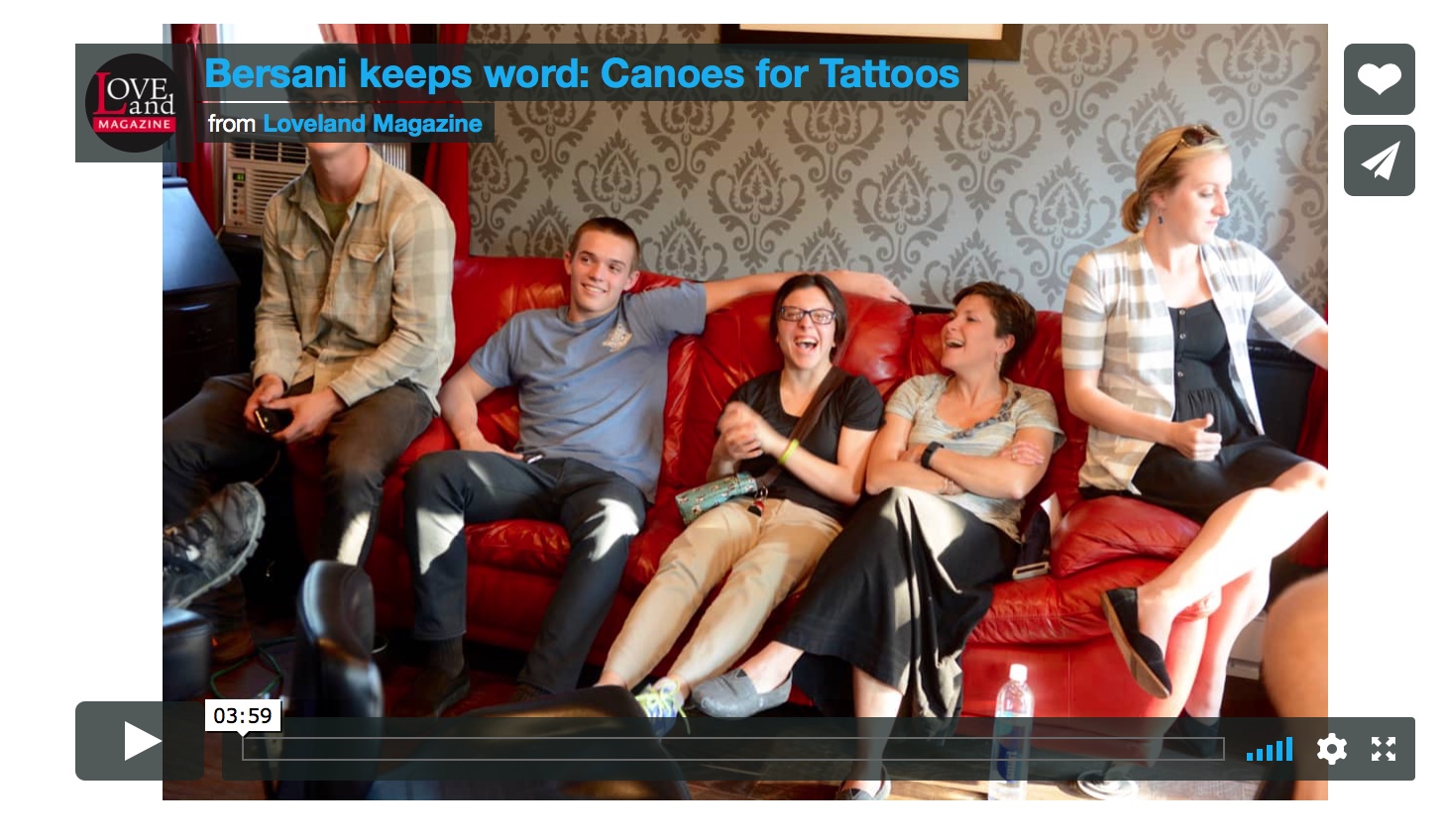
Loveland, Ohio (Nov 9, 2015) – Mark Bersani and his wife Robyn own Loveland Canoe and Kayak on the bank of the State and National Scenic, Little Miami River in downtown. This Summer the weather was not kind to their business. Too much rain and too often, keeping river levels unsafe for canoers and kayakers. Business was dismal.
Mark’s staff made a dare. If they could muster enough customers to match last season, Mark would get tattooed, a tattoo like many of his young staff had already gotten.
This LOVELAND MAGAZINE TV VIDEO is the rest of that story….
If you are concerned about neighborhood safety, then you should NOT support Issue One on the ballot this fall. It will hinder law enforcement, prosecutors, and judges in their ability to deal with the biggest drug crisis in this state’s history.As a result, it will result in more drugs on the streets, more crime, more deaths from overdoses, and more costs to local communities and taxpayers.
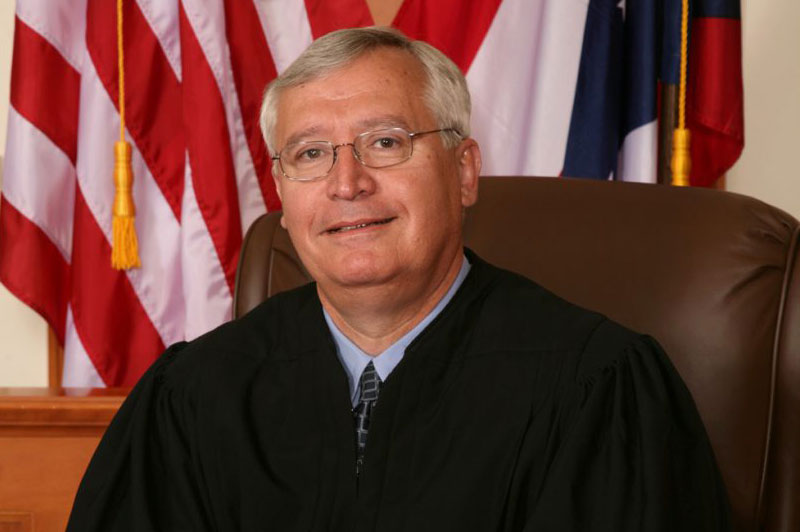
Jerry R. McBride is a Clermont County, Ohio, Common Pleas Court Judge
Judges have the ability to comment on issues that affect the administration of justice. Issue One will have a devastating effect on the administration of justice on Ohio. As one trial judge, this is my take on Issue One:
ISSUE ONE DOES NOT BELONG IN THE STATE CONSTITUTION
A state constitution should set forth the powers and functions of the branches of government, certain general values and principles upon which the citizens of the state generally agree, and the basic rights which are afforded to the citizens of the state. It should set forth matters which are so fundamental and important that they will not be subject to change over time. This proposed constitutional amendment does not in any way belong in a state constitution. It seeks to change sentencing law as it exists in the state of Ohio based on an assumption that change needs to be made. If change does need to be made, then it should be made through the process of enacting legislation, as is done on a regular basis in this state, and not through a constitutional amendment.
ISSUE ONE DIRECTLY CONTRADICTS THE CONCEPT OF TRUTH IN SENTENCING AND IGNORES THE RIGHTS OF VICTIMS.
There should be truth in sentencing, not lip service to truth in sentencing. Issue One allows a credit to be given by the Department of Rehabilitation and Correction for participation in rehabilitative, work, or educational programming of up to 25% of a sentence plus 30 days. While this may sound good at first glance, it is contrary to the concept of truth in sentencing. When a victim is told what a sentence will be, he/she should be able to rely on that being the sentence unless a hearing is scheduled on a possible reduction in the sentence. Why should a sentence be reduced just because an inmate “participates” in programming? Isn’t that the bare minimum that should be expected from an inmate? Why should an inmate be rewarded for doing the bare minimum? If a sentence is to be reduced, it should be reduced by the sentencing judge based upon an assessment that the risk of recidivism has been reduced, not because somebody has shown up to work. And if the judge makes the assessment that the sentence should be reduced, a hearing will be required and the victim will have an opportunity to be present and to be heard, which is the way it should be. Additionally, what does it mean to “participate” in these activities? This essentially allows the prison authorities to reduce a judge’s sentence,and it should be the judge who imposed a sentence who determines whether that sentence should be reduced.
ISSUE ONE IS DANGEROUS IN THAT IT INTERFERES WITH THE JUSTICE SYSTEM’S ABILITY TO DEAL WITH THE DRUG CRISIS
It is highly inappropriate in the midst of the biggest crisis in this state in terms of drug abuse for the possession and use of dangerous drugs to be treated essentially the same as minor traffic and criminal offenses. Possession of dangerous drugs leads to overdoses, to more serious criminal offenses, to deaths. The possession and use of dangerous drugs are not minor offenses to the persons who are addicted to drugs, to the victims of crime involving persons under the influence of drugs, to the parents and family members who are praying that their loved ones will not overdose and die. To suggest that we need to include treatment in our approach to this drug crisis is highly appropriate, and in fact it is already being done routinely across this state. However, to suggest that we should reduce the level of these offenses so that they are no longer classified as serious offenses is highly inappropriate.
ISSUE ONE TREATS USE OF DANGEROUS DRUGS AS LESS SERIOUS THAN JUST ABOUT EVERY OTHER CRIME
The proponents of the constitutional amendment, in saying that a jail sentence cannot be imposed, are saying that possession and use of such drugs as heroin, methamphetamine, and cocaine should be treated more lightly than reckless driving, shoplifting, lying to a police officer, gambling, and persistent disorderly conduct, all of which can result in the imposition of jail sentences. Is this really the message that we should be sending to drug addicted adults who represent a risk of committing more serious offenses as long as they persist in the use of dangerous drugs?
ISSUE ONE ELIMINATES THE ABILITY OF A JUDGE TO IMPOSE A JAIL SENTECE FOR A FIRST OR SECOND POSSESSION OFFENSE, EVEN IF THE DRUG IS HEROIN, METHAMPHETAMINE, OR COCAINE
In all likelihood, probation will be appropriate for a person who commits a drug possession offense which is the first or second within a 24-month period. However, that will not always be the case. For instance, probation may not be appropriate at all if the offense is committed at the same time as a more serious offense such as a burglary or an assault. Similarly, probation may not serve the purpose of protecting the public if the drug possession or use offense is committed by a convicted sex offender for whom use of a dangerous drug or alcohol represents a significant risk of reoffending and for whom intermediate sanctions may provide no real protection to the community. As for the term probation, does that include treatment in a halfway house or in a lock-down community based correctional facility?
If it doesn’t include residential treatment, including lockdown residential treatment, ittakes away some of the most effective tools which can be used in trying to rehabilitate an offender. Needless to say, the problem with creating an absolute standard that requires that a person who uses or possesses drugs receive the lowest level of sanction available is that applying that standard under the facts of given case may not be consistent with the seriousness of the offense or the likelihood of recidivism.
ISSUE ONE PUTS HANDCUFFS ON JUDGES IN THEIR ABILITY TO GET OFFENDERS TO STOP USING DRUGS
The proposed amendment would eliminate the possibility of imposing a jail sentence at all for a violator on a first or second drug possession or use offense within 24 months and would eliminate the possibility of a court imposing a prison sentence for a felony violator unless the violator commits a new criminal offense. However, this leads to some very real dilemmas. If that is to be the law, what is a court to do with someone who simply refuses to attend treatment or to comply with any of the intermediate sanctions or who simply says that he/she will not comply with anything that the court orders? What is a court to do with someone who says he/she will comply with community control sanctions but then refuses to do anything which is ordered? Under the language of the proposed constitutional amendment, a felony offender could simply tell a judge at the time of the sentencing hearing that he/she will comply with the community control sanctions that are ordered, and then after being placed on community control, refuse to do anything that the court orders. At that point, a prison sentence could not be imposed. What is the possible sense in that? How does that serve to protect the public? The probation department has a statutory duty to report violations to the court, but if the offender continually absconds or fails to comply with the sanctions that are ordered, how can the probation department perform that function? The answer is very simple- it can’t.
ISSUE ONE JUST GIVES LIP SERVICE TO THE CONCEPT OF GRADUATED SANCTIONS
Issue One strips away the full range of tools which enable a judge or probation department to be effective in not only rehabilitating an offender, but also in protecting the public. It is difficult to argue with the concept of graduated responses, and the use of intermediate sanctions, by courts and probation departments. It is consistent with the use of evidence-based practices. However, the application of graduated responses or intermediate sanctions to a violator in a given case will depend on the seriousness of the original offense, the risk of recidivism, and the nature of the violation. In this regard, a graduated response policy will typically include probation (monitored or with conditions), intermediate sanctions (which may include such things as house arrest, residential or outpatient treatment, day reporting, a short jail term, or other requirements), and jail or prison. Issue One, however, arbitrarily takes away the option of jail or prison even for someone who thumbs his or her nose at the system and who refuses to undergo treatment or to make other changes that are necessary to reduce the likelihood of recidivism. It also arbitrarily takes away the option of jail or prison for someone for whom lesser sanctions are simply not appropriate.
ISSUE ONE CONTRADICTS THE IMPORTANT CONCEPT OF SEPARATION OF POWERS
The proposed amendment provides that each court must prepare guidelines for graduated responses that may be imposed in sentencing offenders and that the guidelines must be approved by the Department of Rehabilitation and Correction, which is part of the executive branch. Such a provision, which is proposed to be part of the state constitution, violates an already existing constitutional principle, which is the separation of powers. Additionally, there is no reason to believe that the Department of Rehabilitation and Correction has any expertise in deciding what factors a court should consider in determining which graduated response should be applied in a given case in sentencing an individual. That is pure and simple a judicial function.
UNDER ISSUE ONE, THERE WILL BE LESS, NOT MORE, MONEY FOR TREATMENT
The proponents of this constitutional amendment assume that the costs of their proposal will be covered by a substantial reduction in the number of prison beds. However, since the cost of housing fourth and fifth degree felons in the prison system is a very small part of the overall prison cost, since the projections as to cost reductions by the Department of Rehabilitation and Corrections have been inaccurate in the past, and since the increase in prison population has primarily resulted from longer sentences, and that is not addressed at all by the constitutional amendment, there is no real reason to believe that the assumptions of the proponents in this regard are correct.
ISSUE ONE WILL RESULT IN GREATER COSTS TO LOCAL COMMUNTIES WITH WORSE RESULTS
In the unlikely possibility that the proponents of Issue One are correct that there will be more money for treatment, and that appears to be fool’s gold, the most significant costs of this proposed constitutional amendment are the following- it undermines the efforts being made by courts and the law enforcement community to deal with the drug crisis, it undermines the ability of courts to effectively sentence offenders, and worst of all, it will not make the public any safer at all, and given the problems identified above, will likely lead to the public being more at risk. The cost of the proponents of Issue One pursuing their ill-conceived political agenda will be to put more people at risk of being victims, will not result in more or better treatment for drug users, and will result in greater cost- both human and monetary- to local communities. That is the reason that law enforcement, prosecutors, and judges throughout Ohio are opposing Issue One as being both ill-conceived and dangerous.
Relaxed atmosphere and friendly service welcomes you back time and time again! Located in the heart of the Historic Loveland District Just outside Cincinnati, Ohio.
June 20th is the 10-year anniversary of Hope Restored Counseling Services
Loveland, Ohio – Maggie Gehler and Tonya Schaeffer met at graduate school while attending Xavier University. Their first location for Hope Restored Counseling Services was at 420 West Loveland Avenue in the historic church building where they worked out of one room. They both had other jobs at that time at other agencies and in different private-practices. Even though it was during the recession, Schaeffer said they had the idea and decided to run with it – “Why don’t we give it a shot? It really was like we’re going to give this a shot and see what happens.”
Schaeffer said that she was maintaining at least two other jobs; two different jobs at the Children’s Home of Cincinnati doing in-home counseling and going to different school districts such as Sycamore. “I had multiple jobs and Maggie was working full-time at Child Focus at that at that time,” she said.
Tonya Schaeffer, M.Ed., LPCC Licensed Professional Clinical Counselor
New moms said let’s do it!
Schaeffer said, “Maggie had three children and I had two – so we were new moms – but we said let’s do it. We did, and we look back and it’s funny. We are therapist, we know therapy we know counseling but we weren’t sure about business.” They contacted SCORE, a group of expert business mentors that advise start-ups, and met with them briefly to come up with the business plan. They also met with an accountant they knew.
The new businesswomen shared that office in the old church for about two years and then moved to Julie Swain’s building just down the street where they had two separate offices. “At that point, we said OK we’re doing well let’s bring on another therapist and see how that works.” That is when they brought on Clinical Counselor, Beata Bartler to help with their caseload and expand the business.
“We ultimately ended up moving to their present location at 600 West Loveland Avenue, again for more space and have added several other therapists,” said Schaeffer. Clinical Counselor, Elizabeth Greller has been with Restored Hope about 5 years. Licensed Independent Social Workers, Dana Hurd, and Catrina Spicer have also been added to the team. They have been in the West Loveland Historic District amongst other professional businesses since they started.
“We all have kind of our own niche. Maggie works a lot with children who have ADHD or on the autism spectrum. Same with Liz. She does a lot of work with families and children on the spectrum. Beata works a lot with the more mature population and does a lot of couples work. Dana and I work with adolescent teenagers and their families.”
Hope Restored counsels individuals with ADHD or autism, but they also work closely with the family. Schaeffer said, “All of us handle ADHD and what’s interesting is that a lot of times people will come in, and a lot of times adults, or let’s say teenagers, that have made it through school one way or another without being diagnosed and I’m sitting here like – you definitely have ADHD. You have all the markers for it.” Schaeffer said that sometimes they need to be convinced and so they need some more scientific information. “We can use a DSM to diagnose, but sometimes if we want more information we will refer out to have them psychologically evaluated. She said the DSM (Diagnostic and Statistical Manual) is their bible. “We were trained in testing at Xavier, but that’s not something we want to do. I think that’s better for psychology.”
Maggie Gehler, M.A., LPCC Licensed Professional Clinical Counselor
They’ve been able to serve hundreds of people struggling with depression, anxiety, divorce, autism and so much more. “My particular passion is working with families and individuals with autism other special needs. There can be a deficit of resources and services for those families and it is extremely gratifying to be able to help,” said Gehler.
For a lot of families and their children on how to best handle divorce, Schaeffer does grief work as well. “We do get a lot of families who are here to avoid divorce or who want to handle it, hopefully, the best way possible. But we also have clients that come to us over death and loss, as well,” she said.
Families who have lost people to a drug overdose
One thing Schaeffer said she found that she didn’t expect, is that over the last three-years the practice is dealing with a lot of families who have lost people to a drug overdose. She lamented, “It’s obviously an epidemic and it’s all over the place and it seems to be happening more and more. I’m finding almost everyone is affected.” She says that a lot of people will come in who have had someone significant that has died from an overdose. “And it’s a lot of different ages, yes a lot.”
Hope Restored does counseling for dependency and has in the past seen clients who have been referred through a court order for drug and alcohol assessments. “But we don’t do a ton of that where we’re looking to grow,” said Schaeffer.
Beata Bartler, M.A., LPCC Licensed Professional Clinical Counselor
What’s in the Future?
“Where we’re looking to grow is, I want Hope Restored to work with people who are transgender and we are looking at exploring their world. Educating parents and relatives on the terminology that’s used and what a person might be going through,” said Schaeffer. “That’s where we’re definitely looking to expand. We’re getting ready to bring somebody on, so I’m excited about that.”
“We’re just super proud to be celebrating 10 years. We just didn’t know. We just said okay let’s give it a shot,” said Schaeffer. “We’d love to have more clients probably the people that have called me in the last 24 hours are thinking why hasn’t she called me back yet, and it’s because we’re super busy.”
Schaeffer would love to be able to hire more therapist that are independently licensed and have the ability to work with more individuals and families and eventually hopes to find a larger space. “However we don’t want to become ginormous by any means.”
On being a school resource
“Almost 50-percent of the local schools know who we are, but some of the schools don’t and we’re just right down the road,”said Schaeffer. She would like their name on the list of resources available that the school puts out for children with special needs. “They list out all of the bigger agencies and places but we are never included, which I don’t get that – so I’m working so folks know we’re right down the road. We’ve introduced ourselves. We have kids in the district. We have kids in the community. We live in the community and we are Loveland.”
Hope Restored recently had a booth at the Loveland School-sponsored, “Right Under Your Nose” event and are part of the task force.
“You can walk in here and get an appointment and you can’t always do that with the bigger agencies.”
Elizabeth Greller, M.A., LPCC Licensed Professional Clinical Counselor
inspirational people along the 10-year journey
Schaeffer said that there were two people who gave her the confidence to go into business and to go out on her own.
“The first person is my grandma who has passed away. Her name was Birdie and that’s why you see little birds all over my office. I opened up the doors on June 20th which is her birthday so she was definitely the first person. She gave me life lessons in general. She had nine kids and lived on the farm and she just sent me the message that I could do anything and that nothing could stop me. Which, was an amazing message. She was a strong woman.”
Dana Hurd, MSW, LISW Licensed Independent Social Worker
She also mentioned her high school guidance counselor at Franklin Monroe High School in Pitsburg, Ohio, Mr. Phipps, who she remains friends with. He led her to understand what her strengths were when she was considering journalism or counseling.
“Maggie’s dad, Mr. Gehler who just passed last year deserves a lot of credit for our success. He was in our field of private practice but he was also a professor in Chicago. He was definitely someone that Maggie would call often and ask business questions. He was a huge guidance. He was a big influence for her.”
Catrina Spicer, LISW-S
Maggie Gehler added, “I’ve always felt driven to help others, inspired by my dad who was a clinical counselor and director of a community mental health agency outside of Chicago. My dad was passionate about developing new programs that would benefit at-risk individuals.”
Just stay home and make a pie?
Early on, Schaeffer remembers contacting a preacher at her church and asking if he had any names so she could get some business advice. “The man I then contacted said to me that I should not do this and that Maggie and I should not pursue this because we were young mothers and it would be very difficult,” said Schaeffer starting to laugh. Though more laughter she said, “And that just pushed me more. (laughing more) Yep, I’m like, ‘Oh, no way.”
She said she thinks he truly thought that he was being helpful. “He said, I should just stay home and make a pie. He thought it was because we were young mothers that we wouldn’t be able to do this, and we still have young ones, ten years later at our anniversary. I’ll never forget that phone call because the message for me was you can do whatever you want to do if you put your mind to do it and if you work hard you can have kids and have a business.”
Professionals building rapport because they are real people
Schaeffer said, “Our work is interesting because the most important thing, in my opinion, is building rapport with a client of any age. I think it’s why we’ve been doing this for so long.”
She said everyone in the office is real people. “You can’t connect with someone if you are seeming above them. We have problems too and I think we try to connect with our clients. We’re genuine. We have empathy.”
Schaeffer believes there are a lot of “Fly by Night” things popping up all over, people doing different things that look like they’re counseling, “But they’re not and that’s scary for us because we deal with a lot of very serious situations such as daily suicidal clients, weekly suicidal ideation, and you have to know how to deal with that and what steps need to be taken.” She worries about people who are not qualified, yet counseling.”
Friends as business partners and risk-takers
“Some people say, don’t go into business with your friends. But I mean it’s not to say we haven’t had our struggles early on adjusting, figuring out what each of us is better at doing. Maggie’s definitely the numbers person and I’m more going out promoting the business and handling all of our referrals,” said Schaeffer.
“We are looking forward to further expanding our services. We are adding groups to meet the needs of our community and have hired more clinical staff to provide even more individual services,” said Gehler.
“I think we just want people to know that we’re here in the community that you know. We really do provide a lot of different services and if we can’t we definitely will find someone that can, said Schaeffer. “It’s hard to believe it goes fast. It was scary in the beginning, but we just took that leap.”
600 West Loveland Ave, Suite 2A • Loveland, OH 45142


 Check out these savings from All American Gutter Protection. All American Gutter Protection offers the best micro mesh gutter guards and gutters at highly competitive pricing.





 Bersani keeps word: Canoes for Tattoos